Wonderfully Weird Roadside Attractions In Georgia You Won’t Believe Exist
Georgia is home to some of the most unusual and quirky roadside stops you’ll ever encounter.
From giant peanuts to mysterious stone structures, these oddities celebrate the state’s creative spirit and love for the unexpected.
I’ve rounded up the most bizarre attractions that prove Georgia has a wonderfully weird side worth exploring.
1. The Big Chicken – Marietta
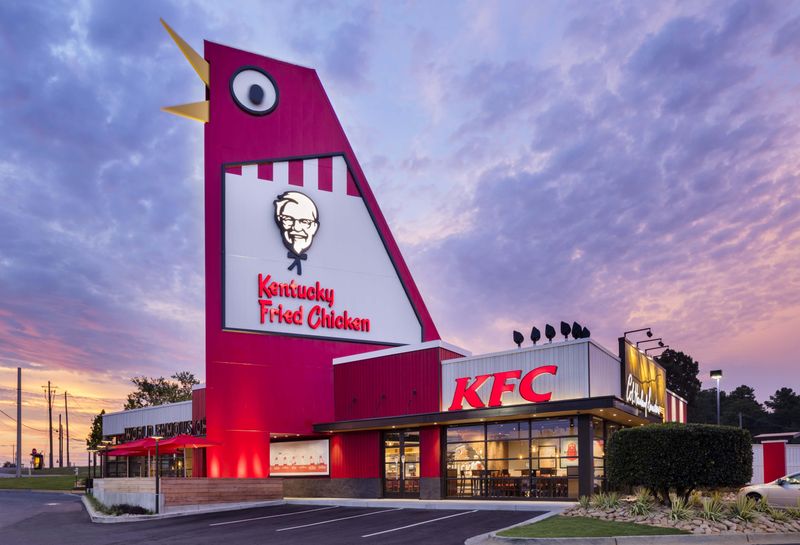
Standing tall at 56 feet, this giant metal rooster has become one of the most recognizable landmarks in the Atlanta metro area. You’ll find it at 12 Cobb Parkway South, Marietta, GA 30060, marking a KFC location that locals use for giving directions. The massive structure features moving eyes and a beak that opens and closes, making it impossible to miss from the highway.
Originally built in 1963, the Big Chicken survived a near-demolition in the 1990s when residents fought to preserve it. The community’s love for this oversized fowl shows how roadside attractions become part of local identity. Workers rebuilt the structure after a storm damaged it, ensuring future generations could enjoy this quirky landmark.
I recommend stopping by during daylight hours for the best photos. The Big Chicken represents everything fun about American roadside culture and Georgia’s willingness to embrace the unusual.
2. The Georgia Guidestones (Former Location) – Elberton
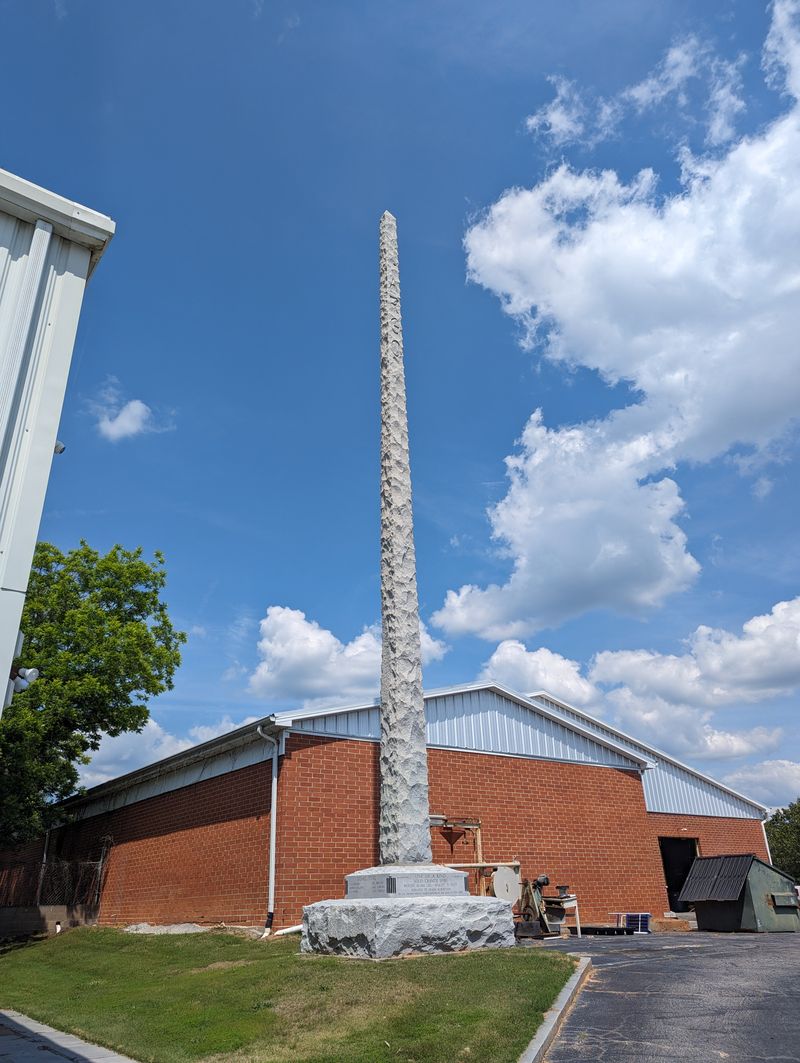
Mystery surrounded this monument for over four decades until its destruction in 2022. The granite slabs once stood at 1031 Guide Stones Road, Elberton, GA 30635, creating an American Stonehenge that puzzled visitors. Ten commandments for humanity were carved in eight different languages, sparking endless theories about their purpose and origin.
Nobody knew who commissioned the structure in 1980, adding to its mystique. The anonymous sponsor used the pseudonym R.C. Christian, leaving researchers to debate the true meaning behind the astronomical alignments and cryptic messages.
Though the physical stones are gone, the site remains a point of interest for those fascinated by unexplained monuments.
The location still draws curious travelers wanting to see where this enigmatic structure once stood. Elberton’s granite industry continues to thrive, and you can visit other stone-related attractions in this self-proclaimed Granite Capital of the World.
3. Babyland General Hospital – Cleveland

Where Cabbage Patch Kids are born might sound like a fairy tale, but it’s real. Located at 300 NOK Drive, Cleveland, GA 30528, this attraction transforms doll manufacturing into an immersive theatrical experience. Nurses in scrubs deliver cloth babies from a cabbage patch while visitors watch the magical adoption process unfold.
The building resembles an actual medical facility, complete with a nursery and delivery room. You’ll witness staff members caring for the dolls as if they were real infants, maintaining the fantasy that made Cabbage Patch Kids a 1980s phenomenon. Each doll comes with birth certificates and adoption papers, making the experience feel official and special.
Kids absolutely love choosing their own Cabbage Patch baby to adopt and take home. The gift shop offers exclusive dolls you can’t find anywhere else. I suggest planning at least an hour to fully enjoy this nostalgic and genuinely unique Georgia attraction.
4. The Blue Whale – Catoosa
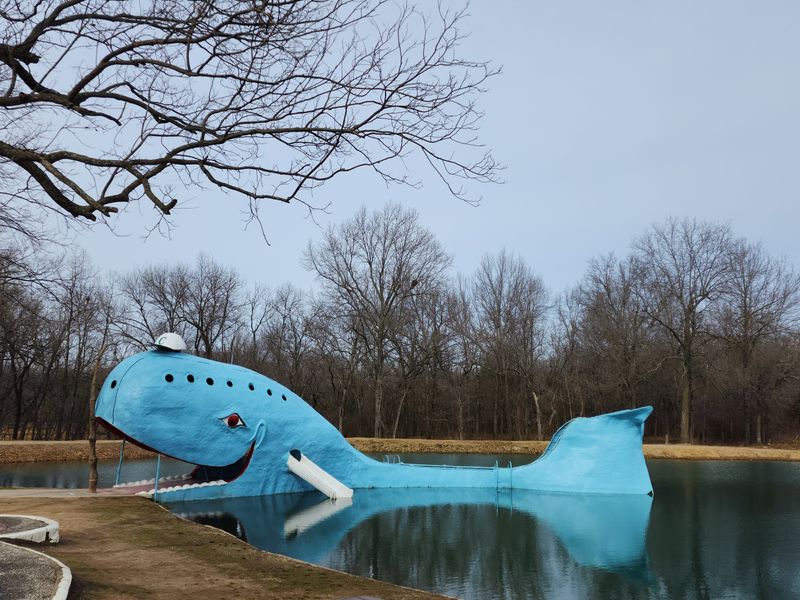
This massive blue whale sits landlocked in a pond, creating one of Route 66’s most photographed spots. You’ll find it at 2600 Route 66, Catoosa, OK 74015—wait, that’s Oklahoma! Georgia actually has its own quirky whale tribute, but the famous one is worth mentioning.
Back in Georgia, roadside oddities include similar oversized animal sculptures that capture travelers’ imaginations.
Hugh Davis built the original Blue Whale in the early 1970s as an anniversary gift for his wife. The 80-foot-long structure became a beloved swimming hole and picnic spot for decades. After years of neglect, volunteers restored it to its former glory, proving communities value these unusual landmarks.
Georgia’s roadside culture shares this same spirit of preserving quirky Americana. Whether you’re hunting for giant animals or other odd structures, the state delivers plenty of unexpected discoveries. These attractions remind us that the journey matters just as much as the destination.
5. World’s Largest Peanut – Ashburn
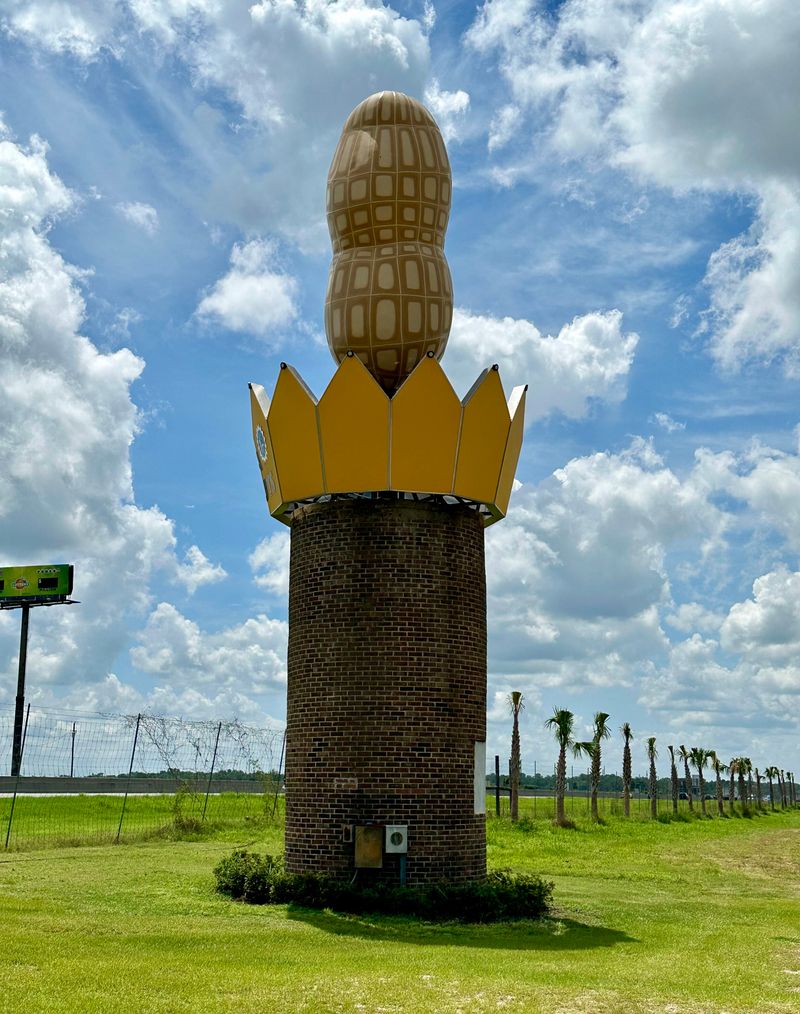
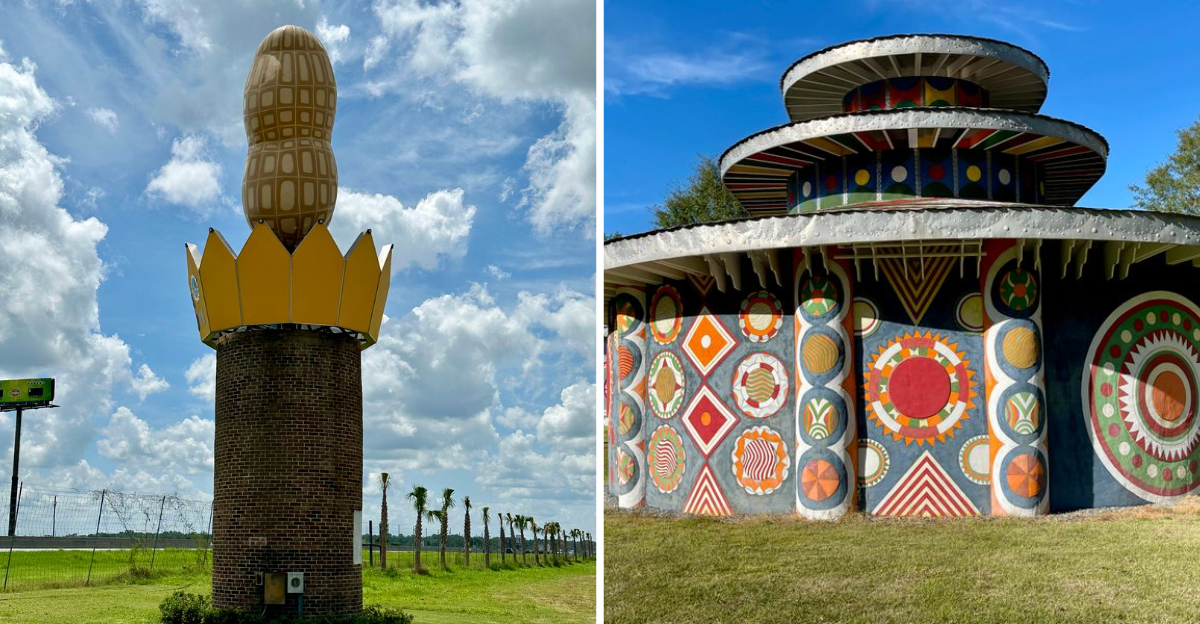
Agricultural pride reaches new heights with this 20-foot monument to Georgia’s famous crop. The giant peanut stands proudly at the corner of College Avenue and East Washington Avenue, Ashburn, GA 31714, celebrating the region’s farming heritage. Painted in bright colors, this concrete tribute weighs several tons and has welcomed visitors since 1975.
Turner County produces millions of pounds of peanuts annually, making this oversized legume a fitting symbol. The monument sits in a small park where you can take photos and learn about peanut farming’s importance to Georgia’s economy. Jimmy Carter’s peanut farming background further connects Georgia to this humble crop.
I find it fascinating how communities celebrate their industries through roadside art. The peanut’s cheerful appearance makes it a favorite stop for families traveling through South Georgia. Don’t forget to grab a bag of boiled peanuts from a nearby stand to complete your authentic Georgia experience.
6. Pasaquan – Buena Vista
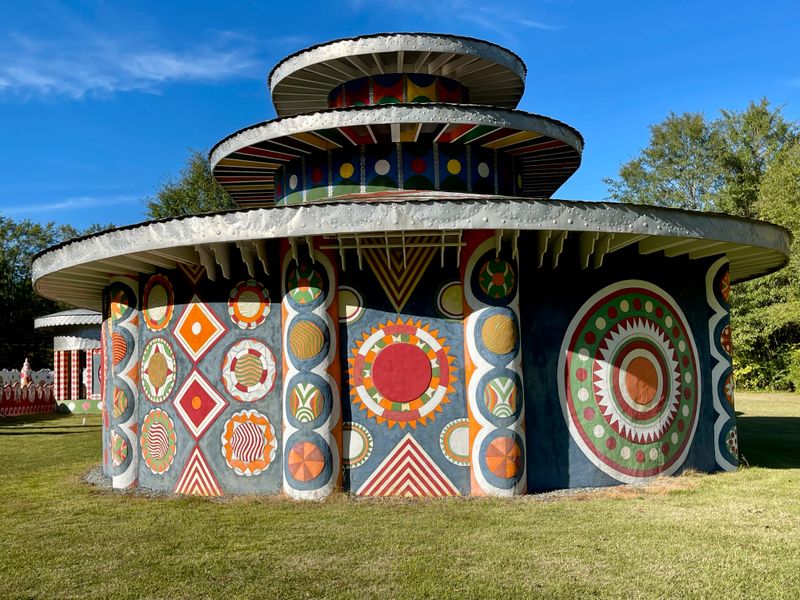
Visionary artist Eddie Owens Martin created this mind-bending compound that looks like it belongs in another dimension. Located at 238 Eddie Martin Road, Buena Vista, GA 31803, Pasaquan features intensely colorful structures covered in geometric patterns and mystical symbols. Martin, who renamed himself St. EOM, spent decades transforming his property into this psychedelic masterpiece.
Bright pagodas, painted concrete walls, and totemic figures create an otherworldly environment unlike anything else in Georgia. St. EOM claimed spiritual visions inspired his work, which blends Native American, Asian, and invented cultural elements. The Columbus Museum now maintains the site, ensuring this folk art environment survives for future generations.
Visiting feels like stepping into someone’s fever dream in the best possible way. Tours are available by appointment, so plan ahead if you want to explore this kaleidoscope of colors. Pasaquan proves that true artistic vision knows no boundaries or conventional rules.
7. Goats on the Roof – Tiger
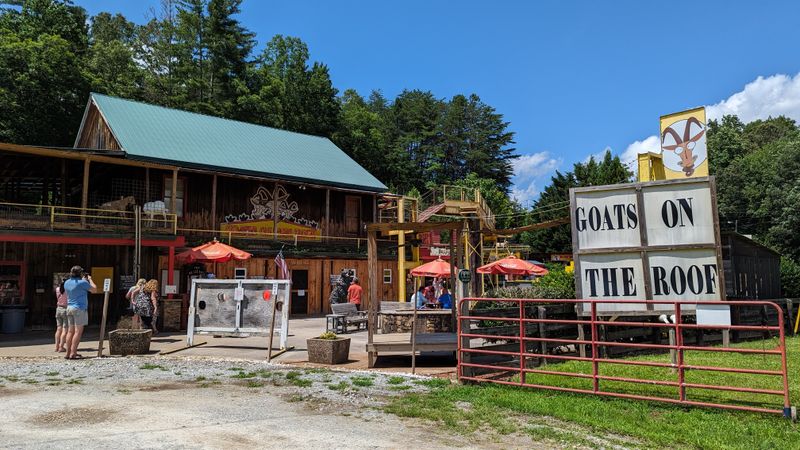
Imagine pulling up to a store and seeing goats casually grazing on the rooftop. That’s exactly what happens at 13820 Highway 441 South, Tiger, GA 30576, where this roadside attraction combines shopping with barnyard entertainment. The building features a grassy roof where goats wander freely, munching on vegetation while customers browse below.
Kids can feed the goats using a pulley system that sends food containers up to the roof level. The store sells everything from fudge to mountain crafts, making it a worthwhile stop beyond just the animal antics. This clever marketing idea has made the location a must-see destination in North Georgia’s mountains.
The concept started in the early 2000s and quickly became famous throughout the region. You’ll find similar goat-on-roof attractions in other states now, but Georgia’s version maintains its charm. I always stop here when driving through because the goats never fail to make me smile with their rooftop adventures.
8. The Lunch Box Museum – Columbus
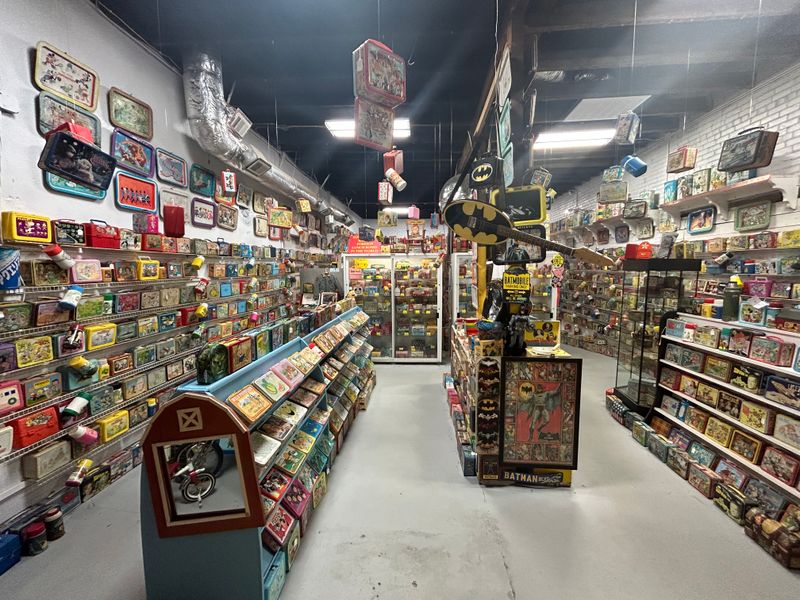
Nostalgia reaches epic proportions at this quirky collection showcasing thousands of vintage lunch boxes. You’ll discover it at 1736 Wynnton Road, Columbus, GA 31906, inside a building that houses one man’s incredible obsession. Allen Woodall spent decades collecting lunch boxes featuring every imaginable character, TV show, and cultural phenomenon from the 1950s onward.
The museum displays over 3,000 lunch boxes covering walls from floor to ceiling. Superman, Star Wars, The Beatles, and countless other pop culture icons stare back at visitors from their metal containers. Each lunch box tells a story about American childhood and the marketing trends that shaped different generations.
Admission is free, though donations are appreciated to maintain this unusual collection. I recommend giving yourself at least 30 minutes to browse and reminisce about your own school lunch memories. This hidden gem proves that any object can become museum-worthy when collected with passion and displayed with care.
9. The Tree That Owns Itself – Athens
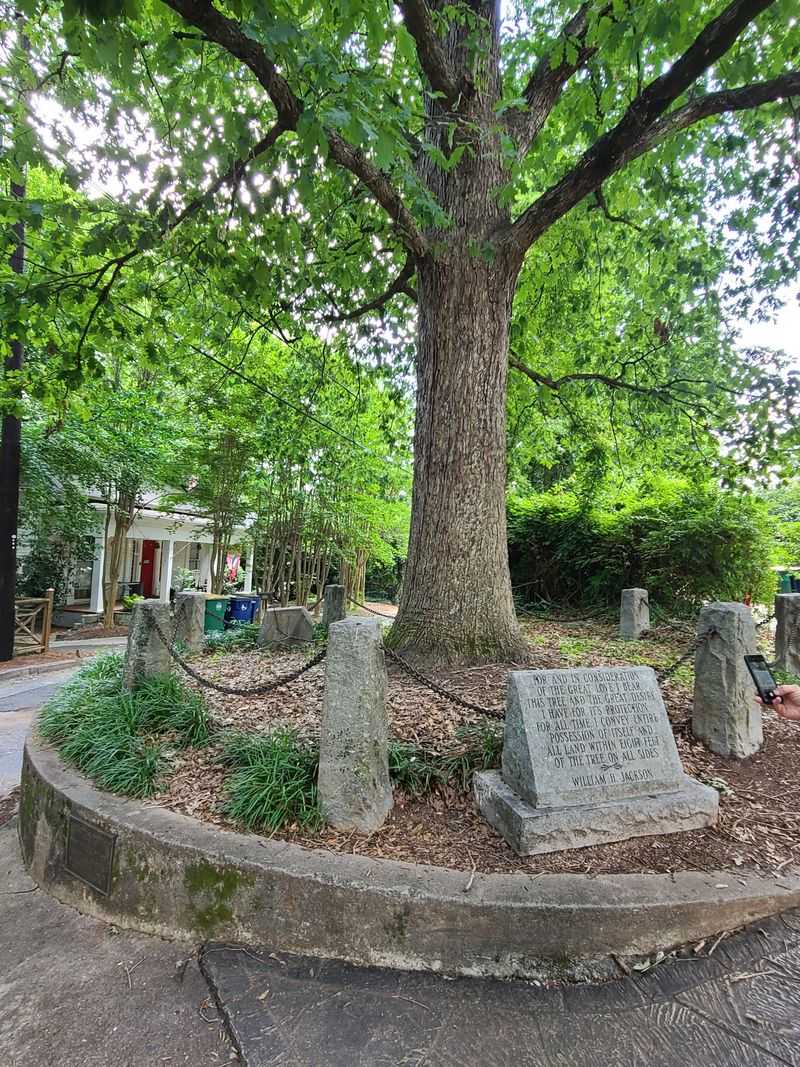
Property rights take an unusual turn with this oak tree that legally owns itself and the surrounding land. The tree stands at the corner of South Finley Street and Dearing Street, Athens, GA 30605, protected by a deed granting it ownership. According to local legend, a professor loved the tree so much that he deeded it to itself in the 1800s.
The original tree fell in 1942, but the community planted a new one from its acorns. This successor tree continues the tradition, making Athens home to possibly the only self-owning tree in the world. A small stone marker explains the tree’s unique legal status to curious visitors.
While the deed’s legal validity remains questionable, the story captures people’s imaginations. The tree symbolizes Athens’ quirky character and respect for natural landmarks. I love how this simple oak tree sparks conversations about property law, environmental protection, and community values all at once.
10. Carhenge of Georgia – Dublin
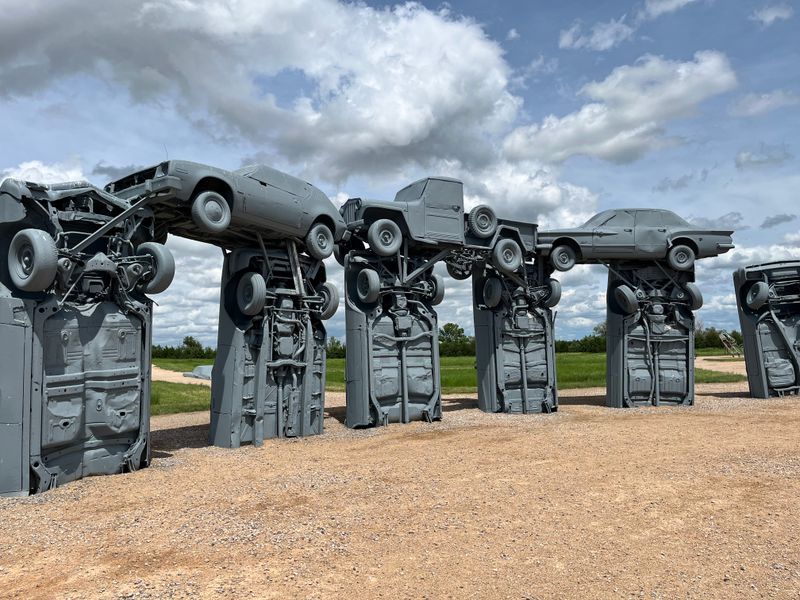
Someone decided Georgia needed its own version of Stonehenge made entirely from old cars. This automotive monument sits near Dublin, though the exact location changes as it’s on private property. Several vehicles are buried nose-down in a circular pattern, mimicking the ancient stone circle’s arrangement.
Paint covers the cars in various colors, creating a bizarre yet strangely artistic scene.
The creator remains somewhat mysterious, adding to the installation’s outsider art appeal. Unlike Nebraska’s more famous Carhenge, Georgia’s version maintains a lower profile but delivers equal amounts of weirdness. The rusting vehicles create interesting shadows and photo opportunities, especially during golden hour.
Roadside art like this divides opinions between those who see trash and those who appreciate unconventional creativity. I fall into the latter category because these installations make road trips memorable. Georgia’s willingness to embrace such oddities reflects the state’s diverse artistic spirit and sense of humor about itself.
11. Tiny Town – Cave Spring
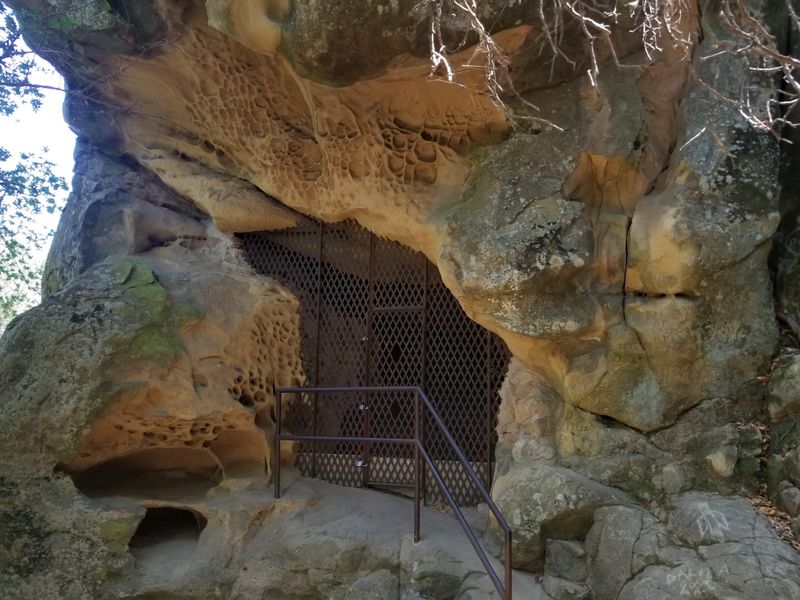
Everything shrinks to miniature scale at this adorable village built for small-town appreciation. Located at 19 Cedartown Street, Cave Spring, GA 30124, Tiny Town features scaled-down buildings representing typical small-town structures. Churches, schools, houses, and businesses stand no taller than a few feet, creating a walk-through diorama of Americana.
Local volunteers maintain the structures, which have delighted visitors since the 1930s. Kids especially love exploring the miniature world where they tower over buildings like friendly giants. The attention to architectural detail makes each structure charming and photo-worthy.
Cave Spring itself is worth exploring, with its natural spring and historic downtown. The combination of Tiny Town and the actual small town creates an interesting contrast in scale and perspective. I appreciate how this simple attraction has provided wholesome entertainment for nearly a century without needing high-tech updates or flashy additions to remain relevant.
12. Popeye Statue – Alma
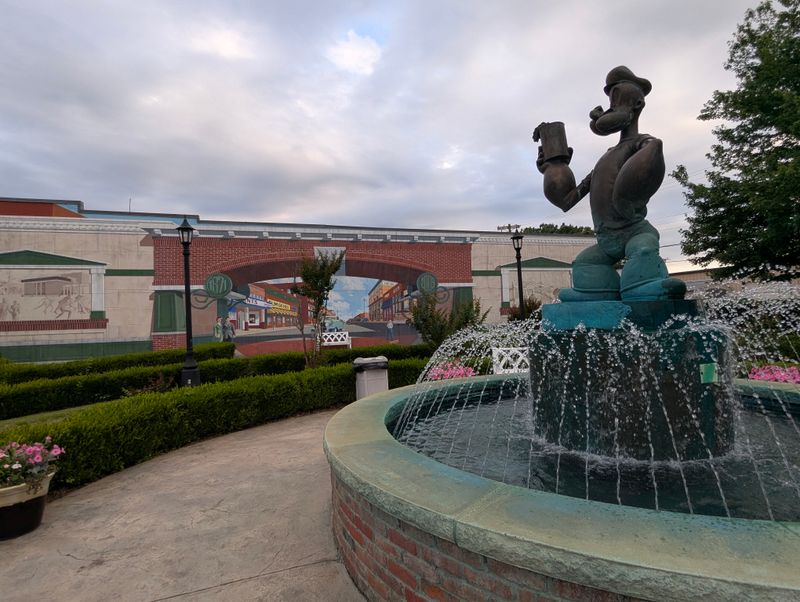
The famous spinach-loving sailor stands guard in a town that claims to be the spinach capital of the world. You’ll spot Popeye at 100 West 12th Street, Alma, GA 31510, flexing his bulging forearms in front of the Chamber of Commerce. The statue honors Alma’s history as a major spinach-canning center during the early 20th century.
Standing several feet tall, the bronze Popeye captures the character’s iconic squinting expression and corn-cob pipe. The town once produced millions of cans of spinach annually, making the cartoon sailor a perfect mascot. Though the canning industry has declined, Popeye remains a beloved symbol of Alma’s agricultural heritage.
An annual Popeye Festival celebrates the connection with live entertainment and family activities. The statue makes for a great photo opportunity, especially for fans of classic cartoons. I find it endearing how small towns embrace these quirky identities, turning local history into roadside attractions that preserve community pride.
13. The Millennium Gate Museum – Atlanta
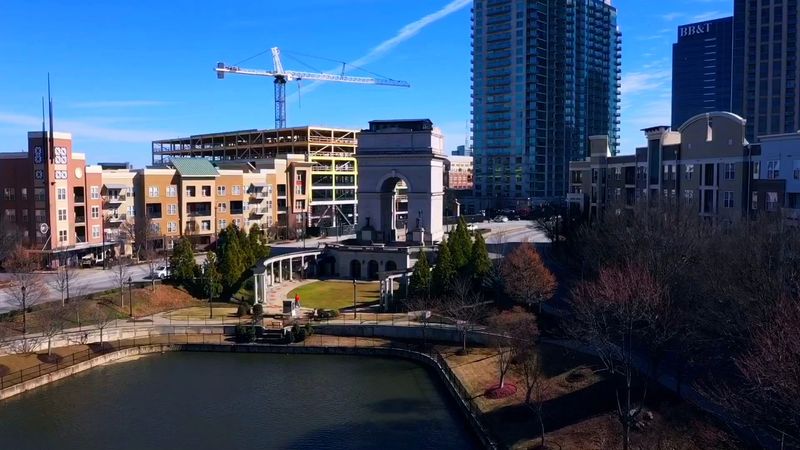
Ancient Rome meets modern Atlanta in this full-scale replica of a classical triumphal arch. The structure towers at 395 17th Street NW, Atlanta, GA 30363, marking the entrance to Atlantic Station. Standing 75 feet tall and 60 feet wide, the gate mimics arches built by Roman emperors to commemorate military victories.
Built in 2008, the Millennium Gate serves both as public art and a museum celebrating Georgia’s history. Inside, you’ll find exhibits about the state’s founding, Civil War history, and cultural development. The neoclassical design fits Atlanta’s tradition of grand architecture while adding an unexpected ancient element to the modern cityscape.
Some critics questioned building a Roman arch in Georgia, but the gate has become a distinctive landmark. The structure hosts events and provides a dramatic backdrop for photos. I think it’s wonderfully weird that Atlanta decided it needed a triumphal arch, proving the city’s ambition knows no historical boundaries or conventional limits.
14. The Double-Barreled Cannon – Athens
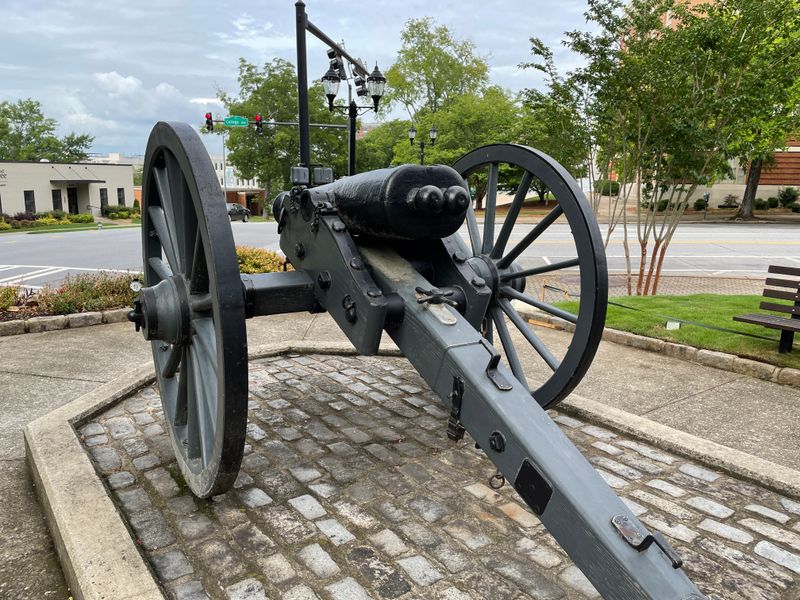
Civil War innovation reaches absurd heights with this failed weapon that never worked as intended. The cannon rests on the lawn of Athens City Hall at 301 College Avenue, Athens, GA 30601, commemorating an ambitious but impractical idea. Inventor John Gilleland designed it to fire two cannonballs connected by a chain, creating a devastating spinning projectile.
Theory didn’t match reality when the cannon was tested in 1862. The balls flew in wildly different directions instead of maintaining their chain connection, nearly killing spectators. Athens wisely decided to retire the weapon immediately, turning it into a monument rather than a battlefield disaster.
The double-barreled cannon represents human ingenuity and the importance of testing ideas before implementation. It’s one of the few surviving examples of this design concept. I love that Athens displays its failed invention proudly, showing that not every historical artifact needs to be successful to be interesting and worth preserving for posterity.
15. The World of Coca-Cola – Atlanta
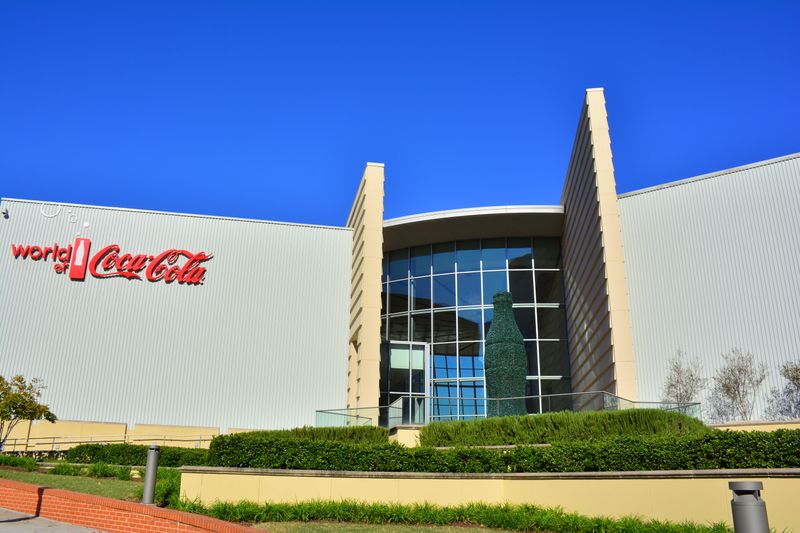
Corporate museums don’t usually qualify as weird, but Coca-Cola’s shrine to itself earns a spot through sheer excess. Located at 121 Baker Street NW, Atlanta, GA 30313, this massive facility celebrates everything about the famous soft drink. You’ll encounter a polar bear mascot, taste over 100 different Coca-Cola products from around the world, and learn the brand’s history through interactive exhibits.
The vault containing the secret formula adds mystery to the experience. Visitors can’t actually see the formula, but the theatrical presentation makes you feel like you’re glimpsing corporate secrets. The tasting room offers the strangest experience, with international Coca-Cola flavors ranging from delicious to absolutely bizarre.
Some beverages from other countries taste nothing like American Coke, proving that flavor preferences vary wildly across cultures. The gift shop sells every imaginable Coca-Cola branded item. I include this because dedicating an entire museum to soda reaches a level of commercial weirdness that perfectly fits Georgia’s eclectic roadside culture.