You Have To See These Incredible Giant Wooden Trolls Hiding In A North Carolina Park
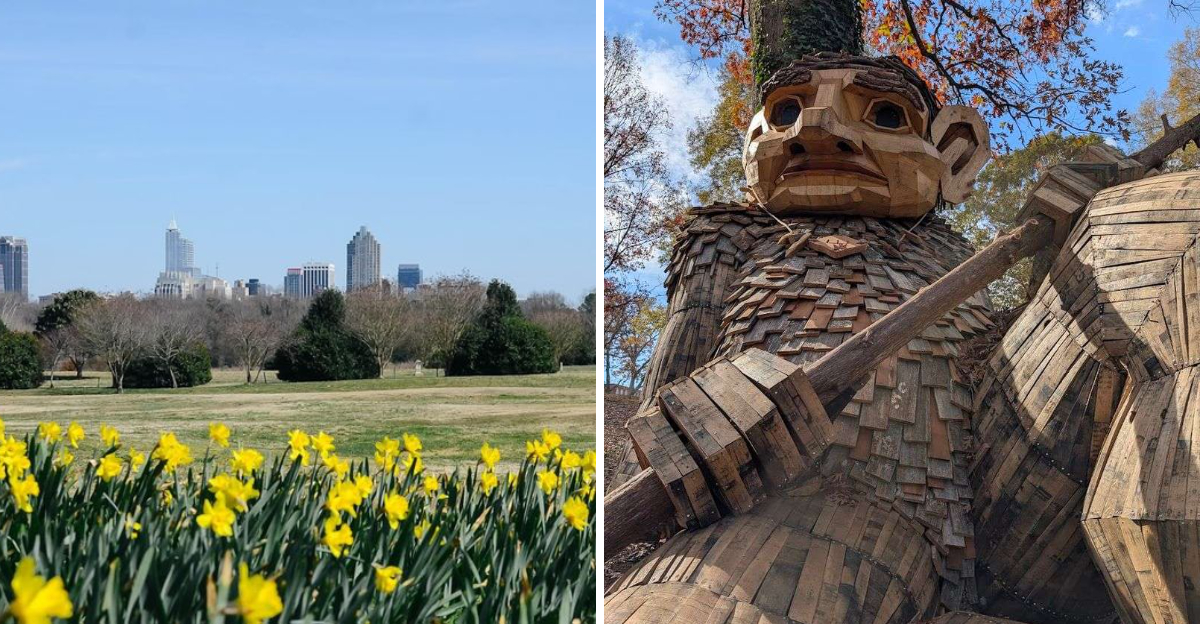
A casual park walk in North Carolina should not come with sudden eye contact from a giant wooden troll.
That is exactly why this place feels so ridiculous in the best way.
One minute, the path feels normal enough.
Then a massive carved face appears through the trees, looking like it wandered out of a fairy tale and forgot to leave.
Kids usually spot it first, because children have excellent troll radar.
Adults try to stay calm for about three seconds before the phones come out.
The whole stroll suddenly becomes a tiny woodland quest with better photos and far less danger than the fairy tales promised.
By the time everyone finds the troll, an ordinary walk has turned into the kind of weird, funny North Carolina outing that keeps getting retold in the car.
Meet The Artist Behind The Magic
Not every artist builds giants from garbage, but Thomas Dambo has made it his signature. The Danish sculptor is known worldwide for creating enormous troll figures using discarded and reclaimed materials, turning what others throw away into breathtaking works of art.
His philosophy is rooted in the idea that creativity does not have to generate waste.
Dambo has installed trolls across more than 40 countries, but his North Carolina project at Dorothea Dix Park in Raleigh stands out as a truly special achievement.
Each troll carries its own personality and story, making the experience feel more like reading a fairy tale than visiting an art exhibit.
Visitors consistently describe feeling a childlike sense of wonder when they encounter these sculptures for the first time.
His work proves that sustainability and stunning artistry can absolutely go hand in hand.
At 1030 Richardson Drive, Raleigh, NC 27603, the park gave him the perfect landscape to bring five unique characters to life.
Five Characters, One Unforgettable Family
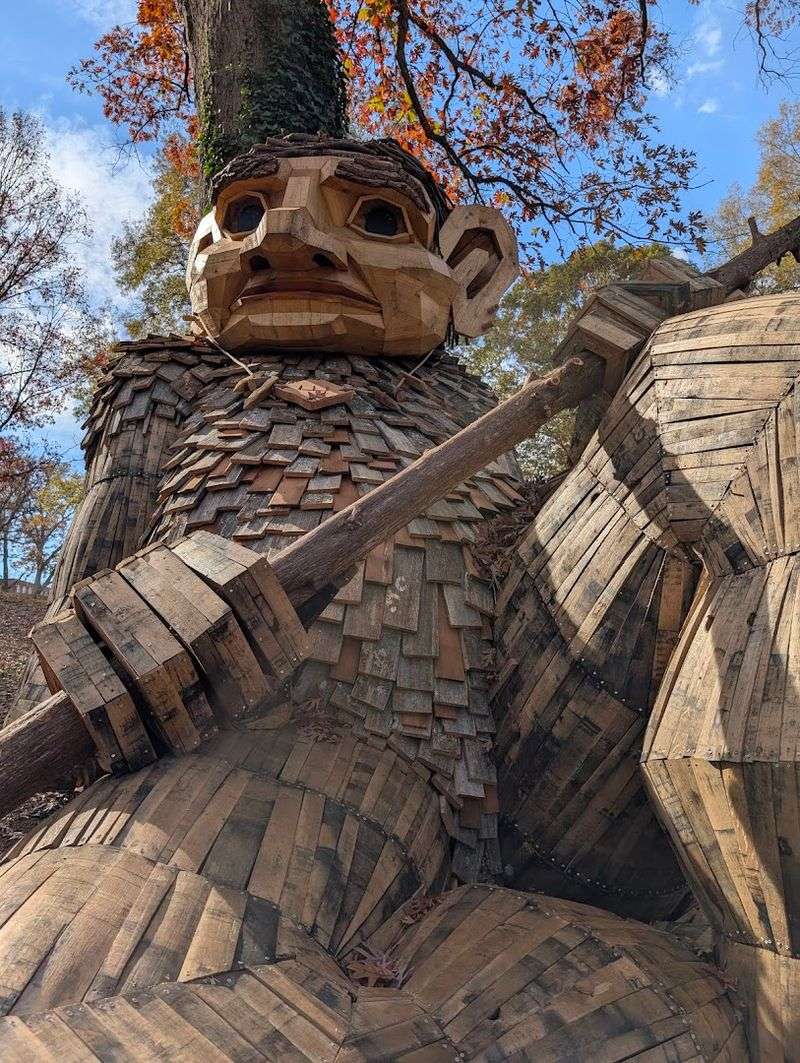
Daddy Bird Eye, Mother Strong Tail, Dix, Dax, and Dux make up the giant troll family at Dorothea Dix Park.
Dix Park’s troll page invites visitors to explore pine groves, nature trails, and century-old oaks to find the five larger-than-life characters. Visit North Carolina also describes the Raleigh trolls as a family group of mother, father, and three children within a broader statewide story.
Each name gives the hunt a little personality before the sculpture even comes into view. Daddy Bird Eye feels watchful, Mother Strong Tail brings the biggest emotional punch, and Dix, Dax, and Dux add the mischievous energy of younger trolls scattered through the park.
Finding all five turns the visit into more than a simple art stop. It becomes a slow, slightly ridiculous adventure where every group starts scanning trees, slopes, and open fields like professional troll detectives.
The fun comes from discovery as much as scale. One troll might appear suddenly near a path, while another rewards anyone willing to keep walking, looking, and wondering what is hiding ahead.
Reclaimed Materials, Remarkable Results
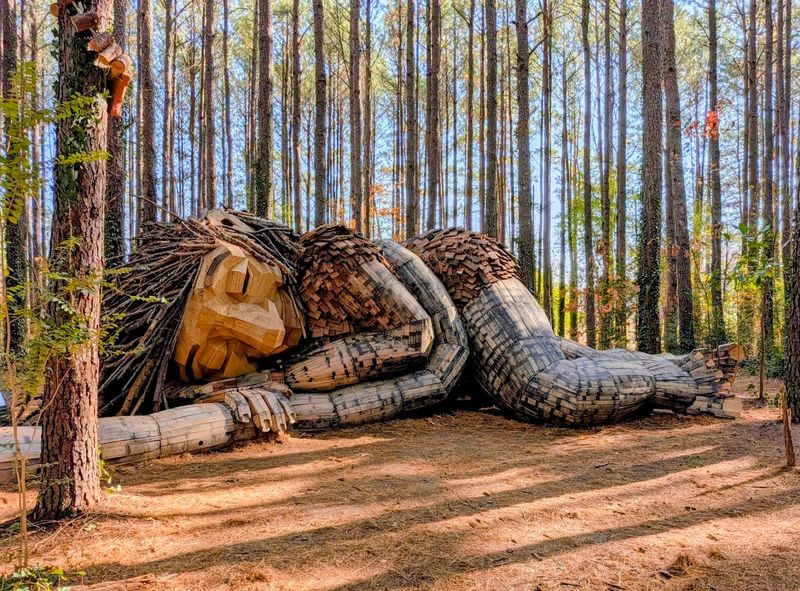
Discarded materials become the main characters at Dix Park, not just the background story.
Visit North Carolina notes that Thomas Dambo’s giant trolls are made entirely from reclaimed materials. Dix Park also describes them as playful, thought-provoking sculptures that highlight environmental stewardship and care for the natural world.
That makes the trolls feel different from ordinary outdoor statues. Their surfaces show grain, texture, age, and irregularity, with each plank or piece of wood adding to the sense that these giants were assembled from forgotten things with a second life.
Up close, visitors can see how the materials create expression, movement, and personality. From a distance, the trolls blend into the trees and fields as if they have been resting there much longer than they actually have.
The recycled construction gives the installation its deeper charm. It proves beauty does not need perfect new materials to feel impressive.
In fact, the old wood makes the trolls better. They look weathered, earthy, and perfectly suited to a park where nature and imagination meet.
Built By The Community, For The Community
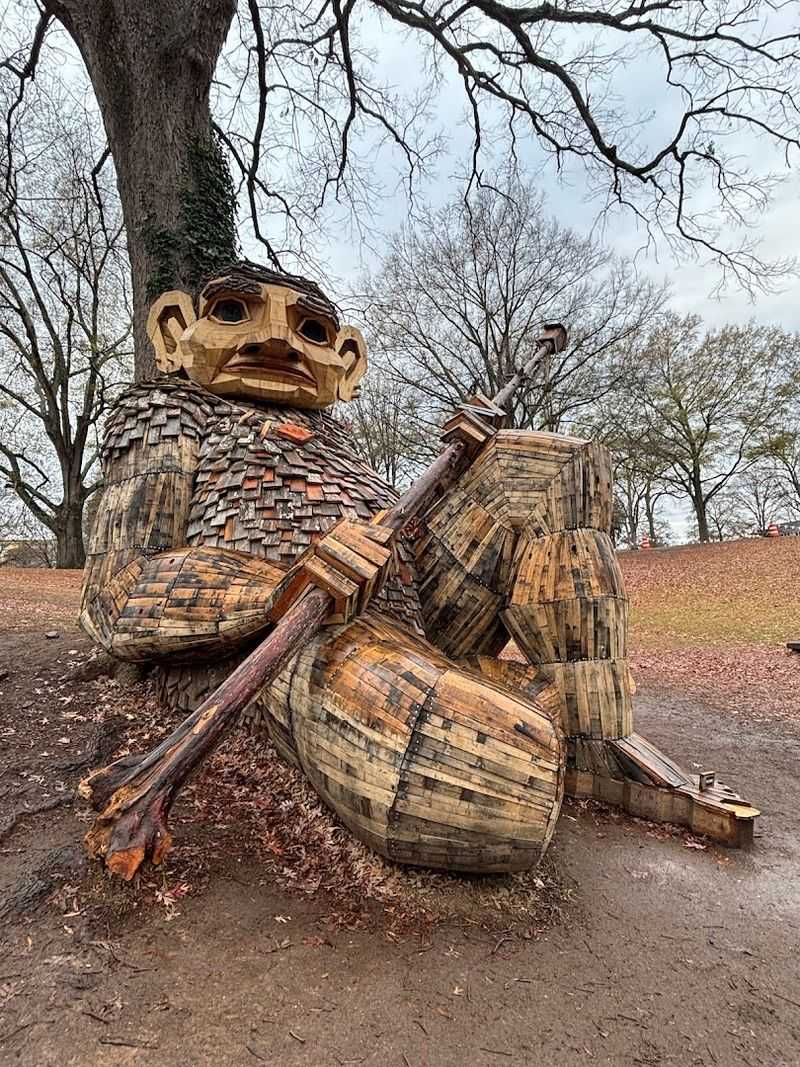
Local hands helped make the Dix Park trolls feel like Raleigh’s own story rather than a traveling spectacle dropped into place.
Thomas Dambo’s projects often involve community volunteers, and North Carolina’s troll collection was built through collaboration across the cities hosting the sculptures.
Recent Southern Living coverage reported that more than 500 local volunteers helped construct the statewide troll installations, with five trolls hidden at Dorothea Dix Park and additional sculptures in Charlotte and High Point.
That volunteer effort matters because public art lands differently when people nearby helped shape it.
Each troll carries Dambo’s vision, but also the time, effort, and excitement of residents who showed up to build something strange and wonderful for their own communities.
Dorothea Dix Park already functions as a major gathering space in Raleigh, and the trolls add another reason for families, friends, school groups, and visitors to explore it together.
Community-built art has a different kind of warmth. People are not only looking at finished sculptures; they are walking through evidence of shared imagination.
How To Find Every Troll
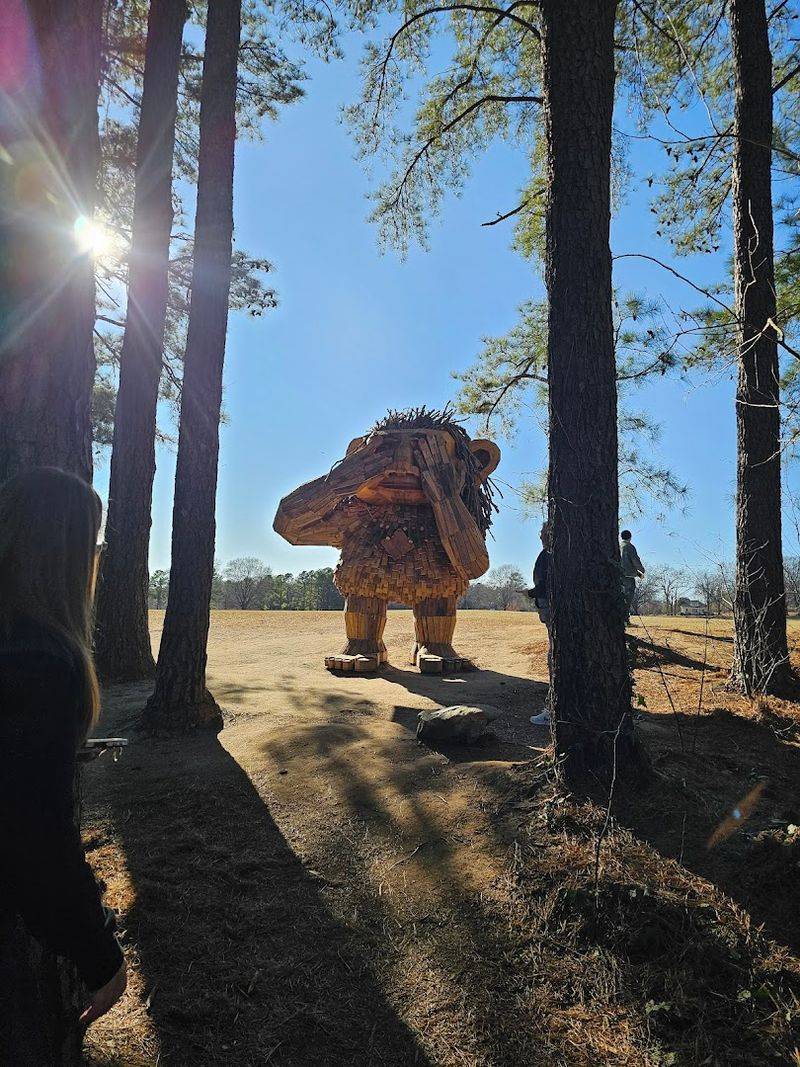
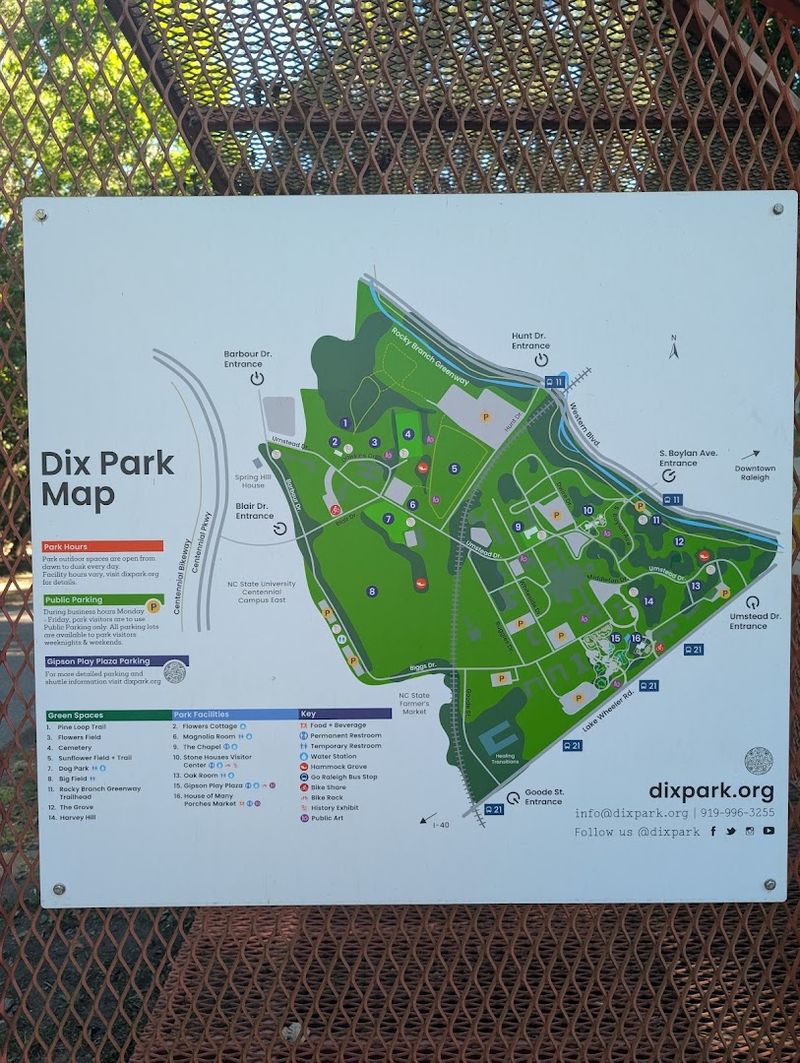
Troll hunting at Dix Park works best with the official map in hand and a willingness to wander. Dix Park provides a downloadable troll map, and the installation is free to visit from dawn until dusk.
The map shows the troll locations spread across different areas of the park, including spaces near the Dog Park, the Cemetery, the Grove, and Gipson Play Plaza.
Comfortable shoes matter because the experience involves walking across a large park with open lawns, wooded areas, slopes, and paths that may not feel perfectly even.
Visitors with mobility concerns may want to use nearby parking areas rather than treating the whole hunt as one continuous trek.
Giving yourself at least an hour makes the outing feel more relaxed, especially with kids who want to stop, climb nearby hills, or take photos at every discovery.
The best moment comes when a troll first appears through the trees. Directions help, but surprise still does most of the magic.
Mother Strongtail
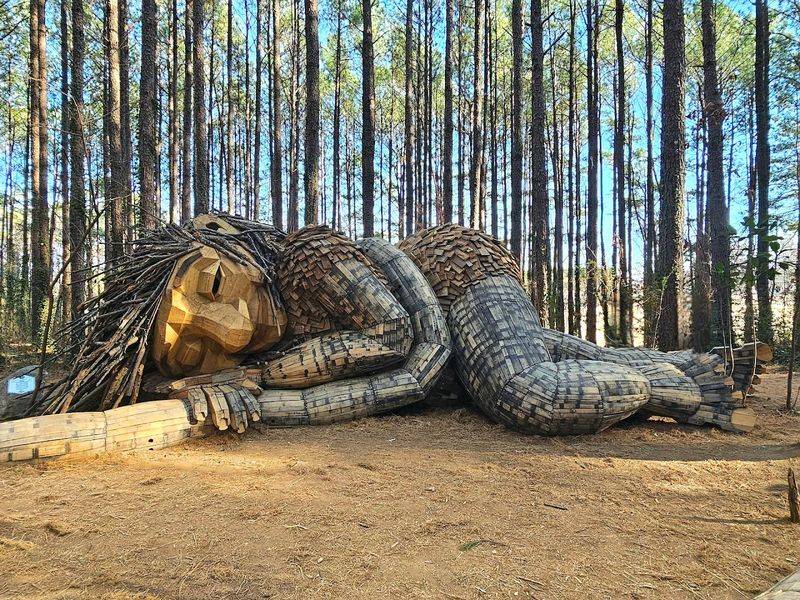
Mother Strong Tail tends to stop people in their tracks because she does not behave like a normal sculpture.
Visit Raleigh notes that her tail stretches 645 feet through the pine grove by Dix’s Flowers Field, creating one of the installation’s most dramatic features.
That extraordinary tail changes the way visitors experience the piece. Instead of standing in one spot, people follow the line of the sculpture through the trees, trying to understand how far it reaches and how it connects the space around her.
The scale feels almost funny at first, then surprisingly moving. Mother Strong Tail looks protective, grounded, and ancient in the way good folklore creatures should.
Children may focus on the size, while adults often get caught by the detail and the emotion in her posture. Photographing her can be tricky because the whole sculpture refuses to fit neatly into one frame.
That becomes part of the experience. She asks visitors to slow down, walk around, and notice how public art can reshape an ordinary grove into a story.
Part Of A Bigger North Carolina Story
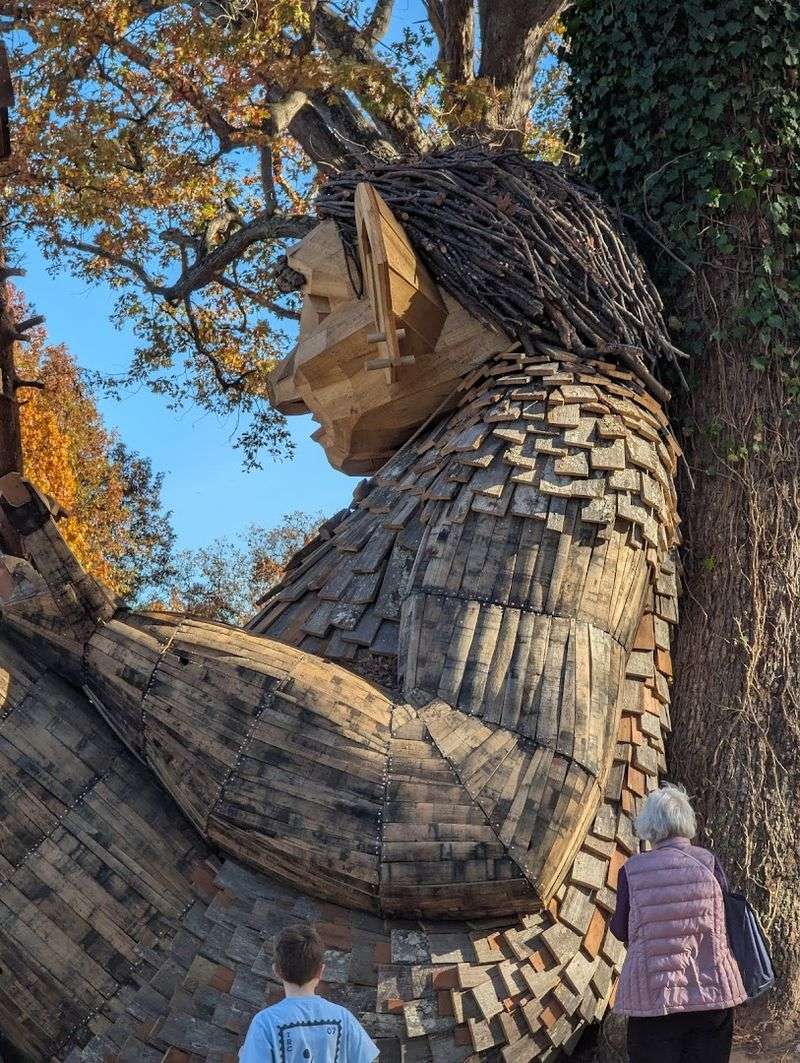
Raleigh’s five trolls are only part of a larger North Carolina adventure. Visit North Carolina explains that Thomas Dambo’s statewide troll family includes five sculptures at Dorothea Dix Park, plus two more in Charlotte and High Point.
Charlotte’s sculpture is called Big Pete with Big Feet, found in the River District, while High Point is home to Little Sally.
That makes Dix Park the densest starting point for anyone who wants the full troll experience, because five characters can be found in one Raleigh park before the hunt expands across the state.
Turning the trolls into a multi-city trip gives families a fun excuse to explore beyond one destination. Raleigh brings the core family, Charlotte adds a huge standalone character, and High Point adds another piece of the story.
The statewide installation also gives North Carolina an unusually imaginative public-art trail, built around sustainability, folklore, and outdoor discovery.
For travelers who like road trips with a purpose, troll hunting might be one of the weirdest and most charming reasons to cross the state.
What To Expect At Dix Park
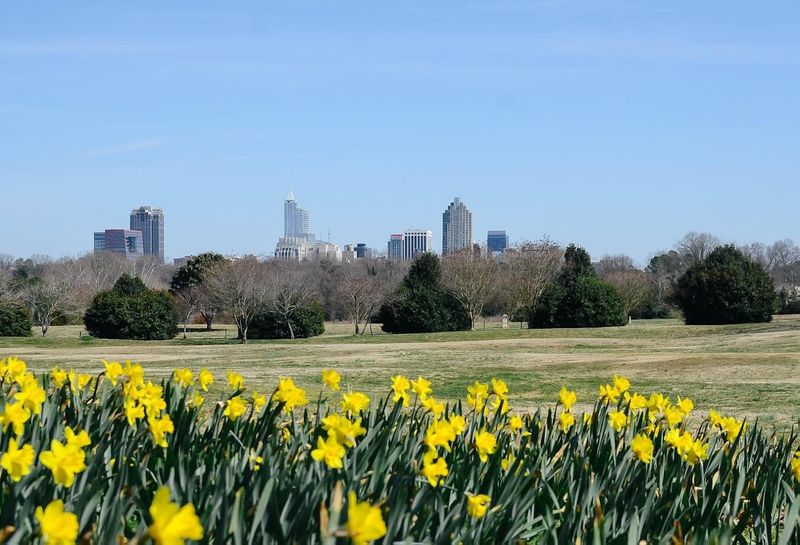
Dorothea Dix Park offers much more than wooden giants, which helps turn a troll hunt into a full day outside. The park’s visit page says outdoor spaces are open from dawn until dusk, while facility hours vary, including Gipson Play Plaza and the Stone Houses Visitor Center.
Visitors can pair the trolls with open fields, walking areas, skyline views, play spaces, seasonal programming, and plenty of room for picnics or slow wandering.
The official map also shows major park landmarks such as the Dog Park, Sunflower Field, Stone Houses, Visitor Center, Harvey Hill, Cemetery, and Gipson Play Plaza, giving families several ways to build a route around the art.
Weekends can feel busy, so arriving earlier in the day usually makes parking and photos easier. Since the trolls sit across a large public park, weather can shape the visit.
Sunscreen, water, comfortable shoes, and patience help a lot. The best approach is not to rush from sculpture to sculpture.
Dix Park rewards visitors who let the troll hunt become part of a larger outdoor adventure.
Tips For The Best Troll Visit
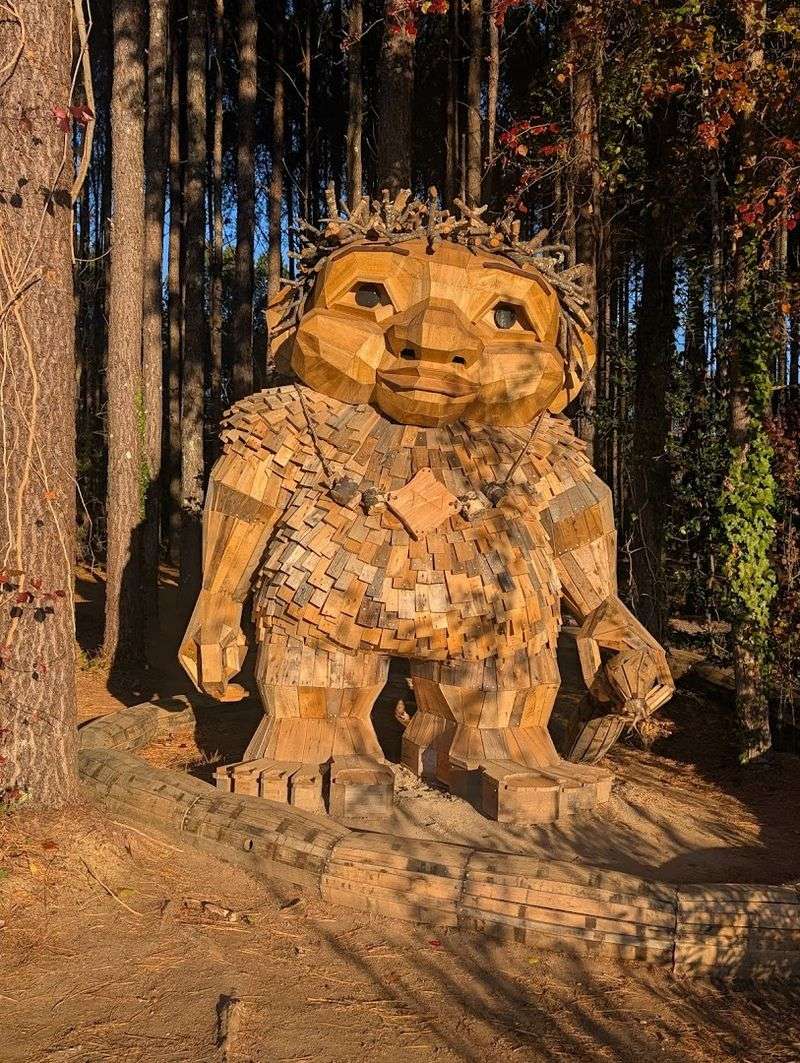
Early light, good shoes, and a downloaded map can make the Dix Park troll hunt much smoother.
The sculptures are free to visit, and the park is open from dawn until dusk, but facility hours can vary, so visitors should check current park information before planning around restrooms, visitor services, or play-area timing.
Morning visits usually bring softer light for photos and cooler walking conditions, while late afternoon can make the wood glow beautifully if you leave enough time before dusk.
Families with young kids may want to start near one cluster of trolls instead of trying to cover the entire park too quickly.
Water, snacks, sunscreen, and layers are smart because open fields can feel very different from shaded groves. Respect matters too.
These sculptures are public art made from reclaimed materials, so visitors should follow posted guidance, avoid damaging the work, and give other groups room for photos. Come ready to look a little silly while scanning the trees.
That is half the fun.