You Never Know What You Will Discover At This Unusual Minnesota Sculpture Park
Nobody warned me. One minute I was driving through flat, forgettable Minnesota farmland, and the next I was standing face to face with a rusted metal giant staring back at me from an open field.
My first thought was, what is this place? My second thought was, why have I never heard of it?
Minnesota is full of roadside surprises, but this one felt different. Personal, almost.
Like stumbling into someone’s dream that got left outside. I spent two hours here and still felt like I missed something.
That is the thing about this state and its strangest hidden spots. They never fully reveal themselves on the first visit.
A 350-Acre Historic Estate That Doubles As An Open-Air Gallery
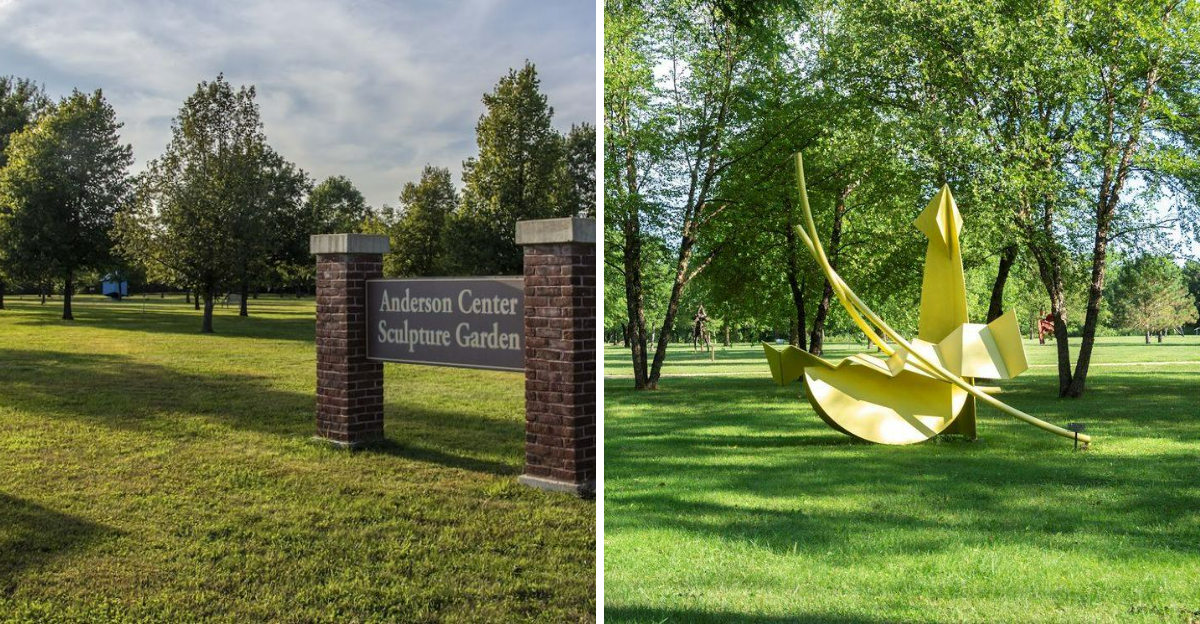
Not every art gallery lets you bring your dog and eat a sandwich outside. The Anderson Center Sculpture Garden sits within the historic Tower View estate, with the public sculpture garden covering about 15 acres.
That alone makes it worth the trip.
The estate stretches across rolling land in Red Wing, Minnesota, and the scale of it genuinely catches you off guard. You expect a small park.
You get something closer to a countryside campus. The Georgian Revival architecture of the main buildings adds a formal elegance that contrasts beautifully with the raw, modern sculptures placed throughout the grounds.
The address is 161 Tower View Dr, Red Wing, MN 55066, and the garden is open daily from 8 AM to 10 PM. Admission is completely free.
The grounds offer benches, picnic areas, and interpretive signs that help you understand what you are looking at.
Over 30 Sculptures From World-Renowned Artists
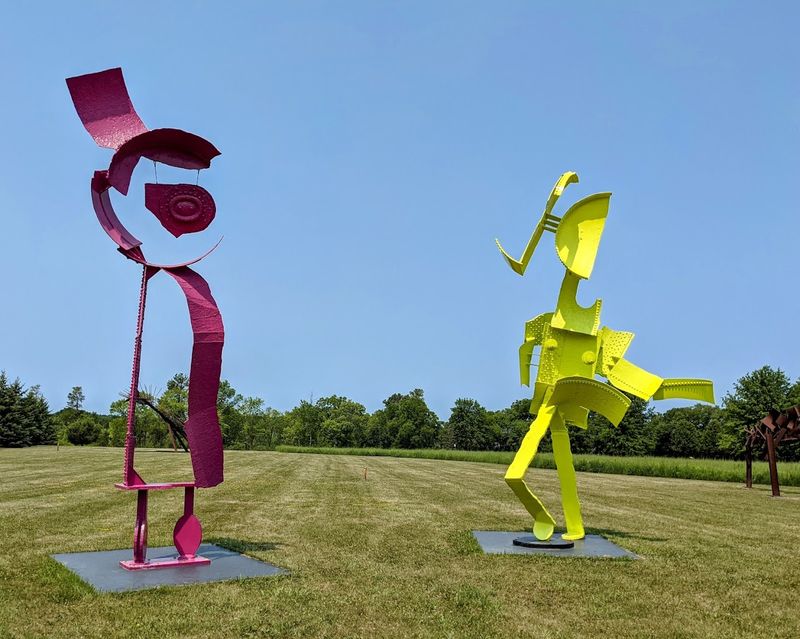
Thirty sculptures does not sound like much until you are standing next to one that is taller than your car. The collection at the Anderson Center features works by nationally and internationally recognized artists, including Charles Biederman, Siah Armajani, and Zoran Mojsilov.
These are not hobbyist pieces.
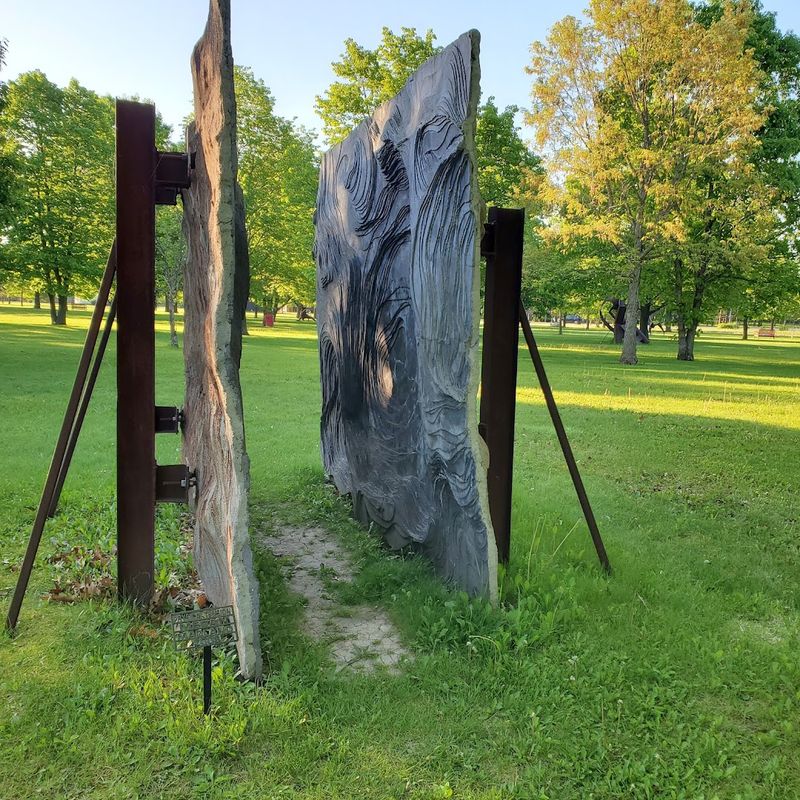
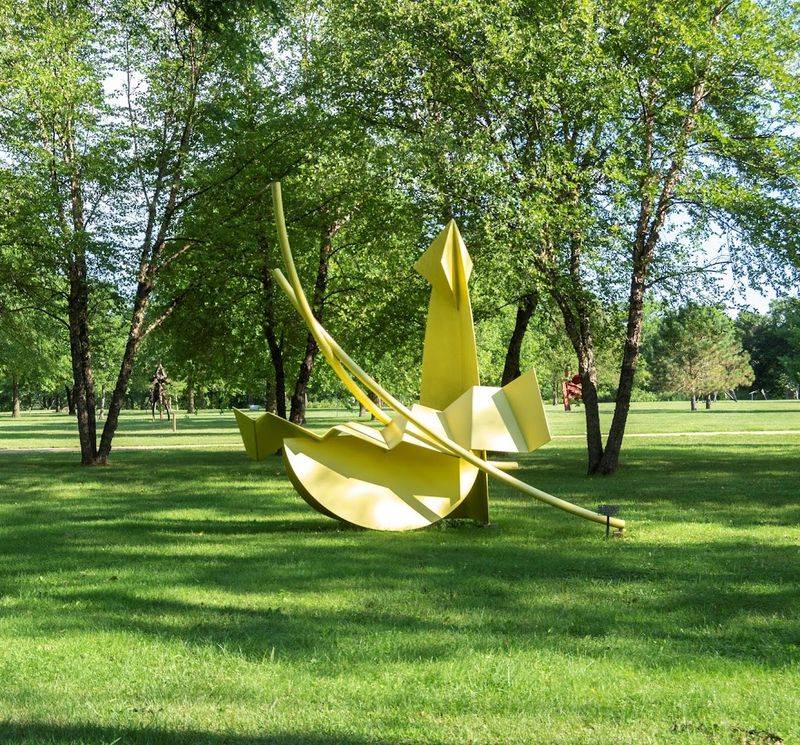
Each sculpture carries its own personality. Some are geometric and precise, demanding your full attention.
Others are playful and organic, like a giant fish tail made of steel and stones that makes you stop and laugh before you even realize you are smiling. The range of styles keeps every few steps feeling like a fresh discovery.
The works span pieces created and installed between 1985 and 2021, giving the collection a genuine sense of artistic history. Labels on each piece include the artist name, title, and year.
Visitors have noted they would love more context through audio guides or QR codes, which is fair. Still, the visual impact of each piece speaks loudly enough on its own.
Walking through this collection feels less like a museum visit and more like a slow, satisfying conversation with creativity itself.
The Legendary History Behind The Land Itself
Here is a fact that will make you look twice at your breakfast cereal. The Tower View estate was originally the home and research laboratory of Dr. Alexander Pierce Anderson, the inventor of Quaker Puffed Wheat and Puffed Rice cereals.
He worked here between 1915 and 1921.
That backstory gives the whole place an extra layer of intrigue. You are walking across land where Alexander Pierce Anderson later continued important cereal research for Quaker Oats.
The estate later took on several different uses before becoming the arts-focused space it is today. Few properties carry that much history in one address.
Since 1995, the Anderson Center has operated as an artist residency program and art center. It has supported over 800 artists and scholars from around the world.
The transformation from cereal laboratory to creative sanctuary is genuinely one of the more unusual origin stories you will encounter in this part of the state.
It adds meaning to every sculpture you pass, knowing that the land itself has always been a place where people came to create something new and worth sharing with the world.
The 115-Foot Red Brick Water Tower You Cannot Miss
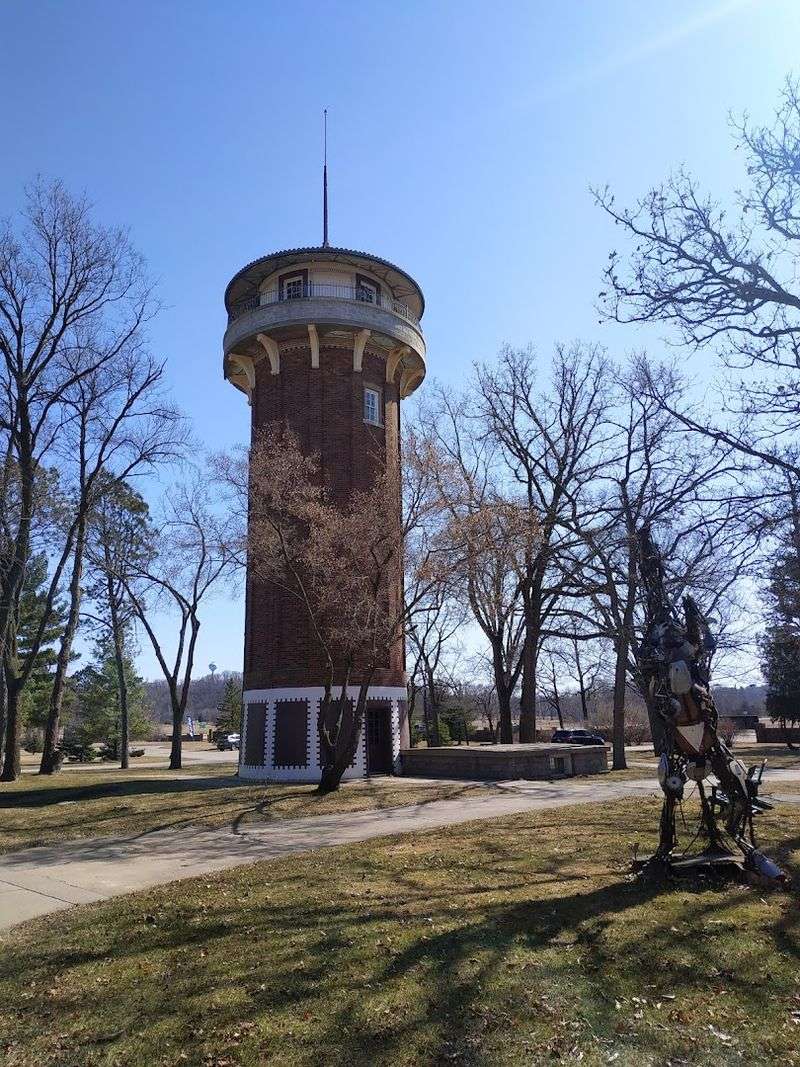
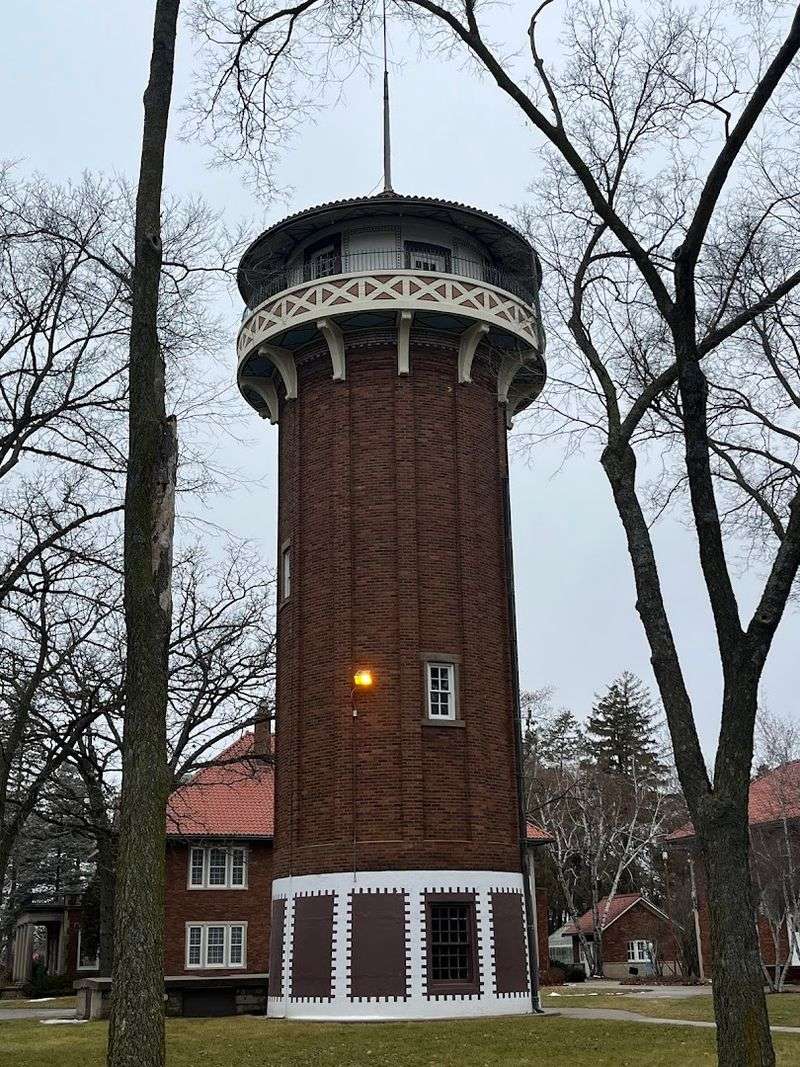
You will see it before you see anything else. The 115-foot red brick water tower rises above the estate like a landmark from another century, and honestly, it kind of is.
It was originally built to supply the property with water and electricity, which was remarkable engineering for its time.
Today, the tower has been thoughtfully repurposed. It features an observation balcony near the top that offers sweeping views of the surrounding landscape.
Even more charming is the original tea room at the very top, accessible during special events. That detail alone makes you want to plan a return visit timed to an event.
The tower anchors the visual identity of the entire estate. It gives the property a sense of permanence and grandeur that most outdoor art spaces simply do not have.
More sculptures are placed around the base of the tower, so do not skip that area on your walk. One visitor noted they almost missed it entirely and were glad they did not.
Make the tower your first stop or your last, but make sure it is on your list either way.
An Ever-Evolving Collection That Never Stays The Same
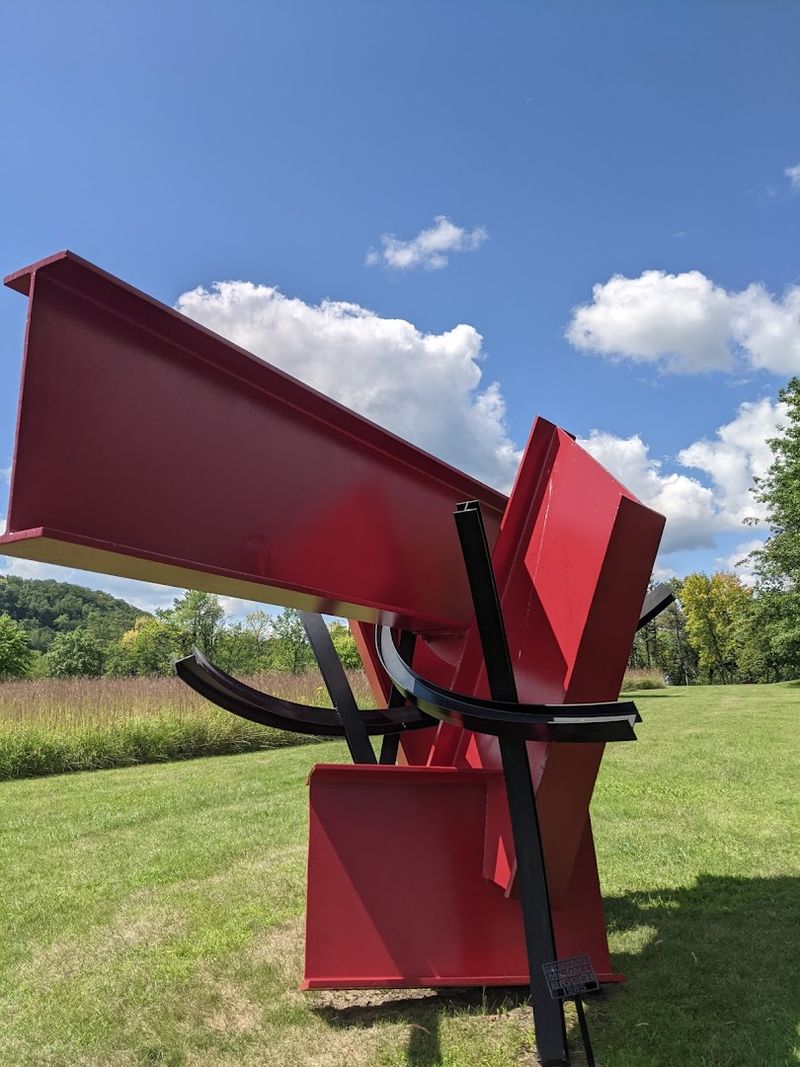
Most sculpture gardens have a fixed collection that rarely changes. This one grows.
Because the Anderson Center operates an active artist residency program, the collection has continued to grow and evolve over time. The result is a collection that feels genuinely alive.
Artists from across the country and around the world have come to live and work on this estate. Many choose to leave something permanent behind.
That ongoing contribution means repeat visitors will almost certainly find something new each time they return. It is the kind of place that rewards loyalty.
The residency program has welcomed over 800 artists and scholars since 1995. Disciplines range widely, and the center supports studio spaces for visual art, a darkroom, a blacksmith shop, a glass blowing studio, and printmaking facilities.
The sculpture garden is the public-facing result of all that creative energy. Knowing that working artists are often present on the grounds adds a special electricity to your visit.
That connection to working artists gives the garden a more active and creative atmosphere than many traditional sculpture parks. That kind of access to the creative process is rare and genuinely exciting.
Scenic Views Of The Cannon River Valley
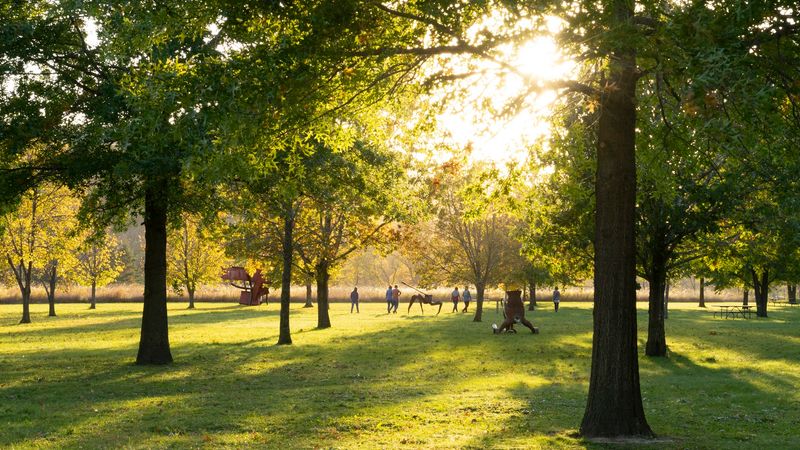
Art is better with a view, and this place has both covered. The elevated grounds of the Tower View estate offer striking vistas of the Cannon River valley below.
On a clear day, the landscape stretches out in a way that makes you want to just stand still for a moment.
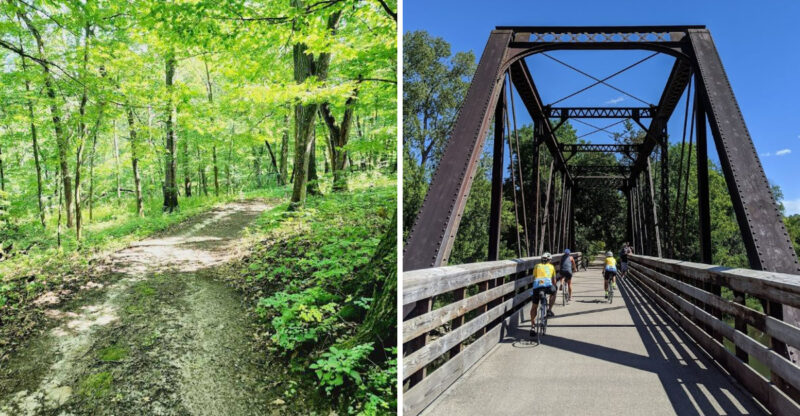
The garden sits above the Cannon Valley Trail, a popular biking and walking path in the area. There is a trail on the back side of the property that leads directly down to the trail below.
The trail down toward the Cannon Valley Trail includes a fairly steep staircase, so plan accordingly if you are visiting with elderly guests or young children. Cyclists on the trail can spot a sign pointing up to the sculpture garden, which is how many visitors discover the place entirely by accident.
That accidental discovery is part of the charm. The elevated position of the garden means the scenery around the sculptures is just as compelling as the art itself.
Mesic prairie areas and natural plantings fill the spaces between installations, giving the whole experience a grounded, organic feel. Bring bug spray in warmer months.
The mosquitoes are enthusiastic and completely free of charge, just like the garden itself.
A Free And Family-Friendly Outdoor Experience
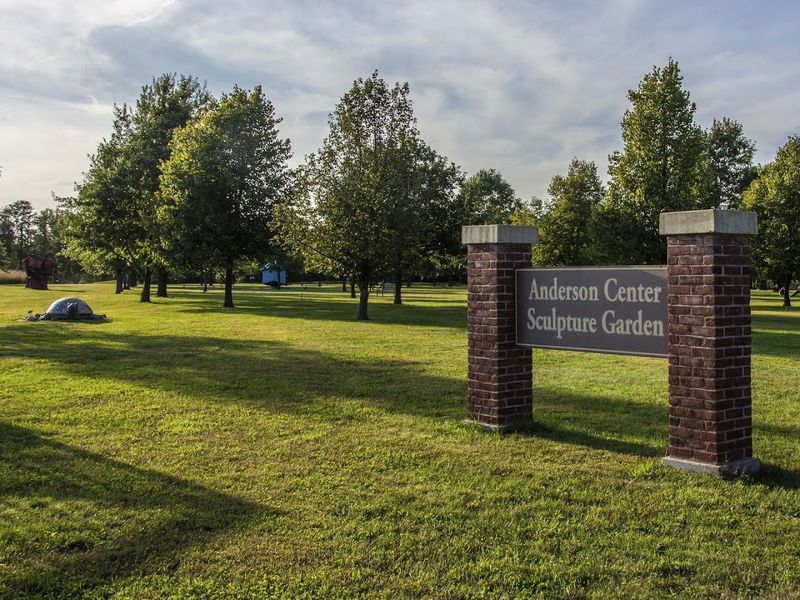
Free admission to a world-class outdoor art space is not something you encounter every day. The Anderson Center Sculpture Garden charges nothing to enter, which makes it one of the most accessible cultural experiences in this part of the state.
That generosity is rare and worth celebrating.
The garden is genuinely welcoming to families. Kids respond to the sculptures in the best way possible, with wide eyes and a lot of questions.
Well-socialized dogs on leashes are also welcome, which was confirmed on the center’s official website. The combination of art, nature, open space, and fresh air makes it a natural choice for a relaxed family outing.
Picnic tables and shaded areas are available throughout the grounds, including a beautiful oak grove at the back of the park that is perfect for lunch. Parking is ample and free.
The garden opens at 8 AM every day of the week and stays open until 10 PM, giving you plenty of flexibility. One practical note worth remembering: public restroom signage is not prominently marked on-site, so a quick stop before you arrive is a smart move.
The nearest convenience store is just down the road.
Sculptures That Range From Thought-Provoking To Wonderfully Weird
Not all art makes you think. Some of it just makes you tilt your head and grin.
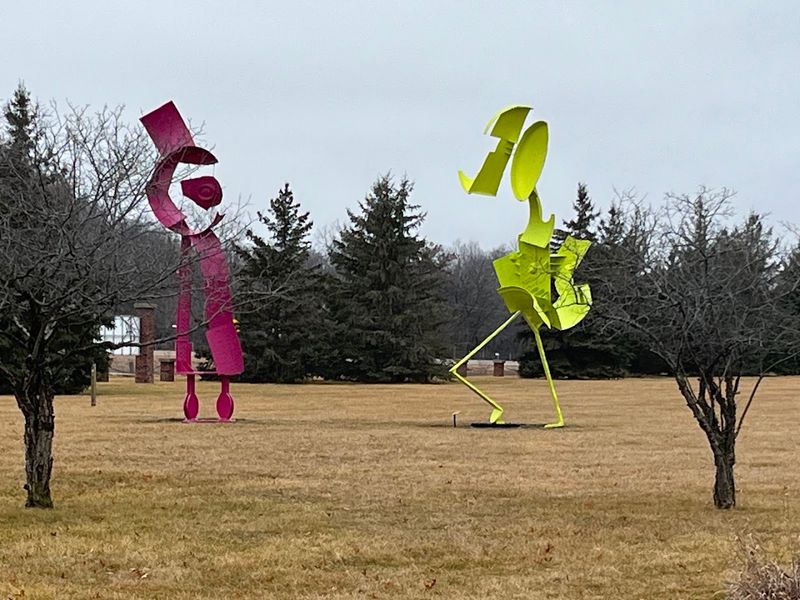
The sculpture collection here runs the full spectrum, from deeply conceptual works that invite quiet reflection to pieces that are just plain delightful in the most unexpected ways. That variety keeps the walk interesting from start to finish.
One piece that visitors consistently mention is Ojala, a sculpture described as screaming emotion in the best possible way. Another fan favorite is a large fish tail constructed from steel and stones, which somehow manages to feel both monumental and playful at the same time.
The range of materials across the collection is equally impressive, including metal, stone, wood, and mixed media.
What makes this collection special is that it never feels curated to impress you. It feels curated to surprise you.
Each turn in the path reveals something you did not anticipate. That sense of discovery is what keeps visitors coming back, and it is what separates this garden from more polished, predictable art spaces.
You do not need an art degree to enjoy it. You just need a willingness to look at things from a slightly different angle and maybe a good pair of walking shoes.
A Year-Round Destination Worth Every Season
Most outdoor attractions have a clear best season. This one defies that logic entirely.
Visitors have reported genuinely memorable experiences at the Anderson Center Sculpture Garden in the middle of winter, with snow settling on the sculptures and the estate taking on an almost theatrical stillness.
It is a completely different experience from a summer visit, and somehow just as rewarding.
Spring and fall bring their own qualities. The surrounding trees shift color dramatically in autumn, framing the sculptures in warm amber and red tones.
In spring, the prairie plantings begin to bloom around the installations, softening the textures of metal and stone with fresh green growth. Summer offers the fullest sensory experience, with shade trees, buzzing wildlife, and long golden evenings.
The garden is open 365 days a year, from 8 AM to 10 PM daily. That consistency makes it easy to plan a visit at almost any time.