You Walk The Decks Of A Real World War II Warship That Sits In A Free Nebraska Park
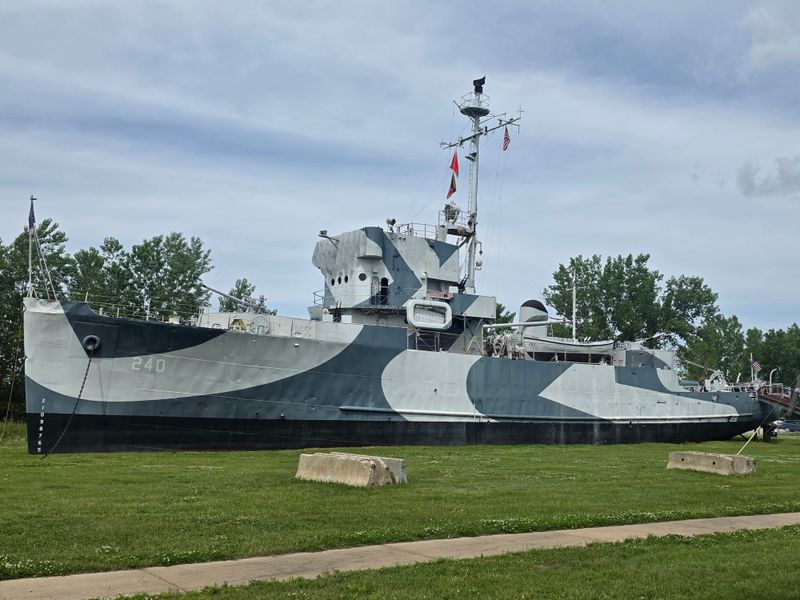
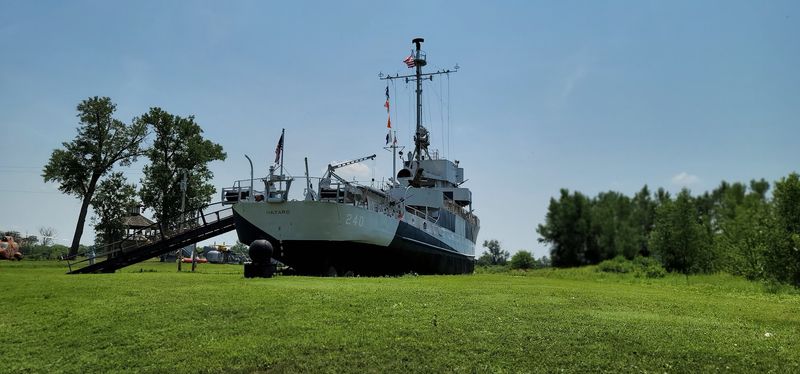
The road looked like a wrong turn, all gravel and weeds and river bottom. Then a gray Navy ship rose up out of the Nebraska flatland, wearing wartime paint and parked a short walk from the Missouri River.
Climbing aboard costs nothing, and a single Saturday morning turns into a crash course on how sailors lived and worked in the 1940s. Few places in a landlocked state hand you a real piece of ocean history this easily.
A Navy Museum on the Omaha Riverfront
Picture a gray warship resting on dry land, a short walk from the Missouri River and only minutes from downtown Omaha. That scene is real, and it belongs to Freedom Park, a 12-acre outdoor naval history park on the north side of the city near Eppley Airfield.
The entrance sits off Gallup Road, along Freedom Park Road.
So what exactly is here? Freedom Park functions as a United States naval museum with two climb-aboard museum ships at its heart.
One is the USS Hazard, a World War II minesweeper, and the other is the USS Marlin, a Cold War-era training submarine.
Around those two vessels, the grounds hold military aircraft, helicopters, artillery pieces, propellers, and a cluster of enormous anchors. Admission is free, parking is free, and a donation box aboard the ship helps keep things going.
The park opens only on Saturdays during the warmer part of the year, which gives each visit the feel of catching something rare.
Plenty of lifelong Omaha residents have never set foot inside. For a state hundreds of miles from any ocean, owning a genuine Navy warship you can walk through is a surprise that never quite wears off.
Big River Views and Open Grounds
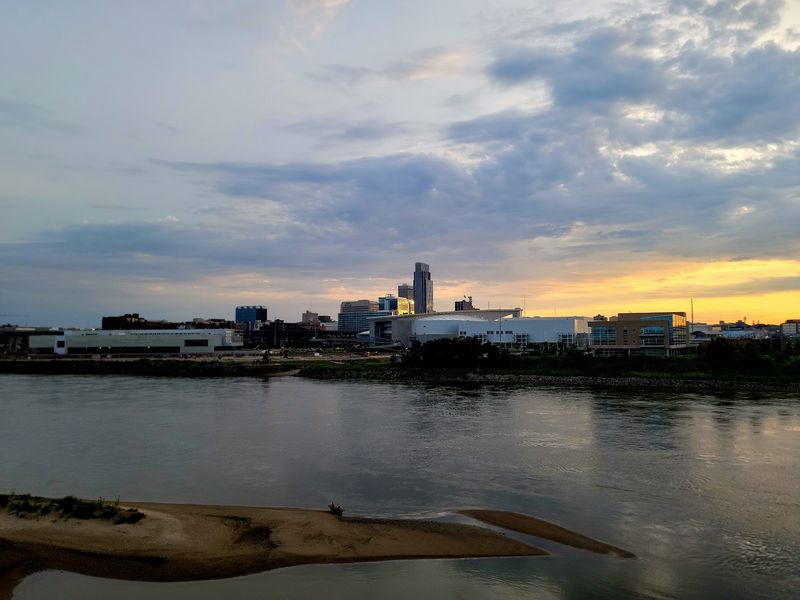
Wind off the Missouri River carries a faint earthy smell across the park, and the water slides past close enough to watch barges and drifting branches. The setting adds something no indoor museum can match.
A Navy ship looks more at home with a big river beside it, even a river in the middle of Nebraska.
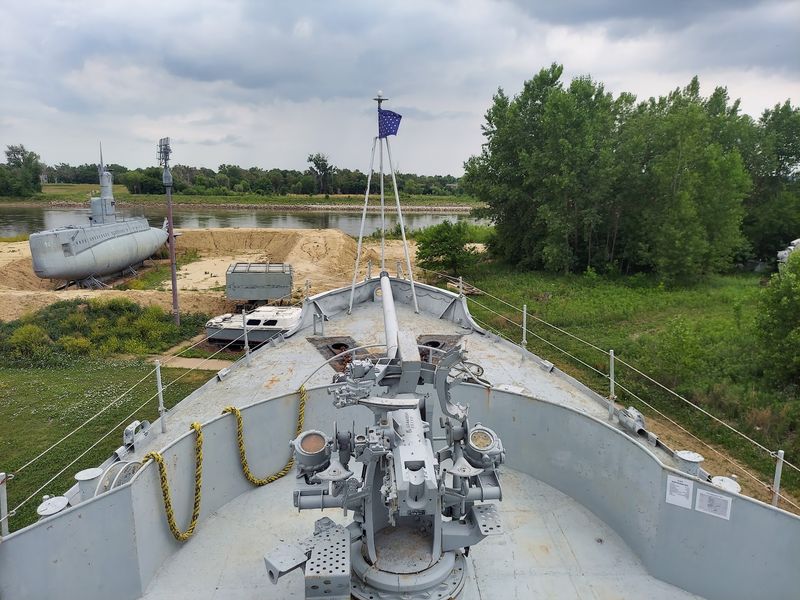
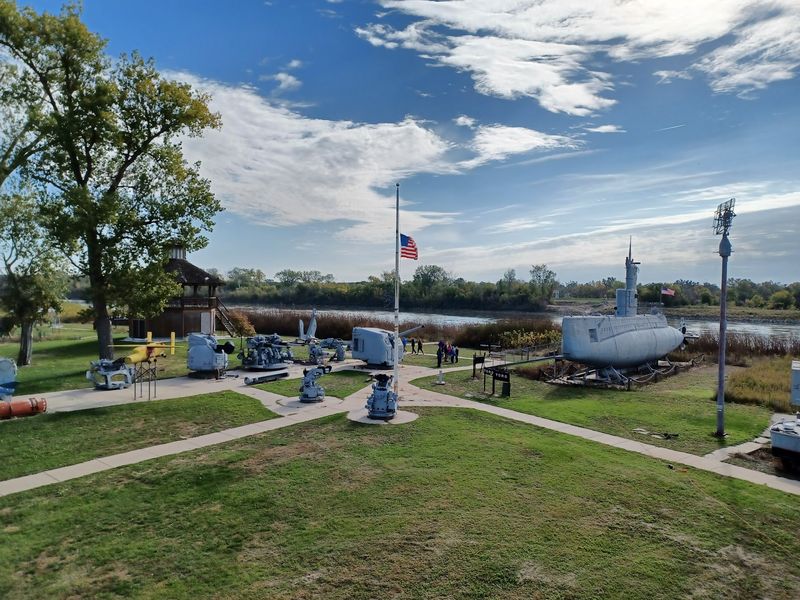
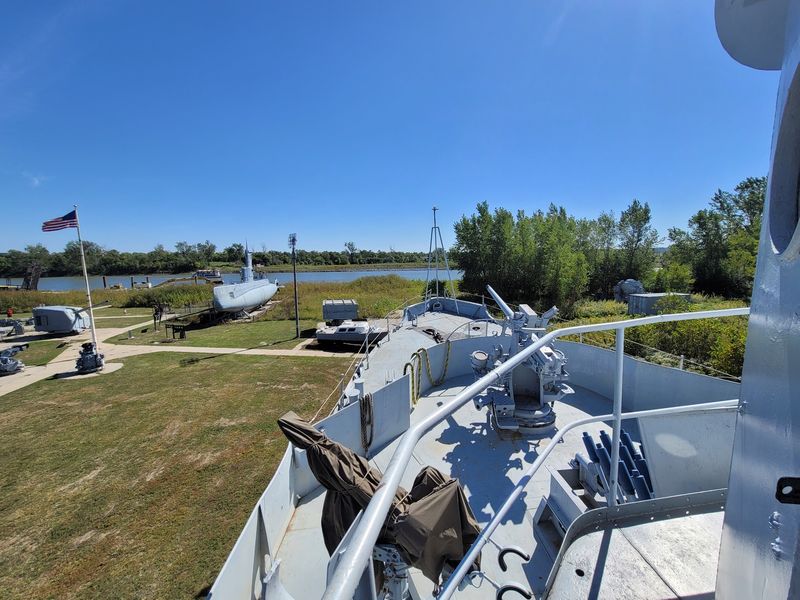
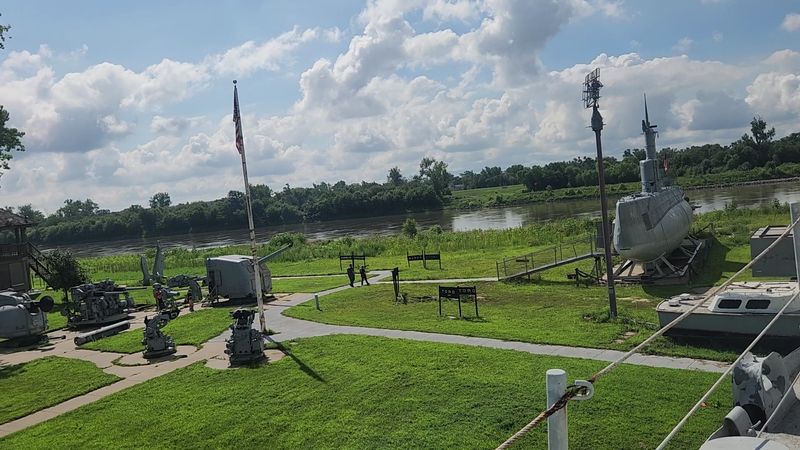
From the upper decks of the Hazard, the view opens wide. You can trace the riverbank in both directions and spot the submarine, the aircraft, and the anchor garden spread across the grounds below.
Here is the contrast that makes the place memorable: an industrial, airport-adjacent corner of the city on one side, and calm, slow-moving water on the other. Planes occasionally pass overhead on approach to Eppley, which somehow fits right in with the aviation pieces parked on the lawn.
Bring sunglasses and a hat on bright days, since much of the park sits in the open. The grounds are easy to wander at your own pace, with plenty of room between exhibits.
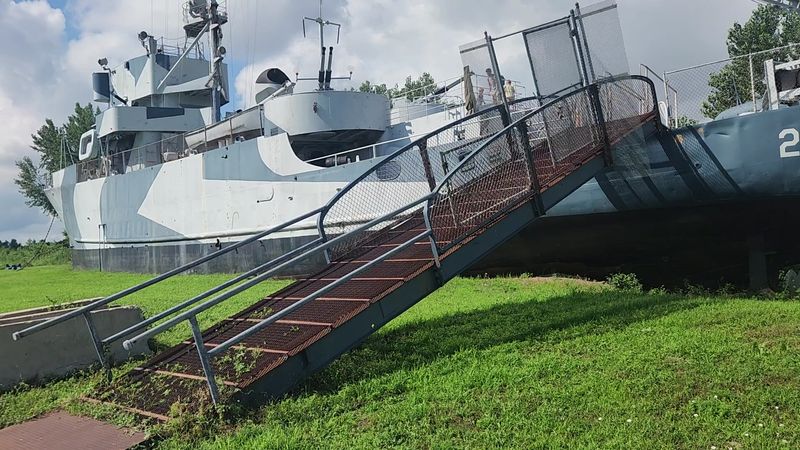
Families tend to spread out, take photos by the anchors, and regroup at the ship’s gangway before heading aboard for the main event.
The USS Hazard’s Beginnings
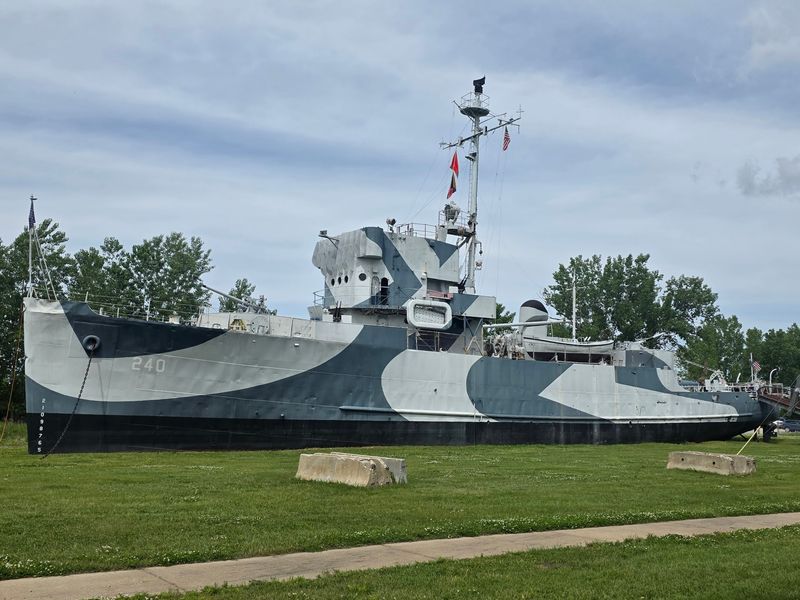
December 30, 1944, was the day the USS Hazard joined the Navy. The war was entering its final stretch, and the Pacific needed ships that could clear the way for everyone else.
What does a minesweeper do, anyway? The Hazard was built to find and clear underwater mines, those hidden hazards that could stop a fleet cold.
It handled two styles of sweeping: wire sweeping, which cut mines loose from their moorings, and acoustic sweeping, which used sound to set them off safely at a distance.
That was only part of the job description. The ship also worked as an anti-submarine platform, taking on patrol and escort duties to protect larger vessels and supply convoys.
Small ships like this rarely made headlines, yet nothing bigger could move into contested waters until crews like the Hazard’s had done their work.
Its motto summed up that role neatly: No Sweep, No Invasion. Standing on the deck today, the phrase lands differently.
A crew of roughly a hundred sailors took that responsibility seriously, day after long day, and the ship you walk through in Omaha carried them across thousands of miles of open water.
Convoys, Okinawa, and Three Battle Stars
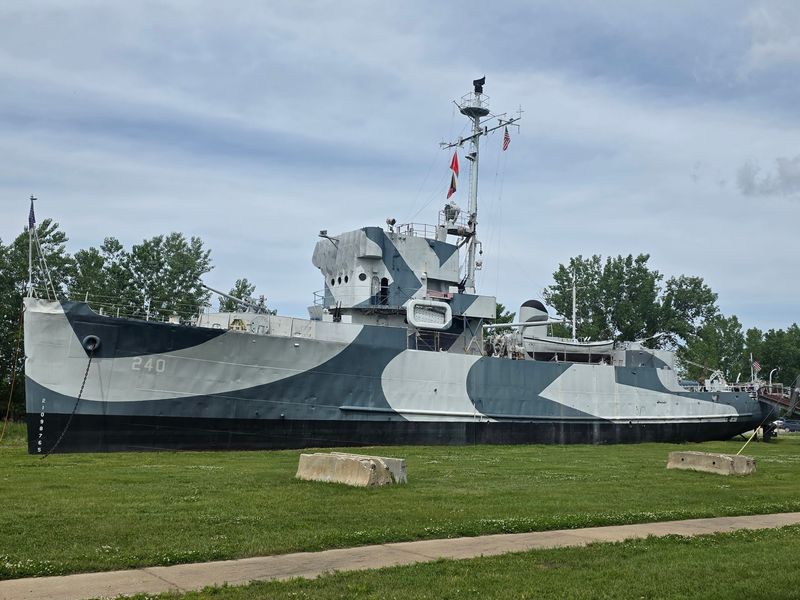
San Francisco to Pearl Harbor, then on to Eniwetok and Ulithi. Those were the first legs of the Hazard’s working life, escorting convoys across the Pacific and keeping a watchful eye on the water around them.
By March 1945, the ship had moved into far busier territory. It ran anti-submarine patrols off Okinawa and cleared waters near Kerama Retto, a group of small islands that became an important anchorage for the fleet.
The work was steady, careful, and demanding, the kind that left little room for mistakes.
For its wartime service, the Hazard earned three battle stars. Those small honors carry real weight in Navy history, marking a ship’s participation in major operations.
Peace did not send the crew straight home, either. After the war ended, the Hazard cleared seas off Korea and Japan so occupation forces could move safely.
Only then, in 1946, was the ship decommissioned.
Knowing that route makes a visit richer. The same hull resting quietly beside the Missouri River once cut through Pacific swells near some of the most important islands of the era, and the museum displays inside help tie that journey together.
Last of Its Class, Still Wearing Wartime Paint
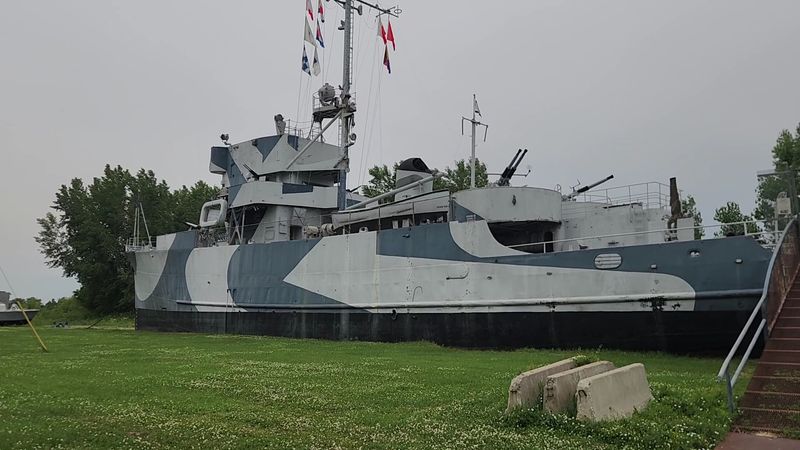
Of all the Admirable-class minesweepers the Navy built, the Hazard is the only one left in the United States. That alone makes the ship a big deal for naval history fans, and it is sitting in Omaha, of all places.
The numbers give a sense of scale. The Hazard measures 184.5 feet long and 33 feet wide, with a displacement of 950 tons.
Up close, it feels much larger than the word minesweeper suggests, especially when you are standing at the bow looking up.
Look at the hull and you will notice something unusual. The ship still displays its original World War II camouflage pattern, a jagged mix of grays and darker tones meant to make it harder to judge the vessel’s size, speed, and direction from a distance.
It is the kind of detail most museum ships lose over decades of repainting.
Inside, most of the operating systems remain intact, and the vessel is in near fully restored condition. Many enthusiasts consider it among the best preserved examples of its era anywhere.
Snap a photo of that camouflage from the grass first, then head up the gangway to see what it protected.
Bunks, Galley, and Life Below Deck
Narrow passageways, steep ladders, and bunks stacked so tight you wonder how anyone rolled over. Below deck, the Hazard tells the human side of its story without needing a single sign.
Around 104 crew members lived aboard this ship. Walking through, you can step into the former kitchen, the dining area, and the living quarters for both officers and enlisted sailors.
Each space shows how carefully the Navy squeezed people, gear, and supplies into a limited footprint.
Ever wondered where a sailor kept his belongings? The answer, mostly, is not many places.
Small lockers and fold-down fixtures hint at a life of tidy routines and very little privacy, which is eye-opening for kids who share a bedroom and think that is cramped.
The galley sparks plenty of curiosity, too. Feeding a crew of over a hundred, three meals a day, from a compact kitchen rolling on ocean waves took skill and stamina.
Watch your head and your footing as you move around, since doorways sit low and thresholds are raised. Comfortable closed-toe shoes make the ladders much easier.
Take your time down here, because the details are what make the 1940s feel close enough to reach out and touch.
A Mess Hall Turned Museum
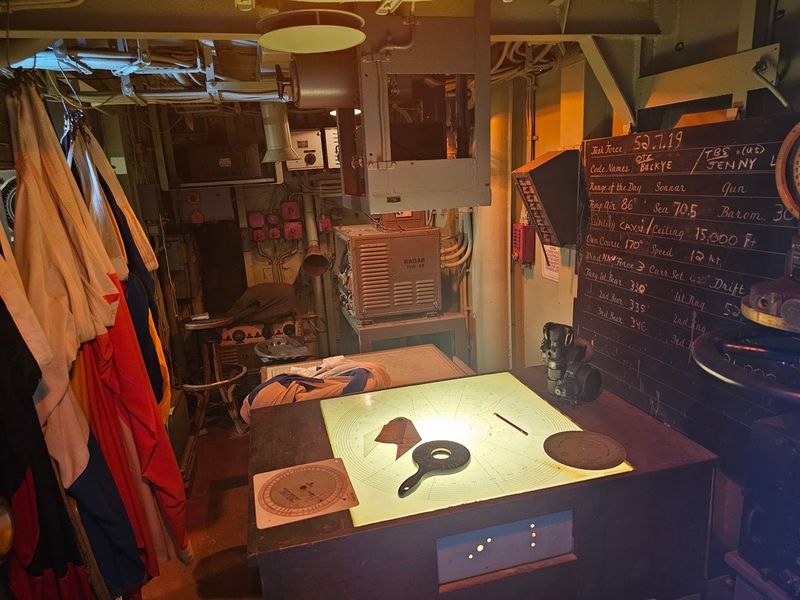
Sailors once lined up here for coffee and chow. Today the Hazard’s original mess hall has a new job as an onboard museum, packed with displays that fill in the history you have been walking through.
Historical photos cover much of the space, showing crews, ports, and the ship in action. Period military artifacts sit in cases nearby, giving a sense of the equipment that defined naval service in the 1940s.
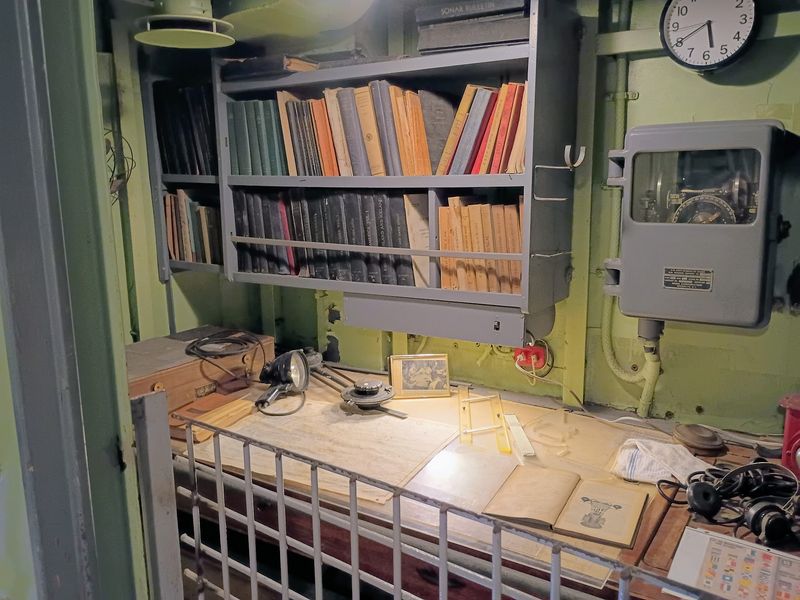
For anyone who loves the nuts and bolts of history, the paper records are a treat. Quartermaster logbooks show how the crew tracked the ship’s position and daily activity, entry by careful entry.
Blueprints reveal how the vessel was laid out, which makes it easy to connect what you see on paper with the rooms you just explored.
Kids may gravitate toward the photos, while grown-ups can lose a surprising amount of time reading handwritten log pages. Both reactions make sense.
Volunteers rotate exhibits and open new areas from time to time, so returning visitors can find something different on a later trip. If you have been aboard years ago, there is a good chance the mess hall holds a few fresh surprises now.
Swing Music in the Radio Room and a Seat on the Bridge
Music drifts out of a doorway as you move through the ship, the crackly, upbeat sound of the 1940s. Follow it and you will find the radio room, where period tunes set the mood among rows of vintage equipment.
Little touches like this change the whole experience. Instead of a silent exhibit, the Hazard feels occupied, as if the radioman just stepped out for a moment and might return any second.
The dials, switches, and headsets offer a glimpse of how the crew stayed in touch with the rest of the fleet long before smartphones.
Then comes the climb to the top. The captain’s bridge is open to explore, and it is one of the best spots on the ship.
From here, the commanding officer watched the water, gave orders, and guided the vessel through tricky sweeps and convoy runs.
Stand at the controls and look out over the bow toward the river. It takes very little imagination to swap the Nebraska treeline for a Pacific horizon.
Kids love this spot for obvious reasons, and adults tend to linger longer than they expected, quietly picturing the responsibility that came with that view.
The USS Marlin Submarine Next Door
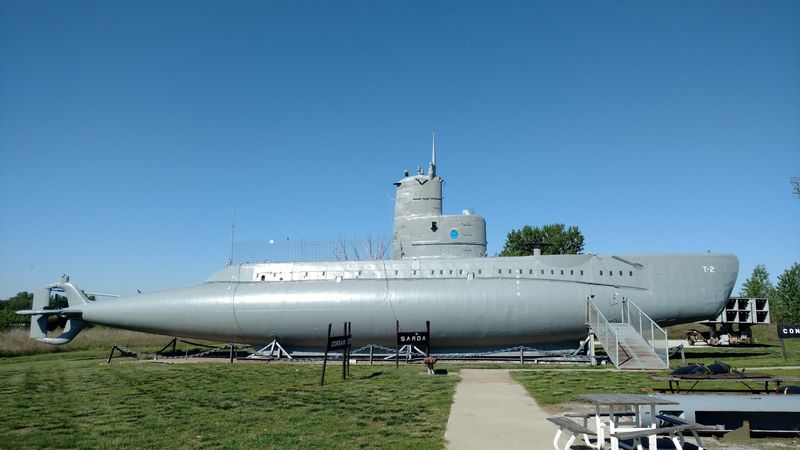
Sleek, dark, and much smaller than most people expect, the USS Marlin sits just across the grounds from the Hazard. It is a Cold War-era training submarine, designated SST-2, and it brings a completely different chapter of Navy history to the park.
Training subs like the Marlin helped prepare crews and surface ships for anti-submarine work. Seeing it beside a World War II minesweeper creates a neat timeline, showing how naval technology and priorities shifted after the war.
When tours are running, a guide leads groups inside. Spaces aboard a submarine are even tighter than on the Hazard, so expect to duck, squeeze, and step carefully through hatches.
The guides share stories and details that make the cramped interior come alive.
Fair warning, though: access has not always been guaranteed. Flooding along the Missouri River closed the submarine to tours for a stretch, and the sub was surrounded by dirt during repairs.
Even then, it remained easy to view from the Hazard’s decks.
Ask a volunteer on arrival whether submarine tours are available that day. Either way, the Marlin adds plenty to the visit and makes a great backdrop for photos.
Aircraft, Radar Batteries, and an Anchor Garden
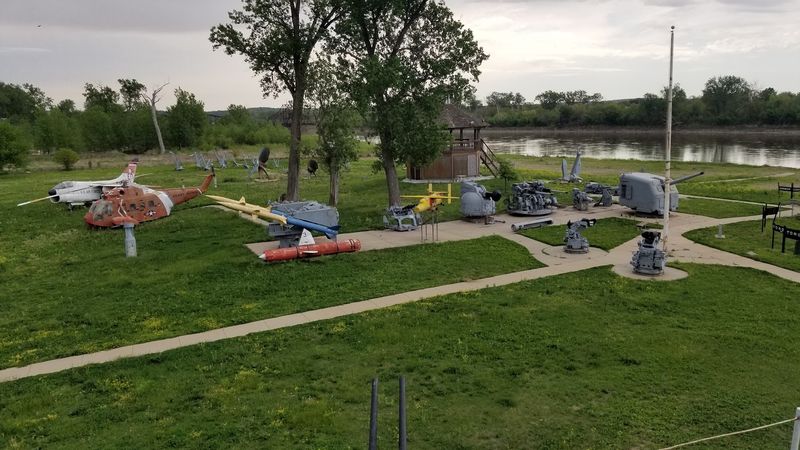
Did you expect airplanes at a Navy park? Freedom Park has them, along with helicopters, artillery pieces, and a lot more spread across the open lawn.
Wander away from the ships and the variety keeps growing. Surface-to-air missile radar batteries stand among the displays, a reminder of how air defense evolved during the Cold War.
Big ship propellers rest on the ground where you can study their curved blades up close, and they are far larger than they look in photos.
Then there is the anchor garden. Several massive anchors are lined up together, heavy iron shapes that make small kids look tiny when they pose beside them.
It is one of the most popular photo spots in the park, and for good reason.
Together these outdoor pieces stretch the story beyond a single war or a single branch. Aviation, artillery, and naval hardware all share the same patch of riverside ground.
Plan some time between ship tours for this part of the visit. A loop around the grounds takes a while if you stop to read the signs, and the open space gives restless young explorers a chance to burn off energy before climbing more ladders.
Volunteers Who Keep the Story Afloat
Everything at Freedom Park runs on volunteer power. The people greeting you, guiding tours, and opening new sections of the ship are giving their own time to keep this history alive.
Some of them are former sailors, and talking with them is a highlight. They can explain how a sweep worked, what a typical day at sea looked like, or why a certain valve or ladder mattered.
Their knowledge turns a quick walk-through into a real history lesson, and they are patient with curious kids who ask a dozen questions in a row.
Keeping a ship from the 1940s in good shape is no small job. Volunteers have restored the Hazard to near-original condition, paying close attention to the little details that make the interior feel authentic.
Their work is the reason so many spaces are open today.
Funding is tight, and donations are the main way the park stays maintained. A box aboard the ship accepts whatever you can give, and nobody is turned away either way.
Say hello, ask a question, and listen to a story or two. The volunteers are a big part of what makes a Saturday here feel personal.
A Saturday Outing for Curious Kids and History Buffs
Small children pressing their faces to portholes, grandparents pointing out details they remember from old movies, teenagers racing up to the bridge. The mix of people on a Saturday shows how broad the appeal runs.
For families, the setup is close to ideal. Kids get to climb, explore, and peek into tiny rooms, which keeps them engaged far longer than a typical museum.
Parents get a free outing with free parking, and the hands-on format sneaks in plenty of learning along the way.
History fans will find even more to chew on. The logbooks, blueprints, and preserved systems reward slow, careful looking, and the volunteers can answer technical questions that go well beyond the signs.
How long should you plan? A quick visit runs about an hour, while a thorough one with both vessels and the outdoor displays can stretch to roughly two.
Most of that time goes to the ship.
Steep ladders and narrow hatches make parts of the ship tricky for anyone with limited mobility, so keep that in mind. Still, the outdoor exhibits and river views offer plenty to enjoy from ground level, making it a solid pick for a birthday surprise or a relaxed weekend morning.
Getting There on a Road That Looks Wrong
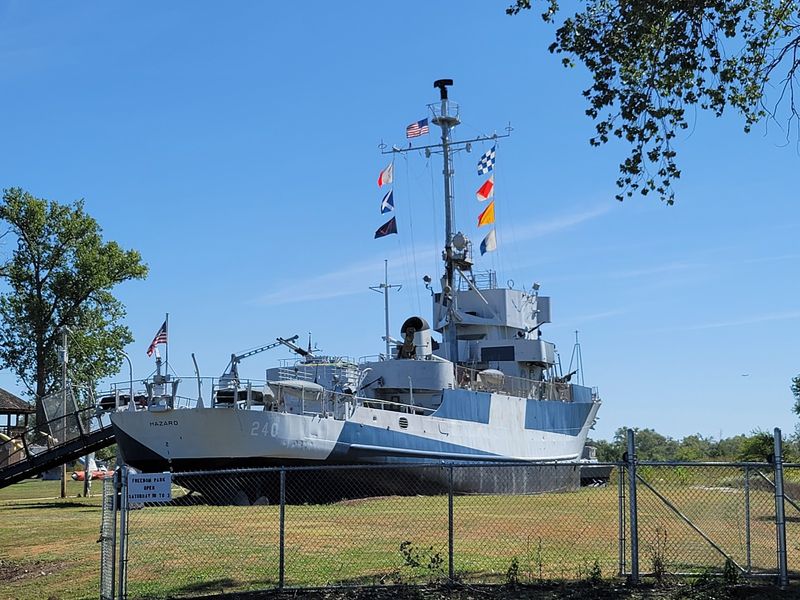
Turn onto the access road and you will probably second-guess your directions. It is a minimum maintenance road that winds about a mile through an empty-looking stretch near the river, and it feels like the wrong way.
Keep going, because it is not.
The park sits close to Eppley Airfield, reached from Gallup Road onto Freedom Park Road on the north side of Omaha. The access road closes to the public whenever the park is not open, so arriving on the wrong day means a locked gate rather than a ship.
Timing matters more than anything here. Freedom Park opens only on Saturdays, from late morning into midafternoon, and only during the warmer months, roughly late spring into early fall.
Because volunteers staff everything, the schedule can shift, so checking the City of Omaha parks page before heading out is a smart move.
Admission and parking are both free. Bring cash or a card if you would like to leave a donation, plus water and sun protection for the open grounds.
Arriving near opening gives you the most time aboard and a calmer first look before the midday crowd builds.
Why This Nebraska Riverbank Deserves Your Saturday
Where else in Nebraska can you stand on the bridge of a real World War II warship and then wander over to a submarine before lunch? That question sums up the appeal of Freedom Park better than any description could.
The Hazard is the star, and rightly so. As the last surviving Admirable-class minesweeper in the country, still wearing its wartime camouflage and outfitted much as it was in 1944, it offers a rare, walkable link to the sailors who served aboard.
The Marlin, the aircraft, and the anchor garden round out a morning that costs nothing but time.
Limited hours take some planning. A Saturday-only window during the warmer months means you need to circle the calendar ahead of time, and that bumpy access road will test your faith for a mile or so.
Once aboard, those small hassles fade quickly. Volunteers share stories, 1940s music plays in the radio room, and the Missouri River rolls past just beyond the deck rail.
Pack the kids, bring a few dollars for the donation box, and give this riverside slice of Navy history a Saturday of its own.