You Wouldn’t Expect To Find Such An Incredible Science Museum And Planetarium Right Here In Connecticut
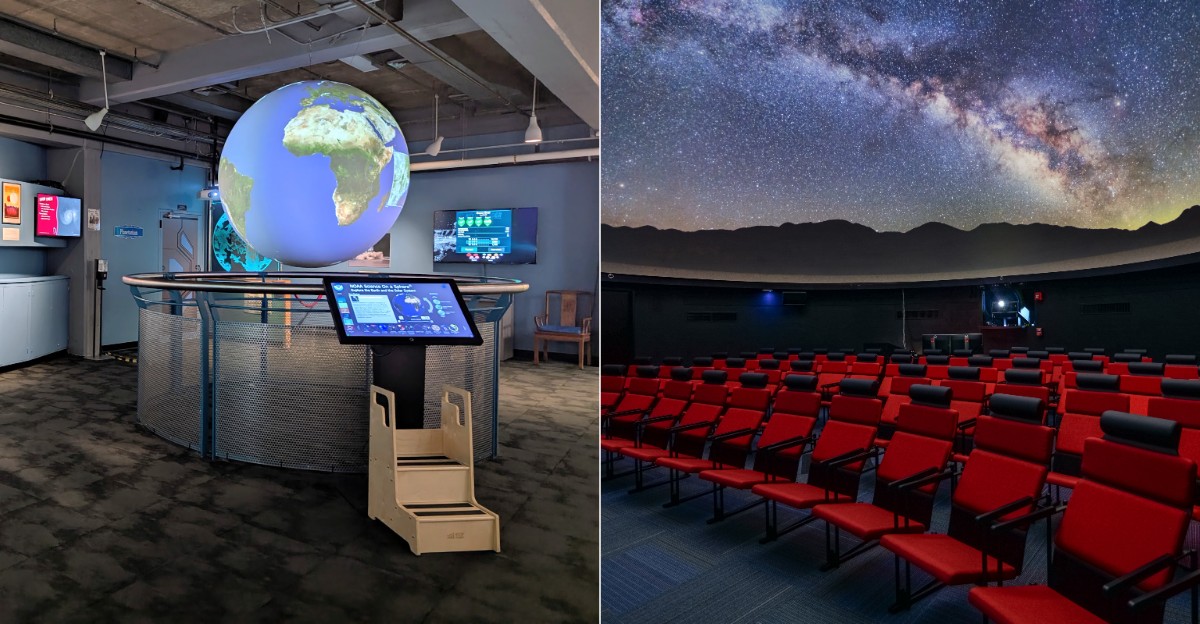
A six-foot globe hangs in a darkened room and turns into Mars, the Moon, or a stormy Earth on command. Downstairs, a full-dome theater can fly you to other star systems in real time.
That alone got my attention. Then I learned there are real artifacts from Apollo and Space Shuttle missions on display, plus a chance to run Mission Control for a simulated shuttle flight.
I like how this place mixes serious space science with paper airplanes, LEGO bricks, and a moonbase kids can climb. It sits right here in Connecticut, close enough for a spur-of-the-moment Saturday trip.
I can’t imagine a better rainy-day rescue for curious kids or grown-ups who still look up at night. So what exactly is waiting under that dome?
1. The Dome That Takes You Off The Planet In Real Time
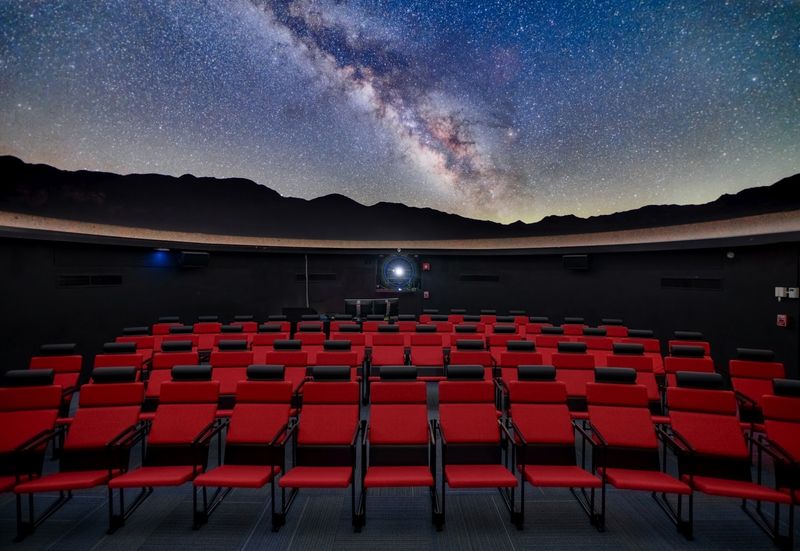
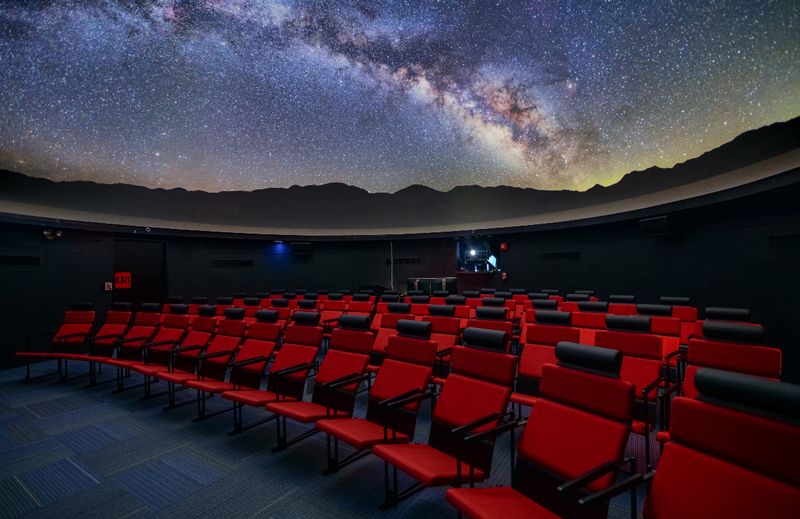
Stars, planets, and whole galaxies swirl overhead at the Henry B. duPont III Planetarium. It’s the star attraction at the Sacred Heart University Discovery Science Center and Planetarium, and it earns that title.
The theater runs on the Digistar 7 system. That means real-time visuals that can carry you to other planets, faraway star systems, and beyond.
Some shows feature a live presenter guiding the trip. Others are pre-recorded, so every visit can feel a little different.
Shows usually run about 25 to 30 minutes. They work for all ages, which makes them easy for families with kids of different sizes.
Timing matters here, so plan ahead. Doors open 10 minutes before showtime and close right at the start, with no late entry.
Seats fill on a first-come, first-served basis. Each show holds a maximum of 65 people, and everyone checks in at the front desk to reserve a spot.
My advice? Grab your seat reservation as soon as you arrive.
Then explore the exhibits while the clock ticks toward liftoff.
The planetarium systems were updated during a renovation a few years ago. So the sky you see is sharp, modern, and ready for adventure.
2. Somebody Has To Run Mission Control, So Why Not You?
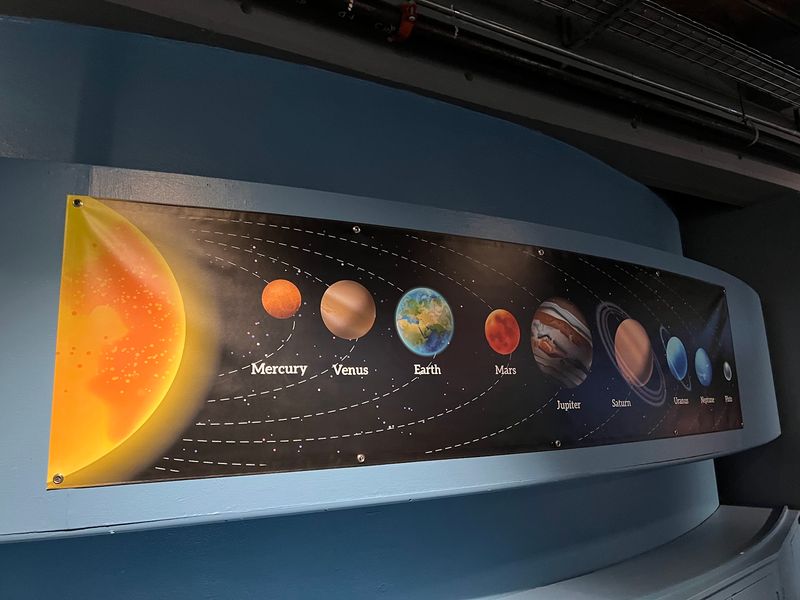
Houston, we have a volunteer. The Challenger Learning Center lets visitors step into simulated space missions that feel surprisingly real.
Participants can take charge of Mission Control for a space shuttle flight. Teamwork, problem-solving, and quick thinking all come into play.
I believe this is where science stops being a textbook subject. Kids get to act like engineers and astronauts instead of just reading about them.
The experience is built around immersive programs. It’s a big part of why school groups and scout troops head here.
Speaking of groups, the center offers more than 80 educational programs. Field trips, scouting events, and special occasions all fit into that lineup.
There are even science courses offered à la carte. Overnight programs are on the menu too, which sounds like the coolest sleepover a young space fan could ask for.
Teachers and troop leaders should reach out early to plan. Programs like these tend to work best when groups arrive with a plan in hand.
Not part of a group? Keep an eye on the center’s schedule for special events and family programs throughout the year.
Either way, the countdown to a genuinely memorable learning day starts right here. No real rocket fuel required.
3. A Floating Globe That Changes Worlds In Seconds
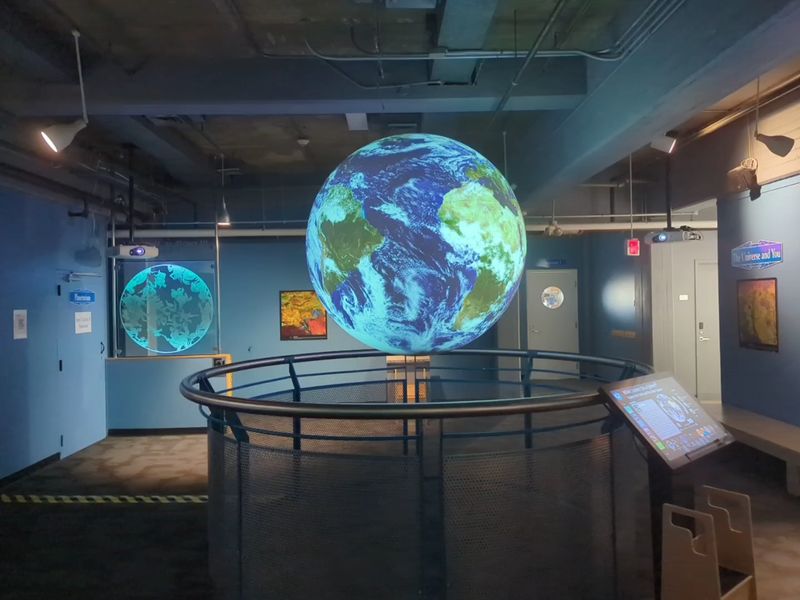
One minute it’s Earth with swirling weather. The next, it’s the dusty red face of Mars staring back at you.
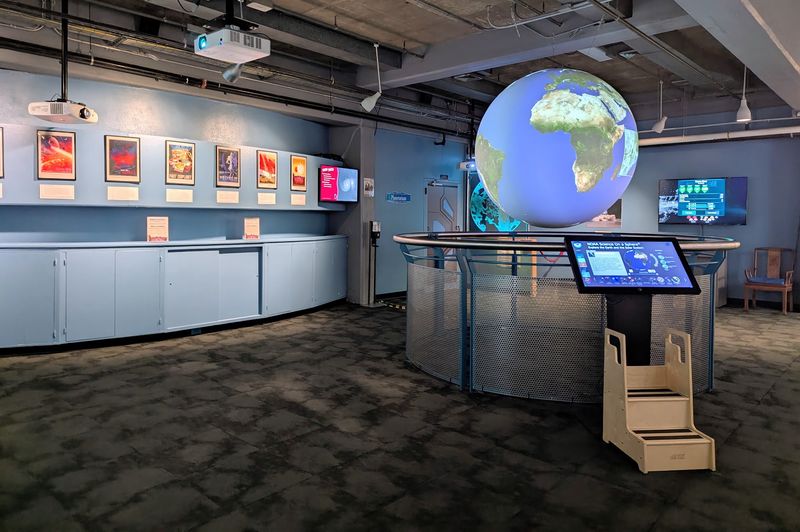
That’s the magic of Science on a Sphere, often called SOS. It’s a room-sized display system that projects planetary data onto a six-foot animated globe.
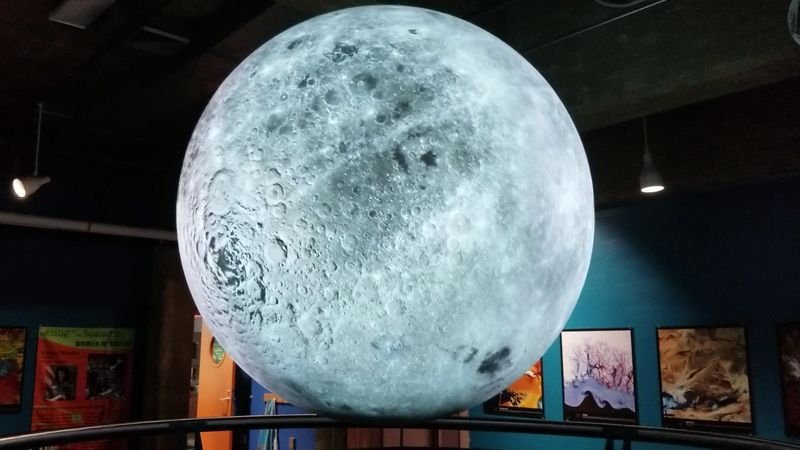
The sphere shows a wide range of data sets. You can explore Earth, the Moon, Mars, and objects beyond our solar system in full 360 degrees.
Walk around it and the view keeps changing. The globe’s 360-degree display gives visitors plenty of viewing angles, making it easier for children and adults to enjoy the exhibit.
I like how it makes giant ideas feel touchable. Ocean currents, planet surfaces, and distant worlds suddenly fit inside a single room.
This exhibit is a good stop for older kids who love facts and details. The center lists it among its offerings that connect with middle school science standards.
Give yourself a few extra minutes here. It’s easy to keep watching just to see what the globe turns into next.
Members get unlimited access to Science on a Sphere. That’s handy for families who want to keep coming back for new perspectives on our cosmic neighborhood.
4. Real Space History Lives On The Lower Level
Not everything here is a simulation. The Hall of Space holds real artifacts from Apollo and Space Shuttle missions, the kind of history that once left Earth.
A collection of model rockets lines up alongside those pieces. Together, they tell the story of how humans learned to reach for the sky.
Space history fans will want to slow down in this area. Reading the displays turns a quick walk-through into a mini lesson on exploration.
Then comes the hands-on fun. Visitors can touch a real meteorite, which is about as close to outer space as most of us will ever get.
Little astronauts can climb a moonbase too. It’s a smart way to burn off energy while staying on theme.
The Moonlander Game adds a challenge. Players direct a lander and try to pick up samples, and it’s trickier than it sounds.
Nearby, the Universe and You exhibit keeps the cosmic theme going. It ties big space ideas back to life here on our own planet.
Parents, here’s a tip. Ask your kids which artifact they’d pack for a real mission, and watch the conversation take off.
5. Build A Black Hole Before Lunch
Creating the universe usually takes billions of years. At the Stellar Playground, it takes a few taps on a giant video game table.
Players build their own solar systems, black holes, or even the Big Bang. A real physics engine runs underneath, so gravity behaves the way it should.
Crash two planets together and see what happens. It’s a little chaotic, a lot educational, and very hard to walk away from.
The table works for a wide range of ages. Younger kids enjoy the colors and motion, while older kids can test real ideas about orbits and gravity.
I believe exhibits like this sneak science into play time without anyone noticing. Kids think they’re gaming, but they’re actually experimenting.
The center points to the Stellar Playground as one of its options for older learners. It connects with science concepts taught in middle school.
On a busy day, you may need to share the table. That’s not a bad thing, since watching other kids’ wild galaxies can spark new ideas.
Fair warning, though. Your young astrophysicist may ask to stay until closing time to perfect their universe.
6. Paper Airplanes Are Officially Considered Research Here
Folding paper airplanes in class might get you in trouble. Upstairs at this museum, it counts as science.
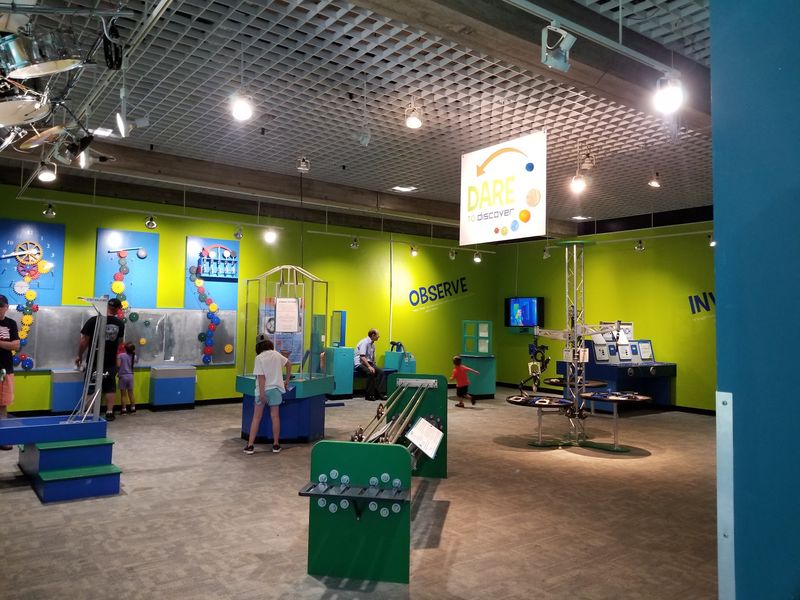
The Science of Flight exhibit lets visitors build and launch their own helicopters, rockets, or airplanes. Then comes the best part, seeing how far they really go.
Every flop is a lesson in design. Change a wing, adjust the weight, and try again until something soars.
Elsewhere on the three floors, Science in Motion keeps things moving. Sports science and an energy exhibit add even more ways to test ideas with your hands.
Builders have options too. LEGO bricks and Lincoln Logs give kids a chance to design towers, bridges, and whatever else they dream up.
Science at Play and Sensational Senses round out the mix. They make a strong case that learning should be noisy, messy, and fun.
For the smallest visitors, Teddy Bear Triage offers a gentle, caring kind of play. Stuffed animals everywhere appreciate the attention.
Plan to let kids repeat favorite activities. A few extra rounds of launching can teach more than rushing from room to room ever could.
7. Traveling Exhibits Keep Every Visit Fresh
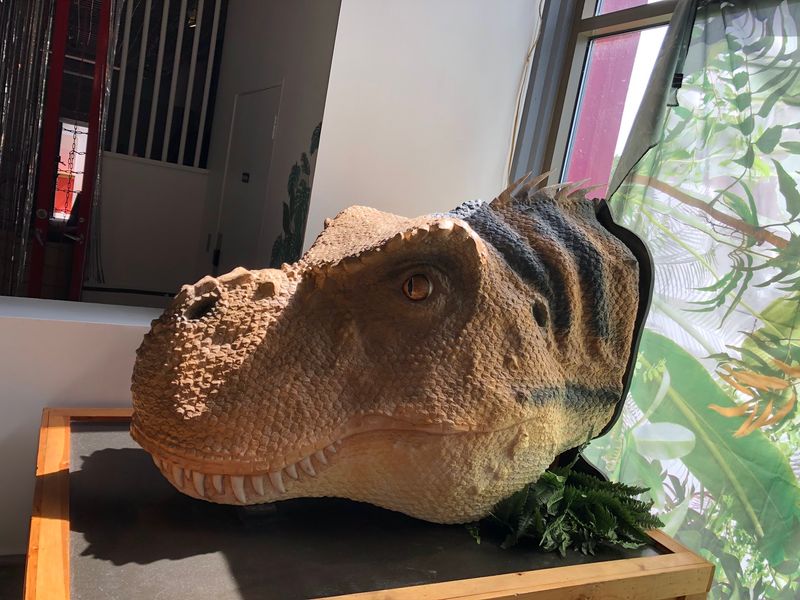
Did you know trillions of tiny microbes are living on and inside you right now? The Secret World Inside You exhibit introduces that hidden crowd.
Organized by the American Museum of Natural History, it uses hands-on gadgets to explain the human microbiome. Gross? Maybe a little. Fascinating? Absolutely.
Another traveling exhibit, How People Make Things, comes from the Children’s Museum of Pittsburgh. It explores manufacturing and is scheduled to stay until September.
Kids learn how everyday objects get made. That’s a smart peek into the work behind the stuff we use every day.
Rotating exhibits mean the Sacred Heart University Discovery Science Center and Planetarium never feels frozen in time. Return visits can bring something brand new.
Visionary Geometries is already open, while Tinker Together offers interactive sessions combining storytelling, science, and art. The museum is also preparing to introduce Under the Arctic: Digging into Permafrost in October 2026.
I like that combination of permanent favorites and fresh arrivals. It gives families a reason to circle the calendar more than once a year.
Before heading out, check which exhibits are currently running. Traveling shows come and go, and you won’t want to miss one you’re excited about.
8. The Building Has A Backstory Worth Bragging About
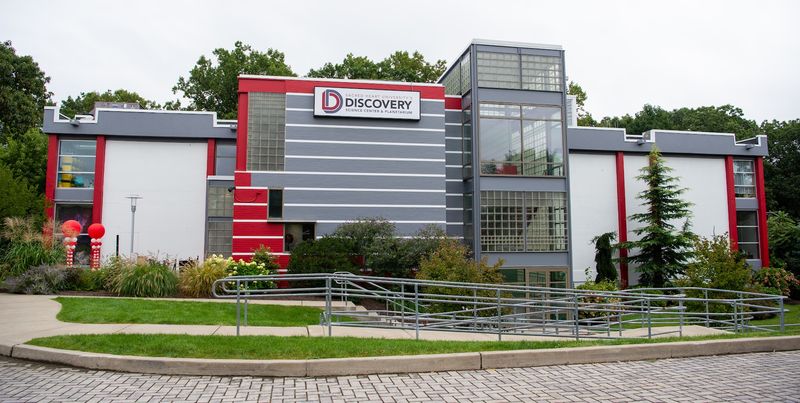
Long before planetarium shows and flight labs, this spot began with a bigger mix of ideas. The organization was founded in 1958.
The building opened in 1962 as the Museum of Art, Science, and Industry, known as MASI. Renowned architect John M.
Johansen designed it.
Over time, the focus shifted toward science. Local artists still get gallery space, so a creative streak remains part of its identity.
Outside stands a bronze statue called Los Portadores de la Antorcha, or The Torch Bearers. Dedicated in 1963, it’s one of only four replicas of the Spanish original worldwide.
In 2018, the state of Connecticut awarded a grant for major upgrades. The planetarium, exhibits, classrooms, elevator, and roof all got attention.
The center closed in March 2020 for about 18 months. Sacred Heart University took over management in January 2021, and the doors reopened in September 2021.
That partnership connects the museum with the university’s academic programs. It’s a fresh chapter for a place with deep roots in the state.
Snap a photo with the statue on your way in. It’s a fun piece of history that many visitors walk right past.
9. Smart Planning Makes Launch Day Smooth
Ever explored outer space and climbed through treetops on the same day? That’s quite a combination.
The Sacred Heart University Discovery Science Center and Planetarium makes science exciting, while the nearby Adventure Park at Discovery adds outdoor fun.
Getting there is simple. The museum sits in Bridgeport’s North End, near Veterans Memorial Park and the Merritt Parkway.
Fairchild Wheeler Golf Course is across the street, and Discovery Interdistrict Magnet School shares the campus.
Public hours begin at 10 a.m. Tuesday through Sunday, with Wednesdays extending until 7 p.m.
Mondays are reserved for members.
Bridgeport residents receive free Wednesday admission with valid local identification, including demonstrations and planetarium shows.
Memberships include unlimited visits, gift shop discounts, and reciprocal admission at participating science centres through the ASTC Passport Program, subject to restrictions.
The ADA-compliant museum welcomes groups and hosts birthday parties. Children under 18 must visit with an adult.
For directions, use 4450 Park Avenue, Bridgeport, CT 06604. Free parking is generally available near the entrance, with additional spaces by Veterans Memorial Park during events.
That makes planning a family outing pretty straightforward. Between space exploration and hands-on activities, curious visitors have plenty to enjoy.