You’ll Be Telling Friends About These 11 Georgia Landmarks Long After You Get Home
I still catch myself bringing up a place I saw months ago. It happens at dinner parties, on long car rides, whenever someone mentions travel.
My friends probably think I am exaggerating until I show them the photos. Georgia has a way of doing that to people, planting landmarks in your memory that refuse to leave.
Ancient mounds, roaring waterfalls, rock gardens that look pulled from a storybook, this state keeps surprising visitors who think they have already seen it all. I have run out of phone storage more than once trying to capture it properly.
These landmarks do not just make good photos. They make good stories, the kind you end up repeating for years.
Get ready to add a few new ones to your own collection.
1. Rock City Gardens, Lookout Mountain
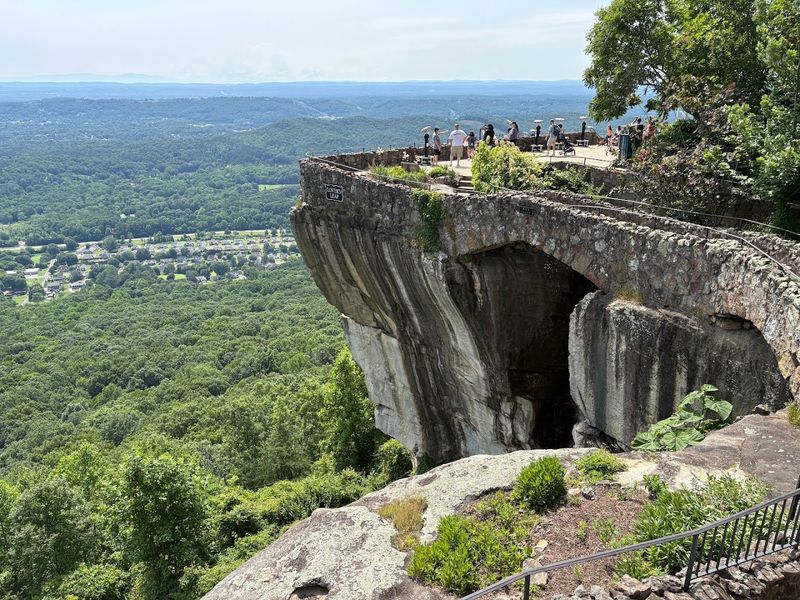
Standing on a rock ledge and seeing seven states at once is not something you forget quickly. Rock City Gardens, at 1400 Patten Rd, Lookout Mountain, GA 30750, sits atop 14 acres of ancient formations and pure wonder.
The 4,100-foot walking trail winds through towering boulders, tight squeezes like Fat Man’s Squeeze, and a 100-foot man-made waterfall. Every turn brings something unexpected and genuinely jaw-dropping.
Lover’s Leap is the crown jewel overlook, offering views that stretch across multiple states on a clear day. Fairyland Caverns lights up with glowing fairy-tale scenes that honestly feel magical at any age.
Balanced Rock is one of those formations that makes you question gravity entirely. The gardens also feature outdoor artwork, a restaurant with scenic views, and a pet menu for leashed furry travelers.
This place earns every ounce of its legendary reputation.
2. Amicalola Falls State Park, Dawsonville
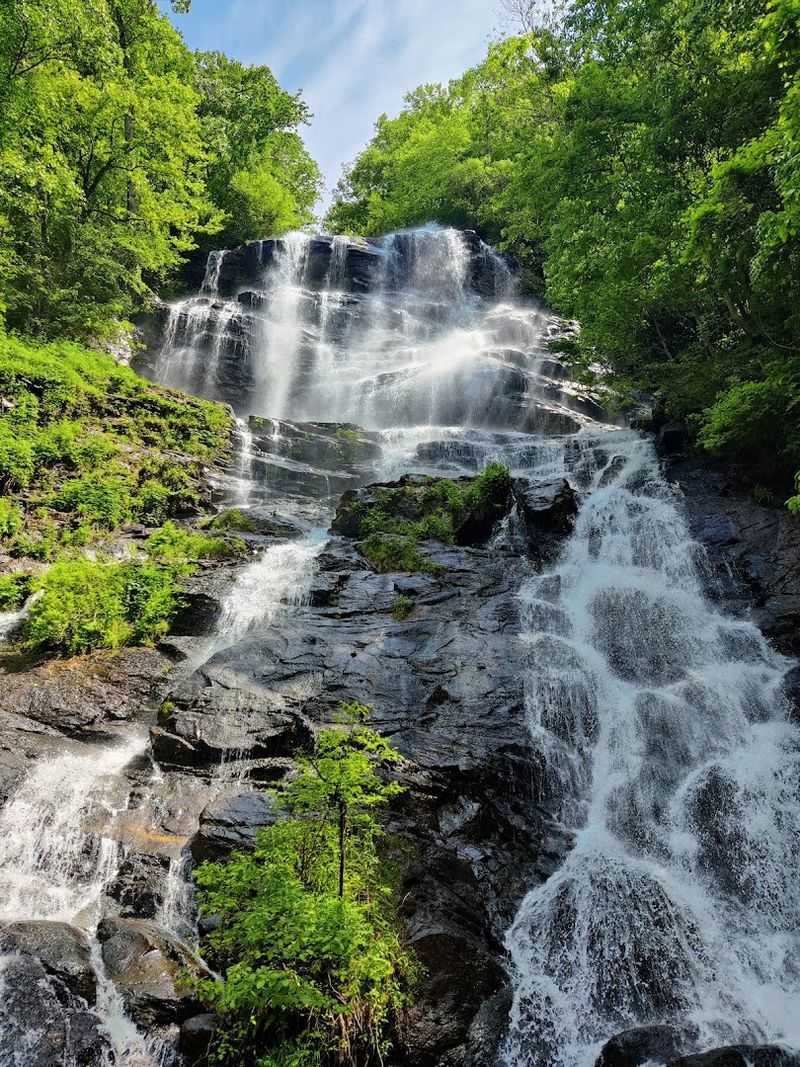
Watching 729 feet of water thunder down a mountainside is genuinely humbling. Amicalola Falls is the tallest cascading waterfall in Georgia and ranks third-highest east of the Mississippi River.
The park covers 829 acres inside the Chattahoochee National Forest, offering serious outdoor variety. Located at 418 Amicalola Falls State Park Rd, Dawsonville, GA 30534, it serves as a launching point for the Appalachian Trail’s eight-mile Approach Trail to Springer Mountain.
An ADA-accessible trail makes the waterfall viewable for almost everyone, which is a genuinely thoughtful touch. Activities here go far beyond hiking, including zip-lining, trout fishing, GPS scavenger hunts, 3-D archery, and hatchet throwing.
Guided hikes add context and stories that maps simply cannot provide. The sheer scale of the falls, combined with the surrounding mountain wilderness, creates a sensory experience that photos struggle to capture.
Plan a full day here because rushing through it would feel like a personal insult to the landscape.
3. Providence Canyon State Park, Lumpkin
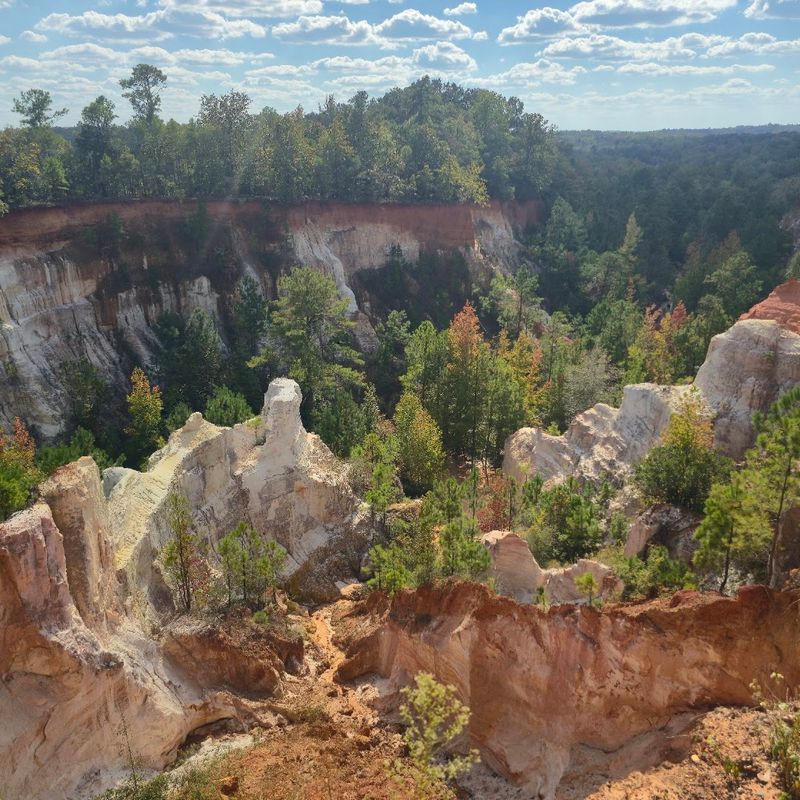
Nobody planned for Providence Canyon to exist, and that makes it even more fascinating. Poor farming practices in the 1800s caused severe erosion, accidentally creating canyon walls that now glow pink, orange, red, purple, and white.
Located at 8930 Canyon Rd, Lumpkin, GA 31815, this 1,003-acre park earned the nickname “Georgia’s Little Grand Canyon” for very obvious reasons. The canyon depths reach up to 150 feet, and the colors shift dramatically depending on the time of day.
The 2.5-mile Canyon Loop Trail descends from the rim and provides access to several canyon areas, while the 7-mile Backcountry Trail offers a longer wilderness hike.
During July and August, the rare Plumleaf Azalea blooms here, adding bursts of orange to the colorful landscape.
One genuinely quirky highlight is an abandoned homestead featuring rusting 1950s-era cars and trucks slowly being reclaimed by nature. It feels like stumbling onto a forgotten movie set.
Few places in the region pack this much visual drama into a single visit.
4. Tallulah Gorge State Park, Tallulah Falls
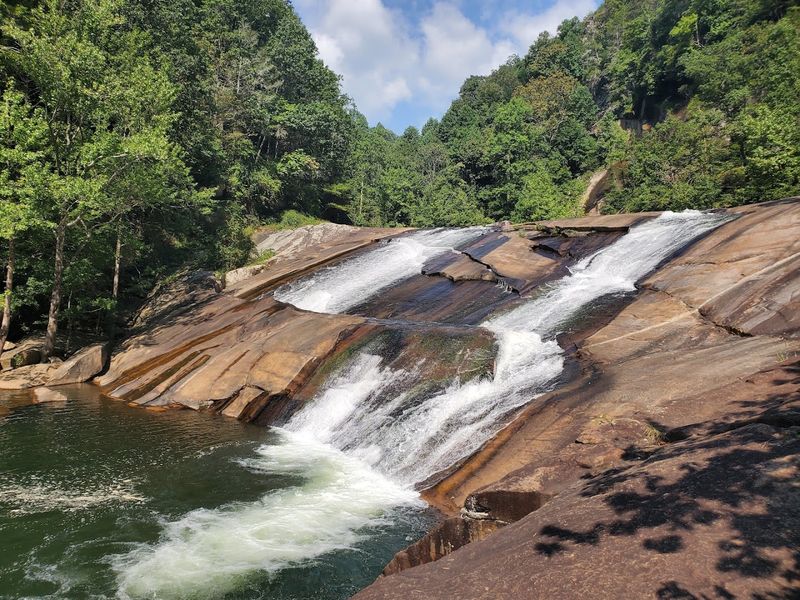
Few natural formations in the eastern United States command attention quite like Tallulah Gorge. Stretching two miles long and nearly 1,000 feet deep, this canyon holds five spectacular waterfalls carved by the Tallulah River.
Found at 338 Jane Hurt Yarn Rd, Tallulah Falls, GA 30573, the park offers rim trails with overlooks that make your stomach do a small flip. The gorge floor access is limited to 100 permitted visitors daily, making it feel genuinely exclusive.
Visitors must obtain a free gorge floor permit and follow the park’s safety requirements before hiking into the gorge. The 200-foot suspension bridge sways 80 feet above the rocky bottom, delivering views that no photograph fully captures.
Hiking, mountain biking, rock climbing, fishing, and paddling round out the activity list impressively. The permit system keeps the experience uncrowded and special, unlike many popular natural sites.
Arriving early for a gorge floor permit is strongly recommended because they disappear fast. Standing beside those waterfalls from below is a memory that genuinely stays with you.
5. Cloudland Canyon State Park, Rising Fawn
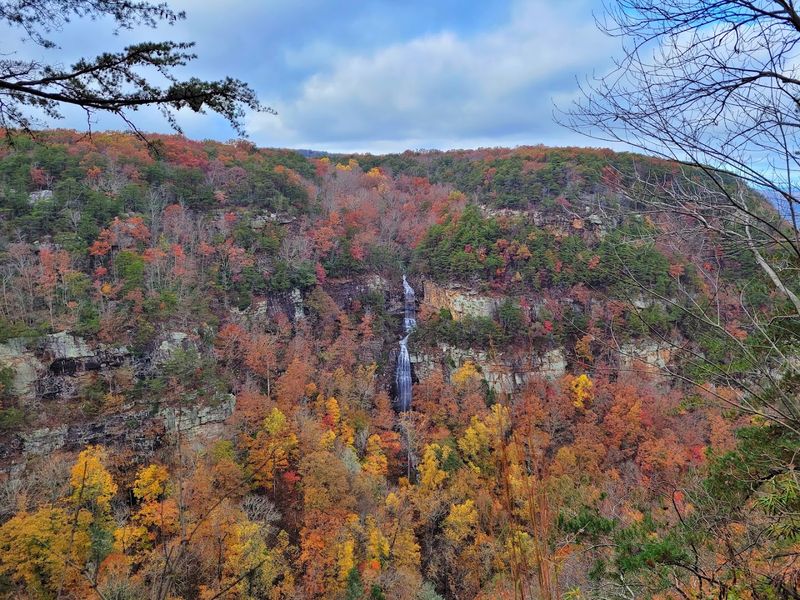
Backpacker Magazine once named the West Rim Loop Trail here one of the top ten hikes in the entire country. That kind of recognition does not come from a landscape that is merely pretty.
Cloudland Canyon State Park sits on the western edge of Lookout Mountain at 122 Cloudland Canyon Park Rd, Rising Fawn, GA 30738. The park’s rugged canyons and dense woodlands create a dramatic backdrop that rewards every step.
The Waterfalls Trail descends 600 metal stair steps to reach Cherokee Falls and Hemlock Falls below. It is strenuous and absolutely worth every burning muscle along the way.
The moderately challenging 5-mile West Rim Loop offers sweeping canyon views without the knee-punishing descent. For a gentler experience, the easy 1-mile Overlook Trail still delivers remarkable scenery.
Wildflowers bloom along the lower trail sections in March and early April, adding vivid color to the rocky terrain. Camping here means falling asleep to canyon silence, which is its own kind of luxury.
6. Okefenokee National Wildlife Refuge, Folkston
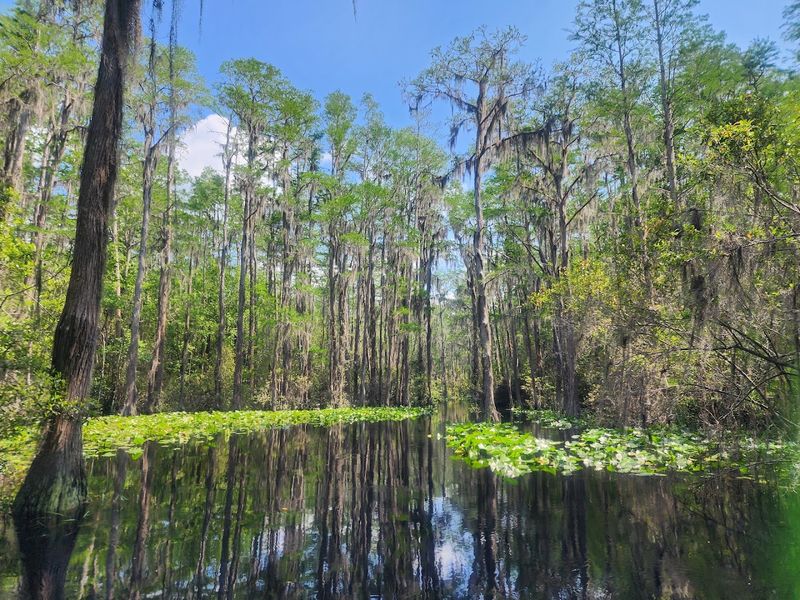
Paddling through a blackwater swamp while an alligator watches calmly from a nearby log is an experience that rewires your brain a little. Okefenokee National Wildlife Refuge covers over 400,000 acres of some of North America’s most extraordinary wetland habitat.
The main entry point is the Suwannee Canal Recreation Area at 4155 Suwannee Canal Road, Folkston, GA 31537. From here, the sheer scale of cypress forests, scrub-shrub zones, and open wet prairies becomes immediately clear.
Okefenokee Adventures runs guided boat tours ranging from 90 minutes to four hours, including unforgettable sunset experiences. Independent visitors can rent canoes, kayaks, Jon boats, or bikes to explore at their own pace.
Wading birds, river otters, and turtles appear frequently alongside the resident alligator population. The Richard S.
Bolt Visitor Center is the smartest first stop for planning your route through this wild landscape. No two visits here feel identical because the wildlife moves on its own schedule.
This refuge operates entirely by nature’s rules, and that is exactly the appeal.
7. Ocmulgee Mounds National Historical Park, Macon
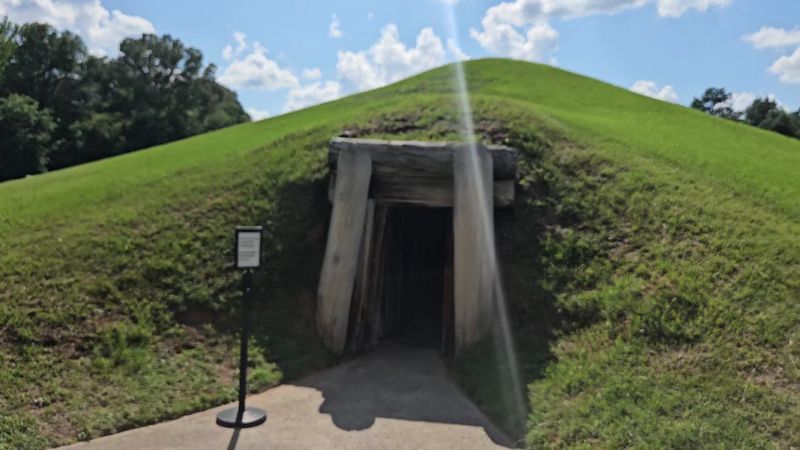
Standing atop the Great Temple Mound and looking across the Ocmulgee River valley connects you to 10,000 years of human history in one quiet moment. Few places in the country carry that kind of weight.
Located at 1207 Emery Hwy, Macon, GA 31217, this park preserves flat-topped earthen mounds, ancient council chambers, and defensive structures from the Mississippian Period between 900 and 1100 A.D. The site also holds the only known spiral mound in the United States.
A reconstructed Earth Lodge, built over the original clay floor dating to around A.D. 1015, offers a rare look at the space where important tribal meetings once took place. The visitor center museum houses over two million artifacts, including pottery and tools that span thousands of years.
The Muscogee (Creek) Nation maintains a deep cultural connection to this site and actively works toward co-management. That living relationship between community and land gives the park a dimension that purely historical sites often lack.
Climbing the mounds is permitted and genuinely changes your perspective on the scale of what was built here long before European contact.
8. Martin Luther King, Jr. National Historical Park, Atlanta
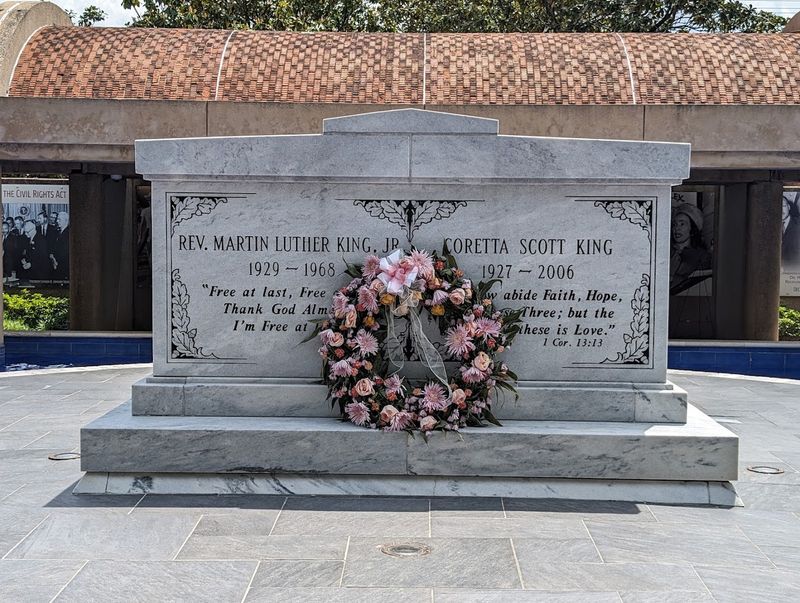
Auburn Avenue carries a quiet gravity that you feel the moment you arrive. This street shaped one of history’s most important voices, and the Martin Luther King, Jr. National Historical Park preserves that story with remarkable care.
Spread across approximately 35 acres at 450 Auburn Ave NE, Atlanta, GA 30312, the park honors the life and legacy of the civil rights leader. Historic Ebenezer Baptist Church, where Dr. King was baptized and later served as co-pastor, stands as a powerful focal point.
The outdoor memorial tombs of Dr. King and Coretta Scott King sit beside a reflecting pool that encourages stillness and reflection.
The Birth Home is open for ranger-led tours, but availability and reservation procedures may vary, so it is best to check the National Park Service website before visiting.
Fire Station No. 6, one of the South’s first desegregated firehouses, is also part of the park and adds important historical texture. The World Peace Rose Garden and the “Behold” Monument provide additional moments of contemplation.
The visitor center’s “Courage To Lead” exhibit brings the broader civil rights movement into sharp, moving focus.
9. World Of Coca-Cola, Atlanta

Sampling a wide variety of Coca-Cola beverages from around the world is one of the most popular experiences at the World of Coca-Cola. The World of Coca-Cola in downtown Atlanta is a full sensory experience wrapped around a single brand’s global story.
Sitting at 121 Baker St NW, Atlanta, GA 30313, the museum sits conveniently next to the Georgia Aquarium, making it easy to combine both into one memorable day. Interactive exhibits, historical artifacts, and immersive visuals fill every corner.
The Vault exhibit lets visitors explore the legend of the secret formula, which has fueled decades of curiosity. A 4-D theater adds cinematic energy to the storytelling, and the iconic Polar Bear makes for an unforgettable photo opportunity.
The Beverage Lab invites guests to create their own unique flavor combinations and taste recipes from the brand’s past. The “Coca-Cola Stories” experience transforms company archives into a multi-sensory journey complete with AI-powered photo moments.
Vintage advertisements line the walls, reminding you just how deeply this brand has woven itself into everyday culture worldwide. It is more engaging than you might expect.
10. Little White House Historic Site, Warm Springs
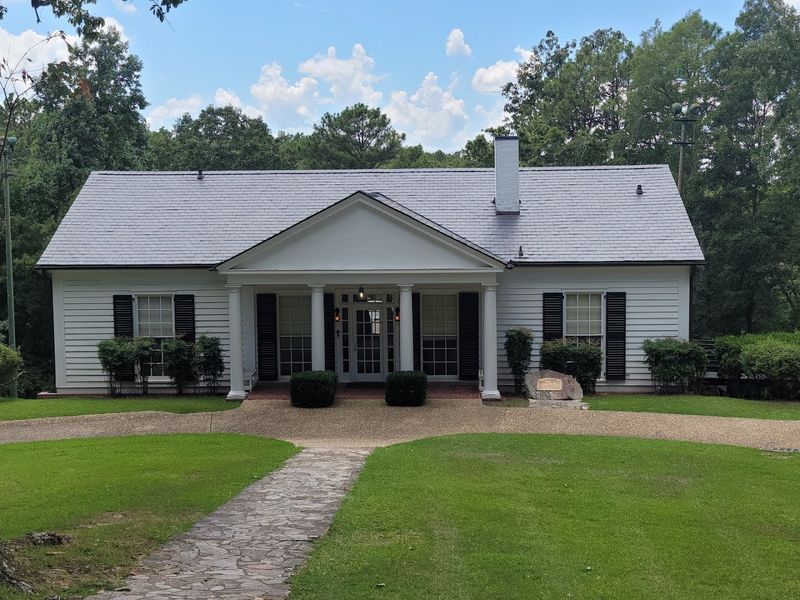
There is something quietly powerful about standing inside a room where a president spent his final hours. The Little White House in Warm Springs preserves that moment with extraordinary care and sensitivity.
Franklin D. Roosevelt built this personal retreat in 1932, found at 401 Little White House Rd, Warm Springs, GA 31830.
He first arrived in 1924 seeking relief from polio through the area’s natural 88-degree therapeutic springs, and he never quite left emotionally.
His time here deeply influenced the New Deal programs that reshaped American life during the Great Depression. The house looks remarkably similar to how it appeared on April 12, 1945, the day President Roosevelt passed away inside.
The on-site museum displays his 1938 Ford convertible fitted with hand controls, recordings of his famous Fireside Chats, and the “Unfinished Portrait” he was posing for at the time of his passing. Guest and servants’ quarters are also open to visitors, as is the Walk of Flags and Stones.
The historic therapeutic pools have separate visitor access, so it is worth checking their current status before your visit.
11. Historic Watson Mill Covered Bridge, Comer
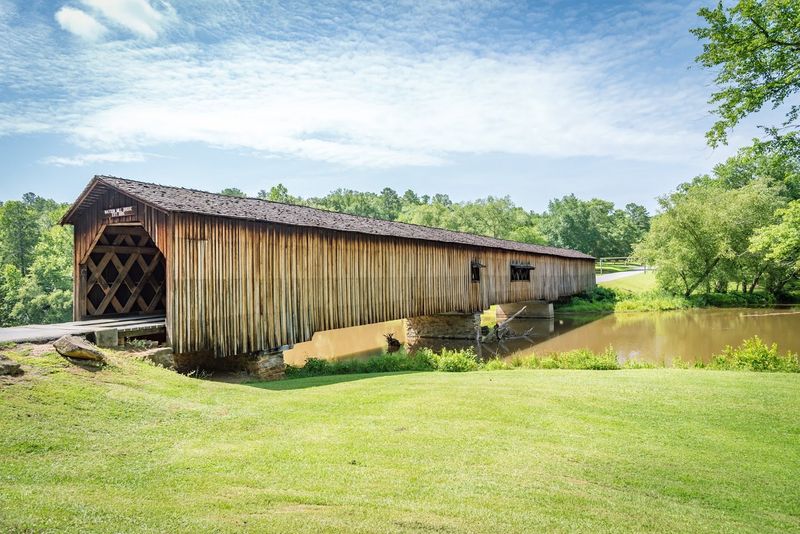
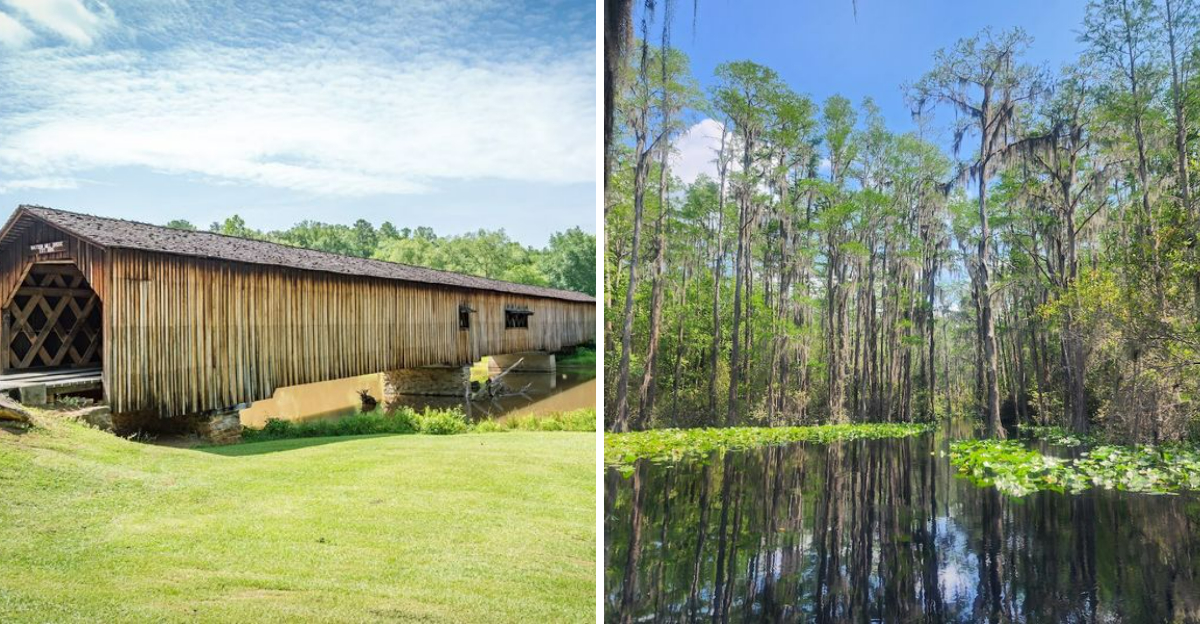
Georgia’s longest covered bridge still in active use stretches an impressive 229 feet across the South Fork River. Built in 1885 by Washington W.
King, the son of legendary covered-bridge builder Horace King, this structure carries serious historical lineage.
Located at 650 Watson Mill, Comer, GA 30629, the bridge sits within a 1,118-acre state park that opened to the public in 1973. The bridge has a 9-foot clearance and a 3-ton weight limit, keeping it both preserved and purposeful.
Seven miles of hiking trails, five miles of biking paths, and 14 miles of equestrian trails spread across the surrounding park. Horseback riders even have dedicated camping areas and stables available, which is a genuinely rare amenity.
During summer months, the river shoals just below the bridge become a popular spot for cooling off and splashing around. Camping options range from RV and tent sites to log cabin bunkhouses, covering nearly every preference.
The bridge itself frames perfectly for photography at almost any time of day. Picnics beside the river here feel like stepping into a slower, quieter version of the world.