Georgia’s Hidden Gems You’ve Never Heard Of Before
Beneath the hustle and bustle of Georgia’s well-known attractions lies a world of hidden treasures, quietly tucked away from the crowds.
In this quieter, more serene corner of the state, forgotten ruins, peaceful trails, and charming small towns offer a glimpse into a side of Georgia that most visitors never see.
The roads less traveled lead to landscapes that feel like personal discoveries, where nature and history converge in ways that don’t make it into typical guidebooks.
For those who know where to look, this part of Georgia holds stories and views that locals treasure, offering a refreshing escape from the ordinary.
Broxton Rocks
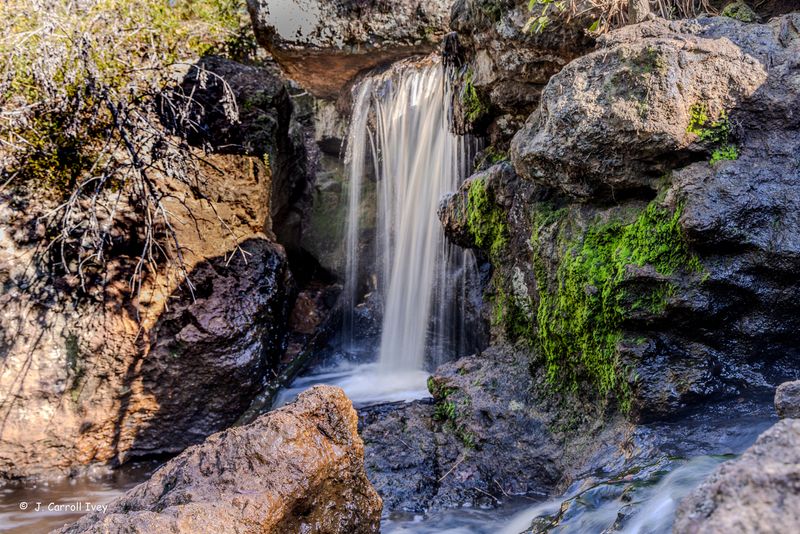
Sandstone formations rise from the earth like ancient sculptures, creating one of Georgia’s most unique geological wonders.
Broxton Rocks Preserve is located at 31 739090 #82.859990, Broxton, GA 31519, sprawling across 1,600 acres of protected wilderness.
Visitors discover a landscape shaped by millions of years of erosion, where massive sandstone outcrops form natural pools and crevices perfect for exploration.
A 10-foot waterfall cascades over layered rock during wetter months, adding a soothing soundtrack to hikes through the preserve.
The site remains relatively unknown despite being the largest sandstone exposure in the entire state, making it feel like a private adventure.
Trails wind through longleaf pine forests and over smooth rock surfaces that glow golden in afternoon light.
Photographers find endless compositions here, from close-ups of moss-covered stone to wide shots of the rolling terrain.
Pack sturdy shoes and plenty of water, as the terrain can be uneven and shade is limited in some areas.
Providence Canyon State Park
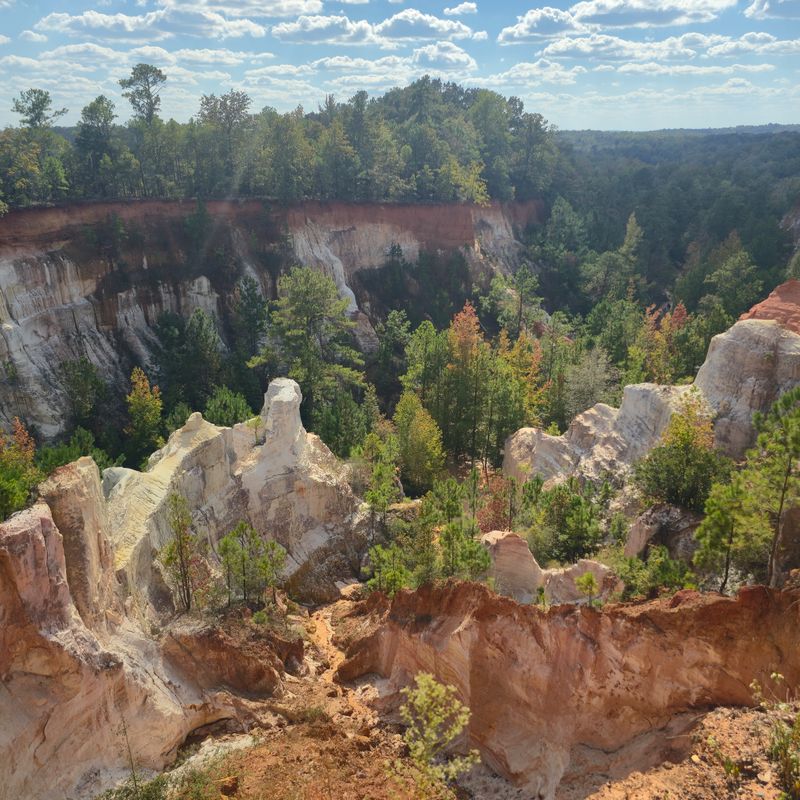
Nature carved a masterpiece from Georgia clay, creating canyons that blaze with shades of pink, orange, rust, and cream.
Providence Canyon State Park sits at 8930 Canyon Road, Lumpkin, GA 31815, where erosion transformed farmland into dramatic gorges over the past 150 years.
Often called Georgia’s Little Grand Canyon, the park features sixteen canyons that reach depths up to 150 feet, each displaying distinct color bands.
Poor farming practices in the 1800s accidentally triggered the erosion, but the result is now a protected natural wonder that draws hikers and photographers year-round.
The Canyon Loop Trail offers an easy 2.5-mile walk along the rim with multiple overlooks, while the Backcountry Trail descends into the canyon floor for a closer look.
Spring and fall bring the most comfortable temperatures for exploring, though each season paints the landscape differently.
Wildflowers bloom along the trails in warmer months, adding bursts of color to the already vivid scenery.
Arrive early on weekends to find parking and enjoy quieter moments before afternoon crowds arrive.
The Story Shop

Books come alive in a space designed to spark imagination, where literary worlds spill off the pages into physical reality.
The Story Shop is located at 124 N Broad Street, Monroe, GA 30655, occupying a charming storefront in the historic downtown district.
Young readers step through a wardrobe that leads to a Narnia-themed section, crawl into a cozy hobbit hole for quiet reading time, or explore other nooks inspired by beloved children’s stories.
The independent bookstore curates its collection carefully, featuring classics alongside new releases and lesser-known titles that deserve attention.
Owner-operated with genuine passion for children’s literature, the shop hosts story times, author visits, and special events that bring the community together.
Parents appreciate the thoughtful organization by age and interest, making it easy to find the perfect book for any young reader.
The atmosphere feels magical without being overwhelming, striking a balance that appeals to both shy bookworms and energetic adventurers.
Plan to spend at least an hour browsing, as kids often lose track of time exploring the themed spaces and discovering new favorites.
Sosebee Cove Wildflower Trail
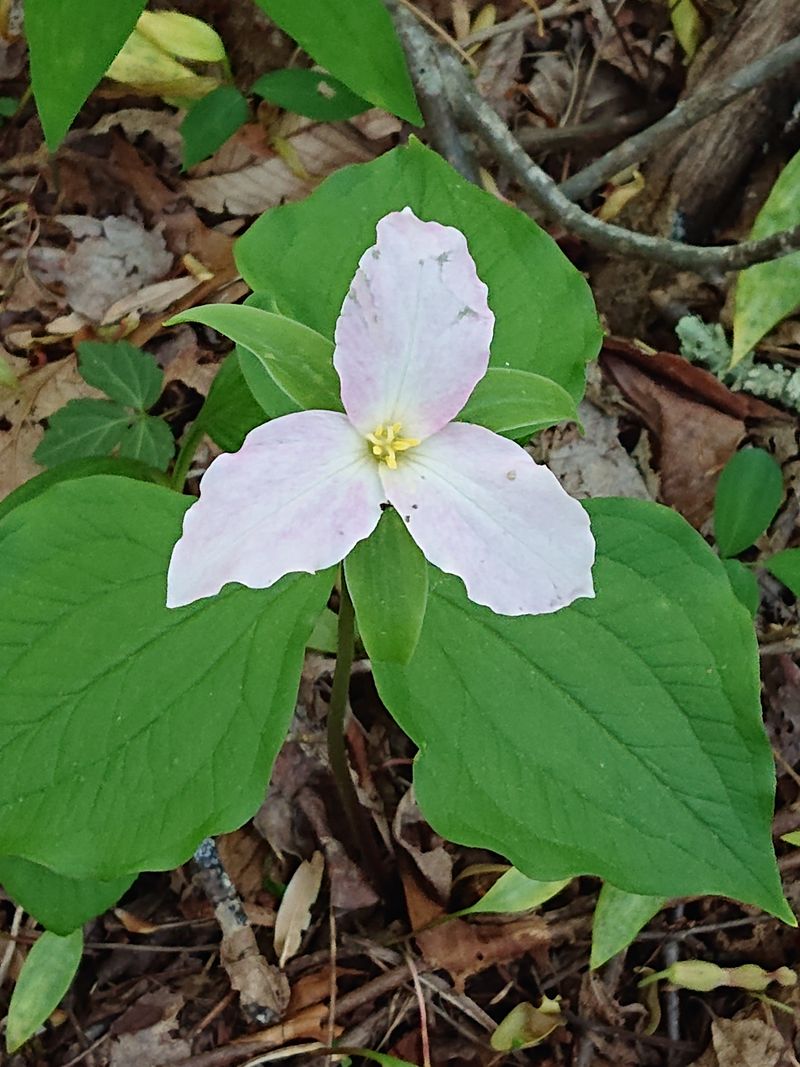
Spring transforms a mountain cove into a botanical showcase, where wildflowers carpet the forest floor in waves of color.
Sosebee Cove Wildflower Trail is found at Wolf Pen Gap Rd, Blairsville, GA 30512, within the Chattahoochee-Oconee National Forest.
The 1.5-mile loop trail winds through a protected cove that remains cool and moist, creating ideal conditions for rare and diverse plant species.
Peak bloom typically occurs from mid-March through May, when trillium, bloodroot, and dozens of other wildflower varieties create a living tapestry.
The trail follows gentle grades suitable for most fitness levels, though some sections can be muddy during wet periods.
Interpretive signs along the path help visitors identify different species and understand the unique ecosystem of southern Appalachian coves.
Photographers should bring macro lenses to capture delicate flower details, while nature enthusiasts might spot salamanders, birds, and other wildlife.
Visit on weekday mornings for the quietest experience, as word has spread about this floral treasure despite its relatively hidden location.
Dungeness Ruins
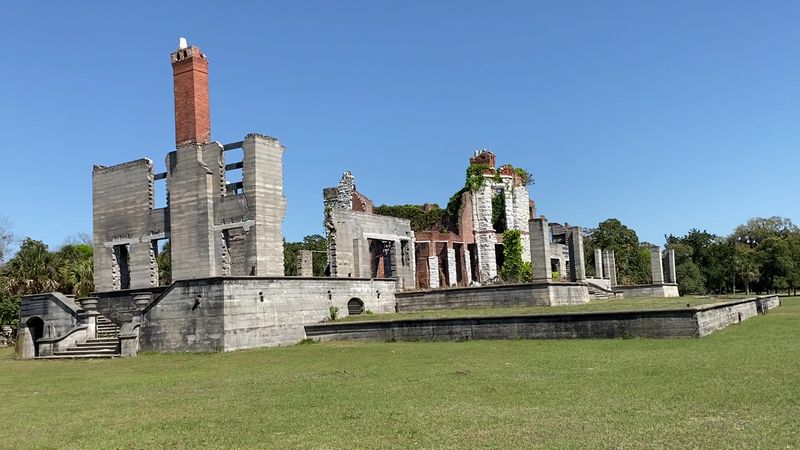
Crumbling walls stand as monuments to faded grandeur, where wild horses now roam through what was once an opulent mansion.
The Dungeness Ruins are located on Cumberland Island at the southern end of Georgia, accessible only by ferry from St. Marys, GA 31558.
Built in the 1880s for the Carnegie family, the mansion once boasted 59 rooms filled with luxury, but a 1959 fire left only the tabby concrete shell standing.
Visitors reach the ruins after a scenic walk from the ferry dock, passing through maritime forests draped with Spanish moss.
The structure’s skeletal beauty creates an almost haunting atmosphere, with empty window frames framing views of ancient live oaks and marshland.
Wild horses that inhabit the island often graze near the ruins, adding to the surreal, timeless quality of the scene.
The site tells stories of wealth, isolation, and nature’s power to reclaim human achievements, making it both beautiful and thought-provoking.
Bring water and sun protection for the walk, and check ferry schedules carefully as return trips are limited and the island has no commercial facilities.
Tallulah Gorge State Park
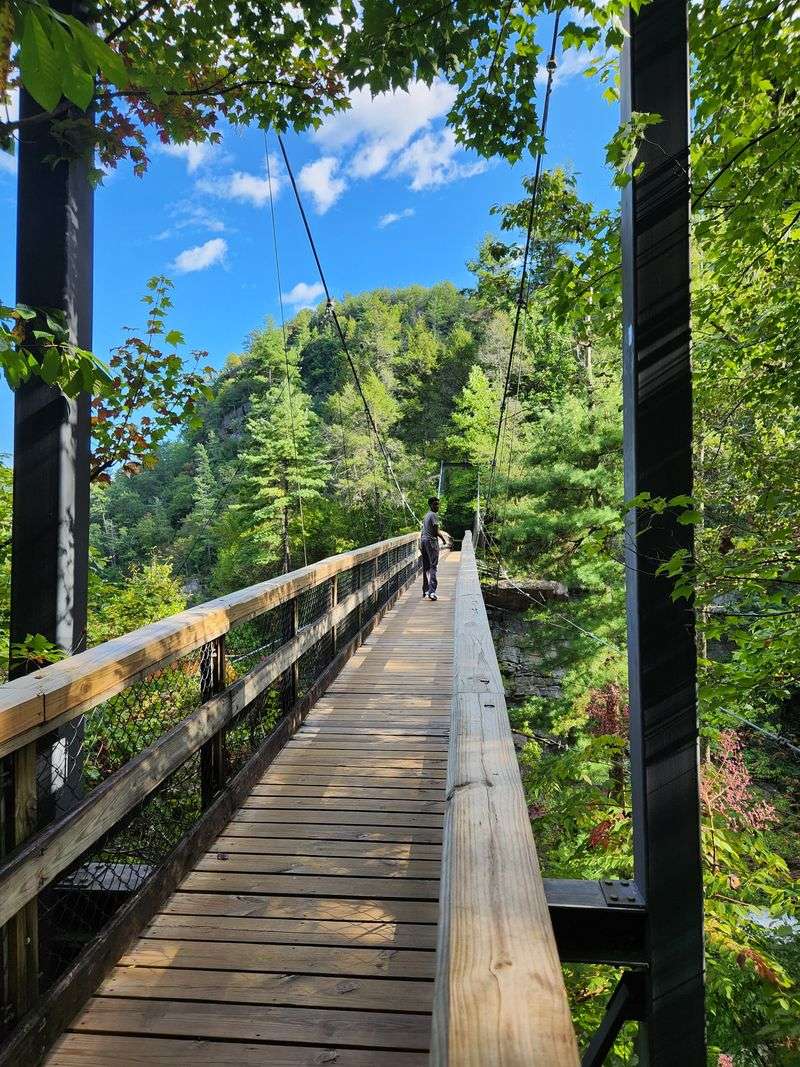
Sheer cliffs plunge nearly 1,000 feet, creating a gorge so dramatic it once drew tightrope walkers and daredevils from across the country.
Tallulah Gorge State Park is situated at 338 Jane Hurt Yarn Drive, Tallulah Falls, GA 30573, where the Tallulah River carved through ancient rock over millions of years.
A suspension bridge spans the gorge, offering vertigo-inducing views down to the river and waterfalls below, while rim trails provide multiple overlook points.
For the adventurous, a free permit system allows limited daily access to the gorge floor, where hikers scramble over boulders and wade through shallow pools.
Six waterfalls cascade through the gorge, though water flow varies depending on hydroelectric dam releases upstream.
The park’s history includes the legendary 1970 Karl Wallenda tightrope walk across the gorge, commemorated with exhibits in the visitor center.
Rock climbers tackle challenging routes on the gorge walls, though proper permits and experience are required for this activity.
Weekdays and early mornings offer the best chance for securing gorge floor permits and avoiding crowds at the most popular overlooks.
Pasaquan

Concrete and paint transform a rural compound into an explosion of color and pattern, where one artist’s vision created an otherworldly environment.
Pasaquan stands at 238 Eddie Martin Road, Buena Vista, GA 31803, representing the life’s work of self-taught artist Eddie Owens Martin, who called himself St. EOM.
Vibrant geometric designs, totems, and murals cover every surface of the six-acre site, creating an immersive folk art experience unlike anything else in Georgia.
St. EOM developed his own cosmology and spiritual philosophy, which he expressed through the elaborate artwork that covers walls, buildings, and sculptural elements throughout the compound.
The site fell into disrepair after the artist’s death in 1986 but has been carefully restored and opened to the public as a museum.
Visitors wander through outdoor spaces decorated with mandalas, faces, and abstract patterns in eye-popping combinations of yellow, turquoise, red, and orange.
The indoor spaces feature additional artwork and exhibits about St. EOM’s life and creative process, helping visitors understand the meaning behind the visual feast.
Photography is encouraged, and the site hosts occasional events and workshops celebrating outsider art and creative expression.
Consolidated Gold Mine
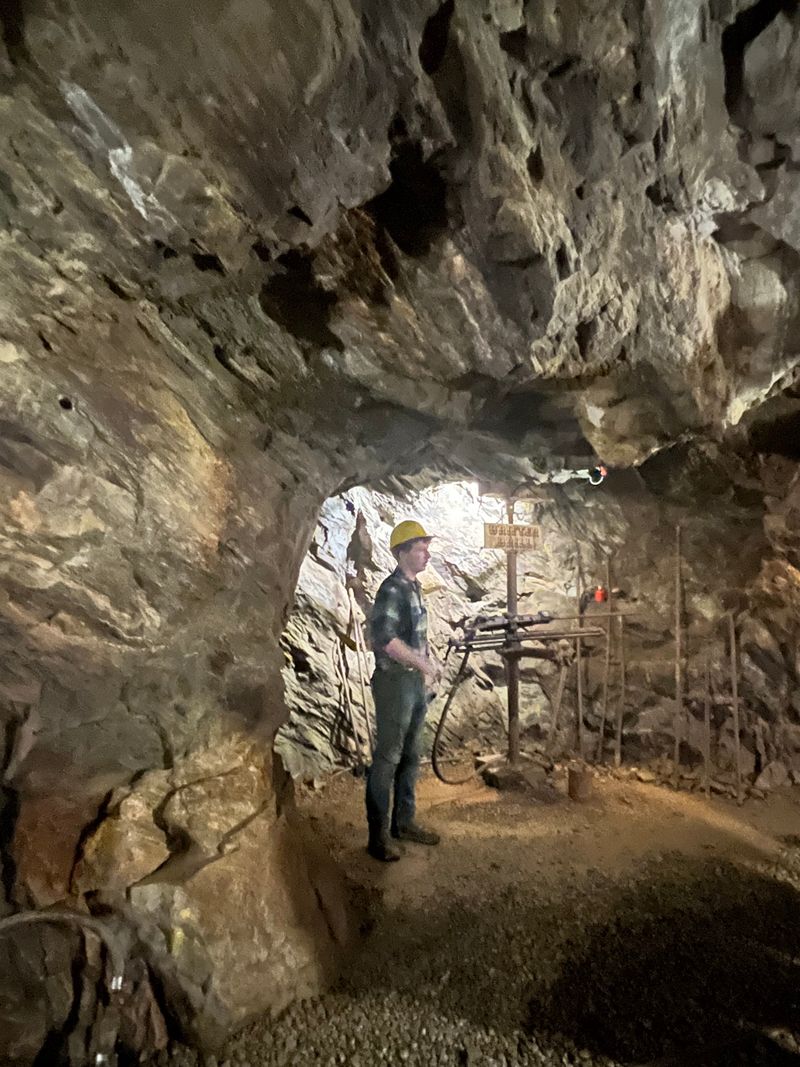
Descending into cool darkness, visitors step back to Georgia’s gold rush era when fortune seekers flooded the North Georgia mountains.
Consolidated Gold Mine is located at 185 Consolidated Gold Mine Road, Dahlonega, GA 30533, where mining operations extracted precious metal from the 1890s through the 1900s.
Guided tours lead groups 200 feet underground through hand-dug tunnels, where the temperature remains a constant 60 degrees year-round.
Knowledgeable guides share stories of miners’ daily lives, explain gold extraction techniques, and point out geological features in the exposed rock walls.
After the underground portion, visitors can try their luck panning for gold in outdoor sluices, keeping whatever they find as a souvenir.
The experience combines history, geology, and hands-on activity, making it engaging for both adults and children.
Dahlonega was the site of America’s first major gold rush in 1828, decades before California’s more famous strike, giving the region deep mining heritage.
Wear comfortable shoes and bring a light jacket, as the underground temperature feels noticeably cooler than the surface, especially in summer months.
Wormsloe Historic Site
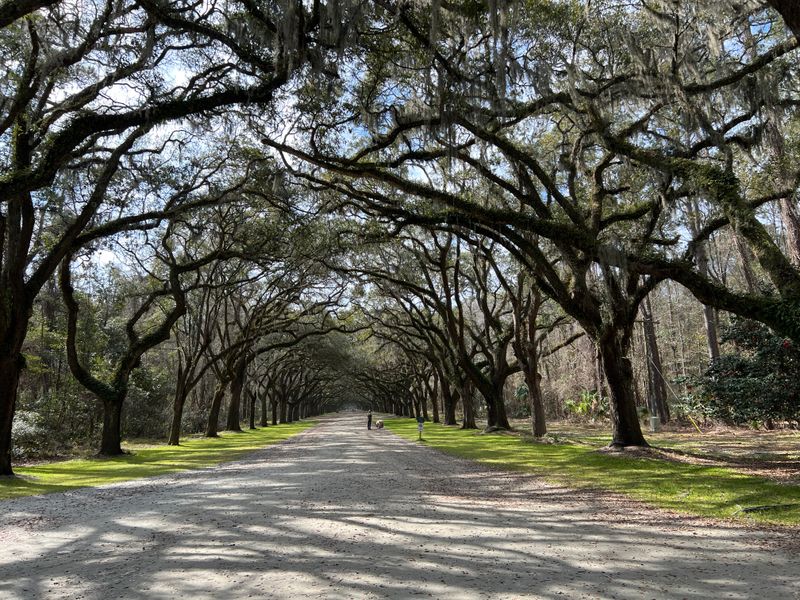
Ancient oaks form a living cathedral, their branches meeting overhead to create one of the most photographed scenes in the entire South.
Wormsloe Historic Site is located at 7601 Skidaway Road, Savannah, GA 31406, preserving the colonial estate of Noble Jones, one of Georgia’s first settlers.
The 1.5-mile oak avenue leading to the property creates an instant mood of Southern Gothic romance, with Spanish moss swaying in the breeze and dappled sunlight filtering through the canopy.
Beyond the famous entrance, visitors explore the ruins of Jones’s tabby fortification, walk nature trails through maritime forest, and tour a museum about colonial Georgia.
Living history demonstrations occur regularly, with costumed interpreters showing colonial skills like blacksmithing, woodworking, and period cooking techniques.
The site offers a quieter alternative to Savannah’s busy historic district while still providing rich history and stunning natural beauty.
Photographers flock here for the oak avenue, which looks magical in early morning fog or late afternoon golden hour light.
The walking trails extend beyond the main historic area, offering peaceful strolls through ecosystems that haven’t changed much since colonial times.
Okefenokee Swamp
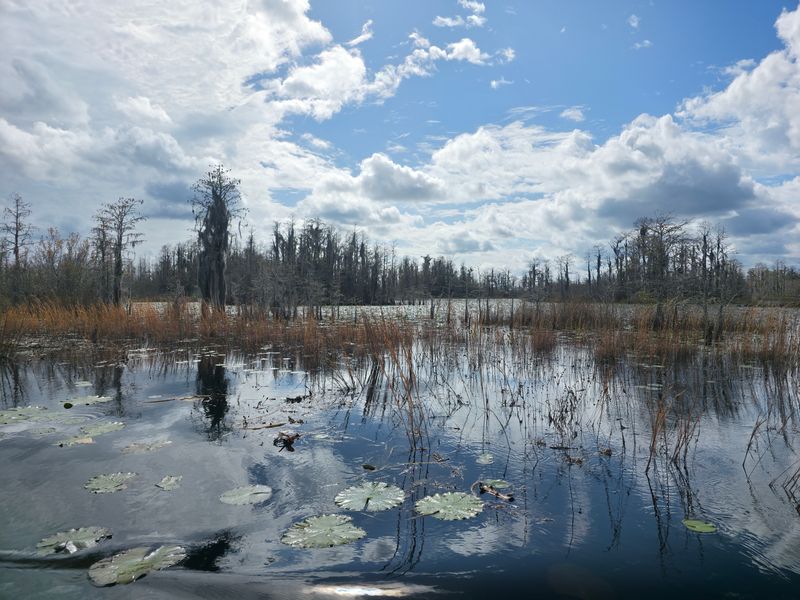
Black water reflects towering cypress trees in a vast wetland wilderness where alligators glide silently and rare birds nest in hidden corners.
Okefenokee National Wildlife Refuge spans 438,000 acres situated at 5700 Okefenokee Swamp Park Rd Waycross, Georgia 31503, protecting one of the largest intact freshwater ecosystems in the United States.
Visitors explore by boat, paddling through narrow waterways called prairies, where floating peat islands support unique plant communities found nowhere else.
The swamp’s dark, tea-colored water results from tannic acid released by decaying vegetation, creating an eerie but beautiful environment.
Wildlife viewing opportunities abound, from basking alligators and wading herons to the occasional black bear spotted along the shoreline.
Multiple entry points offer different experiences, with boardwalk trails for those preferring to stay dry and canoe trails for adventurers wanting deeper immersion.
The name Okefenokee comes from a Native American word meaning trembling earth, referring to the floating peat that shakes when walked upon.
Spring and fall provide the most comfortable temperatures and best wildlife activity, while summer brings heat, humidity, and abundant mosquitoes requiring serious bug protection.
Etowah Indian Mounds

Massive earthen pyramids rise from the river valley, silent witnesses to a sophisticated civilization that thrived here centuries before European contact.
Etowah Indian Mounds Historic Site is located at 813 Indian Mound Road SE, Cartersville, GA 30120, preserving the remains of a major Mississippian culture city.
Three main mounds dominate the 54-acre site, with the largest standing 63 feet tall and covering three acres at its base.
Between 1000 and 1550 CE, thousands of people lived in this settlement, farming the fertile river bottomland and participating in complex trade networks stretching across the Southeast.
Visitors climb wooden stairs to the top of one mound, gaining perspective on the site’s layout and the effort required to move millions of baskets of earth.
The excellent museum displays artifacts excavated from the site, including intricately carved shell gorgets, copper ornaments, and ceremonial objects that reveal the culture’s artistry.
Interpretive trails wind through the village area and along the defensive moat that once protected the settlement, helping visitors imagine daily life in this ancient city.
The site remains relatively uncrowded despite its significance, offering a contemplative experience for those interested in pre-Columbian American history.
Blue Hole
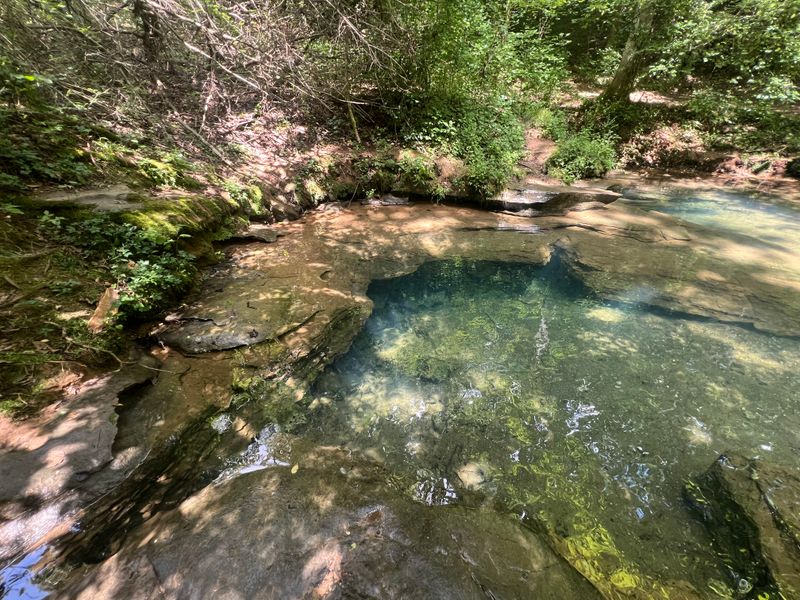
Crystal-clear water bubbles up from underground springs, creating a swimming spot so inviting it feels like a secret oasis in South Georgia.
Blue Hole is located at GA-95, Rock Spring, GA 30739, though exact public access can vary, so checking current status with local sources is wise before visiting.
The natural spring maintains a constant cool temperature year-round, providing refreshing relief during Georgia’s sweltering summers.
Locals have enjoyed this spot for generations, diving from surrounding rocks and swinging from ropes into the deep, clear water.
The blue-green water gets its striking color from the limestone bottom and the way sunlight filters through the exceptionally clear spring water.
Unlike murky rivers or lakes, the clarity here allows swimmers to see all the way to the bottom, adding to the swimming experience.
The surrounding area remains largely undeveloped, preserving the natural setting and peaceful atmosphere that makes the spot special.
Visitors should respect the property, pack out all trash, and be mindful of any posted rules or access restrictions that may apply to protect this natural treasure for future enjoyment.
Jekyll Island Driftwood Beach
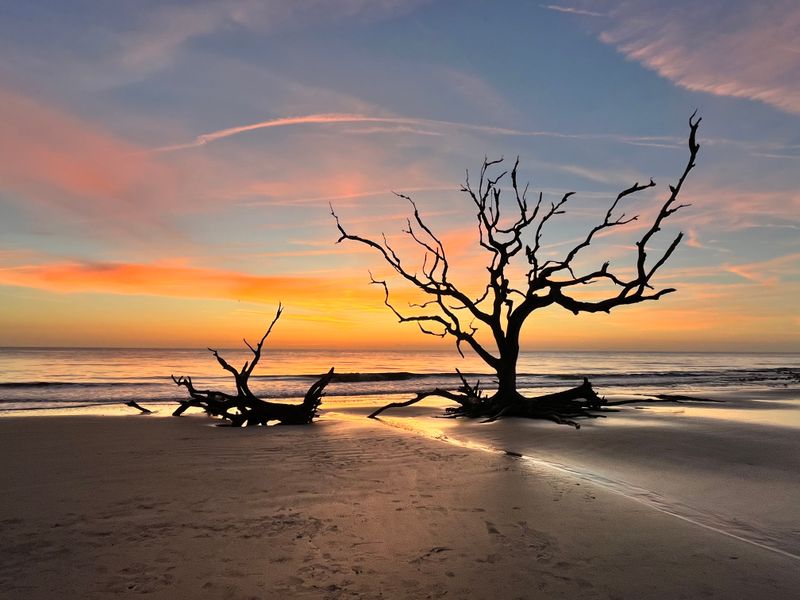
Bleached tree skeletons sprawl across sand like natural sculptures, creating a hauntingly beautiful landscape where forest meets ocean.
Driftwood Beach is located on the north end of Jekyll Island, where coastal erosion has exposed and toppled maritime forest trees.
Salt, sun, and sand have stripped the fallen trees of bark and smaller branches, leaving smooth, silvery wood in twisted, artistic forms.
Photographers consider this one of Georgia’s most photogenic locations, especially during golden hour when warm light illuminates the weathered wood against the ocean backdrop.
The beach changes constantly as tides and storms rearrange the driftwood, meaning no two visits look exactly the same.
Walking among the fallen giants feels almost otherworldly, with the contrast between the dead trees and living ocean creating a powerful reminder of nature’s cycles.
The site works well for contemplative walks, family photos, or simply sitting on a log to watch waves roll in.
Bring sturdy shoes as walking over and around the driftwood can be tricky, and watch for fire ants that sometimes nest in the sand around the wood.
Radium Springs Gardens
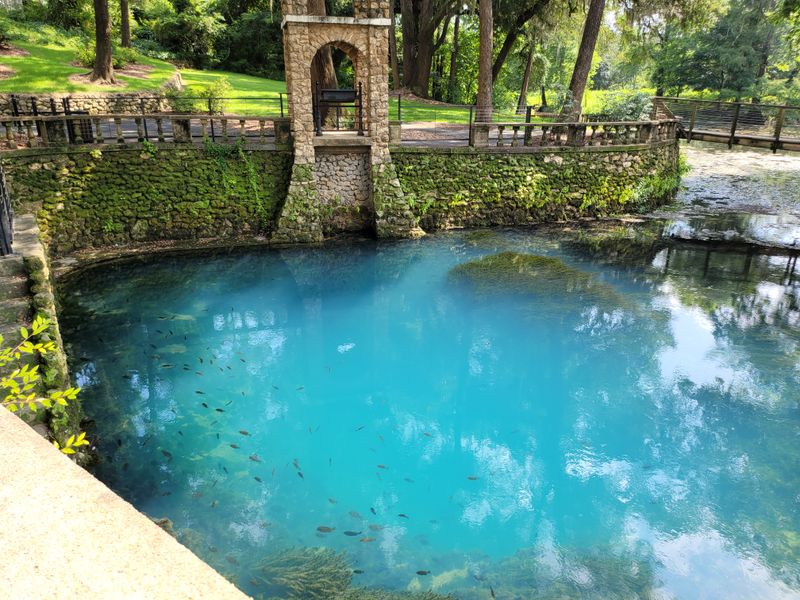
Turquoise water gushes from the earth at a rate of 70,000 gallons per minute, creating Georgia’s largest natural spring and a stunning garden setting.
Radium Springs Gardens is located at 2501 Radium Springs Road, Albany, GA 31705, where the spring has attracted visitors since Native American times.
The spring’s brilliant blue-green color results from limestone deposits and the way light refracts through the exceptionally clear water rising from underground aquifers.
In the early 1900s, developers built a resort and casino here, though those structures are long gone, replaced by peaceful gardens and walking paths.
The name comes from a mistaken 1920s belief that the water contained radium, though it’s simply pure limestone spring water with no radioactive properties.
Terraced gardens surround the spring pool, featuring azaleas, camellias, and native plants that create colorful displays throughout the growing season.
A stone bridge arches over the spring’s outflow, providing a perfect spot for photos and a clear view of the water’s remarkable color.
The site offers a serene escape with picnic areas and shaded paths, though swimming is no longer permitted to protect the spring’s ecosystem.
Brasstown Bald
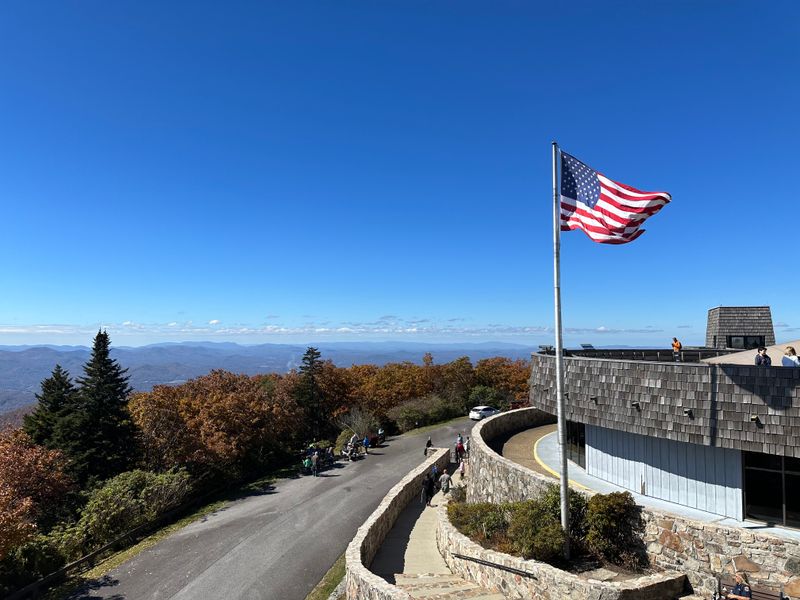
Standing at 4,784 feet, Georgia’s highest peak offers views stretching across four states on clear days, with mountains rolling toward every horizon.
Brasstown Bald is located at 2941 Georgia Highway 180 Spur, Hiawassee, GA 30546, where a paved trail or shuttle bus carries visitors from the parking area to the summit.
The observation deck atop the visitor center provides 360-degree panoramic views of the Southern Appalachians, with interpretive displays identifying distant peaks and landmarks.
On exceptionally clear days, visitors can spot the Atlanta skyline to the southwest, the Great Smoky Mountains to the north, and the Blue Ridge Mountains stretching eastward.
The half-mile paved trail to the summit gains 500 feet in elevation, challenging but manageable for most visitors who take their time.
Exhibits inside the visitor center explain the mountain’s ecology, weather patterns, and cultural history, including Cherokee legends about the peak.
Weather can change rapidly at this elevation, with temperatures often 10-15 degrees cooler than surrounding valleys and fog rolling in without warning.
Fall foliage season brings spectacular color displays visible from above, while spring and summer offer wildflowers along the trail and occasional sightings of rare mountain wildlife.
Andersonville National Historic Site

Solemn grounds preserve the memory of one of the Civil War’s most notorious prison camps, where thousands of Union soldiers died in harsh conditions.
Andersonville National Historic Site is located at 760 POW Road, Andersonville, GA 31711, commemorating the 45,000 prisoners held here during the war’s final fourteen months.
The site includes the prison grounds, a national cemetery, and a museum dedicated to all American prisoners of war throughout history.
Walking the prison site, visitors see reconstructed sections of the stockade walls and markers indicating where the deadline stood, beyond which guards would shoot prisoners.
Nearly 13,000 Union soldiers died here from disease, malnutrition, and exposure, their graves now marked with white headstones in the adjacent national cemetery.
The museum takes a broader view, honoring POWs from all American conflicts and explaining the evolution of prisoner treatment under international law.
The experience is educational but emotionally heavy, appropriate for older children and adults interested in understanding this difficult chapter of American history.
Rangers lead tours and programs that provide context about conditions, the prison’s commander Henry Wirz, and the complex circumstances that led to such tragedy.
Amicalola Falls State Park
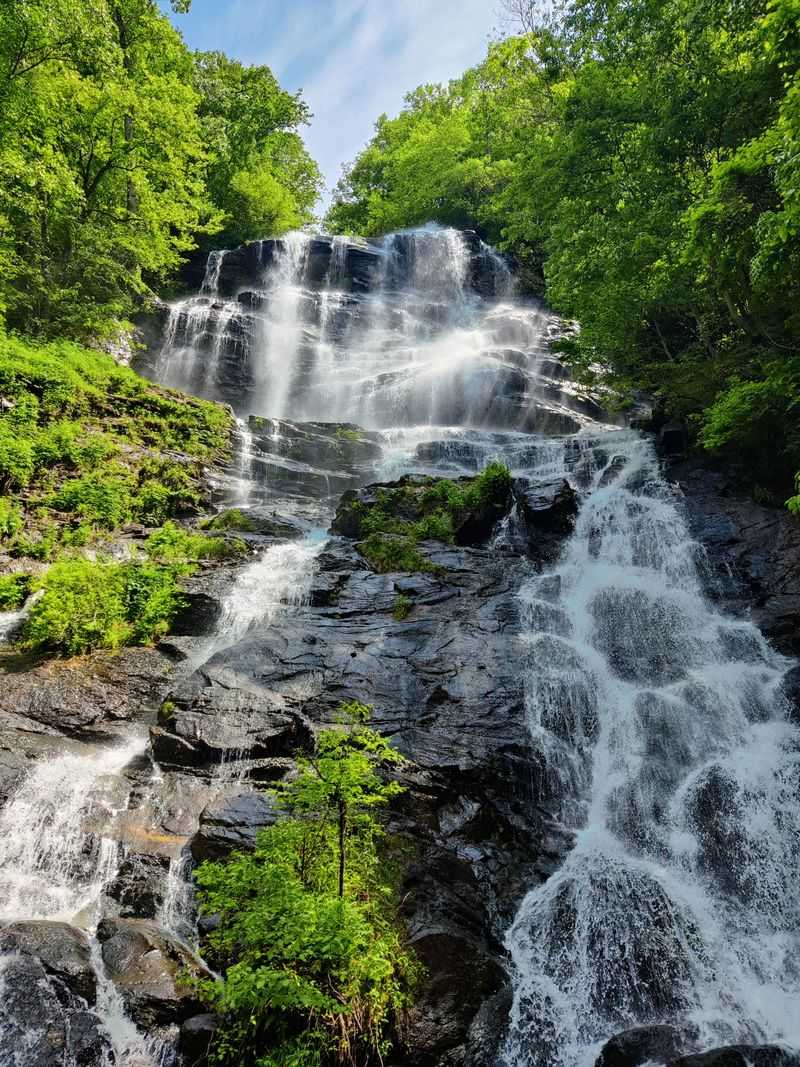
Water plunges 729 feet down a mountainside in a series of dramatic cascades, making this the tallest waterfall in Georgia and a spectacular sight year-round.
Amicalola Falls State Park is located at 418 Amicalola Falls State Park Rd, Dawsonville, GA 30534, where the falls serve as a gateway to the southern terminus of the Appalachian Trail.
Visitors choose between viewing platforms at the base or top of the falls, or climbing the 600-step staircase that follows alongside the cascading water.
The name Amicalola comes from a Cherokee word meaning tumbling waters, perfectly describing the way the creek bounces down the rocky mountainside.
The park offers more than just waterfall views, with miles of hiking trails, a comfortable lodge, and campsites for those wanting to extend their visit.
Spring brings the highest water flow as mountain snowmelt and rain swell the creek, while fall frames the falls with brilliant autumn foliage.
The Appalachian Approach Trail begins in the park, offering ambitious hikers a challenging 8.8-mile path to Springer Mountain, the official trail starting point.
Arrive early on weekends during peak seasons to find parking, as the falls’ popularity has grown significantly in recent years.
Callaway Gardens
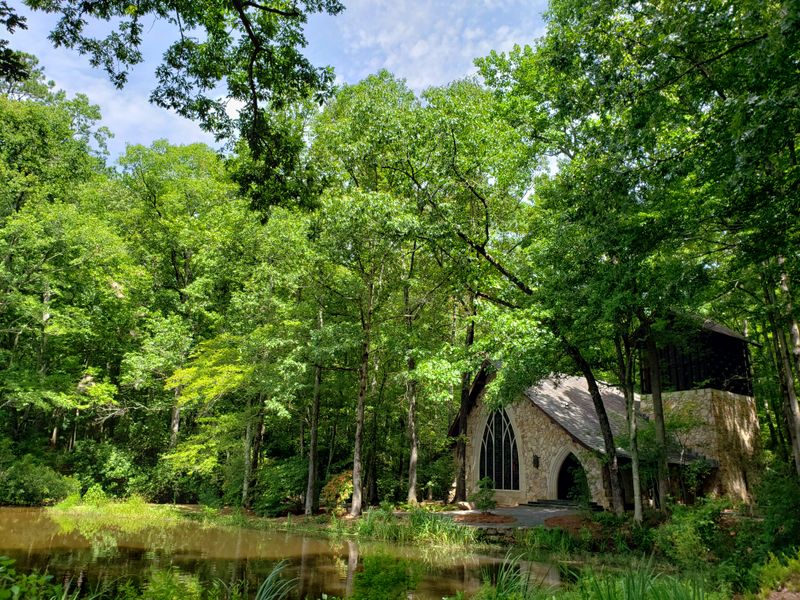
Thousands of acres of cultivated beauty showcase Southern horticulture at its finest, from spring azaleas to summer butterflies and beyond.
Callaway Gardens is located at 17617 US-27, Pine Mountain, GA 31822, offering gardens, trails, a beach, and year-round attractions across 2,500 acres.
The Cecil B. Day Butterfly Center houses North America’s largest glass-enclosed tropical butterfly conservatory, where hundreds of colorful species flutter freely among exotic plants.
Miles of walking and biking trails wind through different garden areas, each designed to showcase specific plants or create particular moods and experiences.
Azalea season in spring draws the biggest crowds, when thousands of plants burst into bloom, creating waves of pink, white, red, and purple across the landscape.
Robin Lake provides a sandy beach for summer swimming and relaxation, making the gardens a full-day destination rather than just a quick stroll.
The gardens also host seasonal events including Fantasy in Lights during winter holidays, when millions of LED lights transform the landscape into a magical nighttime display.
Consider visiting on weekday mornings for a more peaceful experience, especially during peak bloom times when parking and crowds can be challenging.
Fort Mountain State Park

An ancient stone wall snakes along a mountain ridge, its origins lost to time and subject to theories ranging from Cherokee construction to pre-Columbian cultures.
Fort Mountain State Park is located at 181 Fort Mountain State Park Road, Chatsworth, GA 30705, where the mysterious 855-foot-long wall has puzzled archaeologists and visitors for generations.
The wall stands in places up to seven feet tall, built from piled stones without mortar in a zigzag pattern that seems deliberate but whose purpose remains unknown.
Beyond the archaeological curiosity, the park offers a 47-foot stone observation tower with sweeping views of the surrounding mountains and valleys.
Miles of hiking and mountain biking trails crisscross the park, ranging from easy nature walks to challenging backcountry routes through dense forest.
A small lake provides fishing, boating, and swimming opportunities, while campsites and rental cottages allow for overnight stays.
Fall brings spectacular foliage views from the tower and along the ridgeline trails, with the mysterious wall adding an element of intrigue to the natural beauty.
The park sees fewer visitors than some of North Georgia’s more famous destinations, offering a quieter mountain experience for those willing to venture slightly off the beaten path.