This California Seafood Buffet Serves Crab The Way Lowcountry Diners Love It
All-you-can-eat seafood carries a special kind of magic for anyone who grew up near the coast or simply loves the ocean’s bounty.
A buffet table piled high with crab legs, shrimp, and oysters brings back memories of family gatherings and celebrations centered around fresh catches.
California offers plenty of seafood dining options, but finding a place that serves crab with the same warmth and generosity as Lowcountry traditions can feel like discovering a hidden treasure.
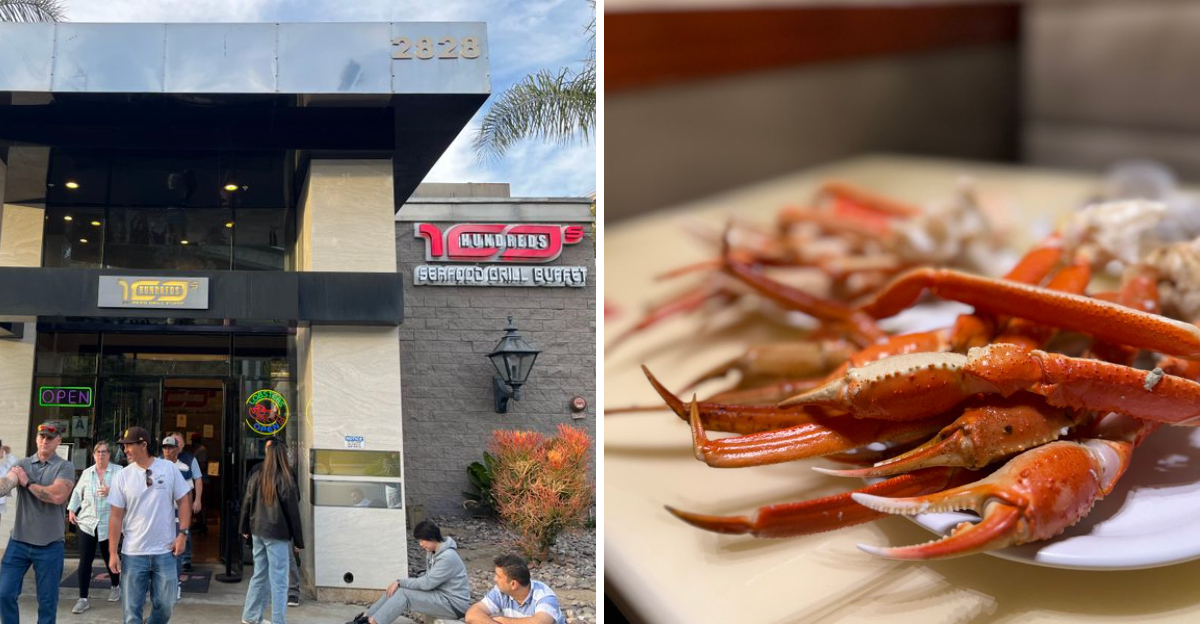
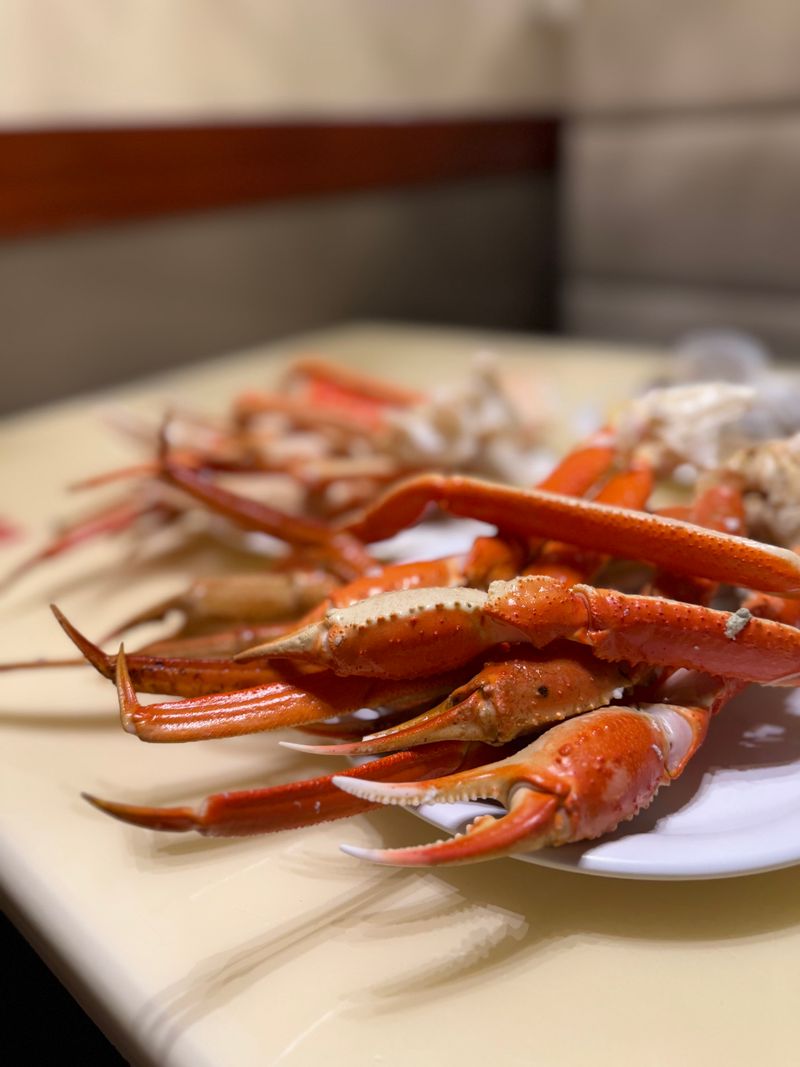
The 100s Seafood Grill Buffet in San Diego stands out as a destination where generous portions meet quality preparation. Snow crab legs arrive perfectly steamed, ready to crack open and enjoy without any fuss.
The restaurant’s approach mirrors the communal dining style found in Southern coastal towns, where seafood feasts bring people together around shared tables.
From the moment guests step inside, the aroma of grilled seafood and the sight of endless options signal something special.
This buffet doesn’t just serve food; it creates an experience that honors the tradition of seafood done right.
1. Snow Crab Legs Take Center Stage
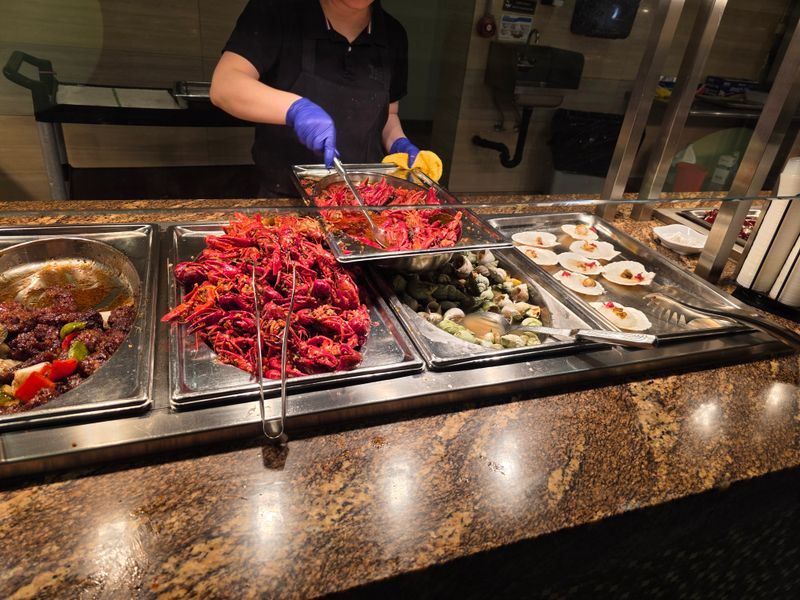
Snow crab legs represent the crown jewel of any serious seafood buffet.
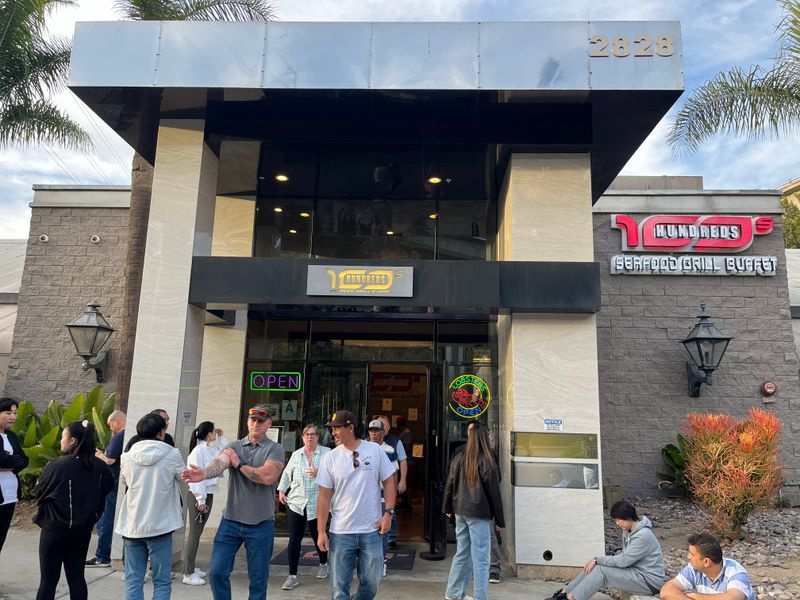
The 100s Seafood Grill Buffet at 2828 Camino del Rio S, San Diego, CA 92108 understands this perfectly, making these sweet, tender legs a constant presence on their serving line.
Each leg arrives steamed to perfection, with meat that slides out easily after a gentle crack. The natural sweetness of snow crab needs little enhancement beyond a small dish of melted butter.
Lowcountry diners know that good crab should taste like the ocean without being overly salty. This buffet achieves that balance, keeping the focus on the crab’s delicate flavor rather than drowning it in heavy seasonings.
The restaurant replenishes the crab legs frequently throughout service, ensuring guests always find warm, fresh options. Walking up to see a fresh tray emerge from the kitchen creates a moment of genuine excitement.
Cracking open crab legs at the table brings a hands-on element to dining that feels both relaxed and celebratory. The process slows down the meal in a good way, encouraging conversation between bites.
Many guests return specifically for the snow crab, building their entire visit around this single offering. The generous availability means no one needs to rush or worry about missing out.
2. Buffet Layout Encourages Exploration
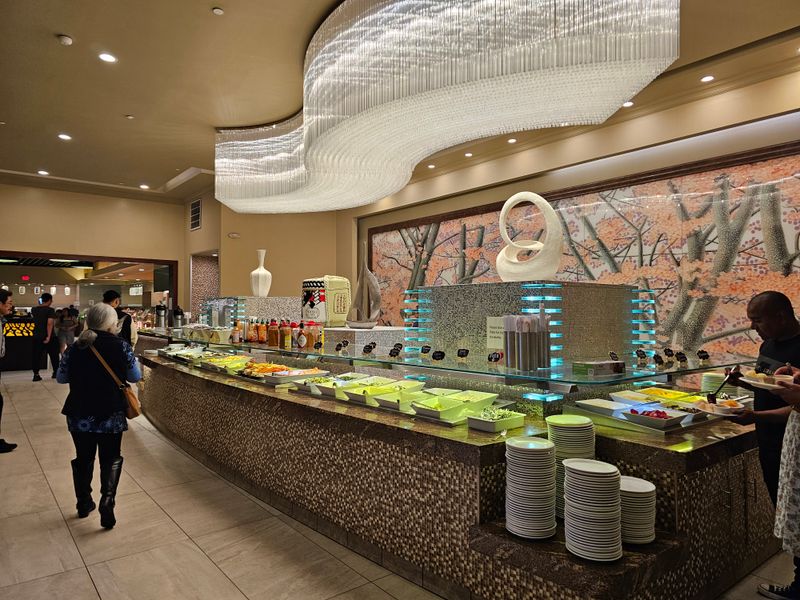
Walking into 100s Seafood Grill Buffet feels like entering a culinary playground designed for seafood enthusiasts.
The layout guides guests through different stations, each offering its own category of dishes. Starting at one end and working through to the other creates a natural flow that prevents crowding.
Clear labels help identify each dish, making it easy to spot favorites or discover something new. The buffet spans enough space to accommodate variety without becoming overwhelming.
Seafood occupies the prime real estate, with cooked items separated from raw sushi offerings. Lowcountry-style dining emphasizes abundance and choice, and this setup delivers both.
Guests can pile their plates high or take smaller portions to sample multiple items across several trips.
Lighting above each station highlights the food without creating harsh shadows or making the space feel overly bright.
The arrangement feels thoughtful rather than haphazard, with hot foods staying hot and cold items properly chilled. Serving utensils at each station stay clean and ready, replaced regularly by attentive staff.
The setup respects the food and the diners, creating an environment where everyone can serve themselves comfortably.
This kind of layout turns dining into an interactive experience rather than a passive one. Guests become active participants in building their meal.
3. Sushi Bar Adds Unexpected Variety
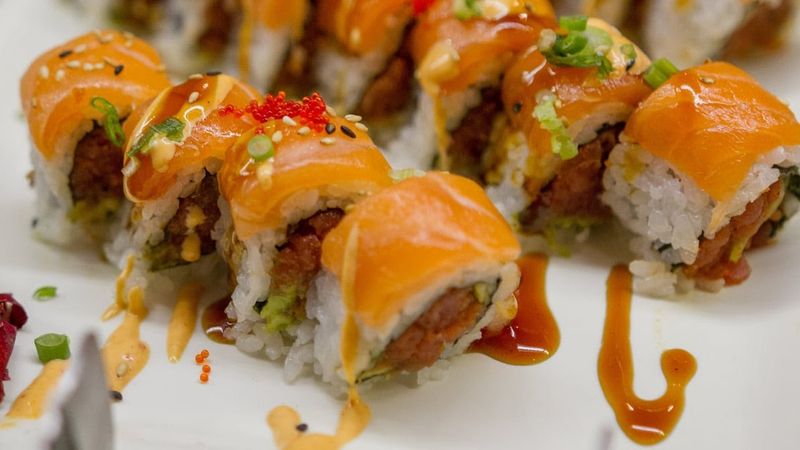
Not every seafood buffet includes a dedicated sushi bar, but 100s Seafood Grill Buffet makes it a centerpiece. Over thirty varieties of nigiri, sashimi, and specialty rolls sit ready for the taking.
Skilled sushi chefs prepare items fresh throughout service rather than letting pre-made pieces sit under lights.
The difference shows in the texture of the rice and the quality of the fish.
Traditional nigiri options include tuna, salmon, and yellowtail, while specialty rolls incorporate creative combinations of ingredients. Some rolls feature tempura crunch or spicy mayo, adding texture and flavor complexity.
For diners who grew up eating both Southern-style seafood and Asian cuisine, this combination feels natural rather than forced. California’s diverse food culture makes such pairings expected and welcome.
The sushi station offers a lighter counterpoint to the heavier fried and grilled options elsewhere on the buffet. Alternating between different styles keeps the palate interested across multiple plates.
Wasabi and pickled ginger sit in small dishes beside the soy sauce, allowing guests to customize their experience.
The presentation maintains standards found in dedicated sushi restaurants rather than taking shortcuts.
This section proves that a buffet can maintain quality across multiple cuisines without compromising on any single one.
4. Grill Station Brings Smoky Flavors
Grilled meats might not be the first thing that comes to mind at a seafood buffet, but the grill station at 100s Seafood Grill Buffet deserves attention. Chicken, ribs, sausage, and lamb rotate through the lineup daily.
The open grill setup allows guests to see their food cooking, with flames licking the edges of ribs and chicken pieces.
That visual connection to the cooking process adds an element of theater to the dining experience. Smoke and char mark each piece of meat, creating the kind of crust that only direct heat can achieve.
The flavors complement rather than compete with the seafood options scattered across other stations.
Lowcountry cookouts often feature both seafood and grilled meats side by side, making this combination feel familiar.
A plate might hold crab legs next to a piece of grilled chicken without any sense of contradiction. The meats arrive well-seasoned but not overpowering, letting the natural flavors shine through.
Marinades and rubs enhance rather than mask the protein underneath. For groups with mixed preferences, this station ensures everyone finds something satisfying.
Children who might hesitate at unfamiliar seafood can fill their plates with familiar grilled options.
The grill station rounds out the buffet, making it a true all-purpose dining destination rather than a single-focus restaurant.
5. Oysters Arrive Fresh And Ready
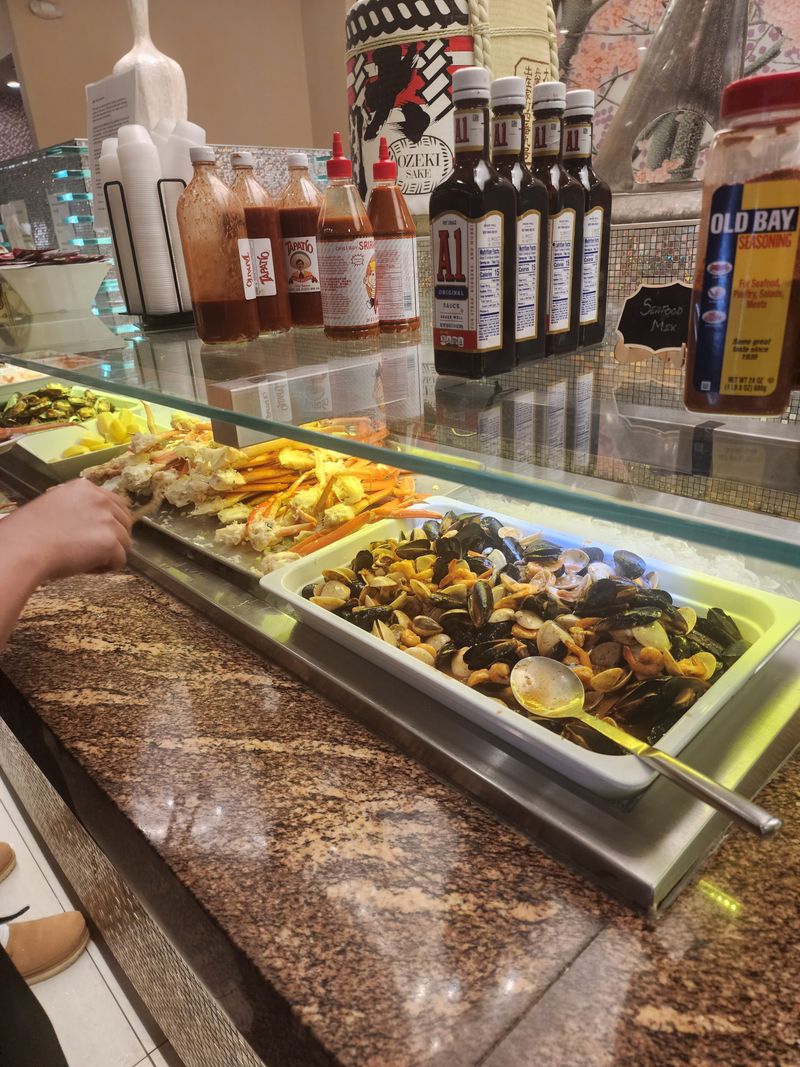
Raw oysters on the half shell represent a test of any seafood establishment’s commitment to freshness.
The 100s Seafood Grill Buffet passes this test by keeping oysters properly iced and regularly refreshed.
Each oyster sits in its shell, glistening and plump, ready to be topped with a squeeze of lemon or a dab of cocktail sauce. The presentation stays simple, letting the oyster’s natural brininess take center stage.
Lowcountry oyster roasts bring communities together over steaming piles of shellfish, and while these oysters arrive raw rather than roasted, they carry the same spirit.
Sharing a platter of oysters creates connection even in a buffet setting. The restaurant sources oysters that taste clean rather than muddy, with a sweet finish that lingers after swallowing.
Quality sourcing makes all the difference between mediocre and memorable oysters. Some diners approach the oyster station cautiously, trying their first raw oyster in the safety of a buffet environment.
Others return repeatedly, building small mountains of empty shells at their tables.
The availability of oysters at a buffet price point makes them accessible to people who might hesitate to order them at market price elsewhere. This democratization of premium seafood feels generous and welcoming.
Oysters add sophistication to the buffet without pretension, fitting naturally among the other seafood offerings.
6. Jumbo Shrimp In Multiple Preparations
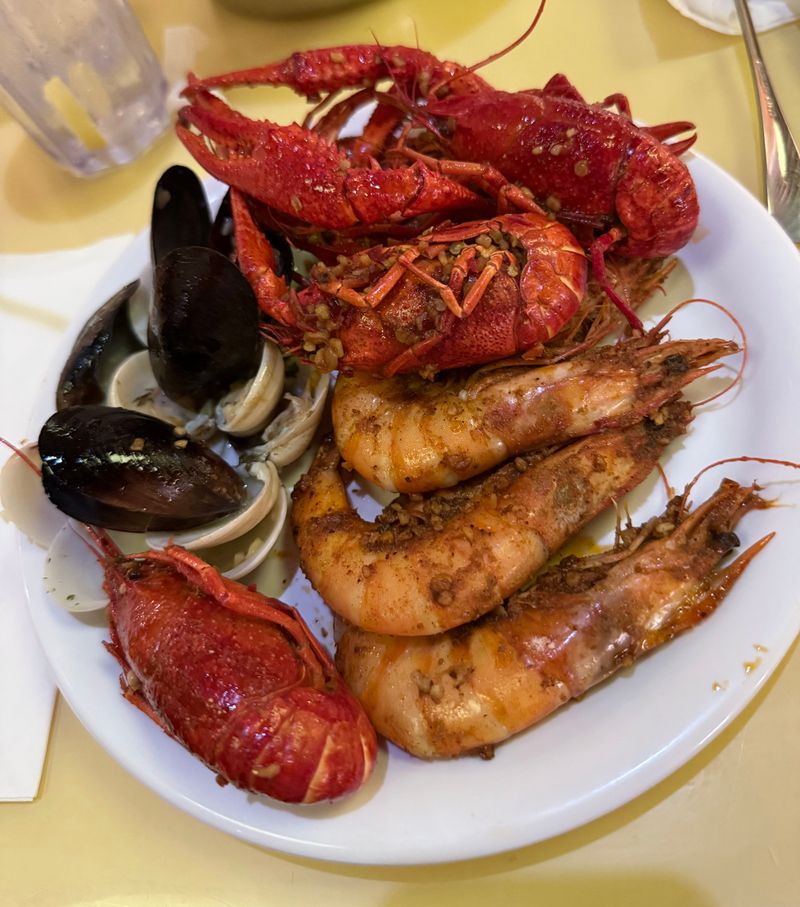
Shrimp appears in so many forms at 100s Seafood Grill Buffet that guests could build an entire meal around this single protein.
Jumbo shrimp arrive steamed, grilled, fried, and as part of various hot dishes. The steamed shrimp come already peeled, saving diners the messy work of shelling each piece.
Their size qualifies as truly jumbo rather than the inflated claims some restaurants make. Cocktail sauce and lemon wedges accompany the cold shrimp, while grilled versions carry char marks and light seasoning.
The variety means everyone can enjoy shrimp prepared the way they prefer. Lowcountry shrimp boils pile shrimp high with corn, potatoes, and sausage, creating communal feasts.
While this buffet presents shrimp differently, the abundance captures that same generous spirit. The shrimp taste sweet and clean, without any hint of ammonia or off flavors that signal poor quality.
Proper handling from boat to buffet shows in every bite. Children often gravitate toward shrimp as an approachable seafood option, and the fried versions provide a familiar entry point.
Adults appreciate the steamed and grilled preparations for their simplicity.
Returning to the buffet line for more shrimp becomes almost automatic once guests taste the quality. The unlimited format means no one needs to ration or save room.
7. Hot Dishes Bridge Multiple Cuisines
The hot dish section at 100s Seafood Grill Buffet showcases the restaurant’s willingness to blend culinary traditions.
Wok-prepared items sit alongside more traditional Western seafood preparations, creating unexpected but welcome combinations.
Stir-fried dishes might include vegetables mixed with seafood or meat, coated in sauces ranging from mild to spicy.
The variety reflects California’s position as a melting pot of food cultures. Some dishes lean heavily into Asian flavors with ginger, garlic, and soy-based sauces. Others take a more neutral approach, letting the main ingredients speak for themselves.
Lowcountry cooking traditionally draws from African, European, and Native American influences, so the concept of blended cuisines feels familiar.
Food evolves when cultures meet, creating something new while honoring traditions. The hot dishes provide comfort and warmth, especially welcome during cooler months.
Steam rises from the warming trays, carrying aromas that draw guests over to investigate. These items work well for guests who want cooked seafood but prefer it in sauce or mixed with other ingredients.
Not everyone wants plain steamed fish, and these dishes accommodate different preferences.
Trying small portions of multiple hot dishes turns into a tasting journey across different flavor profiles. The buffet format encourages this kind of culinary exploration without commitment.
8. Dessert Station Ends Meals Sweetly
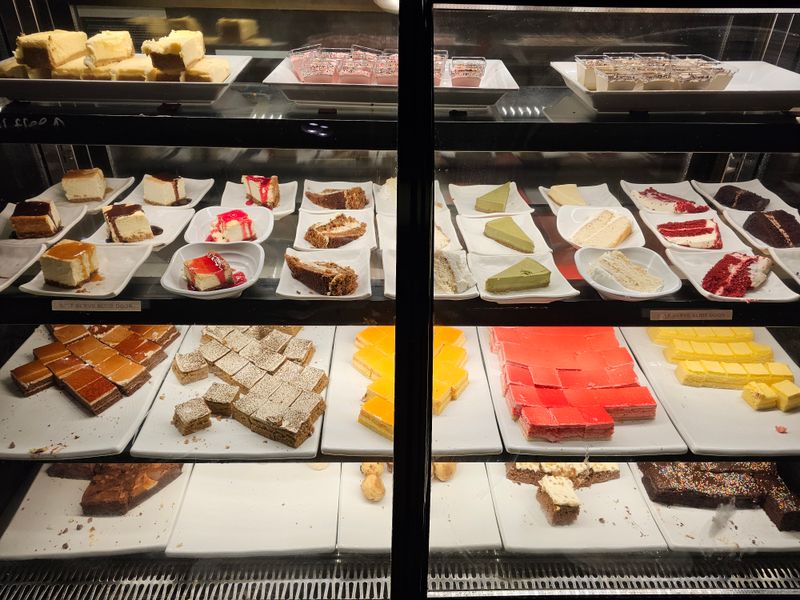
Finishing a seafood feast with something sweet completes the experience, and 100s Seafood Grill Buffet takes desserts seriously.
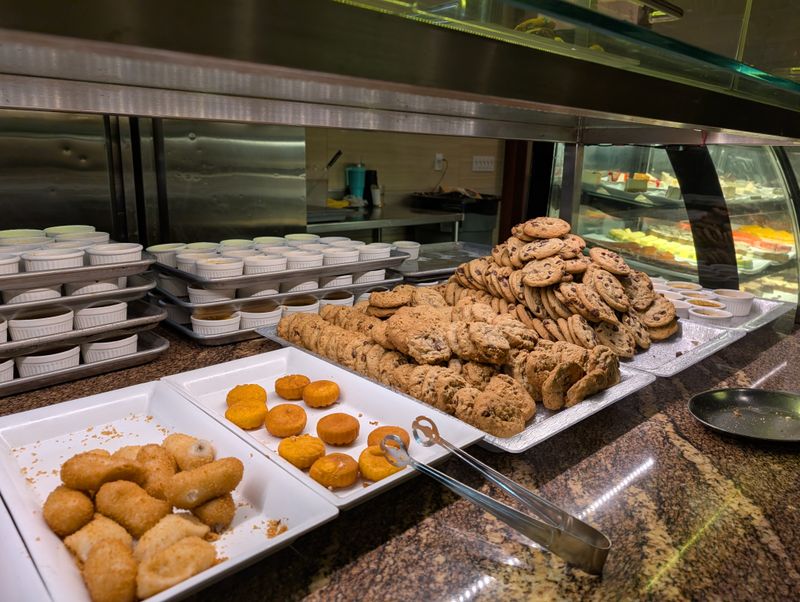
Freshly baked items include crème brûlée, cream puffs, cheesecake, and cookies alongside a large selection of Italian gelato.
The crème brûlée arrives with its signature caramelized sugar top, cracking satisfyingly under a spoon. Cream puffs stay light and airy rather than becoming soggy or stale.
Gelato flavors rotate but typically include classics like vanilla, chocolate, and strawberry along with more adventurous options. The smooth, dense texture of properly made gelato distinguishes it from regular ice cream.
Lowcountry desserts often feature pecans, sweet potatoes, and fruit cobblers, but the principle remains the same: ending a big meal with something indulgent.
The buffet’s dessert selection honors that tradition even if the specific items differ.
Portion control becomes challenging when facing multiple dessert options, leading many guests to take small samples of several items. This approach maximizes variety without creating overwhelming fullness.
The dessert station stays well-stocked throughout service, with staff replacing empty trays promptly. Presentation remains attractive even during busy periods, showing respect for the final course.
Leaving a seafood buffet satisfied but not uncomfortably stuffed requires strategy, and ending with a light dessert helps achieve that balance.
9. Operating Hours Accommodate Different Schedules
Timing matters when planning a buffet visit, and 100s Seafood Grill Buffet operates on a schedule that works for most diners.
The San Diego location opens at 4:00 PM on weekdays and stays open until 9:00 PM. Weekends expand the schedule, with doors opening at noon on both Saturday and Sunday.
This earlier start time accommodates lunch crowds and families with children who eat earlier. The restaurant closes on Tuesdays, giving staff a consistent day off. Knowing this prevents disappointed guests from showing up to locked doors mid-week.
Special events like Lobster Thursday add variety to the weekly routine, giving regulars something to anticipate.
These themed nights create excitement beyond the standard menu offerings.
Arriving early in the service period means finding fresh food and empty tables, while later arrivals might encounter more crowds but still find plenty of options. Neither time proves definitively better; it depends on personal preference.
Lowcountry fish shacks and seafood restaurants often operate on similar limited schedules, opening for dinner service rather than all day.
This approach allows staff to focus on quality during specific hours rather than spreading resources thin.
Checking the schedule before visiting prevents wasted trips and ensures the restaurant is open when guests arrive. A quick phone call or website check takes minimal effort but saves significant frustration.
10. Location Serves San Diego Diners
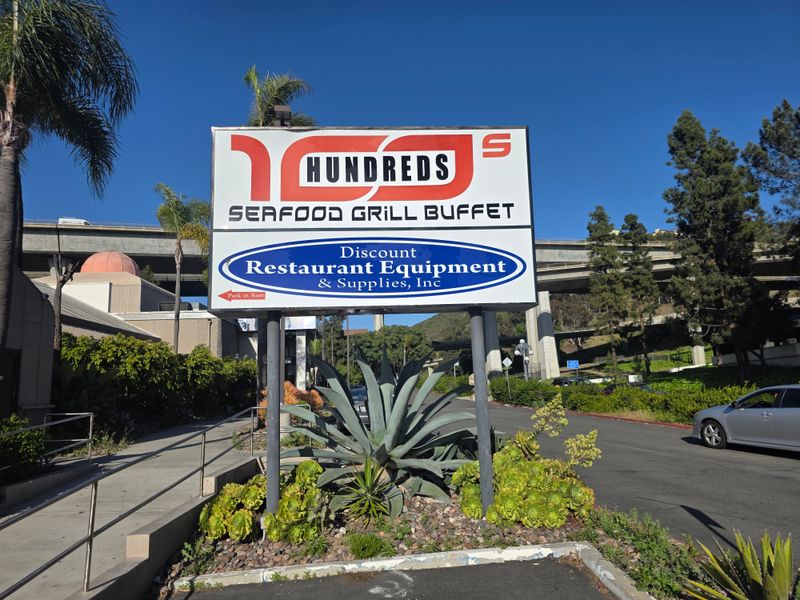
The 100s Seafood Grill Buffet operates in San Diego, making it a destination for Southern California residents and visitors.
San Diego’s coastal location makes it a natural fit for a seafood-focused restaurant. Guests planning to visit should confirm the specific address and location before traveling.
San Diego’s proximity to the Pacific Ocean ensures access to fresh seafood, with fishing boats bringing in daily catches. This geographic advantage shows in the quality of what appears on the buffet line.
Lowcountry regions benefit from similar coastal access, with shrimp boats and oyster beds supplying local restaurants.
The connection between location and food quality remains consistent regardless of which coast we’re discussing.
California’s diverse population means restaurants succeed by offering variety and accommodating different tastes.
A buffet format fits this environment perfectly, giving everyone options rather than forcing consensus.
The restaurant’s location in San Diego makes it accessible to locals looking for regular dining options and tourists seeking memorable meals. Parking and directions should be confirmed before visiting to avoid confusion.
Understanding where the restaurant actually operates prevents disappointment and ensures guests arrive at the correct location ready to enjoy their meal.