12 Enchanting Caves In California That Will Take You To Another World
Darkness swallows the light. The air turns cool and still. One step forward, and the world above disappears.
Beneath California’s mountains and deserts, entire worlds wait in silence. Water carved some of them. Fire forged others. Time shaped them all.
Twisting passageways open into cathedral-sized chambers. Crystal formations shimmer in flashlight beams. Ancient lava tubes stretch farther than you expect, bending into shadows that feel endless.
These are not theme park recreations. These are real underground landscapes built over millions of years.
Every cave tells a different story. Some echo with dripping water that still sculpts the rock. Others stand frozen in time, their mineral formations growing at a pace too slow to see but impossible to ignore.
Stepping below the surface changes your sense of scale. The temperature drops. Sounds soften. The outside world feels distant.
California holds some of the most striking and accessible cave systems in the country, making it possible to experience geology up close without specialized training.
You do not just tour these places. You feel them.
1. Lava Beds National Monument – Tulelake
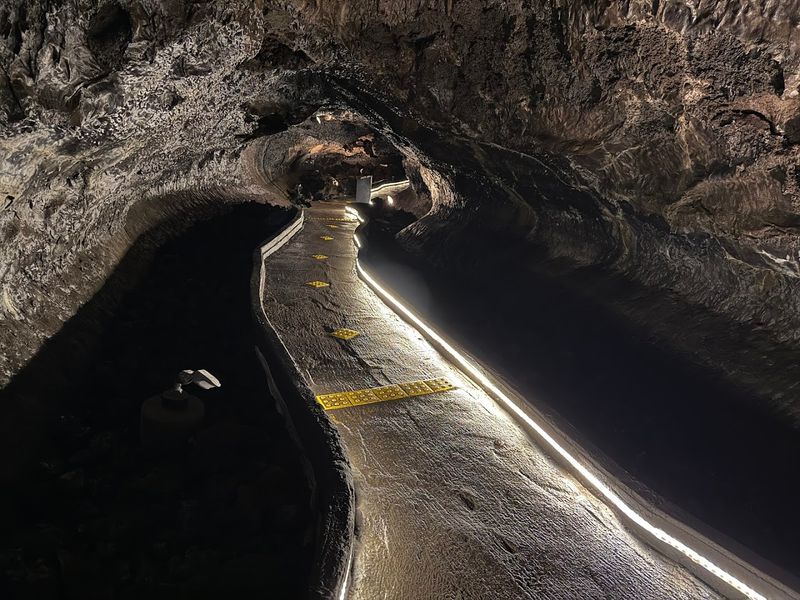
Volcanic activity thousands of years ago created more than 700 caves beneath the high desert landscape near the Oregon border.
The monument at 1 Indian Well in Tulelake protects these lava tubes along with cinder cones and other volcanic features that tell the story of ancient eruptions.
Visitors can explore caves ranging from easy walks to challenging crawls through narrow passages.
Mushpot Cave serves as the introduction to the underground world here with lighting and interpretive signs explaining how lava tubes form.
Beyond that single developed cave, adventurers can pick up free flashlights at the visitor center and choose from dozens of other caves to explore on their own.
Some require only a short walk from parking areas while others demand scrambling over rough volcanic rock.
The caves stay cool year-round, making them a relief during hot summer days above ground. Winter brings snow that can block cave entrances and make trails slippery.
Spring and fall offer the most comfortable conditions for exploring multiple caves in a single visit.
The monument sits in a remote area, so bringing extra batteries and sturdy shoes becomes essential for anyone planning to venture beyond the main cave.
2. Moaning Caverns Adventure Park – Vallecito
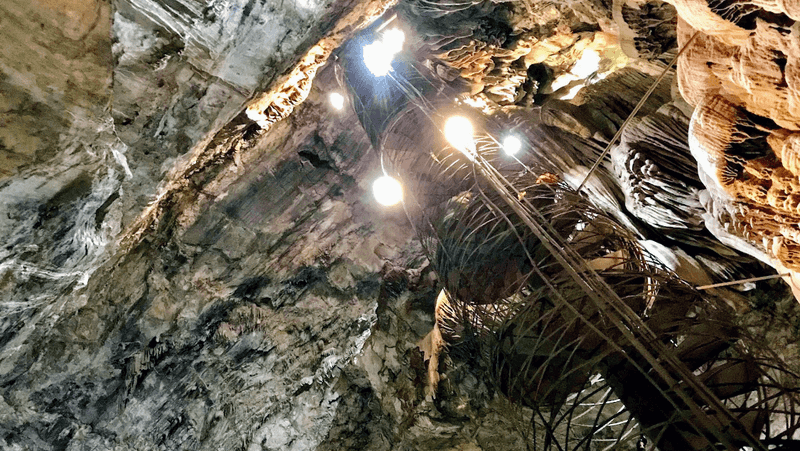
A spiral staircase drops 165 feet into the largest single cave chamber in California, where the ceiling arches high overhead and the walls disappear into shadows.
The cavern earned its name from sounds that once echoed through the entrance, though changes to the opening have silenced the moans that early visitors described.
Walking tours follow the staircase down and then loop through the main chamber, giving everyone a chance to stand at the bottom and look up at the massive space.
The adventure park at 5350 Moaning Cave Road in Vallecito offers more than just the walking tour for those seeking extra thrills.
A rappelling adventure lets participants descend the full 165 feet on rope, and a three-hour expedition crawls through undeveloped passages beyond the main chamber.
Above ground, zip lines and a climbing tower add outdoor activities to the cave experience. The cavern maintains a constant temperature that feels cool in summer and mild in winter.
The main chamber stays well-lit during tours, but the expedition route requires crawling through tight spaces in near darkness.
Reservations help secure tour times, especially during summer weekends when families fill the schedule.
3. California Cavern – Mountain Ranch
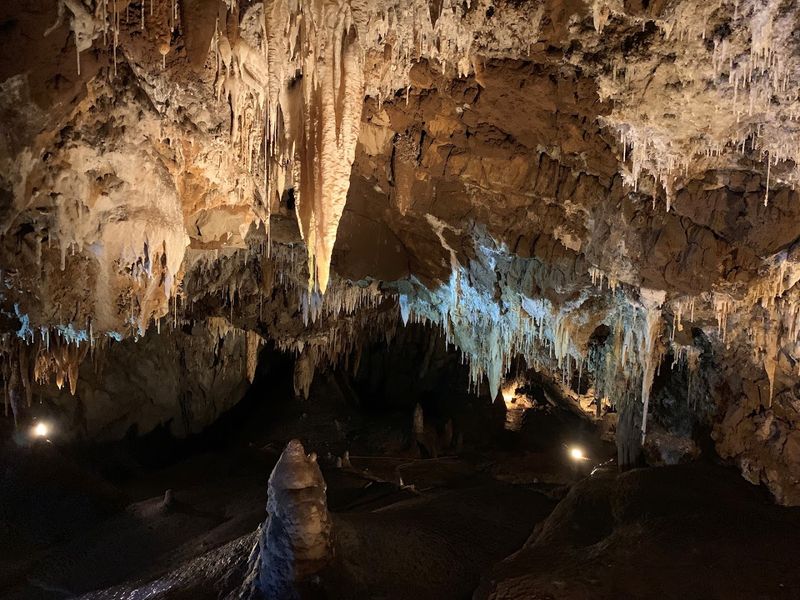
Discovered in 1849, this cavern became one of the first show caves in the state and hosted visitors throughout the Gold Rush era.
The standard tour at 9565 Cave City Road in Mountain Ranch follows level walkways through rooms decorated with flowstone, stalactites, and other formations that developed over thousands of years.
Guides explain the geology and history while pointing out features that early visitors named based on what they imagined the shapes resembled.
This tour ventures beyond the developed passages into areas where participants must crawl, squeeze through tight spots, and climb over breakdown rock.
The expedition takes several hours and requires physical fitness plus a willingness to get dirty in the mud that coats some passages.
Both tours maintain comfortable temperatures, though the undeveloped sections feel more humid than the main route.
The cavern operates year-round with tours running on weekends during winter and daily during summer months.
Wearing layers makes sense since the walk back to the parking area can feel warm after spending time in the cool underground environment.
4. Mercer Caverns – Murphys
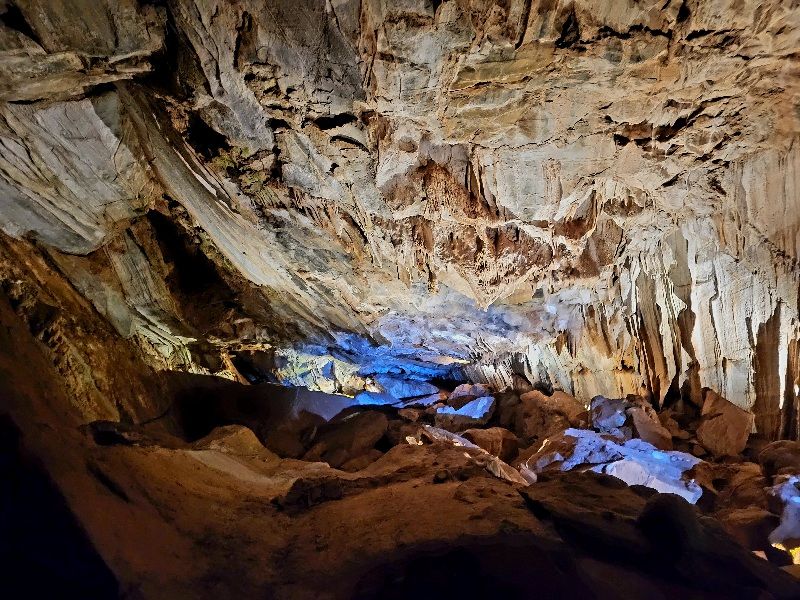
A miner searching for gold in 1885 instead found a vertical shaft dropping into decorated chambers filled with unusual formations.
The cavern opened to tourists within months of its discovery and has been showing visitors underground wonders ever since.
Tours descend through a series of rooms connected by steep stairs, passing formations that include rare aragonite crystals shaped like flowers.
Located at 1665 Sheep Ranch Road in Murphys, the cavern sits in the heart of Gold Country where historic towns and wineries draw visitors year-round.
The tour route drops 161 feet below the surface through ten chambers, each with different types of formations. The descent requires climbing down many stairs, and the return trip back up takes some effort.
The cavern temperature stays around 55 degrees regardless of the weather outside, making a light jacket comfortable for most visitors. Tours run throughout the year with more frequent departures during summer.
The entire tour takes about 45 minutes, and the small group size keeps the experience intimate rather than crowded.
5. Black Chasm Cavern – Volcano
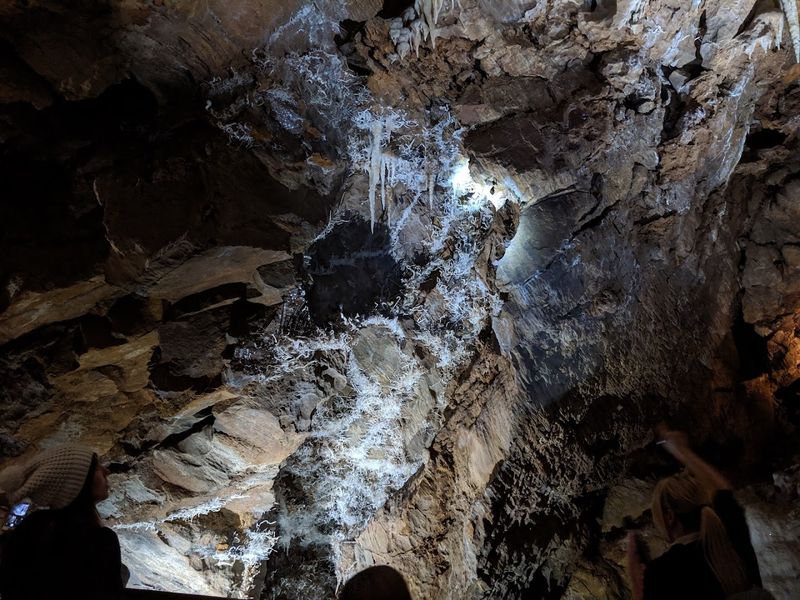
Rare helictite crystals cover the ceiling and walls of this cavern like a forest of twisted stone icicles that seem to defy gravity.
These delicate formations grow in directions that appear random, curving and spiraling instead of hanging straight down like typical stalactites.
The concentration of helictites here ranks among the finest displays in any show cave, earning the cavern designation as a National Natural Landmark.
The walking tour at 15701 Pioneer Volcano Road in Volcano follows a suspended walkway that protects the formations while bringing visitors close enough to see the intricate details.
The route stays level and accessible, making it suitable for most fitness levels.
The entire tour takes about 50 minutes and covers geology, formation types, and the history of the cavern’s discovery in 1854.
Above ground, visitors can try gemstone mining at sluices where staff provide buckets of mining rough and help identify finds.
The cavern stays open year-round with daily tours during summer and weekend tours during winter months.
The town of Volcano itself preserves Gold Rush history with old buildings and a quiet main street that feels frozen in the 1850s. Combining the cave tour with a walk through town creates a full afternoon of exploration.
6. Mitchell Caverns – Providence Mountains State Recreation Area
Limestone caves hidden in the Providence Mountains rise above the Mojave Desert floor like an island of rock in an ocean of sand and creosote.
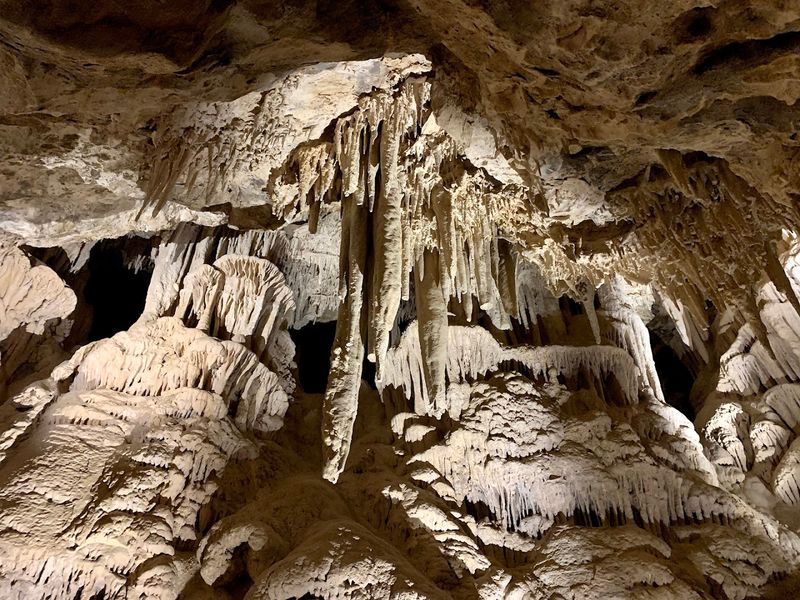
The caverns at 38200 Essex Road in Essex formed in an ancient reef that grew in a shallow sea millions of years ago, and the formations inside display colors ranging from white to orange depending on the minerals present.
Tours explore both El Pakiva and Tecopa caves, which connect through passages decorated with stalactites, stalagmites, and draperies.
Access requires a drive on a steep paved road that climbs from the desert floor to the visitor center at the cave entrance.
The caverns currently operate on a limited schedule with tours available only on specific dates, so checking ahead becomes essential before making the drive.
The preserve sits far from any town, and cell service remains unreliable throughout the area.
Summer temperatures in the desert can exceed 110 degrees, but the caves maintain a comfortable 65 degrees year-round. The tour involves walking through uneven passages and climbing some stairs.
Spring brings wildflowers to the desert and offers the most pleasant weather for exploring both the caves and the surrounding preserve.
The remote location means bringing extra water and supplies for the drive becomes important.
7. Crystal Cave – Sequoia National Park
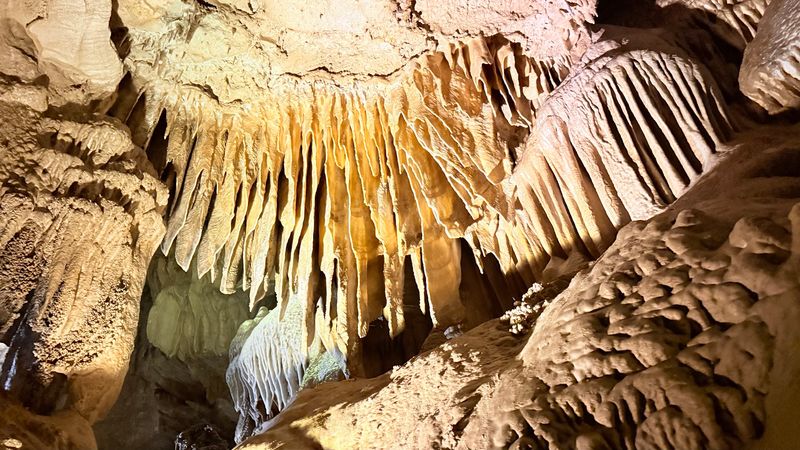
Carved from marble by an underground river, this cave winds through the mountains beneath giant sequoia groves with passages that gleam white in the light.
The marble formed from limestone that was transformed by heat and pressure deep underground, and water dissolved channels through the rock to create rooms filled with formations.
Curtains of stone hang from the ceiling while columns connect floor to roof in places where stalactites and stalagmites met.
Tours depart from the cave entrance, which sits at the end of a narrow mountain road that drops from the main park highway.
The tour route follows a paved path through the cave for about 50 minutes, and the guide explains the geology and ecology of this underground environment.
The cave stays around 50 degrees year-round, so bringing a jacket makes the tour more comfortable even on hot summer days.
The access road opens only during summer months when snow has melted, typically from late May through September.
The walk from the parking area to the cave entrance covers half a mile with some elevation change. Combining the cave tour with a visit to nearby Giant Forest creates a full day of exploring the park.
8. Boyden Cavern – Kings Canyon National Park
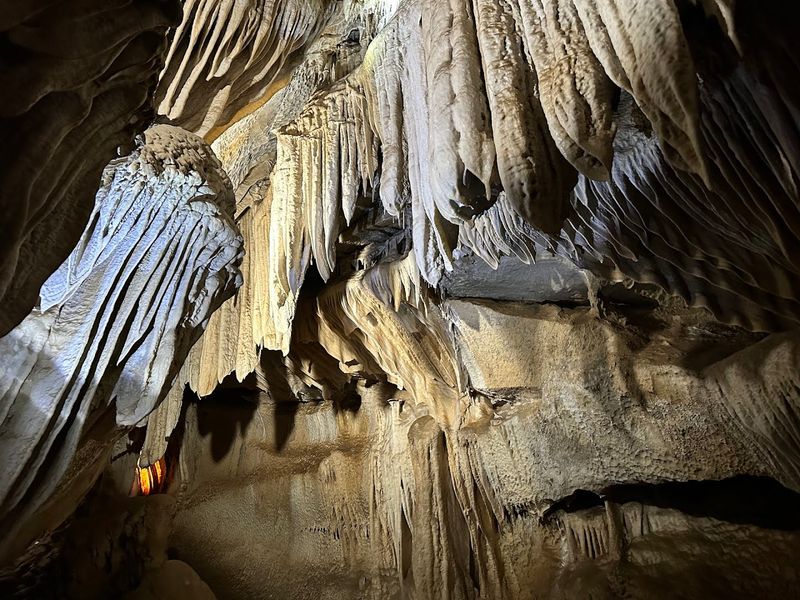
Tucked into the wall of Kings Canyon above the rushing river below, this cavern offers tours through rooms filled with formations that display every color from pure white to deep red.
The cave at Kings Canyon National Park, Sequoia National Forest 18 Miles East of Grant Grove developed in marble similar to Crystal Cave but shows different features due to variations in the rock and water chemistry.
Stalactites hang in clusters from the ceiling while flowstone coats the walls in sheets that look almost melted.
The cavern entrance sits along Highway 180 as the road follows the Kings River through the dramatic canyon.
Tours run frequently during the summer season and take about 45 minutes to complete.
The path inside includes some stairs and uneven surfaces but remains accessible for most visitors who can handle moderate walking.
Guides share information about cave formation and point out features that resemble familiar objects.
The cavern operates only during the summer months when the highway through the canyon stays open.
Winter snow closes the road, and the cave shuts down until the following spring. The temperature inside stays cool enough that a light jacket feels comfortable.
The tour size stays small enough that everyone can hear the guide and see the formations without crowding.
Parking sits right across from the cave entrance, making access convenient for anyone driving through the canyon.
9. Subway Cave – Old Station
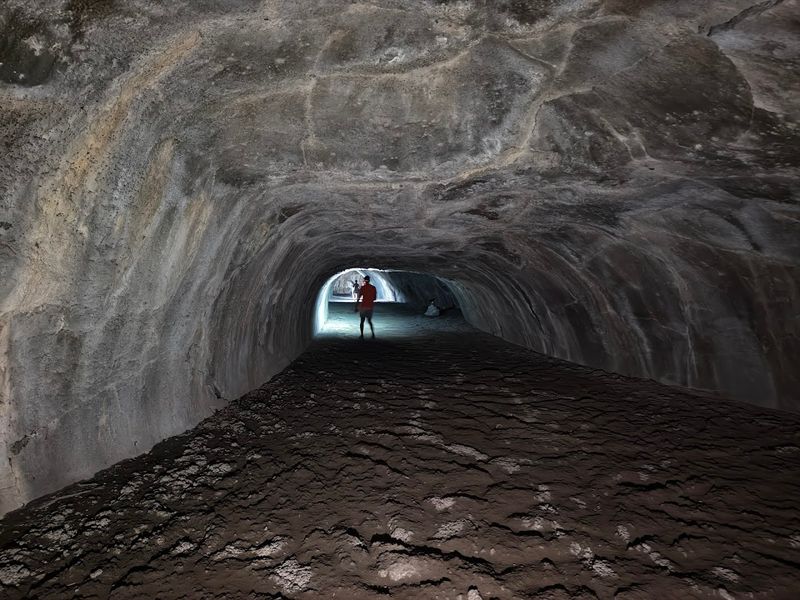
A collapsed section of roof creates a natural entrance into this lava tube that runs beneath the forest floor like a subway tunnel carved by molten rock.
The tube formed about 20,000 years ago when lava flowed from a nearby vent and the surface cooled while liquid rock continued moving underneath.
Eventually the lava drained away, leaving an empty tunnel with smooth walls that show the direction of the ancient flow.
The cave sits along Highway 89 between Lassen Volcanic National Park and Burney Falls, making it an easy stop during a drive through the region.
Visitors can walk through the entire tube on their own without a guide or fee. The passage stretches about a third of a mile from entrance to exit, and several openings along the route let in daylight.
Bringing a flashlight helps navigate the darker sections between the skylights. The floor stays uneven with loose rocks in places, so watching footing becomes important.
The cave remains cool year-round, though winter can bring ice that makes the floor slippery. Summer offers the easiest walking conditions.
The tube requires no special equipment beyond a light source and decent shoes. The entire walk takes about 20 minutes at a casual pace, and both entrances connect to the parking area.
10. Sea Caves – La Jolla
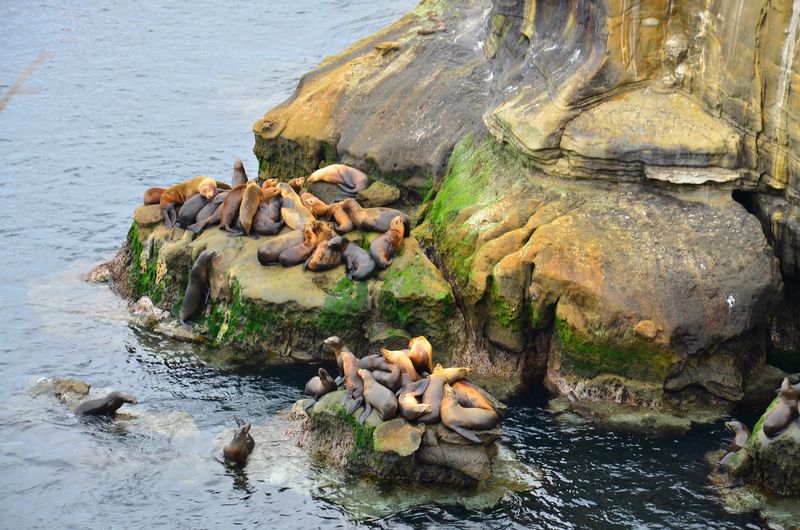
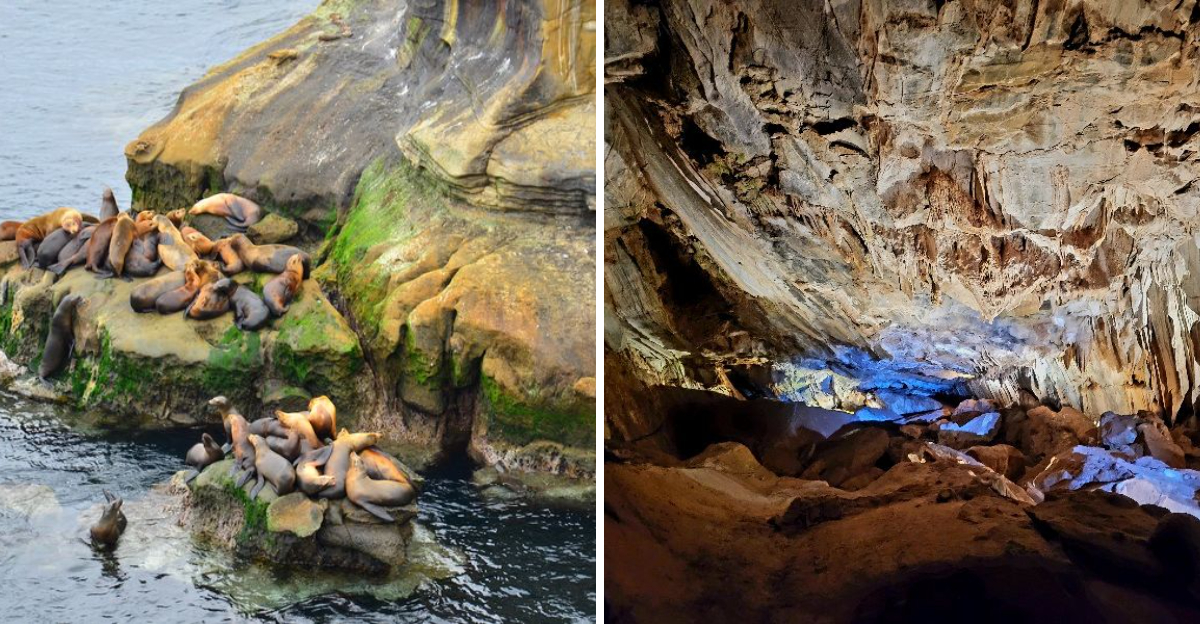
Natural caves carved by waves into the sandstone cliffs provide shelter for sea lions that haul out to rest between fishing trips.
These marine mammals gather in the caves during certain times of year, and the sound of their barking echoes off the rock walls.
The caves sit at the base of cliffs along the La Jolla coastline where tidepools and rocky shores create habitat for many species.
Access to the caves requires timing visits with low tide when water levels drop enough to reveal the entrances.
The caves can be viewed from above at several overlooks along the coast, or kayakers can paddle into some of the larger caverns during calm conditions.
The sea lions move between different caves and offshore rocks depending on tides, weather, and breeding season.
Summer brings the calmest ocean conditions for kayaking, while winter storms create dramatic waves that crash against the cliffs.
The sea lions remain active year-round, though their numbers vary with the seasons.
Viewing them from shore requires no special equipment, but getting close means dealing with the strong smell that comes from a colony of marine mammals.
The caves form part of a protected ecological reserve, so touching or disturbing the animals is prohibited.
Nearby streets offer parking, though spaces fill quickly during weekends and summer months.
11. Pinnacles National Park (Talus Caves) – Paicines
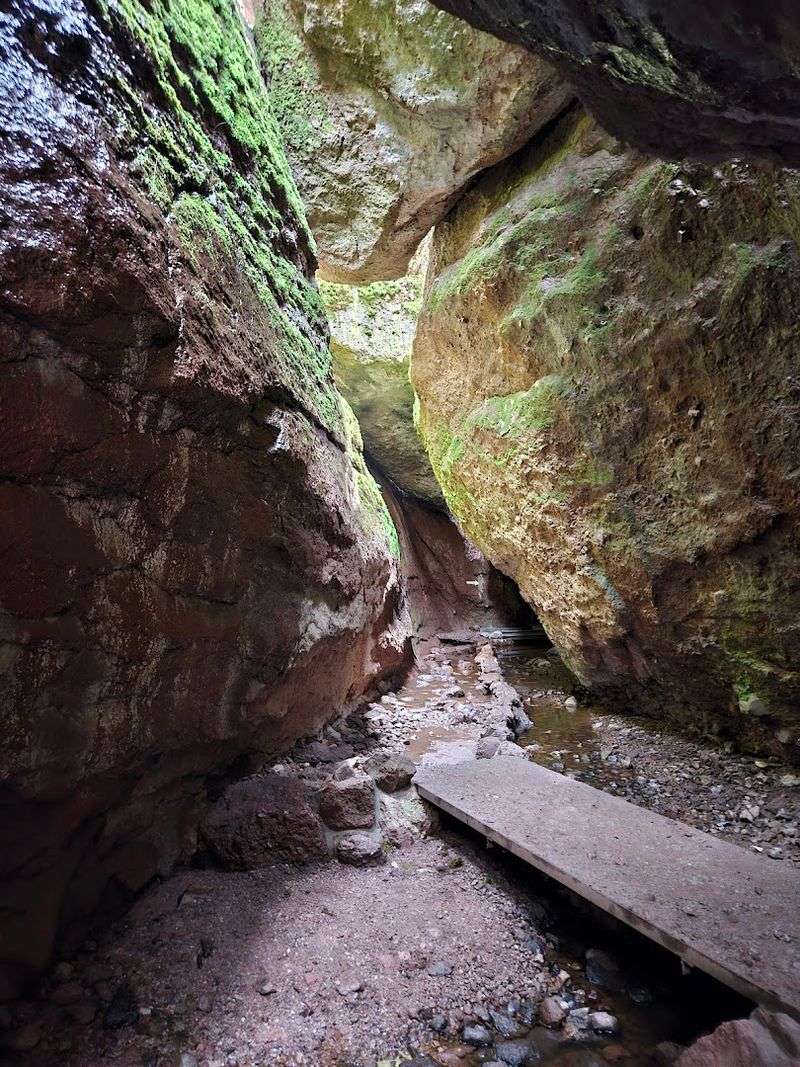
Massive boulders that tumbled from the cliffs above created caves by wedging against each other and leaving gaps underneath.
These talus caves differ from typical limestone caverns since they formed from rockfall rather than water dissolving stone.
The passages twist between huge rocks with some sections so narrow that visitors must turn sideways to squeeze through.
The park protects two separate cave systems called Bear Gulch and Balconies, both accessible via hiking trails that wind through the volcanic landscape.
Bear Gulch Cave requires a moderate hike to reach and includes sections with stairs built to help navigate the boulder maze.
Balconies Cave sits on the west side of the park and offers a slightly easier route through the talus. Both caves close seasonally to protect bat colonies that use them for breeding.
The caves provide cool relief during hot summer days, though their closure for bat protection often coincides with the warmest months.
Spring offers the best combination of open caves and mild weather. The passages stay completely dark in sections, making a flashlight or headlamp essential.
The uneven footing and tight spaces mean these caves work best for visitors comfortable with scrambling over rocks.
The park entrance sits far from major cities, and the drive to either side takes planning since no road crosses through the middle.
12. Lake Shasta Caverns – Lakehead
Reaching this cavern requires a boat ride across the blue waters of Shasta Lake followed by a bus trip up the mountainside to the entrance.
The journey to the cave becomes part of the adventure as the boat cuts across the reservoir and views open up to the surrounding mountains.
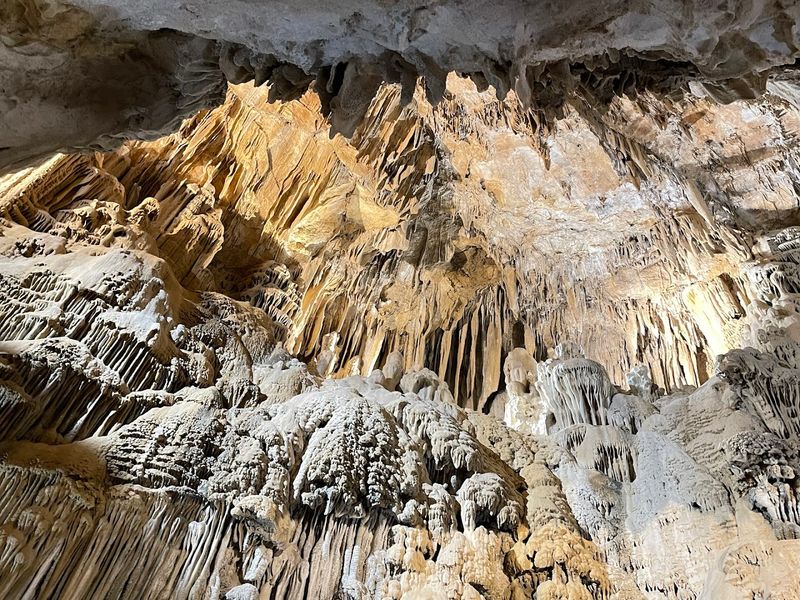
Once inside, the cavern displays formations that include stalactites, stalagmites, flowstone, and rare cave shields that grow in circular patterns.
Tours depart from the visitor center at 20359 Shasta Caverns Road in Lakehead, where boats leave on a regular schedule during operating season.
The entire experience takes about two hours including the boat ride, bus trip, cave tour, and return journey.
Inside the cavern, the route covers about 600 feet of passages with some stairs and elevation change. The formations show various colors created by different minerals in the water that formed them.
The cavern maintains a comfortable temperature year-round, staying around 58 degrees regardless of the heat outside. The tour operates from spring through fall, closing during winter months.
The boat ride adds a unique element not found at most cave tours and provides views of the lake that make the trip memorable even before entering the cavern.
Reservations help guarantee space on the boat, especially during summer weekends when tours can fill up.