This Iconic California Donut Shop Is Built Around A Giant Donut You Can Drive Through
There’s a split second when something by the roadside makes you look twice. Then you realize it is exactly what it looks like.
Not far from the everyday rhythm of traffic and strip malls, a giant donut rises into view and turns a simple stop into something memorable.
This unexpected landmark in California has been catching attention since the late 1960s, blending routine with a design that still feels surprising decades later.
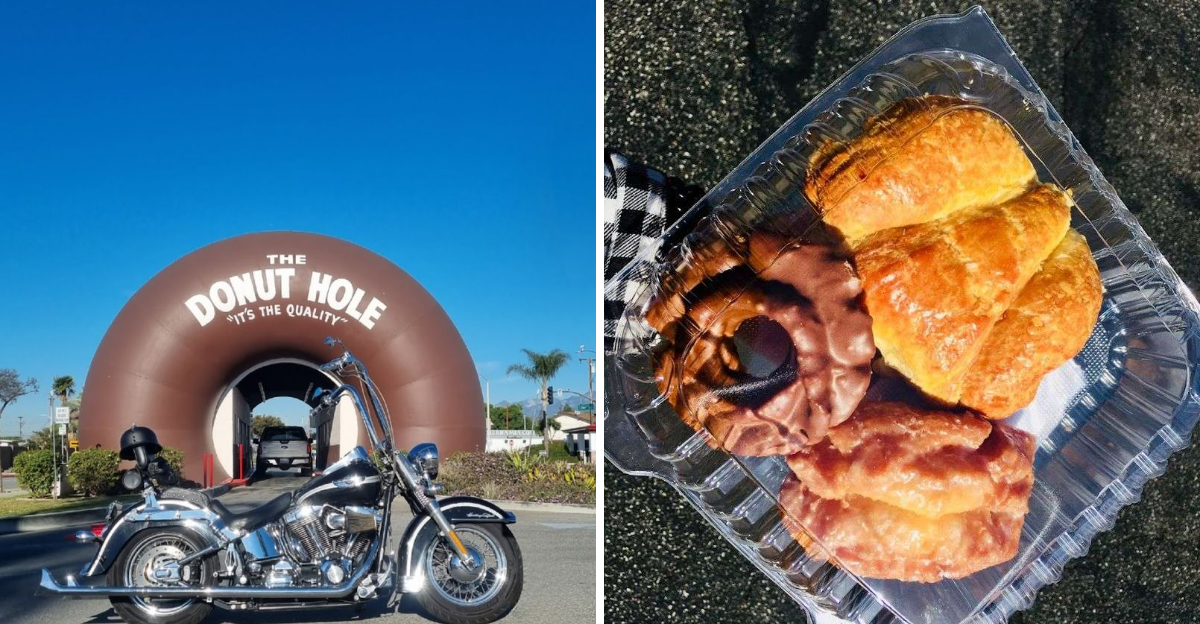
Cars do not just pull up here. They drive straight through the center of a massive donut to order and pick up their food. It is the kind of detail that sounds almost too playful to be real until you see it happening.
Part bakery, part roadside attraction, this place has built a reputation that stretches far beyond its immediate surroundings.
Locals return for the familiarity, while visitors from across California make the trip just to experience it for themselves.
It is a reminder that sometimes the most memorable stops are the ones no one expects to find.
The Shop Is Located On Amar Road In La Puente
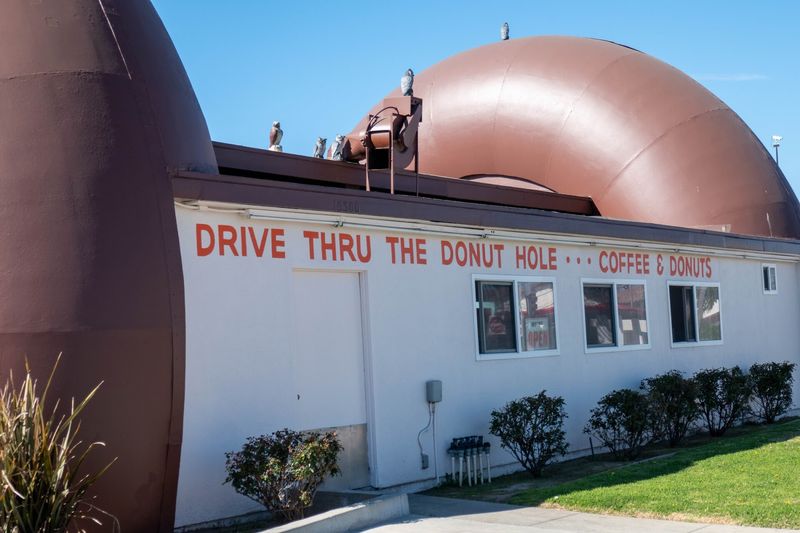
Finding the shop is straightforward once familiar with the La Puente area, and the building itself is hard to miss from the road.
The Donut Hole sits at 15300 Amar Rd, La Puente, CA 91744, positioned along a commercial stretch that makes it easy to approach by car from multiple directions.
The drive-through layout means the entire visit is designed around vehicle access, so pulling up and joining the line is the natural way to experience the shop.
The lane is described by frequent visitors as narrow, so drivers with larger vehicles may want to take the turn slowly and stay centered to avoid scraping against the donut structure on either side.
Parking spots are available nearby for anyone who prefers to stop and enjoy their order before heading out, though the setup is primarily built for a quick drive-through experience.
The surrounding neighborhood is a mix of residential and commercial buildings, giving the area a grounded, everyday feel rather than a tourist-heavy atmosphere.
Stopping here feels more like discovering a neighborhood gem than visiting a staged attraction, which is a big part of what makes it so appealing to both regulars and first-time visitors.
A Building Shaped Like A Giant Donut You Actually Drive Through
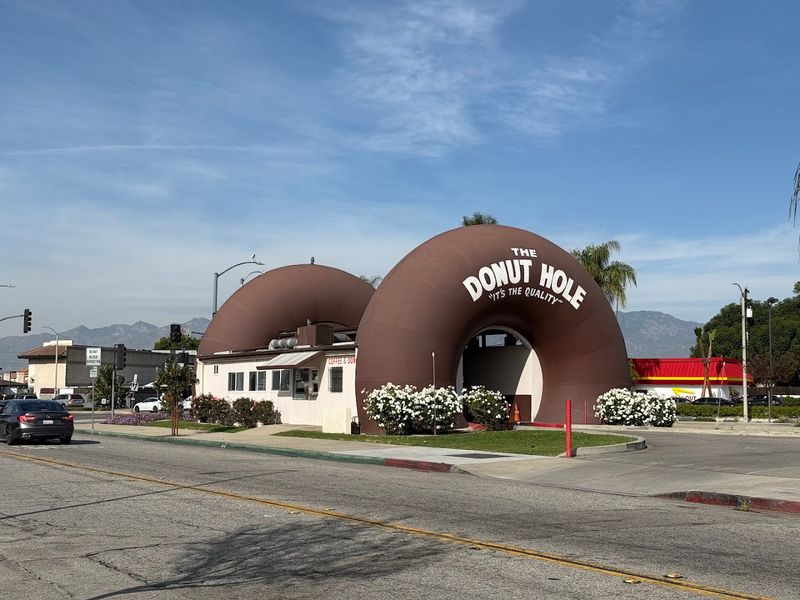
Not many buildings in the country can claim to be both a functioning snack shop and a piece of roadside sculpture, but The Donut Hole in La Puente pulls it off effortlessly.
The structure features two oversized fiberglass donuts built directly into the architecture, and the entire drive-through lane passes straight through the center of each one.
Customers roll in through the first giant donut, cruise slowly past a display case of fresh-baked options, place their order at the service window, and exit through the second donut on the other side.
The experience feels both playful and oddly practical at the same time.
Architects and historians refer to this style as programmatic architecture, where a building is shaped to look like the product it sells.
Few examples of this style remain as intact and operational as this one, making it genuinely rare.
The donuts themselves are painted to look realistic, complete with frosting details, which makes the whole thing even more visually striking when seen in person for the first time.
It Has Been Around Since 1968
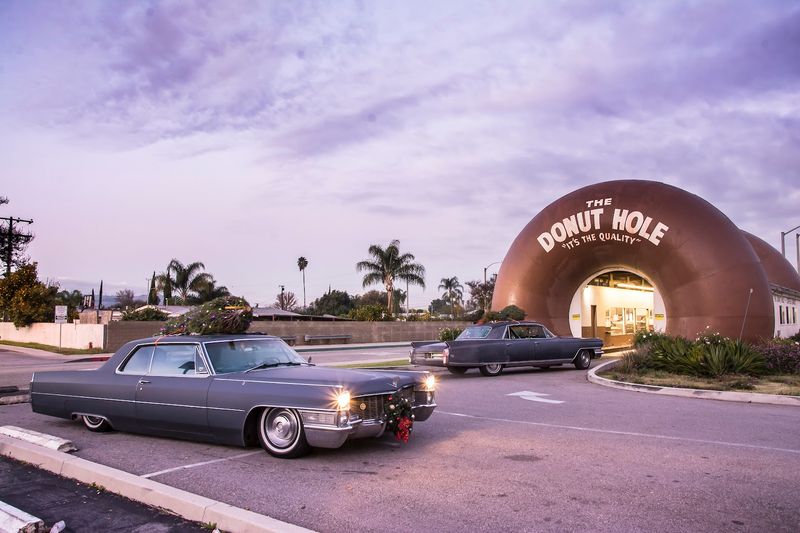
Opening in 1968, The Donut Hole has been serving the La Puente community for well over five decades, which is a remarkable run for any small food business.
The shop was actually the second location in a small chain of five Donut Hole establishments, but it stands apart as the only one that was built with the iconic giant donut architecture.
Surviving through changing neighborhoods, shifting food trends, and decades of competition, the shop has maintained a steady presence along Amar Road without losing its original character.
The building itself has not been dramatically altered from its original design, which is a big part of why it still feels so authentic to longtime visitors.
Longevity like this is rare in the restaurant world, especially for an independent shop that has never expanded into a large chain.
The fact that multiple generations of families in the area have grown up visiting the same building adds a layer of community meaning that goes well beyond the donuts themselves.
For many local residents, a trip to The Donut Hole is tied to childhood memories and family routines that have passed down over time.
The Architecture Is Classified As Programmatic Design
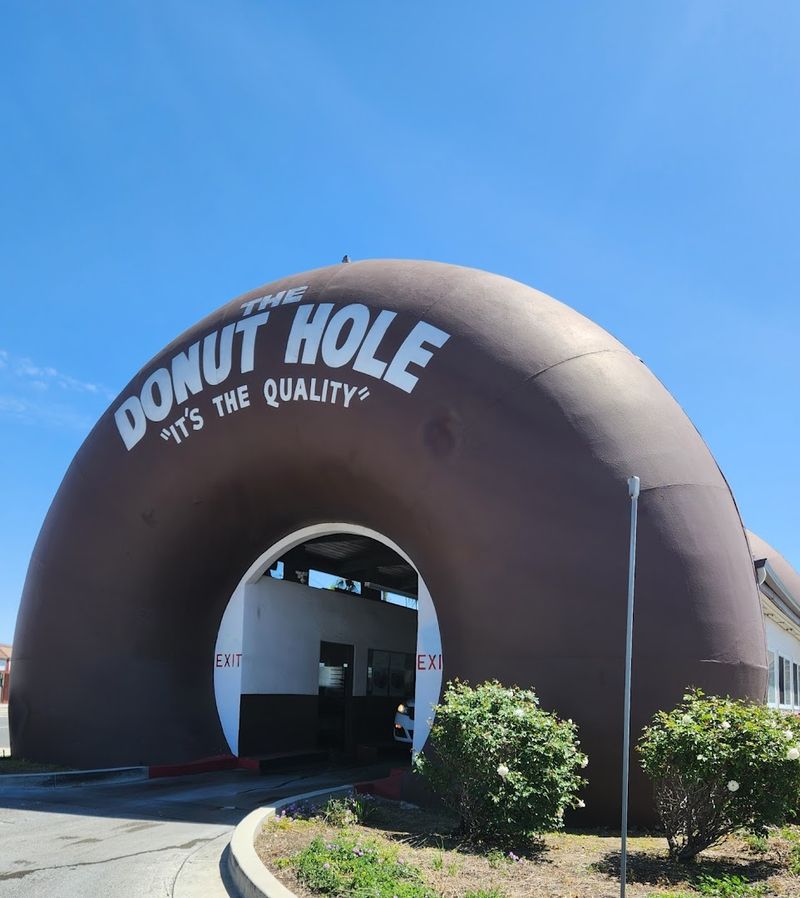
Programmatic architecture is a design style where the shape of a building communicates its purpose at a glance, often by resembling the product or service offered inside.
The Donut Hole is one of the most well-preserved and widely recognized examples of this style still standing in Southern California.
The Los Angeles Conservancy has documented the shop as a significant piece of architectural history, noting that the giant donuts are constructed from fiberglass and were carefully designed to look convincingly like real frosted donuts.
That kind of craftsmanship in a roadside commercial building was unusual even in the late 1960s when novelty architecture was more common along American highways.
As fast food chains replaced quirky independent shops throughout the 1970s and 1980s, many programmatic buildings were demolished or converted.
The Donut Hole survived that wave of change, which is one reason organizations like the Los Angeles Conservancy take an interest in its preservation.
Visiting the shop today feels a bit like stepping into a snapshot of mid-century California roadside culture, where creativity and commerce were genuinely blended in ways that still feel fresh and surprisingly fun decades later.
It Operates On A Cash-Only Basis
One detail worth knowing before pulling into the drive-through lane is that The Donut Hole accepts cash only and does not process card payments.
Keeping this in mind before arrival saves the awkward moment of reaching the order window without the right form of payment ready.
Prices at the shop are described by regular visitors as quite affordable, so the cash amount needed is generally modest.
Having a few small bills on hand is usually enough to cover a solid order, and the low price point is part of what makes the shop feel accessible to a wide range of customers regardless of budget.
The cash-only policy is a holdover from an older era of small business operation, and it fits the retro personality of the shop rather well.
Many visitors actually find it adds to the charm, reinforcing the sense that The Donut Hole has not tried to modernize itself in ways that might strip away its original character.
For anyone driving from a distance to visit, stopping at an ATM beforehand is a practical step that ensures the trip goes smoothly from the moment the car enters that first giant donut tunnel.
The Menu Includes Classic And Creative Donut Varieties
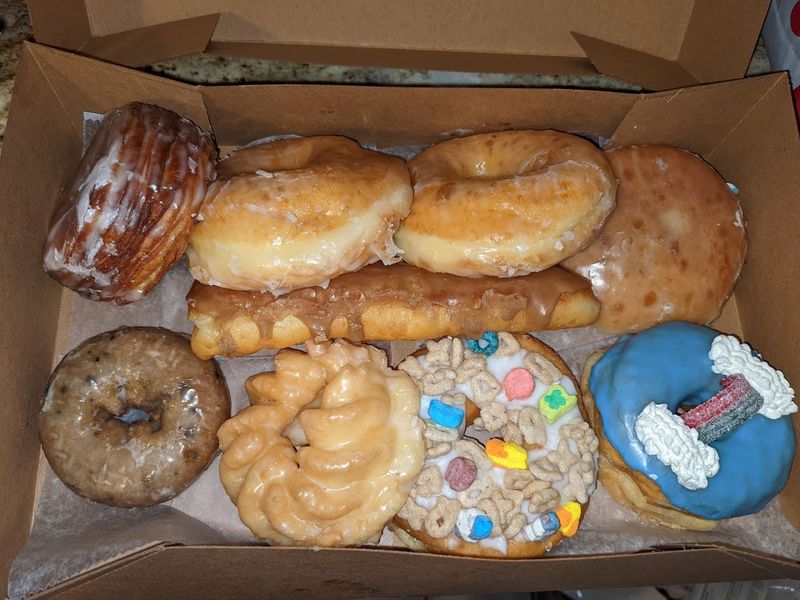
The menu at The Donut Hole covers a solid range of options, from straightforward classics to more inventive creations that give regular visitors a reason to try something new on each visit.
Glazed and chocolate frosted donuts represent the traditional end of the lineup, while options like the maple bacon donut and the Rainbow Donut lean toward the more playful side.
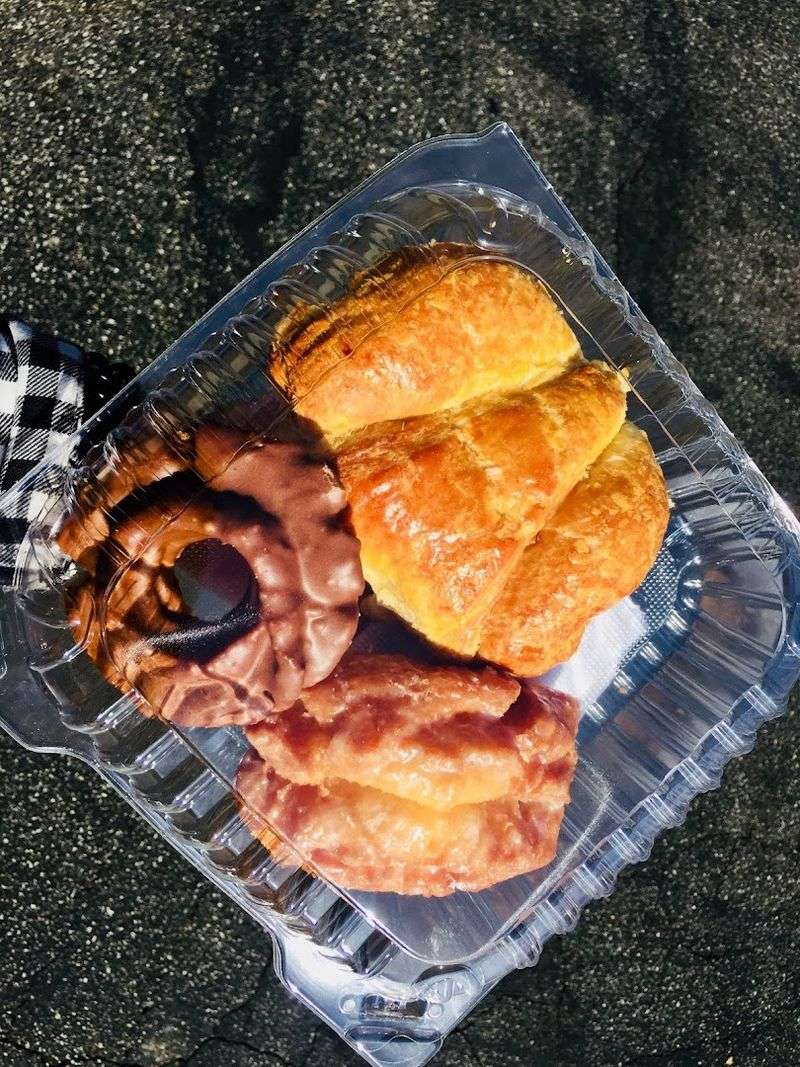
Apple fritters, old-fashioned donuts, buttermilk donuts, and cronuts have all been mentioned by visitors as standout items worth ordering.
The donut holes themselves, sold by the dozen, are described as light and airy with a texture that practically dissolves on the tongue, making them a popular choice for groups or families.
Croissants, sandwiches, and beverages are also available for those who want something beyond a sweet treat.
The display case is visible from inside the drive-through lane, allowing customers to browse options before reaching the order window, which helps keep the line moving at a reasonable pace.
Freshness tends to be a consistent theme in feedback about the shop, with many items described as tasting handmade rather than mass-produced, which makes a noticeable difference in overall quality and satisfaction.
Newlyweds Have A Tradition Of Driving Through The Donuts
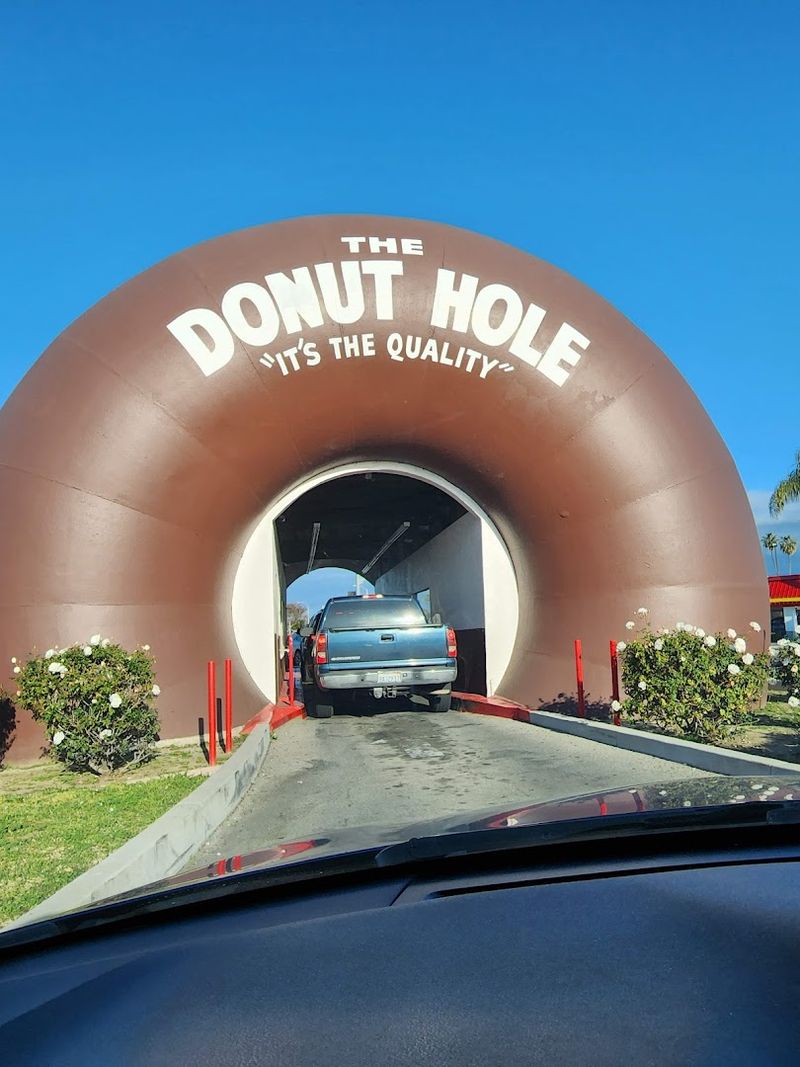
Among the more charming local customs associated with The Donut Hole is a tradition involving newlyweds.
Couples who have just gotten married sometimes make a point of driving through the giant donuts together, with some believing the act brings good luck to the new marriage and others treating it as a playful cultural ritual tied to the symbolism of the circular shape.
The circular form of a donut has long carried associations with unity and continuity in various cultural contexts, and the oversized scale of the donuts at this shop makes the gesture feel appropriately theatrical for a celebratory occasion.
Whether the tradition started as a spontaneous joke or a sincere custom is not entirely clear, but it has persisted long enough to become a recognized part of the shop’s local identity.
For visitors who are not newlyweds, knowing about this tradition adds an interesting layer to the experience of driving through.
The shop has accumulated decades of small stories and community rituals like this one, and they contribute to a sense of place that goes well beyond what the building itself communicates visually.
Roadside stops with this kind of accumulated folklore tend to leave a stronger impression than purely architectural novelty alone could ever achieve.
The Shop Appeared In The 1987 Film Dragnet
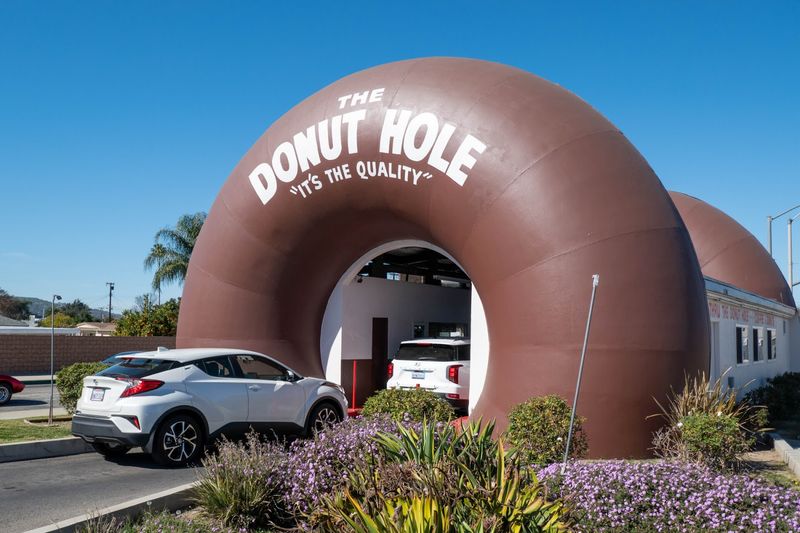
Pop culture gave The Donut Hole an early boost when it appeared in the opening scenes of the 1987 comedy film Dragnet, starring Dan Aykroyd and Tom Hanks.
The building’s unusual appearance made it a natural fit for a film looking to capture quirky Los Angeles-area visuals, and the brief screen time introduced the shop to audiences well beyond the San Gabriel Valley.
Film appearances like this one have a way of cementing a location’s status as a genuine landmark rather than just a local curiosity.
Being chosen as a filming location signals that the visual identity of a place is strong enough to communicate something to a broad audience without much explanation needed.
For visitors who arrive at The Donut Hole with some knowledge of its film history, the experience of driving through those giant donuts carries an extra layer of recognition.
The shop has not leaned heavily into its Hollywood connection as a marketing angle, which keeps the atmosphere grounded and unpretentious.
Knowing about the Dragnet appearance is more of a fun piece of trivia to carry into the visit than something that defines the experience, but it does add to the sense that this small bakery has quietly accumulated more history than its modest exterior might initially suggest.
It Is Considered One Of The Most Photographed Donut Shops In The Country
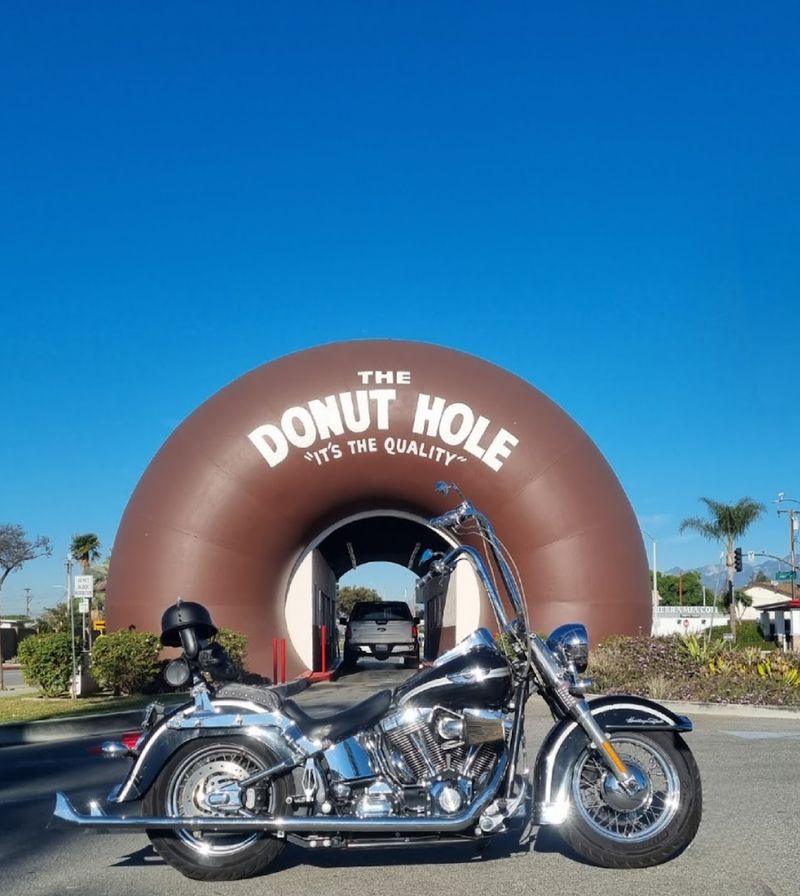
A building shaped like two enormous donuts is almost impossible to pass without reaching for a camera, and The Donut Hole has earned a reputation as one of the most photographed donut shops in the entire country.
The combination of the bold fiberglass structures, the working drive-through lane, and the retro color palette creates a visual that photographs well from nearly any angle.
Social media has amplified this quality significantly in recent years, with visitors sharing images of the building and their orders to a wide online audience.
The shop tends to attract people who are drawn to authentic, visually interesting places rather than polished tourist destinations, which gives it a genuine grassroots appeal that feels earned rather than manufactured.
Stopping to take a photo while in the drive-through line is part of the expected rhythm of a visit, and the slow pace of the lane accommodates that naturally.
For anyone traveling through the San Gabriel Valley with an interest in California roadside history or simply looking for a memorable detour, The Donut Hole delivers a visual payoff that holds up well even after seeing it in photos beforehand.
Seeing the actual scale of those donuts in person tends to be more impressive than any image fully captures.
The Los Angeles Conservancy Recognizes It As A Historic Place
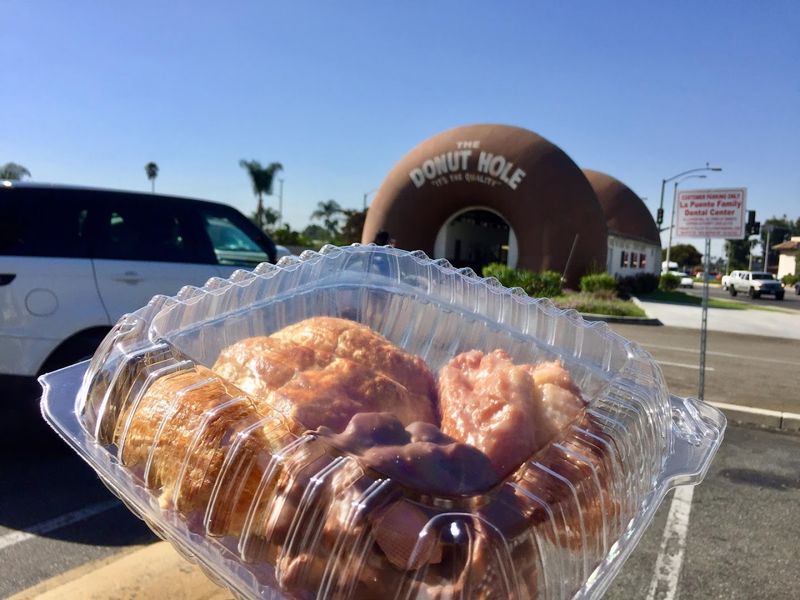
Recognition from the Los Angeles Conservancy places The Donut Hole in a meaningful category of structures worth preserving for their cultural and architectural significance.
The Conservancy documents the shop as a prime example of programmatic architecture from the late 1960s, a style that has largely disappeared from the Southern California landscape over the past several decades.
Being listed by an organization focused on historic preservation signals that the building has value beyond its commercial function.
The Conservancy’s interest in the shop helps raise awareness about the broader history of roadside architecture in California and encourages the kind of community attention that supports long-term preservation efforts.
For visitors who appreciate history alongside their food, knowing about this recognition adds context to the visit.
The Donut Hole is not just a quirky place to grab breakfast on the way to work.
It represents a specific moment in American commercial design when small business owners built structures that were bold, imaginative, and deeply tied to what they were selling.
Stopping here supports a living piece of that history, and the fact that the shop continues to operate daily means the building remains what it was always intended to be: a working, welcoming place rather than a preserved relic sitting behind a fence.