Just Outside Los Angeles, This California Farm Lets You Pick Sweet Cherries Straight From The Tree
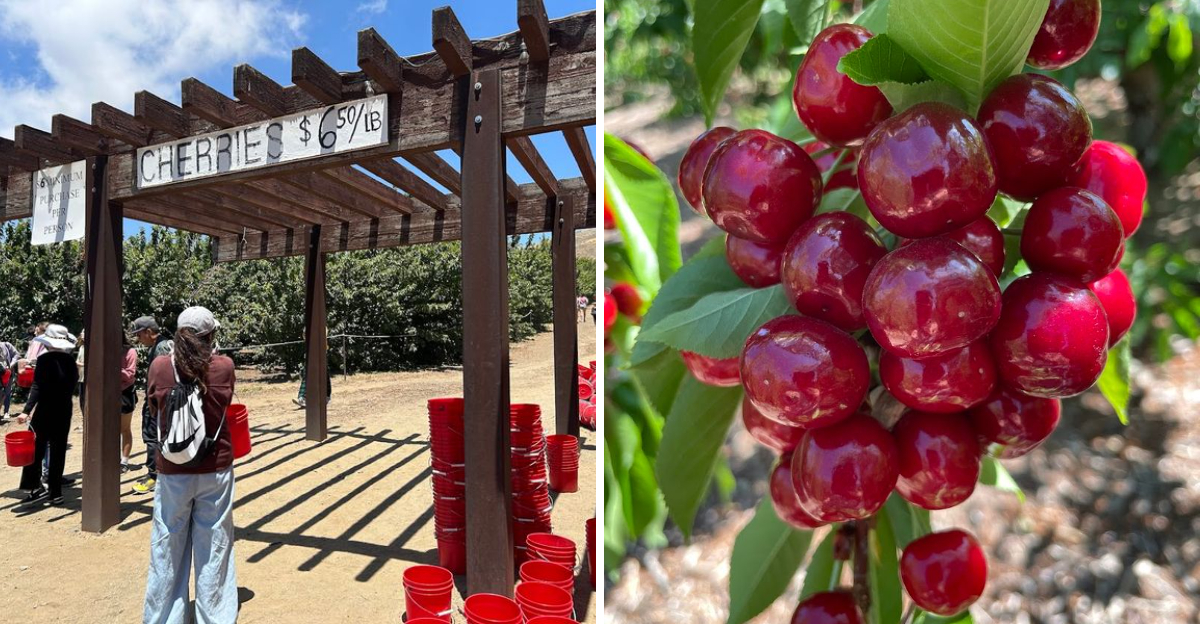
Fingers stain red before the basket even fills halfway. One taste leads to another, sweeter than expected, impossible to ignore.
Sunlight hits the rows at just the right angle. Trees line up in long stretches, branches dipping low with fruit that doesn’t stay untouched for long. A slow walk turns into stopping every few steps, scanning, reaching, choosing.
Conversations drift between the rows, something that plays out across California every spring when orchards open and the season takes over.
Which ones are ripest. Who found the best spot. Small moments that turn a simple outing into something more interactive, more hands-on than anything that comes in a store.
The short harvest window changes how people approach it. Plans revolve around timing. Leaving gets delayed.
What begins as a quick visit turns into a tradition people return to year after year, built around a season that never lasts quite long enough.
A Family-Owned Farm With Deep Roots In Leona Valley
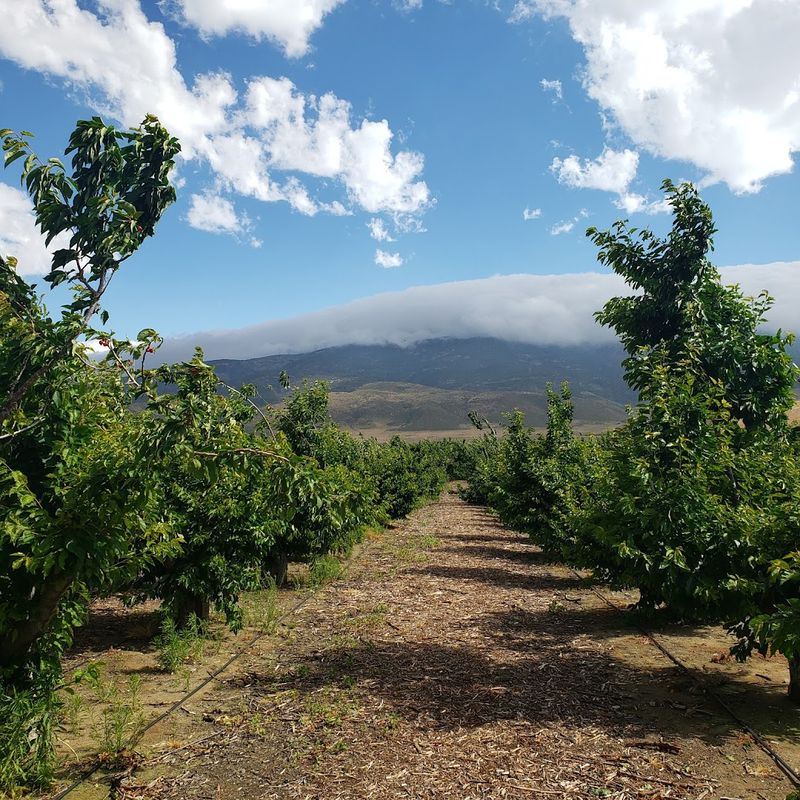
Started in 1999 by a family with a passion for growing quality fruit, Villa del Sol Sweet Cherry Farms has grown into something genuinely special in Southern California.
The farm sits at 6989 Elizabeth Lake Road, Leona Valley, CA 93551, and has been welcoming visitors to its sprawling orchard for more than two decades.
That kind of long-standing commitment to the land and to the community is something visitors tend to feel the moment they arrive.
Spanning 25 acres with over 3,600 cherry trees, the operation is the largest u-pick cherry orchard in Southern California.
The scale of it can catch first-time visitors off guard in the best way possible.
Rows of trees stretch out in every direction, all clearly marked and easy to navigate.
The family-run nature of the farm shows in the details.
Staff members greet arrivals with helpful instructions, and the overall atmosphere feels more like a neighborhood gathering than a commercial attraction.
There is a warmth here that tends to linger long after the drive home, making many visitors eager to return the following season.
The Largest U-Pick Cherry Orchard In Southern California
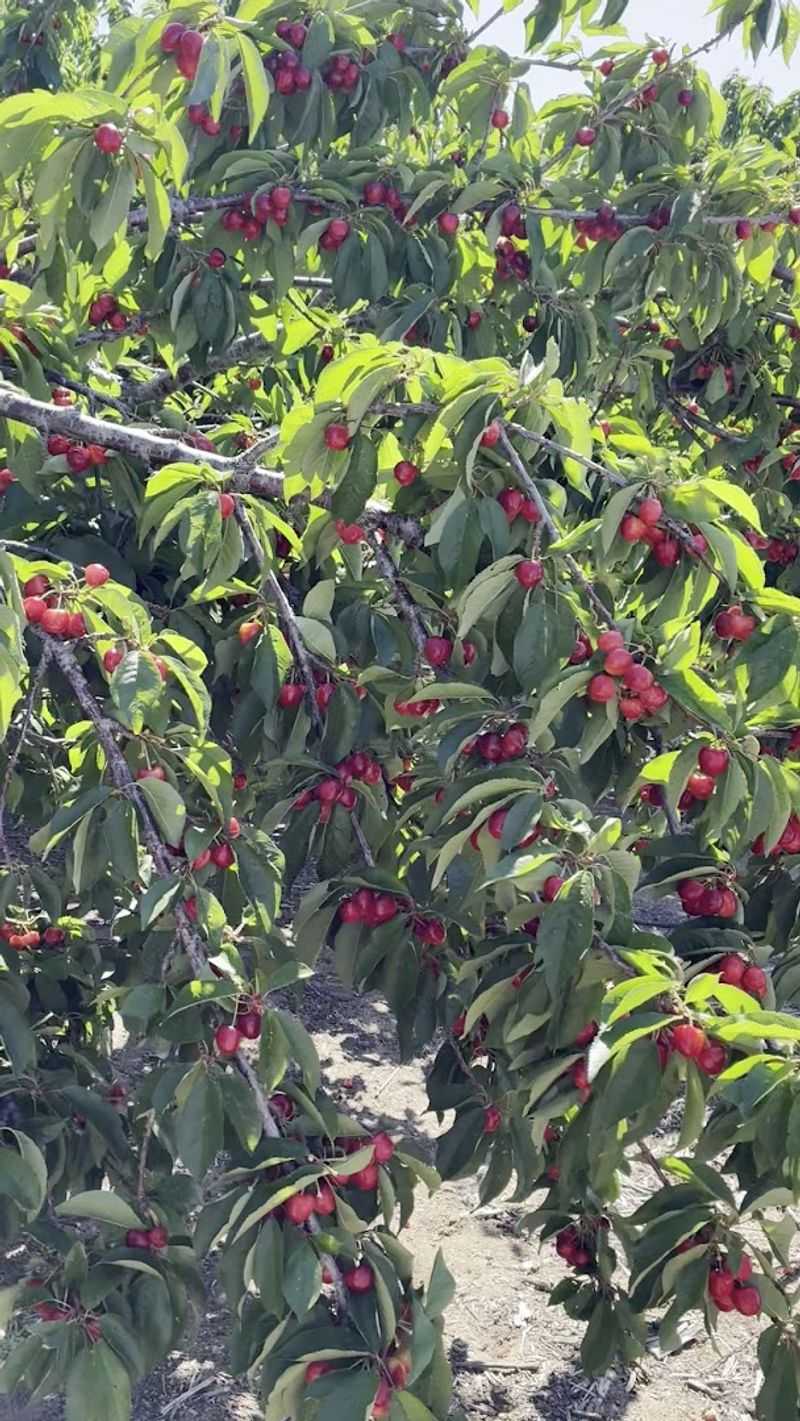
Holding the title of the largest u-pick cherry orchard in Southern California is no small feat.
With more than 3,600 trees spread across 25 acres, the sheer size of the orchard means visitors rarely feel crowded even on busy weekends.
Each row is rope-marked and clearly organized so that families can spread out and find their own little corner of the farm to enjoy.
The scale also means there tends to be plenty of fruit available throughout the season, though availability can vary depending on weather conditions each year.
Going earlier in the season may offer more selection while going closer to the end of June often means the trees are still producing but with fewer prime spots to choose from.
Checking the farm’s official website or calling their hotline before visiting is always a smart move.
For anyone who has only ever bought cherries at a grocery store, walking through an orchard of this size is a completely different experience.
The trees vary in height and reach, making picking accessible for children and adults alike.
Some branches hang low enough for small kids to grab fruit on their own, which adds a layer of joy to the whole outing.
Cherry Varieties Worth Knowing Before You Go
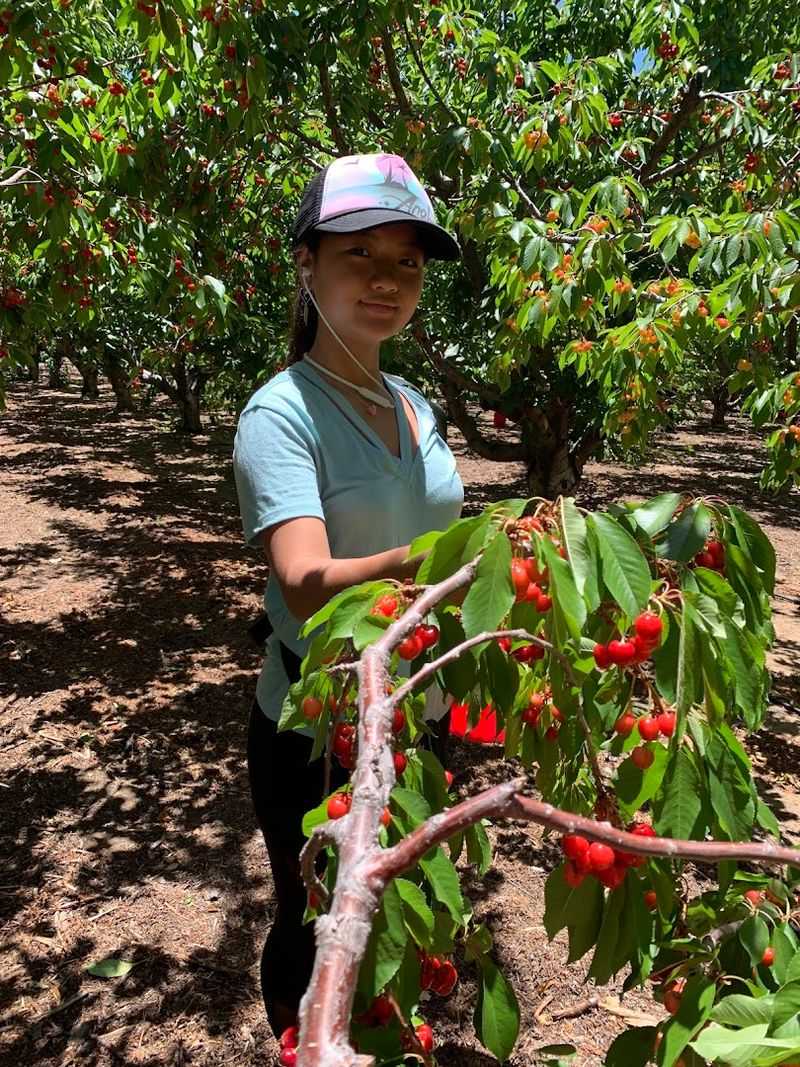
Not all cherries taste the same, and Villa del Sol grows several distinct varieties that each bring something different to the picking basket.
Bing cherries are the classic deep-red variety that most people picture when they think of cherries, known for their firm texture and rich sweetness.
Rainier cherries are the golden-yellow ones with a pinkish blush, and they tend to be slightly sweeter and softer than Bing.
Brooks and Tulare cherries round out the lineup, both offering their own balance of sweetness and tartness that makes snacking while walking the rows a very tempting idea, though the farm asks visitors to refrain from eating while picking.
Each variety ripens on its own timeline, so the specific types available on any given visit may depend on where the season stands at that point.
Knowing which variety to look for ahead of time can make the picking experience more focused and satisfying.
Rainier cherries in particular tend to go quickly because of how popular they are.
Arriving early in the day and early in the season gives visitors the best shot at finding a good mix of all the varieties the orchard has to offer.
When The Harvest Season Opens And Why Timing Matters
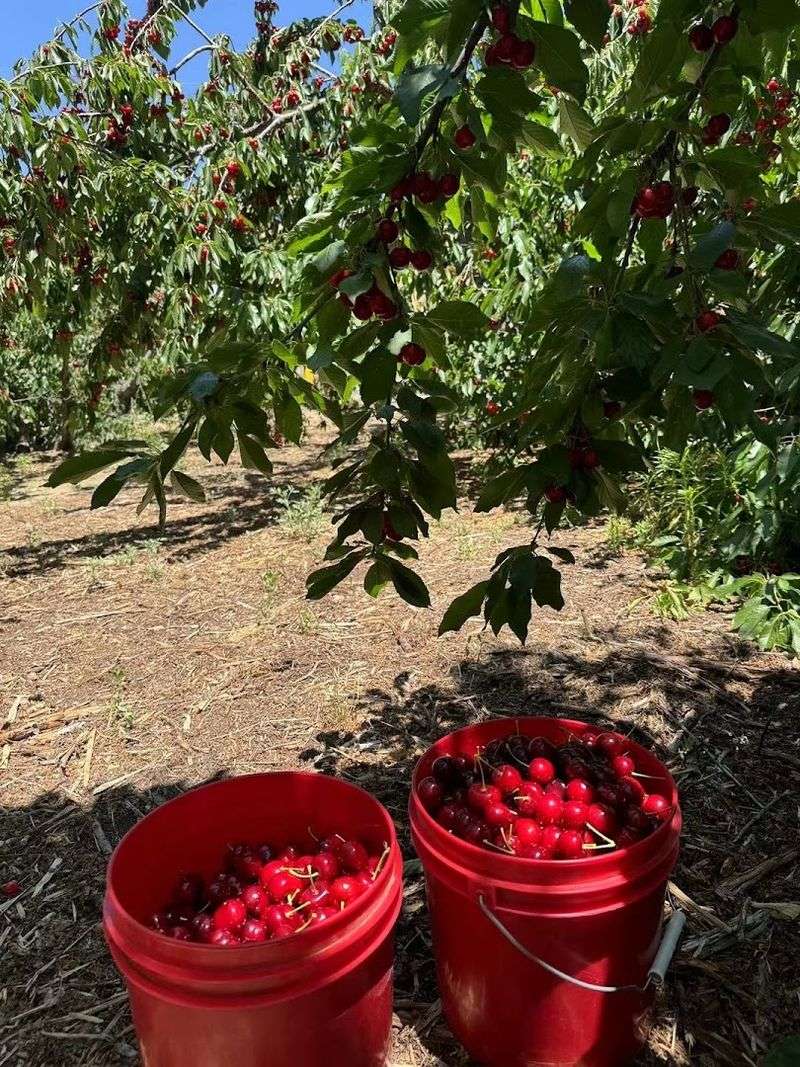
The cherry harvest at Villa del Sol typically runs from late May through early July, with the exact opening date shifting slightly from year to year based on weather patterns and growing conditions.
A particularly warm spring can push the season to open a bit earlier while a cooler stretch can delay things.
Because of this natural variability, checking the farm’s official website or calling their recorded hotline before making the drive is strongly recommended.
The window is genuinely short, often wrapping up around the Fourth of July weekend.
That compressed timeline is part of what makes the experience feel so exciting and worth prioritizing on the calendar.
Missing the season means waiting a full year for another chance, which is why many regular visitors start checking for opening announcements weeks in advance.
Mid-June tends to be a reliable sweet spot for visiting, as the trees are usually in peak production and multiple varieties are available at the same time.
Weekday visits during this window tend to be quieter than weekends, which can make for a more relaxed and unhurried outing.
The farm does not operate year-round, so every visit during the season carries a bit of that fleeting, now-or-never energy that makes it memorable.
How To Pick Cherries The Right Way
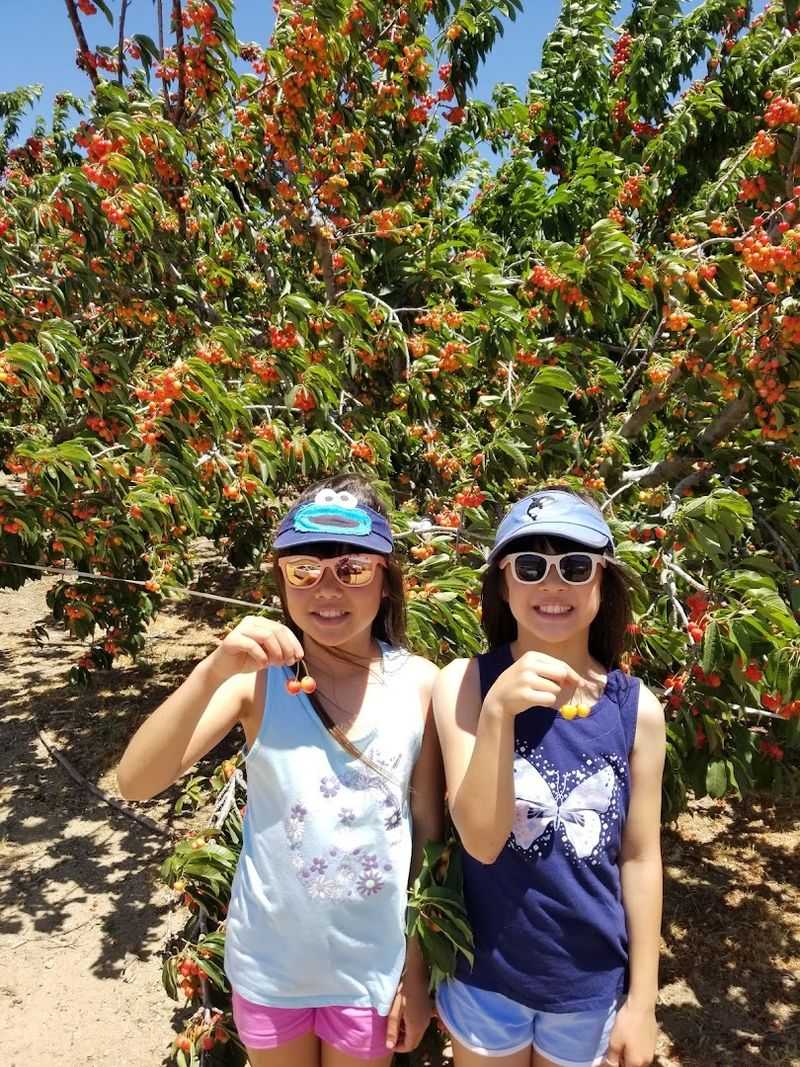
Picking cherries correctly is a small skill that makes a real difference in the quality of the fruit and the health of the tree.
The farm provides simple instructions upon arrival, encouraging visitors to hold the stem with one hand and gently pull the cherry away with the other.
This technique keeps the stem attached to the fruit, which helps the cherry stay fresh longer after it leaves the orchard.
Small scissors can also be used to cut the stem in half, leaving the remaining half attached to the branch.
This method is particularly useful for younger children who may not yet have the finger strength for a clean pull.
The farm provides red 2.5-gallon buckets for picking, and each bucket holds approximately 11 pounds of cherries when filled.
One rule the farm takes seriously is the no-eating-while-picking policy.
Sampling fruit from the trees without paying for it is understandably not permitted, so saving the tasting for after checkout is the right approach.
The farm also asks that visitors avoid bringing ice chests, coolers, backpacks, chairs, or stools into the orchard, which helps keep the space manageable and fair for everyone walking the rows.
Operating Hours And What To Expect On Arrival
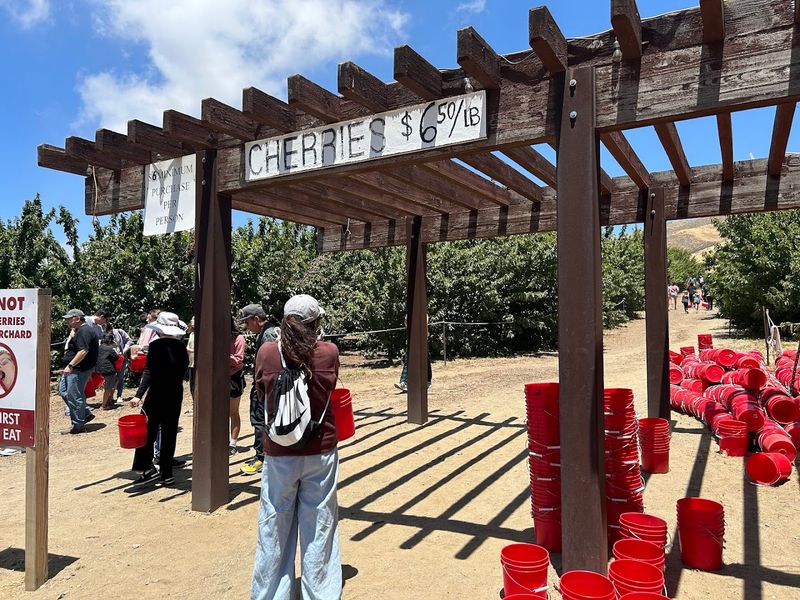
Hours at the farm during cherry season have historically included Friday and Saturday openings, with morning start times that reward early arrivers.
In past seasons the farm opened as early as 7:00 AM on Saturdays and 8:00 AM on Fridays, with closing times in the early afternoon.
These hours can change from season to season so verifying current hours directly through the farm’s website or hotline before visiting is the most reliable approach.
Arriving early has real advantages beyond just beating the heat.
The rows tend to be less crowded in the first hour or two after opening, which makes navigating the orchard more comfortable and enjoyable.
Staff members are typically on hand at the entrance to greet visitors, explain the rules, and point people toward the best picking areas for the day.
The check-in process moves efficiently.
Visitors receive their picking buckets and a quick orientation before heading into the orchard.
Payment happens at the end after the cherries are weighed, and the farm accepts both credit and debit cards.
There is no entrance fee, so the only cost is what ends up in the bucket, with a minimum purchase of ten dollars per person required per visit.
Pricing, Minimum Purchase, And Payment Options
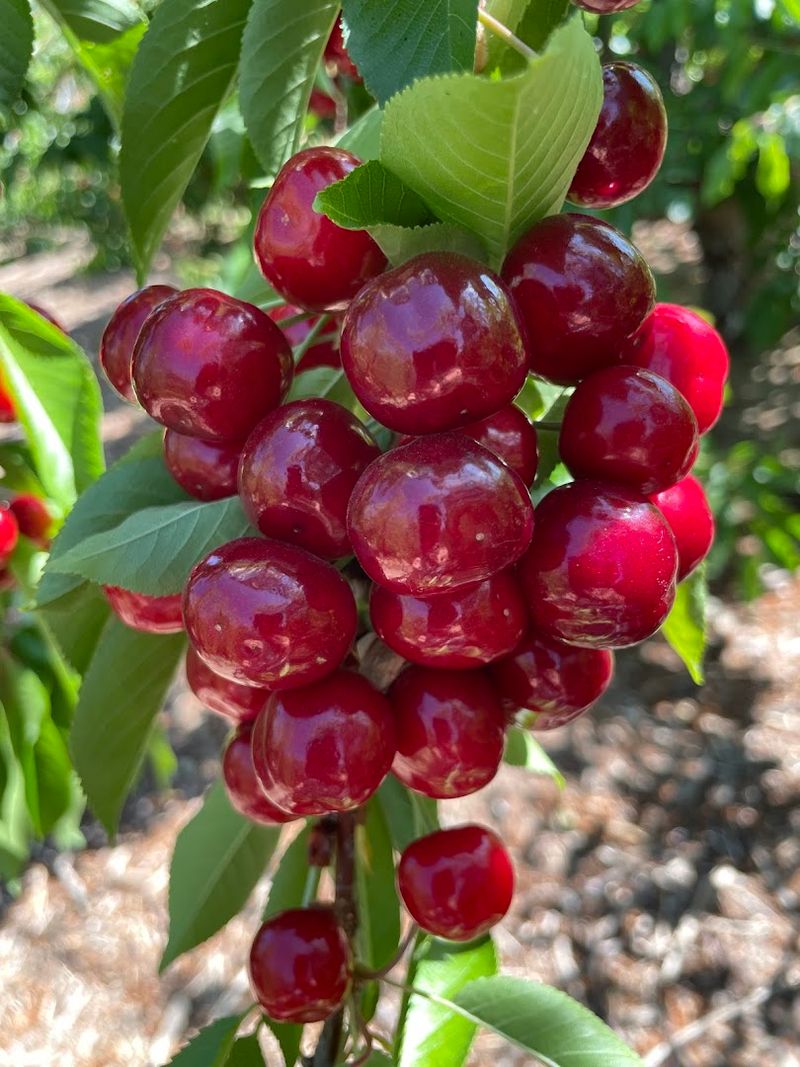
Getting into the orchard costs nothing, which makes the experience feel immediately accessible and low-pressure.
Cherries are priced at $6.50 per pound, and each visitor is asked to purchase a minimum of ten dollars worth of fruit per person.
That minimum works out to just over a pound and a half, which most visitors exceed easily once they start picking their way through the rows.
The farm accepts both credit and debit cards, which is a practical convenience for visitors who do not carry cash.
Payment happens at the end of the visit after the cherries have been weighed, so there is no need to track spending mid-pick.
The 2.5-gallon bucket provided holds roughly 11 pounds of cherries when full, giving visitors a rough sense of what a complete bucket might cost before they head out.
For context, fresh-picked cherries of this quality are rarely available at this price in grocery stores, and the experience of picking them adds value that simply cannot be replicated on a supermarket shelf.
Bringing an extra bag or container for the drive home is a smart move since the cherries will need to be stored properly once the bucket is handed back at checkout.
What To Bring And How To Dress For The Visit
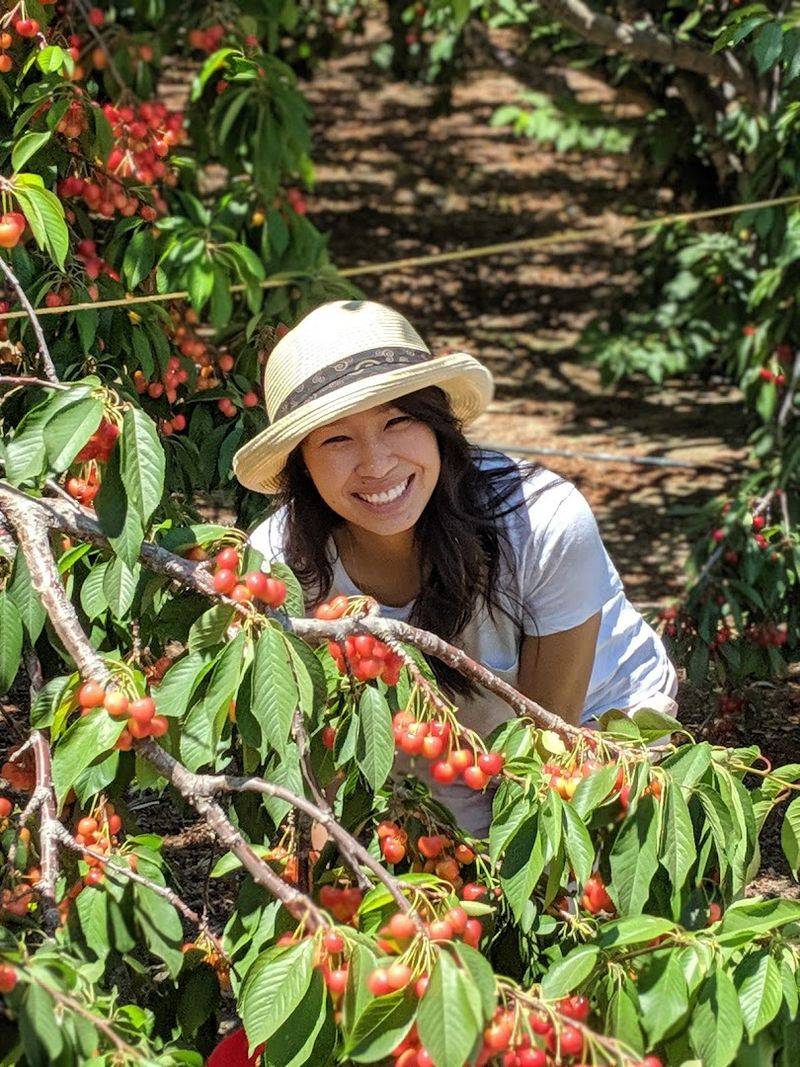
Leona Valley sits far enough inland that marine layers rarely reach it, which means the sun hits hard and temperatures can climb significantly by midday.
Dressing in light breathable clothing and bringing a hat and sunscreen is genuinely important rather than just a casual suggestion.
The orchard offers no shade structures, so visitors are essentially in open sun for the duration of their stay.
Bringing water is equally critical.
The combination of physical activity, warm temperatures, and sun exposure can add up quickly, especially for families with young children.
There are no food vendors or refreshment stands inside the orchard, so packing snacks and drinks before arriving makes the experience far more comfortable and enjoyable.
Comfortable closed-toe shoes are a practical choice since the ground between the rows can be uneven and dusty.
On windy days, dirt can kick up and get into eyes and faces, so sunglasses are a smart addition to the packing list.
Pets are not permitted in the orchard, and visitors are asked to leave ice chests, coolers, backpacks, and folding chairs in their vehicles.
Keeping the list of restricted items in mind before arriving helps avoid any surprises at the entrance and keeps the visit running smoothly from the start.
Bees, Honey, And The Secret To A Thriving Orchard
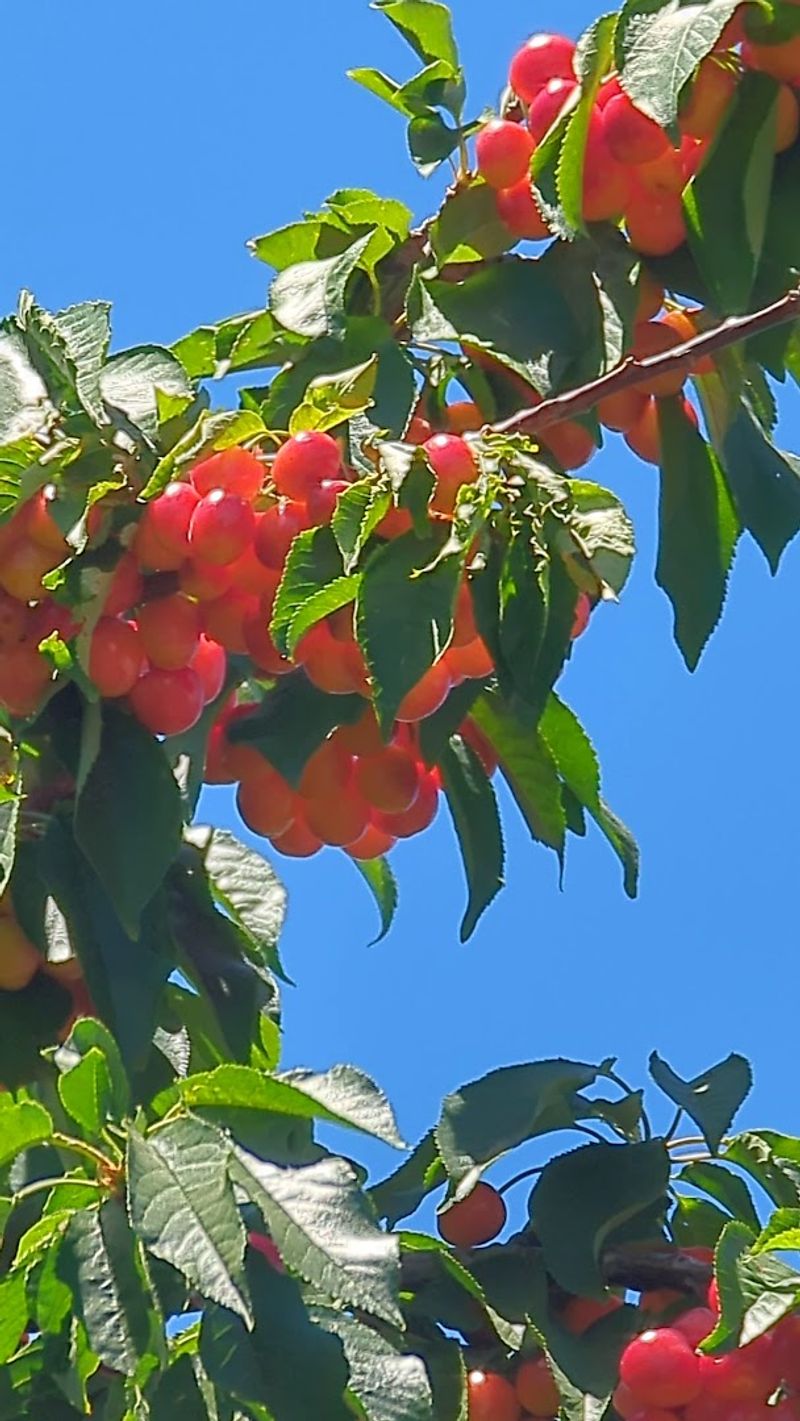
One of the more fascinating behind-the-scenes details at Villa del Sol is the role that honeybees play in keeping the orchard productive.
The farm maintains 100 honey bee hives specifically to support pollination during the growing season.
Without this level of managed pollination, producing the volume and quality of cherries the orchard is known for would be significantly more difficult.
During the cherry picking season the hives are moved off-site so the bees can forage among wildflowers and alfalfa blossoms in the surrounding area.
This means visitors are unlikely to encounter swarms or feel concerned about bee activity while walking through the rows.
The relocation supports both the bees and the overall health of the local ecosystem in a thoughtful way.
Raw local honey produced from these hives is available for purchase at the farm’s sales stand during regular operating hours.
Sizes and pricing have ranged in past seasons, with smaller jars typically starting around ten dollars and larger ones priced higher depending on availability.
Picking up a jar of honey alongside a bucket of cherries makes for a genuinely satisfying haul, and the honey carries a flavor profile that reflects the wildflowers of the surrounding Leona Valley landscape.
Getting There From Los Angeles And What To Know About Parking
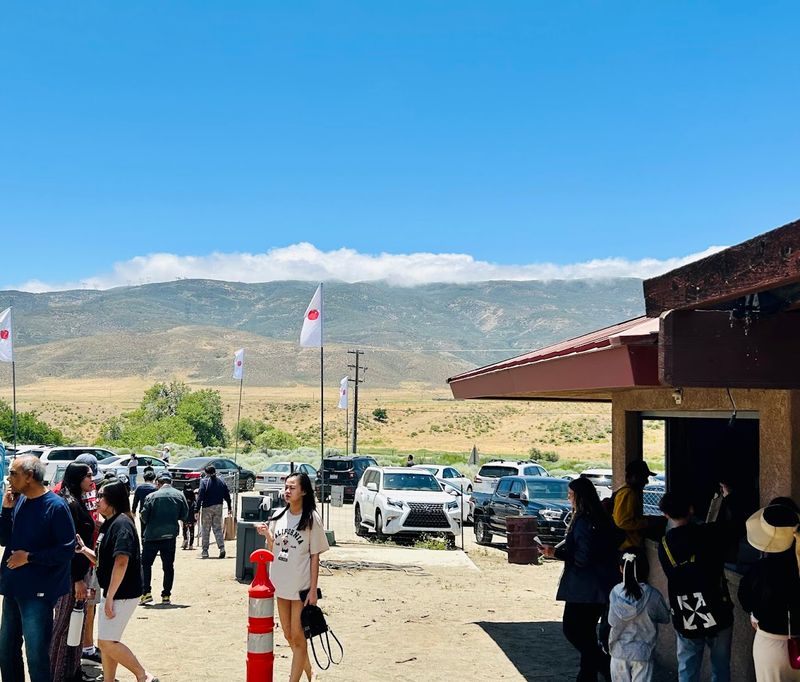
Sitting approximately one hour northeast of Los Angeles, the farm is close enough for a comfortable day trip without feeling like a major expedition.
The most common route involves taking the 14 Freeway and exiting at Palmdale Boulevard before heading west.
The orchard is the first cherry stop on the right along Elizabeth Lake Road, making it relatively straightforward to find once off the freeway.
The drive itself passes through some genuinely scenic terrain including stretches near the Angeles National Forest, which adds a pleasant visual dimension to the journey.
Roads leading into Leona Valley can be narrow in spots so keeping an eye on the route and driving at a relaxed pace is a good habit.
The trip is best enjoyed without rushing, especially on the way home with a full bucket of cherries in the back seat.
Free parking is available on-site, which is a meaningful perk given how popular the farm becomes on weekends during peak season.
Lots can fill up quickly on busy mornings so arriving closer to opening time tends to result in a smoother parking experience.
Weekday visits generally involve less competition for spots and a quieter overall atmosphere, which some visitors find more enjoyable than the energetic buzz of a packed Saturday morning.