This Tiny Town In California Hides One Of The Most Incredible Natural Wonders On The West Coast
A tiny town in California seems like the last place you would expect to find a natural wonder on this scale.
Then the view appears, and suddenly the quiet setting makes the whole experience feel even more astonishing.
Life moves gently here, almost modestly, which only makes the nearby natural wonder feel more astonishing when it finally appears.
There is a kind of emotional whiplash in that contrast, the softness of a tiny town followed by a landscape dramatic enough to stop every thought in its tracks.
You do not arrive expecting awe on that scale. It catches up to you all at once.
That surprise is part of what makes the place so unforgettable. The town stays calm, the coast shows off, and somewhere between the two, the visit starts feeling a little unreal.
The Tufa Towers That Make Mono Lake Look Like Another Planet
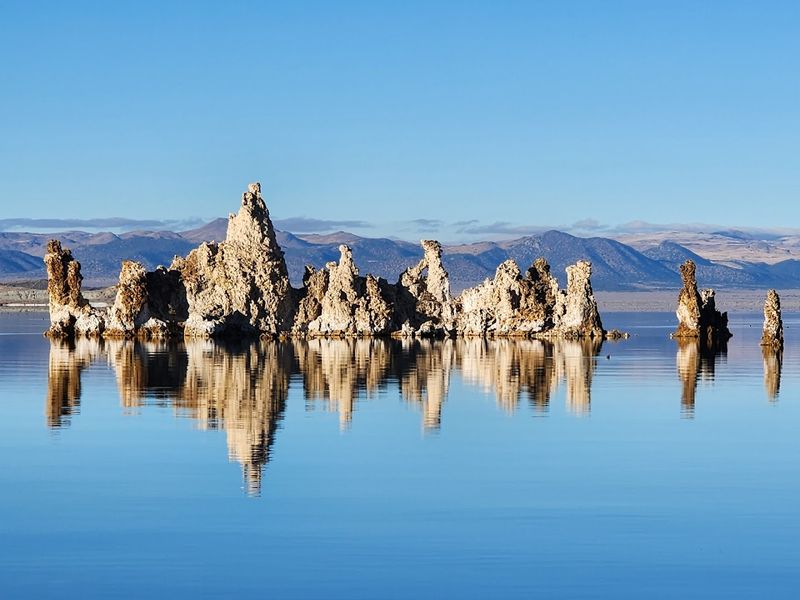
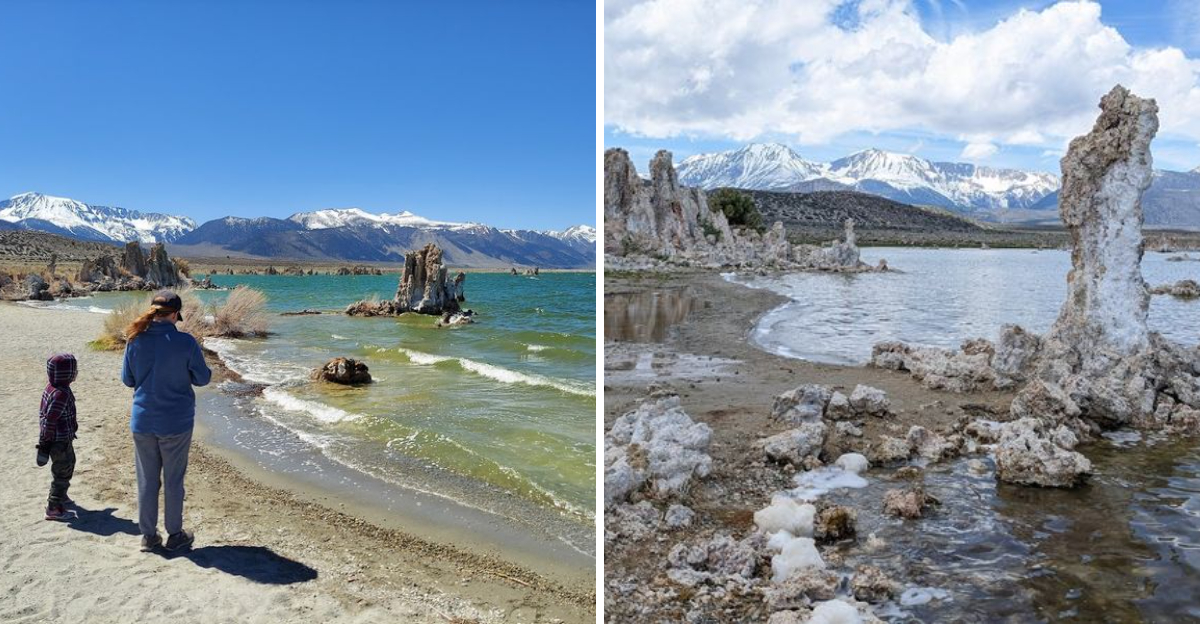
Few natural formations stop people in their tracks quite like the tufa towers at Mono Lake.
Standing up to 30 feet tall, these calcium carbonate spires were built slowly over thousands of years when calcium-rich freshwater springs pushed up through the lake’s alkaline, carbonate-heavy water.
The chemical reaction between those two water types created limestone deposits that grew, layer by layer, into the jagged columns visible today.
What makes them look so dramatic now is actually the result of a troubling history.
Water diversions by the Los Angeles Department of Water and Power caused lake levels to drop significantly during the mid-20th century, exposing towers that had previously been hidden beneath the surface.
The lower water levels revealed formations that had been quietly building for millennia.
Visitors can walk right up to the towers along the trails at the Mono Lake Tufa State Natural Reserve. The structures feel rough and porous underfoot, almost like hardened sea coral.
Early morning light hits them at a low angle that makes each column cast long shadows across the pale shoreline, and the effect is genuinely striking.
Touching the formations is discouraged to help preserve them for future visitors.
South Tufa Area Is The One Stop Worth Prioritizing
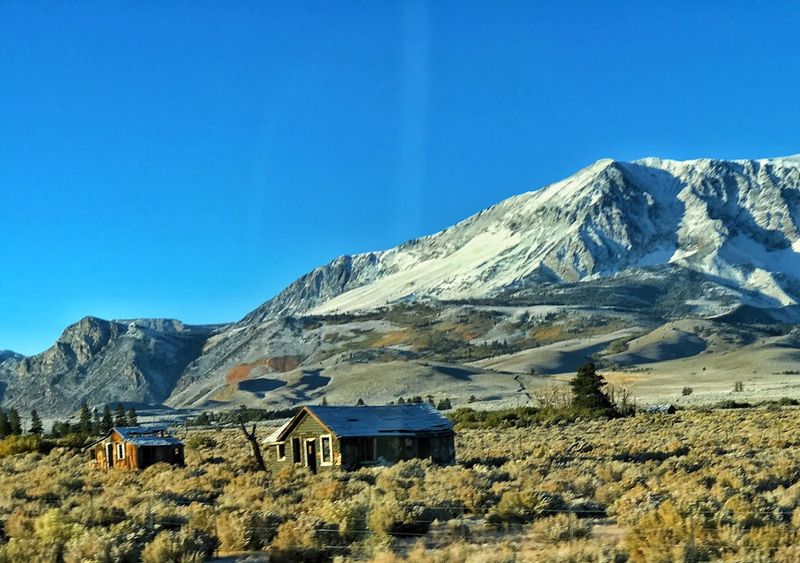
Among all the access points around Mono Lake, the South Tufa Area consistently stands out as the most rewarding single stop on the lake.
California State Parks describes the one-mile self-guided nature trail here as the best option for visitors who only have time for one location, and that recommendation holds up well in practice.
The trail is well-marked and moves through a landscape that shifts from sandy desert scrub to a shoreline crowded with tufa clusters.
A boardwalk section brings visitors close to the water’s edge without disturbing the fragile lakebed. Interpretive signs along the path explain how tufa towers form, what lives in the water, and why the lake’s ecosystem is considered so biologically unusual.
The combination of geology, ecology, and scenery packed into a single mile makes the trail feel genuinely efficient for curious visitors.
There is a small entry fee per person at the South Tufa Area, and parking is available on a gravel lot nearby. Restrooms are on-site.
Dogs are allowed in the parking area on a leash but are not permitted on the trail itself. Visiting in the early morning tends to mean fewer crowds and softer light across the water.
The Water Chemistry That Sets This Lake Apart From Almost Every Other
At first glance, Mono Lake looks like a calm blue lake sitting in a desert basin. Look closer and the water tells a very different story.
The lake has a pH of around 9.8, making it strongly alkaline, and the Mono Lake Committee notes that it is almost three times as salty as the Pacific Ocean.
No fish have ever lived in it, and most organisms that enter the water from outside do not survive for long.
The salinity and alkalinity built up over time because Mono Lake has no natural outlet.
Water flows in from streams and snowmelt but has no way to drain out, so minerals accumulate with every passing year.
The only water that leaves the lake does so through evaporation, which concentrates the salt and alkaline compounds further.
Strangely, that extreme chemistry is exactly what makes the lake so productive ecologically. The harsh conditions filter out most species but create ideal conditions for the few that have adapted to them.
Brine shrimp and alkali flies thrive in water that would be hostile to almost everything else, and their enormous populations form the base of a surprisingly rich food web that supports hundreds of thousands of birds each year.
Brine Shrimp And Alkali Flies As The Unexpected Engines Of The Ecosystem
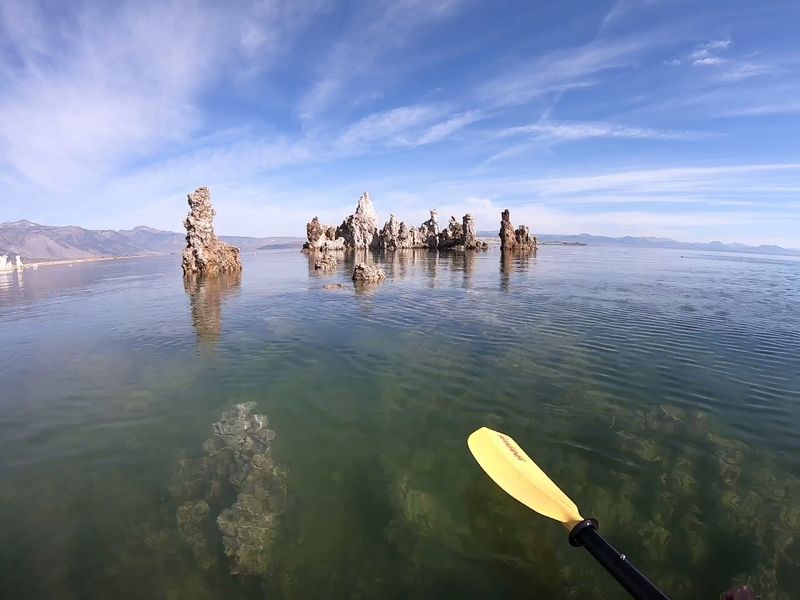
There is something quietly remarkable about the way life has found a foothold in Mono Lake’s inhospitable water.
Trillions of brine shrimp live in the lake at peak season, small enough to be nearly invisible individually but collectively visible as a reddish-orange haze just below the surface.
Alkali flies swarm the shoreline in dense, rippling clouds that shift and move like living curtains, which can feel startling at first but turns out to be one of the lake’s most memorable sensory experiences.
Both species have adapted to the lake’s extreme salinity and high pH in ways that most organisms simply cannot manage.
The brine shrimp feed on algae that blooms in the mineral-rich water, and the alkali flies lay their eggs in algae mats along the shore.
Together they convert the lake’s chemical energy into biological energy that gets passed up the food chain. For migratory birds, the lake essentially functions as a refueling station.
Eared grebes, Wilson’s phalaropes, and many other species stop at Mono Lake during long migrations specifically to feed on the dense shrimp and fly populations.
The caloric payoff is so high that birds can double their body weight in just a few weeks of feeding here before continuing their journey.
The Conservation Fight That Saved The Lake From Disappearing
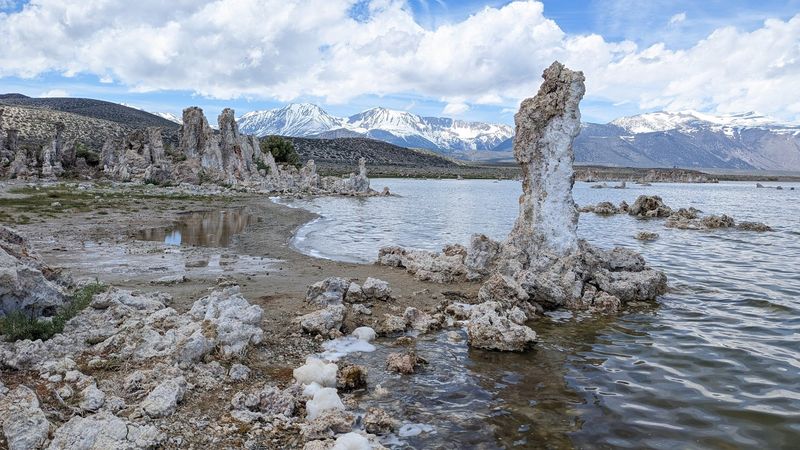
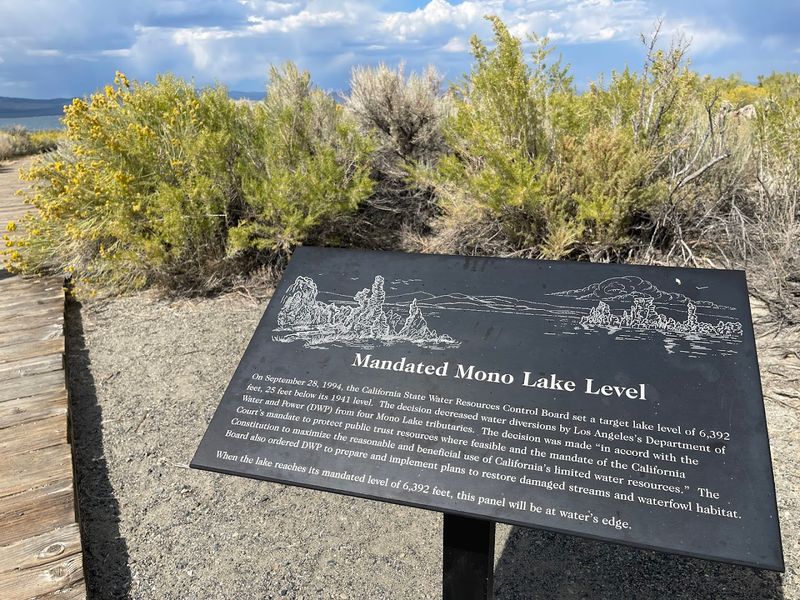
By the 1970s, Mono Lake was in serious trouble. Water diversions that had been redirecting streams feeding the lake toward Los Angeles since the 1940s had caused the water level to drop dramatically.
As the lake shrank, its salinity doubled, the exposed lakebed turned to dust that blew across the region, and the land bridge connecting the shore to Negit Island allowed coyotes to reach the gull nesting colony for the first time.
The Mono Lake Committee formed in 1978 specifically to fight for the lake’s survival.
Through years of legal action, public advocacy, and scientific documentation, the committee eventually secured a landmark ruling that required water diversions to be reduced and the lake to be allowed to recover.
The legal process took years, but the outcome changed the trajectory of the lake permanently.
Water levels have been slowly rising since the protections took effect, and the ecosystem has shown signs of stabilization.
The fight to save Mono Lake became a landmark moment in California environmental history, demonstrating that public pressure and legal advocacy could reverse long-standing water policies.
The Mono Lake Committee’s Information Center and Bookstore in Lee Vining continues to share this history with visitors and remains active in ongoing conservation work.
The Mono Basin Scenic Area Visitor Center In Lee Vining
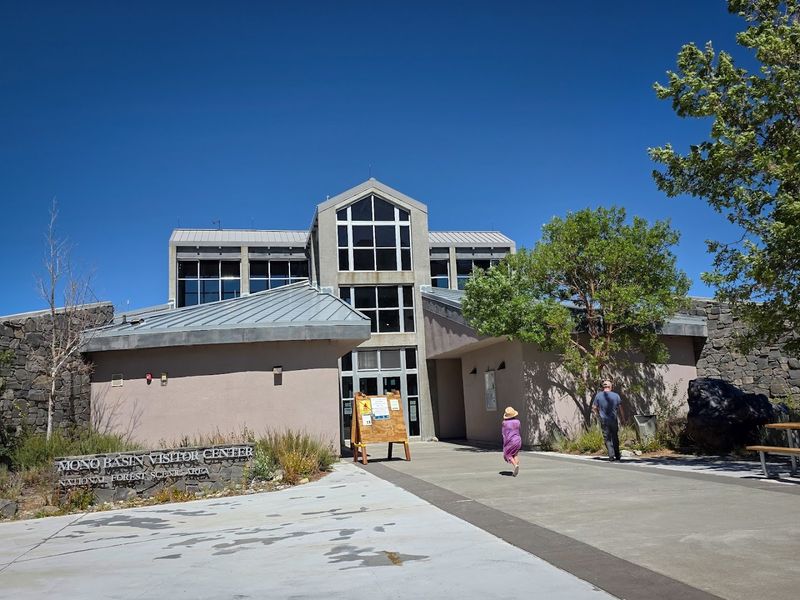
Before heading to the lake’s edge, a stop at the Mono Basin Scenic Area Visitor Center in Lee Vining tends to make the whole experience more meaningful.
The visitor center is located at 1 Visitor Center Drive, Lee Vining, California 93541, and it sits on a small rise above Highway 395 with sweeping views of the lake and surrounding basin through its large windows.
The building itself is run by the U.S. Forest Service and offers free admission.
Inside, interpretive exhibits cover the lake’s geological history, its unique ecosystem, and the conservation story that brought it back from the brink.
Rangers and staff are available to answer questions and help visitors plan their time around the lake based on current conditions and interests.
Trail maps, field guides, and educational materials are available for those who want to go deeper into the science.
The views from the visitor center’s outdoor deck are worth the stop on their own.
On a clear day, the entire basin spreads out below, with the lake’s pale blue surface framed by volcanic ridges and the jagged Sierra Nevada in the distance.
Guided Tufa Tours And What They Add To The Visit
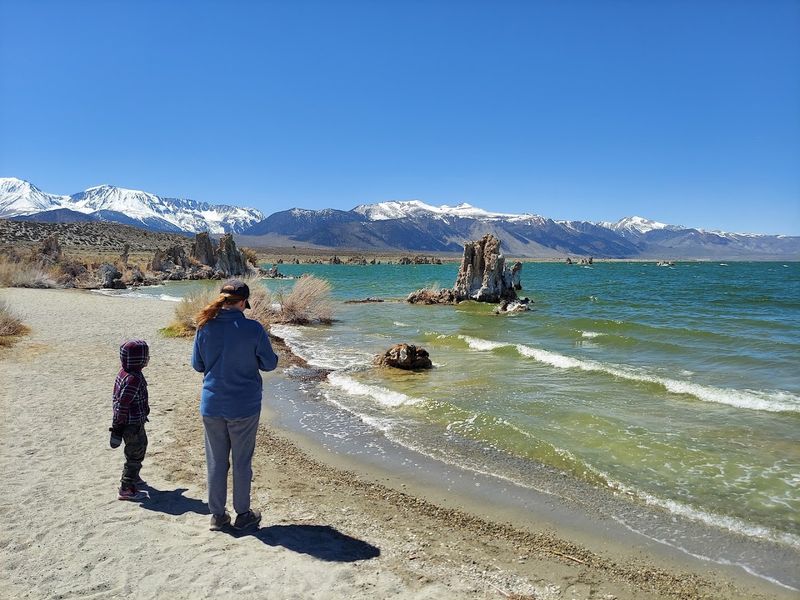
Walking the South Tufa trail on its own is rewarding, but the guided tours offered by the Mono Lake Committee add a layer of detail that is hard to replicate with signage alone.
The tours focus on the tufa towers, the bubbling freshwater springs still active beneath the lake’s surface, the birdlife, the brine shrimp, and the long human and natural history of the Mono Basin.
Each of those threads connects to the others in ways that a self-guided walk might not make obvious.
The guides are trained naturalists who can answer specific questions and point out features that most visitors walk right past.
Hearing the formation process of a tufa tower explained while standing directly in front of one makes the geology feel tangible rather than abstract.
The tours also tend to adjust in real time based on what is happening at the lake that day, whether a particular bird species is active or a spring is especially visible.
According to the Mono Lake Committee, guided South Tufa tours are scheduled to resume in June 2026, so checking their website before visiting is a good idea for anyone hoping to join one.
Tour availability may vary by season, and group sizes are typically kept manageable to protect the fragile shoreline environment.
Lee Vining As A Base Camp For Exploring Mono Lake
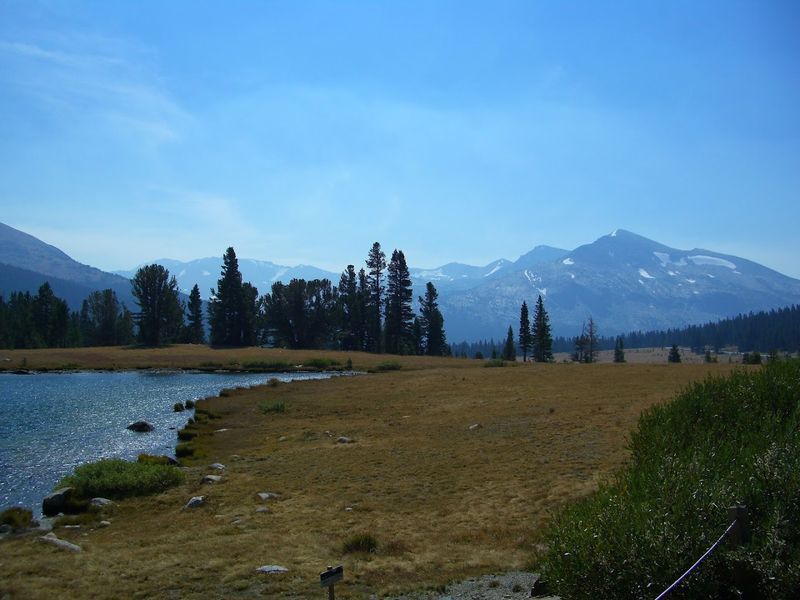
Lee Vining might be small, but it punches well above its weight as a base for exploring the Mono Basin.
Mono County describes the town as the entrance to both Yosemite National Park and Mono Lake, which gives it a geographic position that few towns of its size can match.
Highway 395 runs right through the center of town, and the lake is visible from the road, making the connection between the town and the natural wonder feel immediate.
Lodging options in Lee Vining tend toward the practical and unpretentious, with motels and small inns that cater to hikers, photographers, and road-trippers passing through.
The Mono Lake Committee’s Information Center and Bookstore is located in town and serves as both a resource hub and a place to pick up field guides, maps, and conservation-focused reading material before heading out to the lake.
The town also sits at the junction for Tioga Pass Road, the eastern entrance to Yosemite, which means visitors can combine a Mono Lake stop with a Yosemite visit in a single trip.
Tioga Pass is typically open from late spring through early fall, so timing matters when planning a combined itinerary.