The Clearest Lake In California Is Worth Seeing With Your Own Eyes
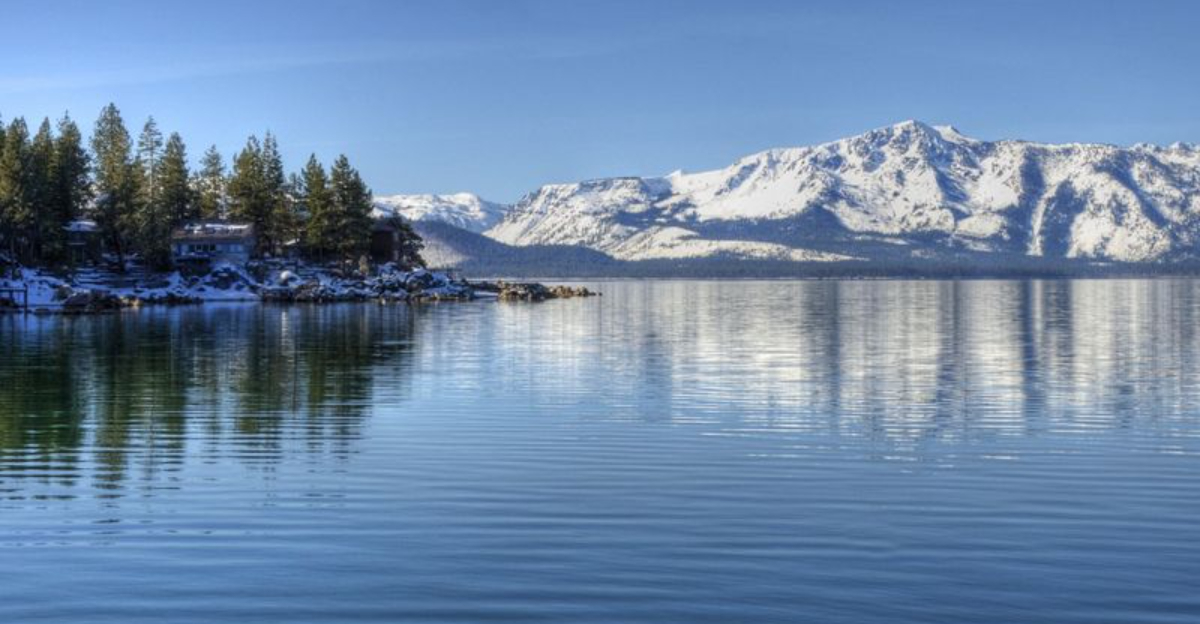
Clear water has a way of making people stop mid-sentence.
Sunlight drops straight through it. Rocks appear beneath the surface. Blue turns almost unreal. A regular lake day suddenly feels like proof that nature enjoys showing off.
California has a lake so clear that photos barely feel convincing. One look explains the fuss.
The shoreline feels calm and the water steals every bit of attention. Boats seem to float over glass. Mountain views only make the whole scene more unfair.
A place like this does not need loud attractions to hold anyone’s focus. Clarity does the work.
It Has Measured Scientific Clarity
Numbers do not usually make a lake feel magical, but in Lake Tahoe’s case, the data is genuinely impressive.
UC Davis reported the 2024 annual average clarity at 62.3 feet, measured by tracking how deep a white Secchi disk remains visible underwater.
That kind of transparency puts it far beyond most lakes in the country.
The clarity comes from a combination of factors including the lake’s high elevation, the cold temperature of the water, and ongoing conservation efforts that limit nutrient runoff into the basin.
Fine clay particles and algae growth are the primary threats to visibility, and researchers have been monitoring both for decades.
What makes the science feel personal is standing at the edge of the water and actually seeing the bottom in spots that would be completely murky in almost any other lake.
The depth of the lake, which reaches over 1,600 feet at its deepest point, means that the blue color intensifies dramatically as the water gets deeper.
Sand Harbor Shows Off The Water Best
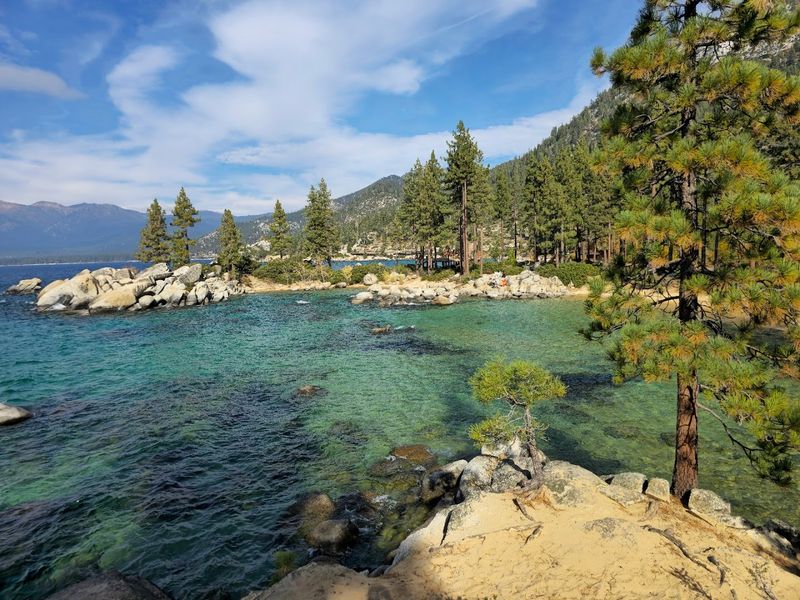
Along the eastern shore of the lake, Sand Harbor is the kind of place that makes first-time visitors stop and just stare.
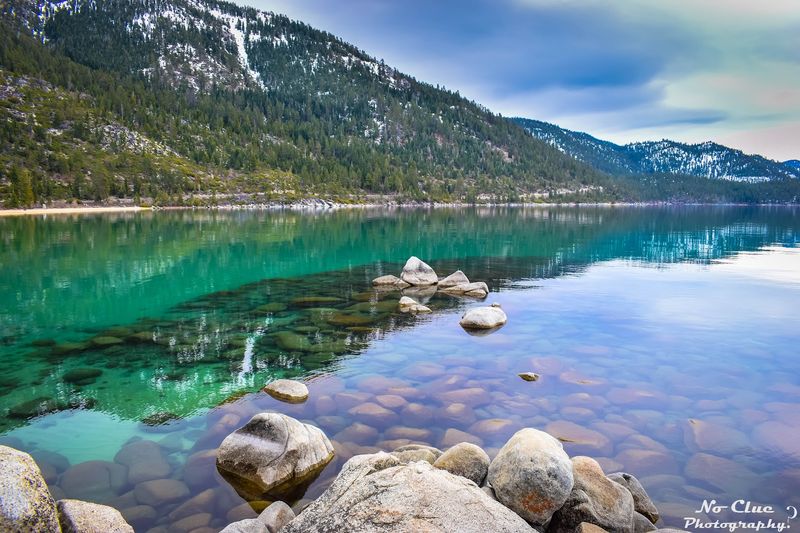
The combination of pale sand, rounded granite boulders, and water that shifts from pale green near the shore to deep blue farther out creates a scene that looks more like the Mediterranean than a mountain lake in the American West.
Nevada State Parks manages Sand Harbor, and the area is well set up for swimming, kayaking, and even scuba diving.
The rocky coves and shallow sandy flats make the water especially easy to appreciate up close, since the bottom stays visible at surprisingly deep distances from shore.
Arriving early on summer mornings tends to make the experience much more comfortable, since the parking lots fill quickly and the beach gets crowded by midday.
The water temperature stays cool even in peak summer, which keeps swims refreshing rather than extended.
Kayakers paddling slowly over the rocky sections near the boulders often describe the feeling of floating above an aquarium, because the water below stays so consistently clear that every rock and fish is fully visible from the surface.
Emerald Bay Adds The Drama
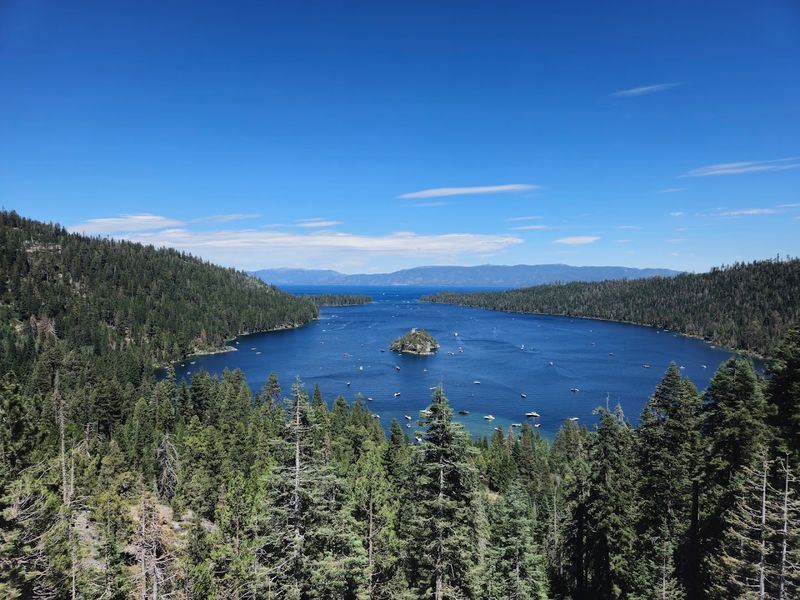
There is a reason Emerald Bay appears on almost every list of must-see California destinations.
The bay sits on the southwestern edge of the lake and frames a small island called Fannette Island, the only natural island in Lake Tahoe, surrounded by water that genuinely earns its turquoise-green name.
The clarity and depth of the lake work together at Emerald Bay to create colors that shift depending on angle and time of day.
Shallow sections near the inlet glow pale aqua, while the deeper water in the center of the bay drops into a rich blue-green.
The surrounding mountain slopes, covered in pine and fir trees, give the whole scene a contained, almost theatrical quality.
Emerald Bay State Park sits at the south end of Lake Tahoe, and the overlook pullout along Highway 89 is one of the most photographed spots in California.
Visitors who want more than a roadside view can hike down to the shoreline, which takes about 20 to 30 minutes and brings the water’s color much closer.
The hike back up is steep but short, and the payoff at the bottom makes the effort feel completely worthwhile.
It Is The Largest Alpine Lake In North America
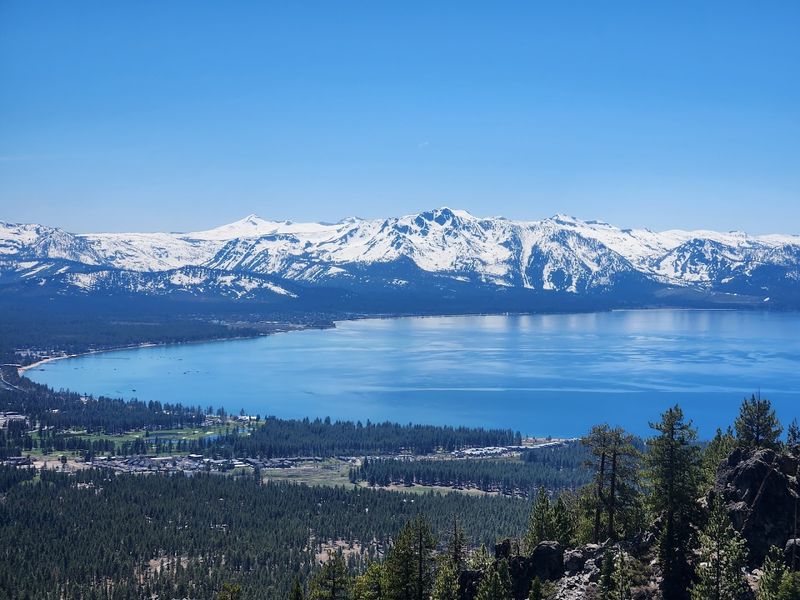
At roughly 22 miles long and 12 miles wide, the sheer scale of Lake Tahoe catches many visitors off guard. Standing at a shoreline pullout and watching the far mountains disappear into haze gives a sense of just how much water is actually sitting in that mountain basin.
The lake sits at approximately 6,225 feet above sea level, which qualifies it as the largest alpine lake in North America.
The depth adds to the drama. Reaching over 1,600 feet at its deepest point, the lake holds enough water that it could theoretically cover the entire state of California in 14 inches of water.
That statistic tends to shift the way a visit feels, turning a beautiful shoreline moment into something that also carries a sense of geological weight.
The high elevation keeps the water cold year-round, which contributes directly to the clarity by slowing the growth of algae and fine suspended particles.
Cold, deep, high-altitude lakes tend to stay clearer than warmer lowland ones, and Lake Tahoe benefits from all three conditions at once.
The size also means that different parts of the lake feel genuinely different, with the south shore, north shore, and east shore each offering their own atmosphere and pace.
The Water Looks Different Throughout The Day
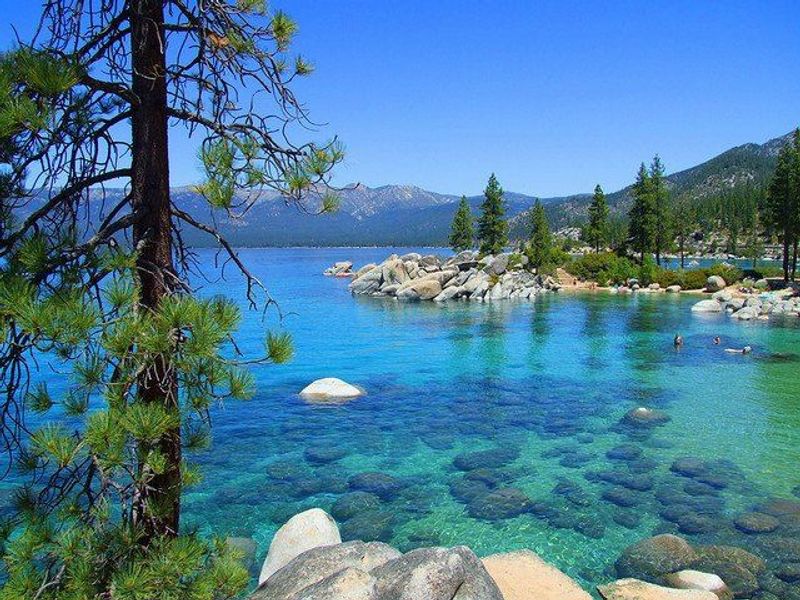
Morning light hits the lake differently than afternoon sun, and both feel worth showing up for.
Early in the day, the surface tends to sit glassy and still, reflecting the surrounding mountains in a way that makes the shoreline feel doubled and quiet.
The pale morning light softens the color of the water into something closer to silver-blue.
By midday, when the sun climbs higher, the lake shifts into its most vivid range. Sandy shallow sections near beaches glow pale turquoise, rocky coves show the bottom in sharp detail, and deeper sections drop into a saturated cobalt blue.
The contrast between near and far water creates a color gradient that photographs capture partially but never fully.
Late afternoon and evening bring a different quality altogether. The light turns warmer and lower, and the lake picks up gold and amber tones along the surface while the mountains cast long shadows across the eastern shore.
Sunset at the lake can feel almost theatrical because the water holds color so well.
Visitors who plan to see the lake at multiple points during the same day often leave with a stronger impression than those who stop briefly at one time and move on.
Kayaking Makes The Clarity Feel Unreal
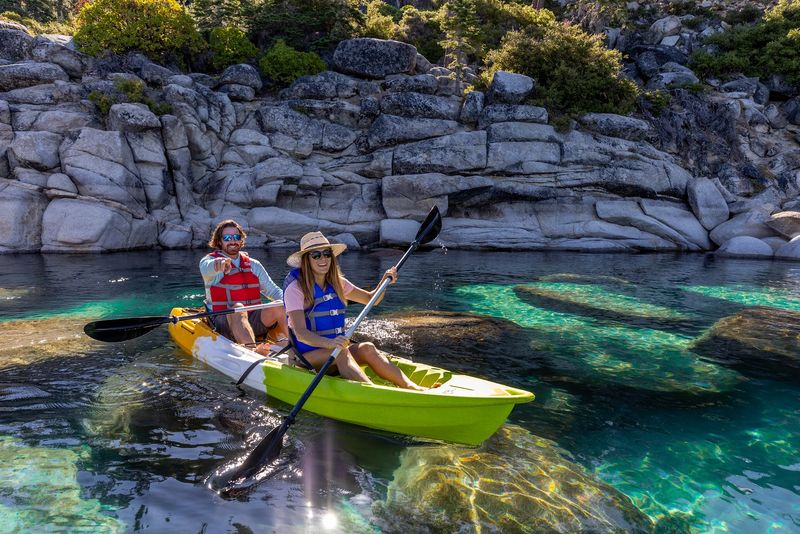
Getting on the water changes everything about how the clarity registers.
From the shore, the lake looks beautiful and transparent, but from a kayak floating just a few feet above the surface, the bottom becomes a completely different experience.
Rocks, sand patches, and occasional fish are visible in detail that feels almost too sharp to be natural.
Around Sand Harbor and other rocky cove areas, paddling slowly over shallow sections lets the texture of the lake floor come through in full.
The water acts almost like glass, bending and refracting light in ways that make the depth hard to judge from above.
Spots that look like they might be two feet deep often turn out to be six or eight feet, which gives the experience a slightly surreal quality.
Kayak rentals are available at several points around the lake, particularly near South Lake Tahoe and on the north shore, making it accessible without needing to bring equipment.
Morning hours tend to offer calmer water and fewer other paddlers, which makes the clarity even easier to appreciate without the surface chop that builds later in the day.
A slow, unhurried paddle close to shore tends to be the most rewarding approach for anyone visiting specifically to see the water up close.
The Beaches Feel More Like A Mountain Escape Than A Regular Lake Day
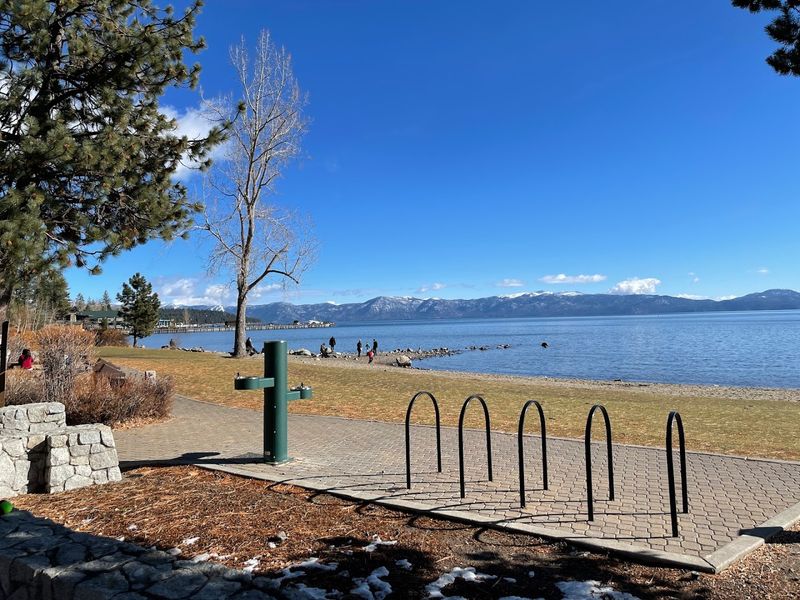
Most lake beaches sit in flat, open settings with a parking lot nearby and not much else competing for attention.
Lake Tahoe’s beaches feel completely different because the setting stacks up in every direction. Pine forests come right down to the sand, granite boulders frame the water’s edge, and mountain ridgelines rise sharply behind the tree line.
Commons Beach in Tahoe City, located at 400 N Lake Blvd, Tahoe City, CA 96145, offers a well-maintained public shoreline with a grassy park area, picnic tables, and easy water access.
The beach is smaller than Sand Harbor but sits in a central location on the north shore and gives a comfortable, unhurried pace compared to busier summer spots.
Sand Harbor’s main beach on the Nevada side is larger and more dramatic, with pale sand and the famous boulder formations that create natural alcoves along the water.
Both beaches reward visitors who arrive before 10 in the morning, since parking fills up quickly on summer weekends.
The mountain backdrop makes even a simple afternoon of sitting near the water feel more expansive than a typical beach day, and the cool alpine air keeps the heat manageable even in July and August.
Scenic Overlooks Make The Lake Easy To Admire
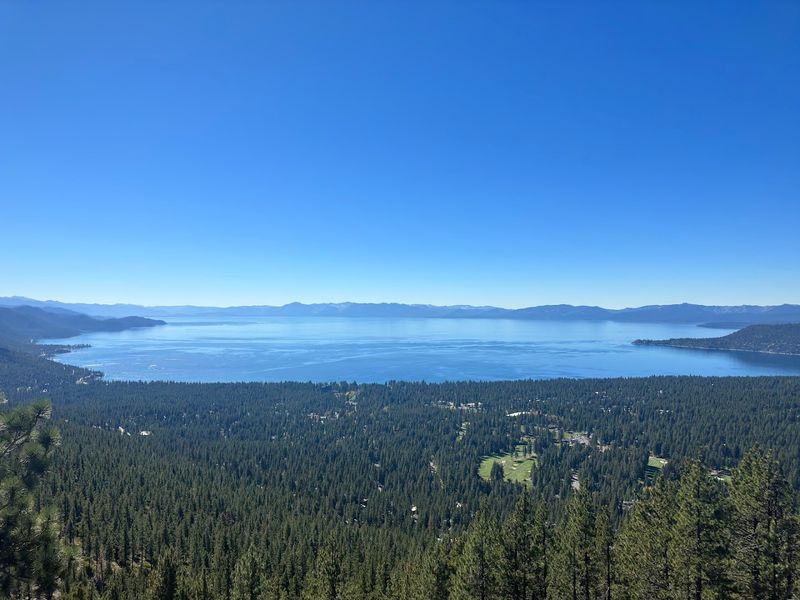
Not every great view at Lake Tahoe requires hiking boots or a boat reservation.
Some of the most striking perspectives on the lake come from roadside pullouts and designated overlooks that are accessible to anyone driving the perimeter road.
The Highway 89 corridor along the west and south shores is especially well stocked with stopping points.
The Emerald Bay overlook is the most famous of these, sitting right off the highway with a clear sightline down to the bay and Fannette Island.
The view captures the bay’s color range in one frame, from pale shallow water near the inlet to deep blue in the center, with forested mountain slopes filling the background.
It tends to attract crowds in summer, so arriving early or visiting on a weekday morning makes the stop more comfortable.
Along the east shore, several pullouts between Sand Harbor and Spooner Summit offer long views across the open lake toward the California mountains on the far side.
Those east shore views feel more expansive and less framed than Emerald Bay, giving a better sense of the lake’s full size.
South Lake Tahoe also has several accessible shoreline parks where the water is close and the mountain backdrop remains visible from flat ground without any climbing required.
It Works In Every Season
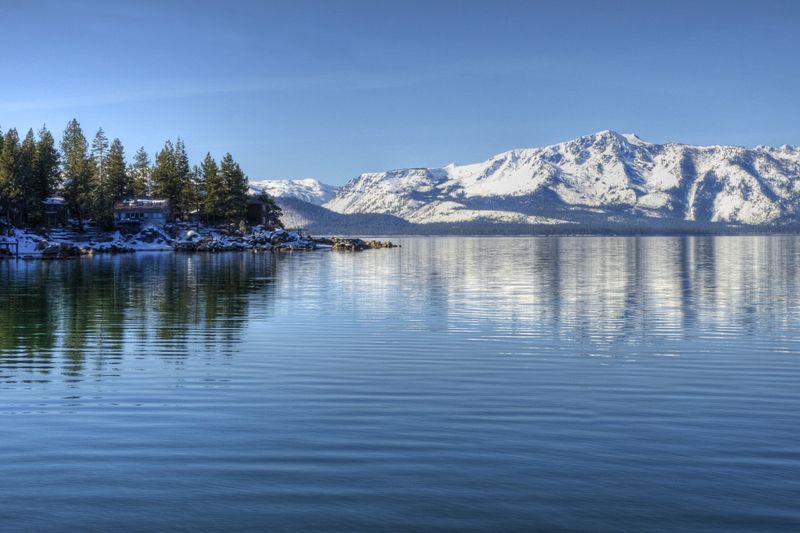
Summer gets most of the attention at Lake Tahoe, but the lake holds its appeal well beyond beach season.
Fall tends to bring a quieter, sharper quality to the water and air, with fewer crowds and a color shift in the surrounding forests as the aspens and willows along the shore turn gold and orange.
The clarity of the water can actually feel more pronounced in fall because the light sits lower and the surface stays calmer.
Winter transforms the lake into a different kind of destination entirely.
Snow settles on the pine trees and granite outcroppings around the shore while the lake itself stays liquid, its deep blue color contrasting sharply against white snowfields.
Ski resorts operate across the basin during winter months, and the combination of snowy mountain scenery and the open lake creates a landscape that feels unlike anything else in California.
Spring brings snowmelt and rising water levels, along with wildflowers on the lower slopes and a gradual return of warmer temperatures.
The lake in spring can feel raw and uncrowded in the best possible way, with trails and shoreline access available without the summer competition for parking.
Visiting in the shoulder seasons between May and June or September and October tends to offer a more relaxed experience while still delivering the clarity and scenery the lake is known for.