10 Unspoken Rules In Nebraska Amish Towns That Visitors Keep Ignoring
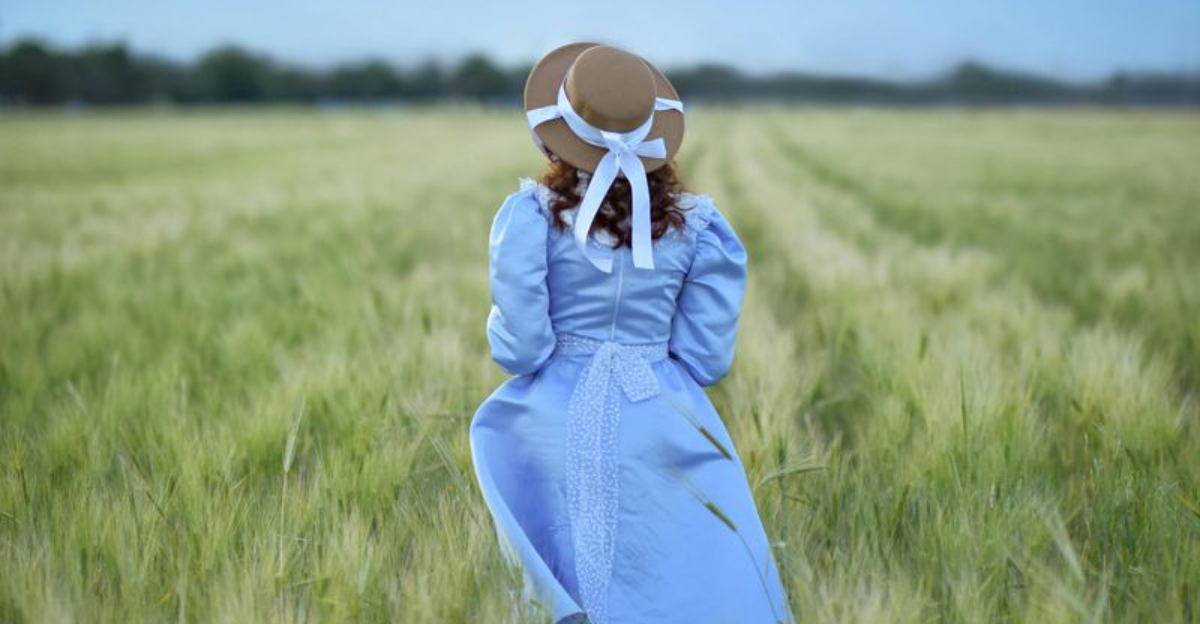
A quiet town can make bad manners feel twice as loud.
Doors close softly, conversations stay low and a camera feels less harmless than people think.
Visiting Nebraska’s Amish communities is not like stepping into a roadside attraction. Real families live there. Real routines matter.
Respect has to lead the trip before curiosity gets carried away.
The rules are not complicated. Most simply come down to patience, privacy, and knowing when to slow down.
A family farm is not an open invitation and a simple wave usually says more than a nosy question ever could. Travelers who miss those details can turn a peaceful visit into an awkward one fast.
The best way to experience places like these is to pay attention without pushing in. That is when the quiet starts to feel meaningful instead of misunderstood.
1. Do Not Photograph People’s Faces Without Permission

Cameras can cause real harm in communities where people believe photography conflicts with their faith and humility.
Many Amish families in Nebraska follow traditions that discourage having their image captured, particularly close-up or without consent.
Treating people like attractions rather than human beings is one of the fastest ways to create discomfort during a visit.
Pointing a lens at someone’s face without asking is considered deeply disrespectful in these communities.
Even if someone does not say anything directly, the discomfort is real and lasting.
Etiquette guides from Amish community advocates consistently remind visitors that these are working, living families, not exhibits at a cultural museum.
Photographing landscapes, products, storefronts, or handmade goods from a respectful distance tends to be more acceptable, though asking first is always the right move.
Some families or shop owners may be open to photography of their goods but not of themselves. A simple, polite question goes a long way and shows genuine respect for the community being visited.
2. Slow Down For Horse-Drawn Buggies On Rural Roads
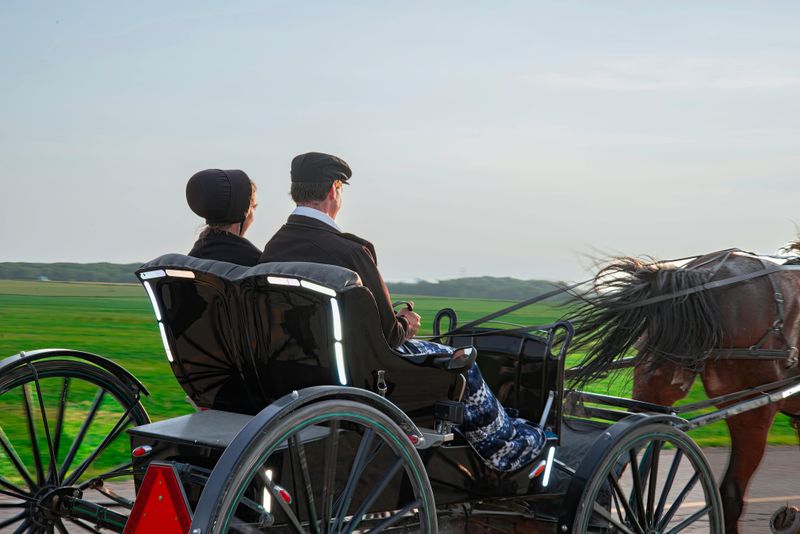
Rural roads near Pawnee City, Verdigre, and the Ewing and Orchard areas carry more than just cars and trucks.
Horse-drawn buggies share these roads regularly, and buggy-warning signs exist in these areas for a reason.
Drivers who are unfamiliar with sharing roads alongside horses often underestimate how quickly a situation can become dangerous.
Buggies travel at a much slower pace than motor vehicles, and horses can become unsettled when cars approach too quickly or too closely.
Giving buggies plenty of room and reducing speed well before reaching them is the safest and most courteous approach.
Passing should only happen when the road is clearly wide enough and the horse appears calm.
Nebraska roads in Amish communities tend to be narrow, and gravel shoulders are not always stable enough for buggies to pull completely off the road.
Patience matters here more than anywhere else on the route.
Arriving a few minutes later is a small price to pay compared to the risk of frightening a horse or causing an accident that could injure a family traveling by buggy.
3. Never Honk At Horses Near Amish Areas
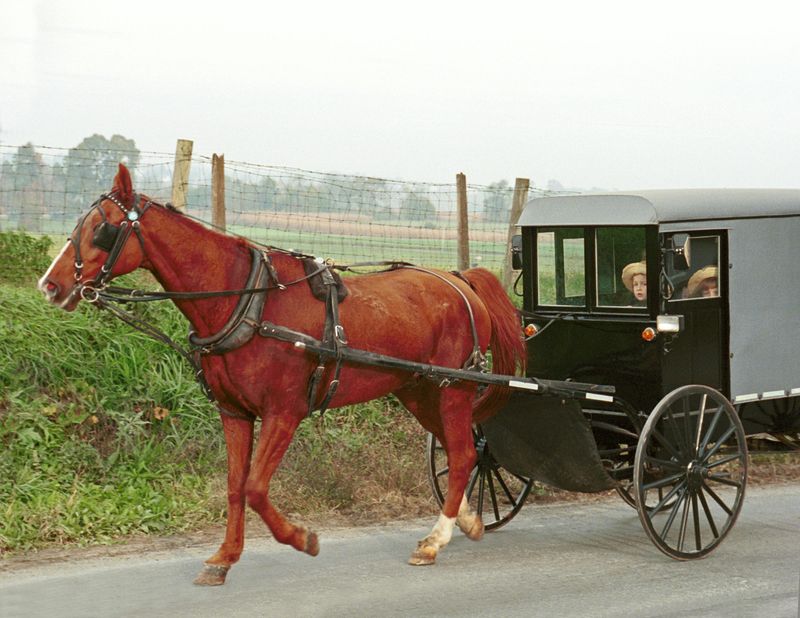
Honking a car horn near a horse is genuinely dangerous, not just impolite.
Horses are prey animals by instinct, and a sudden loud noise can cause them to bolt, rear up, or behave unpredictably in ways that put both the animal and the buggy passengers at serious risk.
Many drivers do not fully understand how sensitive horses are to sudden sound.
Even a short honk that seems harmless from inside a car can feel like an explosion to a horse standing just a few feet away.
Amish families who travel by buggy depend on their horses remaining calm in traffic, and a startled horse can be very difficult to control on a narrow rural road.
The consequences of a horse bolting while attached to a buggy can be severe.
Patience and silence are the right tools when approaching a buggy on a Nebraska country road.
Slowing down, keeping a wide berth, and waiting for a safe moment to pass quietly is the approach that keeps everyone safe.
Horns should be reserved for genuine emergencies, and rural Amish roads are not the place to test how a horse reacts to noise.
4. Shop Respectfully At Amish-Run Businesses

Pawnee County is home to Amish-run shops that sell bulk foods, woodwork, handmade goods, and other locally crafted items.
These are real, working businesses run by families who rely on them for their livelihood.
Treating a shop like a cultural museum display or a photo opportunity rather than a functioning store is something that locals notice and find uncomfortable.
Touching items without intent to purchase, making loud comments about how unusual things look, or treating shopkeepers like curiosities rather than business owners can quickly shift the atmosphere in a small store.
Browsing quietly, asking about products with genuine interest, and handling goods carefully reflects the kind of visitor these communities genuinely appreciate.
Prices at Amish-run shops tend to reflect real craftsmanship and quality ingredients rather than mass production shortcuts.
Bargaining aggressively or comparing prices dismissively can come across as disrespectful to the work involved.
Approaching these shops the same way a person would approach any small, family-owned local business sets the right tone from the moment the door opens.
5. Do Not Wander Onto Private Farms
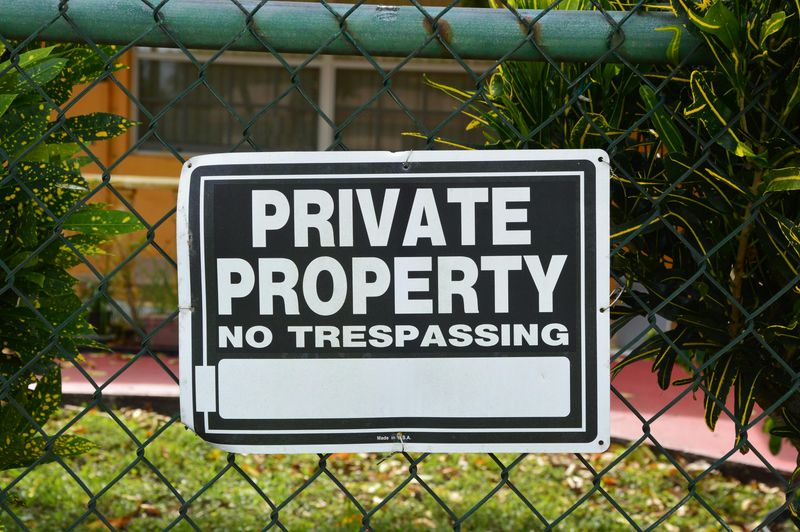
Many Amish-run businesses in Nebraska are located on or adjacent to private farmland, and the line between a shop entrance and private property is not always clearly marked.
Assuming that an open gate or an unlocked door is an invitation to explore further into someone’s property is a common mistake that visitors make without realizing it.
The fact that a business is home-based does not make the surrounding land public.
Wandering into barns, walking through gardens, or stepping beyond the shop area without being invited can feel like a significant intrusion to families who live and work in the same space.
Privacy holds deep importance in Amish culture, and respecting property boundaries is one of the most basic ways to honor that value. Staying in designated areas and waiting to be guided elsewhere is the right approach.
If something looks interesting beyond the shop, the better move is to ask politely rather than explore independently.
Most families who operate businesses are willing to share what they are comfortable sharing, on their own terms.
Respecting those terms without pushing back or testing boundaries is what separates a respectful visitor from one who leaves a lasting negative impression.
6. Dress And Act Modestly In Small Shops
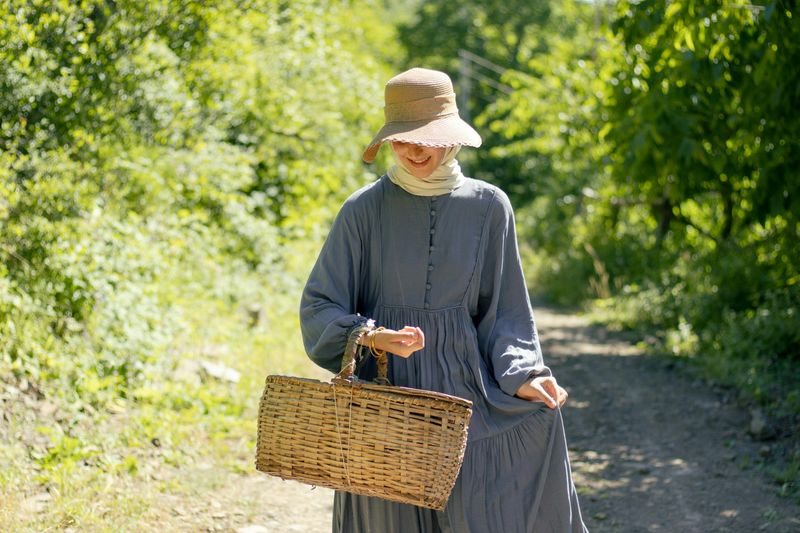
Walking into a small Amish-run shop in a community built around simplicity and modesty while wearing loud, flashy clothing or behaving in an attention-grabbing way tends to create an immediate sense of disconnect.
Visitors do not need to dress in Amish style, but choosing understated, relaxed clothing over anything overly revealing or showy is a small gesture that communicates awareness.
Tone of behavior matters just as much as appearance.
Loud conversations, boisterous laughter, or speaking at high volume in a quiet shop can feel jarring in spaces where calm and simplicity are the norm.
Keeping voices low, moving through the space without rushing or disrupting displays, and speaking to shopkeepers with patience and directness all contribute to a more comfortable interaction for both sides.
These shops are not designed for the kind of energy that works in a busy city market.
Modest behavior is not about performing for the community or pretending to share values that are not genuinely held.
It is simply about reading the room and adjusting accordingly.
Showing basic social awareness in a space that operates differently from a mainstream retail environment is a sign of genuine respect rather than just rule-following.
7. Do Not Stare, Point, Or Follow Amish Families
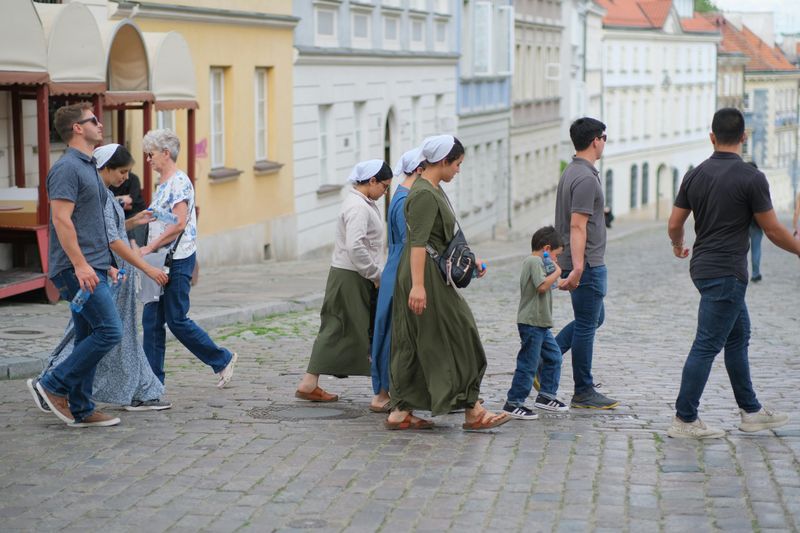
Staring at Amish families while they go about daily errands or work is something that happens more often than most visitors would admit.
Curiosity is natural, but acting on it in ways that make people feel watched or followed crosses a clear line. Amish families in Nebraska communities are not there to be observed as a cultural performance.
Pointing at people, whispering loudly about their clothing or lifestyle, or trailing a family through a store or down a road creates a dynamic that feels dehumanizing rather than respectful.
Children in these communities can be particularly sensitive to being stared at or singled out by strangers. Adults notice too, even when they do not respond outwardly.
Treating every person encountered in an Amish community the same way a person would treat anyone else in a small town is the simplest guide available.
Nod politely, make brief and natural eye contact, and move on without making someone feel like a spectacle.
The communities near Pawnee City and Verdigre are home to real families living real lives, and that reality deserves to be honored with ordinary human decency.
8. Bring Cash When Visiting Amish Stores

Cash remains the most reliable payment method when shopping at Amish-run stores in rural Nebraska.
Many of these small, family-operated businesses do not have point-of-sale systems, card readers, or reliable internet connections needed to process digital payments.
Assuming that a card or phone payment will work the same way it does at a chain store is a mistake that can leave both the visitor and the shopkeeper in an awkward position.
Pulling out a card only to discover there is no way to process it wastes everyone’s time and can feel embarrassing for a visitor who genuinely wants to make a purchase.
Bringing enough cash before heading into rural Amish areas means shopping can happen smoothly without any last-minute complications. Small bills are especially useful since not every shop will have change for large denominations.
Planning ahead financially is just as important as planning the route.
Rural Amish communities are not located near ATMs in most cases, so stopping in a nearby town before heading out is worth the extra few minutes.
Cash-ready visitors tend to have much smoother and more enjoyable experiences at these shops than those who arrive unprepared.
9. Respect Closed Days And Limited Business Hours
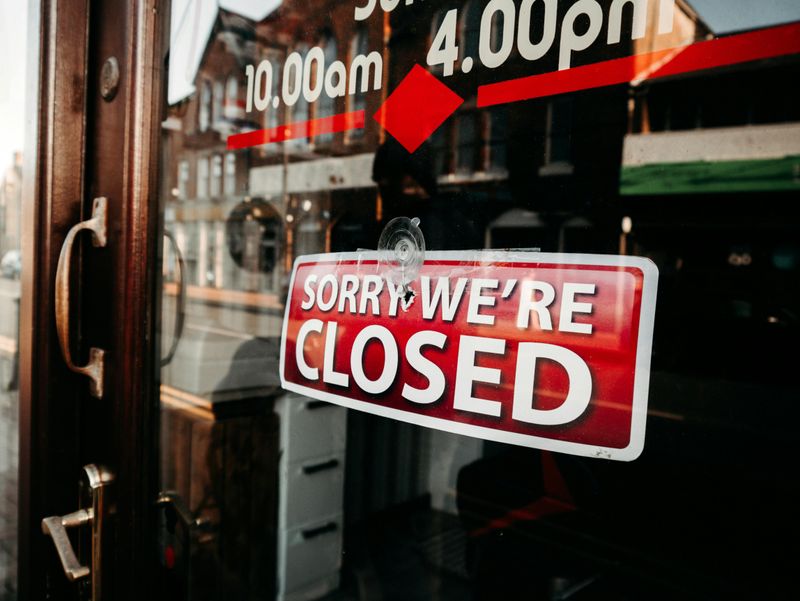
Small family-run Amish shops in Nebraska do not operate on the same schedule as commercial retail stores.
Hours may be limited to certain days of the week, and closures can happen without advance notice if a family has other obligations.
Sunday closures are especially common and should be expected rather than questioned or worked around.
Arriving at a shop and finding it closed is not a failure of planning on the shop’s part but rather a reflection of how these businesses work.
Families balance farming, childcare, community responsibilities, and shop operations all at once, and their schedules reflect those priorities.
Visitors who show up unannounced on a closed day and knock persistently or peer through windows are creating a situation that no one benefits from.
Checking for posted hours or calling ahead when possible helps avoid wasted trips and unnecessary awkwardness.
Some shops post their hours on a sign near the entrance, while others operate more informally based on when family members are available.
Building flexibility into the visit schedule rather than treating shop hours like a guaranteed convenience is the mindset that leads to a genuinely good experience in these communities.
10. Do Not Assume All Plain-Dressed Communities Are The Same

Nebraska is home to both Amish and Mennonite communities, and while the two groups share some historical and theological roots, they are distinct in meaningful ways.
Assuming that every person dressed plainly or traveling by buggy belongs to the same community or follows the same rules can lead to awkward misunderstandings.
Treating these groups as interchangeable shows a lack of basic awareness that communities notice.
Mennonite communities may use technology, drive cars, and participate in broader society in ways that differ significantly from Old Order Amish practices.
The level of interaction with outsiders, the types of businesses operated, and the specific customs around photography or conversation can vary quite a bit depending on which community a visitor is encountering.
Assuming one set of rules applies to all plain-dressed groups is an oversimplification that can cause unintended offense.
Taking a few minutes to learn the basic differences between Amish and Mennonite communities before visiting Nebraska’s rural areas makes the experience richer and more respectful.
Local tourism resources and community guides can provide helpful context without requiring deep academic study.
Arriving with even a basic understanding of who lives where and how they differ is a meaningful form of respect that most visitors skip entirely.