Most People Don’t Know About This Quietly Mysterious State Park Hiding In California
A state park should not feel like it is keeping a secret from you. This one does.
The roads get quieter. The buildings stand still in a way that feels almost too patient. You start reading the windows before you read any sign.
Something about the place makes you lower your voice without anyone asking.
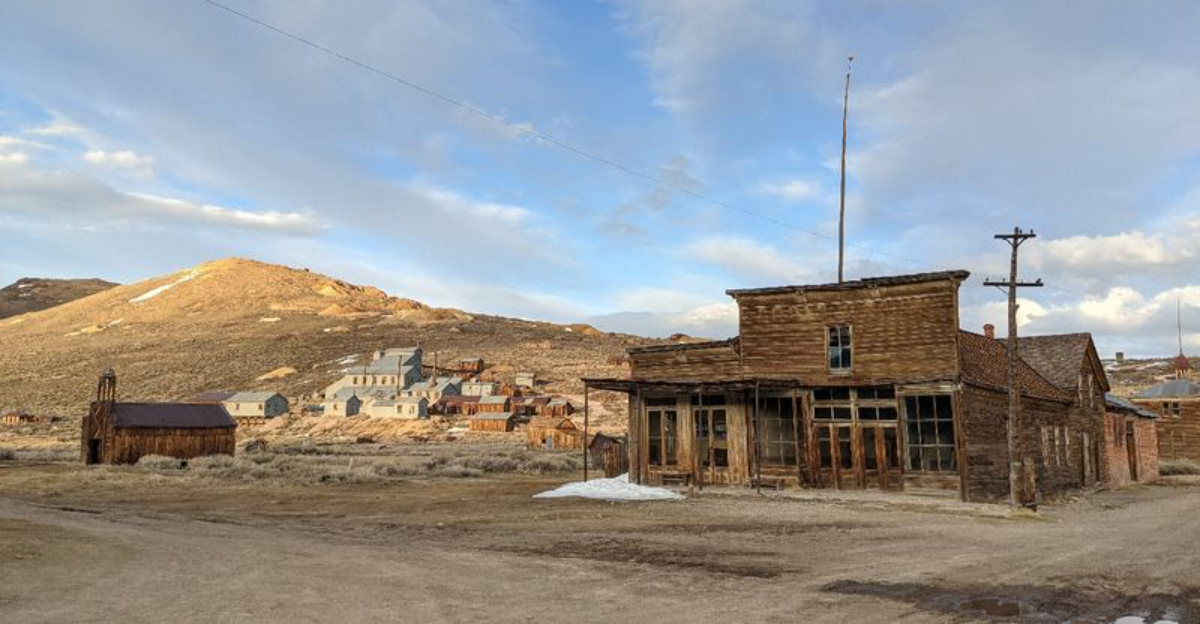
At one California state park, history seems to hover in the dust, settle into the silence, and cling to every weathered street.
That is what makes it so hard to shake. Nothing jumps out with cheap thrills. No dramatic soundtrack is needed.
The mystery comes from what remains. Weathered walls and empty rooms.
Streets that look paused mid-story. You do not just visit a place like this. You try to figure out what kind of life once filled it.
The answer never arrives all at once. That is why people keep looking.
It’s Preserved In Arrested Decay
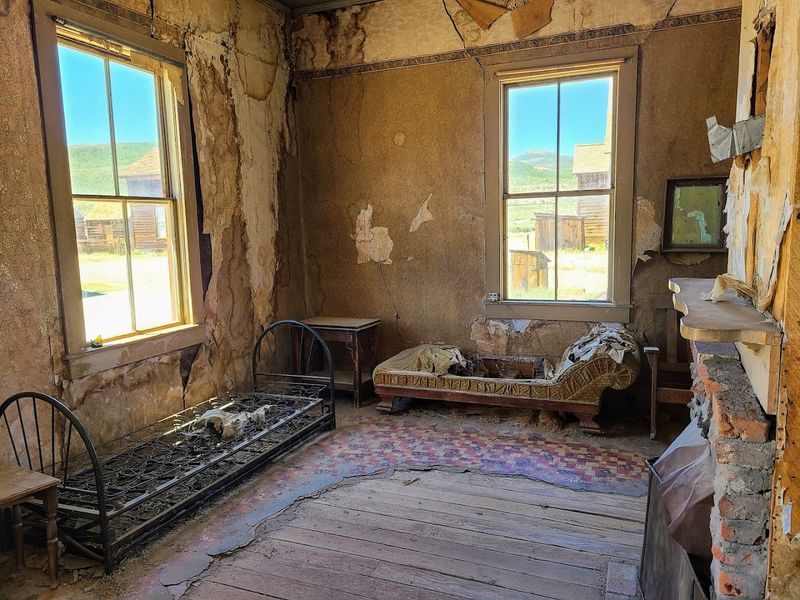
Most ghost towns get cleaned up, rebuilt, or turned into theme park versions of themselves.
Bodie takes a completely different approach, and that decision is what makes it so genuinely unsettling in the best possible way.
California State Parks manages the site under a philosophy called arrested decay, which means buildings and their contents are stabilized just enough to keep them from collapsing but are never restored to look new or polished.
Dust still coats the shelves inside the general store. Curtains hang in tatters over cracked windows.
A calendar on a wall may still show a month from decades past.
The effect is deeply atmospheric in a way that no amount of professional staging could replicate. Peeling wallpaper, sagging ceilings, and weathered wood tell a story that a freshly painted facade never could.
Visitors who peer through the windows of homes and shops often describe the experience as genuinely eerie, not because of ghost stories but because the evidence of real human lives is still right there, frozen mid-sentence.
That raw honesty is what separates Bodie from every other historic site in California.
Gold Was Discovered There In 1859
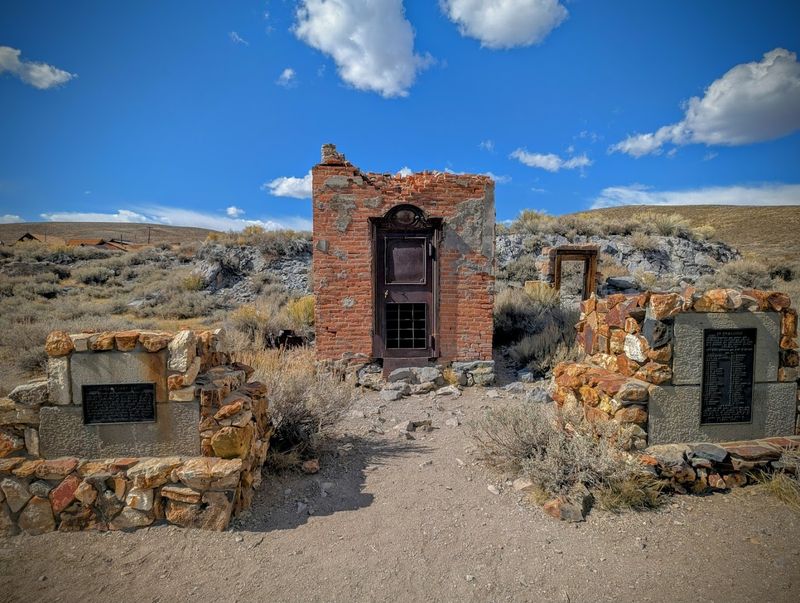
Long before the crowds of the 1880s arrived, a single gold discovery in 1859 set everything in motion.
W.S. Bodie and a small group of prospectors found gold in the hills of what is now the Bodie Mining District, and word spread fast across California.
The early years were modest, just a rough camp of determined miners working the ground with basic tools. Then in 1877, a rich vein of ore was uncovered and the population exploded almost overnight.
By the early 1880s, Bodie had grown into one of the largest and most notorious mining towns in the American West.
At its peak, the town reportedly housed somewhere between 8,000 and 10,000 people and featured around 2,000 structures.
Saloons, banks, a school with hundreds of enrolled students, churches, and a red-light district all operated within walking distance of each other.
The whole rise started with that single 1859 discovery, and the remnants of that era are still visible today in the landscape and the buildings that somehow managed to survive more than a century of brutal high-desert winters.
Population Once Topped 8,000
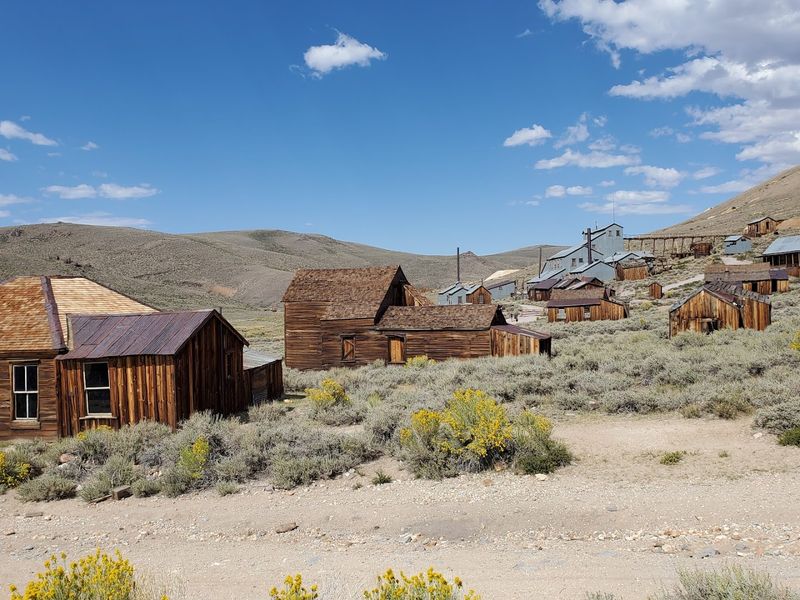
Hard to picture now, standing on those quiet dirt streets with only the wind for company, but Bodie was once a genuinely crowded and chaotic place.
At its height in the early 1880s, the population reached somewhere between 8,000 and 10,000 people packed into a remote valley above 8,000 feet elevation.
The town had everything a city of that size might need.
There were multiple hotels, a school that reportedly enrolled as many as 625 students at one time, a jail that reportedly stayed busy, and enough saloons to keep the whole population occupied after dark.
Bodie was even considered the sixth largest city in California during its boom years, which is a genuinely staggering fact given how isolated the location is.
Decline came gradually at first and then quickly. Mining output dropped, fires destroyed large sections of town, and residents began leaving for better opportunities elsewhere.
By the time the last mine officially shut down in 1942, only a handful of people remained.
The contrast between that booming past and the silent present is something visitors feel almost physically when walking the empty streets today.
Roughly 100 Structures Still Stand
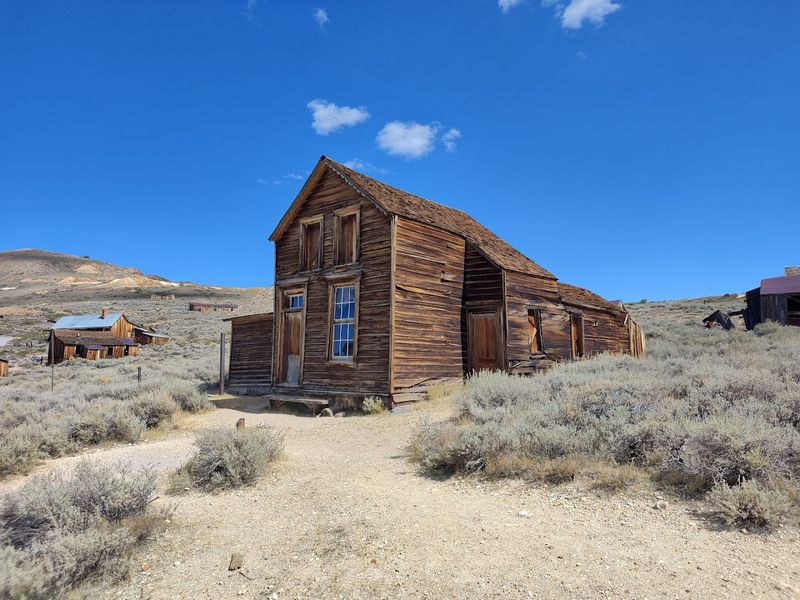
At its peak, Bodie had roughly 2,000 structures spread across its valley.
Fires, harsh winters, and time have taken most of them, but around 100 buildings still stand today and they cover a surprisingly wide range of what daily life looked like in a late 19th century mining town.
Walking through the site, visitors can see homes with furniture still inside, a church with pews in place, a schoolhouse, a saloon, a general store with goods still on shelves and various outbuildings scattered across the landscape.
Some structures are in better shape than others, and a few lean at angles that suggest they are working hard just to stay upright.
The variety of building types is part of what makes the self-guided walk so engaging. Each structure tells a slightly different story about who lived and worked in Bodie and what they left behind.
Park staff post signs to help visitors identify buildings and their histories, and a walking tour booklet available for a small cash fee adds even more context.
Bringing extra time to move slowly through the site is genuinely worthwhile because details reward a patient eye.
Museum And Visitor Center Providing Historical Context
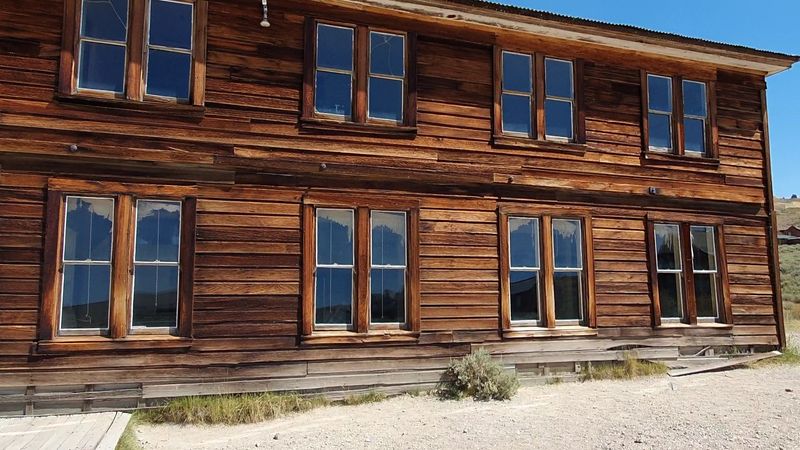
Before heading out to explore the streets, stopping at the museum and visitor center is a smart move.
Located within the park, it provides historical context that makes everything else on the grounds feel more meaningful and connected.
The museum holds display cases filled with artifacts recovered from the town, tools, personal belongings, documents, and objects that give a tangible sense of the people who actually lived and worked in Bodie.
Informational exhibits explain the arc of the town’s history from its 1859 gold discovery through its boom years and eventual abandonment.
A small gift shop and bookstore are also located inside, which is the place to pick up the walking tour booklet that many visitors consider essential.
The museum also serves as the place to purchase tickets for the Standard Stamp Mill tour when it is running, and staff there can answer questions about current conditions and building availability.
Worth noting is that the museum tends to close earlier than the park itself, so visiting it first thing after arriving is the most reliable approach.
Starlink wifi is reportedly available inside the building, which is a practical bonus given that the park sits in a cellular dead zone.
Standard Stamp Mill Tours
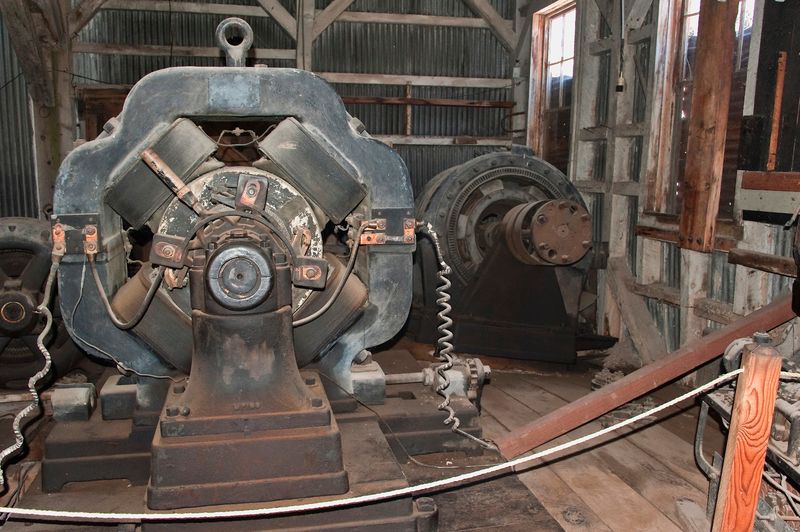
Out of everything at Bodie, the Standard Stamp Mill stands apart as the one place where visitors can actually step inside a building with a guide rather than peering through a window.
Seasonal guided tours take small groups through the mill and explain how gold ore was processed during the town’s most productive years.
The mill itself is enormous and filled with original machinery, including the stamping equipment that crushed raw ore, the shaker tables that separated gold particles, and the electrical room that powered the whole operation.
Guides walk visitors through each section and provide detailed explanations of how the process worked, how many workers were employed, and what the conditions were like.
The tour tends to sell out, especially on busy summer days, so purchasing tickets at the museum as early as possible after arrival is strongly recommended.
Tickets for the mill tour are sold at the museum, and the cutoff for purchasing them happens roughly ten minutes before the tour begins, so arriving early gives the best chance of securing a spot.
Even visitors who miss the mill tour find plenty to explore throughout the rest of the grounds, but the interior access and guided storytelling of the stamp mill experience adds a layer that the self-guided walk simply cannot match.
It Became A State Historic Park In 1962
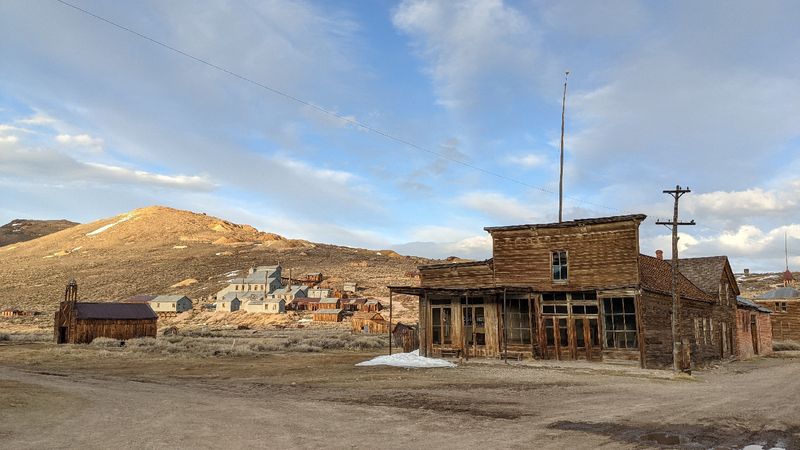
Before official protection arrived, Bodie spent decades quietly deteriorating in its remote valley with little oversight.
That changed in 1961 when the site was designated a National Historic Landmark, followed by its establishment as a California State Historic Park in 1962.
That formal protection is the reason roughly 100 structures are still standing today.
Without the resources and management that came with state park status, the remaining buildings almost certainly would have collapsed further or been stripped of their contents over the following decades.
The arrested decay philosophy was adopted as the official preservation approach, meaning the goal became stabilization rather than restoration.
More than sixty years of state management have also kept the town’s remarkable collection of interior artifacts in place.
Furniture, tools, dishes, clothing, and personal belongings remain inside buildings largely as they were left, which is an almost unheard-of level of preservation for a site this age.
The Bodie Curse, a local legend suggesting bad luck befalls anyone who removes artifacts from the park, is often credited with helping to discourage theft.
It Sits In California’s High Desert
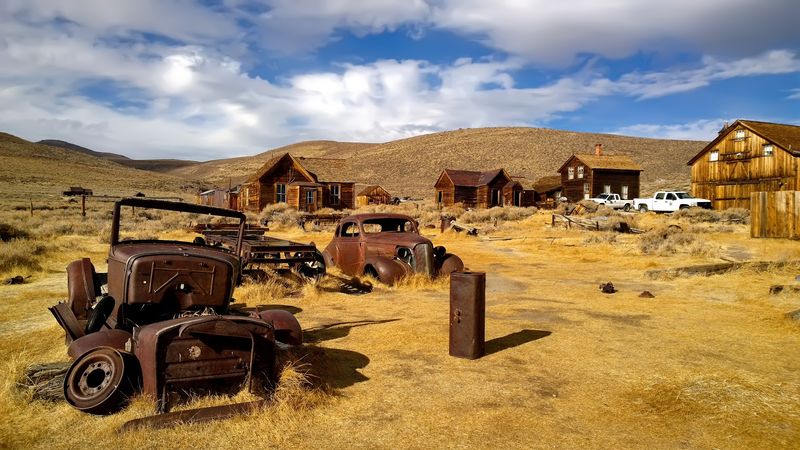
Location plays a massive role in why Bodie feels the way it does.
Sitting at roughly 8,375 feet elevation in a stark, treeless valley east of the Sierra Nevada, the setting strips away every distraction and leaves the town completely exposed to the sky and the elements.
The landscape around the site is wide and spare, rolling hills covered in sagebrush with no commercial development visible in any direction.
That isolation is not incidental. It is a core part of what makes the experience feel cinematic and genuinely eerie rather than staged.
The same remoteness that helped preserve the town from vandalism over the decades also contributes to the quiet, almost suspended atmosphere that visitors describe so consistently.
Weather at that elevation can shift quickly. Summer days can be warm and sunny but wind is common and temperatures drop fast after sunset.
Sunscreen and a hat are genuinely useful given the direct sun exposure and lack of shade throughout the site.
The drive in through the Eastern Sierra is itself scenic and worth slowing down for, with views of open rangeland and mountain ridgelines that set the mood well before the town comes into sight.
The final three miles of unpaved dirt road are manageable for most standard vehicles at a careful pace.
The Road Can Be Seasonal-Sensitive
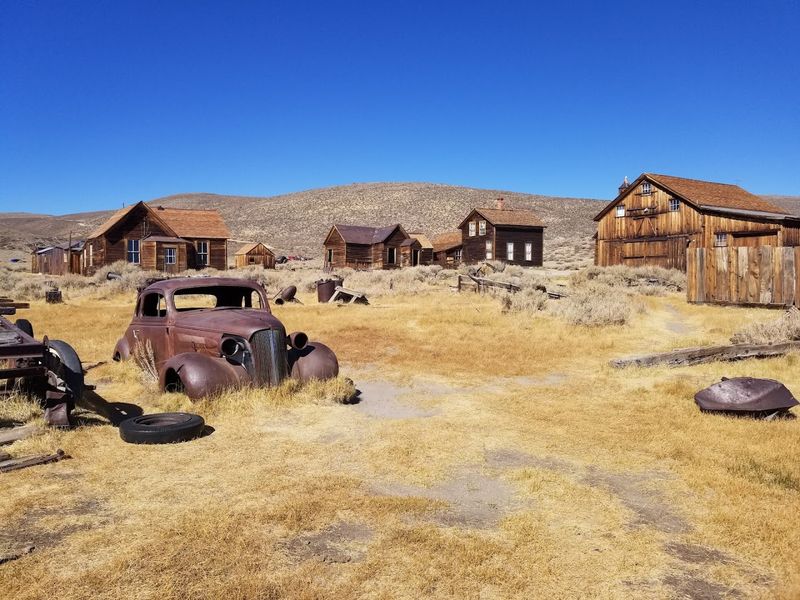
Getting to Bodie is part of the experience, and knowing what to expect before leaving makes the trip considerably smoother.
The primary route is California State Route 270, which begins near Bridgeport and covers most of its distance on paved road before transitioning to a rough unpaved section for the final three miles.
That last stretch of washboard dirt road is manageable for most standard passenger vehicles as long as drivers keep their speed down, somewhere around 15 to 20 miles per hour.
High-clearance vehicles handle it more comfortably but are not strictly required under normal dry conditions.
Alternative routes like Cottonwood Canyon Road are significantly rougher and are generally not recommended for standard cars.
During winter, heavy snowfall at the park’s elevation can make the road entirely impassable, and during those months the park is typically only accessible by skis, snowshoes, or snowmobiles.
State Route 270 is currently listed as open but road status can change with weather, so checking conditions before departure is always a sensible step.
Summer Hours Are Longer
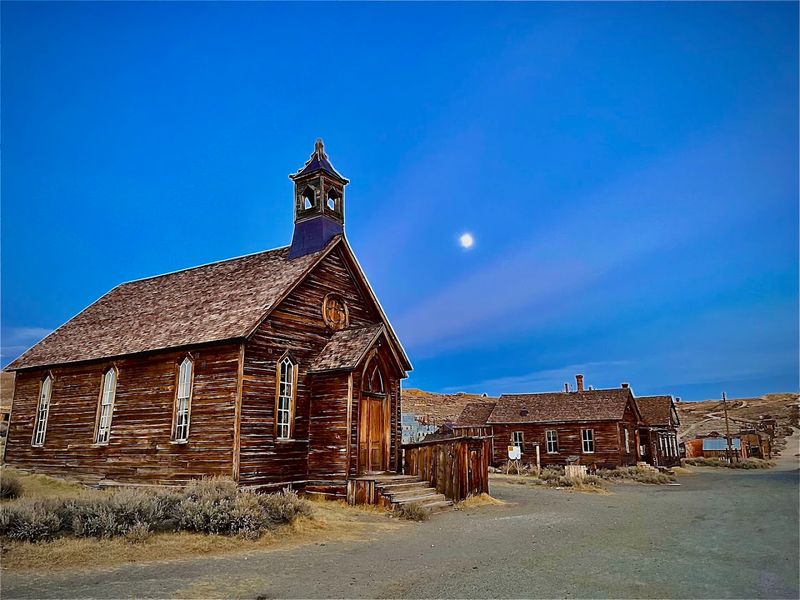
Planning around the park’s operating hours matters more at Bodie than at many other destinations because the site covers a lot of ground and rewards those who give themselves enough time.
Current official hours show the park open from 9 AM to 6 PM between May 1 and Labor Day, and from 9 AM to 4 PM during the rest of the year.
Summer is the most popular season and for good reason. The longer hours allow for a more relaxed pace, and the late afternoon light in particular turns the weathered wood and open landscape into something genuinely beautiful.
Arriving right at opening on a weekday tends to offer a quieter experience before the midday crowds arrive. By late morning on a summer Friday or weekend, the parking area can fill up noticeably.
Fall visits in September and October offer cooler temperatures and thinner crowds while the park is still fully accessible.
Winter access is extremely limited due to heavy snowfall at the park’s elevation of roughly 8,375 feet, and the final stretch of road may become impassable without specialized equipment during those months.