These Hidden New Hampshire Spots Are Even Better Than The Famous Attractions
New Hampshire has a talent for making you feel like a terrible tourist, and honestly, good for it.
You show up with your carefully curated list of famous peaks and scenic drives, feeling very prepared, and then the state quietly blows up your entire itinerary.
A wrong turn leads to a waterfall nobody put on a sign. A local tip sends you down a dirt road that ends somewhere genuinely magical.
I have stood in spots that had zero hashtags and an absolutely unhinged amount of beauty, wondering why I ever bothered with the crowded overlooks.
The truth is that New Hampshire saves its best material for the people willing to wander a little.
These hidden gems are not secret because they are disappointing. They are secret because the people who found them are too busy enjoying themselves to tell anyone.
1. Polar Caves Park
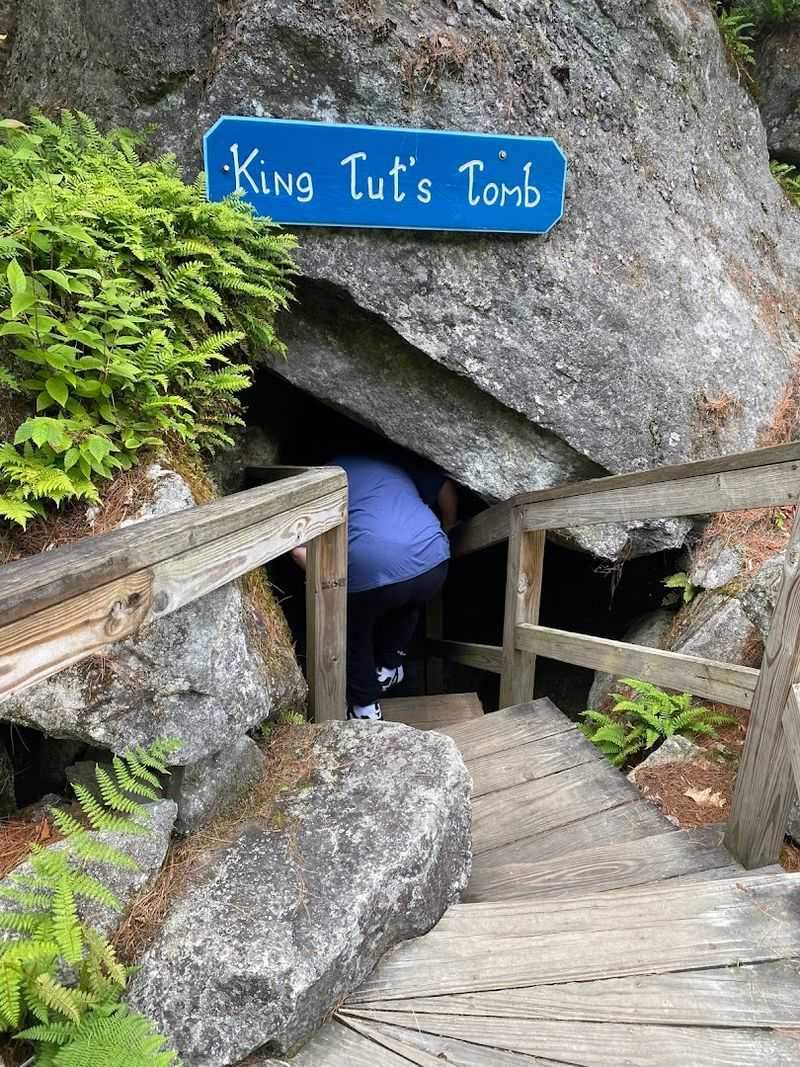
Some places look modest from the parking lot and then completely blow your mind once you are inside.
Polar Caves Park in Rumney is exactly that kind of place.
The caves were carved by glaciers over 50,000 years ago, and walking through them feels like stepping into a geology textbook that somehow became an adventure course.
The park features nine caves connected by a trail, each one with its own nickname and personality. Lemon Squeeze is not for the claustrophobic.
Fat Man’s Misery is self-explanatory and absolutely hilarious when you watch strangers attempt it. The tight squeezes and cool air inside the caves make it feel genuinely exploratory, not staged.
Families with kids love it here, and honestly so do adults who forgot what it feels like to be curious. There is also a nature trail with wildlife exhibits and a gem mining sluice that kids go absolutely wild for.
The address is 705 Rumney Rte 25, Rumney, NH. Spring and fall visits are spectacular when the foliage frames the granite formations.
This is one of those rare places that earns every single bit of enthusiasm people bring to it.
2. Lost River Gorge & Boulder Caves
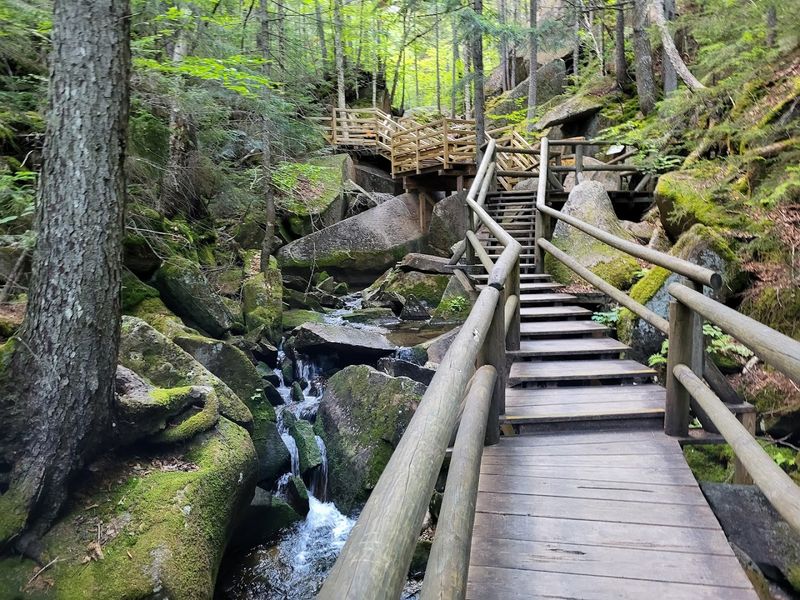
Picture a river that vanishes underground and then reappears between boulders the size of houses. That is Lost River Gorge, and it is one of the most dramatic natural features in New England.
The gorge was formed by glacial activity, and the result is a half-mile trail of boardwalks, ladders, and platforms that put you right inside the action.
I remember leaning over the edge of one platform and watching the water disappear into a crack in the earth below me. It felt like the land was keeping a secret.
The boulder caves here have names like Hall of Ships and the Dungeon, and crawling through them is genuinely exciting for anyone who does not mind getting a little dirty.
The surrounding forest is stunning, and the whole experience takes about an hour and a half at a comfortable pace.
The park is located at 1712 Lost River Road, North Woodstock, right in the heart of the White Mountains region. It is open seasonally and tends to be less crowded than the big mountain attractions nearby.
Bring good shoes, wear layers, and prepare to be genuinely amazed by what glaciers left behind.
3. America’s Stonehenge
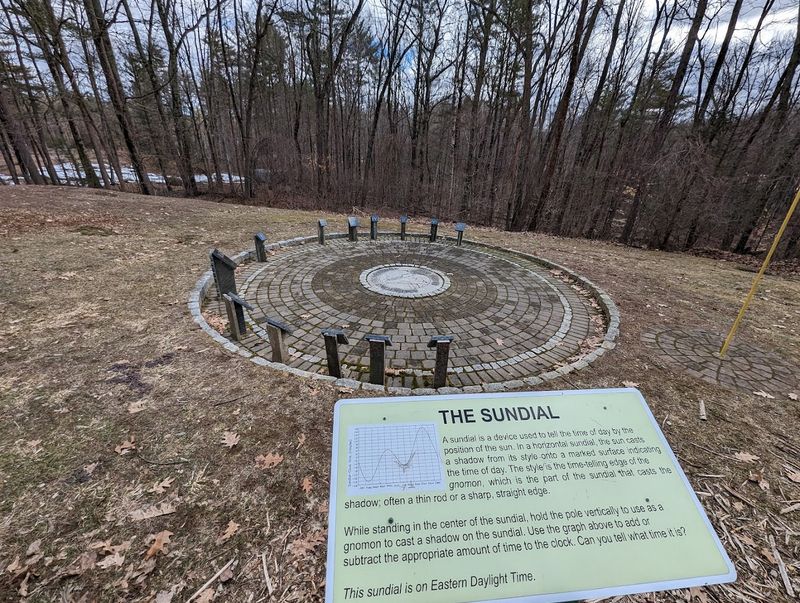
Nobody expects to find a megalithic stone site in southern New Hampshire, which is exactly why this place is so delightfully weird.
America’s Stonehenge in Salem is a sprawling complex of ancient stone chambers, walls, and standing stones that researchers believe may be thousands of years old.
The origin is still debated, which makes visiting feel like participating in an unsolved mystery.
The site spans about 30 acres and includes a main chamber, a sacrificial table stone, and an astronomical calendar of standing stones aligned to solar and lunar events.
Walking the trails here, you get the feeling that every rock has something to say if you listen closely enough. The audio tour adds real depth to what might otherwise just look like a pile of old rocks.
There is also an alpaca farm on the property, which is genuinely charming and a little unexpected. Kids and adults alike end up fascinated, though for completely different reasons.
The address is 105 Haverhill Road, Salem. It is open year-round, and the summer solstice event draws crowds who come to watch the sunrise align perfectly with the standing stones.
That alone is worth planning a trip around.
4. Canterbury Shaker Village
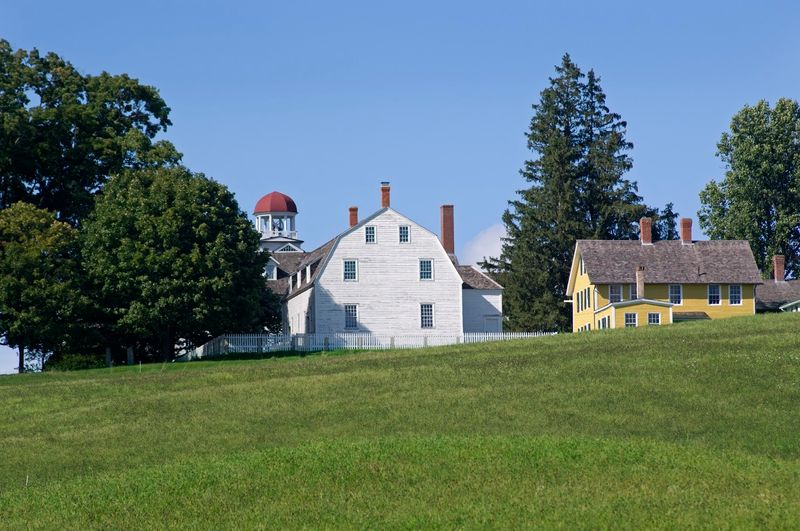
Most people drive past Canterbury without a second thought, which means most people are missing one of the most beautifully preserved historic sites in the entire country.
Canterbury Shaker Village was an active Shaker community from 1792 until 1992, and the last sister passed away in 1992.
Two centuries of intentional, peaceful living left behind an extraordinary collection of buildings and craftsmanship.
The village has 25 original buildings set across a stunning landscape of meadows, ponds, and stone walls.
The Shakers were ahead of their time in many ways, inventing practical tools and embracing gender equality long before it was fashionable.
Guided tours bring that history to life in a way that feels personal rather than textbook-dry.
The on-site restaurant serves food inspired by Shaker recipes, and it is genuinely excellent. Craft demonstrations happen throughout the season, and the gift shop carries beautiful handmade items.
You can find the village at 288 Shaker Road, Canterbury. Fall is a particularly magical time to visit when the trees surrounding the village turn gold and the whole scene looks like a painting.
Plan for at least two hours because there is far more to explore than you expect.
5. Currier Museum Of Art
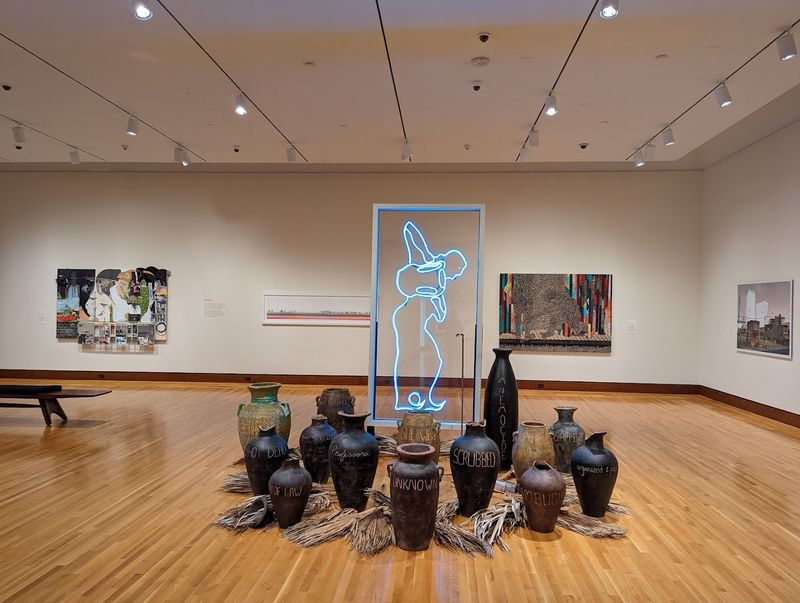
Manchester does not usually make the top of anyone’s New Hampshire travel list, which is a shame because the Currier Museum of Art is genuinely world-class.
The collection includes works by Picasso, Monet, and Matisse alongside outstanding American paintings and decorative arts. For a mid-sized city museum, the quality and range of the collection is honestly surprising.
The building itself is worth the visit. The original 1929 Beaux-Arts structure was expanded in 2008 with a modern wing that handles natural light beautifully.
The two architectural styles exist side by side without clashing, which takes real skill to pull off. Walking from one section to the other feels like moving between two different eras of museum design.
One of the coolest features is the Zimmerman House, a Frank Lloyd Wright Usonian home that the museum owns and offers tours of by appointment.
It is the only Wright-designed home open to the public in New England, and that alone makes the Currier a must-visit.
The museum is located at 150 Ash Street, Manchester. Admission is reasonably priced, and the cafe inside serves great coffee.
This is the kind of place that locals are quietly proud of and visitors are loudly impressed by.
6. Strawbery Banke Museum
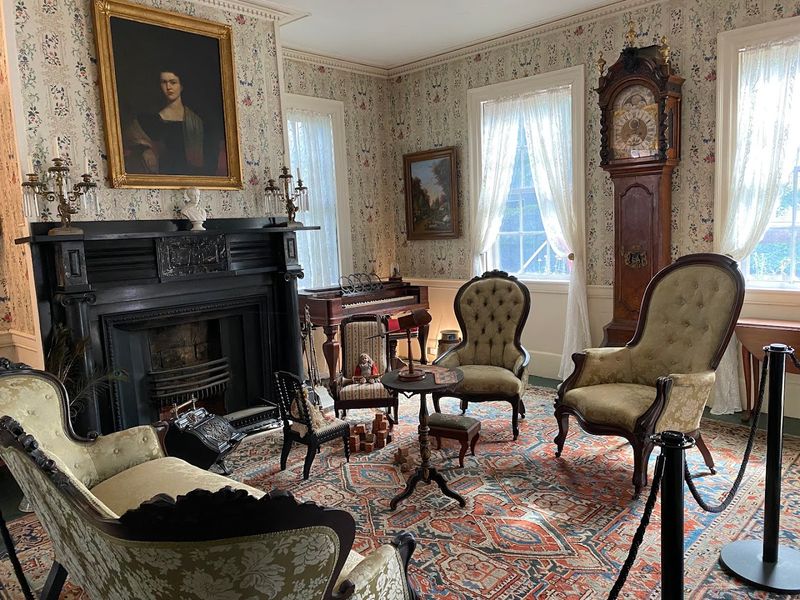
Portsmouth gets attention for its restaurants and waterfront, but the real treasure is a ten-acre outdoor history museum that most visitors walk right past.
Strawbery Banke preserves an entire neighborhood that dates back to 1630, with over 30 historic structures spread across the grounds. It is the kind of place where you can step into different centuries within a single afternoon.
What sets Strawbery Banke apart from typical history museums is the layered storytelling.
One house might show life in the 1700s while the next one is restored to the 1950s, capturing how the same neighborhood changed across generations.
That approach makes history feel continuous rather than frozen, and it is genuinely thought-provoking.
The gardens are maintained using period-appropriate plants and techniques, and they are quietly beautiful. Costumed interpreters bring specific eras to life without making it feel like a theme park.
The museum sits at 14 Hancock Street, Portsmouth, New Hampshire, right in the middle of the historic South End neighborhood.
It is open seasonally with special events throughout the year, including a beloved winter candlelight stroll.
Give yourself at least three hours here, and bring comfortable shoes because the grounds are larger than they look on a map.
7. Mt. Kearsarge Indian Museum
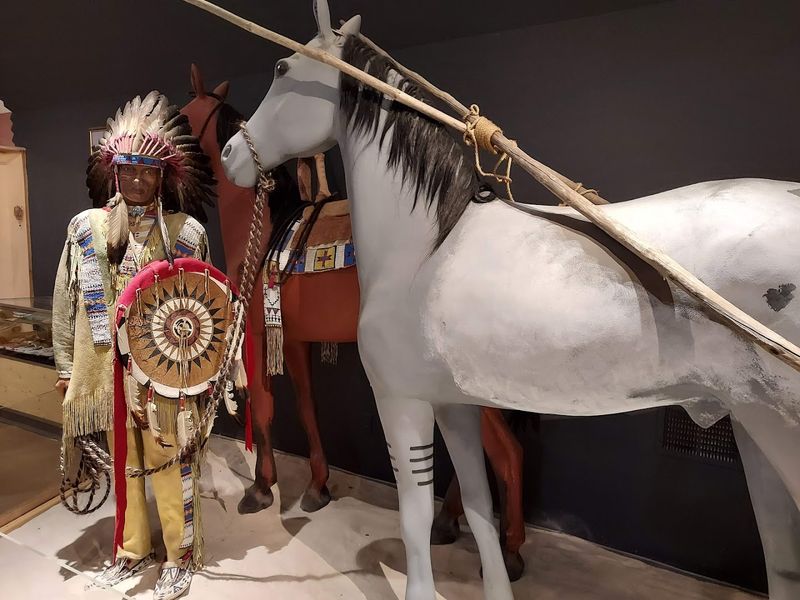
Somewhere between Concord and the Lakes Region, there is a small museum that quietly does one of the most important jobs in New England.
The Mt. Kearsarge Indian Museum in Warner is dedicated to preserving and honoring the cultures of Native peoples across North America.
The collection is personal, carefully curated, and more moving than you expect walking in.
The museum was founded by Bud Thompson and his family, who spent decades collecting authentic Native American artifacts with deep respect for the cultures they represent.
The exhibits cover everything from intricate beadwork and quillwork to tools, clothing, and ceremonial objects.
Each piece is presented with context that helps visitors understand the living traditions behind the objects, not just the objects themselves.
The outdoor Medicine Woods trail is a peaceful walk through a garden of plants used by Native peoples for food and healing. It adds a sensory dimension to the experience that most museums simply cannot offer.
You will find the museum at 18 Highlawn Road, Warner. It is a smaller institution, which means the experience feels intimate and unhurried.
The staff are knowledgeable and genuinely passionate. This is the kind of place that stays with you long after you leave the parking lot.
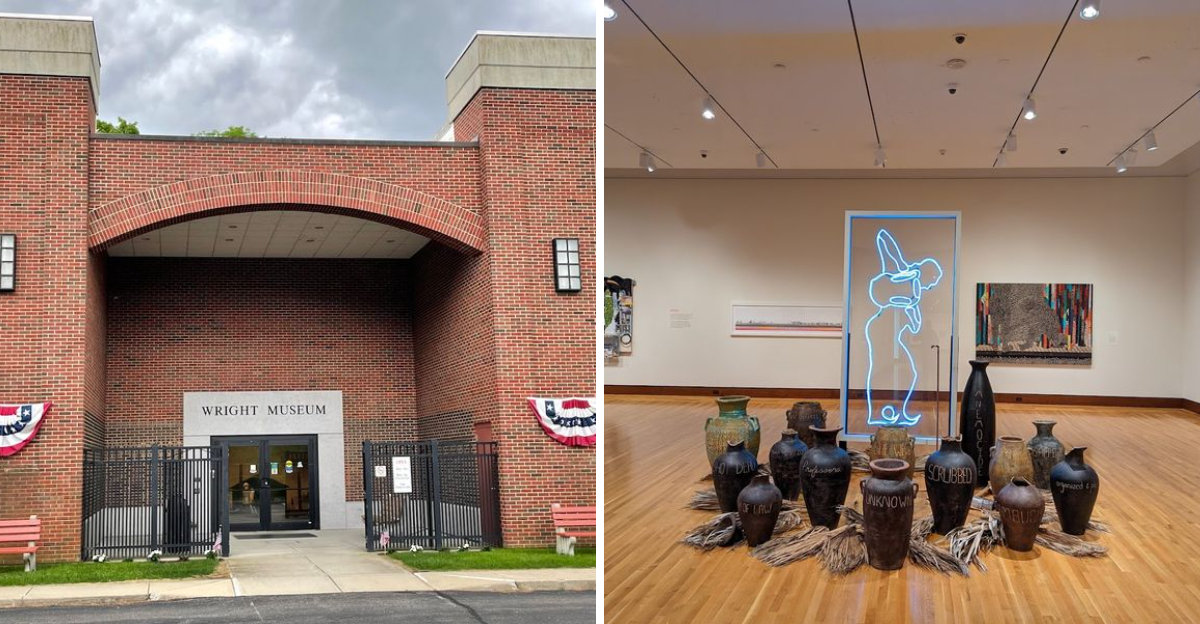
8. Wright Museum Of World War II
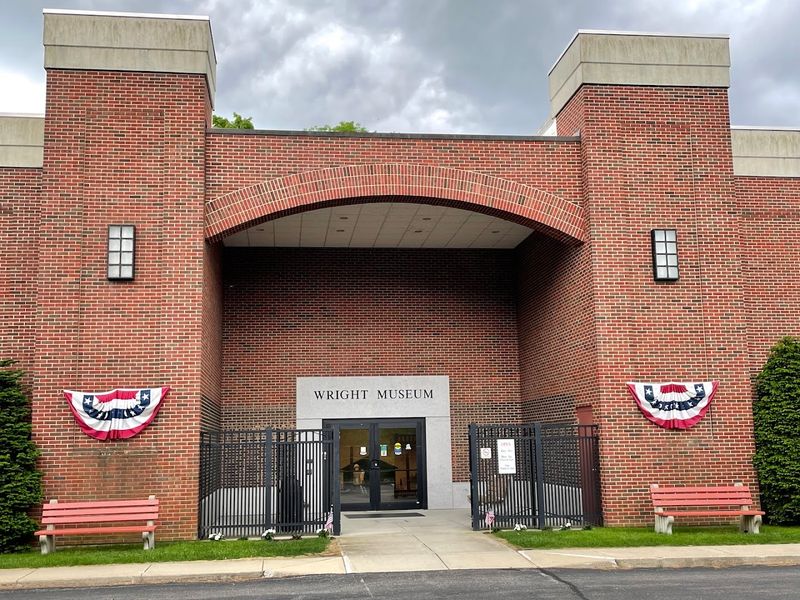
Wolfeboro is known as the oldest summer resort town in America, and most visitors come for the lake views and the charming downtown. But right in the middle of town sits a museum that tells a much bigger story.
The Wright Museum of World War II is one of the most comprehensive home-front history museums in the country, and it deserves far more attention than it gets.
The museum focuses specifically on the American home-front experience during the conflict, covering rationing, manufacturing, propaganda, and the daily lives of ordinary people.
That angle makes it different from most military museums, which tend to focus primarily on battlefield history. Here, you understand how an entire society reorganized itself around a shared national effort.
The collection includes authentic vehicles, uniforms, equipment, and personal artifacts donated by veterans and families. The exhibits are well-designed and emotionally resonant without being overwhelming.
There is a 1940s-era street scene that places you inside the era in a surprisingly effective way. The museum is located at 77 Center Street, Wolfeboro, New Hampshire.
It is open seasonally and attracts visitors of all ages. History teachers especially love it here because the exhibits connect directly to what students study in school.
Plan to spend two solid hours minimum.
9. Robert Frost Farm State Historic Site
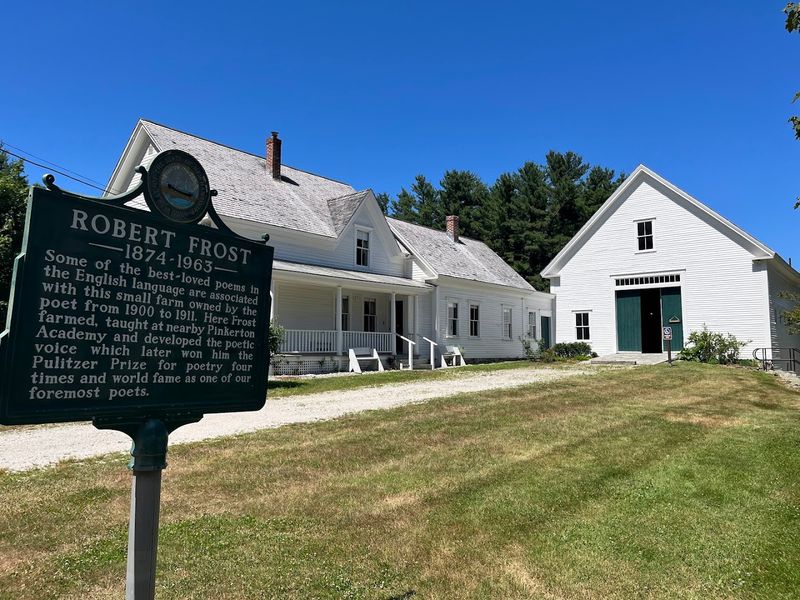
Most people know Robert Frost from a poem about a road diverging in a yellow wood, but fewer people know that some of his most important early work was written on a farm in Derry, New Hampshire.
The Robert Frost Farm State Historic Site preserves the place where Frost lived from 1900 to 1911, and visiting it feels like reading his poems with the volume turned up.
The farmhouse is restored to the period when Frost lived there, and the rooms are simple and honest in a way that reflects his writing.
Walking the Hyla Brook Trail behind the property, you pass the exact landscapes that inspired poems like “Mending Wall” and “After Apple-Picking.”
That kind of direct connection between a writer and their surroundings is rare and genuinely affecting.
The site hosts poetry readings and educational programs throughout the year, and the staff bring real enthusiasm to interpreting Frost’s life and work.
It is a quiet place that rewards slow visitors more than rushed ones. The farm is located at 122 Rockingham Road, Derry.
Admission is modest and absolutely worth it.
Whether you are a poetry fan or just someone who appreciates a well-kept piece of American literary history, this farm will surprise you in the best possible way.
10. American Independence Museum
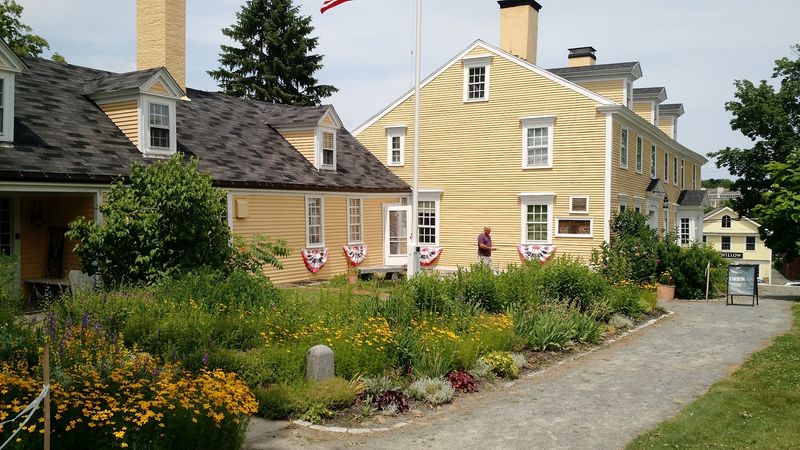
Exeter is one of those towns that carries more American history per square foot than almost anywhere else in the country.
The American Independence Museum sits at the center of that history, occupying the Ladd-Gilman House, which served as the state treasury during the Revolutionary War.
Walking through its rooms, you are standing where some genuinely pivotal decisions were made.
The museum’s collection includes rare documents and artifacts from the founding era, and the crown jewel is one of the few surviving original copies of the Declaration of Independence.
Seeing it in person is a different experience than seeing a reproduction. The paper, the handwriting, the age of the thing itself all hit differently when it is right in front of you.
The museum hosts the annual American Independence Festival each July, which draws thousands of visitors for reenactments, period music, and community celebration.
It is one of the most genuinely festive and historically grounded events in the region. The museum is located at 1 Governors Lane, Exeter.
Staff and volunteers here are passionate about making history accessible rather than academic.
Even visitors who do not consider themselves history people tend to leave feeling like they just discovered something important. That reaction is hard to manufacture and impossible to fake.