This Stunning North Carolina Island Is Where Wild Horses Roam Free
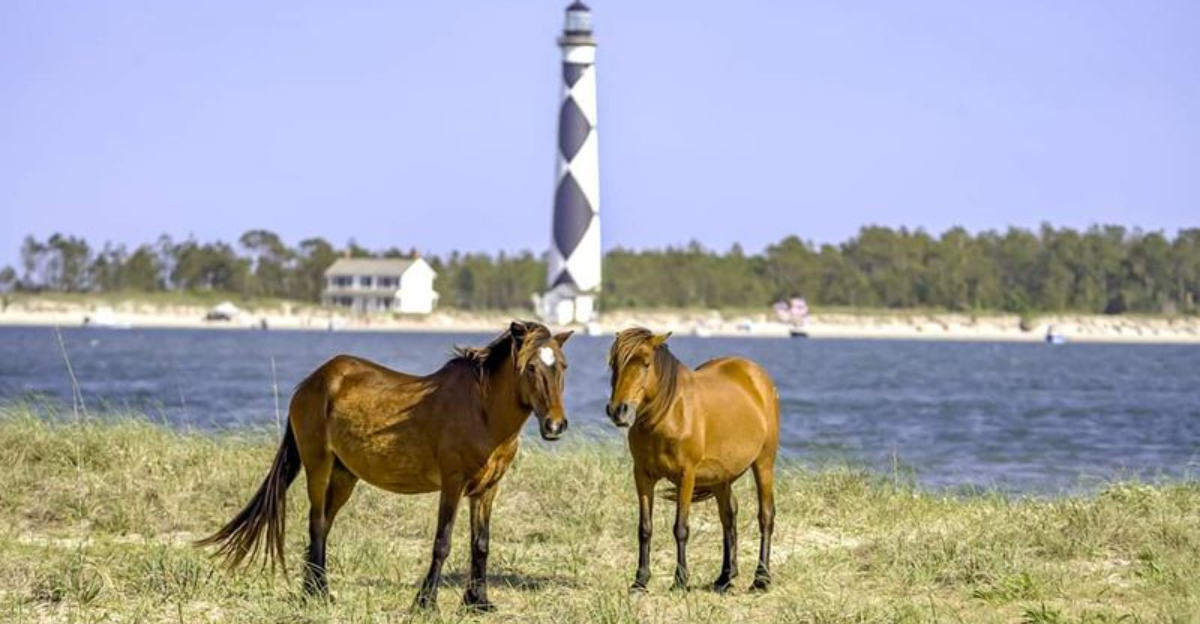
Wild horses make any beach feel instantly more dramatic, like the shoreline hired its own movie cast and forgot to mention it in the brochure.
Ferry rides start feeling more exciting once an island appears with no bridges, no roads, and enough open sand to make regular beach towns seem wildly overdressed.
Along the North Carolina coast, more than 100 free-roaming horses wander through dunes and quiet shoreline stretches that still feel genuinely untamed.
Everything moves slower here except the wind.
Footprints disappear quickly. Ocean noise handles most of the conversation.
A place this untouched almost feels suspicious in modern life, which is exactly why people remember the trip long after heading back to the mainland.
The Wild Horses
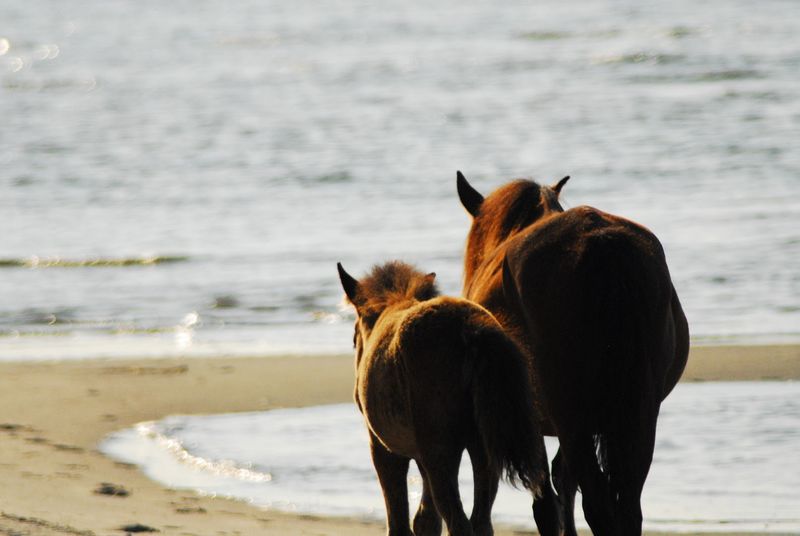
Wild horses are the island’s most unforgettable sight, but the wording needs to stay careful.
The National Park Service identifies Shackleford Banks as home to wild horses, and older NPS horse materials describe the herd as numbering more than 110 animals, while federal protections call for maintaining the herd between 100 and 110.
Their exact origin is often described as uncertain, with long-running theories tying them to Spanish horses brought to the region centuries ago, but it is safer to say they are believed to descend from early Spanish stock.
Visitors must stay at least 50 feet away from the horses, never feed them, never touch them, and back away if a horse approaches.
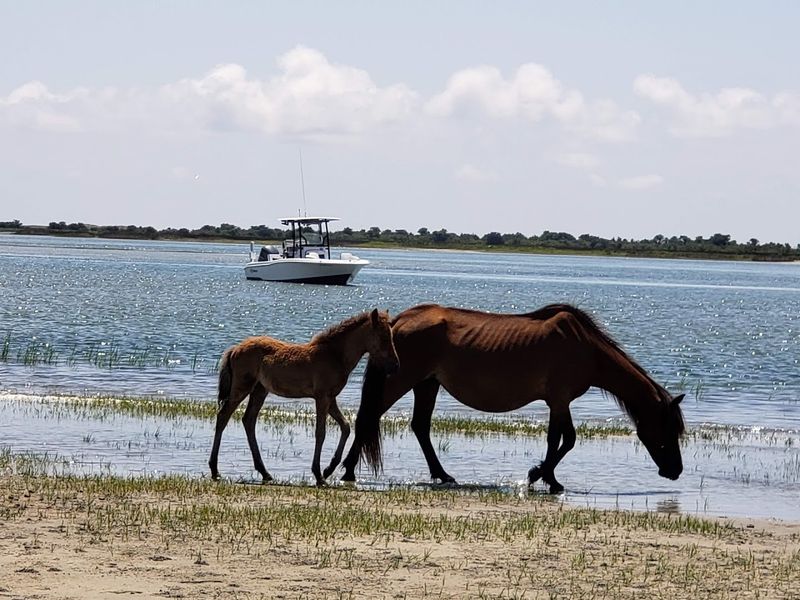
These animals may look calm from a distance, but they are wild and fully adapted to island life. Watching them graze near dunes or move through maritime grass is remarkable precisely because they are not staged for visitors.
Respectful distance keeps both people and horses safe.
Getting There By Ferry
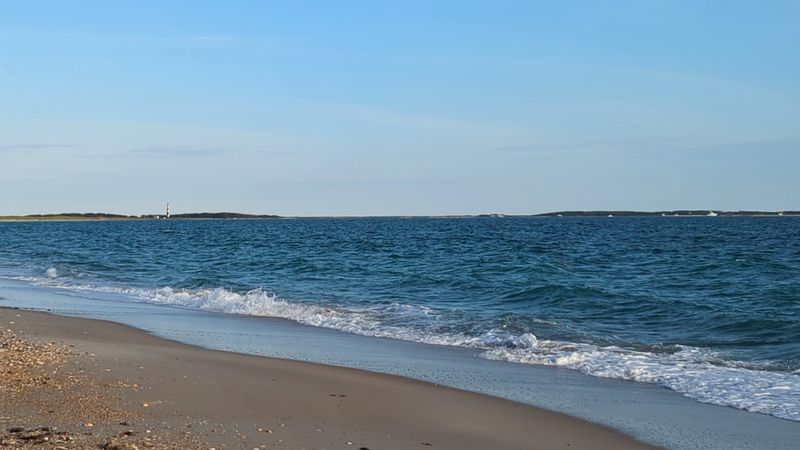
Boat access shapes the whole Shackleford Banks experience. The National Park Service says Cape Lookout’s barrier islands are reached by ferry services and private boats, and Island Express Ferry is one of the authorized ferry providers serving the park.
Many visitors depart from Harkers Island or Beaufort-area services depending on the exact trip they want, so schedules, departure points, prices, and seasonal availability should be checked directly before planning.
The ride itself is part of the fun, with open water, marsh views, seabirds, and occasional dolphin sightings turning the trip into more than transportation.
Once passengers step onto the sand, the island feels immediately different from a drive-up beach. There are no shops waiting with forgotten sunscreen or quick snacks, so preparation matters.
A day trip usually works best with a small cooler, plenty of water, sun protection, a shell bag, and shoes suitable for soft sand. Ferry timing also affects the rhythm of the day.
Early departures often feel quieter and give visitors more time to search for horses before midday heat settles in.
Shelling Along The Shore
Shelling is one of the biggest reasons people return to Shackleford Banks even after seeing the horses. The island’s undeveloped shoreline gives visitors long stretches of sand where tides, storms, and currents may leave behind whelks, conchs, olive shells, sand dollars, and smaller treasures.
Tour operators in the area regularly promote Shackleford Banks as a strong shelling destination, and the island’s low-development character helps the experience feel more like a search than a stroll past souvenir-shop leftovers.
Early morning is usually the best time to look, especially after higher tides or rougher weather.
A mesh bag works better than a plastic bucket because sand and water can drain while you walk. Visitors should collect responsibly, avoid taking live animals, and check any shell before carrying it away.
The best shelling days reward patience rather than speed. Walk slowly, scan the wrack line, and look near shell beds where smaller finds often hide.
Even when the haul is modest, the setting makes the search feel worthwhile because the Atlantic keeps delivering little surprises with every wave.
Crystal-Clear Waters And Swimming
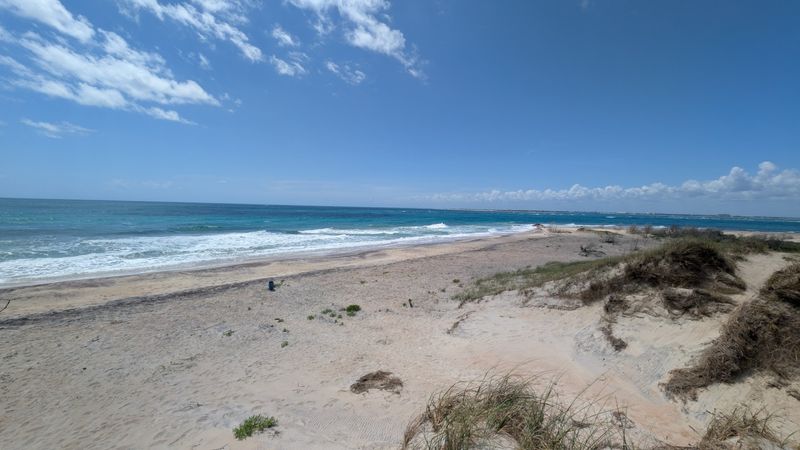
Swimming around Shackleford Banks can be beautiful, but visitors need to remember this is a remote national seashore with no lifeguard on duty. The National Park Service lists beach and water access among the island’s amenities, while also clearly warning that there is no lifeguard.
That means every swim depends on personal judgment, weather, tides, currents, and group safety. The sound side can sometimes feel calmer than the ocean-facing side, while the Atlantic side may bring stronger waves and changing surf conditions.
Families should choose swimming spots carefully, keep children close, and avoid entering the water when currents look rough or storms are nearby. Water shoes can help with shells, hot sand, and prickly vegetation near dunes, though swimmers should avoid trampling fragile habitat.
The best water moments here are often simple: wading in the shallows, cooling off after a long walk, or sitting near the shoreline with the island stretching empty behind you. Shackleford Banks is not a guarded resort beach, and that wildness is both its beauty and its responsibility.
Wildlife Beyond The Horses
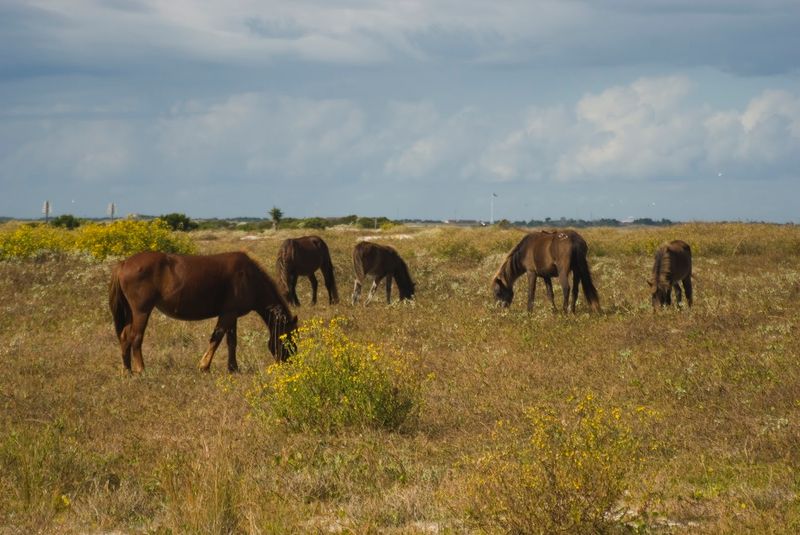
Horses get most of the attention, but Shackleford Banks belongs to much more than one famous herd.
Cape Lookout National Seashore supports birding, shelling, fishing, camping, and wildlife watching across its remote barrier islands, and the wider seashore protects important coastal habitat.
Pelicans, gulls, terns, herons, and other birds can appear along the beaches, marshes, and sound-side waters, especially during migration seasons. Dolphins may be seen from ferries or nearby boats, although sightings are never guaranteed.
Ghost crabs, fish, and smaller coastal creatures add movement to the sand and shallows. This kind of wildlife viewing works best when visitors move quietly and give animals space.
Binoculars are useful because they let people watch birds, horses, and distant shoreline activity without disturbing anything.
The island’s protected status is what keeps these encounters possible, so staying out of posted closures, respecting nesting areas, and packing out trash are not optional courtesies.
They are part of visiting well.
Hiking The Interior Trails
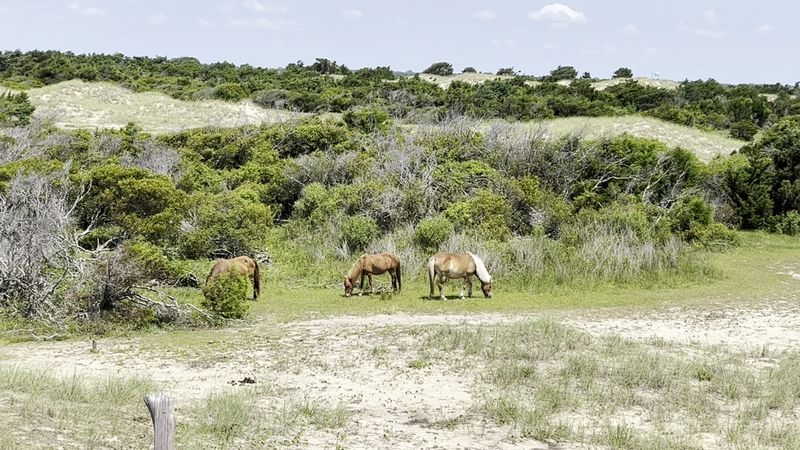
Exploring the interior of Shackleford Banks is one of the most rewarding and humbling outdoor experiences available along the entire Crystal Coast.
The island stretches roughly eight miles long and less than a mile wide, offering a surprisingly varied landscape of rolling dunes, dense marsh grass, and open sandy flats.
Most visitors who venture beyond the beach are rewarded with close-up horse sightings that beachside walkers often miss entirely.
The terrain demands respect and preparation. Trails are unmarked and shift with the dunes, so navigation requires attention and a sense of adventure.
Sturdy closed-toe shoes are essential since cacti grow throughout the interior and can puncture thin footwear with ease. Long pants or high socks are also a smart choice for protecting legs when moving through dense vegetation.
Bug spray is an absolute must, particularly during warmer months when mosquitoes in the interior can be relentless. This North Carolina place is a must.
Camping Under The Stars
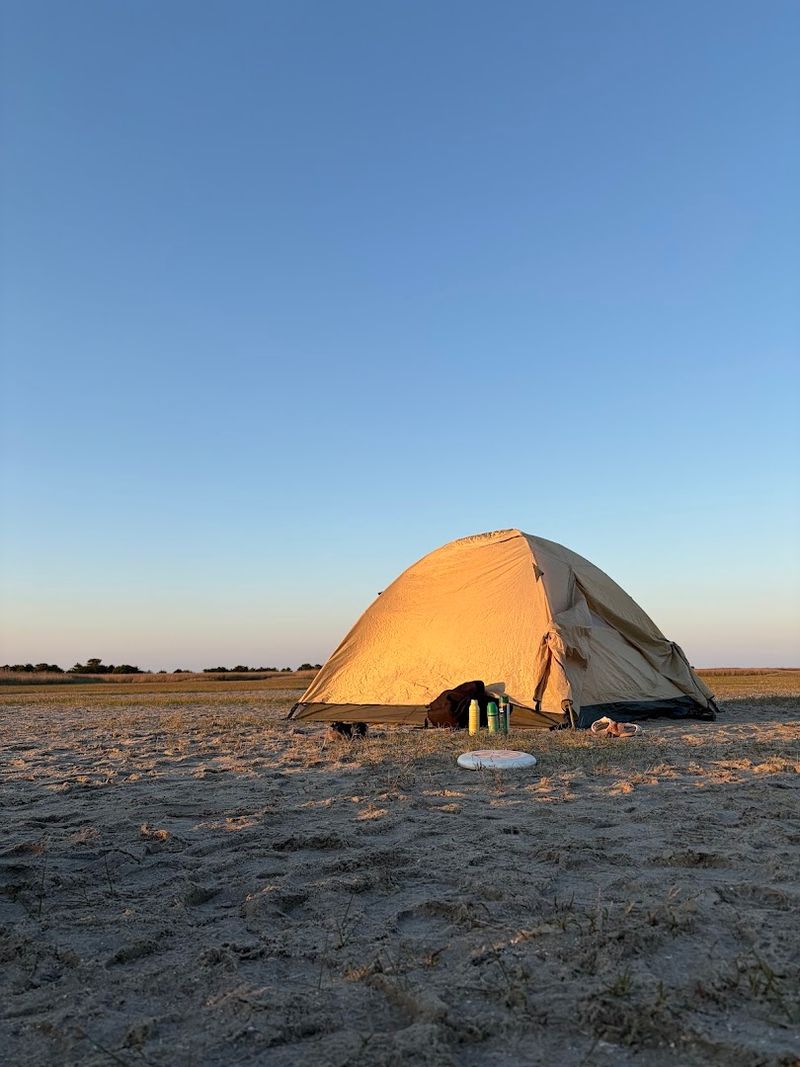
Primitive camping is allowed on Shackleford Banks, but it is not casual campground camping with hookups and easy supplies nearby.
The National Park Service lists primitive campsites among Shackleford Banks amenities, and Cape Lookout materials remind visitors that the seashore’s remote beaches require campers to bring needed food, water, and supplies and carry trash back out.
Seasonal restroom access may be available, but visitors should verify current conditions before relying on facilities. There are no developed campgrounds, no electricity, no shops, and no convenient resupply if something gets forgotten.
Campers need sturdy tents, sand-friendly stakes, drinking water, food storage, sun protection, insect protection, and a plan for wind, storms, and changing tides. The reward is extraordinary quiet.
Once day visitors leave, the island can feel enormous, with waves, stars, and darkness replacing the usual beach-town noise. Wild horses may be nearby, but campers must still keep their distance and secure food properly.
Sleeping on Shackleford Banks can be magical, but only for people who prepare for a truly primitive coastal environment.
Views Of Cape Lookout Lighthouse
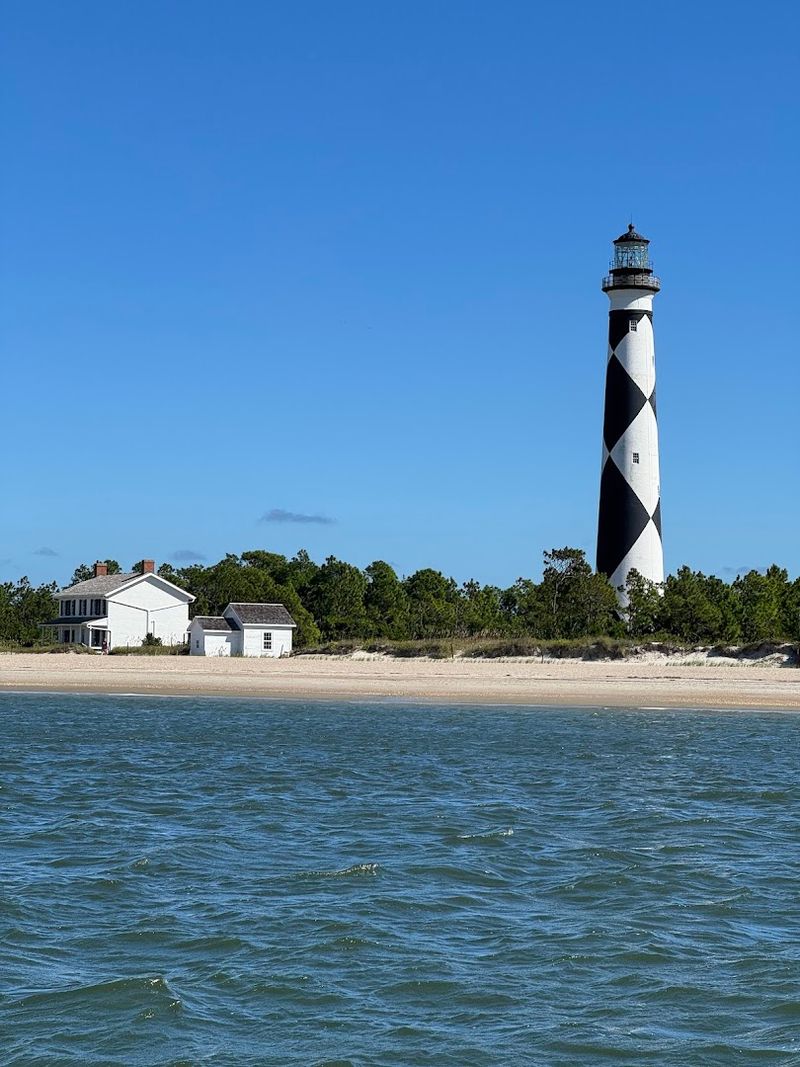
Cape Lookout Lighthouse adds a classic coastal landmark to the Shackleford Banks experience. The lighthouse stands across the water on South Core Banks, and visitors often glimpse its black-and-white diamond pattern during boat rides or from parts of the island depending on visibility and position.
Pairing Shackleford Banks with a Cape Lookout Lighthouse visit can make a full day feel especially rich, but it requires planning ferry routes carefully.
The National Park Service identifies lighthouse climbing, historic villages, horse watching, shelling, camping, fishing, and birding as part of the wider seashore experience, which means travelers can shape the day around beaches.
Photographers should bring a zoom lens if they want stronger lighthouse shots from a distance. The view works best when the weather is clear and the sound is calm.
Even without a close-up visit, seeing the lighthouse across the water gives Shackleford Banks a sense of place within the larger national seashore. It reminds visitors that this wild island belongs to a broader coastal story.
Essential Tips For Your Visit
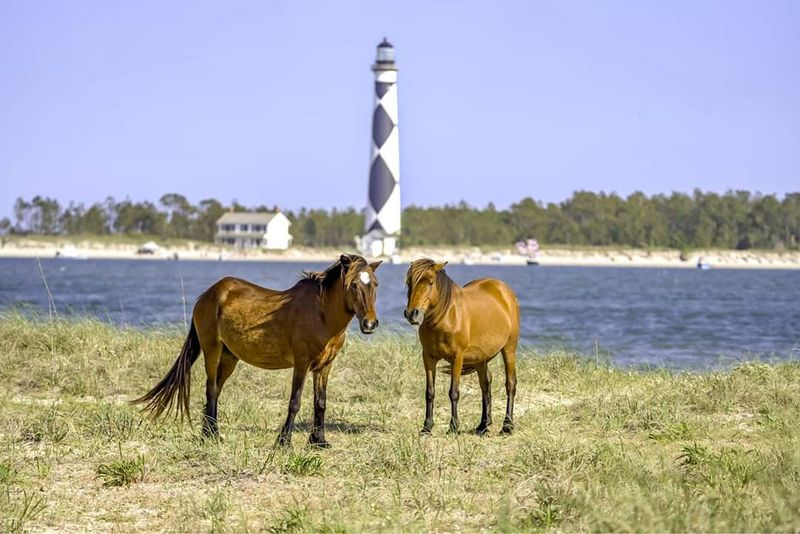
A little preparation goes a long way toward making your Shackleford Banks visit truly outstanding rather than simply good. Fresh water is the single most important thing to pack since there are no fountains or shops anywhere on the island.
Most experienced visitors recommend bringing at least two liters per person, along with salty snacks to keep energy levels steady during long walks in the heat.
Sunscreen and a wide-brimmed hat are non-negotiable given the island’s complete lack of shade. Bug spray rated for mosquitoes is equally critical, especially if you plan to spend any time in the interior marsh areas where insects gather in large numbers.
Water shoes protect feet from both the small cacti that grow near the shoreline and the occasional sharp shells hidden in the sand.
Arriving on an early morning ferry gives you the best chance of spotting horses before the midday heat pushes them into the dune shade.
Always remember to maintain a safe distance from the horses and pack out everything you bring in, helping preserve this incredible North Carolina treasure for future visitors.