The Southern California Fishing Town Tourists Skip On The Way To Long Beach And Locals Are Quietly Grateful For
Fishing towns do not beg for attention.
They smell like salt. Boats rock in the harbor. Lunch tastes better when the dock is still part of the view.
Most travelers race toward bigger names and miss the quieter magic sitting nearby. Locals seem perfectly fine with that arrangement.
One Southern California fishing town keeps its charm by staying just outside the spotlight.
That feels like the kind of place worth knowing carefully, right?
The appeal is not loud. Harbor walks, working boats, and an easygoing pace give the town a rhythm that feels wonderfully unforced.
Nobody needs a packed itinerary here. A slow afternoon does the job.
Maybe that is why locals stay protective of it. Once a place like this gets too much attention, the secret starts slipping.
The Port Of Los Angeles And The Working Waterfront Identity
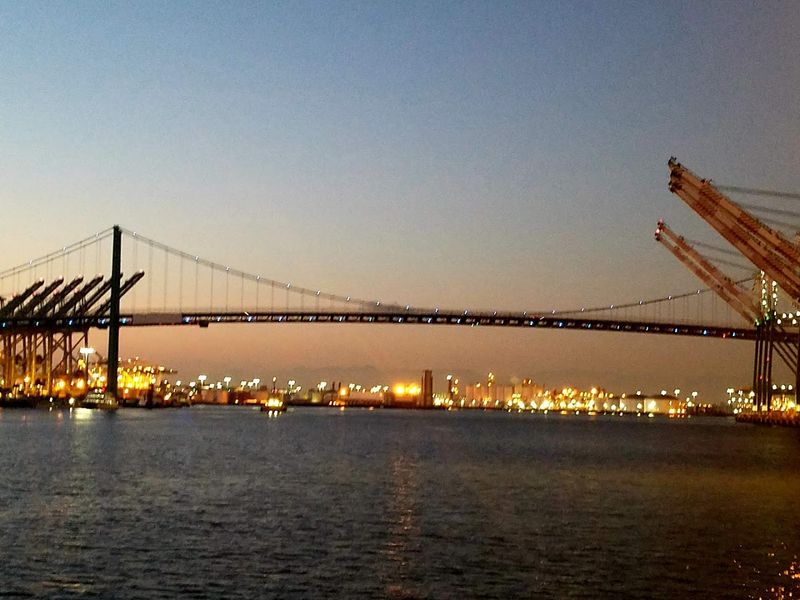
Cargo ships the size of city blocks move through the harbor on a regular schedule, and watching that process from the public waterfront spaces around San Pedro gives you a sense of scale that few urban experiences can match.
The Port of Los Angeles covers more than 400 acres of waterfront property across San Pedro and Wilmington, and it remains one of the busiest container ports in the entire country.
That working-port backdrop is what separates San Pedro from every other coastal neighborhood in the Los Angeles area.
Public access to the waterfront is available through the LA Waterfront corridor, which connects parks, plazas, and open spaces along the harbor edge.
The combination of industrial infrastructure and open public space creates a visual contrast that feels genuinely cinematic without trying to be.
Cargo cranes, tankers, tugboats, and fishing vessels all share the same water, and the layered activity makes the harbor feel alive in a way that purely recreational waterfronts do not.
Weekday visits tend to offer a quieter experience when port traffic is still visible but crowds are thinner.
Los Angeles Maritime Museum And The Story Of The Harbor
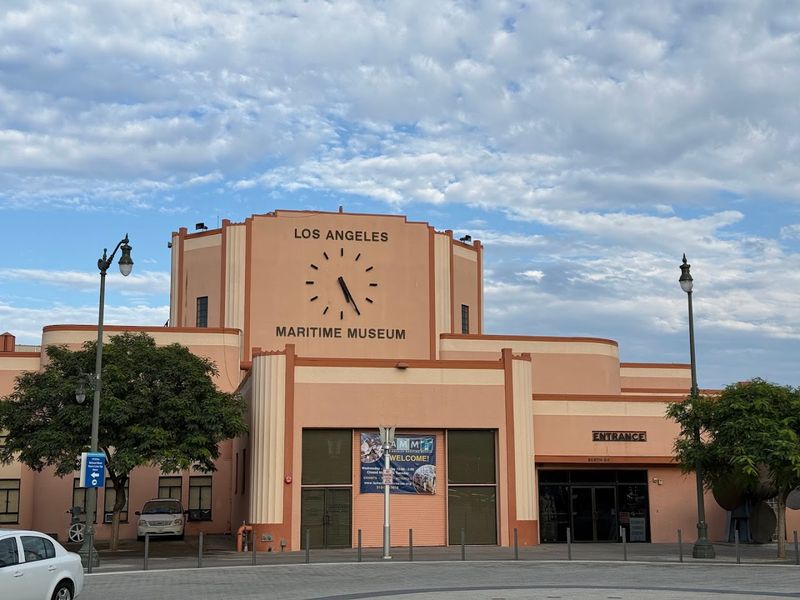
Housed in a restored 1941 ferry terminal building at the foot of Sixth Street, the Los Angeles Maritime Museum sits at Berth 84, San Pedro, Los Angeles, CA 90731, overlooking the main channel of the harbor.
The building itself carries architectural character from its ferry-terminal origins, and the location directly on the water reinforces the maritime theme before you even step inside.
Exhibits cover the full sweep of the harbor’s history, from early fishing operations and immigrant communities to commercial shipping and naval activity.
Scale models of historic vessels, navigation equipment, and photographs of Terminal Island canneries at their peak offer a grounded look at how deeply the fishing and shipping industries shaped this community.
The Croatian, Italian, and Japanese immigrant communities that built much of the fishing industry are acknowledged throughout the collection.
Admission is generally low-cost or donation-based, making it an accessible stop for families and solo visitors alike.
The museum tends to be quieter than larger Los Angeles attractions, which allows for a more relaxed pace through the exhibits.
Point Fermin Park And The Blufftop Escape Above The Ocean
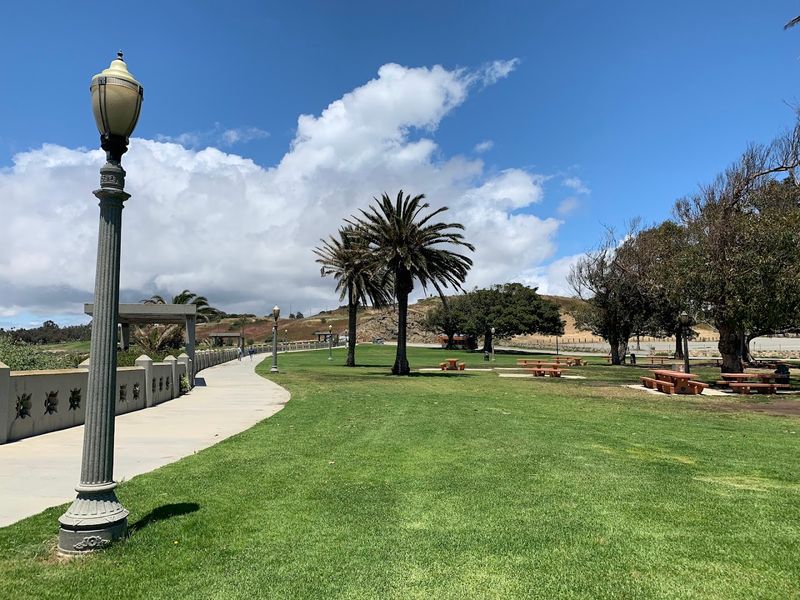
Sitting on a bluff above the Pacific with wide ocean views stretching toward Catalina Island on clear days, Point Fermin Park offers one of the more quietly spectacular outdoor spaces in all of Los Angeles.
The park and its open lawns, shaded walking paths, and picnic areas make it a comfortable destination for an unhurried afternoon.
The bluff edge provides unobstructed sightlines over the water, and the sound of waves below carries up through the vegetation in a way that feels genuinely calming.
Benches are scattered along the paths, and the pace here tends to be slow and reflective rather than crowded and hurried.
The park connects directly to the Point Fermin Lighthouse area, which adds a historical anchor to what is otherwise a straightforward nature walk.
Whale-watching from the bluff is possible during migration seasons, though sightings are never guaranteed.
The combination of ocean air, bluff elevation, and unobstructed sky makes this park feel like a genuine exhale from the surrounding urban environment.
Point Fermin Lighthouse And Its Coastal History Layer
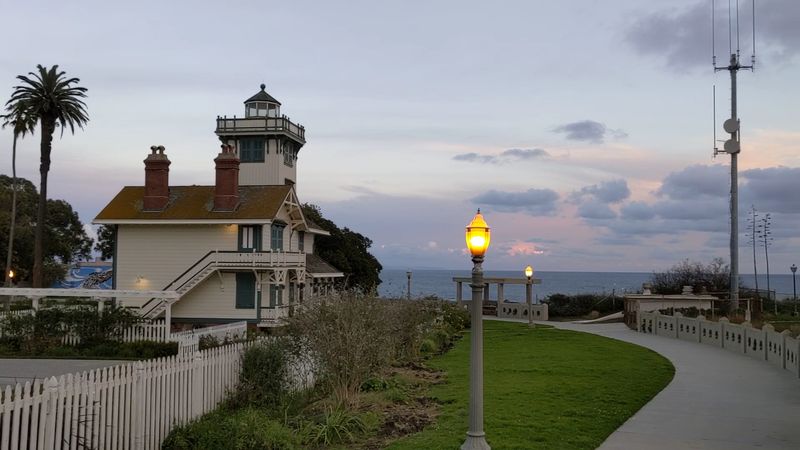
Built in 1874, Point Fermin Lighthouse stands as one of the oldest lighthouses on the West Coast, and its Victorian Stick-style architecture looks almost unexpectedly ornate against the backdrop of a coastal bluff.
The lighthouse is located within Point Fermin Park at 807 W. Paseo Del Mar, San Pedro, Los Angeles, CA 90731, and it is open to the public Tuesday through Sunday from 1 p.m. to 4 p.m., with guided tours offered.
The exterior alone is worth the walk, with its original wooden detailing and the surrounding garden giving it a preserved, unhurried quality.
Guided tours take visitors through the interior and share the operational history of the light, the keepers who maintained it, and the role it played in guiding vessels through the San Pedro Channel.
The tour experience is accessible and conversational rather than lecture-heavy, which makes it comfortable for a range of ages. Photography around the exterior tends to yield strong results in the afternoon light.
Because the lighthouse sits within the park, combining a visit here with a walk along the bluff paths and a stop at the Korean Bell area creates a natural half-day loop.
The Korean Bell of Friendship And The View From Angels Gate Park
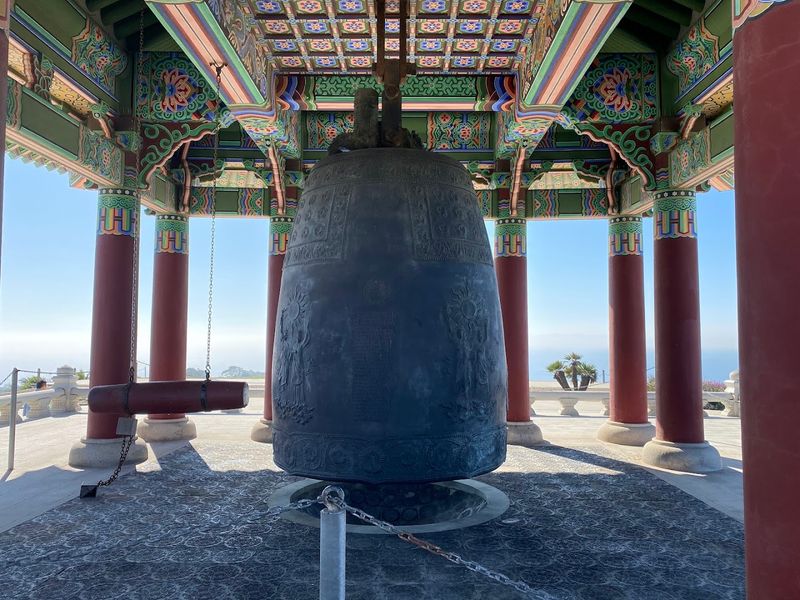
Weighing 17 tons and standing inside a traditional Korean pavilion above the Pacific, the Korean Bell of Friendship is one of the most visually striking landmarks in Southern California.
The bell is located in Angels Gate Park at 3601 S. Gaffey St., San Pedro, Los Angeles, CA 90731, on a bluff that offers sweeping views of the ocean, the harbor entrance, and Catalina Island on clear days.
South Korea gifted the bell to the United States in 1976 as a symbol of friendship and peace, and its craftsmanship reflects traditional Korean bronze-casting techniques.
The surrounding park area is open and spacious, with benches and walking paths that encourage a slower pace.
The scale of the bell becomes more apparent up close, where the detailed carvings and the weight of the structure feel more tangible than any photograph suggests.
Parking is available at the park, and the site is free to visit.
Cabrillo Beach And The Harbor-Town Coastal Experience
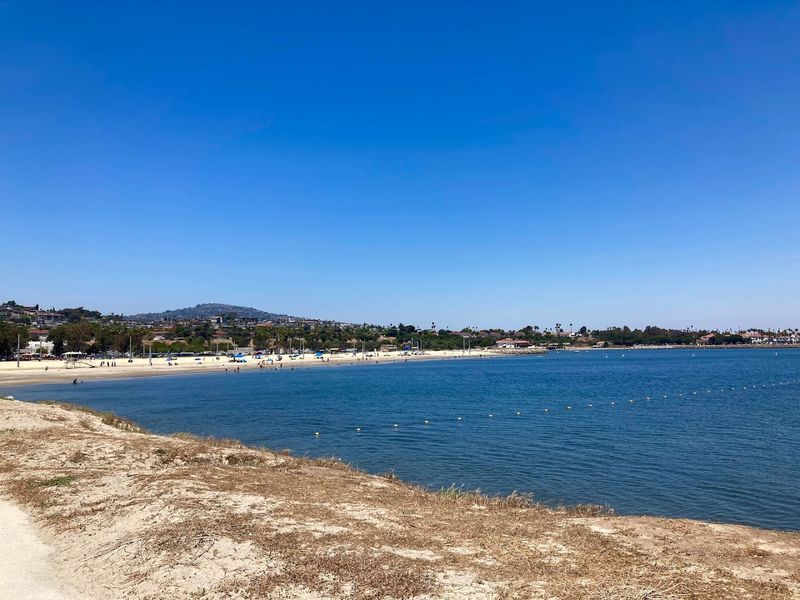
Unlike the wide surf beaches farther up the coast, Cabrillo Beach offers something a little different: a calm-water side that faces the harbor and a more open ocean-facing side that catches swell and draws swimmers.
Located near the Cabrillo Marine Aquarium, the beach area combines coastal recreation with harbor-town character in a way that feels distinctly local rather than resort-polished.
The sand here is accessible, the pace is relaxed, and the surrounding infrastructure keeps things practical without being overcrowded.
The harbor-side section is particularly well-suited for families with younger children since the water tends to stay calm and shallow.
Anglers work the pier and the jetty areas regularly, and the sight of fishing lines in the water alongside harbor vessel traffic reinforces the working-waterfront identity that defines San Pedro.
The overall atmosphere at Cabrillo Beach tends to feel more neighborhood-oriented than tourist-oriented, which is exactly what makes it feel like a genuine Southern California coastal escape.
White Point And Royal Palms Beach For Tide Pools And Quiet Shoreline
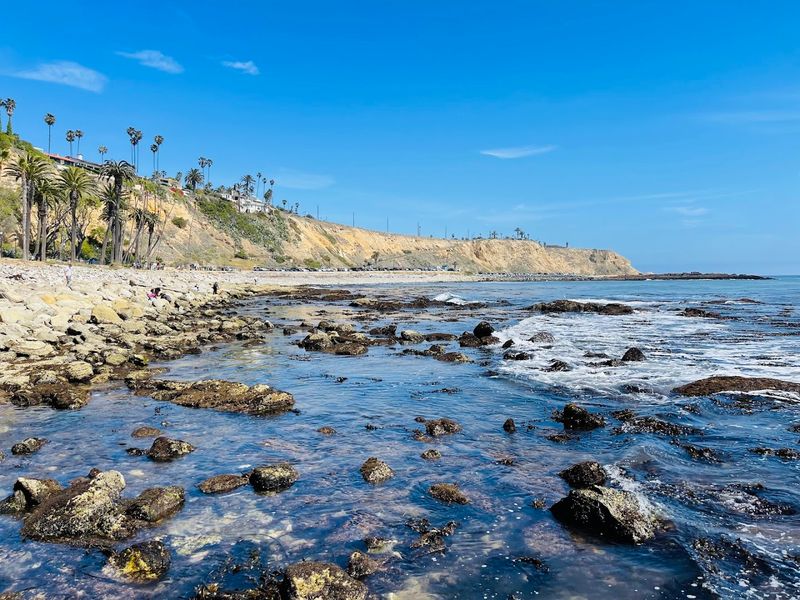
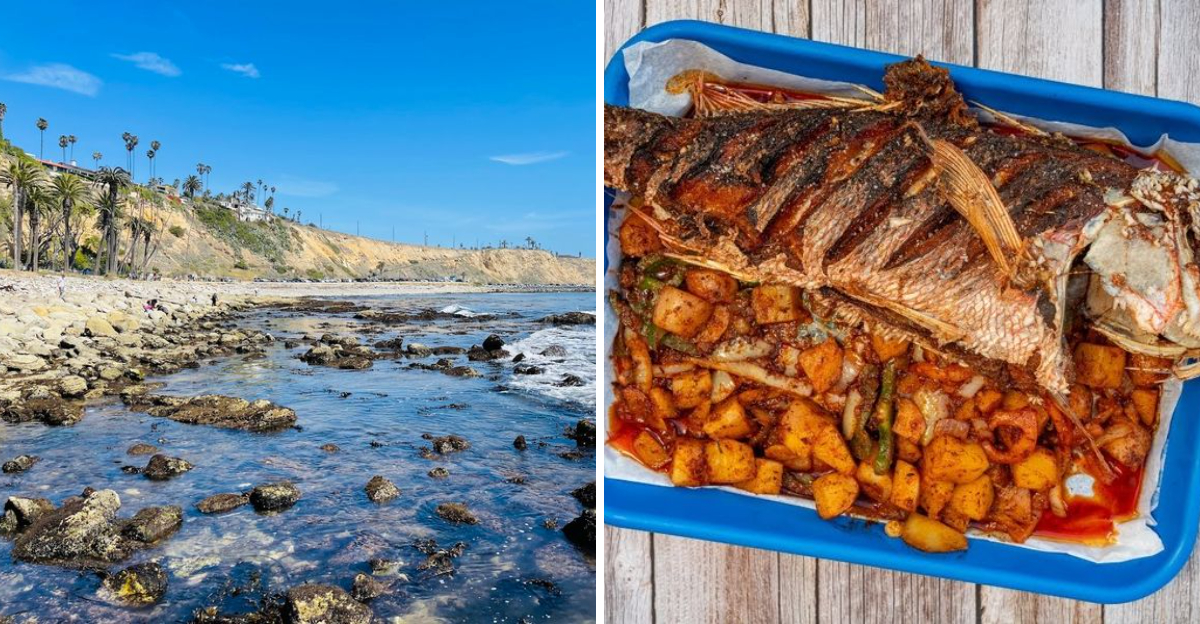
Rocky shorelines, exposed tide pools, and a relatively secluded setting make White Point and Royal Palms Beach one of the more rewarding natural spots along the entire Los Angeles coastline.
The beach and its combination of rocky outcroppings, grassy bluffs, and ocean-facing exposure gives it a character that feels more like the Central California coast than the typical Los Angeles beach scene.
The tide pools here are among the more accessible in the area, particularly during low tide when the rock shelves open up to reveal sea anemones, hermit crabs, and small fish.
The bluff area above the beach includes open green space and picnic facilities, making it a comfortable spot for a longer visit.
The lack of a wide sandy swimming beach keeps the crowds thinner than at more developed spots, which adds to the exploratory feeling the location naturally produces.
Visiting during a lower tide cycle yields the best tide-pool experience, and checking tide charts before arriving is a practical step.
San Pedro Fish Market And Its Deep Roots In Harbor Culture

Back in 1956, a family business called Vista Seafood started selling fresh catch along the harbor, and that small operation eventually grew into what locals now know as San Pedro Fish Market.
The market sits at 706 S Harbor Blvd, San Pedro, CA 90731, right along the working waterfront where the harbor backdrop feels completely unscripted.
Generations of fishermen, cannery workers, and neighborhood families have passed through its counters, giving the place a lived-in energy that polished seafood restaurants rarely manage to replicate.
The menu focuses on straightforward seafood cooked simply, and the portions tend to be generous.
Shrimp, crab, fish, and clams are among the staples available at the counter-service setup, which keeps things casual and unpretentious.
Outdoor seating near the water means you can eat while watching boats move through the harbor, which adds a sensory layer that no indoor dining room could offer.
San Pedro pioneered tuna canning in 1903, and that maritime identity still clings to the neighborhood today.
Visiting the fish market connects that history to the present in a way that feels tangible rather than performative.
The Warner Grand Theatre And The Art Deco Character Of Downtown San Pedro
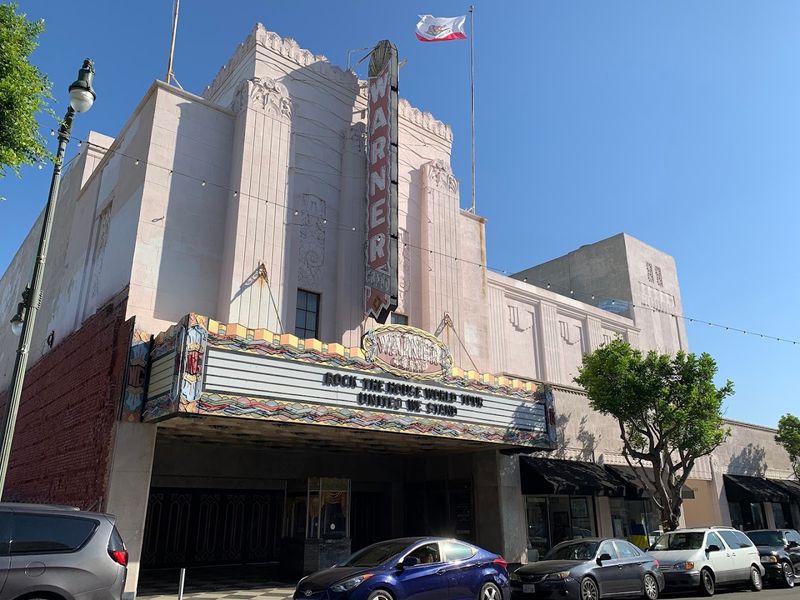
Opened in 1931 and designed in a lavish Art Deco style, the Warner Grand Theatre is the kind of building that makes you stop walking and look up.
The theatre is located at 478 W. 6th St., San Pedro, Los Angeles, CA 90731, in the heart of the downtown neighborhood, where its ornate facade stands as a reminder of what neighborhood entertainment once looked like.
The interior retains much of its original detailing, including decorative plasterwork, a grand lobby, and a main auditorium that seats over a thousand people.
The venue hosts live performances, film screenings, and community events throughout the year, so checking the current schedule before visiting is worthwhile.
The theatre is also part of the broader First Thursday ArtWalk that moves through downtown San Pedro monthly, connecting it to the neighborhood’s active arts and culture scene.
Attending an event here rather than simply viewing the exterior gives the experience a much fuller dimension.
The surrounding downtown blocks include independent shops, local restaurants, and street-level murals that reinforce the neighborhood’s creative identity.
Angels Gate Cultural Center And The Arts Scene Above The Harbor
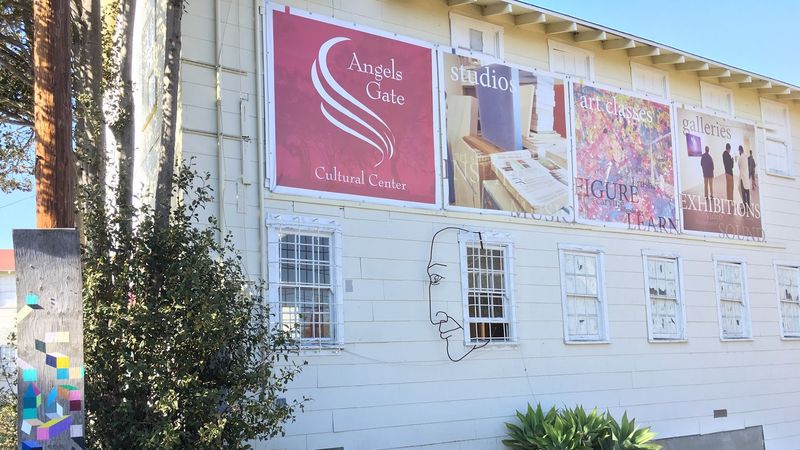
Housed in a collection of repurposed military buildings from the former Fort MacArthur, the Angels Gate Cultural Center brings together working artist studios and an outdoor sculpture garden.
The center is located at 3601 S. Gaffey St., San Pedro, Los Angeles, CA 90731, sharing the Angels Gate Park grounds with the Korean Bell of Friendship and the blufftop ocean views.
The combination of military history, coastal setting, and active creative community gives the space a layered identity that rewards slow exploration.
Studio artists work on-site and the galleries rotate regularly, meaning return visits tend to offer something different each time.
The outdoor sculpture garden is freely walkable and the pieces change periodically, giving the grounds a living-exhibition quality.
The architecture of the repurposed buildings adds an industrial texture that contrasts interestingly with the artwork displayed within them.
Admission to the galleries is typically free or low-cost, and the relaxed atmosphere encourages browsing without pressure.