10 Historic Missions In California That Feel Like They’re Preserved In Time
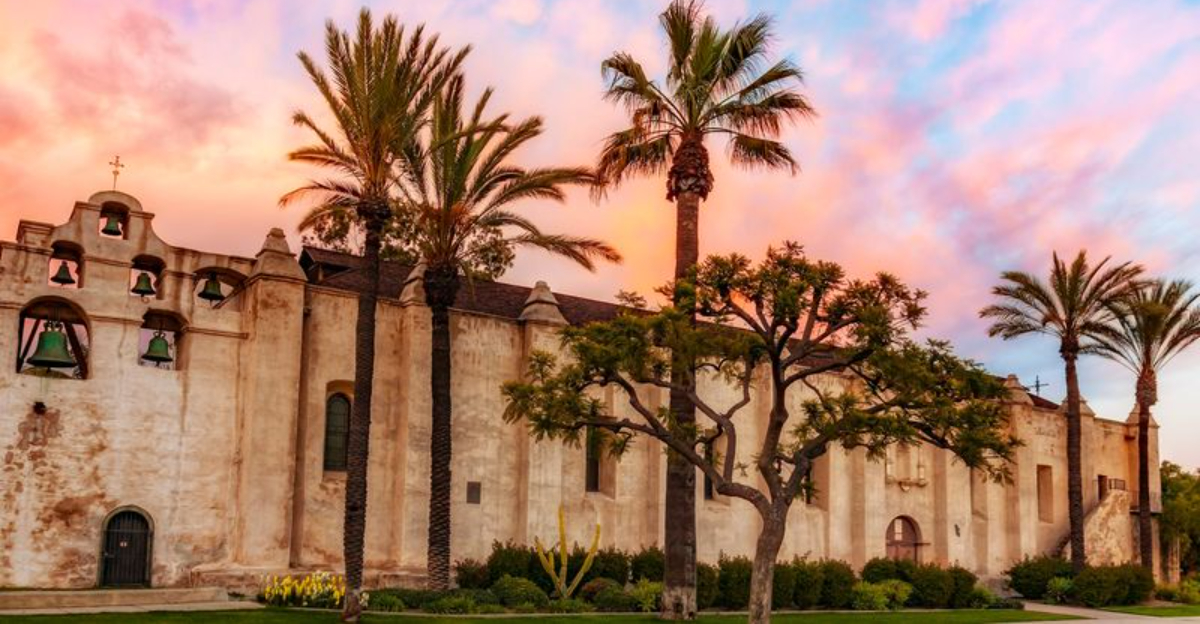
Old stone has a way of making the present feel temporary. Sunlight hits the arches differently Garden paths slow the pace.
Bells, courtyards, and weathered walls seem to carry more memory than any plaque can explain.
Missions like these can make California feel like it still keeps entire centuries hidden behind quiet doors.
A visit does not need to feel rushed or overly planned.
The details do the work. A carved doorway. A painted ceiling.
Each mission holds a different piece of the state’s layered past, and none of them need flashy presentation to feel meaningful.
History feels closer when the buildings still stand in front of you.
Not polished beyond recognition.
Just preserved enough to make every courtyard and bell tower feel like time paused there on purpose.
1. Carmel Mission Basilica, Carmel-by-the-Sea
Founded in 1770, Carmel Mission Basilica holds a central place in California’s mission history that few other sites can match.
Situated at 3080 Rio Road, Carmel-by-the-Sea, CA 93923, this mission served as the headquarters from which Father Junípero Serra directed several other missions along the chain.
The stone church has a quiet, almost solemn beauty that greets visitors before they even step through the entrance.
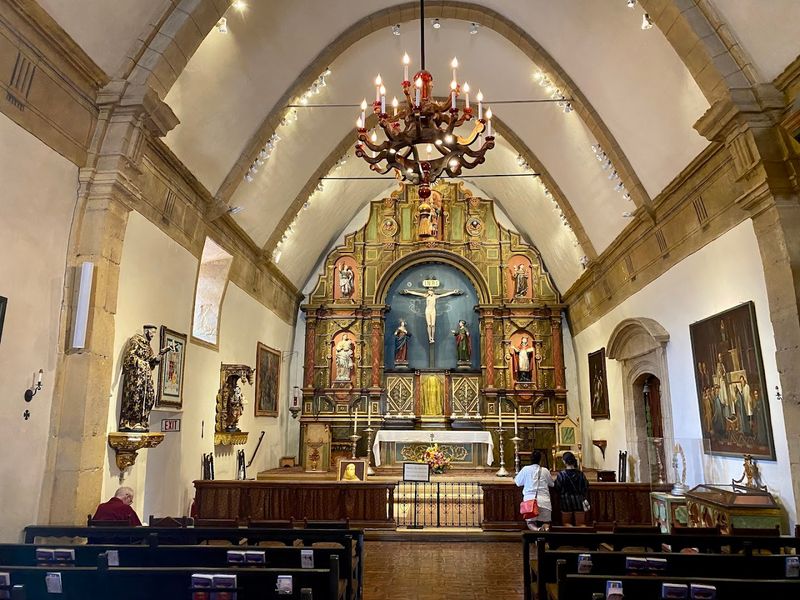
Inside, the restored interior features original-era furnishings, painted ceilings, and soft filtered light that makes the space feel genuinely old rather than staged.
The surrounding courtyard garden is planted with native and period-appropriate species, giving the grounds a calm and unhurried atmosphere.
Museum spaces within the complex display artifacts, vestments, and documents that help tell the full story of this mission’s early role.
The basilica designation, granted in 1960, reflects the site’s ongoing religious significance as well as its historical stature.
Visiting on a weekday tends to mean smaller crowds and more time to linger in the quieter corners of the complex.
The combination of restored architecture, active parish life, and well-preserved museum spaces makes Carmel Mission one of the most complete and layered mission experiences in California.
2. Mission San Juan Capistrano, San Juan Capistrano
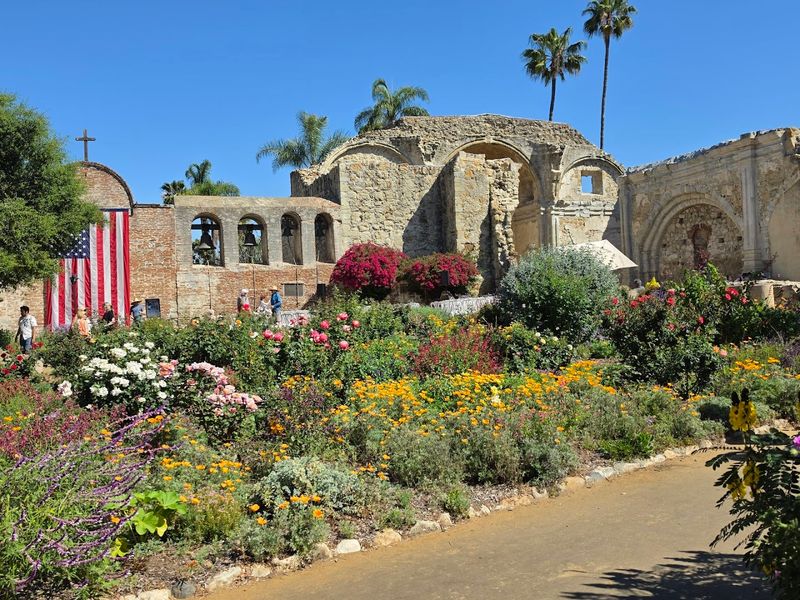
Few mission sites in California are as visually arresting as Mission San Juan Capistrano, where crumbling stone arches and bell towers rise above carefully tended garden courtyards.
Located at 26801 Ortega Highway, San Juan Capistrano, CA 92675, the mission draws more than 300,000 visitors annually and remains one of the most recognized landmarks along the historic El Camino Real.
The ruins of the Great Stone Church, which was damaged in an 1812 earthquake, give the site a dramatic, haunting quality unlike anything else in the mission chain.
Wandering through the complex feels layered and unhurried, with multiple garden spaces, fountains, and restored rooms offering different pockets of calm.
The mission’s founding date of 1776 ties it to the same era as American independence, adding an extra dimension to its historical context.
Serra Chapel, still standing within the complex, is considered the oldest building in California still in use for its original purpose.
Seasonal changes affect the experience noticeably, with spring blooms filling the courtyard gardens and cooler months bringing quieter foot traffic.
Audio guides are available for visitors who want deeper historical context without joining a tour group.
The balance of ruin and restoration here is what makes San Juan Capistrano feel genuinely preserved rather than reconstructed.
3. La Purísima Mission State Historic Park, Lompoc
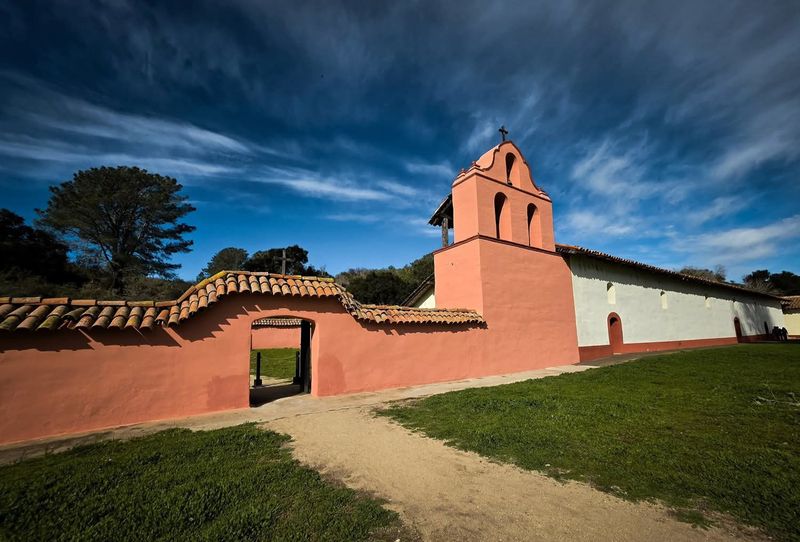
California State Parks describes La Purísima Mission as the most completely restored mission in the state, and a visit to the site makes that claim feel entirely believable.
Located at 2295 Purisima Road, Lompoc, CA 93436, the park encompasses not just the mission buildings but also the surrounding landscape, which adds enormously to the sense of stepping into another century.
The setting is rural and open, with rolling hills visible beyond the adobe walls.
Unlike missions that sit within modern towns, La Purísima is surrounded by undeveloped land, which means the visual context of the visit remains largely unbroken by contemporary buildings or street noise.
The restored structures include the church, living quarters, workshops, and a mission garden where period crops and herbs are still grown.
Docents in period clothing are sometimes present on weekends to demonstrate crafts and daily tasks from the mission era.
Livestock such as longhorn cattle and horses can occasionally be seen on the grounds, reinforcing the working-ranch character that mission life once had.
Trails connect the main complex to quieter corners of the park, making the visit feel more exploratory than a simple walkthrough.
For anyone who wants the “preserved in time” feeling without embellishment, La Purísima delivers that experience with unusual honesty and depth.
4. Old Mission Santa Barbara, Santa Barbara
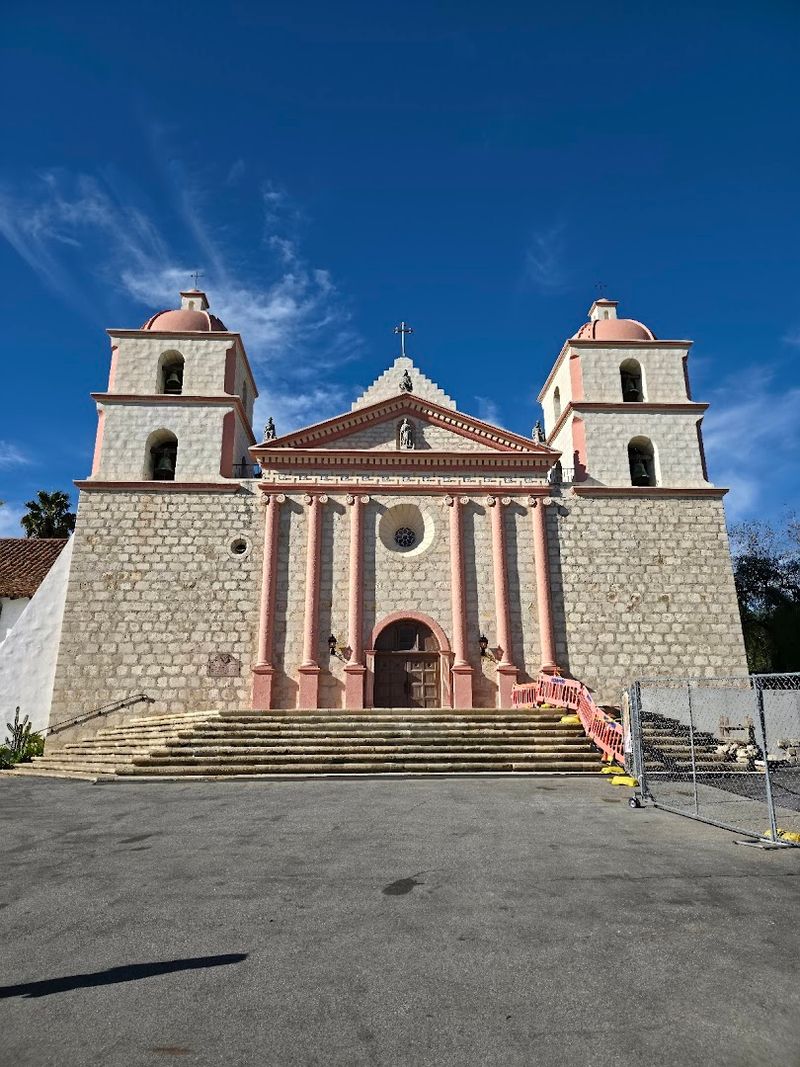
Nicknamed the Queen of the Missions, Old Mission Santa Barbara carries that title with an architectural confidence that becomes clear the moment the twin bell towers come into view.
The mission sits at 2201 Laguna Street, Santa Barbara, CA 93105, on a hillside that overlooks the city and, on clear days, extends toward the Pacific.
Its grand neoclassical facade is one of the most photographed mission exteriors in California, and the 15-acre grounds include a church, historic cemetery, gardens, and a mausoleum.
Founded in 1786, the mission has been an active parish continuously since its establishment, which gives the space a lived-in quality that purely museum-style sites sometimes lack.
The cemetery adjacent to the church is one of the oldest in California and contains grave markers dating back to the early 1800s, with inscriptions that are quietly moving in their simplicity.
The museum inside the mission complex holds an impressive collection of original artwork, vestments, and archival documents.
Morning visits tend to be cooler and less crowded, with soft light falling across the stone facade in a way that feels unhurried.
The garden courtyard with its central fountain is a genuinely peaceful spot to pause before or after exploring the interior spaces.
Santa Barbara’s broader walkable neighborhood around the mission adds practical appeal for visitors planning a longer day out.
5. Mission San Antonio de Padua, Jolon, Monterey County
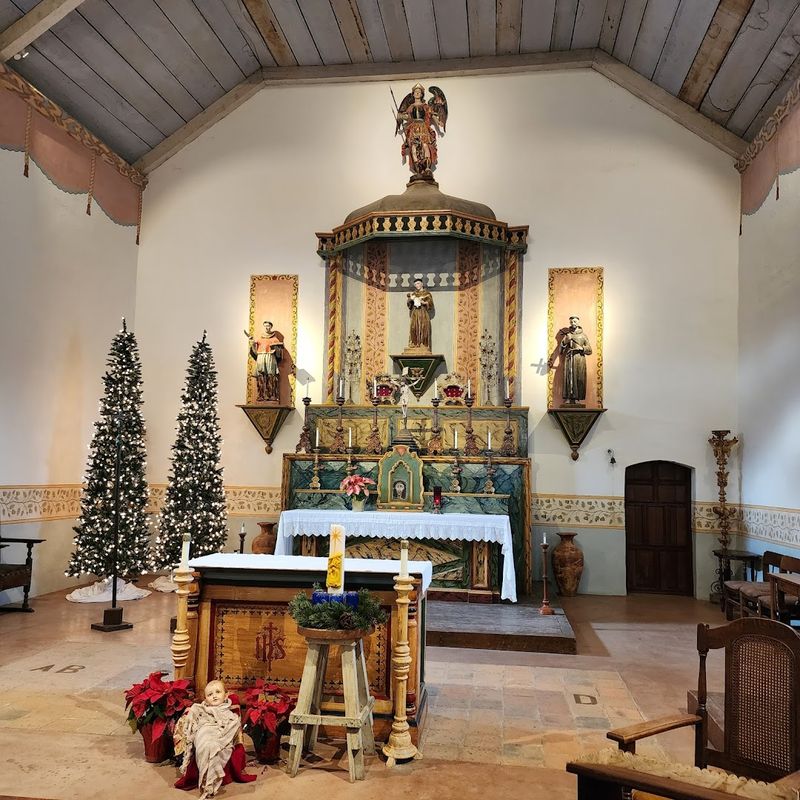
There is something genuinely rare about Mission San Antonio de Padua, and it starts with the drive to get there.
Situated within the Hunter Liggett Military Reservation near Jolon in Monterey County, the mission sits in a valley of oak woodlands that looks almost exactly as it would have two centuries ago.
The California Missions Foundation notes that it remains nearly as isolated today as it was at its founding in 1771, which is a remarkable thing to be able to say about any historic site.
The mission complex includes a restored church, arched arcade, and courtyard that have been carefully maintained without the kind of commercial overlay that busier missions sometimes accumulate.
Because it requires passing through a military installation checkpoint, visitor numbers stay naturally lower, which contributes to the quieter and more contemplative atmosphere.
The surrounding landscape of rolling hills and valley oaks adds a layer of sensory context that helps visitors understand why this location was chosen in the first place.
The sound environment is noticeably different here, with birdsong and wind replacing the ambient noise of nearby towns.
For travelers willing to plan ahead and make the drive, Mission San Antonio de Padua offers one of the most authentically remote and visually unaltered mission experiences in all of California.
6. Mission San Miguel Arcángel, San Miguel
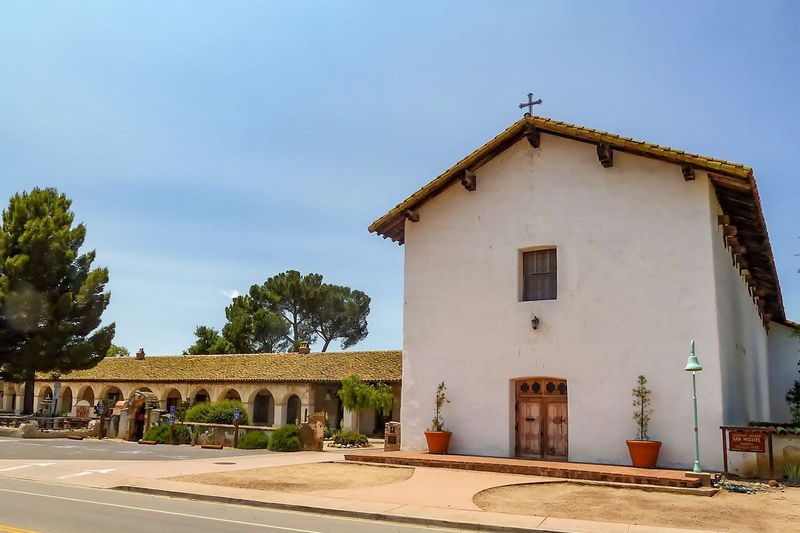
What sets Mission San Miguel Arcángel apart from many other missions on the chain is the condition of its interior murals, which are considered among the best-preserved original decorative paintings in any California mission.
Standing at 775 Mission Street, San Miguel, CA 93451, the mission was designated the 16th in the California chain and is now a National Historic Landmark recognized by the National Park Service.
The painted walls inside the church were completed in the early 1800s by indigenous artists working under the direction of a Spanish artist, and they retain a vivid quality that feels almost startling in person.
The exterior of the mission has a straightforward adobe simplicity that contrasts interestingly with the elaborate interior decoration, making the transition from outside to inside feel like a genuine reveal.
Franciscan friars still maintain a presence at the mission, keeping it active as both a religious site and a historic destination.
The surrounding town of San Miguel is small and quiet, which means the mission doesn’t compete with much else for visual attention in the landscape.
Guided tours are available and worth considering here specifically because the mural history is rich enough to reward deeper explanation.
The combination of well-preserved architecture, intact original artwork, and continued religious use makes Mission San Miguel Arcángel one of the most layered and rewarding stops on any California mission itinerary.
7. Mission Basilica San Diego de Alcalá, San Diego
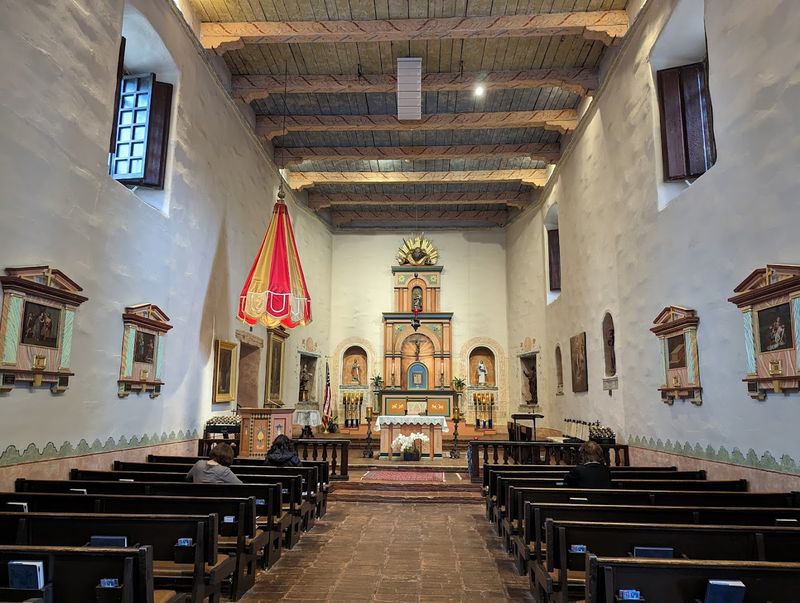
As California’s first mission, Mission Basilica San Diego de Alcalá carries a foundational significance that gives a visit an extra layer of weight.
At 10818 San Diego Mission Road, San Diego, CA 92108, the mission was established in 1769 by Father Junípero Serra and marks the starting point of the entire California mission chain.
The white-washed facade and distinctive campanile bell wall are instantly recognizable and have become enduring symbols of early California history.
The current structure is largely a reconstruction, as the original mission was damaged and relocated over its early history, but the site itself remains the historically accurate location of the mission’s second and permanent home.
An active parish continues to hold services here, and the grounds include a peaceful garden, small museum, and the ruins of the original padre’s quarters.
The museum collection includes artifacts, photographs, and documents that place the mission’s founding in the broader context of Spanish colonial California.
Parking is available on site, and the complex is manageable to explore in a focused two-hour visit.
The surrounding Mission Valley neighborhood has changed considerably since 1769, but stepping through the mission gates creates a clear visual and acoustic shift from the modern city outside.
8. Old Mission San Luis Rey de Francia, Oceanside
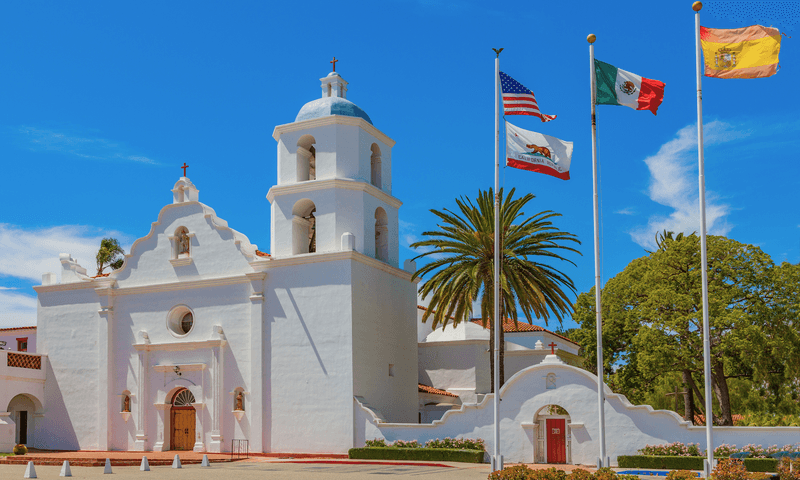
Known as the King of the Missions, Old Mission San Luis Rey de Francia is the largest of the California missions by physical footprint, and that scale becomes immediately apparent on arrival.
Located at 4050 Mission Avenue, Oceanside, CA 92057, the mission was founded in 1798 and is now a National Historic Landmark that functions as both a museum and an active Franciscan retreat center.
The long, arched corridor that runs along the front of the complex is one of the most architecturally striking elements of any mission in the state.
The grounds include a historic cemetery, a sunken garden with a pepper tree said to be the oldest in California, and a well-stocked museum that covers the mission’s history across multiple rooms.
Franciscan friars continue to live and work at the mission, which means the site has a living, functional energy rather than the static quality of a purely preserved monument.
Weekend visits tend to bring more families and organized groups, while weekdays offer a calmer pace for those who prefer unhurried exploration.
The museum’s collection includes original vestments, paintings, and indigenous artifacts that provide context for the full range of people whose lives intersected with this place.
The sheer size of the complex rewards slower exploration, with multiple courtyards and interior rooms to move through at a comfortable pace.
9. Mission San Gabriel Arcángel, San Gabriel
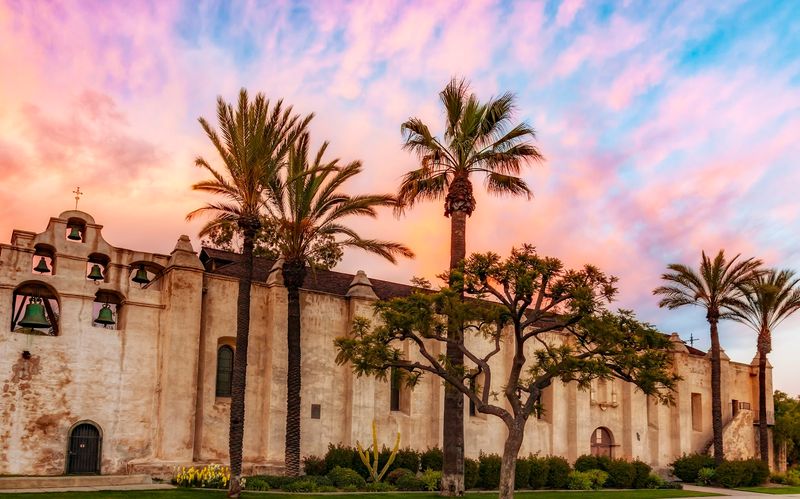
Founded on September 8, 1771, Mission San Gabriel Arcángel holds a foundational role in the history of the Los Angeles region that extends well beyond its walls.
Sitting at 428 South Mission Drive, San Gabriel, CA 91776, the mission was the fourth established in the California chain and served as a major agricultural and economic hub during the Spanish colonial period.
The distinctive architecture here includes heavy stone buttresses and a capped parapet wall that give the church a fortress-like solidity unlike most other missions.
The mission suffered significant damage in the 2020 Whittier Narrows earthquake’s aftershocks and subsequent events, and restoration work has been ongoing, so it is worth checking current access conditions.
Even with restoration work underway, the site continues to operate as an active Catholic faith community and welcomes visitors to its grounds and museum spaces.
The museum holds one of the more extensive collections of mission-era paintings in Southern California, including a series of large canvases depicting the Stations of the Cross.
The surrounding city of San Gabriel has grown densely around the mission, but the grounds themselves maintain a defined historic character.
A visit here pairs well with exploring the broader San Gabriel Valley, where the mission’s agricultural legacy is still traceable in the landscape and place names.
10. Old Mission Santa Inés, Solvang
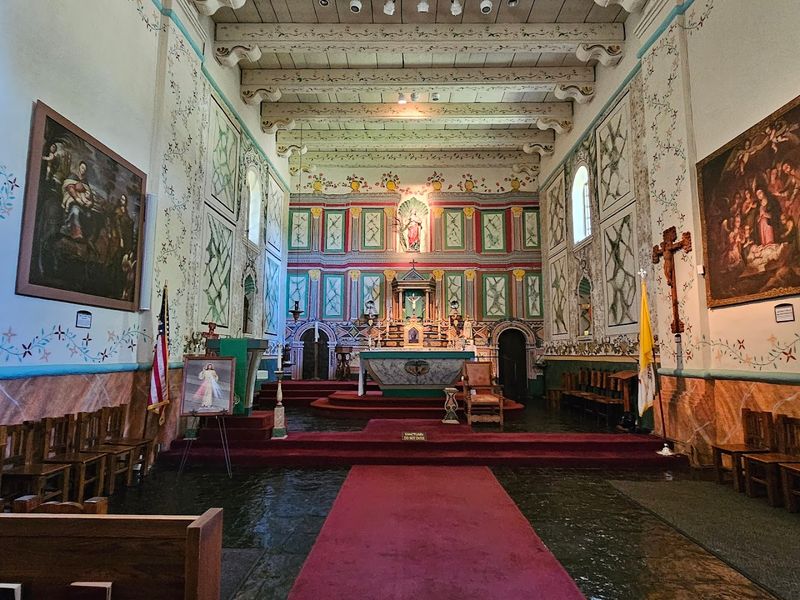
In the edges of Solvang, a town better known for its Danish-village architecture and windmills, Old Mission Santa Inés offers a visit that layers two very different historical identities into a single afternoon.
Located at 1760 Mission Drive, Solvang, CA 93463, the mission was founded in 1804 as the 19th in the California chain, and its adobe church and arched arcade stand in quiet contrast to the European-style storefronts just a short walk away.
That unexpected juxtaposition gives the whole visit an unusual and memorable texture.
The mission complex includes a restored church that remains an active parish, a museum with original vestments and painted artifacts, and a garden courtyard that feels genuinely calm even when the surrounding town is busy with visitors.
The museum here is notably well-organized, with displays that cover the mission’s history from founding through the secularization era and into its modern restoration.
Natural light enters the church through narrow windows, casting long shadows across the tile floor in a way that changes noticeably through the day.
Solvang’s walkable streets make it easy to combine a mission visit with the broader town experience, and the contrast between the two environments is part of what makes this stop distinctive.
Arriving in the morning tends to mean softer light in the church interior and fewer visitors in the courtyard.