11 Spots In Nebraska Where One Short Walk Leads To A View That Feels Wildly Dramatic
A short walk should not be able to pull this much drama out of the landscape. Yet Nebraska proves otherwise.
Ten minutes on a trail can turn into cliffs, river bends, or a lookout that makes the parking lot feel strangely far away.
That is the trick.
The effort stays small. The payoff does not.
You do not need a brutal hike or a backpack full of gear to get a view that makes everyone stop talking for a second.
Spots like these are perfect for anyone who wants the reward without turning the day into an endurance contest.
A few steps. A little curiosity. Then the scenery suddenly gets theatrical.
That is when a quick walk stops feeling casual and starts feeling like the whole reason you came.
1. Scotts Bluff National Monument, Gering, North Overlook And South Overlook
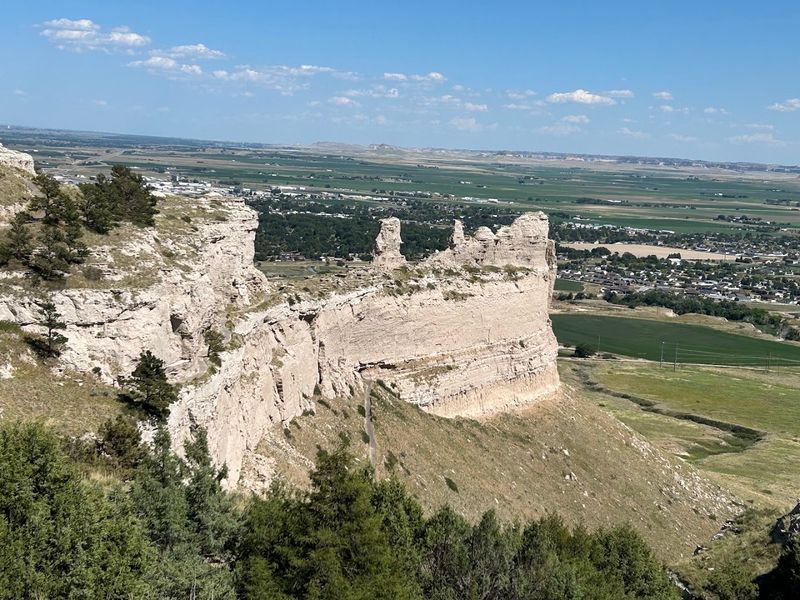
Standing at the edge of a bluff that rises roughly 800 feet above the North Platte River Valley tends to reset a person’s idea of what Nebraska looks like.
Scotts Bluff National Monument sits near Gering, Nebraska, and offers two short summit walks that deliver enormous payoffs.
The North Overlook path is only about 60 yards from the summit parking area, making it one of the quickest dramatic views in the entire state.
The South Overlook trail runs about 300 yards and puts you above Mitchell Pass, where faint traces of the historic Oregon Trail are still visible cutting through the valley below.
Both overlooks frame a wide stretch of badlands, river bottom, and open sky that feels almost cinematic. Visitors can drive to the summit via a tunnel road or hike up through the bluff itself on the Saddle Rock Trail.
Early morning light hits the bluff faces in warm amber tones that make the rocky textures especially vivid.
The monument is managed by the National Park Service, and a standard entrance fee applies.
Arriving on a weekday tends to mean fewer crowds at the overlook edges, giving more room to stand and take in the full scale of the landscape below.
2. Fort Niobrara National Wildlife Refuge, Valentine, Fort Falls Nature Trail
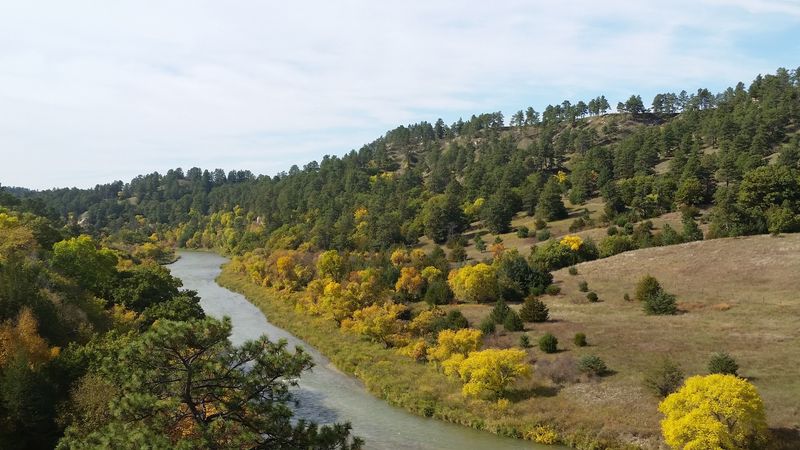
A 0.8-mile loop through the Fort Niobrara National Wildlife Refuge near Valentine leads to one of the more quietly stunning natural scenes in the state.
The trail moves through a mix of grassland and canyon terrain before revealing a 45-foot waterfall dropping into a rocky pool below.
The sound of falling water carries through the canyon well before the falls come into view, building a sense of anticipation that makes the arrival feel genuinely rewarding.
Canyon walls rise on either side of the trail in certain sections, and the Niobrara River comes into view from several scenic overlook points along the route.
The vegetation shifts noticeably as the trail drops closer to the water, moving from dry upland grasses into lush riparian growth that feels cooler and more sheltered.
Spring and early summer tend to bring the highest water flow, which makes the falls more dramatic during those months.
The refuge is managed by the U.S. Fish and Wildlife Service and is open to the public.
Bison and elk herds roam portions of the refuge, and wildlife sightings along the trail edges are fairly common.
The loop is short enough to complete in under an hour, making it an easy addition to a broader exploration of the Valentine area and the Niobrara River corridor.
3. Smith Falls State Park, Near Valentine, Smith Falls Boardwalk
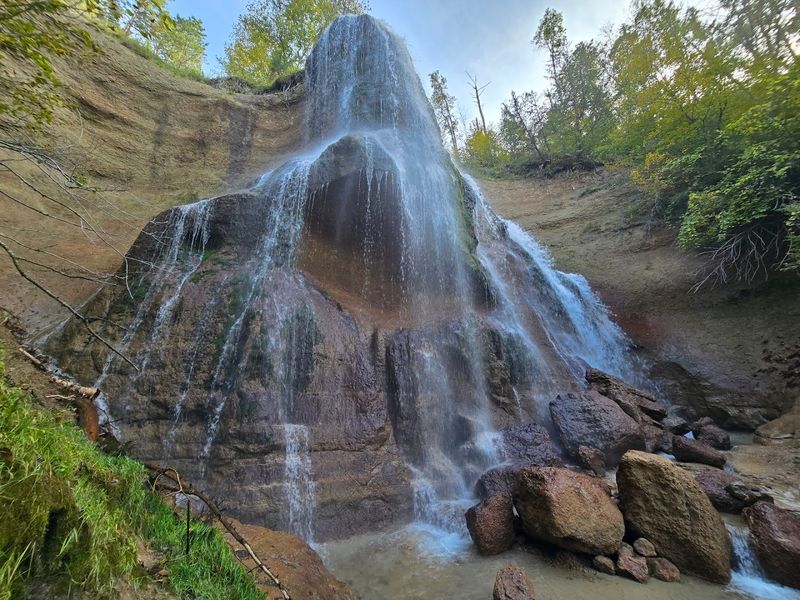
Nebraska’s tallest waterfall drops more than 63 feet in a single cascade inside Smith Falls State Park, and reaching it requires only a short and easy walk across a footbridge and boardwalk.
The park sits along the Niobrara River near Valentine, and the river crossing itself sets a pleasant tone before the waterfall even comes into view.
The boardwalk keeps foot traffic off the fragile canyon floor while still putting visitors close enough to feel the cool mist from the falls.
The Niobrara River corridor is federally designated as a National Scenic River, and the landscape surrounding the falls reflects why that designation exists.
Ferns, mosses, and deciduous trees crowd the canyon walls in a way that feels more Pacific Northwest than central Nebraska.
The contrast between the dry upland prairie and this lush, shaded canyon is one of the more surprising details about the park.
Camping is available on-site, and many visitors combine the waterfall walk with a canoe or tube float on the Niobrara.
The park sees heavier use during summer weekends, so arriving earlier in the morning tends to give a quieter experience at the falls.
A Nebraska State Park entry permit is required for vehicle access, and permits can be purchased at the park entrance.
4. Ponca State Park, Ponca, Tri-State Overlook Trail
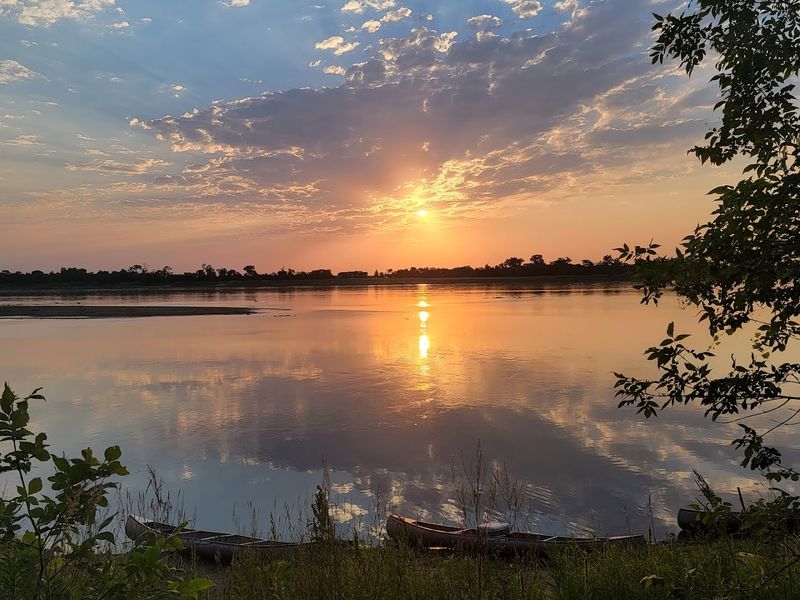
Perched on the bluffs above the Missouri River in northeastern Nebraska, Ponca State Park offers a 1.28-mile loop that ends at one of the more geographically interesting viewpoints in the Midwest.
The Tri-State Overlook puts visitors at a high vantage point where Nebraska, Iowa, and South Dakota can all be seen at once, with the Missouri River curving through the valley below.
The view carries a real sense of scale that feels unusual this far from the mountains.
The trail itself moves through a mix of wooded hillsides and open ridge sections, with the overlook sitting near the highest point of the loop.
The river bends visible from the top are wide and unhurried-looking, lined by cottonwood trees and sandbars that shift with the seasons.
Fall color on the surrounding bluffs adds extra visual depth to the view from roughly mid-October onward.
Ponca State Park has a well-maintained trail system overall, and the Tri-State Overlook loop is considered easy to moderate in difficulty.
The park also offers camping, horseback riding trails, and access to the river, making it a reasonable base for a longer visit.
A Nebraska State Park entry permit is required, and the park sits just north of the town of Ponca along the Missouri River bluffs.
5. Wildcat Hills State Recreation Area, Gering, Bluff And Canyon Trails
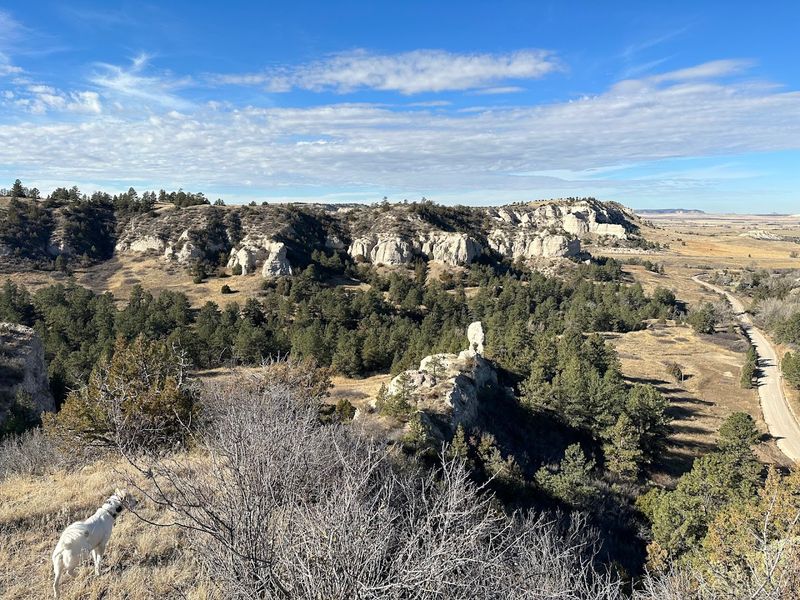
Just south of Gering, the Wildcat Hills rise out of the surrounding plains in a way that catches most first-time visitors off guard.
The terrain here is rugged and rocky, with ponderosa pines clinging to canyon walls and bluff edges that drop sharply toward the North Platte River Valley below.
The recreation area has more than three miles of trails total, and even the shorter routes deliver views that feel far more dramatic than the flat farmland just a few miles away.
The Monument View Trail covers about a half mile and puts hikers at a ridge with a clear sightline across the valley toward Scotts Bluff in the distance.
The Turkey Run Trail stretches 1.5 miles and moves through some of the rockiest and most visually interesting terrain in the area.
Both trails are best walked in dry conditions since the clay and sandstone surfaces can become slippery after rain.
Wildlife activity in the hills is notable, and pronghorn, wild turkey, and mule deer are occasionally spotted near the trail edges.
The recreation area also includes a nature center and a small bison enclosure that adds an extra point of interest for families.
The area is managed by the Nebraska Game and Parks Commission, and a state park entry permit is required for vehicle access.
6. Chadron State Park, Chadron, Black Hills Overlook Trail
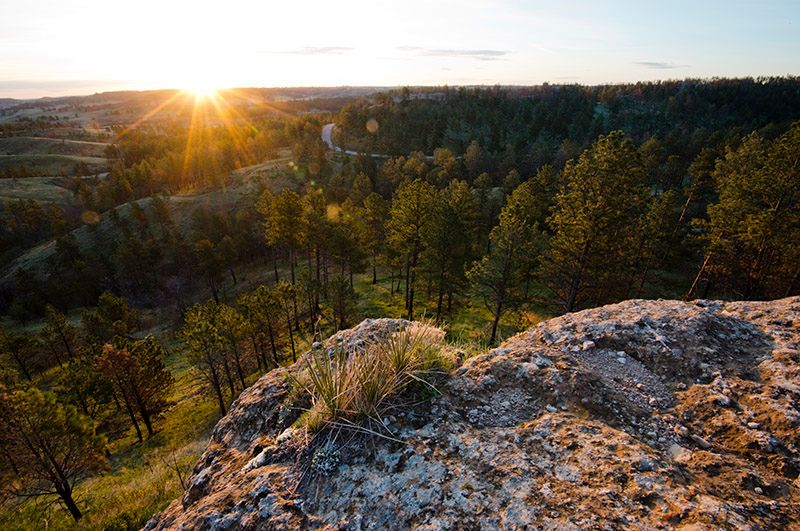
Chadron State Park sits in the Pine Ridge region of northwestern Nebraska, and the Black Hills Overlook Trail offers one of the clearest arguments for why this corner of the state deserves far more attention than it typically gets.
The trail runs 1.5 miles one way and climbs through ponderosa pine forest and open butte terrain before reaching a viewpoint that looks out over ridges, canyons, and on clear days, the faint outline of the South Dakota Black Hills on the horizon.
Evidence of a 2012 wildfire is still visible along portions of the trail, where burned snags stand among recovering vegetation in a landscape that tells a clear ecological story.
The contrast between the charred areas and the green pine growth coming back around them gives the trail a texture that feels honest and unfiltered.
Birding is productive along this route, particularly for species that favor open pine and burned-over habitat.
Chadron State Park is one of Nebraska’s oldest state parks, established in 1921, and the trail system here is generally well-marked and maintained.
The park offers camping and cabin rentals for those who want to spend more time in the Pine Ridge area.
A Nebraska State Park entry permit is required, and the trailhead for the Black Hills Overlook is accessible from the main park road near Chadron.
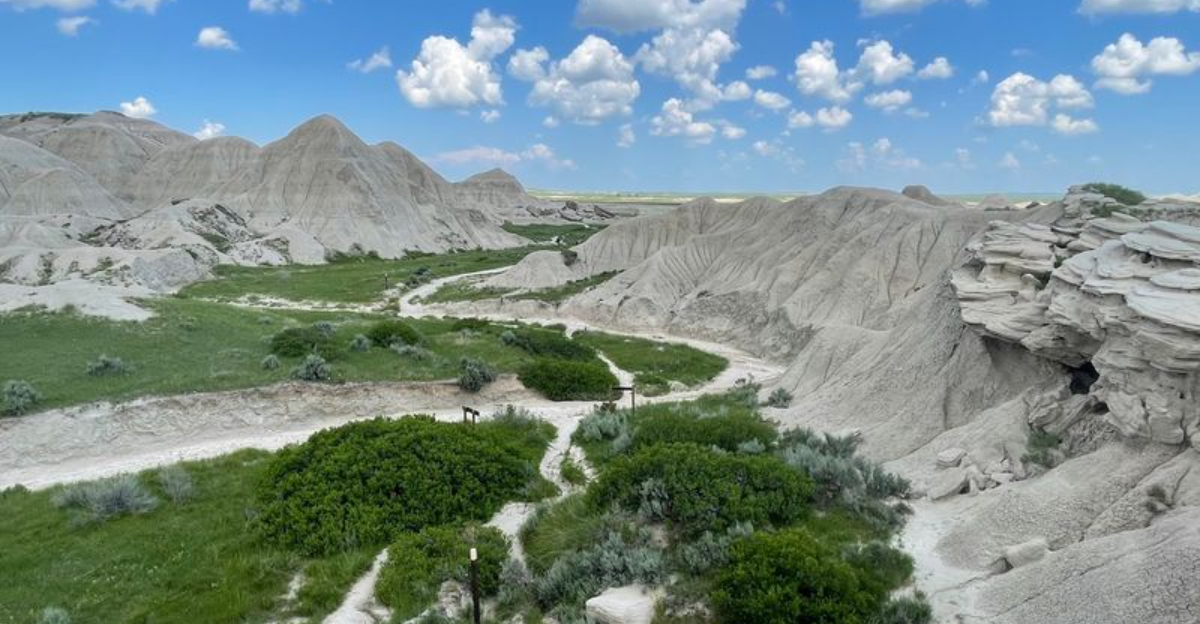
7. Toadstool Geologic Park, Near Crawford, Toadstool Loop
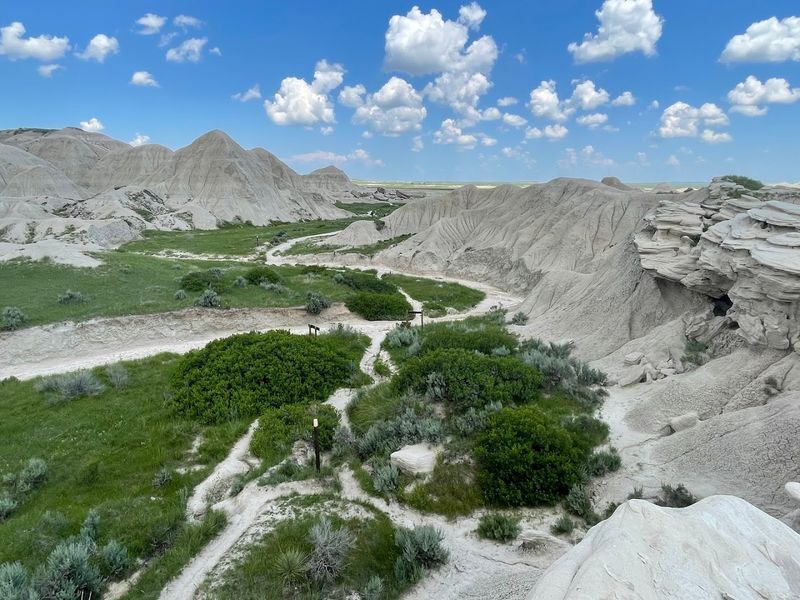
Few places in Nebraska feel as genuinely alien as the badlands terrain inside Toadstool Geologic Park, located near Crawford in the northwestern corner of the state.
The one-mile loop trail winds through mushroom-shaped rock formations called hoodoos, where softer clay erodes beneath harder capstones over thousands of years.
The result is a landscape that looks sculpted rather than natural, with shapes that seem to belong somewhere far more dramatic than the Great Plains.
Fossil fragments from prehistoric animals are embedded in the layers of sediment here, and interpretive signs along the trail help explain what the area looked like millions of years ago.
The ground underfoot shifts between pale clay, crumbling sandstone, and packed earth depending on where the trail leads.
After rain, the clay becomes slick, so dry conditions make for much easier walking.
The park is part of the Nebraska National Forests and Grasslands system and is free to enter.
No formal trailhead facilities exist beyond a small parking area and a basic pit toilet, so packing water and sun protection matters here.
The open terrain offers almost no shade, but the wide views across the surrounding grasslands and eroded formations make the exposure feel worthwhile rather than uncomfortable.
8. Agate Fossil Beds National Monument, Harrison, Daemonelix Trail
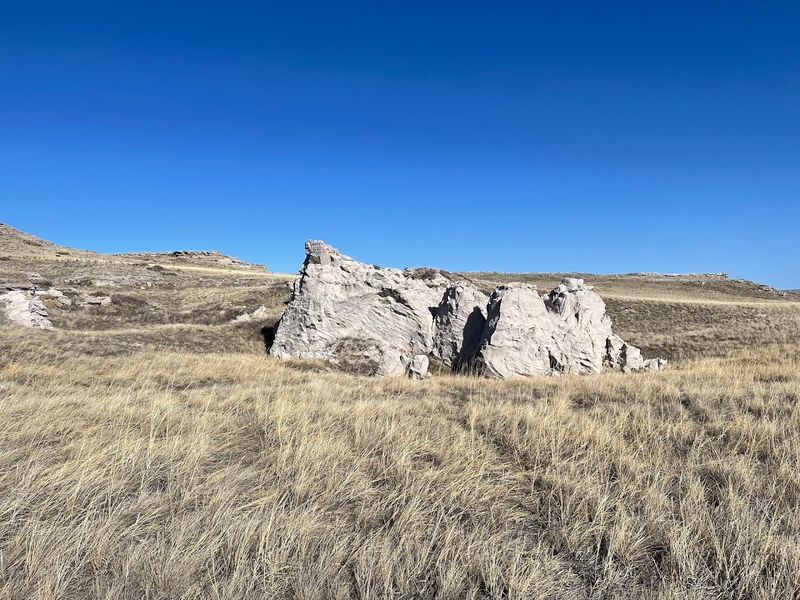
Out on the open grasslands near Harrison in the Nebraska Panhandle, Agate Fossil Beds National Monument preserves one of the most significant fossil deposits in North America and wraps it inside a scenic landscape.
The Daemonelix Trail covers about one mile and climbs gradually through open fossil country, offering wide views over surrounding bluffs and rolling prairie that stretch to the horizon in nearly every direction.
The trail is named after the corkscrew-shaped fossilized burrows of an ancient beaver found embedded in the hillsides here.
The terrain along the trail is open and exposed, which means the sky feels enormous and the sense of distance is hard to shake.
Interpretive markers explain the geological history of the area and help identify the fossil-bearing layers visible in the hillside cuts along the route.
The Niobrara River runs near the monument boundary, and glimpses of the river valley add a softer visual contrast to the dry upland scenery.
The monument is managed by the National Park Service, and entrance is free.
The visitor center on-site holds an impressive collection of fossil specimens and Native American artifacts related to the area’s history.
Visiting on a clear day enhances the trail experience considerably, since the panoramic views depend on good visibility across the wide-open terrain surrounding the fossil hills.
9. Platte River State Park, Louisville, Observation Towers
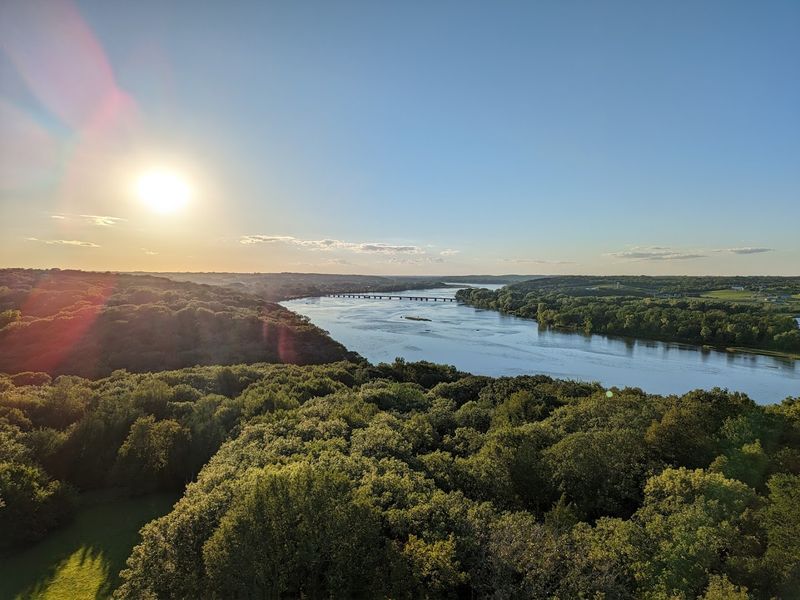
Eastern Nebraska tends to get written off as flat and unremarkable, but Platte River State Park near Louisville pushes back against that assumption.
What helps are the wooded hills, a stone waterfall trail, and an 85-foot observation tower that delivers a genuinely expansive view over the Platte River Basin.
The tower climb is short and accessible, and the view from the top takes in a wide sweep of forested hills and river corridor that surprises most visitors who associate this part of the state with cornfields.
The park sits about 25 miles southwest of Omaha.
The Stone Creek Falls Trail is another short option here, covering roughly a quarter mile to a small waterfall and continuing another quarter mile to bluffs sitting about 80 feet above the river.
The trail is well-maintained and easy enough for most fitness levels, making it a reliable choice for families or casual walkers.
Sunrise from the observation tower is particularly striking when morning light filters through the river valley mist below.
Platte River State Park offers camping, cabin rentals, and access to an outdoor education center, which makes it a strong pick for a weekend trip rather than just a quick stop.
A Nebraska State Park entry permit is required for vehicle access. Weekday visits tend to be noticeably quieter, especially outside of the summer camping season.
10. Mulberry Bend Overlook, near Newcastle, Paved Overlook Trail
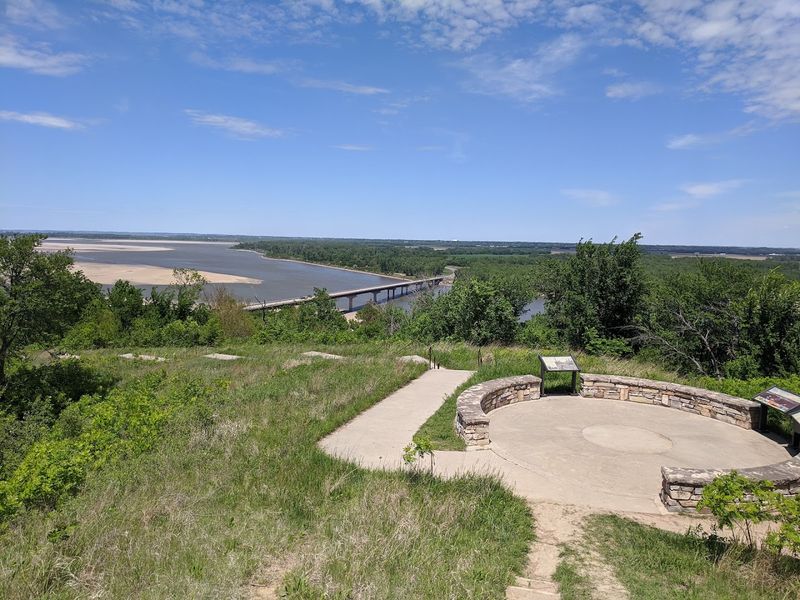
Along a quiet stretch of Highway 12 in northeastern Nebraska, Mulberry Bend Overlook offers one of the most accessible big-view payoffs in the state.
A short paved trail leads to two overlook platforms positioned above a wide bend in the Missouri River, where the water curves through a broad valley flanked by wooded bluffs on both sides.
The paved surface makes this a strong option for visitors who want a dramatic view without navigating uneven terrain.
The overlook sits near Newcastle, Nebraska, in a part of the state that sees relatively light tourist traffic despite holding some genuinely beautiful river scenery.
The Missouri River valley here looks largely undeveloped from the overlook height, which gives the view a more natural and less managed feel than some of the busier state park destinations.
Morning visits tend to catch softer light across the river surface and quieter conditions overall.
No formal entry fee is associated with the overlook, and parking is available near the trailhead along the highway.
The site is maintained as part of Nebraska’s scenic byway infrastructure, and signage along Highway 12 points the way clearly enough that finding it does not require advance navigation.
Fall foliage in the surrounding bluff country adds considerable color to the already strong river view from late September through mid-October.
11. Indian Cave State Park, Shubert, Trail 8 And Missouri River Ridge Views
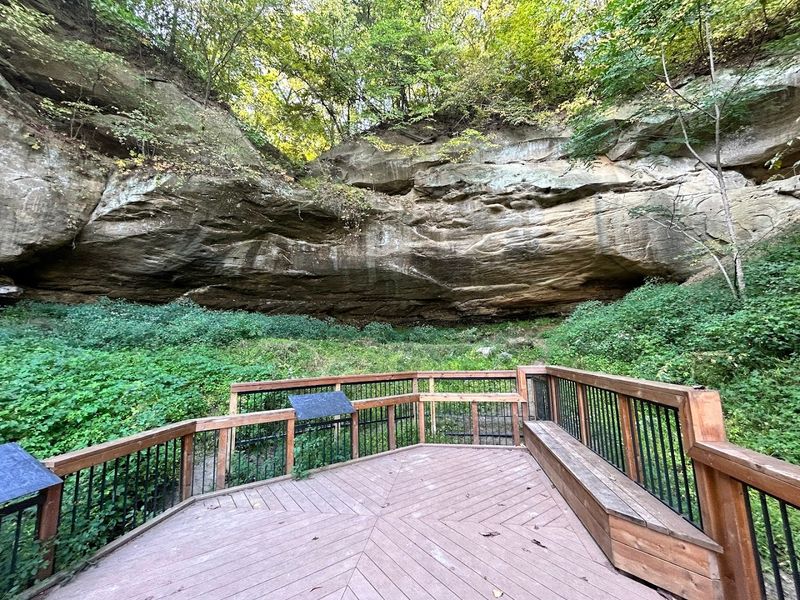
In the far southeastern corner of Nebraska, Indian Cave State Park in Shubert holds some of the most rugged and forested terrain in the entire state.
Trail 8 climbs to a ridgetop that opens up to a clear view of the Missouri River below, where the river bends through a wide valley bordered by bluffs on both sides.
The trail is short enough to complete in under 30 minutes but delivers a view that feels earned and genuinely scenic.
The park also features a sandstone cave containing Native American petroglyphs, which adds a strong cultural and historical dimension to a visit beyond the scenic overlooks.
The cave is accessible via a forest trail and is one of the more unique natural landmarks in Nebraska’s state park system.
Interpretive signs near the cave entrance provide context about the carvings and their estimated age.
Indian Cave State Park covers more than 3,000 acres and has an extensive trail network for those who want to extend their visit beyond the ridge views.
The park offers primitive and modern camping options, and the Missouri River bottomlands along the park boundary support rich wildlife populations.
A Nebraska State Park entry permit is required, and the park is located near Shubert along the Missouri River bluffs in Richardson County.