10 Nebraska College Campuses That Are Beautiful Enough For A Walk
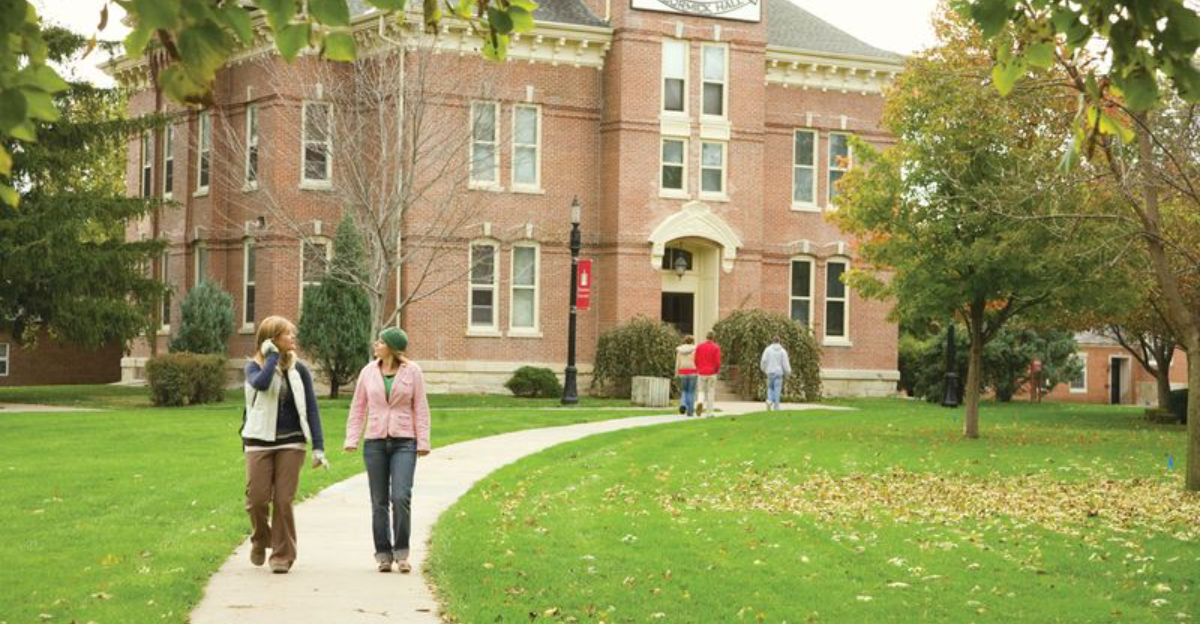
College campuses are underrated walking spots. Seriously.
You get the pretty buildings, leafy paths, and the occasional squirrel acting like it pays tuition. That is a strong outing.
A beautiful campus does not have to be famous to feel worth exploring.
It just needs a good mix of scenery and little places that make you slow down without feeling like you accidentally joined a tour group.
Across Nebraska, several college campuses offer exactly the kind of easy, low-pressure walk. They feel peaceful without being boring.
Historic without feeling stiff. Scenic without trying too hard.
Maybe you go for the architecture. Maybe you go for the trees. Maybe you just need a different place to stretch your legs.
These 10 Nebraska college campuses prove a good stroll does not always require a trailhead or hiking shoes. Sometimes all it takes is a pretty quad and a reason to wander.
1. Doane University, Crete
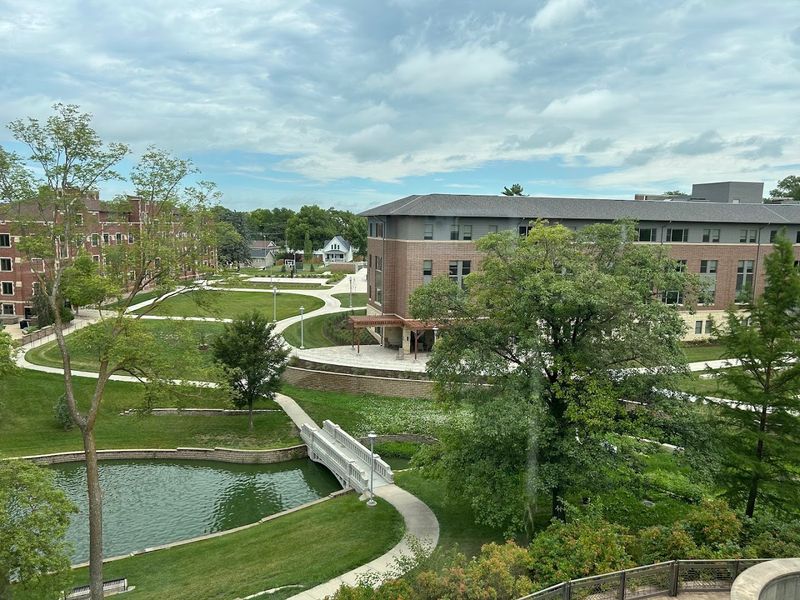
Few campuses in Nebraska carry the kind of layered history that Doane University does, and that depth shows in every corner of its grounds.
The flagship campus in Crete spans 300 acres and holds accreditation as a full arboretum, meaning the trees here are not just decorative but carefully documented and maintained.
Three of its buildings appear on the National Register of Historic Places, giving the walkways a sense of old-campus permanence that is hard to replicate.
Strolling through the grounds, visitors tend to notice how the canopy shifts above them as they move between open lawns and tighter tree-lined paths.
The mix of historic architecture and mature plantings creates a rhythm that feels both settled and alive.
Founded in 1872, Doane has had well over a century to grow into its landscape, and it shows.
The arboretum designation means the campus functions as a living collection of trees and shrubs, not just a pretty yard. Visiting in late spring tends to bring out the fullest color across the grounds.
For anyone who appreciates a walk that combines natural beauty with genuine historical character, Doane is a strong starting point for exploring Nebraska’s campus landscapes.
2. University of Nebraska-Lincoln, Lincoln
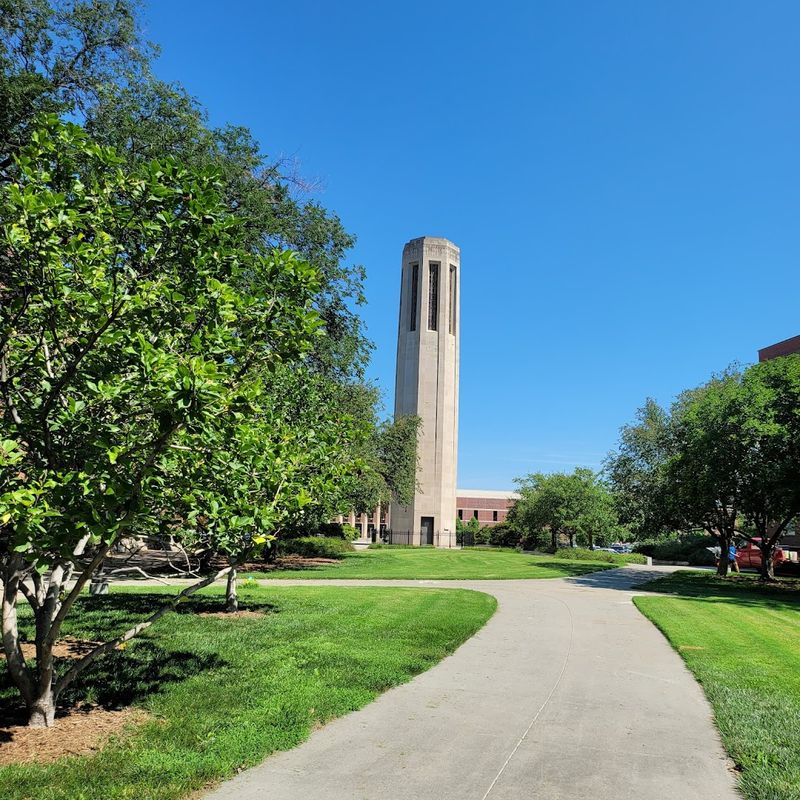
Spread across two distinct campuses in Lincoln, the University of Nebraska-Lincoln offers more green walking space than most people expect from a large public university.
The East Campus is home to the Earl G. Maxwell Arboretum, which serves as a flagship site of the Nebraska Statewide Arboretum and holds an impressive collection of trees, shrubs, vines, and herbaceous perennials.
Paths wind through the grounds in a way that makes it easy to lose track of time without ever feeling lost.
The arboretum is open daily from dawn to dusk, making it accessible for early morning walks or late afternoon visits when the light tends to soften across the plantings.
City Campus adds a different kind of appeal, with the architecturally refined Sheldon Museum of Art serving as a visual anchor for that side of the university.
Together, the two campuses give walkers a range of experiences, from formal garden settings to broader open lawns framed by mature trees.
The UNL Botanical Garden and Arboretum system ties both campuses together under a shared mission of public green access. For a campus walk with real variety, UNL delivers more than one might anticipate.
3. Peru State College, Peru
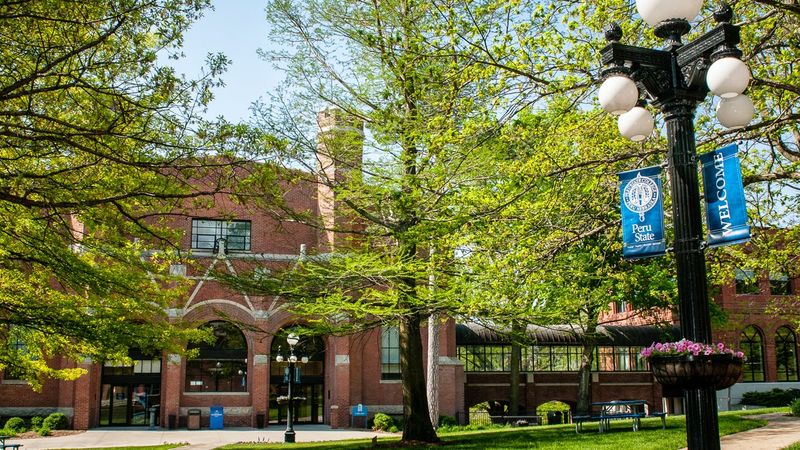
Perched above the Missouri River on a wooded hillside, Peru State College has a setting that feels genuinely removed from the everyday.
Nebraska’s oldest college, founded in 1867, sits on a campus known informally as the Campus of a Thousand Oaks Arboretum, a name that speaks to just how tree-dense the grounds really are.
The bluffs and river valleys that cradle the surrounding town extend naturally into the campus itself, making it feel like the landscape and the institution grew up together.
Walking the grounds here has a different quality than most flat Midwestern campuses.
The terrain shifts underfoot, paths curve around mature oaks, and glimpses of the river valley appear between buildings in ways that keep the walk visually interesting.
The town of Peru is small and quiet, which adds to the unhurried feeling of the whole experience.
Historic buildings dot the campus alongside the tree collection, reinforcing the sense that this place has been tended for a long time.
For anyone drawn to campuses with genuine character rather than polished newness, Peru State offers something rare.
The combination of natural topography, old-growth trees, and deep institutional history makes it one of Nebraska’s most distinctive campus walks.
4. Creighton University, Omaha
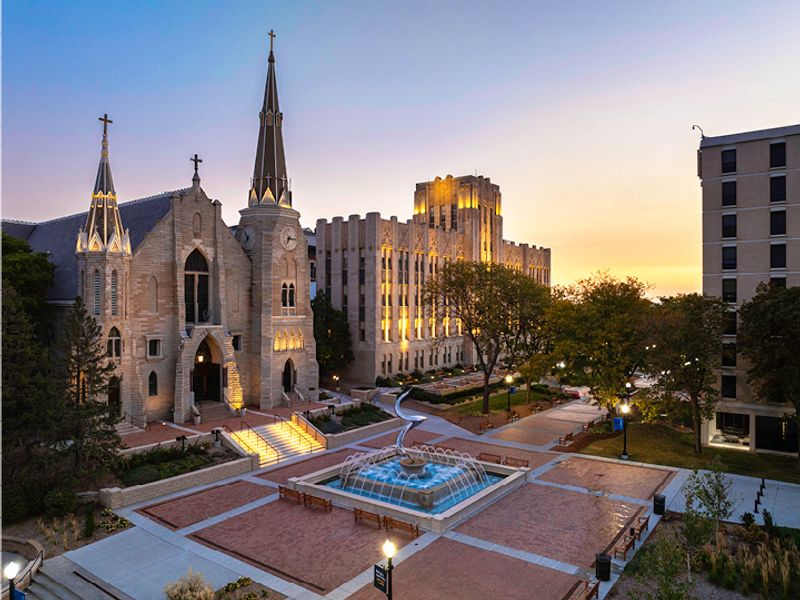
Named the most beautiful college in Nebraska by Travel and Leisure magazine, Creighton University makes a strong case for what an urban campus can look like when it is genuinely well maintained.
Located in Omaha, the campus centers on a brick Mall that serves as the main pedestrian spine of the grounds, lined with trees and flanked by a mix of historic and contemporary architecture.
St. John’s Parish and the Harper Center represent opposite ends of the campus timeline and somehow work well together visually.
Creighton has earned Tree Campus USA recognition from the Arbor Day Foundation for nine consecutive years, which reflects a real and ongoing commitment to its tree canopy rather than just a one-time designation.
May tends to be the most rewarding month to walk the campus, when the trees are in full bloom and the brick paths feel especially inviting under a green canopy.
For an urban campus, the grounds manage to feel surprisingly contained and walkable, with the Mall providing a clear path that ties the major buildings together.
The blend of old and new architecture gives the walk visual variety without feeling disjointed.
Creighton is a good reminder that city campuses can carry just as much natural beauty as their rural counterparts when the care is consistent.
5. Hastings College, Hastings
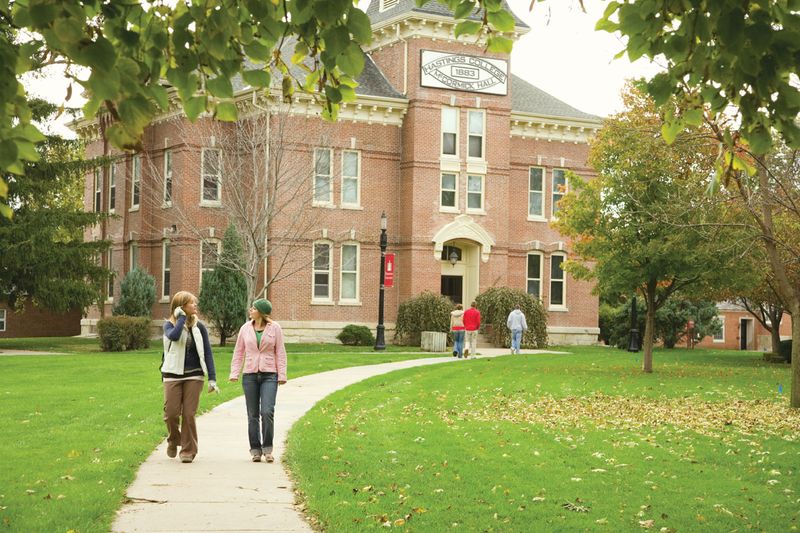
There is something quietly impressive about a campus arboretum that traces its roots back to 1883.
Hastings College began planting trees the same decade it opened, and that long commitment to its landscape is visible in the scale and variety of what stands there today.
The campus spans over 100 acres and holds approximately 1,100 trees representing nearly 100 different species, making it one of the more diverse tree collections on any Nebraska campus.
Beyond the sheer number of trees, the grounds include some thoughtful design details that reward a slow walk.
A Rain Garden manages stormwater while adding seasonal color, and a Japanese Friendship Garden brings a different kind of calm to the northeast corner of the campus.
Both spaces feel intentional rather than incidental, like places that were planned for people to actually use.
The overall layout of the campus is compact enough to cover on foot without exhaustion, but rich enough in variety to hold attention throughout.
Spring tends to bring the most visual activity as flowering trees come into bloom against the older hardwoods.
For a campus walk that blends horticultural depth with genuine historical continuity, Hastings College offers a surprisingly rewarding afternoon.
6. Chadron State College, Chadron
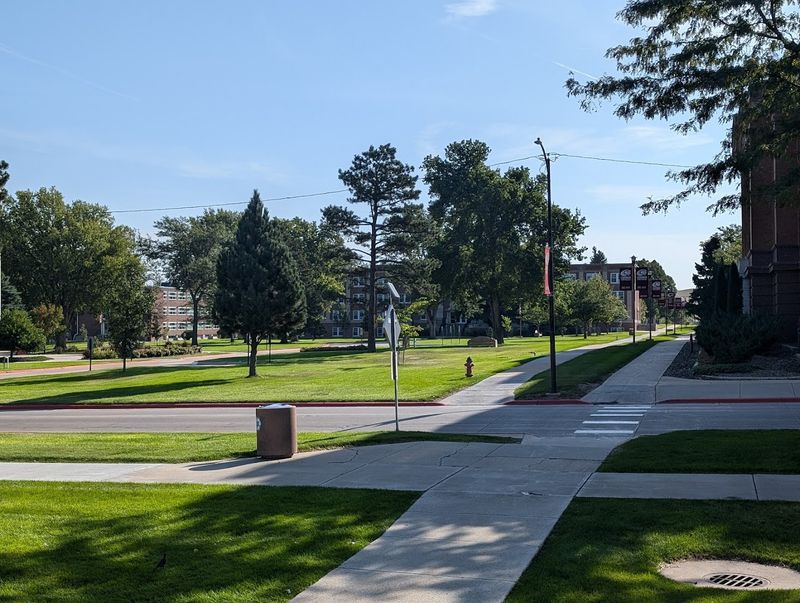
Positioned in the Pine Ridge region of northwest Nebraska, Chadron State College sits in a landscape that looks and feels nothing like the flat eastern part of the state.
The surrounding terrain of pine-covered ridges and open range gives the campus a visual backdrop that most Nebraska schools simply cannot offer.
That natural setting bleeds into the campus itself, lending it a wilder, more open character that suits a long, unhurried walk.
The CSC Arboretum and Heritage Gardens provide a more structured walking experience within the broader campus, offering a peaceful environment where visitors can wander through heritage plantings.
The campus also includes the Thompson Nature Preserve and Labyrinth, a quieter space set apart from the main academic buildings where the pace of a walk slows naturally.
As an affiliate site of the Nebraska Statewide Arboretum, Chadron State carries a formal commitment to its plant collection alongside its scenic location.
The proximity to the Nebraska National Forest adds to the sense that the outdoors here is genuinely expansive.
For anyone looking for a campus walk with a more rugged and regionally distinct atmosphere, Chadron State delivers an experience that is hard to find elsewhere in Nebraska.
7. Wayne State College, Wayne
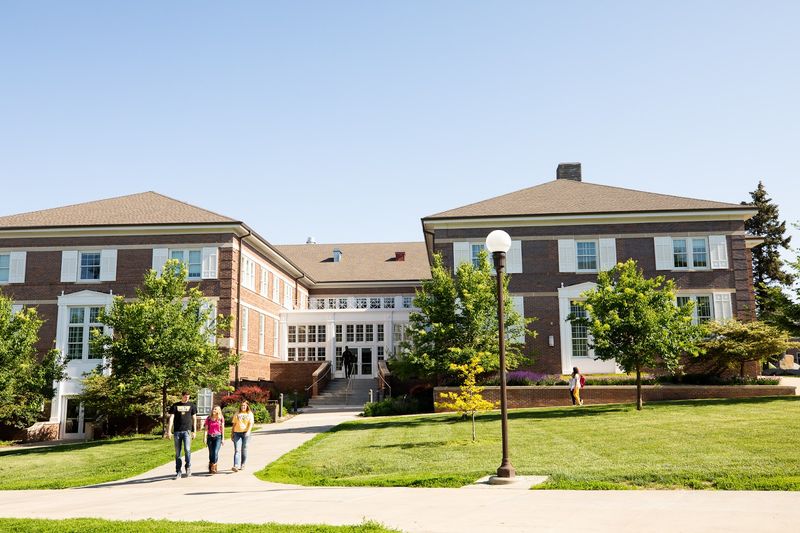
Not every beautiful campus leans on formal gardens or historic buildings to make its case.
Wayne State College takes a different approach, drawing its visual identity from a prairie-inspired landscape that feels rooted in the actual ecology of northeast Nebraska.
The entire campus functions as an arboretum, with a diverse tree collection spread across the grounds in a way that feels natural rather than ornamental.
One of the more distinctive features is the Willow Bowl, a natural amphitheater nestled into a low point on campus where willows and surrounding plantings create a sheltered, quiet space.
It is the kind of spot that tends to slow a person down without any signage telling them to do so.
The campus also highlights its broader collection of native and adapted species, giving the walk an educational dimension for anyone curious about regional plant life.
Wayne itself is a small city in the northeastern corner of the state, and the campus reflects that quieter, more open character.
Foot traffic on the grounds tends to be light outside of class hours, which makes it a comfortable place to walk without feeling crowded.
The combination of prairie sensibility and genuine arboretum care gives Wayne State a personality that stands apart from more traditional campus landscapes.
8. University of Nebraska at Kearney, Kearney
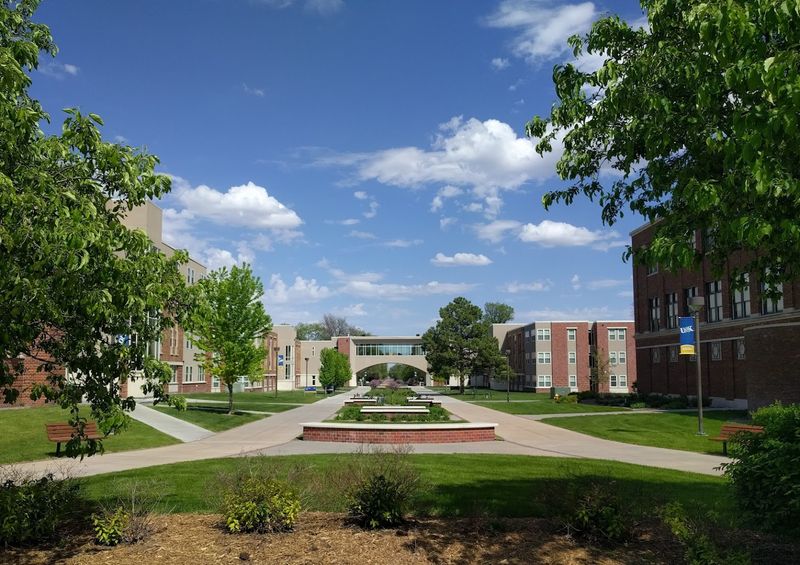
Kearney has a reputation as one of Nebraska’s most attractive college towns, and the University of Nebraska at Kearney fits naturally into that setting.
The campus itself has a clean, open layout with well-maintained green spaces that photograph well and walk even better.
University officials have highlighted the campus in photo galleries and virtual tour materials, pointing to its grounds as one of the features that makes the school worth visiting in person.
Just beyond the campus boundary, Yanney Heritage Park expands the walking options considerably.
The park includes a lake, walking trails, maintained gardens, and an amphitheater, creating a natural extension of the campus green space into the surrounding community.
The combination of campus grounds and nearby parkland gives visitors a longer and more varied route than the campus alone would provide.
Central Nebraska’s open sky and relatively flat terrain mean that light tends to fall across the campus in a clean, unobstructed way that makes even ordinary lawns look appealing at the right time of day.
Early morning and late afternoon tend to be the most comfortable times to walk, particularly in summer when midday heat can be significant.
For a modern campus walk with easy access to broader green space, UNK and its surroundings offer a well-rounded option.
9. Nebraska College of Technical Agriculture, Curtis
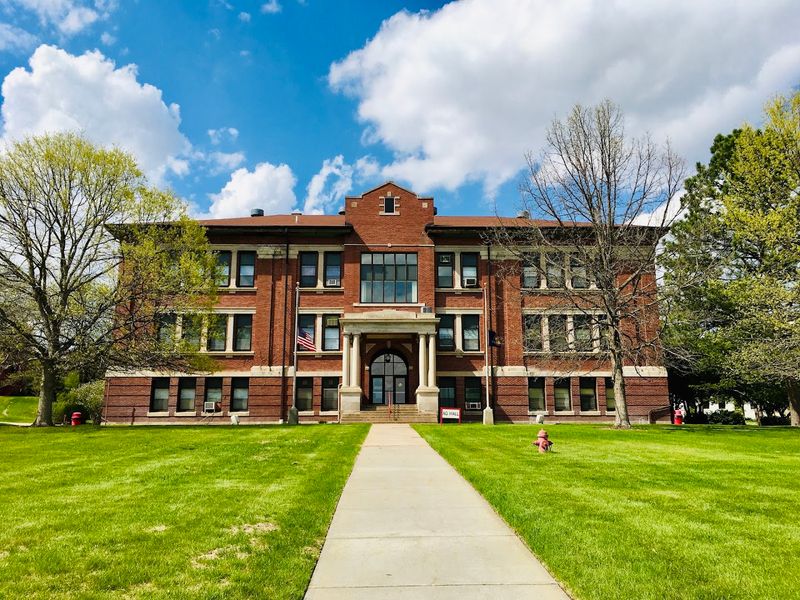
Curtis is not a name that comes up often in conversations about beautiful Nebraska campuses, but the Nebraska College of Technical Agriculture has quietly maintained one of the more interesting walking experiences in the state.
Since 1985, the campus has been a showcase site of the Nebraska Statewide Arboretum, a designation that reflects decades of intentional tree planting and landscape stewardship.
That long-term commitment gives the grounds a maturity that newer arboretum sites are still working toward.
The self-guided arboretum walking tour is the main draw for visitors, with an audio guide and printed brochures available to help identify the trees along the route.
The tour makes the walk educational without being heavy-handed, giving curious visitors something to engage with beyond simply admiring the scenery.
The surrounding southwest Nebraska landscape adds a wide-open quality to the experience that feels distinct from the more sheltered campuses in the eastern part of the state.
For a smaller, more off-the-beaten-path option, NCTA in Curtis rewards visitors who make the trip with a genuinely well-tended arboretum and a quiet atmosphere that allows for unhurried exploration.
The campus may be compact, but the care put into its plant collection and walking infrastructure makes it a legitimate destination for anyone building a list of Nebraska campus walks.
10. Nebraska Wesleyan University, Lincoln
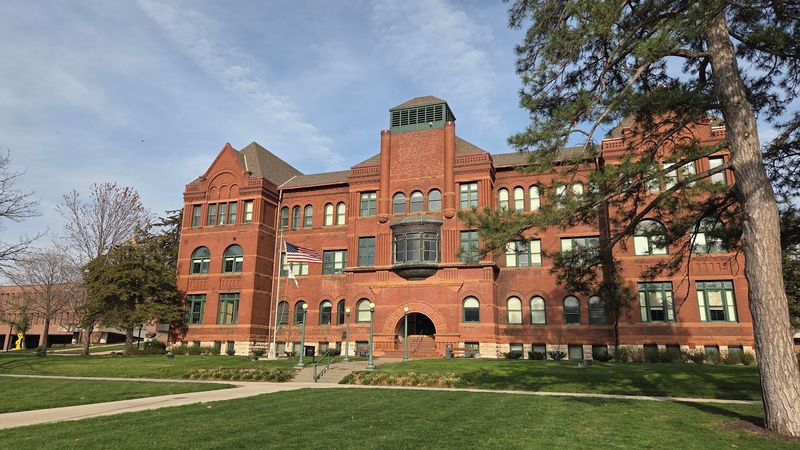
On the northeast side of Lincoln, Nebraska Wesleyan University offers a campus experience that feels noticeably different from the sprawling UNL grounds a few miles away.
The layout here is compact and residential, with buildings arranged in a way that encourages walking rather than driving between them.
Old Main, one of the campus’s most recognizable structures, anchors the grounds with the kind of old-brick solidity that gives a campus its sense of place.
The traditional residential college layout means that green spaces, academic buildings, and student housing are all woven together rather than separated into distinct zones.
That integration creates a more intimate walking environment where the campus feels like a single connected place rather than a collection of separate destinations.
Official virtual visit materials from the university specifically encourage prospective students and visitors to see the campus up close on foot, which reflects how the institution thinks about its own grounds.
For anyone already planning a visit to Lincoln, adding a walk through Nebraska Wesleyan requires minimal extra effort and offers a genuinely different campus texture than the larger university across town.
The mature trees lining the older parts of campus add seasonal variety throughout the year. Spring and fall both tend to bring out the strongest visual character of the grounds.