The Idaho Drag Strip Is So Old-School You’ll Swear You Time-Traveled To 1968
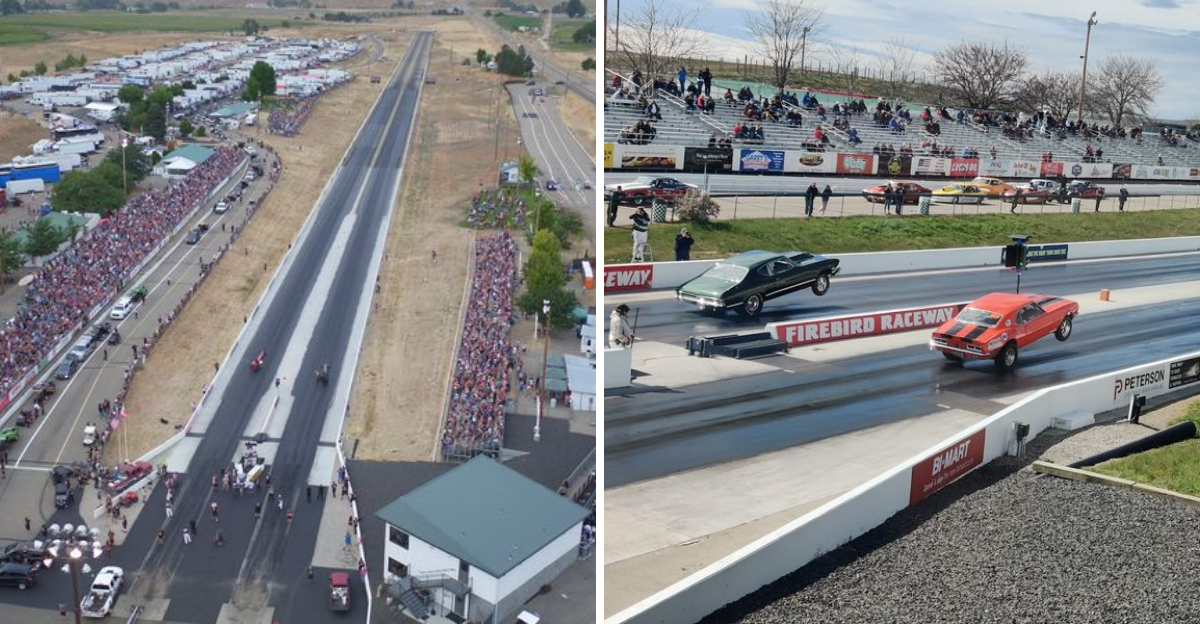
The first engine rumble does not politely introduce itself; it grabs the whole afternoon by the collar and says, “Pay attention.”
Out in Eagle, this quarter-mile drag strip has been making Idaho crowds grin since 1968, which means the place has earned every bit of its old-school confidence.
The charm is not polished smooth, and that is exactly why it works.
You can feel the history in the stands before the cars even launch, then the revving starts and every sensible thought gets replaced by vroom-vroom enthusiasm.
Nobody comes here for a quiet little outing.
They come for speed that rattles the air, nostalgia that still has horsepower, and a track that feels proudly stuck in the best decade possible.
This Drag Strip Still Feels Loud In The Best Way
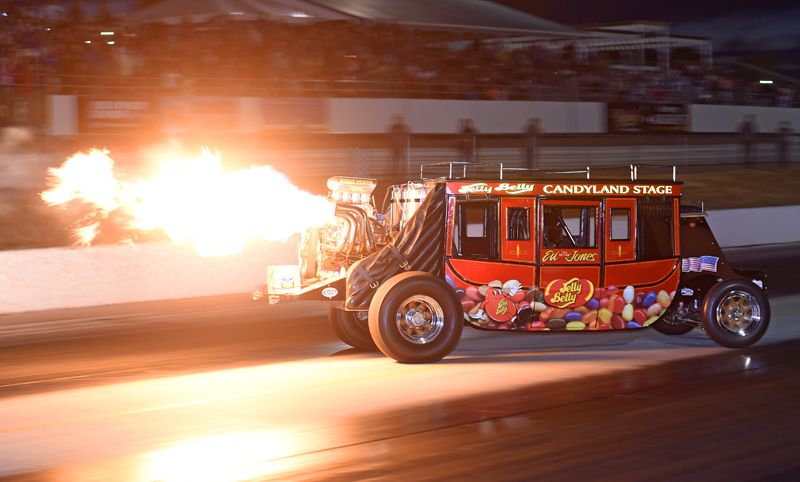
Before the first pass is finished, Firebird Raceway reminds visitors that drag racing is not a quiet hobby. Engine noise rolls across the property, climbs through the stands, and turns a simple launch into something people feel as much as hear.
The track’s own description calls Firebird the heartbeat of drag racing excitement in western Idaho and beyond, with a quarter-mile strip built around thrilling, accessible, family-friendly motorsports. That combination of power and approachability is a big part of the charm.
Spectators do not need to know every class, elapsed time, or technical detail to understand the moment when two cars stage, the lights drop, and everything suddenly gets loud. The setting helps too.
Firebird sits in a high-desert valley near the Boise foothills, with the NHRA describing the roughly 60-acre raceway as close to the Boise foothills and Boise National Forest. That landscape gives race days a wide-open Idaho feel that polished indoor entertainment could never copy.
Ear protection is smart, especially for kids, but the roar is part of the reason people come back. Loud here feels honest, old-school, and completely tied to the place.
1968 Energy Runs Right Down The Quarter-Mile
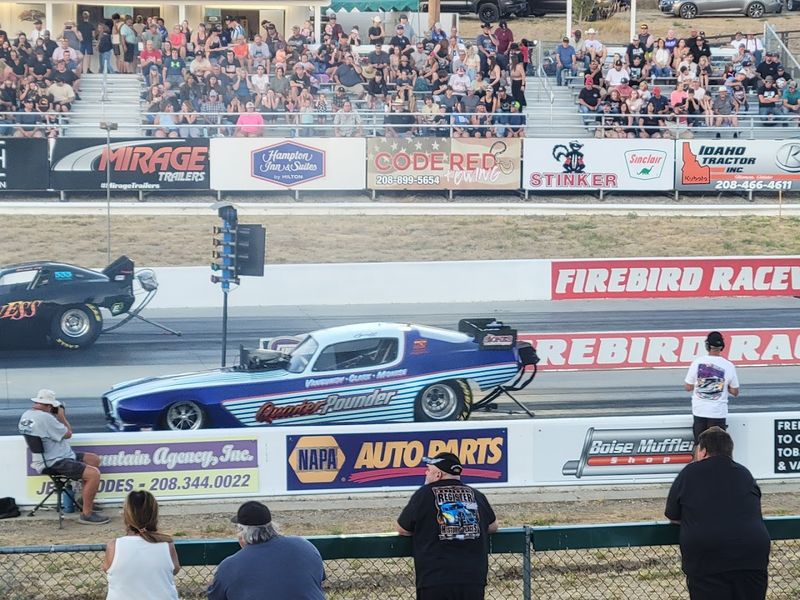
History at Firebird does not sit behind glass. It runs straight down the strip every time a car leaves the line.
The raceway was constructed in 1968, and the National Register nomination describes it as a purpose-built dragstrip complex that remains mostly intact on hilly terrain near Eagle.
That origin gives the whole place a different feel from newer venues designed around luxury boxes and overproduced spectacle.
Firebird has updated where needed, but the deeper identity still points back to the late 1960s, when drag racing was loud, community-driven, and close enough for fans to feel connected to the action.
NHRA credits the New family with establishing the track in 1968 and keeping ownership and operation in the family for more than five decades, which adds an unusual amount of continuity to the experience.
Visitors can sense that lineage in the atmosphere. It is not trying to impersonate the past as a theme.
The past is part of how the place actually functions. A quarter-mile run may only last seconds, but at Firebird, those seconds carry 1968 right along with them.
The First Engine Roar Sets The Whole Mood
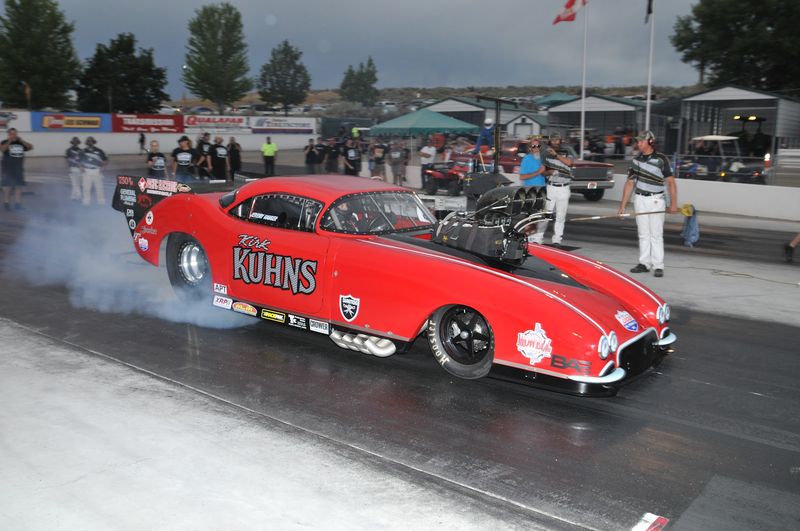
Crowd chatter can fill the air for a while, but one staged pair changes everything. A race car creeps into position, the lights begin their sequence, and then the launch cuts through the afternoon like a switch flipped across the entire property.
Firebird’s official site emphasizes that the track hosts more than 50 action-packed events each season, drawing racers and fans from across the country. That schedule means plenty of people have experienced the same first-roar moment, yet it rarely loses its effect.
Cameras rise. Conversations pause.
New visitors suddenly understand why regulars did not bother overexplaining the appeal in advance. The track’s physical setting adds drama because Firebird was built as a dedicated dragstrip rather than squeezed into a multi-use venue.
The National Register documentation highlights its purpose-built design and mostly intact layout, which helps explain why the racing feels so direct and focused. No giant production is needed when the main attraction is that immediate burst of speed and sound.
Once the first car launches, the day has a rhythm. Everything else becomes part of waiting for the next one.
Old-School Racing Fans Get Their Kind Of Time Machine
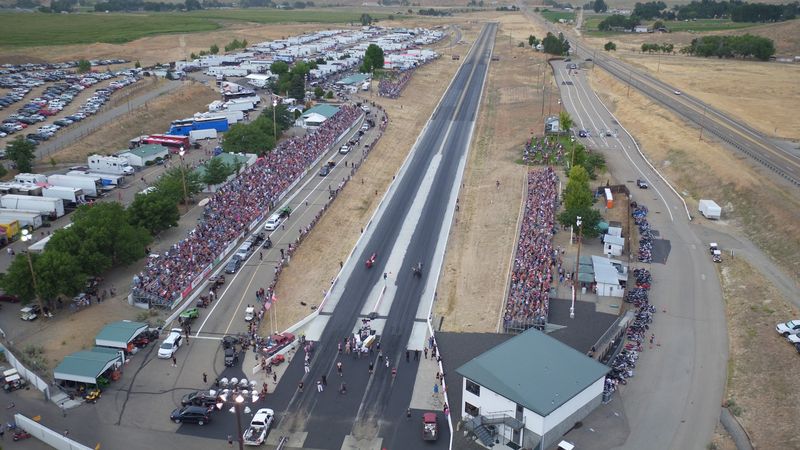
People who love motorsports history do not have to work hard to feel it here. Firebird Raceway has the rare advantage of being both active and historically recognized, which means fans can watch current racing in a place that helped shape Idaho’s drag racing culture for decades.
NHRA reported in 2019 that Firebird became the first drag racing strip in the United States listed on the National Register of Historic Places. The report also highlighted the New family’s long ownership and the track’s continued role as an NHRA member facility.
That is the kind of fact old-school fans appreciate because it confirms what the atmosphere already suggests.
This is not nostalgia manufactured after the fact. It is a working track with a continuous story.
Firebird’s official materials also stress its founding belief in affordable, family-friendly motorsports, a value that still shapes the way the venue presents itself today. For longtime racegoers, the appeal may come from familiar sounds, bracket traditions, and the no-nonsense pace of a race day.
For younger visitors, it can feel like stepping into a version of racing culture they have only heard about. Either way, the time-machine effect is real.
Eagle Keeps One Of Idaho’s Fastest Traditions Alive
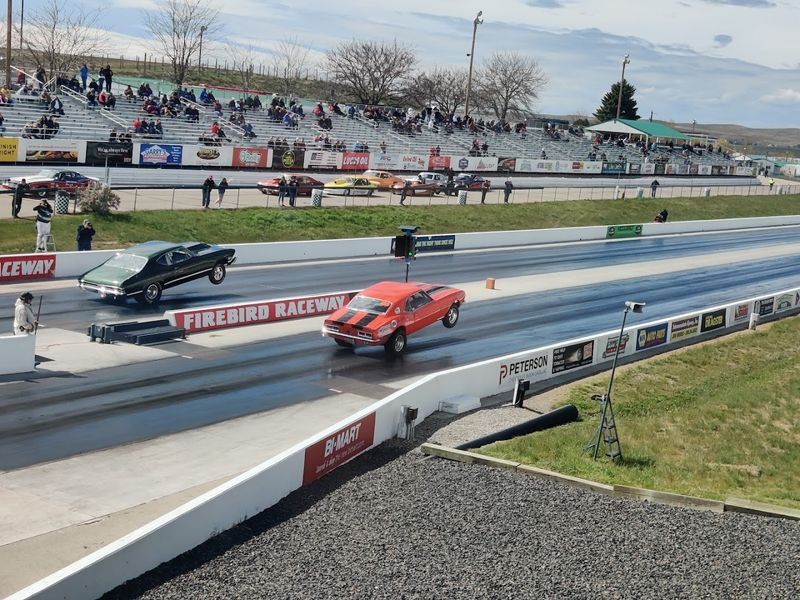
Growth around the Treasure Valley has changed a lot, but Firebird Raceway keeps one high-speed tradition firmly in place.
The Eagle track is recognized by NHRA as Idaho’s only purpose-built drag strip, according to a quote from the Idaho State Historic Preservation Office included in NHRA’s National Register coverage.
That distinction helps explain why the raceway matters beyond weekend entertainment. It represents a specific piece of Idaho sports, engineering, family business, and community life.
Major events strengthen that role. The NAPA Ignitor has been described by Firebird as its oldest major event, and NHRA’s 2025 Nightfire coverage called the Nightfire Nationals Idaho’s largest motorsports event.
Those annual traditions give local families and traveling fans recurring reasons to head toward Highway 16. A racing calendar becomes part of the regional calendar, something people plan around and remember year after year.
Eagle’s identity may not revolve only around racing, but Firebird gives the area a sound and story that stand apart. Few towns can claim a nationally recognized historic drag strip still running with this much energy.
The Track’s History Makes Every Run Feel Bigger
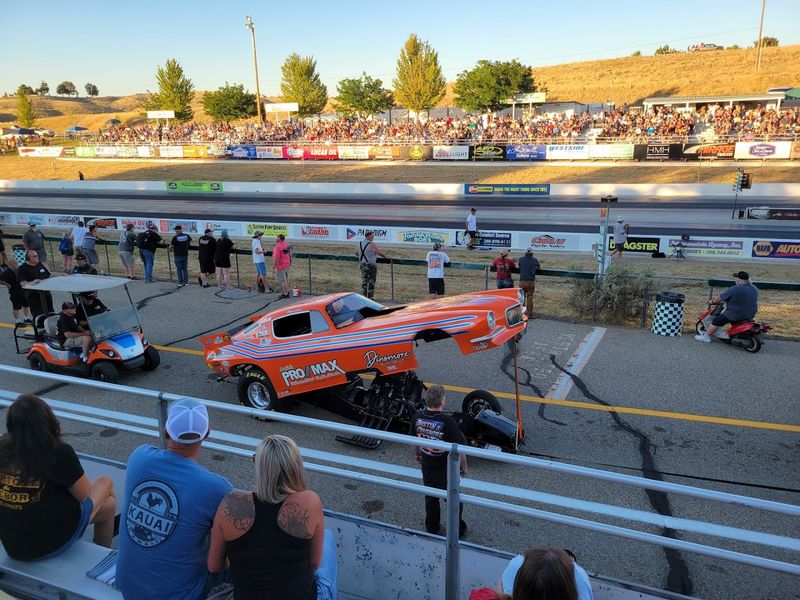
Knowing what the strip has already seen changes the way each pass lands. Firebird was completed in 1968, covers roughly 60 acres, and includes the original strip and associated raceway features, according to NHRA’s report on the National Register listing.
That physical continuity gives every modern run a deeper backdrop. Newer racers are not simply using a lane of asphalt.
They are joining a sequence that stretches across generations of drivers, crews, families, announcers, spectators, and event weekends. Historic events add even more texture.
NHRA’s Nightfire coverage notes that The Bracketeers sportsman racing tradition dates back to 1976, while the raceway’s own event materials point to long-running major competitions that still return to the track.
Vintage-themed events and classic race cars only make that feeling stronger, but even regular sessions benefit from the same legacy.
The starting line has witnessed decades of nerves, reaction times, engine trouble, personal bests, and family memories. That is why the place can make a short race feel larger than its elapsed time.
Firebird gives each run a visible finish line and an invisible history running beneath it.
Night Races Bring Extra Retro Drama
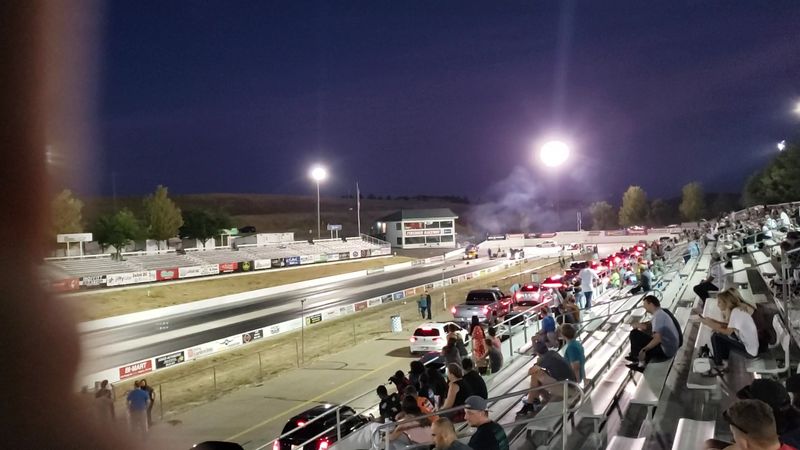
After dark, Firebird takes on a different personality. Track lights, exhaust, engine noise, and open Idaho sky can make a night race feel closer to a drive-in memory than a standard sporting event.
The Nightfire Nationals are central to that atmosphere. NHRA reported that the 54th Annual Nightfire Nationals returned in August 2025 with AA/Funny Cars, AA/Fuel Dragsters, AA/Fuel Altereds, Pro Modifieds, Jet Cars, and more, calling it Idaho’s largest motorsports event.
The event’s long history adds to the drama, with KTVB reporting that the Pepsi Nightfire Nationals had been happening at Firebird since 1972. Night racing brings out the cinematic side of the track.
Flames, lights, smoke, and speed register differently against the dark. The crowd noise feels tighter.
The launches feel sharper. Even people who have seen daytime racing may find the evening version more intense, because the visuals and sound become concentrated under the lights.
Firebird’s official schedule should always be checked before planning around a specific night event, but when the timing works, the after-dark experience is one of the best ways to feel the old-school magic.
This Raceway Turns Speed Into A Boise-Area Throwback
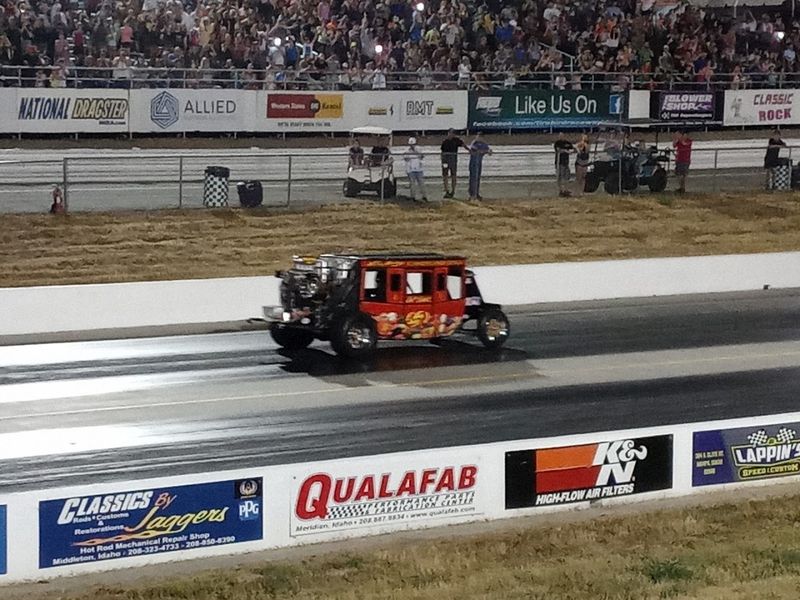
A short drive northwest of Boise can feel like a much bigger trip once Firebird’s gates come into view. The raceway sits along Highway 16 in Eagle, close enough for Treasure Valley families to make it a repeat tradition rather than a rare pilgrimage.
Public racing resources list the address as 8551 Highway 16, Eagle, Idaho 83616, while Firebird’s own site presents the venue as a western Idaho motorsports hub with a season running from late March through mid-October.
That accessibility matters because the track’s history is not locked away for specialists.
Kids can attend with parents. First-timers can learn by watching.
Longtime fans can point toward hillside seating, staging areas, and event traditions with the confidence of people who have done this before.
NHRA notes that Firebird continues to host major NHRA-related events, including a Division 6 Lucas Oil Drag Racing Series event and a Hot Rod Heritage Series event.
Speed here becomes more than spectacle. It becomes a Boise-area tradition with family ownership, historic recognition, and enough raw sound to make 1968 feel surprisingly close.