This Idaho “Car Graveyard” Once Held Thousands Of Classic Cars Waiting To Be Found Again
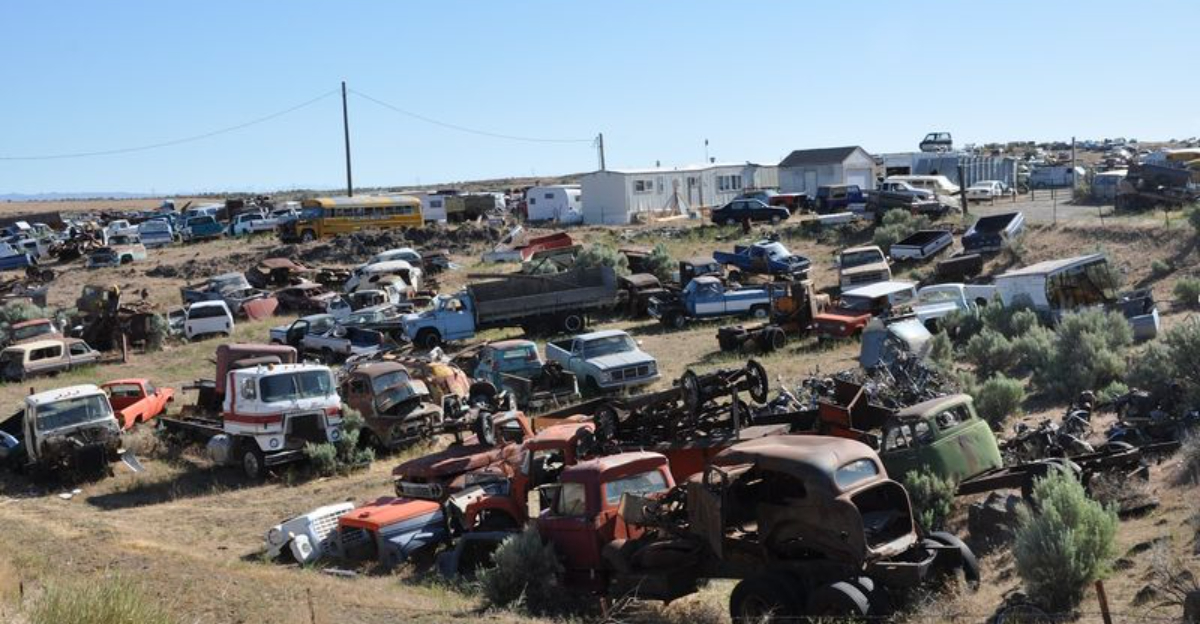
Rows of old steel can feel strangely alive when every hood, door, and faded curve seems to be holding onto a story.
For decades, this southern Idaho car graveyard felt like another world, the kind of place where time did not move so much as rust beautifully in place.
People came looking for parts, but many found something bigger than that.
A field full of forgotten vehicles can turn into a museum of dreams that never quite made it back to the road.
That is what makes the June 2026 fire feel so heavy. It did not just change a landscape.
It touched a place built from memory, patience, and the hope that something old might still be saved.
Even after the damage, the story deserves to be remembered.
This Wendell Yard Feels Like A Classic-Car Time Capsule
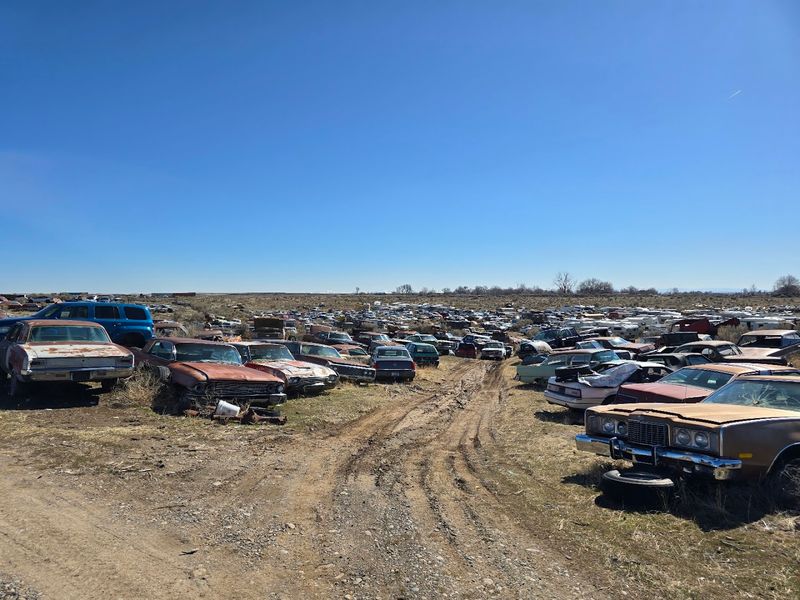
Rows of old cars can make time feel strangely visible, and L&L Classic Auto had that feeling in every direction. One fender looked like the 1940s.
One grille seemed ready for a 1950s postcard. A truck cab with sun-faded paint could say more about rural work life than a polished museum display ever would.
The yard grew from Larry Harms’s early body-shop business into a massive working salvage operation that served people hunting antique, classic, muscle, domestic, and import parts for decades.
Nothing about the place felt curated for a tidy visitor experience, and that was part of the appeal.
This was not a showroom with ropes, plaques, and perfect lighting. It was a living, weathered archive shaped by tow jobs, restoration dreams, hard-to-find requests, dry Idaho air, and the stubborn belief that old vehicles still had value.
Wendell may be a small community, but this yard gave it a giant presence in classic-car circles. People came because they knew the rows might hold something impossible to find elsewhere.
A trim piece, a shell, a badge, a bumper, or a project car could turn an ordinary day in the yard into the beginning of a years-long rebuild.
Thousands Of Old Cars Turn The Property Into A Maze
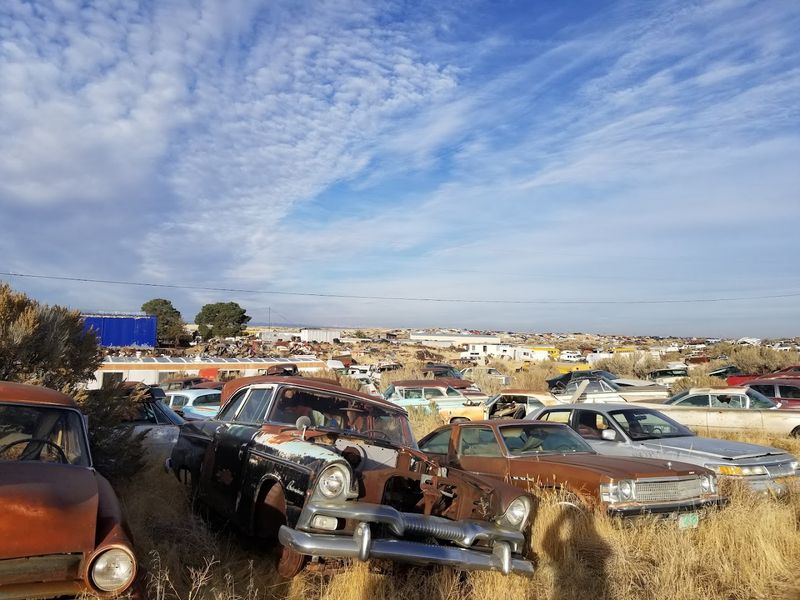
Scale was part of the legend long before anyone named a favorite model.
L&L Classic Auto was often described as spanning more than 120 acres and holding thousands of vehicles. Older accounts place the number around 7,000 to 8,000, while 2026 fire coverage reports about 10,000 cars before the blaze.
That kind of size changes the entire experience. You could not absorb it in one slow stroll, and nobody serious about old cars expected to.
The property felt more like a maze than a lot, with rows that seemed to keep unfolding and corners that suggested another decade of automotive history might be waiting just beyond sight. The terrain was not built for casual wandering in dress shoes, either.
A place like this asked visitors to pay attention, move carefully, and accept that the search was part of the reward. Someone might arrive looking for a specific fender and lose an hour studying a car they had not thought about in years.
Another person might come with no plan at all and end up mentally dragging home three different projects. The overwhelming size gave the yard its mythic quality.
It made every find feel earned and every row feel like a new chance.
The First Row Already Feels Like A Treasure Hunt
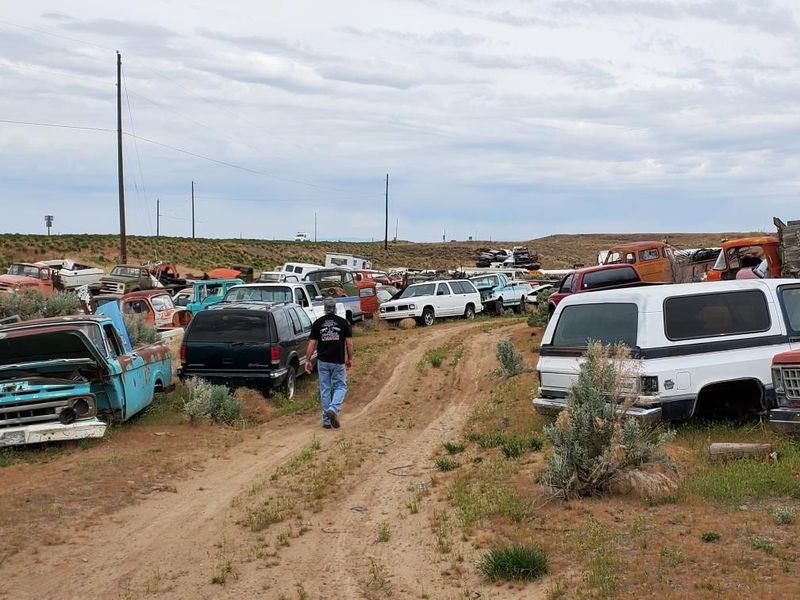
Discovery did not wait for the deep corners of the property. A first row at L&L Classic Auto could already start working on a visitor’s self-control, because old vehicles have a way of making people believe the next one might be the one.
A faded hood ornament, cracked steering wheel, sunbaked dashboard, half-hidden taillight, or chrome bumper catching the Idaho light could pull someone in before they had walked very far at all. That first-row thrill mattered because it set the tone for everything else.
This was never just about counting cars. It was about the possibility attached to each one.
Restorers looked for usable parts. Collectors searched for originality.
Photographers saw texture, color, decay, and time. Casual road trippers saw a field of machines that looked like they had been parked mid-story and left for the landscape to finish the chapter.
The business served a wide range of automotive interests, from classic domestic vehicles to imports and muscle-era pieces, so the first row could already feel unpredictable. One person might spot something practical.
Another might find something purely emotional. That is why the treasure-hunt feeling stuck.
L&L made people look closer, then closer again, because any ordinary-looking row could still be hiding the exact piece someone needed.
Project Cars Give Restorers Plenty To Dream About
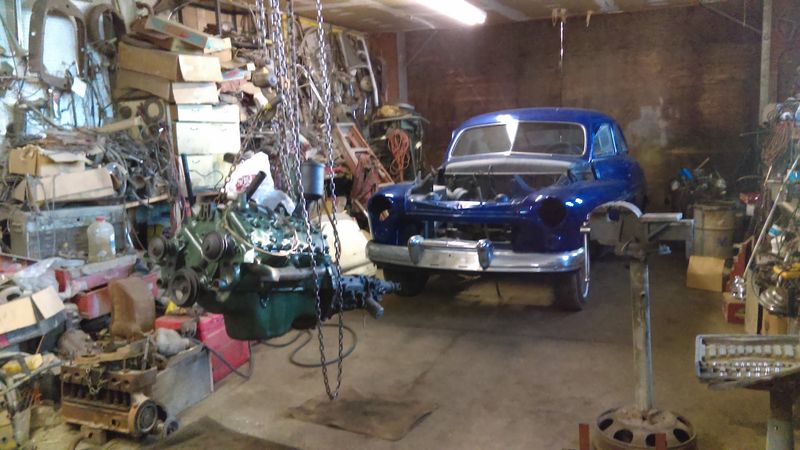
Restorers do not see a weathered shell the same way everyone else does. Where one person sees a car too far gone, another sees weekends in the garage, parts orders, late-night research, scraped knuckles, new wiring, bodywork, and the eventual thrill of hearing an engine run again.
L&L Classic Auto became especially compelling because it was not only a place for loose parts. It was also known for hundreds of project cars that gave serious builders a chance to start with a full vehicle rather than just a wish list.
That made the yard a destination for people who wanted more than a souvenir. Some came looking for a specific make and model.
Others arrived with an open mind and let the rows decide what kind of trouble they were about to get into. Idaho’s dry climate helped make those dreams more realistic, because old metal can survive differently in lower humidity than it does in wetter regions.
No outdoor salvage yard can stop time completely, of course, and not every car was a clean candidate. Still, less rust can mean more usable sheet metal, better structural hope, and fewer impossible repairs.
For classic-car people, that difference matters. L&L gave restorers something rare: space to dream with real metal in front of them.
Parts Warehouses Make The Search Even Bigger
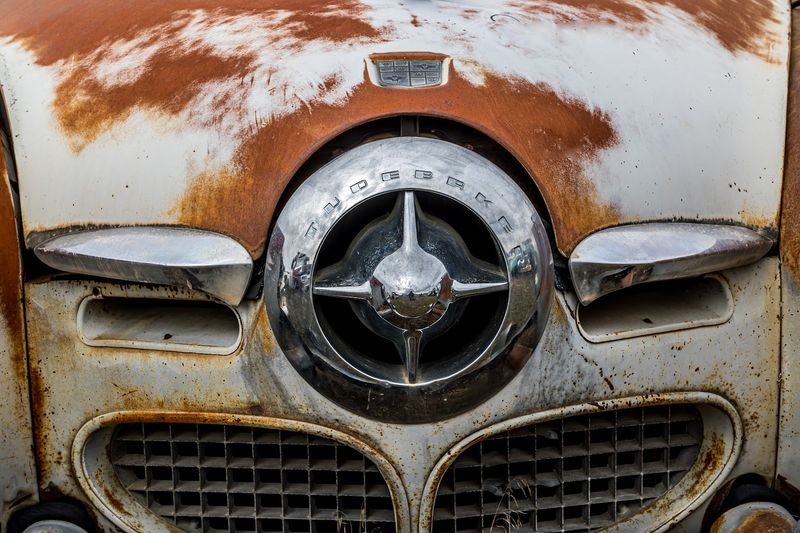
Open fields may have drawn the cameras, but the parts operation gave L&L Classic Auto much of its practical value. A salvage yard becomes truly important when it can help someone locate the piece that keeps a project moving, and L&L built decades of reputation around exactly that kind of search.
The business served people looking for hard-to-find parts for antique, classic, muscle, domestic, and import vehicles, which meant the hunt could continue beyond the rows of cars outside.
Storage buildings and warehouses added another layer to the experience, because some components had already been pulled, organized, or set aside for future buyers.
For restorers, that could be the difference between a stalled project and a car that finally made progress.
A trim strip, steering wheel, door, hood, radiator, taillight, bracket, or original factory part might seem small beside thousands of vehicles, but the right small part can carry enormous value to the person who needs it.
That is why places like this become more than businesses. They become networks of memory and usefulness.
People call, ask, compare, measure, wait, and hope. L&L’s warehouses represented decades of accumulated answers to questions restorers had not even asked yet.
You Never Know Which Decade Shows Up Next
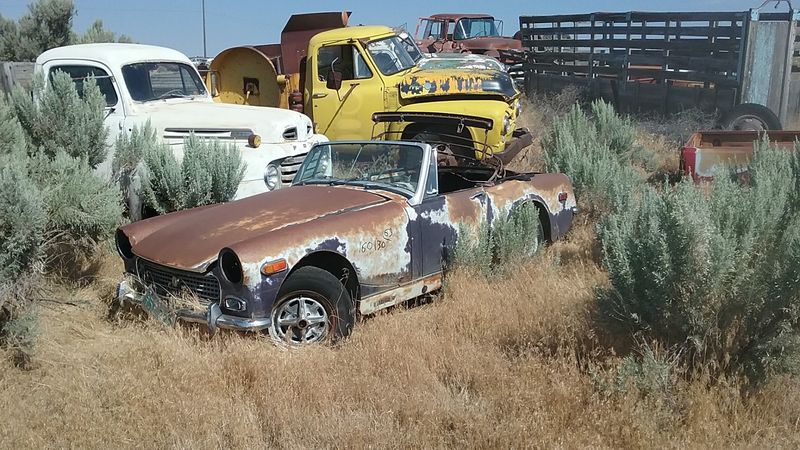
Part of what made walking through L&L Classic Auto so addictive was the sheer unpredictability of it all. Turn one corner and you might find a weathered coupe from the 1930s.
Take a few more steps and a wide-bodied muscle car from the early 1970s appears out of nowhere. The inventory spanned nearly every decade from the 1920s through the 1990s, and that range kept every visit feeling completely fresh.
Boats and tractors also found their way into the mix, adding yet another layer of surprise for visitors who came expecting only cars. The property at 2742 Highway 46 became a kind of accidental museum, one where the exhibits changed over time as vehicles arrived and parts were sold.
For automotive historians and enthusiasts alike, that variety was a genuine gift. Seeing so many different eras of design and engineering side by side offered a visual timeline of how American vehicles evolved over the better part of a century.
Very few places in Idaho, or anywhere in the country for that matter, could offer that kind of sweeping perspective in a single afternoon visit.
Dry Idaho Air Helps Preserve The Roadside Relics
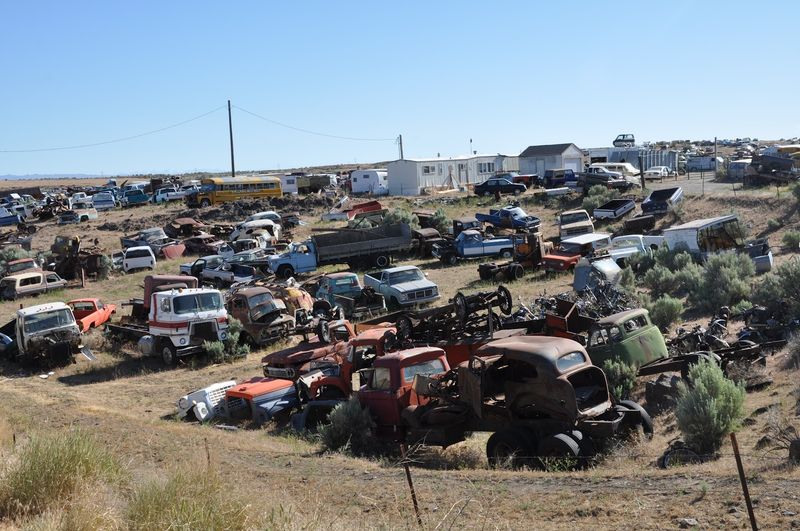
Climate quietly decides the fate of old vehicles, and southern Idaho gave L&L Classic Auto an advantage that wetter regions could not offer. In humid places, rust can turn promising project cars into heartbreak before anyone gets the chance to save them.
Around Wendell, the drier air helped old metal hold on longer, even when sun, age, missing parts, and exposure still left their marks. That distinction mattered deeply to collectors and restorers.
Sunbaked paint and cracked interiors are one kind of problem. A body dissolving from underneath is another problem entirely.
Idaho’s dry conditions made the yard more valuable because body panels, frames, trim, and structural pieces could sometimes remain more workable than similar vehicles sitting for decades in damp climates. That does not mean every car was clean or easy.
Salvage yards are never fairy tales with wheels. But the land itself helped preserve possibility, and possibility is what restorers chase.
A car that looked rough might still have usable doors. A pickup might still have a solid cab.
A forgotten sedan might hold original pieces someone had searched for across several states. The Magic Valley setting was not just background scenery.
It helped shape why this yard became famous and why people were willing to travel for it.
This Car Graveyard Turns Wendell Into A Gearhead Detour
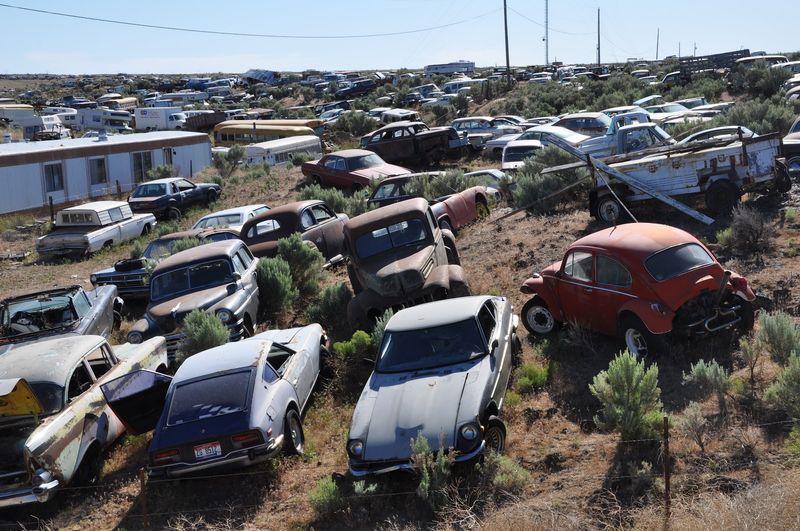
Wendell became more than a small Idaho stop because L&L Classic Auto gave gearheads a reason to leave the main route.
At 2742 S. Highway 46 in Wendell, the yard functioned as more than a business address for decades. It became a destination for restorers, collectors, photographers, filmmakers, parts hunters, and curious travelers drawn to one of the West’s most unusual automotive landscapes.
Then June 2026 brought a painful turn.
The Median Fire swept through the area and caused devastating damage to the property. It destroyed most of the vehicle inventory along with the office, records, storage buildings, utilities, and much of what had been built over more than 50 years.
Reports described thousands of vehicles lost, though the family has continued sorting through what remains and operating in a limited capacity where possible.
That chapter is heartbreaking, but it also shows why the place mattered so much. L&L Classic Auto was never just a “car graveyard” in the casual sense.
It was a lifelong collection, a family business, a preservation site, and a working resource for people trying to keep old machines from disappearing completely. Wendell may be a quiet dot on the map, but this yard made it unforgettable.