Most People Have No Idea This Charming Accordion Museum Exists In Connecticut
Okay, this one genuinely caught me off guard. A museum dedicated to one of the most underappreciated instruments in music history sounds like a dream.
Yet here it is, doing exactly that, in the most charming way possible.
The collection inside is genuinely remarkable. The passion behind it comes through in every exhibit, no question.
Music lovers lose themselves completely in here. Even people who never thought much about this instrument leave with a whole new appreciation for it.
Some visitors come in expecting a quick stop and end up staying far longer than planned.
Most people in Connecticut have no idea a museum this charming even exists. That’s one of the more surprising oversights around.
It sits quietly, doing its own thing, while the rest of the state rushes past without a second glance.
Getting here feels like stumbling onto something that was always there. It was just waiting for the right curious person to show up.
Once you find it, it’s hard to imagine not knowing about it.
1. Thousands Of Accordions From Around The World
Most museum visits do not begin with genuine disbelief but this one tends to produce exactly that reaction.
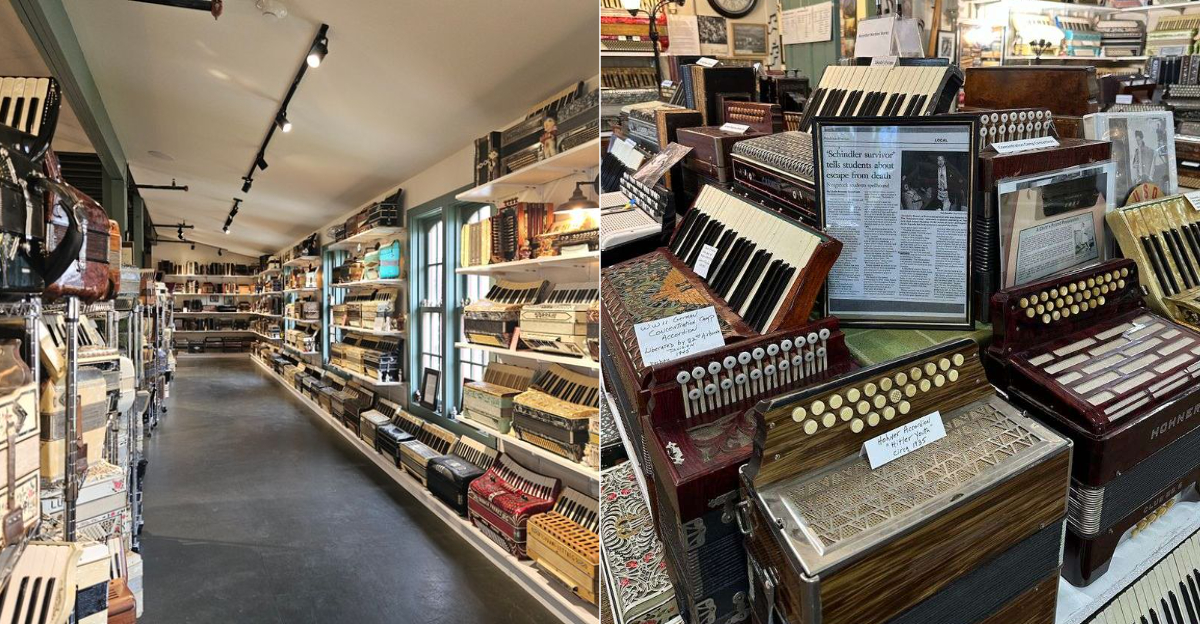
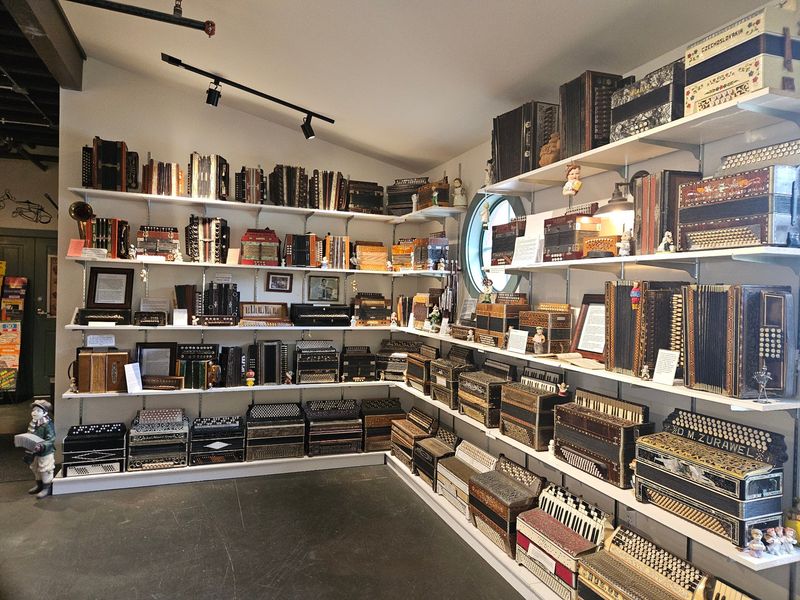
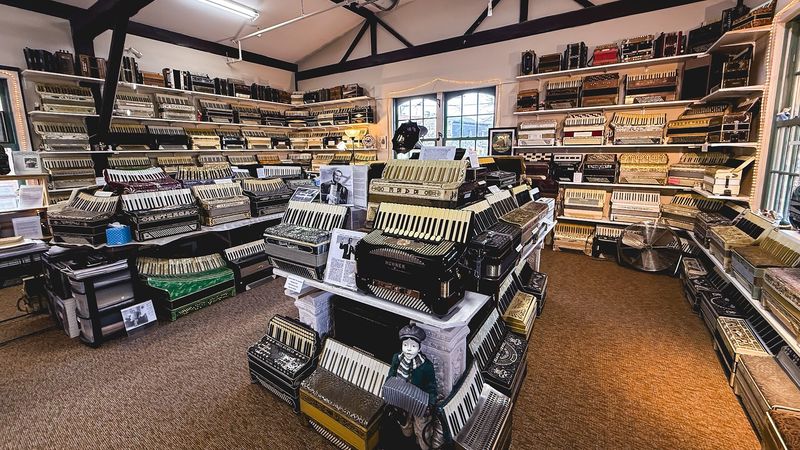
Over 500 accordions fill the display space and some accounts suggest the total collection could stretch well beyond 600 or even 700 instruments, making it a serious contender for one of the largest personal accordion collections anywhere in the world.
The variety is genuinely impressive. Piano accordions, button accordions and concertinas sourced from across multiple continents share the space alongside recognizable names like Giulietti, Bugari, Dino Baffetti, Hohner and Paolo Soprani.
Each represents a different era and regional tradition in accordion craftsmanship and the cumulative effect of seeing them all together is something that stays with visitors long after they leave.
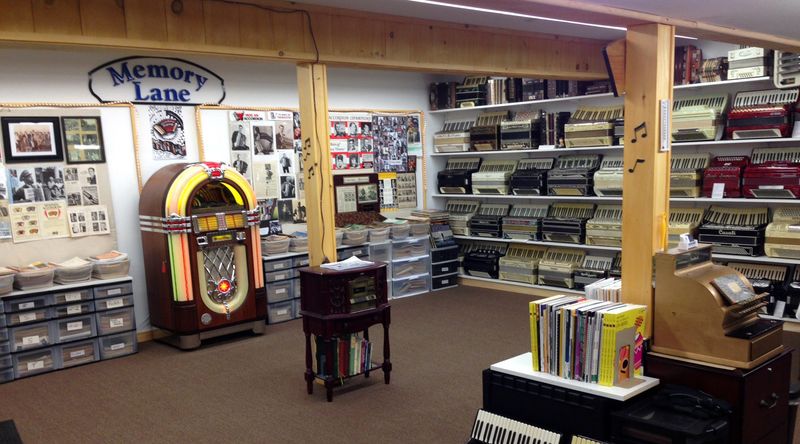
The collection goes considerably deeper than the instruments themselves. Thousands of pages of sheet music and instruction books document how accordion culture spread globally across generations, adding a historical layer that gives the whole visit genuine depth.
A Wurlitzer Jukebox loaded with accordion melodies brings an auditory dimension to everything on display, reinforcing just how versatile and widely beloved this instrument has been across so many different cultures and musical traditions throughout history.
2. The Story Behind A Rare Musical Collection
Every great collection has an origin story, and the one behind this museum is particularly compelling. The founder played the accordion enthusiastically during youth but set the instrument aside for more than four decades before a sudden, powerful urge to play again emerged in 2008.
That rekindled connection quickly grew into something far larger than a personal hobby.
A turning point came when the collection expanded to include concertinas reportedly linked to the Dachau concentration camp.
That acquisition shifted the entire mission of collecting away from simple accumulation and toward something more meaningful: preserving the deeply personal stories embedded within each instrument.
The museum first opened to the public in October 2011, operating from a garage on the founder’s home property. By July 2021, it had outgrown that space and relocated to the historic Canaan Railroad Station at 75 Main Street in North Canaan.
The station itself dates back to 1872 and survived a significant fire in 2001, making the building a historical landmark in its own right. That combination of musical heritage and architectural history gives the museum an atmosphere unlike any other small institution in New England.
3. Vintage Instruments With Unique Histories
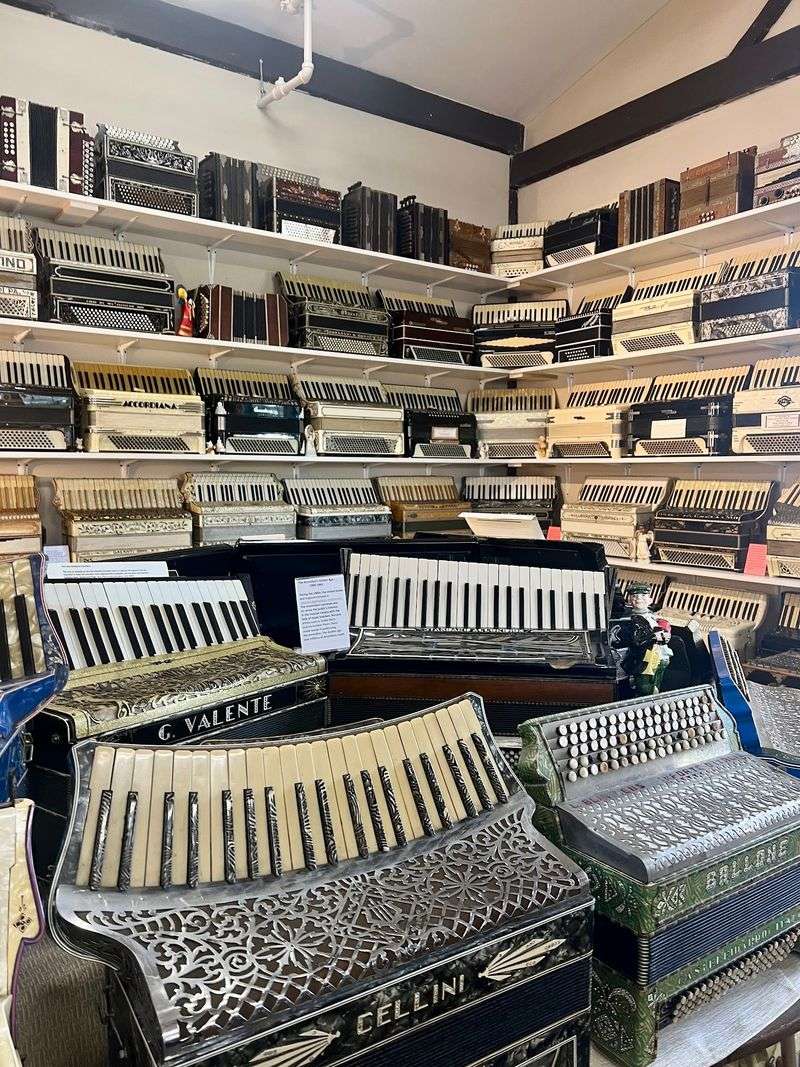
Some of the most fascinating pieces in the collection trace the accordion’s history back to its earliest known origins, with certain models believed to date to around 1820 or 1829.
Seeing instruments from that period alongside more contemporary examples creates a vivid timeline of how the accordion evolved in both form and function over nearly two centuries.
What makes these vintage pieces especially captivating is not just their age but the personal narratives attached to them.
Certain accordions were played to entertain troops during World War II, while others traveled across oceans with immigrant families who carried them as cherished connections to the homelands they left behind.
The decorative quality of many older instruments also surprises first-time visitors. Intricate mother-of-pearl inlays, sparkling rhinestones, and polished chrome accents transform these musical tools into objects that could easily be displayed as fine art.
Each detail reflects the era and culture in which the instrument was made, turning a simple walk through the exhibits into a surprisingly rich lesson in both music history and material culture that lingers long after the visit ends.
4. A Passion Project Built Around Accordion Culture
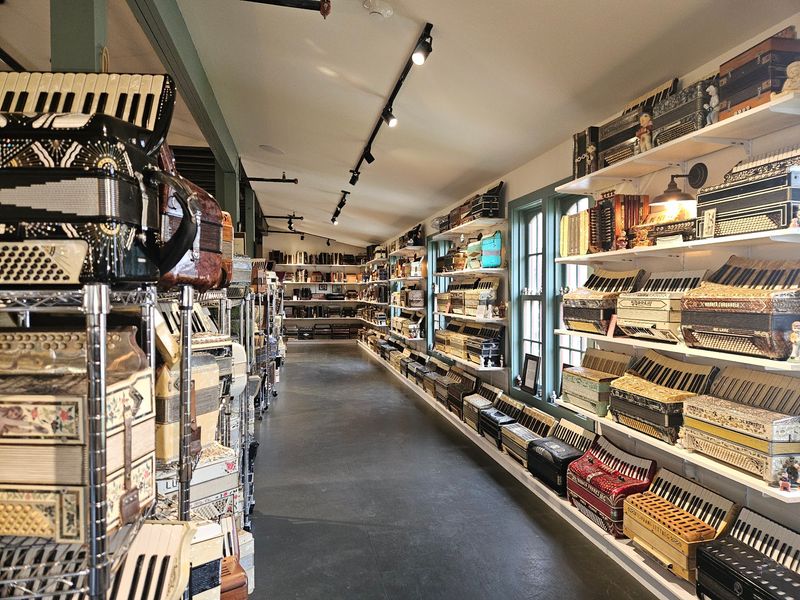
The energy here feels genuinely different from most museums and that distinction becomes clear almost immediately. Rather than keeping the collection behind barriers and velvet ropes, visitors are actively encouraged to touch and even play some of the instruments on display.
That hands-on philosophy transforms the whole experience into something that feels more like a community gathering spot than a formal institution.
The space is built around a belief that the accordion has a unique power to connect people across cultural and social lines.
Seasoned players and complete beginners both find something meaningful here, whether the draw is the history, the craftsmanship, or simple curiosity sparked by spotting the sign on the way past.
The museum also functions as a genuine hub for the broader accordion community across the region. Workshops, seminars and regular Saturday gatherings give enthusiasts a place to connect and share their passion for the instrument in an environment that actively welcomes them.
The founder’s commitment to keeping accordion culture accessible shows up in every corner of the space, from the open layout to the relaxed atmosphere that encourages visitors to linger, ask questions and explore entirely at their own pace without ever feeling rushed or out of place.
5. Hidden Details Inside The Museum Displays
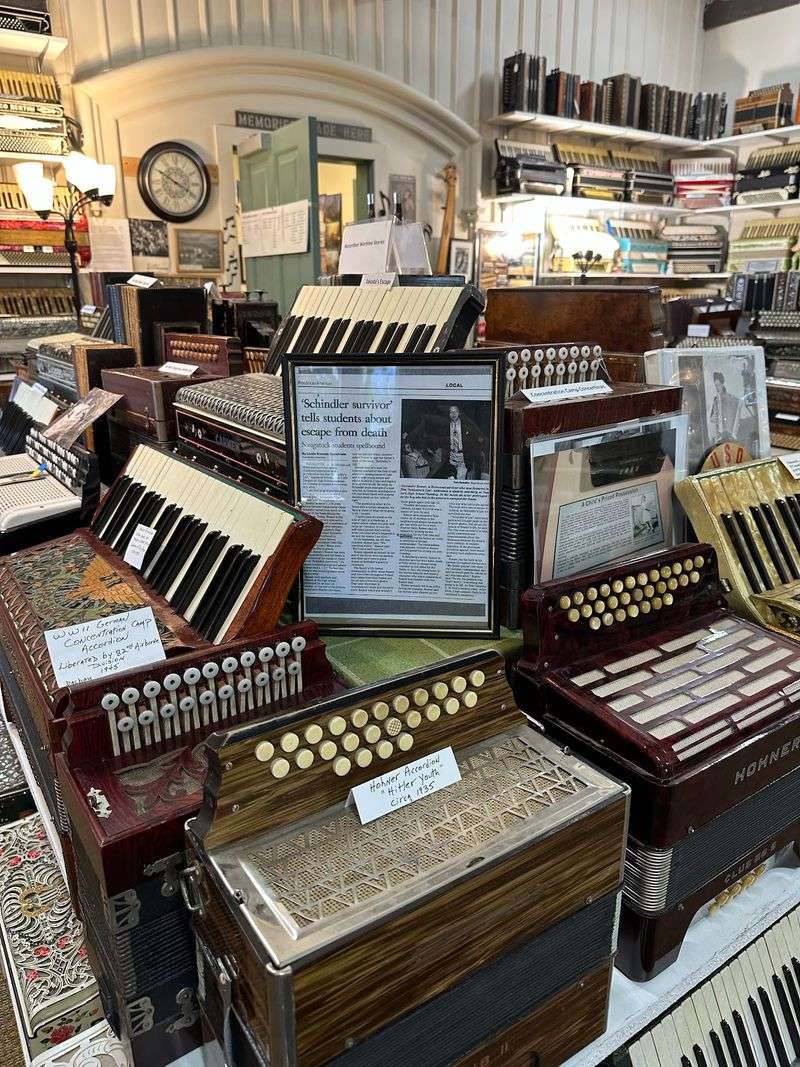
At first glance, the sheer volume of instruments creates an overwhelming visual impression, but slowing down reveals layers of detail that reward careful attention.
Accordions are arranged and stacked from floor to ceiling in a way that creates a dramatic wall-of-sound effect even before a single note is played.
The arrangement itself becomes a kind of installation that transforms the room into something almost gallery-like.
Looking closely at individual instruments uncovers an astonishing range of decorative choices. Gleaming buttons catch the light differently depending on the angle, while finely crafted piano keys show the subtle variations in ivory toning that come with age.
Mother-of-pearl inlays shimmer in ways that photographs rarely capture accurately.
The displays also incorporate historical context through articles and informational materials about the accordion industry, helping visitors understand what they are seeing beyond the surface-level visual appeal.
The historic Canaan Railroad Station building itself adds another hidden layer to the experience, with its 1872 architecture providing a backdrop that subtly reinforces the sense of deep time running through the collection.
Together, the instruments, the stories, and the building create a layered environment that offers something new on every visit.
6. The Craftsmanship Behind Each Accordion
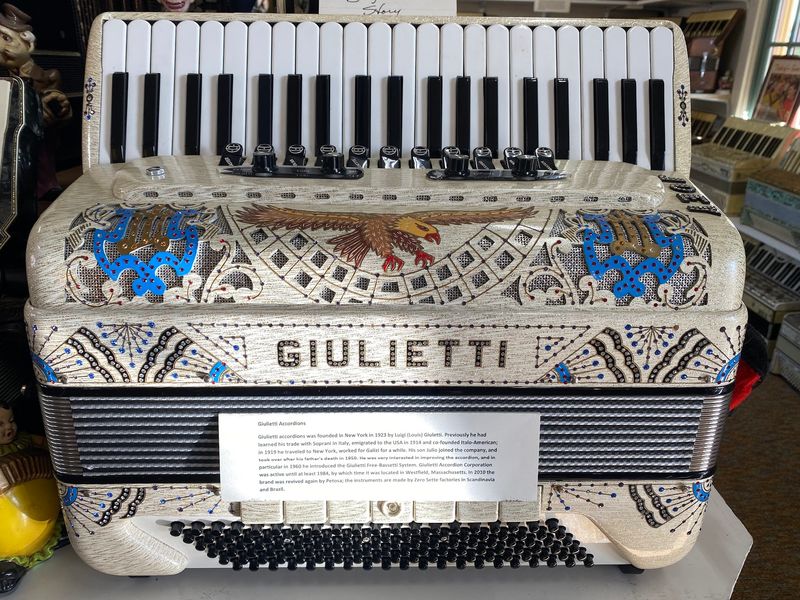
Standing in front of a handmade accordion and actually examining the construction changes how most people think about the instrument entirely.
Many of the older pieces in the collection were crafted without the assistance of modern machinery, with artisans shaping bellows by hand, tuning individual reeds and placing buttons with a precision that reflected years of dedicated practice and deep material knowledge.
The variety of construction materials across the collection tells its own story. Mother-of-pearl, various hardwoods and metals each contribute distinct acoustic properties alongside their visual appeal, meaning the decorative choices were rarely purely aesthetic.
Makers understood that material selection affected sound as much as appearance and that dual consideration is evident throughout the exhibits.
Restoration work forms a living part of what happens here on an ongoing basis. Antique accordions arriving in disrepair are carefully returned to playable condition, ensuring that instruments carrying decades or even a century of history do not fall permanently silent.
That commitment extends the life of pieces that might otherwise be lost entirely and reflects a genuine respect for the labor embedded in each one.
Honoring the makers feels just as important here as celebrating the music those makers helped shape across so many different generations and cultural traditions around the world.
7. Live Music And Special Gatherings

A museum that also hosts live music occupies a special category of cultural space, and this one earns that distinction consistently.
Regular Saturday gatherings bring players and listeners together for sessions that range from individual performances to group musical exchanges, giving the space a rhythm and social life that extends well beyond the exhibits on the walls.
Speaker seminars and educational workshops add another dimension to what the museum offers, helping visitors move from passive observation to active understanding of the accordion and its place in musical history.
Plans for a dedicated Community Music Room signal an intention to expand that participatory spirit even further, creating a space where multiple instruments can share the same room and the same moment.
The museum’s founder often plays during visits, offering informal mini-concerts accompanied by personal anecdotes and historical context that bring individual instruments to life in a way that static displays simply cannot achieve.
Hearing an accordion played inside a space filled with hundreds of them creates an acoustic experience that feels genuinely special.
Visitors who arrive expecting a quiet browse frequently find themselves staying far longer than planned, drawn in by the combination of live sound, shared stories, and the warmth of the setting.
8. Preserving A Forgotten Musical Tradition
Among all the things this museum does well, its core mission may be the most quietly important: keeping the accordion’s cultural presence alive at a time when the instrument has drifted to the margins of mainstream musical attention.
Actively seeking out old accordions and related memorabilia, the museum works to ensure that individual instruments and their histories do not simply disappear from the record.
Educational programming aimed at younger visitors reflects a long-term commitment to passing the tradition forward rather than simply archiving the past.
Children who encounter the accordion here for the first time often leave with a curiosity that was entirely absent when they arrived, which suggests the museum is achieving something real in terms of cultural transmission.
Located inside the historic Canaan Railroad Station at 75 Main Street in North Canaan, the museum is open Tuesday through Sunday from 9:00 AM to 4:00 PM and is closed on Mondays. Admission is free, though donations are welcomed and genuinely appreciated.
Calling ahead before visiting is recommended, especially for anyone traveling a considerable distance.
As one of only two dedicated accordion museums in the entire United States, this Connecticut institution holds a significance that extends well beyond its modest size and quiet location.