This Georgia Railroad Museum Lets Visitors Ride Historic Trains Through A Working Rail Yard
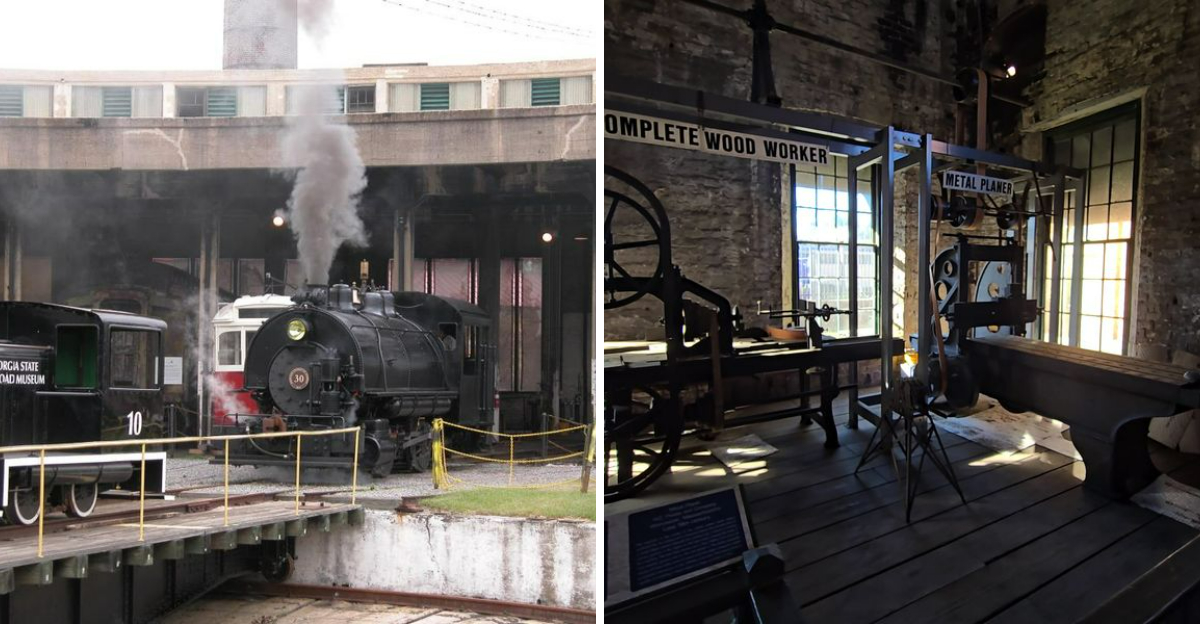
I heard the steam whistle before I saw anything else, a long, low sound that seemed to come from another decade. I followed it out of pure curiosity, expecting maybe a small display or a museum sign.
Instead I found an entire rail yard still working, tracks branching out in every direction, brick buildings older than most towns nearby. Someone waved me toward a platform and told me the next train would leave in ten minutes.
I did not ask questions, I just climbed aboard. Georgia hides more working history than people realize, and this yard proved it within minutes.
The engine groaned to life beneath me, and suddenly I understood why people come back again and again. Georgia turned an ordinary afternoon into something that felt like stepping through a crack in time.
A National Historic Landmark Worth Every Step
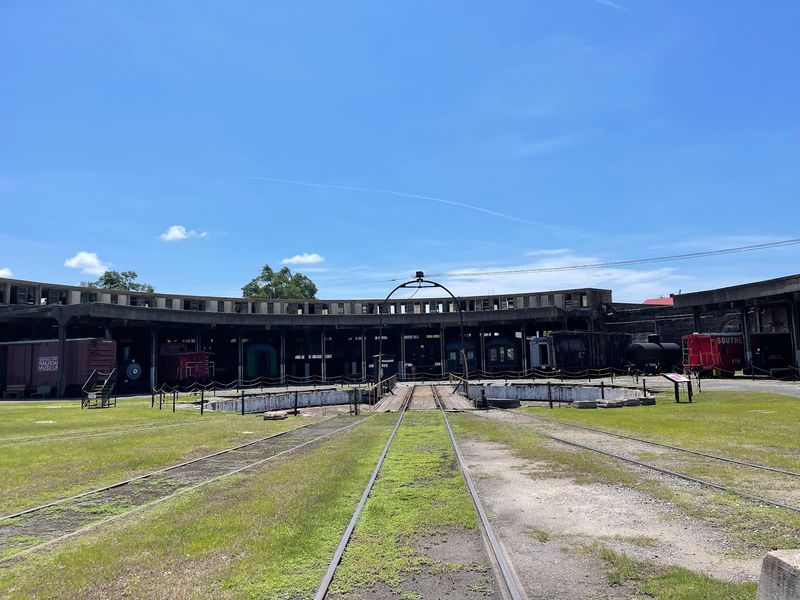
Few places in America carry the weight of history quite like this one. The Georgia State Railroad Museum, located at 655 Louisville Rd, Savannah, GA 31401, holds the distinction of being the largest and most complete antebellum railroad repair facility in the entire country.
That is not a small claim, and the grounds absolutely back it up.
Dating back to 1853, this complex once served as the Central of Georgia Railway’s main repair shop and terminal. The sheer scale of the operation is staggering when you walk through it.
Thirteen original structures still stand, most of them open for exploration.
The site earned its National Historic Landmark status for good reason. Every brick wall and rusted rail tells a story about industrial America in the years before it changed forever.
Visiting feels less like a museum trip and more like stepping onto a working site frozen in time.
Plan to spend at least two to three hours here. There is genuinely that much to see.
The combination of preserved buildings, rolling stock, and active demonstrations makes this one of the most layered historic attractions in the entire Southeast.
Riding A Real Steam Locomotive Through The Grounds
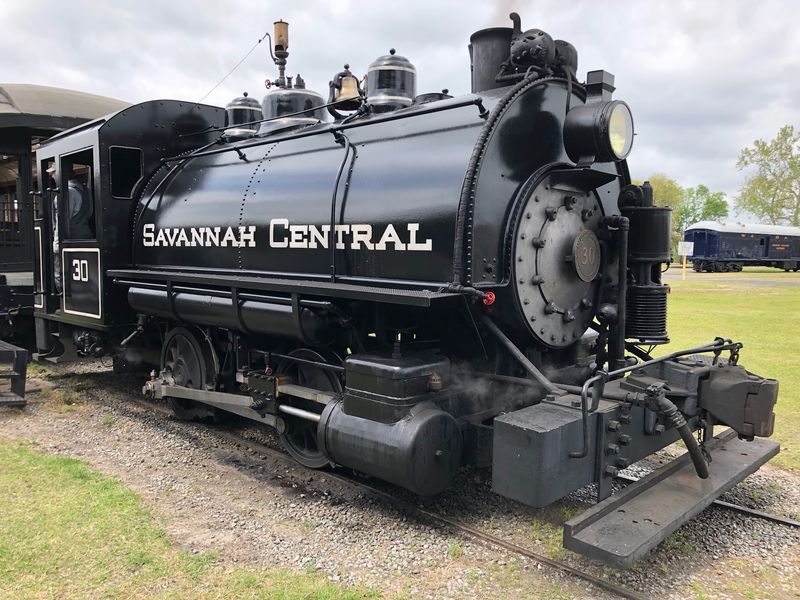
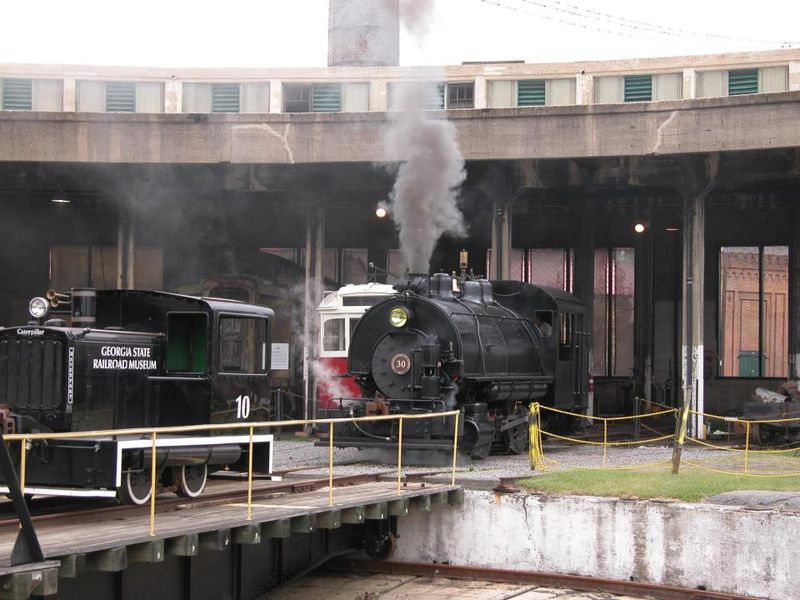
Climbing aboard a train built in 1913 is a very different experience from boarding a modern commuter rail. The Georgia Power Locomotive 30 is one of the operational steam engines here, and it actually moves, pulls passengers, and breathes real steam.
That moment when the engine lurches forward is genuinely exciting.
The open-air passenger car was built on-site, modeled after historic Central of Georgia coaches. Docents ride along and provide historical context as the train rolls through the museum grounds.
You are not just sitting quietly. You are learning while the landscape shifts around you.
A 1947 diesel locomotive is also available on some days, offering a slightly different but equally memorable ride. One train ride is included with your general admission ticket, which makes the value here hard to beat.
Kids absolutely love the experience, but adults tend to be just as captivated.
The museum is open daily from 9 AM to 4 PM, except on certain holidays. Train rides are typically offered daily, subject to weather, staffing, and equipment availability, so it is always a good idea to check the schedule before visiting.
Arriving in the morning is especially smart during warmer months since most of the experience is outdoors.
The 85-Foot Turntable That Still Actually Spins
Most museum pieces sit still and collect dust. This one spins.
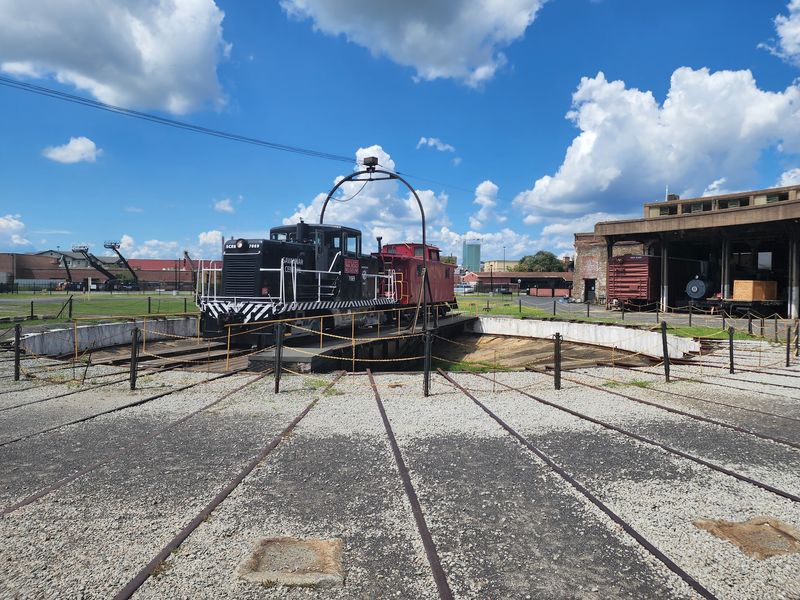
The fully operational 85-foot turntable at this attraction is one of the most jaw-dropping working relics you will find anywhere in the country. Watching a full-size locomotive rotate on it is something your brain needs a moment to process.
The turntable was originally used to redirect engines into different bays of the roundhouse for maintenance and repairs. Back in the 1800s, this was cutting-edge industrial engineering.
Today, it still functions exactly as intended, which is remarkable given its age.
Passengers are loaded near the gift shop before a train ride, and then the locomotive is turned on this very turntable. That moment of rotation, with the engine balanced perfectly on the platform, draws gasps from first-time visitors every single time.
It is the kind of thing you did not know you needed to see until you are standing right there.
The museum was originally called the Roundhouse Railroad Museum, named after this very feature. The partial roundhouse surrounding the turntable still stands with its original brick construction.
Few places in the world preserve this kind of living mechanical history so completely.
Thirteen Original Buildings From The 1850s
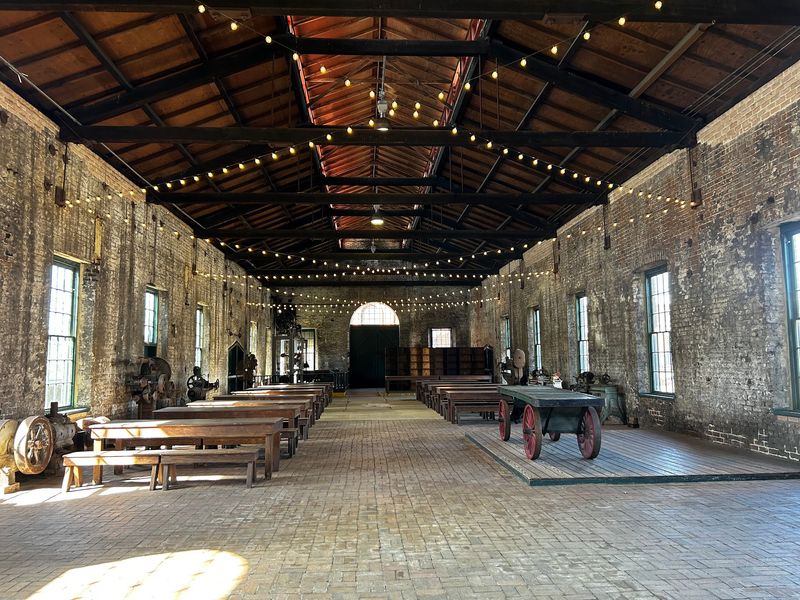
Walking through a complex where every building dates back to the 1850s is a genuinely surreal feeling. These are not reconstructions or replicas.
The thirteen original structures here include the machine shop, Tender Frame Shop, Blacksmith Shop, Boiler House, Storehouse, Print Shop, Lumber and Planing Sheds, and Coach and Paint Shops. Each one has a story.
Many of these spaces are open for visitors to walk through, which makes the experience feel remarkably hands-on. Old machinery still sits in some of the shops, exactly where workers left it generations ago.
The floors in some buildings are made of wood blocks, which is a detail that catches almost everyone off guard.
The Paint Shop, constructed around 1923, was used for general rolling stock maintenance and has undergone careful restoration. Seeing the layers of history in each building, from construction methods to materials, gives a real sense of how this facility evolved over decades.
The Carpentry Shop now serves as the Savannah Children’s Museum, which sits right next door. Families with younger kids can easily split time between both attractions.
Your admission ticket is valid for three days, so there is plenty of time to explore everything without rushing.
The 125-Foot Smokestack You Cannot Miss
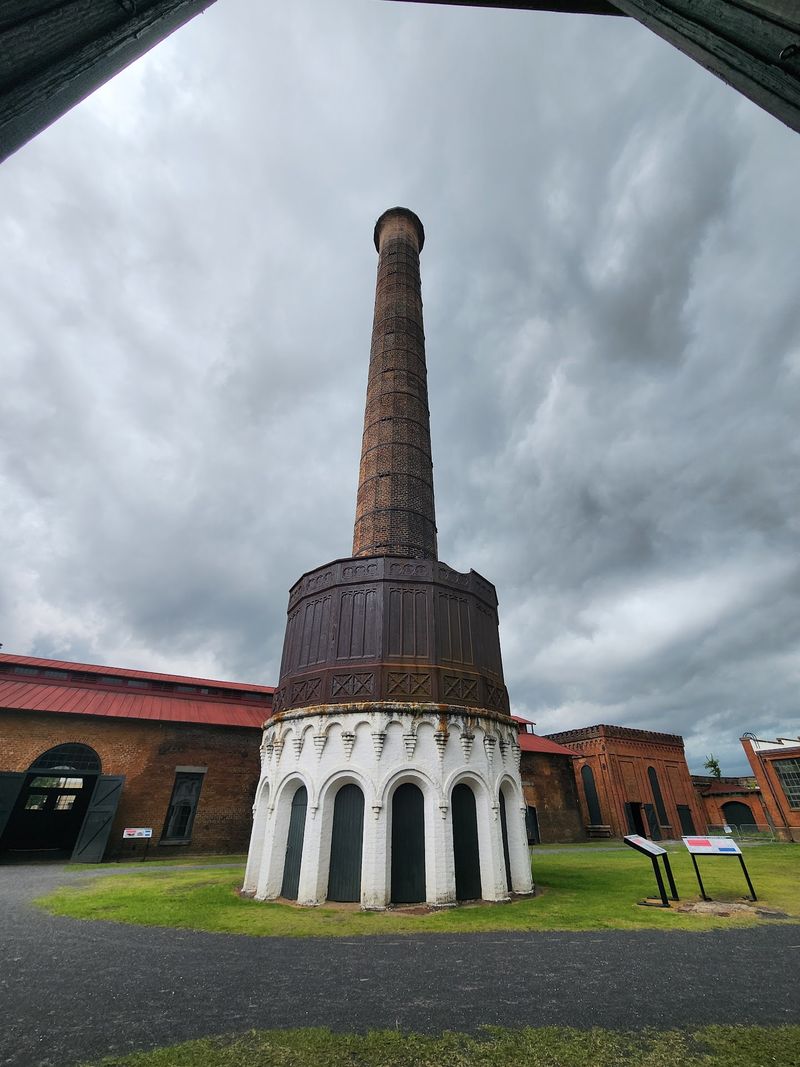
You will see it before you see anything else. The 125-foot brick smokestack dominates the skyline of the complex, rising above every roofline and tree with quiet authority.
It served as the exhaust system for the various shops operating below it, pulling heat and fumes away from the workers inside.
What makes it even more interesting is the ring of privies built around its base. That is an unusual detail that most visitors do not expect, and it sparks a lot of curiosity.
The smokestack and its surrounding structures represent a very practical approach to industrial design from the mid-1800s.
Standing at the base and looking up gives you a real sense of the scale of this operation. The craftsmanship involved in constructing a freestanding brick tower of that height, without modern tools, is genuinely impressive.
It has stood for over 170 years and shows no signs of going anywhere.
The smokestack is one of the most photographed features at this spot, and for good reason. It appears in nearly every wide shot of the complex.
Hobbyist photographers especially love capturing it in black and white, which brings out the texture of the aged brick beautifully.
Historic Locomotives Up Close And Personal
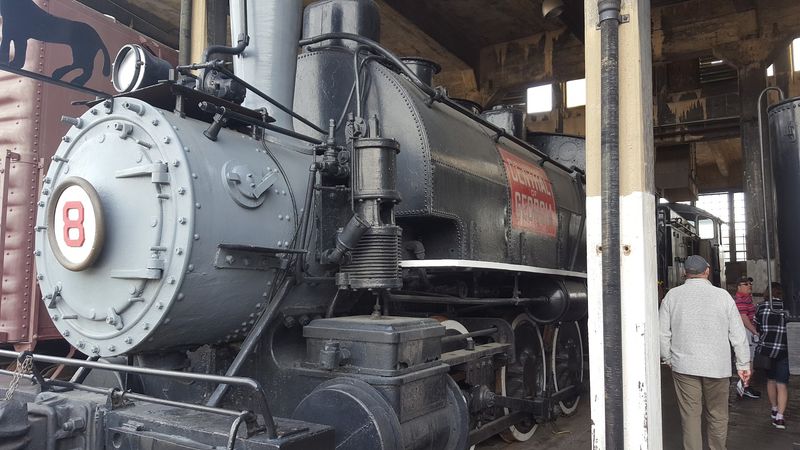
There is something about standing next to a full-size locomotive from 1886 that reframes your sense of scale entirely. Central of Georgia No. 8, nicknamed Maude, is one of the oldest engines in the collection and a remarkable piece of surviving machinery.
Seeing her up close is a highlight that serious rail fans absolutely will not want to skip.
Central of Georgia No. 223, built in 1907, is also on display alongside Central of Georgia No. 1 from 1939, which was the first diesel-electric locomotive ever owned by the Central of Georgia Railway. That progression from steam to diesel, represented by real engines side by side, tells the story of an entire technological era.
General Electric 44-ton switchers are also part of the collection, along with luxury passenger cars and hand-powered maintenance vehicles. Visitors can walk through and even climb into the cabs of some locomotives, which adds a tactile dimension that photos simply cannot replicate.
The collection is diverse enough to satisfy both casual visitors and dedicated enthusiasts. Each engine has its own character, history, and presence.
Spending time with each one, rather than rushing past, reveals details that make the visit feel genuinely personal and memorable.
Operating A Handcar Like A Railroad Worker
Pushing a handcar down a track is harder than it looks in old movies. That is the first thing you realize when you actually get on one.
This interactive experience lets visitors physically operate a working handcar, which is one of the most memorable hands-on moments the attraction offers.
Handcars were essential tools for railroad maintenance crews throughout the 1800s and early 1900s. Workers used them to travel quickly along tracks to inspect or repair sections of rail.
Operating one, even briefly, gives a real appreciation for the physical demands of that kind of labor.
The handcar activity is available during guided tours, so joining one of those is strongly recommended. Guided tours are led by historical interpreters and are included in the cost of admission.
They also unlock access to the interiors of executive rail cars and steam engine demonstrations.
This place genuinely rewards those who engage with it fully. Self-guided tours are an option, but the guided experience adds layers of context that transform what you are looking at.
The interpreters here know their material deeply, and their enthusiasm for the history is infectious and easy to get caught up in.
Exhibits Covering Railroad History And Social Context
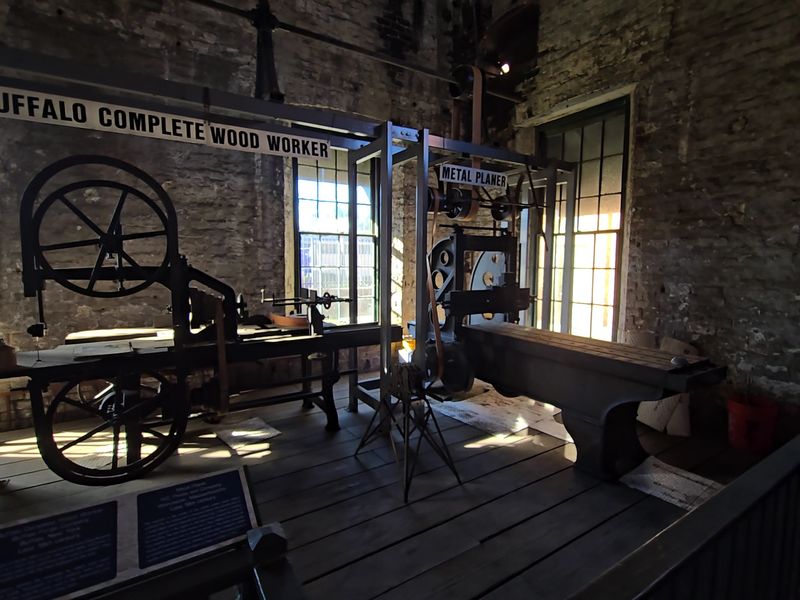
Railroad history is not just about machines. The exhibits here make that point clearly and thoughtfully.
Alongside displays of rolling stock and machinery, the museum includes educational content covering industrial slavery and segregation, two topics that are central to understanding how this facility actually operated in the 1800s.
That kind of honest, layered storytelling elevates the experience beyond a simple equipment showcase. You come away understanding not just how trains were built and repaired, but who built and repaired them, and under what conditions.
That context makes the visit more meaningful and harder to forget.
A boxcar on the grounds has been converted into a small screening room where visitors can watch short documentary videos. The videos add another dimension to the exhibits and work well for those who prefer a more structured learning format.
It is a quieter spot to pause and absorb what you have been seeing.
Informative display boards are positioned throughout the complex, offering bite-sized history at every turn. Even without a guided tour, the signage does a solid job of orienting visitors and providing context.
Girl Scout groups in particular have found the educational programming here especially relevant to their badge work and broader learning goals.
Active Preservation Work Happening Right Now
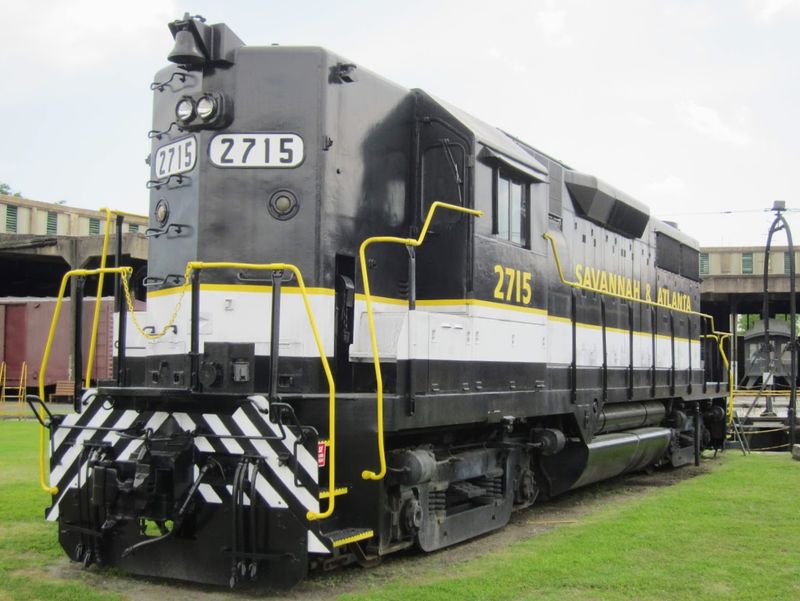
This is not a place where everything is finished and sealed behind glass. Active restoration work is ongoing throughout the complex, and that energy makes the whole place feel alive.
Staff and volunteers are regularly working to preserve historic buildings, railcars, and machinery for future generations to experience.
The Coastal Heritage Society manages the complex and oversees the meticulous restoration efforts. Their commitment goes well beyond basic upkeep.
Each project involves careful research to ensure that restoration work stays true to the original construction methods and materials. That level of dedication shows in every detail.
Watching a restoration project in progress adds an unexpected layer to the visit. You are not just seeing history.
You are watching people actively fight to keep it intact. That combination of past and present creates a sense of purpose that most museums simply do not have.
The museum participates in the Museums for All program, which provides free admission to families receiving public benefits including WIC cards. A family membership through the Coastal Heritage Society covers access to six different Savannah sites.
For anyone planning multiple visits or traveling with kids, that membership pays for itself quickly and comfortably.