8 North Carolina Beaches Where You Can Hunt For Ancient Fossils In The Sand
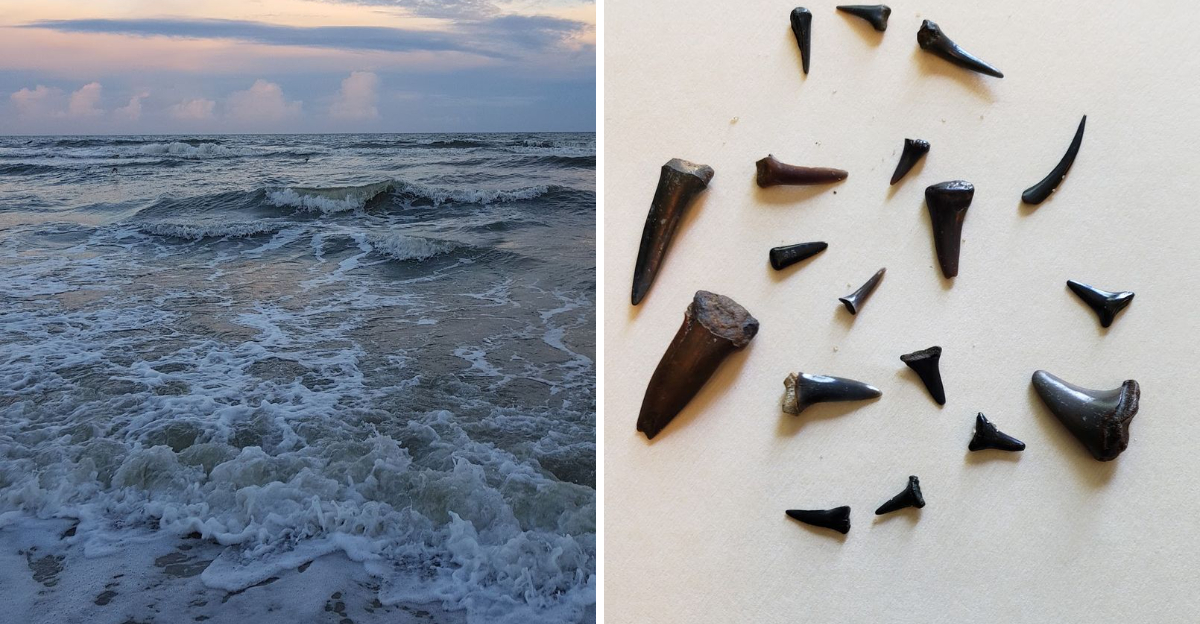
I nearly walked right past it.
A tiny dark triangle was sitting in the sand like it had been waiting there for a few million years just to ruin the rest of my beach walk.
The second I picked it up, everything changed.
Suddenly I was not looking at shells anymore. I was scanning every patch of wet sand like the next megalodon tooth might be hiding two feet away.
That is the joy of fossil hunting along the North Carolina coast.
One good find turns a casual walk into a full-blown obsession. The waves roll in and rearrange the evidence, which means every few minutes can feel like a fresh chance.
And when another glossy tooth finally appears? Ridiculous excitement.
You hold something smaller than your thumb and somehow feel like you just discovered buried treasure.
By the end of the day, my pockets would probably be sandy and my neck sore from staring down. Completely worth it.
8. North Topsail Beach
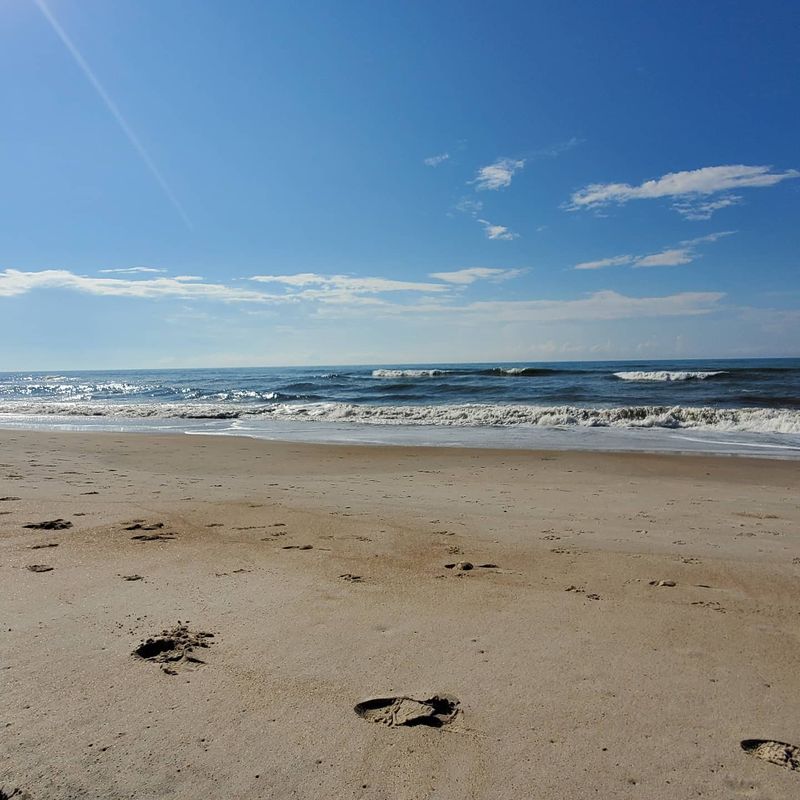
Quiet sand, a wide shoreline, and shell piles that seem to rearrange themselves overnight make this the top starting point for fossil hunters. The Town of North Topsail Beach runs its offices at 2008 Loggerhead Court, North Topsail Beach, NC 28460, close to the northern end of Topsail Island.
Fossilized shark teeth turn up here often, and megalodon finds have been documented along this shore.
Most teeth are small, often under half an inch, and show up as dark gray, black, or brown slivers among broken shells. Sunlight helps: crouch low and watch for a glossy triangle with a smooth, glassy shine that ordinary shell fragments never have.
A cheap plastic sifter from a beach shop speeds things up on crowded days.
The area near New River Inlet is worth a slow walk, since moving water sorts heavy material into narrow bands. Go out at low tide, bring a small mesh scoop, and rinse handfuls of shell grit in the shallows.
Patience matters more than speed, and the reward can be a tooth older than the sand it rests in.
Do not ignore the rough bands of broken shells left behind by the retreating tide. Topsail Island is well known for beachcombing finds that include shark teeth and other fossils, so those messy-looking stretches deserve extra attention.
Keep your eyes moving slowly instead of covering as much beach as possible. Once you recognize the dark shape and enamel-like surface, spotting the next tooth becomes surprisingly addictive.
7. Surf City Beach
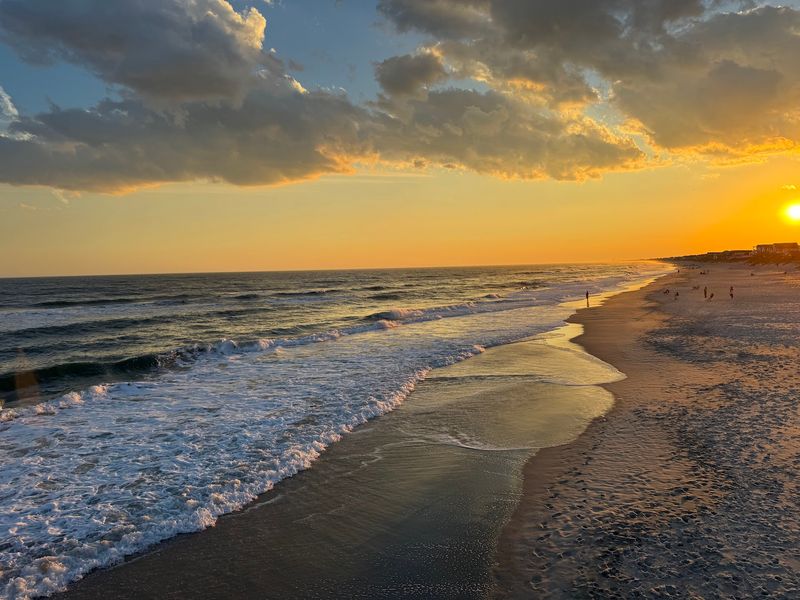
Shifting currents do the digging for you along the middle of Topsail Island. After a night of choppy surf, fresh gravel beds appear near the Surf City Pier, and fossilized megalodon teeth have washed ashore on this stretch.
Town offices sit at 214 W. Florence Way, NC 28445, a short drive from the main beach accesses.
Families tend to like this section because the walk from parking to water is short and the sand stays fairly firm. Kids often spot the tiniest teeth first, simply because their eyes are closer to the ground.
Public accesses along the island have showers and boardwalks, which helps when you are hauling buckets of shell grit back to the car.
Shell hash, that crunchy mix of broken shell and coarse sand, is the layer to study. Kneel beside it, brush the top away with your fingers, and look for edges that are serrated rather than chipped.
Early morning works best, before footprints scramble the wrack line and before the sun sits directly overhead.
Bring a small jar for the day’s finds.
6. Topsail Beach
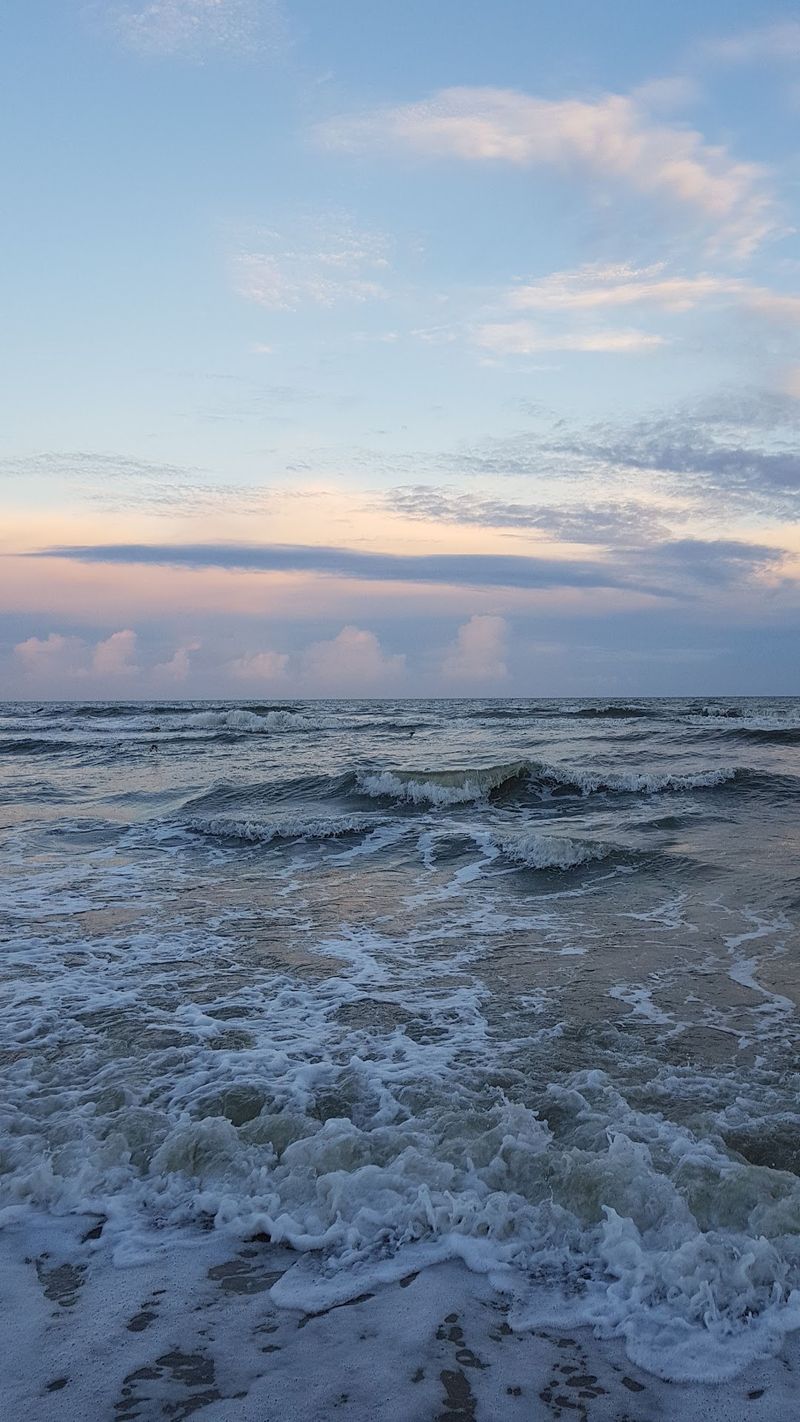
Generations of families have combed this quiet southern town for shark teeth, and the habit shows in the slow, head-down pace of walkers along the tide line. Prehistoric tooth discoveries here are well documented, part of a beachcombing tradition that stretches back decades.
Retro cottages, a fishing pier, and low-rise streets keep the mood unhurried.
The southern end, where the inlet meets Topsail Sound, gathers shells in thick ridges. Sound-side flats hold small teeth too, along with scallop and cockle shells worn smooth.
Town hall stands at 820 S. Anderson Blvd., Topsail Beach, NC 28445, near the island’s quieter residential blocks.
Rinse your finds in a bucket of seawater at the end of the day, since dried salt hides the shine that separates fossil enamel from shell. Store teeth in a small tin with tissue between layers so the tips do not snap.
A rainy afternoon is a fine time to visit, when fewer people are out and the shell beds sit undisturbed.
Pack water and sunscreen, because shade is scarce on the open sand and searching takes longer than you expect.
5. Wrightsville Beach
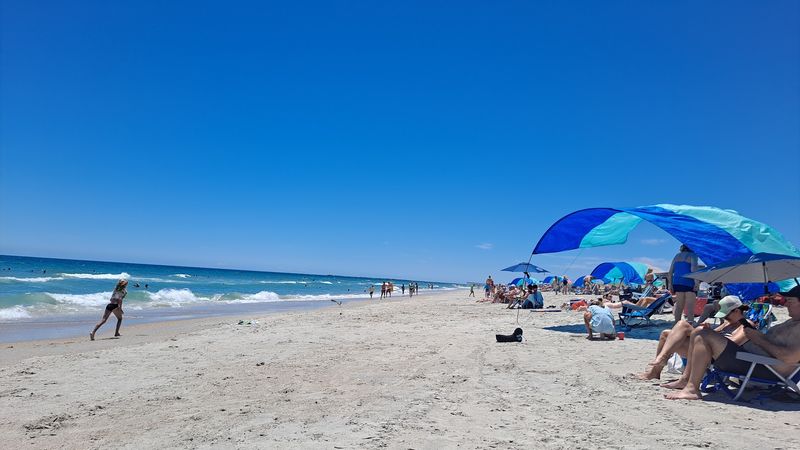
Low tide changes everything on this barrier island. The town keeps its offices at 321 Causeway Drive, Wrightsville Beach, NC 28480, a few minutes from the public accesses that line Lumina Avenue.
As water pulls back, shell beds emerge in long curving lines, and dark, glossy teeth sometimes sit right on top.
Offshore ledges along this part of North Carolina are considered a fossil hotspot, with divers recovering megalodon teeth from deeper water. From the sand, though, the hunt is simpler: follow the waterline and study anything that looks too shiny to be shell.
Days after a storm are often the most rewarding, since heavy surf tears open older layers of sediment. Sunglasses with polarized lenses cut glare on wet sand and make dark objects easier to pick out.
Between searches, the loop path around Harbor Island offers a stretch for tired legs.
Parking here fills early in summer, so an arrival before eight in the morning saves time and gives you first look at the fresh tide line. Coffee shops near the drawbridge open early enough for a quick stop.
4. Carolina Beach
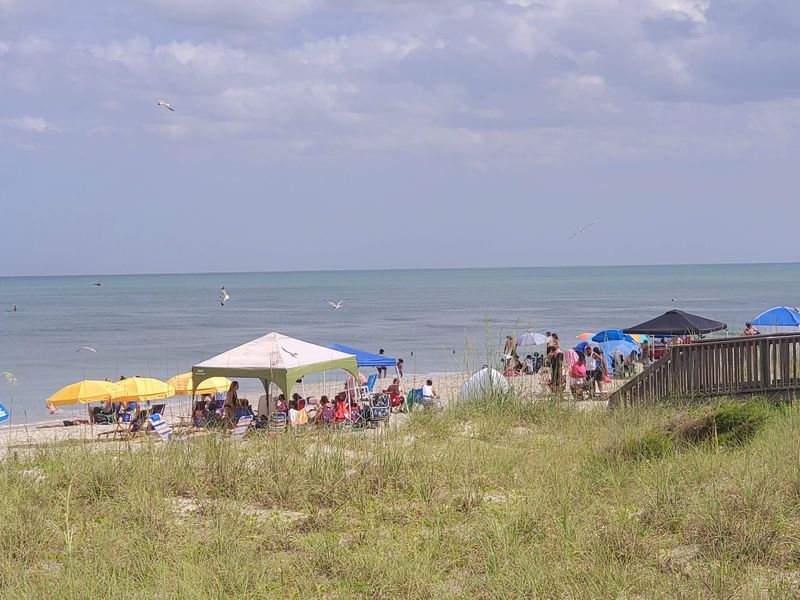
Carnival lights, the smell of doughnuts, and the rattle of an arcade sit just steps from a shoreline that quietly holds fossils. Rough surf pushes small teeth and fragments into the wrack line, that ribbon of seaweed and shell where debris collects.
Town hall is at 1121 N Lake Park Blvd, Carolina Beach, NC 28428, minutes from the boardwalk on Carolina Beach Ave S.
The sand near the pier tends to gather heavier material, and patient searching often turns up tiny teeth, including fragments from sand tiger sharks. Nothing here is museum-sized, but the volume of small finds keeps the search interesting.
Plan a loop: search at first light, then reward yourself with breakfast along the boardwalk once the shops open. As one of the liveliest beach towns in North Carolina, it pairs fossil hunting with Ferris wheels and fireworks nights in summer.
Bring quarters and cash, since some boardwalk spots do not take cards.
Parking is metered along much of the beachfront, so check posted rates and hours at the kiosk before settling in for a long, slow morning hunt.
3. Kure Beach
Fewer umbrellas, fewer footprints, and a softer surf make searching here feel almost meditative. The wash zone, where thin sheets of water slide back and forth, is the place to focus.
Wet sand shows dark objects clearly, and fossil teeth often glint for a second before the next wave covers them.
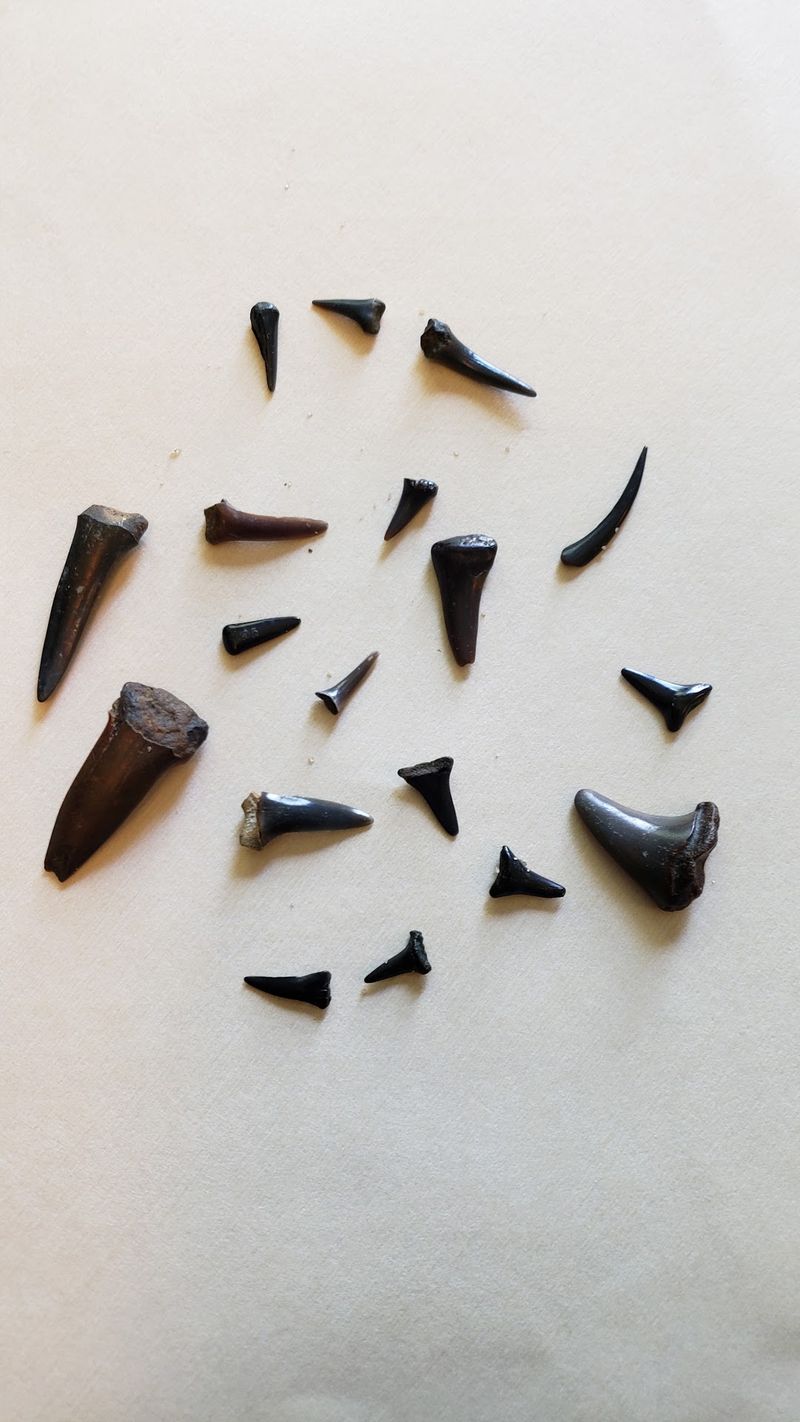
Walking south from the pier, the crowd thins quickly. Small teeth show up in the shell lines, sometimes with worn ray plates or pieces of ancient bone mixed in.
Nothing about the process is complicated: walk slowly, look about six feet ahead, then scan back at your feet.
Sunrise over the Atlantic here is worth the early alarm, and the light at that hour is angled just right for spotting shine. Later in the day, families spread out near the pier while the far ends stay quiet.
Keep a mesh bag clipped to your belt loop so both hands stay free.
More fossil ground waits just to the south, which makes this town a practical base for a full day of hunting along the lower Cape Fear coast.
The trick is to spend extra time where broken shells collect instead of wandering across clean stretches of sand. Fossil-hunting guides for the North Carolina coast recommend checking shell-heavy areas near the surf and searching around low tide, when receding water exposes more material.
Dark, shiny triangular shapes deserve a second look, particularly when they stand out against pale shell fragments. Small fossil shark teeth are much more realistic finds than giant specimens, so do not dismiss something simply because it looks tiny.
Recent beachgoers continue to report shark-tooth finds at Kure Beach, although every tide produces different results.
Give yourself plenty of time, because this is the sort of hunt where slowing down usually works better than covering more shoreline.
2. Fort Fisher State Recreation Area
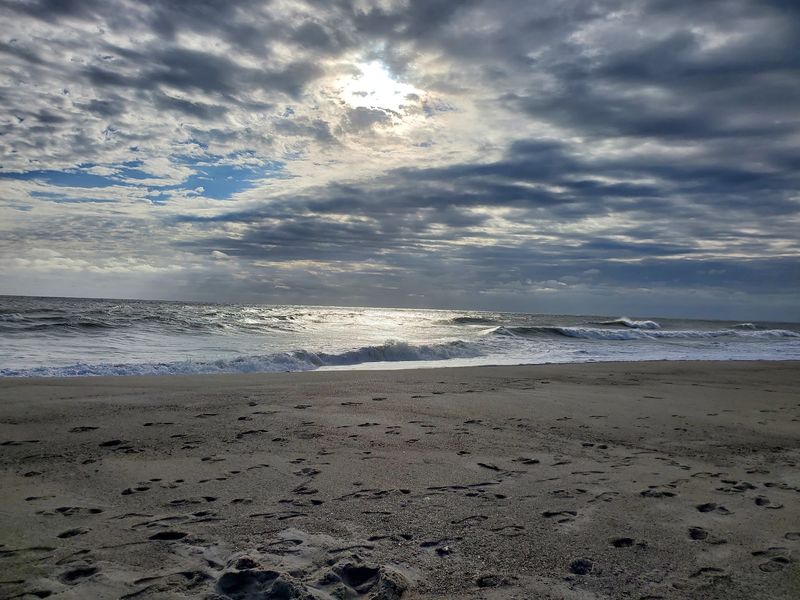
Six miles of undeveloped shoreline stretch south of the developed beach towns, and the difference is obvious the moment you step onto the sand. The recreation area sits at 1000 Loggerhead Road, Kure Beach, NC 28449, with a visitor center near the entrance.
Sea oats, dunes, and driftwood replace hotels.
Tides here regularly uncover fresh shell beds, which is exactly what a fossil hunter wants. Because the area sits in the same fossil-rich Cape Fear coastal zone as its neighbors, dark teeth and worn shell fragments can appear in the wash after a strong tide.
Primitive trails wind behind the dunes, and the marsh edges draw herons, egrets, and shorebirds through much of the year. Binoculars earn their space in the bag.
Check park rules on collecting before you fill a bucket, since regulations differ inside protected areas.
Wear closed shoes for the walk, because the beach path crosses coarse shell and hot sand in summer. Water, a hat, and a snack matter more here than at the busier beaches, since shops are not within easy reach of the shoreline.
1. Shark Tooth Island
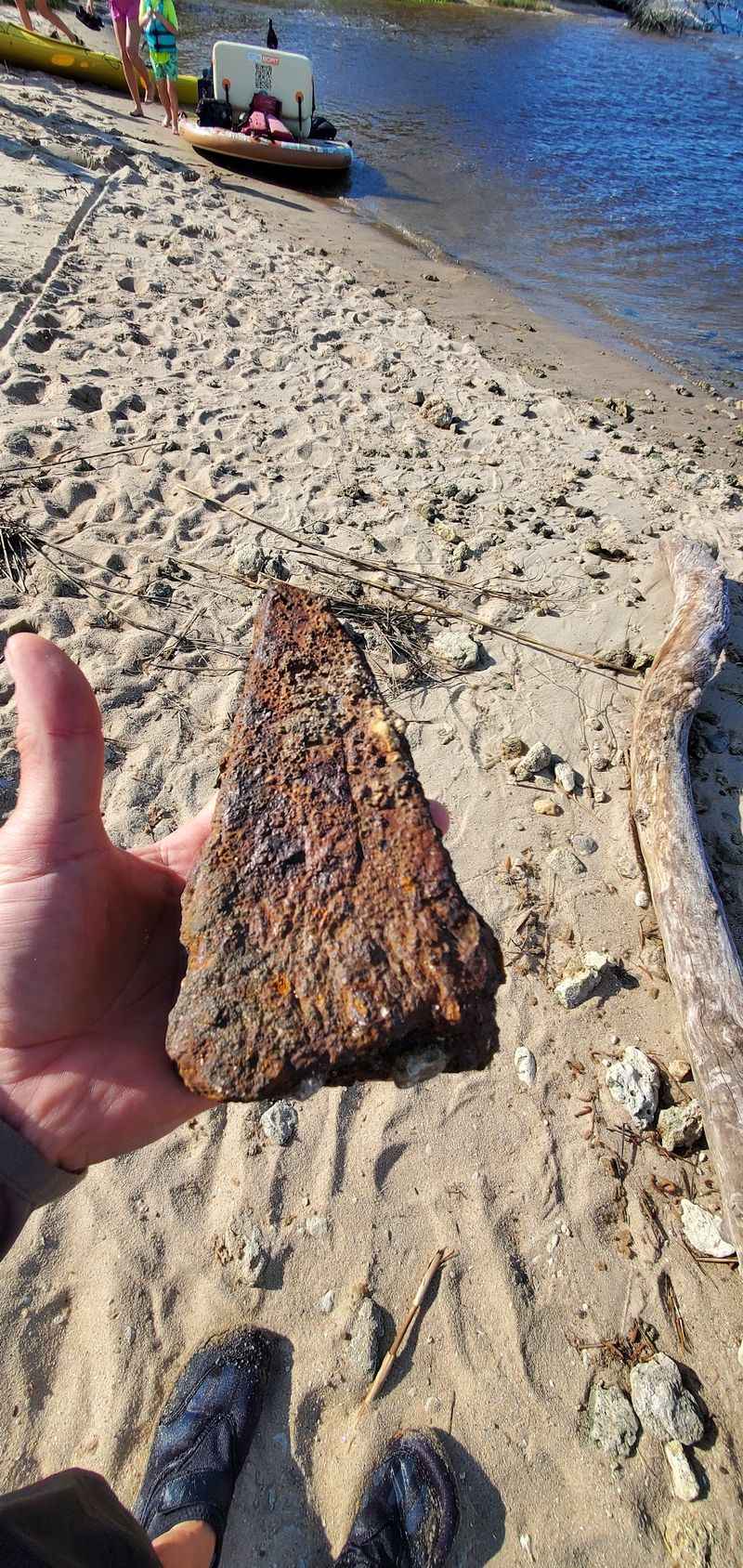
Reaching the finish line of this list takes a paddle. Shark Tooth Island sits in the Cape Fear River north of Wilmington, and its exposed tidal banks are known for fossil shark teeth, prehistoric shells, and other marine fossils.
Gravel bars appear as the water drops, spilling fossils that the river has been sorting for centuries.
No bridge or road leads there, so access comes by boat, kayak, or guided charter. River Road Park is a common launch point, and paddlers should watch the tide, current, and boat traffic on the river.
The crossing is short but the channel is busy.
Because the island’s shape shifts with tides, currents, and storms, each visit reveals a slightly different bank of gravel and shell. Sift the coarse material at the water’s edge and you may turn up serrated teeth, fossil oyster shells, and bits of bone.
Among fossil sites in North Carolina, few feel this much like an expedition.
Go with a partner, wear a life jacket, and check the forecast before launching, since afternoon winds can build quickly on open water.
Disclaimer
Fossil hunting conditions can change quickly along the North Carolina coast, and finding shark teeth or other fossils is never guaranteed. Tides, storms, erosion, beach nourishment, and shifting sand can completely change what is exposed from one visit to the next.
Always check current rules before collecting fossils, shells, rocks, or other natural materials. Regulations vary between public beaches, parks, recreation areas, protected habitats, and other managed properties.
Never collect where signs or local rules prohibit it, and avoid disturbing dunes, vegetation, wildlife areas, archaeological features, or sea turtle nests.
Use extra caution around inlets, riverbanks, sandbars, and open water. Currents and tides can become dangerous quickly, especially near Shark Tooth Island, which requires boat or kayak access.
Wear appropriate safety gear, check weather and tide conditions, and do not enter rough water simply to reach a promising fossil spot.
Addresses and access details in this article are provided for general trip planning and may change. Confirm current parking, hours, fees, closures, and trail or beach access before visiting.
Finally, fossil identification is not always straightforward. Dark shell fragments, rocks, and modern material can resemble ancient teeth, so unusual finds may require expert identification.
Collect responsibly, leave protected areas undisturbed, and take only what local rules clearly allow.