This Hidden North Carolina Shop Has More Than 10,000 Pieces Of Antique English Stained Glass
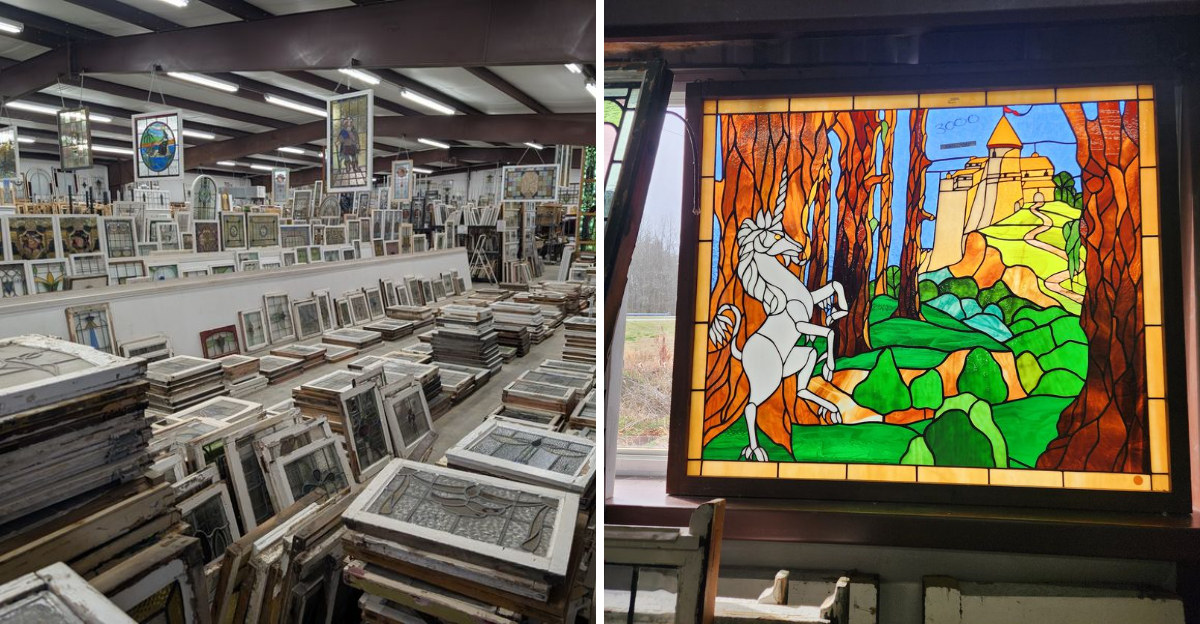
From the road, you would never guess what is hiding inside.
The building looks practical, almost forgettable, the kind of place you could pass without easing off the gas. That makes the surprise waiting beyond the door even better.
North Carolina has plenty of antique shops, but very few can turn sunlight into part of the experience.
Inside, thousands upon thousands of old English stained-glass pieces catch whatever light reaches them. Deep reds glow against cooler blues.
Small details suddenly appear in panels that may have spent generations in another country.
It feels a little like opening a warehouse and accidentally finding a cathedral.
More than 10,000 pieces are gathered here, yet the real thrill is not the number.
It is the moment you realize how close you came to driving right past the whole thing. That plain barn? Consider it extremely misleading.
Walk Into A Country Warehouse Hiding Thousands Of Colorful Windows
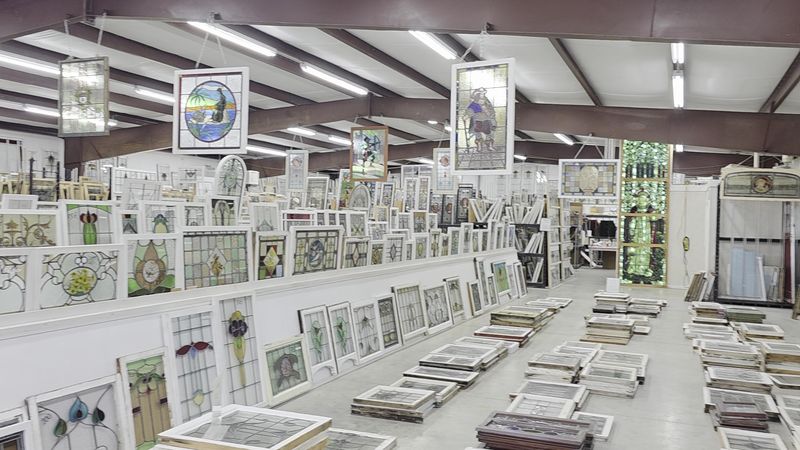
Gravel crunches under your tires, a few trees sway, and nothing about the exterior hints at what waits behind the doors. The building itself is a modest metal barn that fits right in with the pastures and pines of Chatham County.
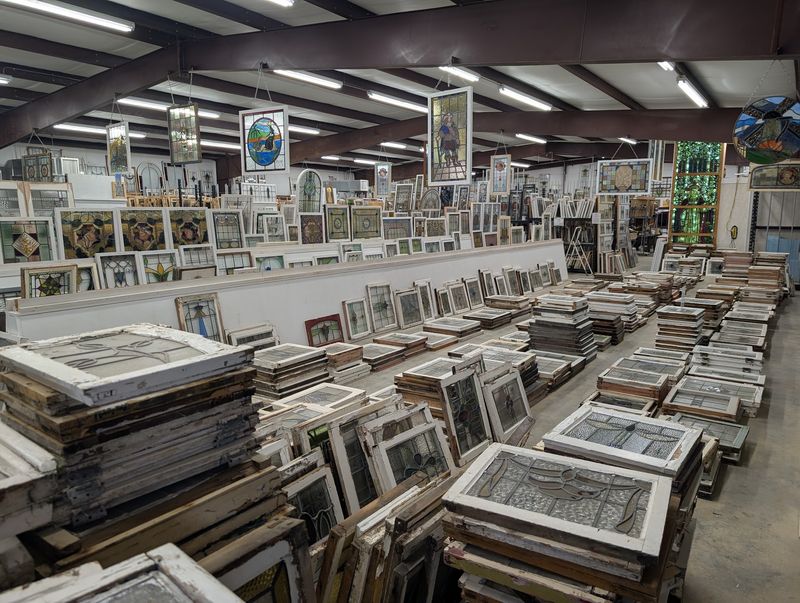
Then the door swings open. Rows upon rows of leaded panels lean against racks and walls, and daylight moving through them scatters color across the floor like spilled paint.
The showroom sits at 17 Paynes Road, Pittsboro, North Carolina 27312, and it holds what is billed as the largest collection of imported antique stained glass in the United States.
Aisles stretch farther than you expect, organized by size and style so browsing feels manageable rather than overwhelming.
Sound behaves differently in here, too. Footsteps echo softly, and the quiet lets you focus on details like a bubbled purple rosette or a hand-cut border of frosted leaves.
Doors open at 9 AM most days, and mornings bring the kind of low, slanting light that makes every panel glow.
You Can Browse More Than 10,000 Pieces Without Seeing Two Quite The Same
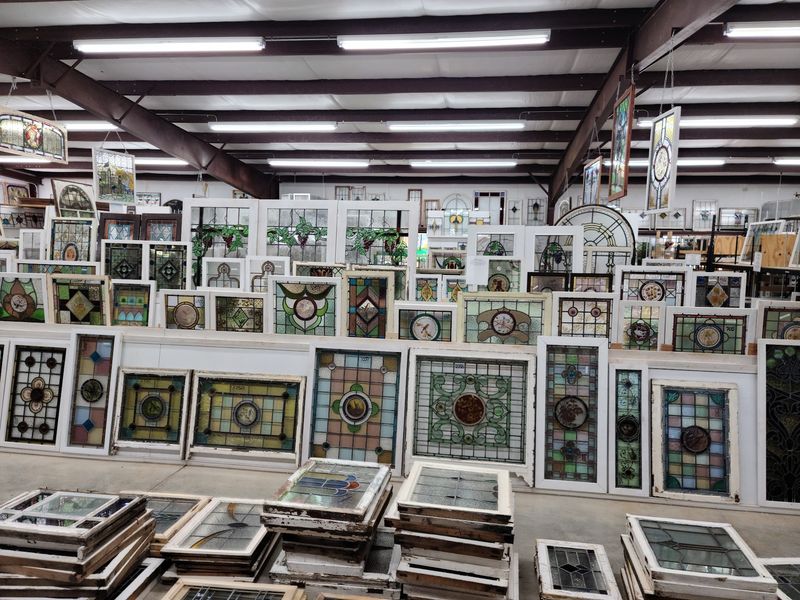
Ten thousand is a number that is hard to picture until you are standing among the racks, flipping through panels like pages in a very heavy book.
Some are simple diamond-pane windows with a single ruby center. Others burst with painted roses, ribboned scrolls, or milky opalescent flowers set inside dark lead lines.
There are etched panels, cut glass with prism edges, and small transom pieces no wider than a shoebox.
Trying to find two identical pieces becomes a friendly little game, and most visitors give up. English glassmakers worked house by house, street by street, so patterns shifted constantly.
Sizes range from tiny accent squares that fit a bathroom window to towering panels tall enough for a stairwell landing. A handful of church windows stand among the residential glass, their arched tops instantly recognizable.
Pacing matters here. Move slowly, hold a panel toward the light, and watch how a single tilt changes amber into honey gold.
Look Closely For Glass Dating Back To The 1800s
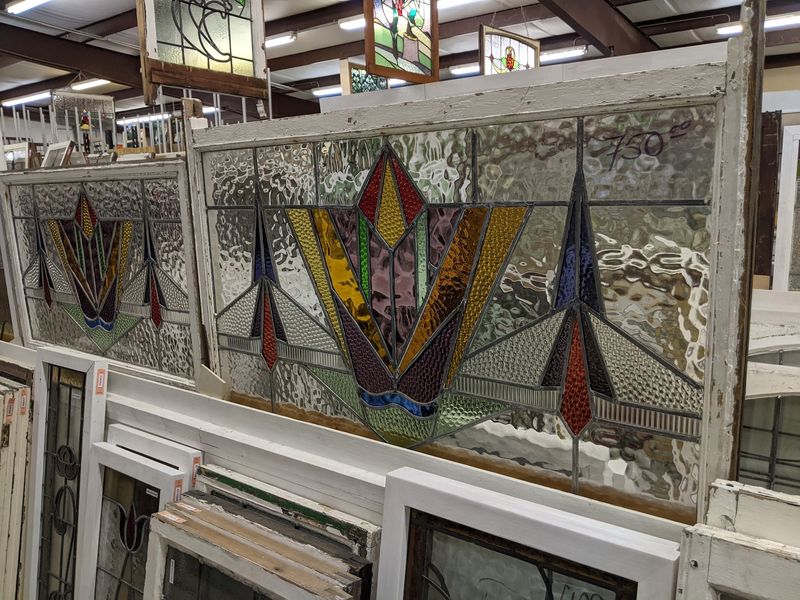
History hides in the smallest details, like the faint waviness in a pane or the soft gray patina on old lead.
Pieces in this inventory span roughly 1780 through 1938, with a strong showing from the mid-1800s. That means some panels were already old when electric lights arrived, and many hung in homes during Queen Victoria’s reign.
Run a finger near the edge of an older piece and you may notice slight ripples where molten glass cooled unevenly.
Hand-painted details show brushstrokes rather than machine-perfect lines, and colors sometimes vary within a single panel because of how the batch was mixed.
Kurt and John Payne are usually on hand to explain what era a piece belongs to and how they can tell. Their answers turn a pretty window into a small lesson about English homes, workshops, and design fashions.
Take a moment with the oldest panels. Knowing a piece has already caught the light for two centuries changes how you look at it.
Find Windows And Doors Rescued From Old Buildings Across England
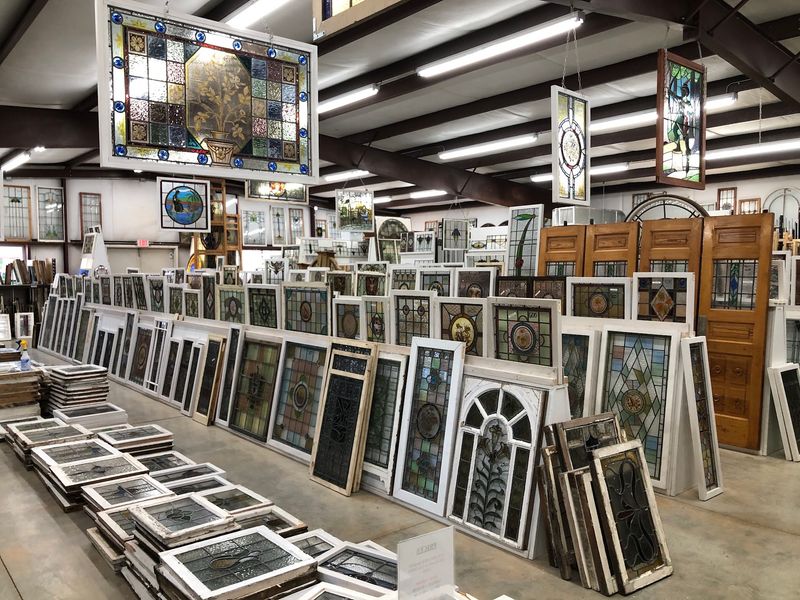
Every panel here started somewhere else, usually in a brick row house on a narrow English street.
The family business began more than 47 years ago in England, where founder John Payne rescued windows from houses slated for demolition. Instead of letting that glass go to the rubble pile, he carefully removed it, crated it, and gave it a future.
That salvage tradition still fills the Pittsboro warehouse. Front doors with leaded fanlights, stair-landing windows, kitchen transoms, and parlor panels all stand together, each one shaped by the building it came from.
You can often guess a piece’s original spot by its proportions. Long narrow panels flanked doorways, small squares brightened hallways, and wide horizontal pieces once sat above entryways to let light into dim front rooms.
A few church windows appear too, their scale and arched shapes standing apart from the domestic glass. Together they form an unlikely map of British architecture, reassembled inside a barn in North Carolina.
Choose A Piece And Have It Altered To Fit Your Home
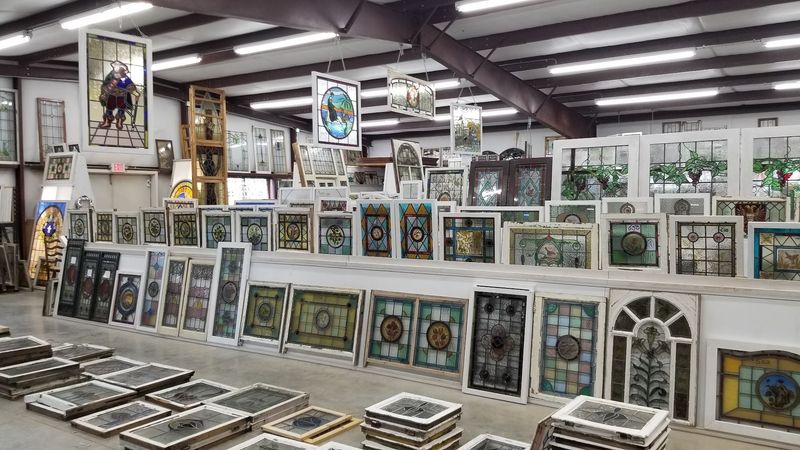
Old windows rarely match modern openings, and that is exactly the problem this shop solves every day.
Bring your measurements and a few photos of the room, and Kurt Payne, who carries on his father’s craft, will help you find something that works.
He can resize a panel, cut it down, add a border, or build a new frame so the glass drops neatly into your opening.
Custom services include stained glass design, reframing, and installation guidance. If you love a piece that is two inches too wide, that is usually a fixable detail rather than a dealbreaker.
Some visitors arrive with a single window in mind and leave with a plan for three, using a large focal panel flanked by two smaller matching pieces. Others hang a panel inside an existing window with simple chain and hooks.
Call ahead at 919-545-3008 if your project is complicated. Arriving with dimensions written down saves a surprising amount of time.
Watch Old Craftsmanship Get A Second Life Instead Of Disappearing
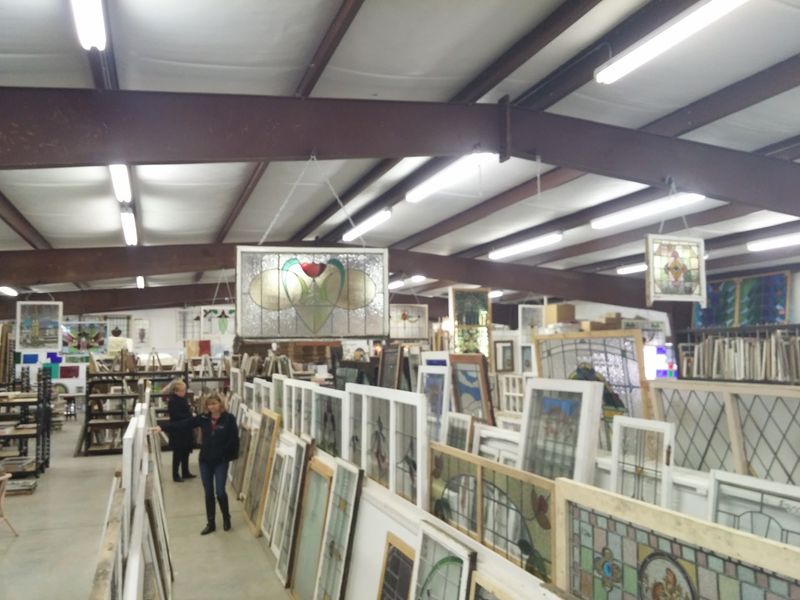
Broken glass and sagging lead used to mean the end of a window’s life. Here, it means the beginning of a repair.
The workshop handles careful restoration: replacing cracked pieces with period-appropriate glass, resoldering tired lead lines, and reinforcing panels that have bowed over decades.
Nothing is rushed, because a single misplaced solder joint shows.
Watching that process gives you real appreciation for the original makers. Someone in an English workshop cut each shape by hand, wrapped it in lead, and soldered every intersection, all before power tools existed.
Local customers sometimes bring in glass from their own historic homes, including windows from houses built in the 1920s. The shop repairs those too, which keeps neighborhood history intact rather than replaced with plain modern panes.
Preservation like this is quietly practical. A restored panel can serve another hundred years, filtering morning light through colors that machine-made glass simply cannot copy.
Give Yourself Time Because This Collection Is Enormous
Plan on half a day. Seriously.
Folks who stop for fifteen minutes almost always end up staying two hours, and even then they miss whole sections. With thousands of panels spanning more than a century of English design, quick browsing simply does not work.
Hours run 9 AM to 5 PM Monday through Saturday, with Sunday afternoons from 1 to 5 PM. Weekday mornings tend to be calmer, which helps if you want unhurried help pulling heavy panels for a closer look.
The staff will walk you toward specific sections once they know what you are after, whether that is small blue accents or a tall entryway piece. Their explanations about age, origin, and construction turn browsing into something closer to a guided museum visit.
Wear comfortable shoes and bring a phone charger, since you will photograph far more than you expect. Snacks and a water bottle in the car are smart too, because Pittsboro dining is a short drive away.
Head Home With A Piece Of English History You Can Actually Hang In A Window
The best souvenirs do something, and a stained glass panel earns its keep every single morning.
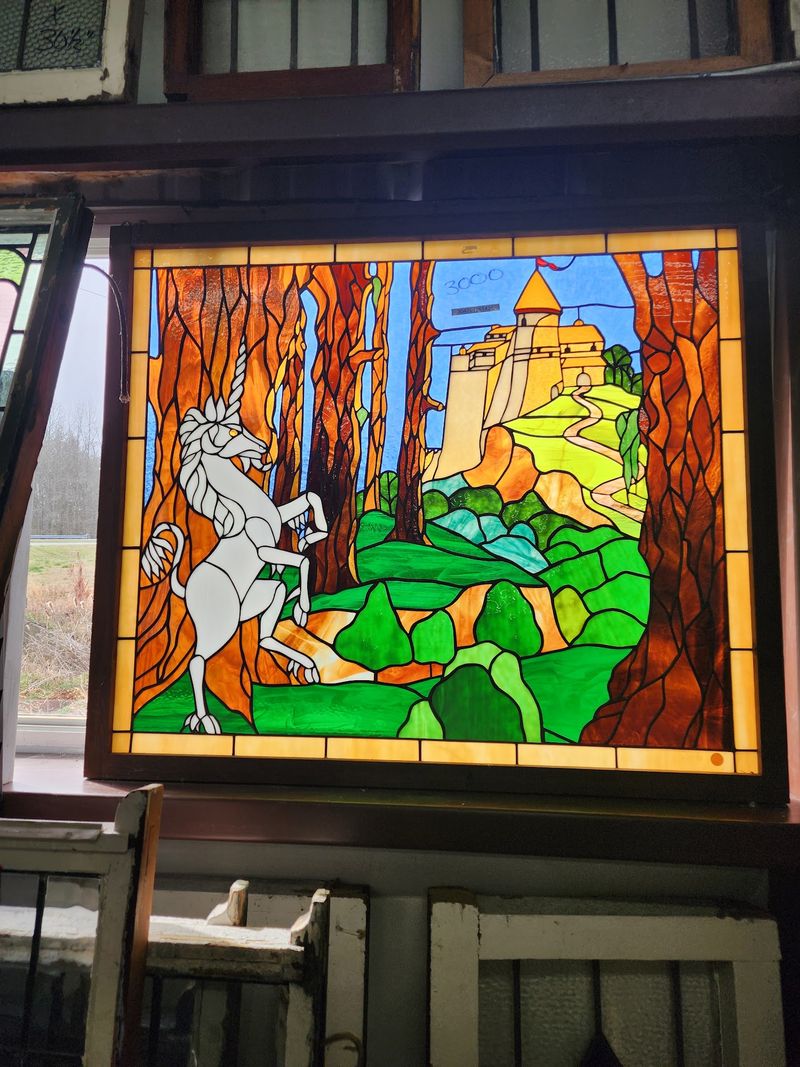
Prices here run from about $65 for small accent pieces to more than $3,000 for elaborate large panels and door inserts. That spread means a first-time buyer and a serious collector can both leave happy.
Hanging one is simpler than most people assume. A sturdy hook, a length of chain, and an existing window frame are often all it takes, and suddenly your kitchen sink or stairwell has patterns of green and rose sliding across the wall.
Larger pieces can be installed permanently as transoms, cabinet fronts, or sidelights. The shop also ships, which helps if you fall for something taller than your car.
Long after your drive back, that glass keeps telling its story. A panel that once brightened a hallway in England now catches North Carolina sunlight, doing exactly what its maker intended.