This Remote Nebraska Steakhouse Sits In A Ghost Town Where One Resident May Never Have Left
The road gets quieter long before dinner starts. Then you reach a place where the past feels unusually close.
A remote Nebraska steakhouse now occupies one of the few active spots in a near-forgotten settlement, giving the evening a strange mix of comfort and unease.
You come for a serious meal, but the setting keeps tugging at your attention.
Look around before you sit down. Old buildings, sparse surroundings, and local stories give the place an atmosphere no polished dining room could manufacture.
One tale even suggests a former resident may never have fully left, adding just enough mystery to make every creak or shadow feel slightly more interesting.
You do not have to believe in ghosts to enjoy the story. Order the steak, take in the silence outside, and decide for yourself whether the town feels empty. Or merely quiet.
Driving Into A Nebraska Ghost Town
The last few miles are where the trip starts to feel unusual. Fields stretch out in every direction, houses become rare, and the road surface may turn to gravel depending on the route chosen.
Sacramento is an unincorporated community southeast of Holdrege in Phelps County, and modern Nebraska sources openly describe it as a ghost town.
There is no downtown to park in and no row of storefronts to browse.
A historical marker placed near the restaurant explains what once stood on the surrounding land, and reading it before dinner adds useful context to the meal ahead.
It only takes a few minutes and helps the emptiness make sense.
Cell service in rural Phelps County can be uneven, so downloading directions ahead of time is a practical step.
Mapping apps do lead here correctly, though plenty of first-time visitors second-guess themselves along the way.
Daylight makes the drive easier for anyone unfamiliar with unlit county roads, which is worth considering during shorter winter days. Farm equipment may also share the road during planting and harvest seasons.
Coming from Holdrege takes only a short stretch of driving, while guests from Kearney or Hastings should plan for a longer run.
Either way, the arrival is memorable because the building appears with almost no warning at all.
A Settlement That Once Held Around 200 People
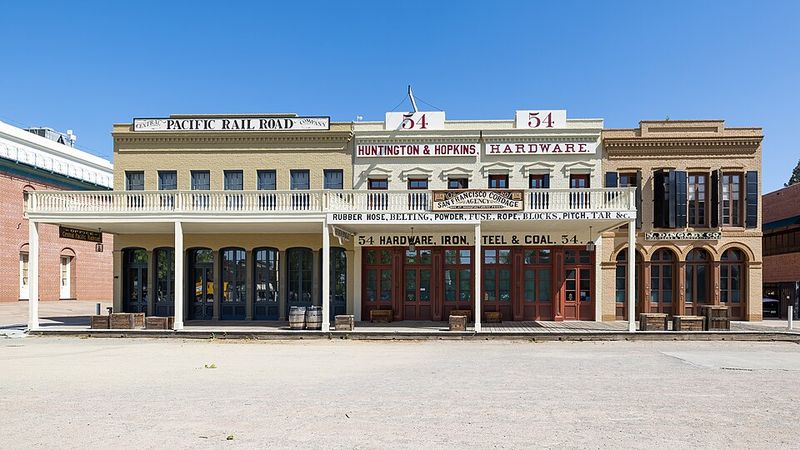
Hard to believe while staring at open farmland, but a working town once filled this spot.
Sacramento was established between roughly 1876 and 1878, and the estimated area population reached about 200 people.
Early businesses were built from sod and lumber, materials that made sense on a treeless prairie.
Among them were a sod schoolhouse that also hosted religious services, a grocery store, a dry goods and general store, and a hotel.
The list continued with a butcher shop, a drug store, a printing shop, a hardware and implement business, a livery stable, a blacksmith shop, and a lumber yard.
A two-story flour mill also operated here, which was a serious piece of infrastructure for a young settlement.
Both a physician and an attorney kept offices in town, showing that residents did not have to travel far for professional help. The Phelps County Pioneer newspaper began publication in Sacramento in 1879.
Knowing all of that changes how the surrounding quiet feels. Instead of land that was never used, the fields represent a community that existed and then moved on.
Sharing these details with anyone riding along tends to make the drive more interesting. Kids especially seem to latch onto the idea of a sod schoolhouse standing where corn now grows.
The Red-Brick Steakhouse Standing Beside Grain Bins
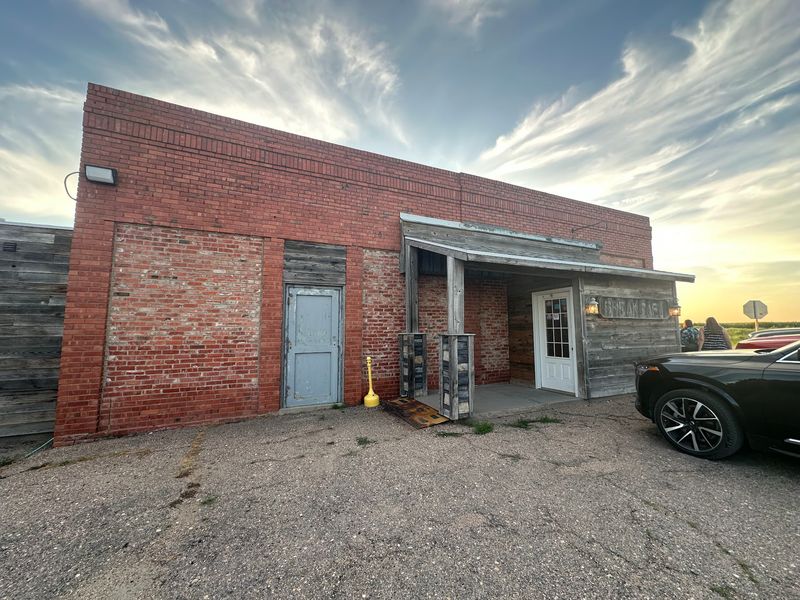
Nothing about the exterior announces fine dining. A modest red-brick building appears beside agricultural land and grain bins, and first-timers often slow down to double-check the address.
The Speakeasy is located at 72993 S Rd, Holdrege, NE 68949, which is the mailing address used for the Sacramento site.
Nebraska Public Media has described the restaurant as essentially sitting in the middle of a cornfield.
Parking is on open ground near the building, and sturdy shoes are a reasonable choice after rain or during winter. There are no sidewalks or streetlights leading up to the door.
The contrast between outside and inside is the part most guests remember. A worn exterior door leads to a second door, and then the space opens into a proper steakhouse dining room.
Because the surroundings are so plain, the transition lands harder than it would in a city. That element of surprise has become part of the restaurant’s reputation across Nebraska.
Anyone bringing guests from out of state should probably warn them ahead of time. Without a heads-up, passengers may genuinely believe the driver has gotten lost somewhere in Phelps County.
Grain bins as a landmark are unusual for a dinner destination, and they make the place easy to spot once it comes into view.
Faceless Fred And The Legend Attached To The Site
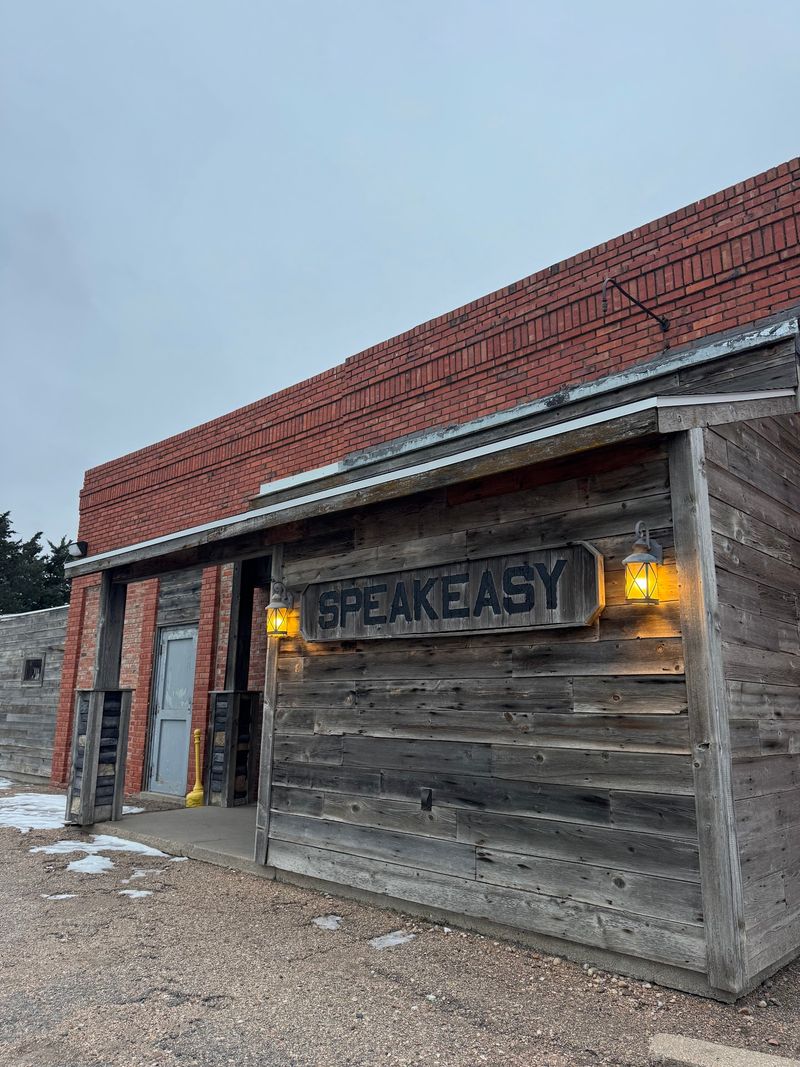
Ghost stories usually live on message boards, but this one has paper behind it.
The restaurant is tied to the long-running Phelps County legend of Faceless Fred, and History Nebraska has preserved material documenting the tale.
That archival connection gives the story more local grounding than a typical internet rumor. It also means the legend can be discussed as documented folklore rather than as a claim about real events.
Fred is described in the folklore as a philanderer living in Sacramento during the late 1800s. The story says his wife ended his life, disfigured his body, and disposed of it in a well.
Legend then holds that a restaurant was later built on the site of that abandoned well. Every part of that account should be treated as folklore and not as verified history.
Over the years, the tale earned Fred the nickname Phantom of Phelps County. Nebraska Public Media still describes the haunting legend as part of The Speakeasy’s identity.
Staff members are used to the questions and will often share the outline of the story if asked politely during a slower stretch. Peak dinner hours are not the moment for a long conversation.
Some families love the spooky angle, while others barely think about it once the food arrives.
Inside, The Mood Shifts Completely
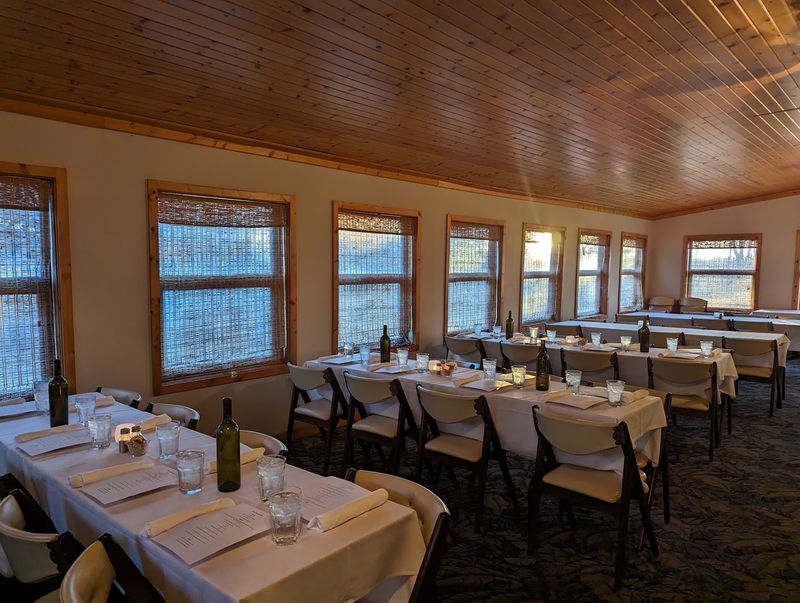
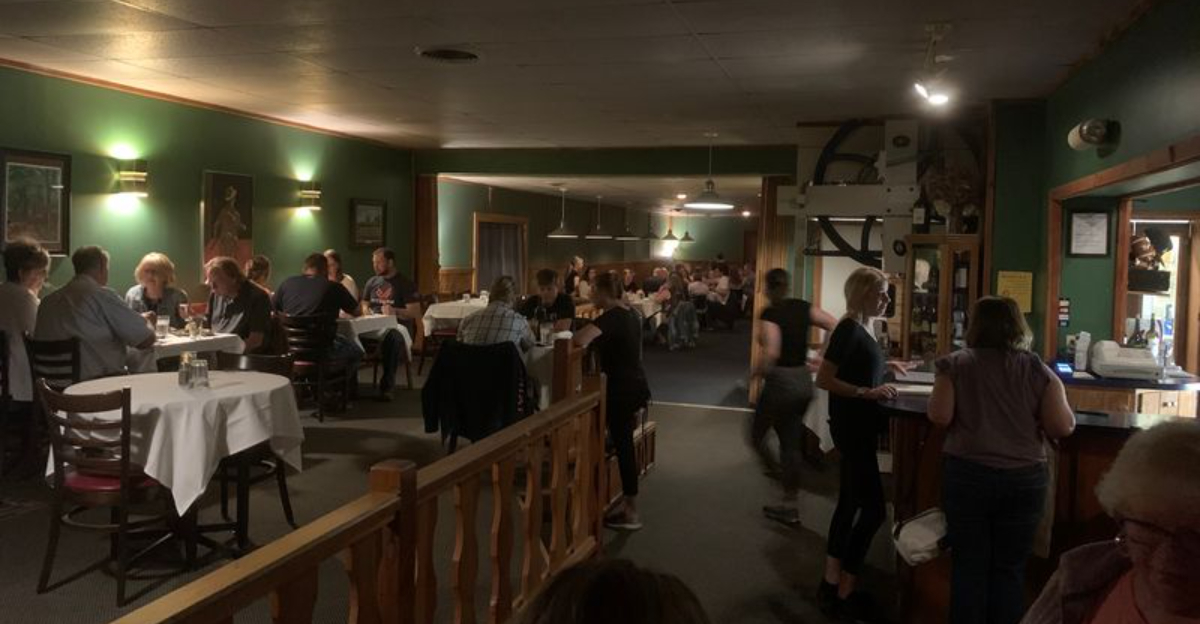
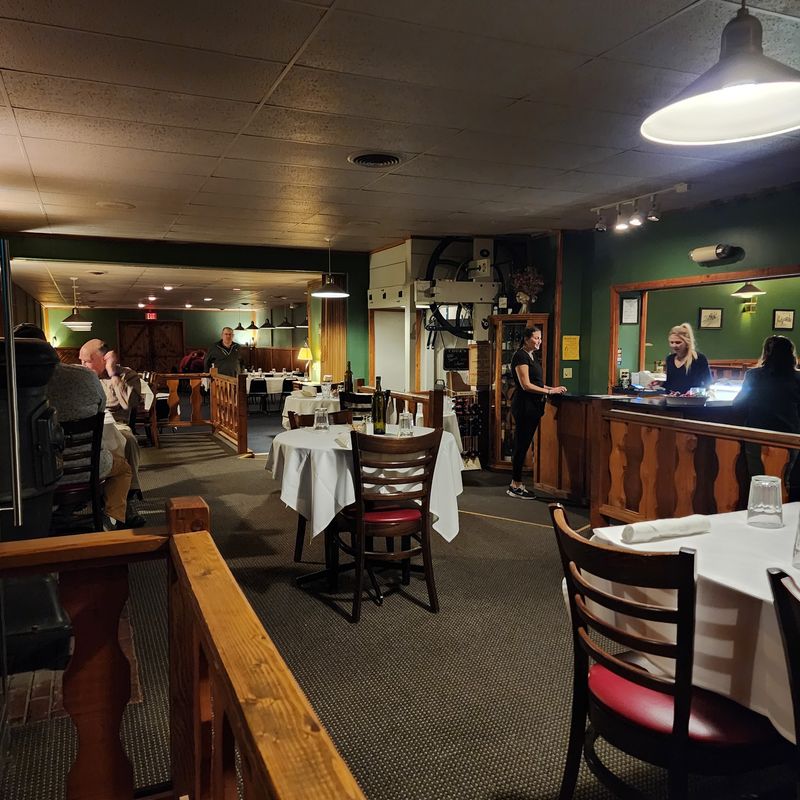
Walking through the door resets everything the drive set up. The dining room is intentionally dim, with white tablecloths and an old-school steakhouse feel that seems far removed from the lonely road outside.
Lighting is a defining feature here. Some guests find it darker than expected, so anyone who reads menus with difficulty in low light may want to bring reading glasses or use a phone screen.
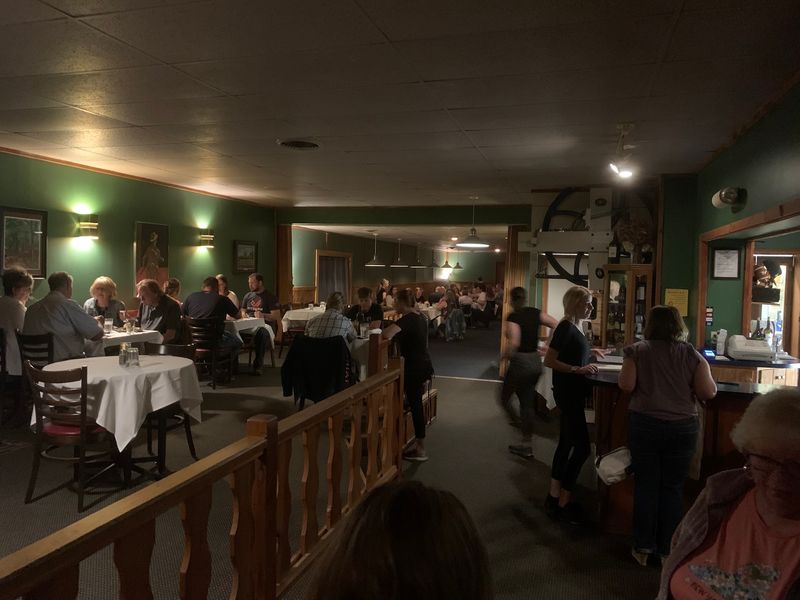
Seating capacity reaches about 150 people, yet the layout keeps the space from feeling cavernous. Tables are arranged so that the room still reads as intimate even when it is busy.
Noise levels rise noticeably on weekend evenings, especially when large parties are seated. Conversation stays manageable because the interior is roomy, though it will not feel hushed during a full house.
Dress expectations are relaxed. Guests show up in jeans and guests show up dressed for an anniversary, and both fit the room without any awkwardness.
Service tends to move at a steady pace rather than a rushed one, which suits a place people drove an hour to reach. Ordering an appetizer early is a comfortable way to settle in.
For couples wanting a quieter table, a Tuesday or Wednesday visit generally offers a calmer atmosphere than Friday or Saturday.
Decades Of Family Ownership Behind The Kitchen
Longevity is rare for a restaurant located this far from a highway. The Speakeasy has stayed in the same family for decades, with the current owner taking over the business from his father in 2017.
The father purchased the restaurant in 1980, and for many years the place built its name on large Sunday buffets. That earlier era is still remembered by longtime area residents.
The transition brought a shift toward a more chef-driven steakhouse approach. Menus became tighter and more focused on cooking technique rather than volume dining.
Family ownership shows up in small, practical ways. Recipes made in house, including dressings, reflect a kitchen that controls its own details instead of relying on shortcuts.
Consistency over that many years also explains why the restaurant has strong reviews despite its isolated location. Word of mouth across Nebraska did most of the marketing work.
Guests curious about the building’s history can usually get a friendly answer from staff, since the story of the place is part of daily conversation there. Timing the question for a quieter moment helps.
Understanding that background makes the meal feel less like a novelty stop. It reads instead as a rural business that adapted, changed direction, and kept going through several decades of shifting dining habits.
Guests Now Travel 60 Miles Or More For Dinner
Distance stopped being a barrier a long time ago. Where diners once came from 15 or 20 miles away, guests now regularly travel 60 miles or farther to eat here.
Visitors arrive from Kearney, Grand Island, Hastings, Lincoln, and Omaha, along with people passing through from North and South Dakota. Some guests have come from as far away as Washington, D.C.
Planning helps when the drive is that long. Building in extra time for gravel stretches, slow farm traffic, or a wrong turn keeps the evening relaxed instead of stressful.
Pairing dinner with something else in the area works well for travelers. Holdrege sits nearby with lodging options, which makes an overnight stay reasonable for anyone coming from a distance.
The return drive happens in full darkness after a 5 p.m. or later reservation, and rural roads have no streetlights. Drivers unfamiliar with the area should take that into account.
Deer activity along county roads is a real consideration at dusk in Nebraska farm country. Slower speeds on the way home are simply sensible.
None of that seems to discourage anyone. People keep making the trip because the destination delivers something they cannot find closer to home, and the drive itself becomes part of the story they tell later.
Beef Takes Center Stage, With Surprises Alongside
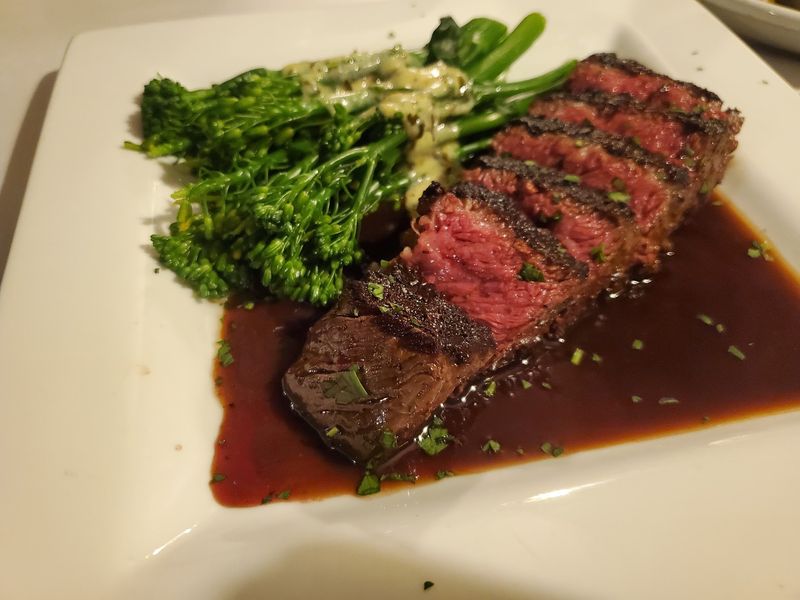
Steak is the reason most people finally make the drive. The menu centers on cuts including filet mignon, prime rib, and rotating higher-end selections, and American wagyu has appeared as well.
Beyond the classics, the kitchen has explored dishes that stretch past traditional steakhouse territory.
Pork belly, pimento cheese burgers, Nashville hot chicken sandwiches, French mussels, pork osso buco, chicken shawarma, and Korean pork tacos have all shown up.
Desserts have included Milk Bar Pie, which is not something typically found on a rural Nebraska menu. Specials rotate, so the exact offerings on any given night will vary.
Sides and appetizers get plenty of attention from regulars, with onion rings, brussels sprouts, creamed spinach, and artichoke dip among the frequently ordered items.
House-made dressings are part of the kitchen’s routine.
Reservations are strongly recommended, particularly for weekend evenings when the dining room fills quickly. Seating is managed deliberately, since packing every chair could compromise food or service quality.
Hours run Tuesday through Saturday from 5 p.m. to 9 p.m., with Sunday and Monday closed. Calling ahead at 308-995-4757 is the simplest way to confirm a table.
Prices land in fine dining territory rather than small-town diner range, so budgeting accordingly keeps the evening pleasant from start to finish.