This Tiny Idaho Mountain Town Barely Reaches 80 Degrees Even In The Middle Of Summer
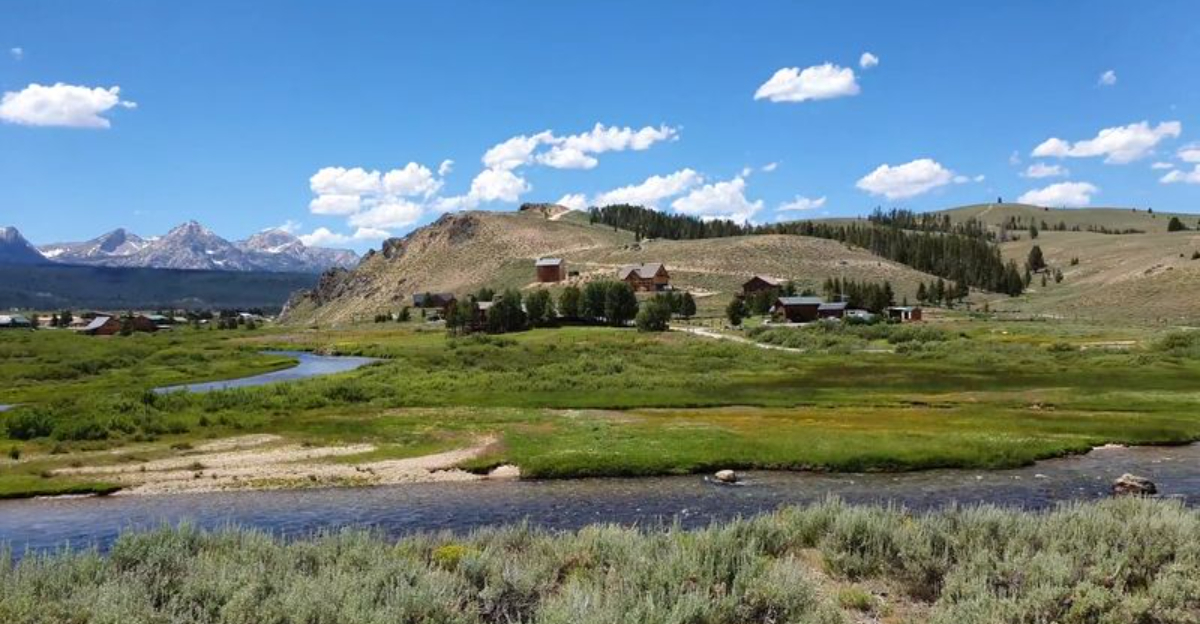
I have a complicated relationship with summer.
Give me sunshine, absolutely. Give me 95 degrees and a steering wheel hot enough to cook breakfast, and suddenly I am reconsidering the entire season.
That is why this tiny Idaho mountain town feels almost suspiciously well designed. Even when July and August are roasting lower elevations, afternoons here rarely push past 80 degrees.
Nights cool down enough that tossing a jacket in the car stops looking overly cautious and starts looking very smart.
The elevation does most of the heavy lifting.
I would happily trade sticky sidewalks for mountain air that actually lets me breathe without feeling slow-roasted. The scenery certainly does not hurt, either.
Huge granite peaks rise beyond the valley, making an ordinary afternoon outside feel like somebody accidentally upgraded the background.
With only about 116 residents, crowds are hardly the main attraction.
Personally, I call this summer cheating.
And I fully support it.
Wake Up To Cool Mountain Air Even After The Calendar Says Midsummer
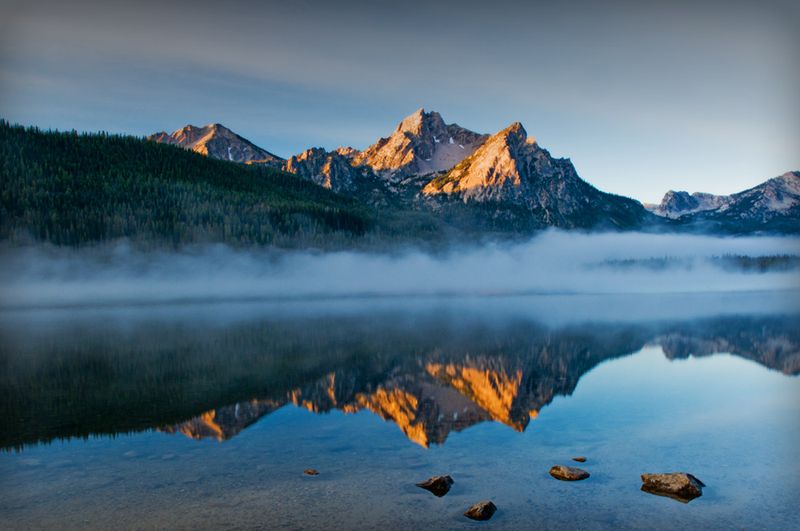
Step outside at six in the morning during August and you may reach for a knit hat. Cold air slides down from the surrounding peaks overnight and settles on the valley floor, so thermometers often read in the low 30s or even the upper 20s Fahrenheit.
The swing between dawn and mid-afternoon can stretch close to 60 degrees.
That sharp contrast turns an ordinary cup of coffee into something memorable. Steam curls off the mug while frost glitters on meadow grass and the first light climbs the granite spires.
Birds start up, a truck rumbles past on the highway, and the valley slowly warms.
Practical tip: pack a fleece and long pants even if your forecast app promises a warm afternoon. Campers along the Salmon River often wake to dew-heavy tents and chilly picnic tables, so a thermos prepared the night before pays off.
Sunrise here rewards early risers with still air, glassy water, and the kind of quiet that vanishes by mid-morning.
Nobody regrets packing an extra layer at 6,200 feet above sea level.
Spend Afternoons Outside Without The Relentless Heat Found At Lower Elevations
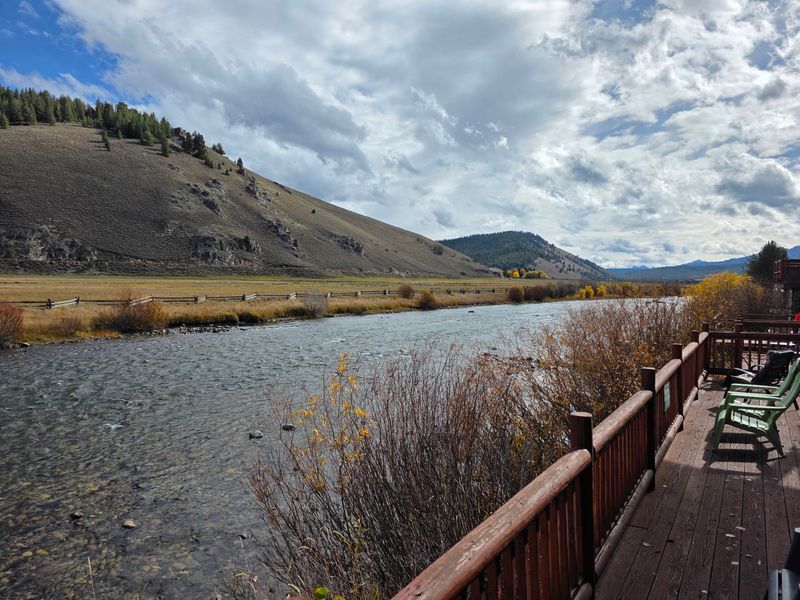
Elevation does the heavy lifting here. Sitting above 6,200 feet in the Sawtooth Valley, the town keeps July highs in a comfortable band of roughly 77 to 83 degrees Fahrenheit, with August peaking near 79.
Low humidity keeps that warmth feeling light rather than sticky.
What that means in practice: you can eat lunch on a sunny deck at one in the afternoon and never feel wilted. Shade under lodgepole pines feels genuinely cool, and river water stays brisk enough to make wading a small thrill.
Travelers arriving from the high desert country to the south often notice the change within the final miles of the drive. Windows come down, sleeves stay rolled, and plans that would be miserable in triple-digit heat suddenly sound easy.
Afternoon is prime time for a paddle, a picnic, or a slow walk along gravel streets where the mountains fill every gap between buildings. Sunscreen still matters, since thin mountain air lets ultraviolet rays through with surprising strength.
A wide-brimmed hat and a refillable bottle round out the kit.
Head Toward Redfish Lake When The Sun Is Out And The Water Looks Its Brightest
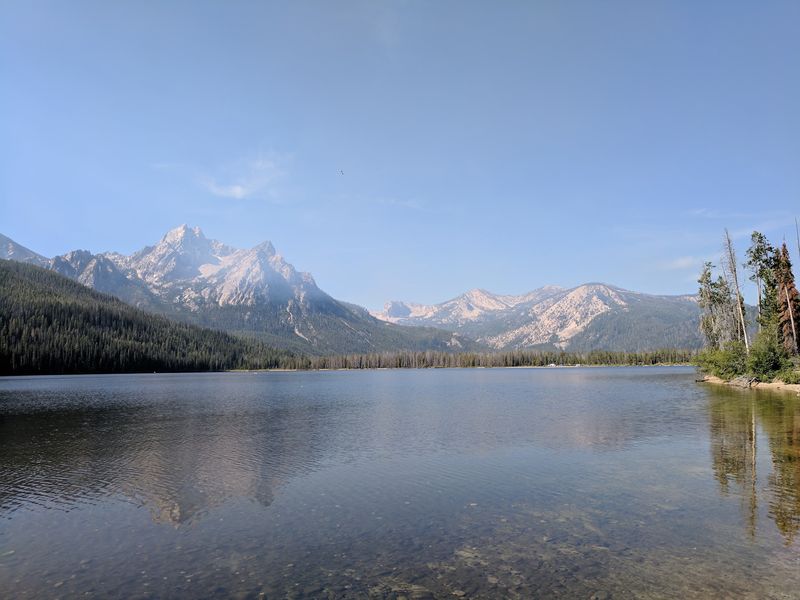
Glaciers carved the basin that now holds one of the most photographed lakes in the Sawtooths. Drive about five miles south of town, following a paved spur off State Highway 75, and the water opens up beneath a wall of jagged granite.
On bright days the surface flips between deep blue and pale turquoise.
Swimmers claim the sandy beaches early, while the marina rents motorized and non-motorized boats for exploring quieter coves. Anglers cast for rainbow trout, Dolly Varden, landlocked salmon, and kokanee.
The historic Redfish Lake Lodge serves meals with a front-row view of the peaks.
Hikers can skip a long shoreline walk by riding the lodge shuttle boat across the water to remote trailheads on the far side. Arrive before eleven if you want a parking spot near the beach in peak season.
Bring water shoes, since the shallows hide smooth stones, and expect the water to feel bracing even in August.
Pack a picnic and claim a log along the shore, because cold water, warm sun, and mirrored mountains turn lunch outdoors into an event.
Keep A Light Layer Handy Because Evenings Cool Down Fast
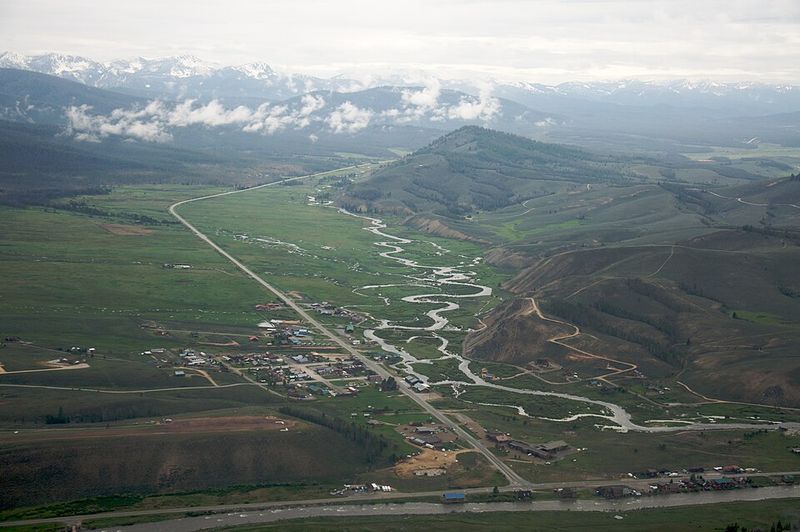
Sunset acts like a switch. Warm afternoon air drains away within an hour of the sun dropping behind the ridgeline, and July lows average around 38 degrees Fahrenheit, with August dipping near 32.
A fleece, a wool sweater, or a packable puffy earns its space in your bag.
Locals plan around this rhythm rather than fighting it. Dinner often means a warm bowl of something hearty, maybe chili or trout with roasted potatoes, eaten while pulling a jacket tighter.
Evening light on the peaks turns pink just as the chill sets in.
The payoff arrives overhead. Stanley sits inside the Central Idaho Dark Sky Reserve, the first of its kind in the United States, so once the sky darkens the Milky Way spreads across the valley in a broad, dusty arch.
Cold, dry air makes stars look unusually sharp.
Bring a blanket, a red-light flashlight, and patience while your eyes adjust for twenty minutes or so. Families often make a small ritual of it: hot cocoa, folding chairs, and a slow count of shooting stars before bed.
Use The Mild Weather For Hiking Biking And Long Scenic Drives
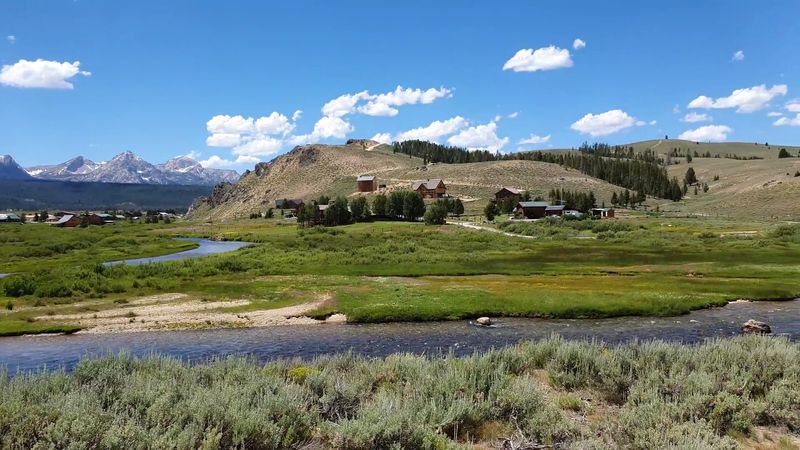
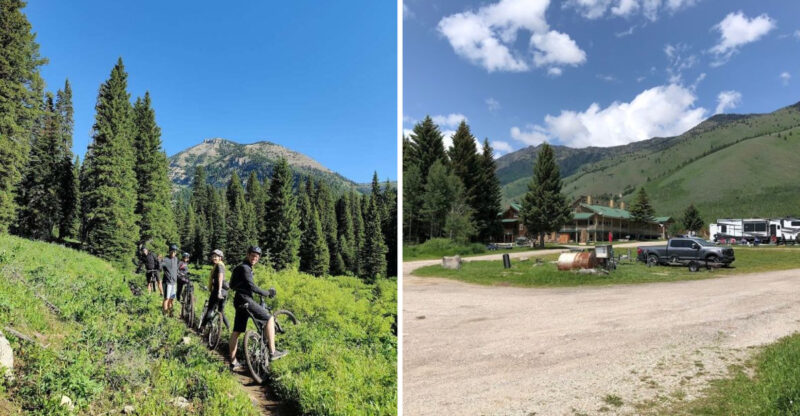
More than 700 miles of trail thread through the Sawtooth National Recreation Area, linking over 300 alpine lakes. Families favor the Fishhook Creek Trail, a four-mile round trip that follows a clear creek near Redfish Lake to a bright meadow.
Stronger walkers aim for Sawtooth Lake, roughly five miles up from the Iron Creek trailhead.
Cyclists get their own menu. The 22-mile Fisher Creek Loop is a classic single-track descent, while the 4.6-mile Stanley to Redfish Lake Trail offers a crushed-stone path gentle enough for beginners and kids on small wheels.
Prefer the driver’s seat? The Sawtooth Scenic Byway along State Highway 75 curls past glacier-carved valleys, ranch fences, and river bends where anglers stand knee-deep in current.
Pullouts appear right when the peaks line up for a photo.
Cool temperatures make midday effort far more pleasant in this corner of Idaho, though you should still carry two liters of water, snacks, and a rain shell. Trails near the highest lakes can hold snow patches into early July.
Bug spray helps near the meadows.
Watch Summer Storms Roll Across The Sawtooths Without Losing The Whole Day
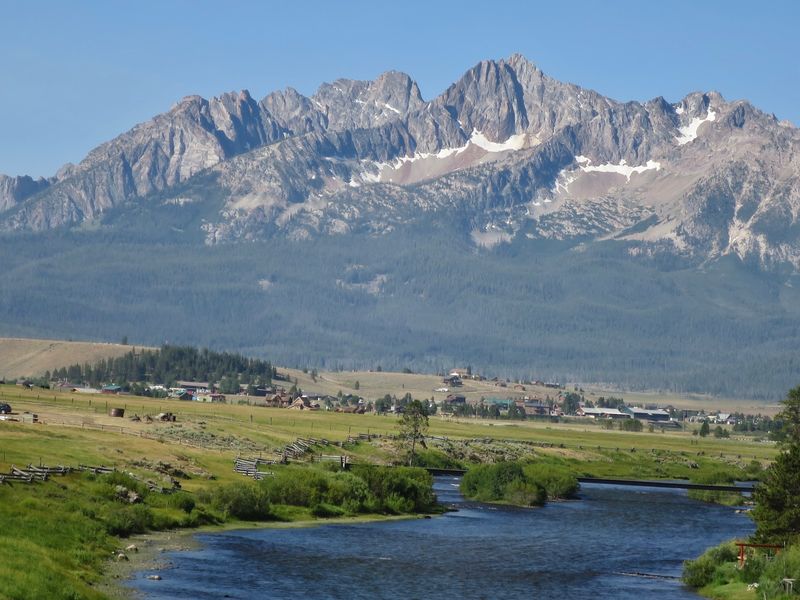
Weather here likes drama without commitment. From early July into mid-August the sky stays clear or partly cloudy roughly 79 percent of the time, so a gathering storm usually means a short, theatrical show rather than a canceled day.
Clouds stack behind the Sawtooth crest, turn slate gray, and trail curtains of rain across the ridgeline.
Thunder rolls with a long echo in a valley this wide. Rain smells like warm pine and wet dust, and the temperature can drop ten degrees in minutes.
Wildflowers look impossibly bright under a bruised sky.
Smart planning turns those interruptions into highlights. Watch the sky from a covered porch, browse a small shop, or wait it out in your vehicle at a pullout while the light shifts from silver to gold.
Afternoons often clear as quickly as they clouded, sometimes leaving a rainbow over the meadows.
Safety still matters above treeline, where lightning finds the tallest object. Start high-elevation hikes early, turn around if you hear thunder building, and save exposed ridges for mornings with clean blue overhead.
Take Advantage Of Clear Mornings Before Afternoon Clouds Build
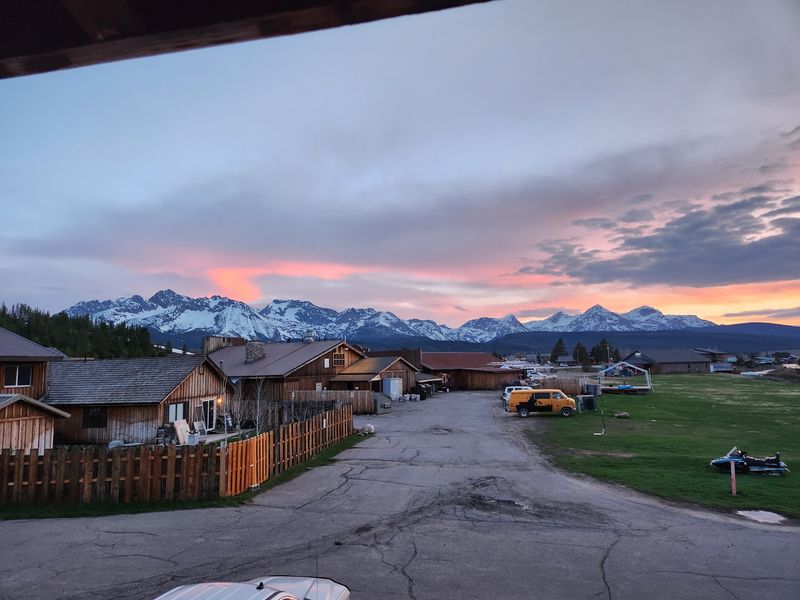
Photographers set alarms for a reason. Summer mornings in this stretch of Idaho tend to open with glass-still water and cloudless sky, which means the Sawtooths double themselves in lakes and slow river bends.
Light hits the granite around sunrise and shifts from rose to bright white within twenty minutes.
Early hours also bring practical advantages. Trailhead lots have space, dust stays down on gravel roads, and wildlife moves in the open before the day heats up.
Morning quiet carries sound a long way across the meadow.
Breakfast fits the pattern nicely. A short stack, eggs, and coffee at a small-town cafe taste better after a chilly walk, and staff can often tell you which road is rough or which trailhead fills first.
Build your day backward: hardest climb first, lake swim at midday, easy scenic drive later while clouds build over the peaks. Riverside spots near the upper Salmon River are especially calm at dawn, with mist drifting above the water.
Keep a lens cloth handy, because condensation forms fast when cold air meets warm gear.
Stretch A Hot-Weather Escape Into A Full Weekend In The High Country
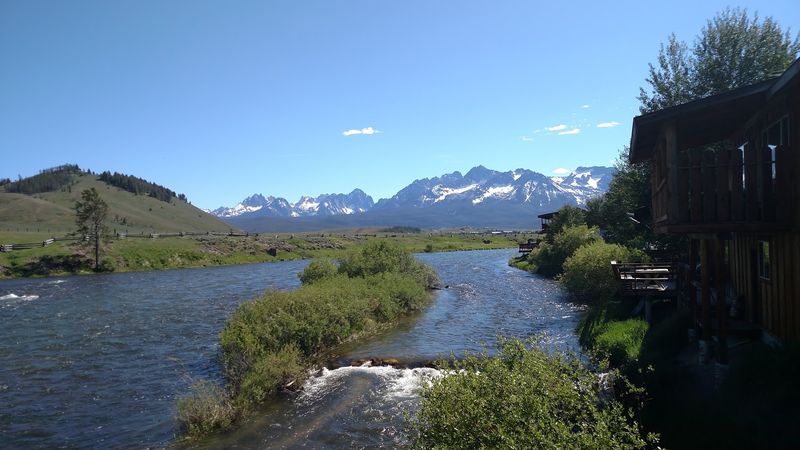
A weekend gives the valley room to unfold. With 2.1 million acres of surrounding public land and wilderness, one day barely covers the trailheads within a half-hour drive.
Lodges, rustic cabins, campgrounds, and seasonal visitor services give the town of about 116 residents a surprisingly capable base.
Two nights let you mix moods. Spend Saturday on the water and Sunday on a ridge, or trade a long hike for a lazy morning of pancakes and river watching.
Extra time also makes the long drive in feel worthwhile.
Small-town rhythms shape the trip. Restaurants keep seasonal hours, cell service thins outside the valley, and the nearest large grocery store sits more than an hour away, so stock up on snacks before you arrive.
Fuel up whenever you pass a pump.
What lingers afterward is the air: cool, pine-scented, and clean enough to make sleep come easily. For anyone chasing relief from a scorching forecast, this high-country pocket of Idaho delivers cool days, cold nights, and scenery that stays with you long after the drive home.