This Quiet Connecticut River Town Is So Easy To Miss Even Most Locals Haven’t Heard Of It
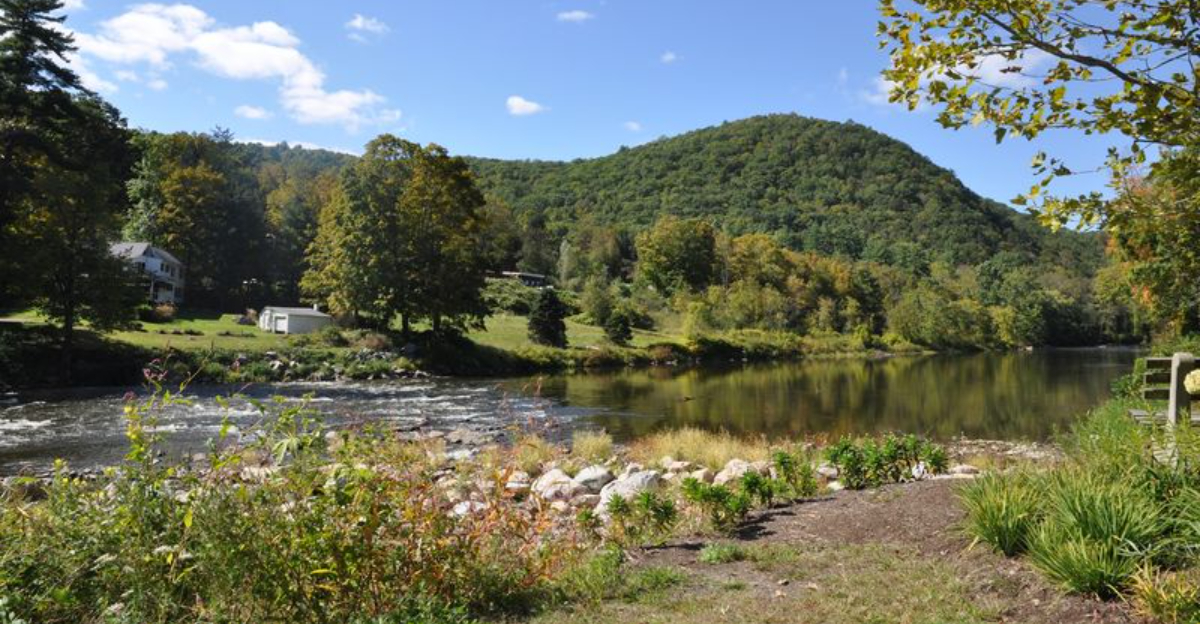
A place can feel wonderfully removed from the usual map without being far from anything at all.
This tiny riverside village keeps such a low profile that even longtime Connecticut residents can miss it unless they know where to turn. The roads narrow here, and the pace seems to soften almost immediately.
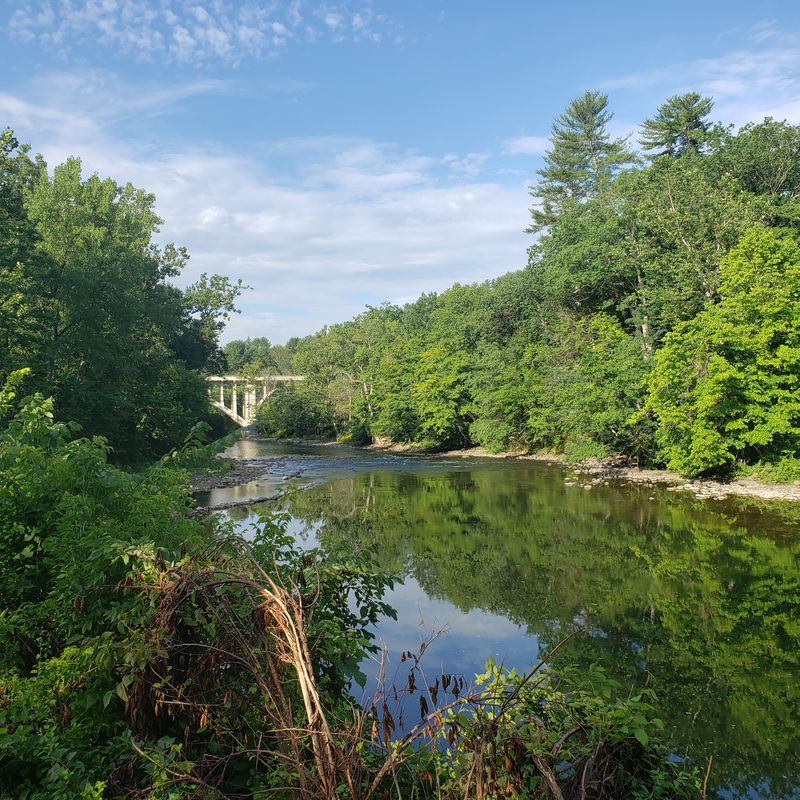
Its setting does most of the talking. Water moves beside the village while wooded hills make the surroundings feel pleasantly secluded.
There is also a historic landmark that gives the area a storybook touch without making the whole place feel staged for visitors.
You can wander for a while and still get that rare feeling of having found somewhere unusually quiet.
That sense of discovery is what gives the village its charm. It feels lived-in rather than polished for attention.
If you enjoy finding corners of the state that somehow stay off the usual radar, this one may leave you wondering how it remained so easy to miss.
1. Tiny Riverside Village With Storybook New England Charm
Blink and you might already be through it. Somehow, that is part of the fun.
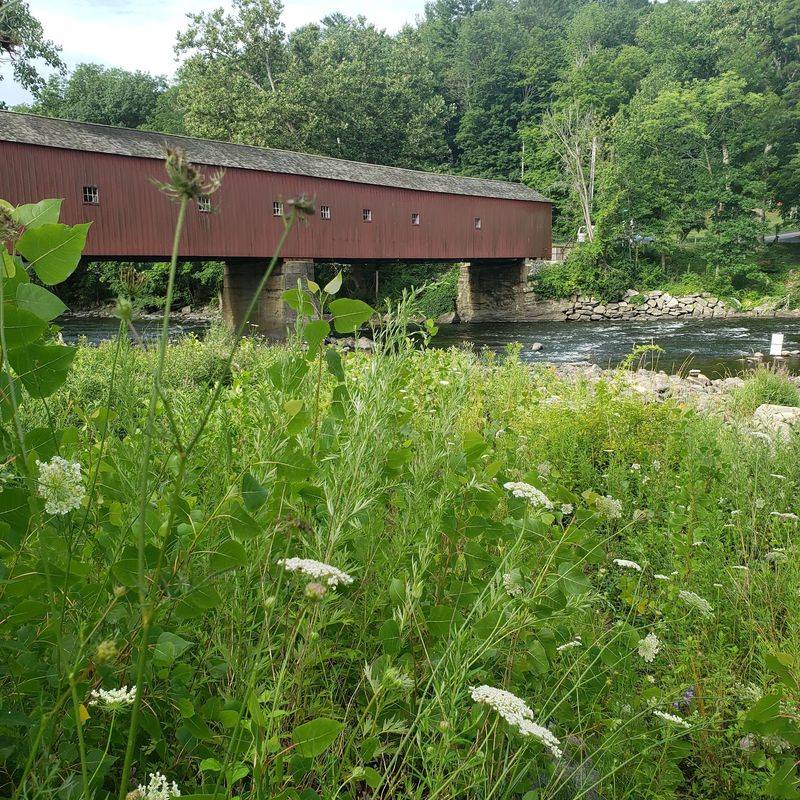
West Cornwall is tiny enough to explore without much of a plan, yet the setting makes it surprisingly easy to linger. The village gathers beside the Housatonic River where Mill Brook rushes down to meet it, with wooded hills rising close around the compact center.
Water shapes much of the atmosphere. Its sound follows you through the village, while the historic covered bridge adds another unmistakable piece of rural New England character.
Buildings sit close enough together that wandering on foot feels natural, and the scale keeps everything relaxed rather than hurried.
That quiet appearance comes with deeper roots. Cornwall has long remained strongly rural, shaped by forest and farmland, while West Cornwall developed as a small river community with its own distinct identity.
A quick walk through the center may take only minutes, but that rarely feels like the point. It is better to slow down, notice the stone walls and old buildings, then spend a little longer beside the river.
Comfortable walking shoes are useful because pavement and sidewalks can vary. By the time you leave, the loudest memory may simply be moving water and wind through the trees.
2. Historic Buildings And Small Shops Around The Village Center
Back in the 1800s, this little village was busy in a way that is hard to picture now.
It served as an active industrial and business hub for the township, with a post office, general stores, a tin shop, a blacksmith, and glove and shoemaking operations all working within a few hundred feet of each other.
The Mallinson Shear Shop, established in 1850, was once the community’s largest employer. The big industry is long gone, but the buildings stayed and found new jobs.
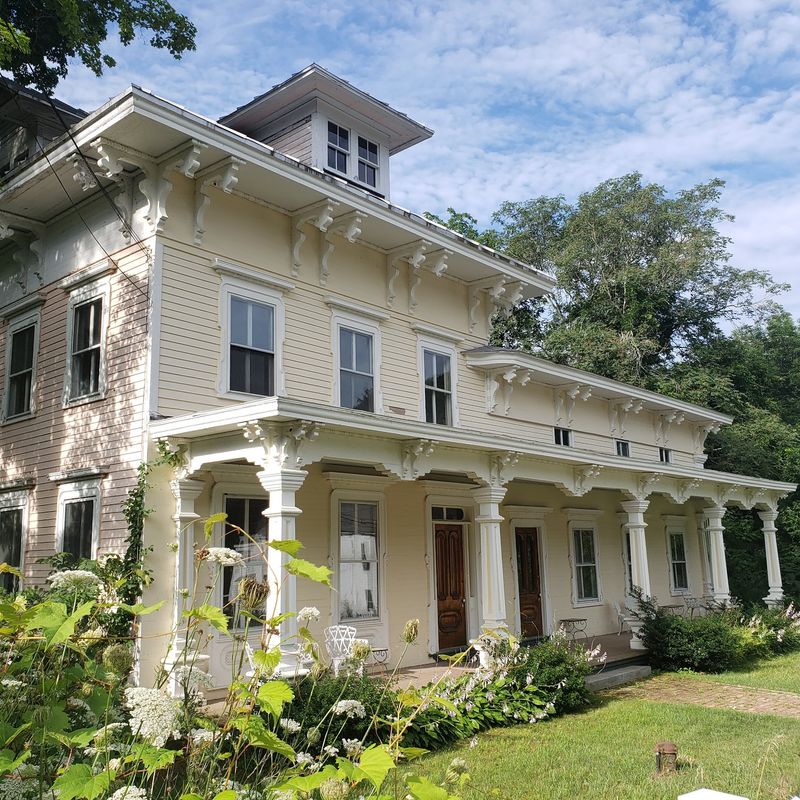
Architecture fans get a compact tour. The West Cornwall Congregational Church, built in 1877 in a Gothic and Stick style, now serves as a residence.
The Italianate Foster Mansion dates to around 1860, and the Greek Revival Foster-Beck House to roughly 1845.
One modest frame structure, possibly as old as 1800, once collected tolls for the Sharon-Goshen and Warren Turnpikes, a leftover from the days before highways existed.
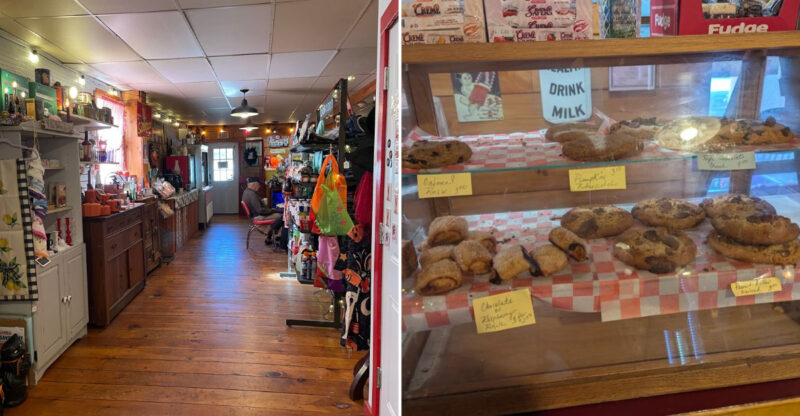
Today the center holds a handful of small, inviting shops. The Wish House offers gifts, clothing, and home accents, many made by local artisans or gathered from farther afield, and you will find it at 413 Sharon Goshen Tpke, West Cornwall, CT 06796, United States.
3. Northwest Hills Along The Housatonic River
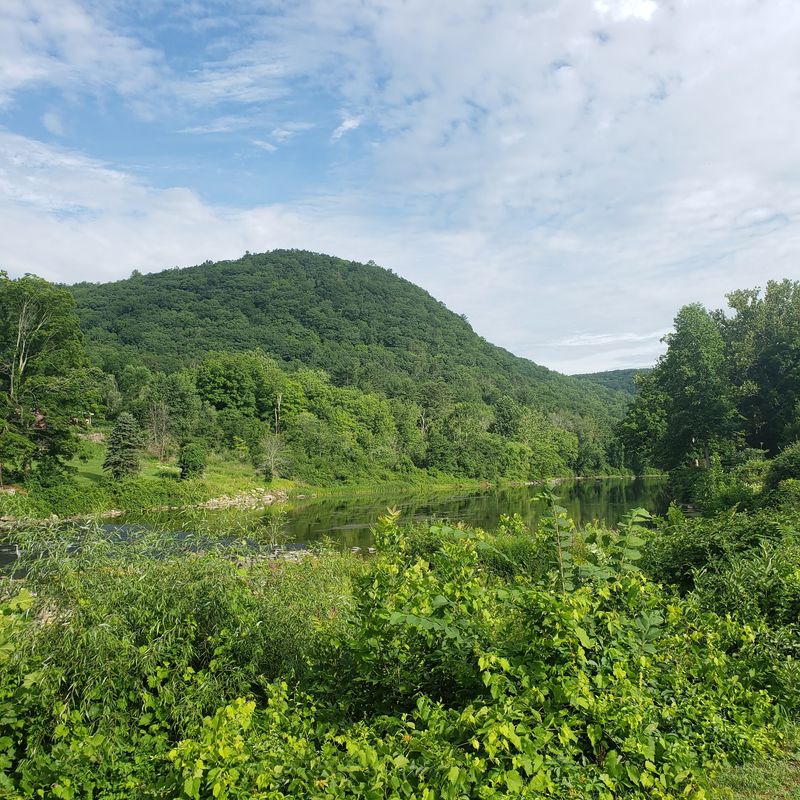
Geography explains a lot about why West Cornwall stays so quiet. The village belongs to the Litchfield Hills, the region many people simply call the Northwest Corner of the state, and the town of Cornwall sits along the east bank of the Housatonic.
That river begins in the Berkshire Mountains of western Massachusetts and runs south through western Connecticut, gathering strength as it goes. Heavy woods crowd both banks through this stretch, which gives the water a secluded, hidden-away feeling even where roads run close by.
Recreation follows the river. Paddling, fishing, and hiking are all part of daily life in Cornwall, and fly fishing has a particularly strong reputation here.
Anglers rate this section of the Housatonic among the finest trout fishing destinations in the eastern United States, sometimes comparing it favorably to celebrated western rivers. The stretch operates under a strict catch-and-release policy, so check the current regulations before you cast.
Just south of the village, Housatonic Meadows State Park spreads along both sides of the water with access for fishing, canoeing, and picnicking.
Even if you never touch a rod or paddle, the riverbank makes an easy place to sit and watch the current work its way downstream.
4. The Famous Red Covered Bridge Still Carrying Traffic
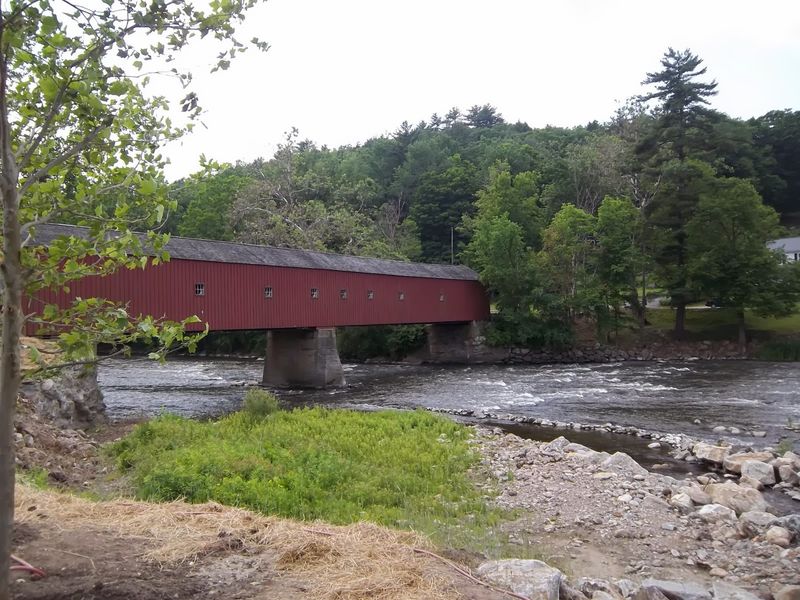
Here is the landmark that puts this village on the map. The West Cornwall Covered Bridge is one of the few remaining covered bridges in the state, it appears on the National Register of Historic Places, and it still carries vehicle traffic on Route 128 across the Housatonic.
Bridges have crossed at this point since as early as 1762, though floods repeatedly claimed the earlier ones. The current structure was most likely completed around 1864.
Numbers tell part of the story. It runs 172 feet long and 15 feet wide, built from red spruce timber using a Town lattice truss design fastened with wooden treenails.
Its survival is remarkable. Major floods in 1938 and 1955 came and went, an ice jam in 1961 had to be cleared with dynamite, and in 1945 a 20-ton oil truck broke through the floor.
A 1973 renovation added a concealed steel support deck, strengthening the span for modern loads and earning a Federal Highway Administration award for historic preservation.
The signature red paint arrived in 1957, replacing an earlier gray. Movie buffs may recognize the bridge from the opening scenes of the 1967 film Valley of the Dolls.
5. More Than A Century Of Life Around The River
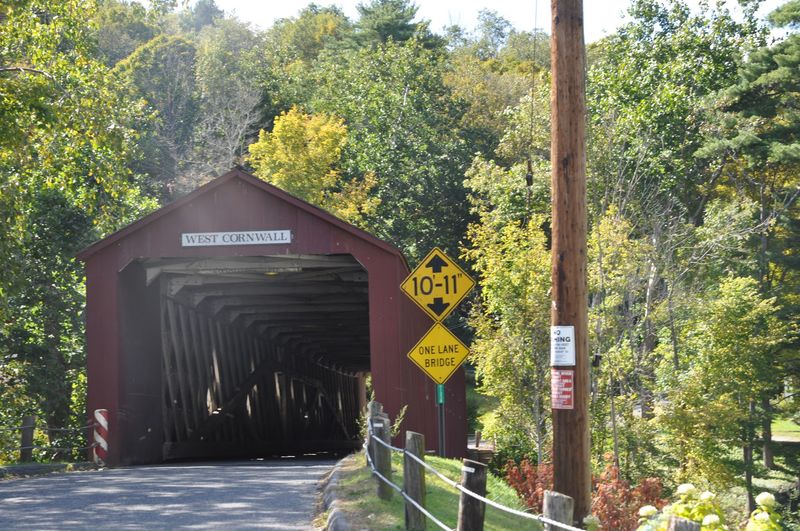
Cornwall was incorporated in 1740 and named after Cornwall, England, so the roots here go back a long way. The riverside settlement that became West Cornwall got its official name after the Housatonic Railroad arrived in 1841.
The 1800s were the village’s boom years. It grew into an active industrial site and a real business center for the township, with the river doing heavy lifting by moving goods and materials.
That water access shaped both the early farming economy and the industries that followed. During the Industrial Revolution, Cornwall supported charcoal-making operations and two furnaces, one of them a blast furnace.
Education and agriculture left their mark too. The Foreign Mission School operated here from 1817 to 1826, and the Cream Hill Agricultural School was established in 1845.
West Cornwall was never meant to be the whole town. It developed as one of several small settlements that together made up what locals came to call the seven Cornwalls.
Understanding that layered past changes how the village looks. What reads today as a peaceful cluster of buildings is really the calm after generations of work, adaptation, and rebuilding along a demanding river.
6. Galleries And Local Makers Behind Quiet Storefronts
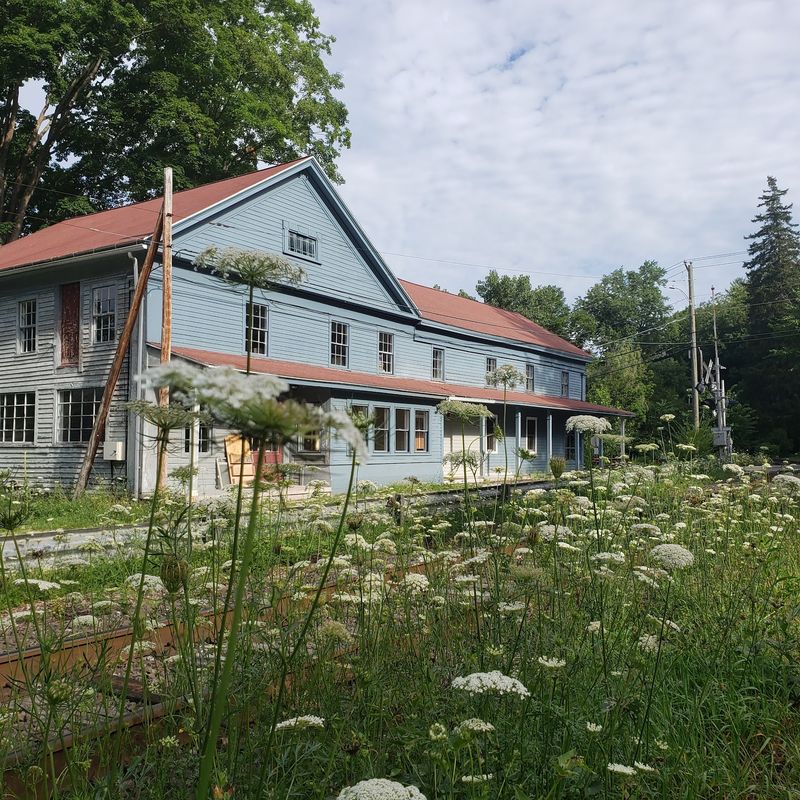
Artists have been quietly moving into the Litchfield Hills for generations, drawn by the same calm that makes West Cornwall easy to overlook. Those unassuming storefronts often open onto studios, galleries, and shelves of handmade work.
The Wish House doubles as a shop and a supporter of regional craftspeople, mixing their pieces in with gifts and home accents. Inside, the Souterrain Gallery gives local artists a dedicated place to show their work.
Timing your visit around the Cornwall Artists Open Studio pays off. Participating artists welcome the public into their working spaces to talk about process and materials, which is a very different experience from browsing a display case.
Other storefronts widen the range. Macaire + Kristoph deals in vintage and antique finds inside a 19th-century building, and The Local sells goods exclusively from Cornwall’s farmers, cooks, and craftspeople so the money stays close to home.
From May through October, the Cornwall Farm Market sets up on The Wish House lawn on Saturdays with fresh produce and artisanal goods.
Hours in a village this small can shift with the season, so a quick check before you drive out saves disappointment. Weekend afternoons tend to be the safest bet.
7. Riverside Trails With Peaceful Housatonic Views
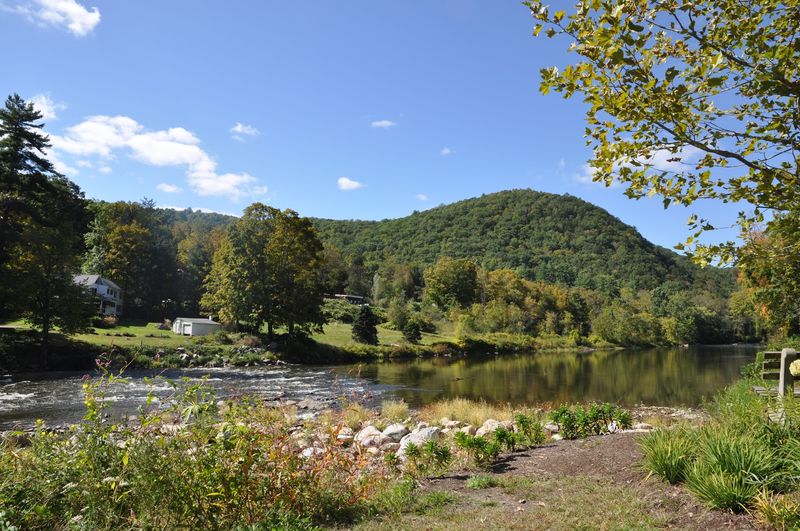
Walkers get spoiled here without much effort. The Trinity Riverside Trail runs 1.4 miles one way, or 2.8 miles out and back, along a remote stretch of the Housatonic just south of the covered bridge, and it suits a wide range of abilities.
Access sits off Lower River Road, which keeps the parking situation simple and the crowds thin.
A scenic section of the Appalachian Trail also follows the river through Cornwall. Sometimes called the Housatonic River Walk, it stays largely flat and peaceful, with hikes stretching anywhere from one mile to ten depending on how much time you have.
Wildlife watching adds a layer of suspense. Bald eagles are known to nest in the area, so keep your eyes on the treetops as well as the water.
Housatonic Meadows State Park, directly south of the village, offers more riverside access for fishing and canoeing if you want to get on the water instead of beside it.
For a climb with a payoff, the Pine Knob Loop Trail north of Cornwall Bridge in the same park delivers views out over the river valley.
Pack water and check trail conditions after heavy rain, since riverside paths can stay damp.
8. Planning A Visit To A Village Most People Drive Past
The best mistake you can make here is assuming twenty minutes will be enough. West Cornwall is tiny, but rushing through it misses most of the charm.
Give yourself a slow morning instead. The covered bridge makes an easy first stop, and from there the compact village opens up naturally on foot.
Small shops and galleries sit close by, while the river keeps pulling attention back toward the water.
Saturdays add a little extra energy during the warmer months. The West Cornwall Farm Market runs on the lawn of The Wish House from May through October, bringing local food and goods into the village from 10 a.m. to 1 p.m.
Fall brings the biggest surge of visitors, especially when the surrounding hills begin changing color. A weekday visit can make the village feel noticeably calmer, while spring and summer offer greener scenery and pleasant conditions for nearby trails.
Because many local businesses are independently operated, hours may shift with the season. A flexible schedule works better than planning every minute.
Wear comfortable shoes for uneven ground and carry water if the riverside paths are part of the day. Then resist the urge to hurry.
West Cornwall is much more memorable when you let a short stop quietly turn into something longer.