Manatees Start Arriving At This Crystal River Spring Next Month, And Here’s Where To Watch
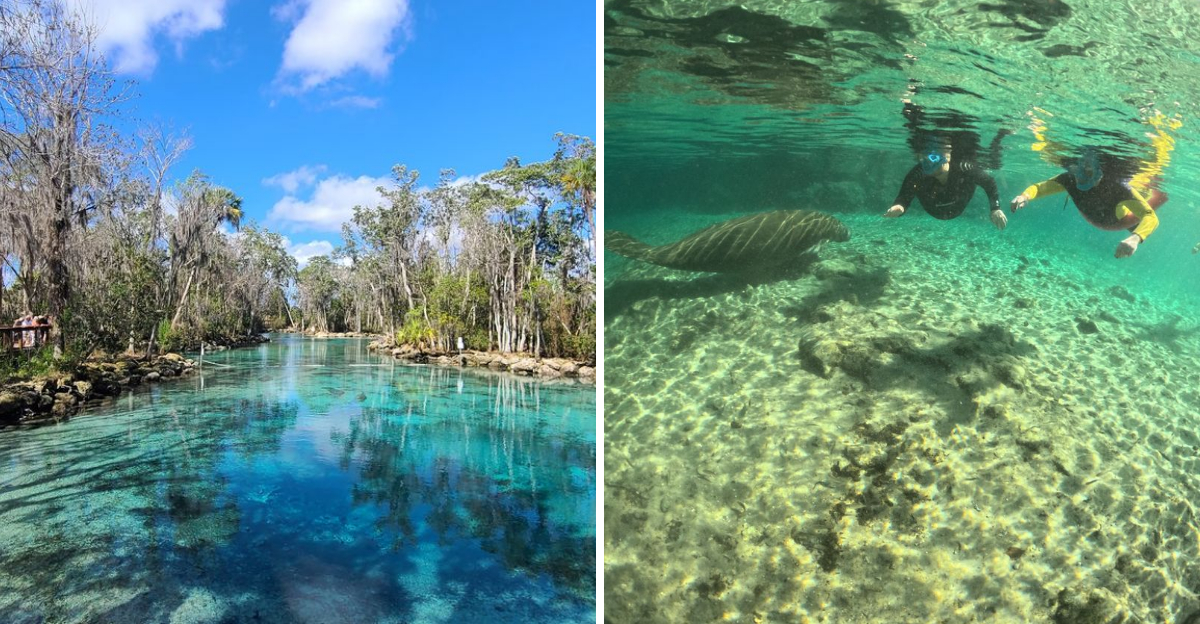
Some places in Florida sneak up on you. You pull into a small parking lot expecting a quiet walk, and twenty minutes later you are leaning over a wooden railing watching hundreds of enormous, whiskered animals drift beneath water so clear it barely looks real.
Every autumn, as the Gulf cools down, these round-bodied swimmers start showing up in a cluster of springs that stay a steady 72 degrees all year. What follows is everything worth knowing before you go, from when the crowds of manatees peak to exactly where you can stand to see them.
A Spring System Tucked Inside a City Neighborhood
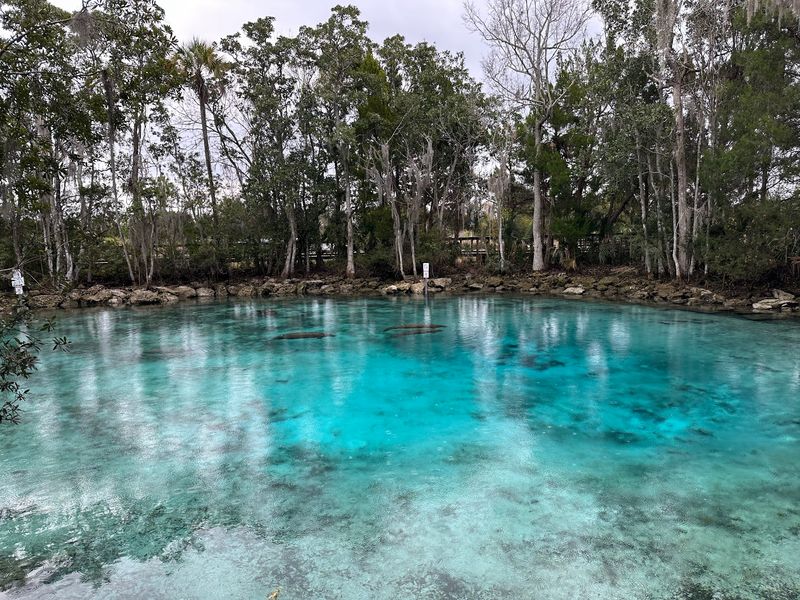
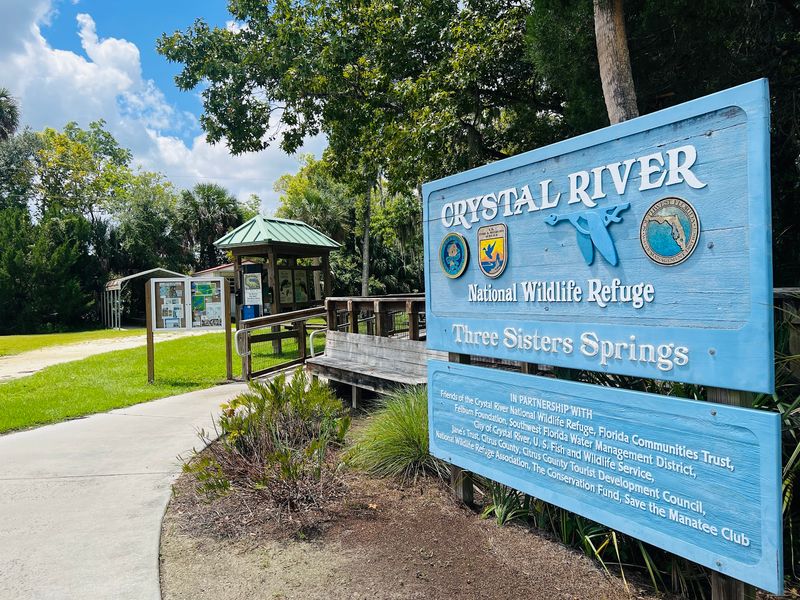
Drive through a quiet residential stretch of Crystal River and you would never guess what sits behind the trees. Three Sisters Springs, at 917 Three Sisters Springs Trail, is a wildlife refuge built around a trio of connected spring vents that pour clear, constant-temperature water into Kings Bay.
The springs hold roughly 72 degrees Fahrenheit year-round, no matter what the weather does above the surface. That single fact explains almost everything about why this small property matters so much.
When Gulf waters slide below 68 to 70 degrees, manatees cannot tolerate it for long. They need warmth, and they know where to find it.
So they push inland, following the rivers, and funnel into these bright blue pockets by the hundreds.
The refuge itself is compact. There is a trail, a boardwalk that loops the spring pools, restrooms, and staff or volunteers stationed at key points.
No restaurant, no gift shop sprawl, no theme park polish.
What you get instead is a viewing platform over one of the most reliable winter wildlife gatherings in the United States, right in the middle of an ordinary Florida town.
Why Crystal River Earned the Manatee Capital Title
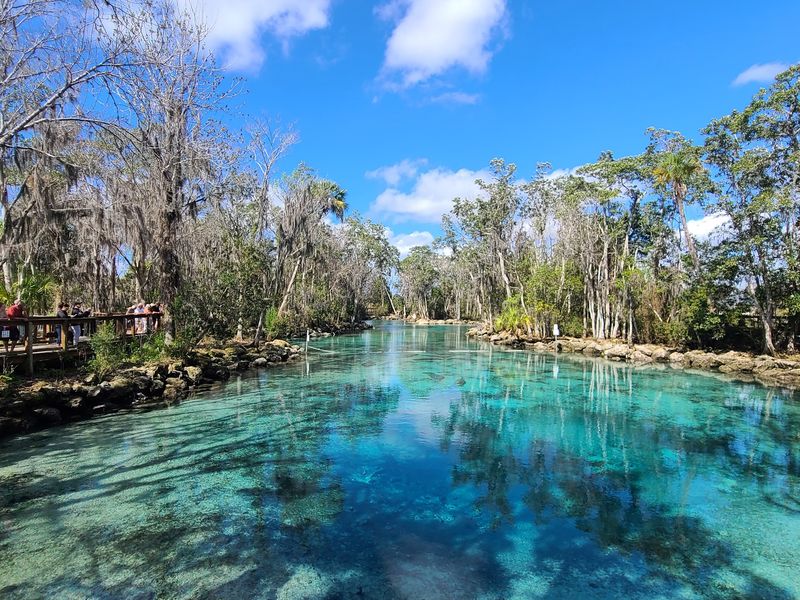
Hundreds of springs feed Kings Bay, and that concentration is unusual even in a state famous for its aquifer. All that groundwater bubbling up at a steady temperature creates a winter refuge that no other stretch of Florida coastline quite matches.
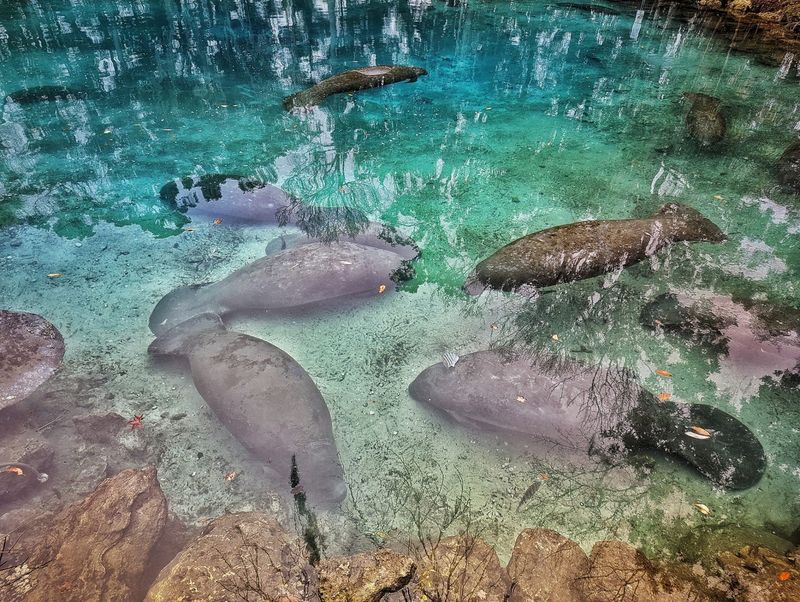
Crystal River carries the nickname Manatee Capital of the World, and the numbers back it up. During cold snaps, the animals stack into the warm pockets so densely that visitors on the boardwalk describe losing count entirely.
There is another distinction worth knowing. Crystal River is the only place in the country where regulated in-water interaction with wild manatees is legally permitted, which is why guided snorkel and paddle operations cluster around the bay each winter.
That permission comes wrapped in rules, and plenty of them. Passive observation is the standard, and the protected sanctuaries within the system close entirely to the public each season.
None of that applies to boardwalk viewing, which is the simplest, most protective way to see them. You stay dry, the animals stay undisturbed, and the water does the rest of the work by being clear enough to see straight to the bottom.
October Arrivals and the November Rush
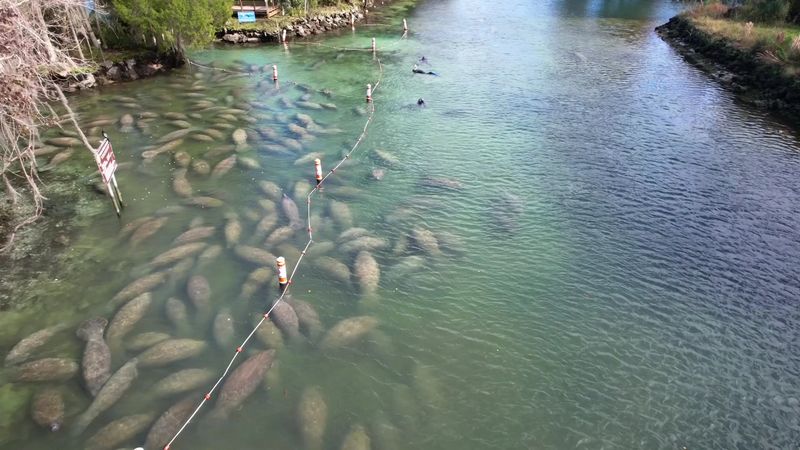
October is when the first movement begins. As water temperatures start their seasonal slide, manatees begin gathering in the headwaters of the Crystal and Homosassa Rivers, a trickle at first rather than a flood.
Official manatee season runs November 15 through March 31. That window is when hundreds migrate in, and it is also when the strictest protections kick in across the sanctuaries and spring interiors.
Peak viewing lands squarely between December and February. Cold fronts are the trigger: the sharper the temperature drop outside, the more animals pack into the warm springs, and visitors who happen to arrive during a chilly stretch often see the biggest gatherings of their lives.
A handful of manatees live around Crystal River all year, so summer and spring visitors occasionally spot a lingering resident. It is a bonus rather than a guarantee.
Anyone planning a trip specifically to see the winter crowds should aim for the heart of the season. Warm December weeks can scatter the animals across the bay, while a cold January morning can turn the springs into something close to a traffic jam of gray backs and slow-moving tails.
The Boardwalk, and Why It Is the Best Seat in the House
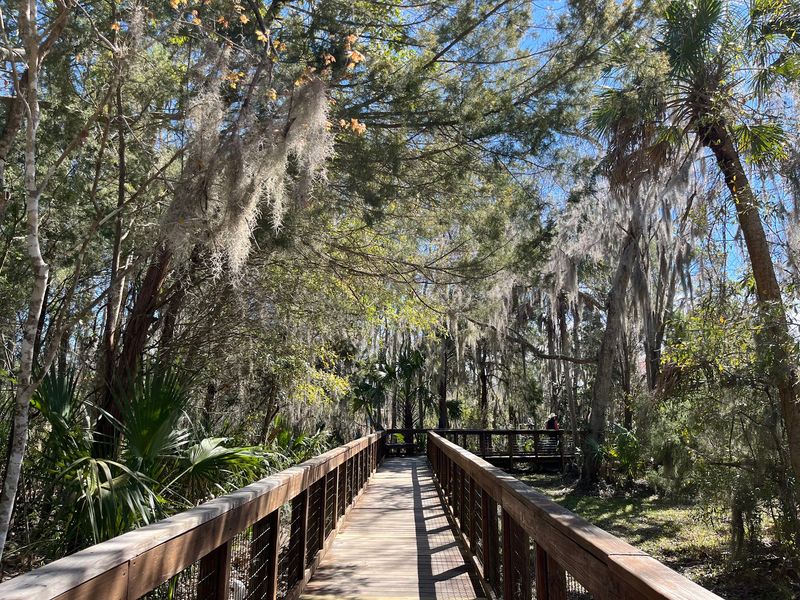
Picture a raised wooden walkway curving around three glass-clear pools, with railings low enough that you can lean out and look straight down. That is the boardwalk, and it is the reason most people come.
Wildlife managers consider it the most protective way to observe manatees here, because nobody is in the water and nothing gets crowded or startled. The animals go about their business a few feet below while people watch quietly overhead.
Visitors regularly mention seeing hundreds at once on cold mornings, describing them as boulders that occasionally shift position. Others note that the manatees drift with the tide, so the view at low tide can be completely different from the view three hours later.
Rangers and volunteers station themselves along the walkway during busy months. They answer questions, point out individual animals, and share details about behavior and conservation that turn a nice look into an actual education.
Birdlife shares the space too. Wading birds, hawks, and owls work the surrounding wetlands, and the walk out to the boardwalk doubles as a quiet nature trail with turtles and fish visible in the shallows.
What the Water Looks Like Up Close
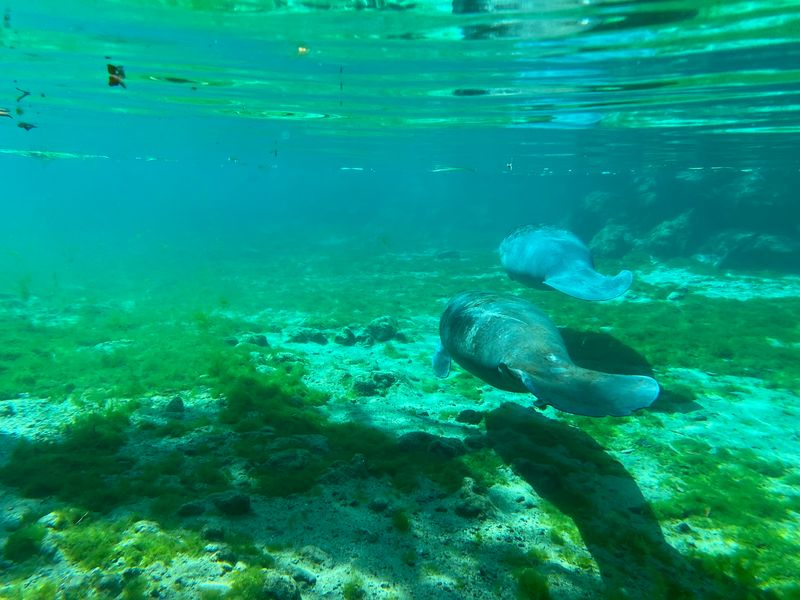
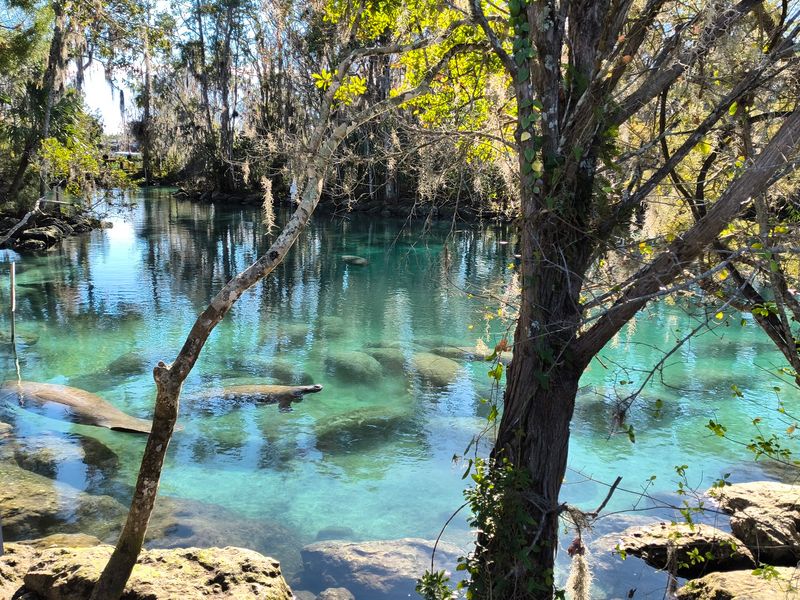
Clarity is the thing photographs never quite capture. The spring water here runs so transparent that the sandy bottom, individual fish, and every ripple of a manatee’s back read with almost uncomfortable sharpness.
Sunlight cuts through in visible shafts on bright mornings. The pools shift between pale aquamarine and deep blue depending on depth and angle, and the boundary where spring water meets the darker river water is often visible as a shimmering seam.
Visitors bring up the clear water constantly when describing the place, and it is not exaggeration. Turtles, schools of mullet, and the occasional alligator sunning at a distance all become part of the show simply because you can see everything.
Water levels fluctuate. Some months the springs sit low and the flow slows, which actually improves visibility in certain spots.
Rain and tide can cloud things temporarily.
For photography, polarized sunglasses or a polarizing filter make an enormous difference by cutting surface glare. Without one, you spend half your time fighting reflections.
With one, the water essentially disappears and the manatees look like they are floating in air.
No Swimming From the Park Side
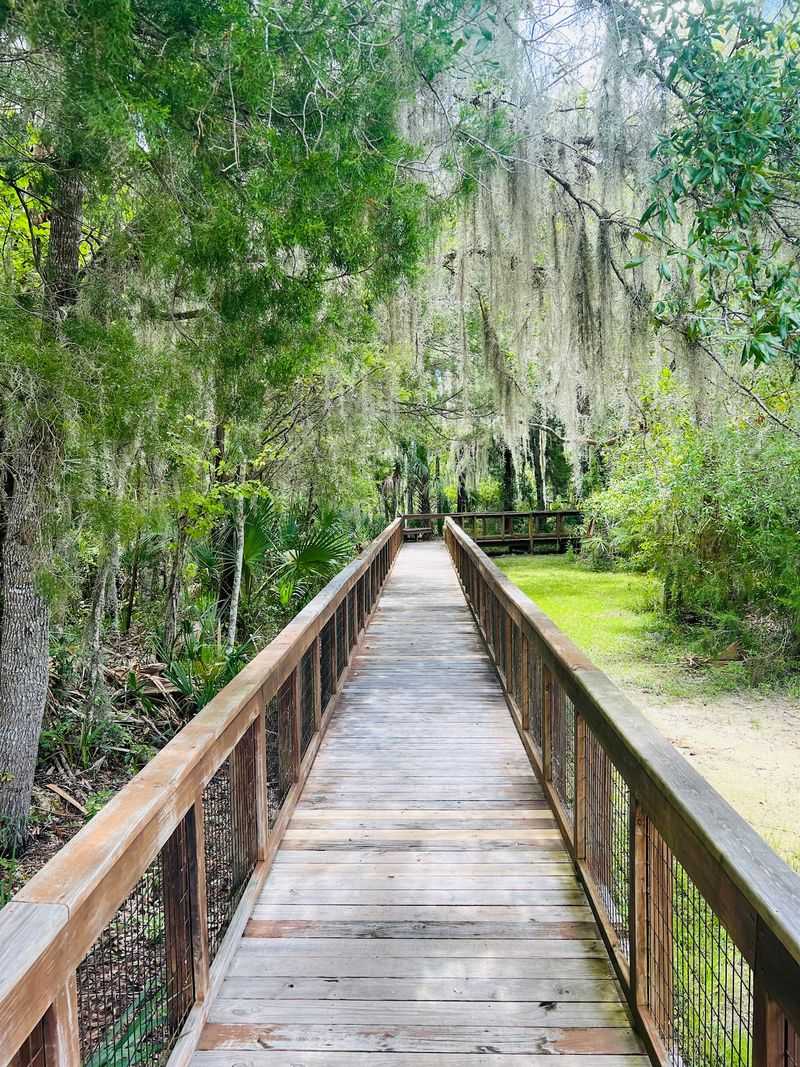
Here is the detail that trips up first-time visitors more than any other: you cannot get into the water from inside the refuge. There is no ladder, no beach, no launch ramp on the park side.
Several people have arrived with towels and snorkel gear only to learn that entry has to happen elsewhere. Swimmers and paddlers reach the springs from Kings Bay by water, launching from separate public access points or joining a guided tour.
The park itself offers walking trails, the boardwalk, restrooms, and picnic space. That is the full menu, and honestly it is enough for most people during manatee season.
During the November 15 to March 31 window, paddlecraft are generally kept out of the spring interior, and in-water access can close entirely on cold days when manatees are packed in and vulnerable. The closures are not arbitrary; they exist because a startled animal leaving warm water in freezing conditions is at real risk.
Plan around it rather than against it. Book any snorkel or kayak experience separately through a licensed operator, then use the boardwalk as your dry, guaranteed, no-schedule-required look at the same animals.
Kings Bay and the In-Water Route
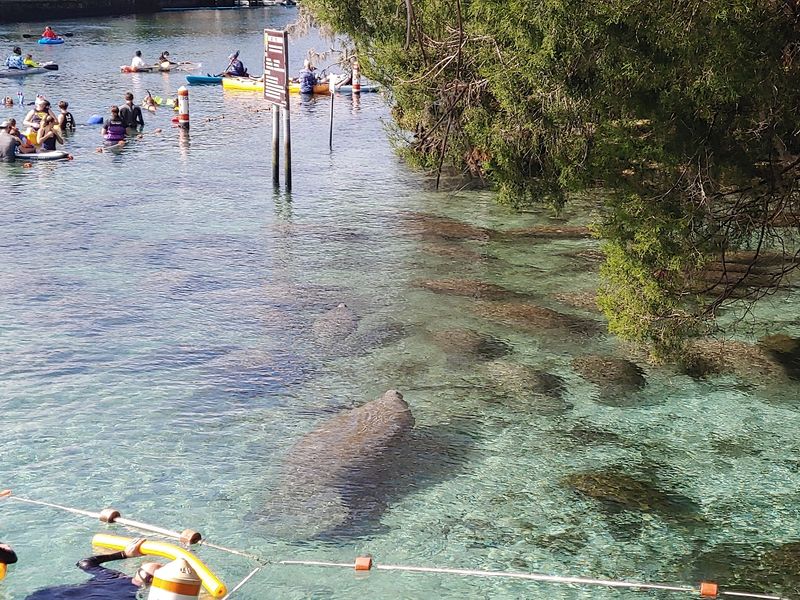
Kings Bay is the larger stage that Three Sisters Springs sits within. Dozens of springs feed it, manatees spread throughout it, and it serves as the main hub for in-water experiences during the cold months.
Guided snorkel trips launch from marinas around the bay. Operators typically require everyone to watch an educational video on Manatee Manners before anyone gets in, which covers the do-not-touch, do-not-chase, do-not-feed basics.
Clear-bottom kayaks and paddleboards have become popular here, letting people see beneath the hull without entering the water at all. Some visitors do a morning snorkel trip and then walk the boardwalk the next day, which gives two completely different perspectives on the same population.
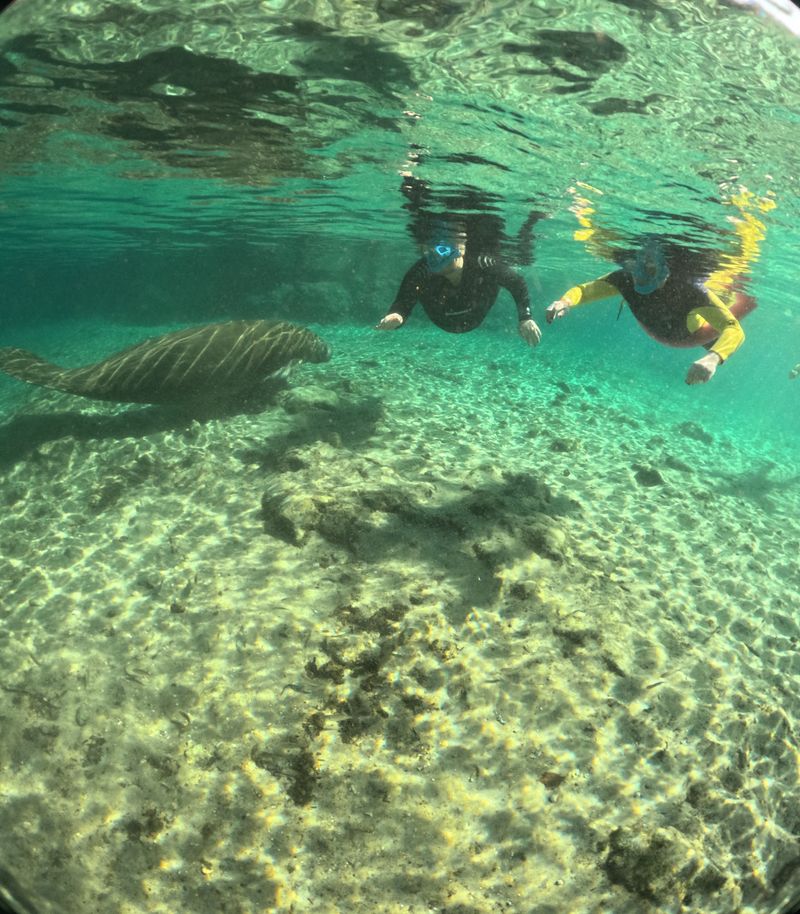
Passive observation is the rule that matters most. If a manatee swims up to you on its own, the correct response is to hold still and let it pass rather than reaching out or following.
Sanctuaries scattered through the bay stay closed to all public use from November 15 through March 31. Those roped-off zones are where the animals rest undisturbed, and staying clear of them is non-negotiable.
Hunter Spring Park as the Launch Point
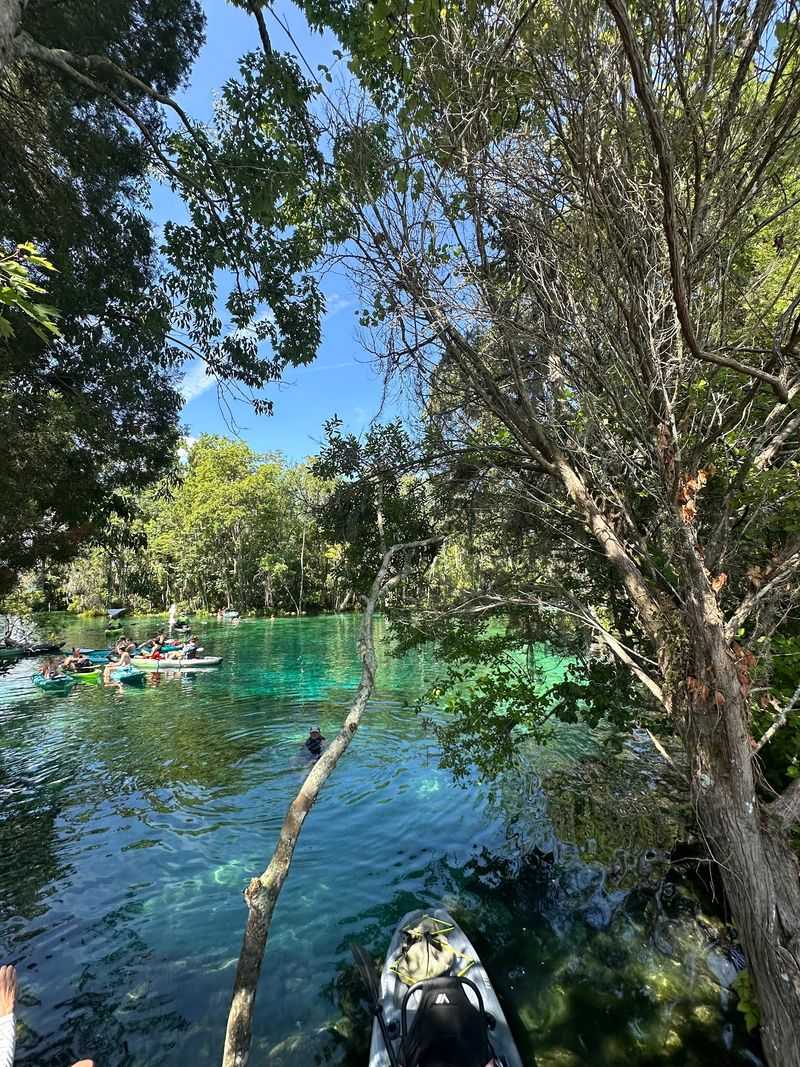
Need somewhere to actually get on the water? Hunter Spring City Park handles that job.
It offers public parking, restrooms, and a launch suited to kayaks and paddleboards.
Hunter Cove sits right alongside it, and the spring-fed clarity there makes for consistent manatee sightings through the season. Plenty of paddlers put in here and work their way toward the Three Sisters area rather than trying to launch from the refuge.
The shuttle that operates out of Three Sisters Springs connects to nearby spots including Hunter Spring, which turns the two locations into a fairly tidy pairing for a single day.
Early morning is the move. Fewer boats, calmer water, and manatees that tend to be more active before the day gets busy.
Swimming is possible at Hunter Spring in a way it is not at the refuge, so families wanting both a dry viewing experience and a chance to float in spring water often split their time between the two.
Keep an eye out for manatee footprints, those smooth circular swirls on the surface that mark an animal moving just below.
The Homosassa Springs Alternative
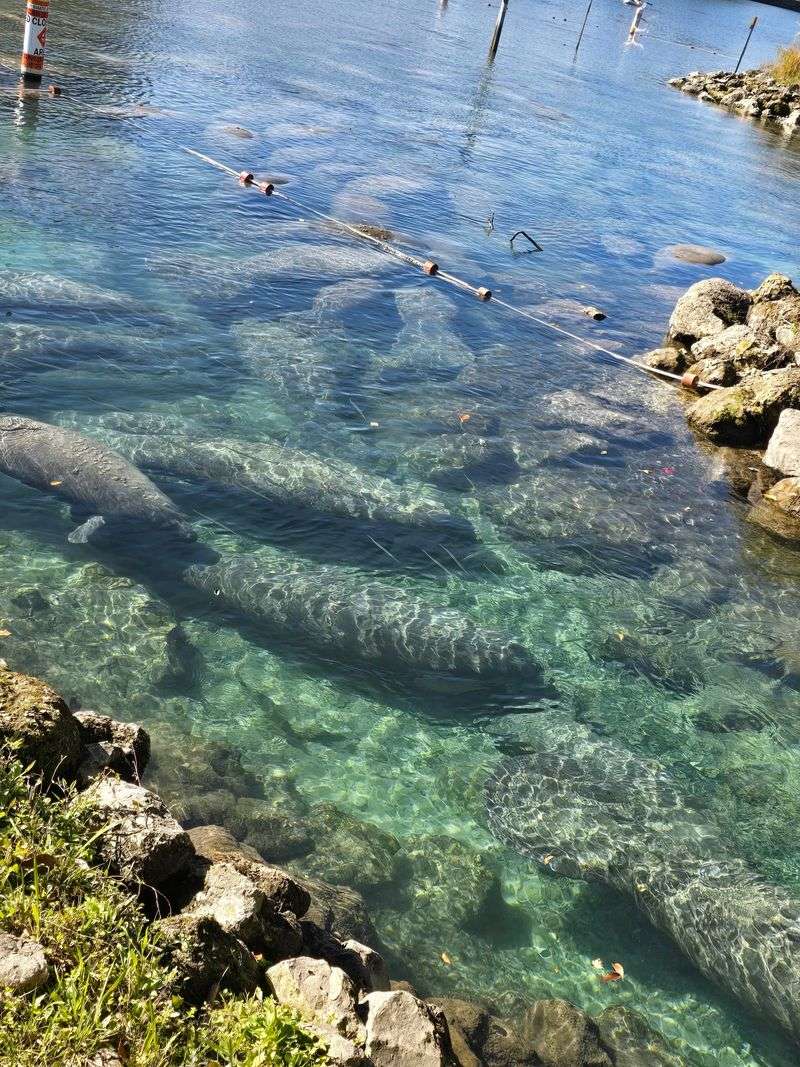
About twenty minutes down the road, Ellie Schiller Homosassa Springs Wildlife State Park offers a different angle on the same species. It functions as a rehabilitation center for injured and orphaned manatees while also drawing wild ones in during winter.
Its signature feature is a floating underwater observatory. You walk down into it and find yourself eye level with the springs, watching manatees glide past large windows without a single ripple between you and them.
For anyone traveling with young kids, the guaranteed sightings are a real advantage. Wild animals do not follow schedules, but the resident population here does not go anywhere.
Manatees begin gathering in the Homosassa River headwaters in October, the same seasonal cue that fills Crystal River. So a cold-weather trip can reasonably cover both.
Pairing the two makes for a satisfying day. The state park explains the biology, the rescue work, and the individual stories, while the boardwalk at Three Sisters delivers the raw spectacle of a wild gathering.
Different experiences, same remarkable animal, and both within an easy drive of each other on Florida’s Nature Coast.
Manatee Manners and the Rules That Protect Them
Rules here are not suggestions. The U.S.
Fish and Wildlife Service promotes a set of guidelines known as Manatee Manners, and they boil down to one idea: watch, do not interfere.
Touching, chasing, cornering, feeding, riding, or otherwise disturbing a manatee is prohibited. So is entering any designated sanctuary during the closed season from November 15 to March 31.
Should an animal approach you in the water on its own terms, the guidance is to stay still and let it move along. Encouraging repeat contact teaches habits that put manatees in danger around boats.
Boaters carry their own responsibilities. Posted speed zones exist for a reason, and watching for the round surface swirls that mark a submerged animal takes real attention.
Polarized sunglasses help enormously on the water, cutting glare so you can spot shapes below the surface before you reach them.
Volunteers stationed around the springs keep an eye on snorkelers and answer questions, and visitors frequently express gratitude for that oversight. The reasoning is simple.
Careful behavior now is what keeps this experience available for the people who come next winter.
Timing Your Visit for Fewer People and More Action
Weekday mornings win. Fewer cars, shorter waits, and manatees that tend to be livelier before the crowds build.
The refuge opens at 8:30 AM every day of the week and closes at 4:30 PM, which gives you an eight-hour window and a very clear best hour within it. Arriving right at opening on a cold Tuesday in January is close to ideal.
Cold fronts are the wild card worth tracking. Visitors have reported seeing enormous numbers one day after being told there were none the day before, all because the temperature dropped overnight.
Tides matter too. Manatees shift position as water moves, so a second pass later in the day can look completely different from your first.
Weekends and holiday weeks in peak season bring plenty of company on the boardwalk. It stays enjoyable, but you will be sharing the railing.
Around 68 degrees is often cited as the trigger temperature that sends the animals crowding into the warm springs. Check the forecast, watch for a chilly snap, and go.
Getting There, Parking, and the Shuttle
Parking is the pinch point. The lot near the entrance is small, and visitors have flagged it as the main logistical headache during busy stretches of the season.
A shuttle solves most of it. Operating out of the refuge, it carries people between the parking area and the springs, and it also runs to nearby destinations as part of the entrance arrangement.
Walking in is an option and a pleasant one. The trail from the entrance to the boardwalk is short, level, and lined with wetland views where birds are almost always working the shallows.
Plenty of people walk out and ride the shuttle back, which is a reasonable compromise after a long morning on your feet.
Accessibility is solid. The paths and boardwalk are described as easy going and manageable for a wide range of visitors, including those with mobility limitations.
Address for your navigation app: 917 Three Sisters Springs Trail, Crystal River, FL 34429. Phone is 352-586-1170 if you need to confirm conditions, and the visitor website posts seasonal updates worth checking before you leave home.
Admission, Facilities, and the Free Visitor Center
Twenty dollars is the figure visitors most commonly cite for admission during manatee season, with a small senior discount applied. Some call it pricey, though most add in the same breath that the sight of hundreds of manatees justified it.
Restrooms are on site, and the grounds are consistently described as clean, groomed, and well maintained. Picnic space makes it easy to build a longer stop rather than a quick look.
Before heading in, the Crystal River National Wildlife Refuge Headquarters is a smart first stop. It is free, filled with manatee information, and gives context that makes the boardwalk view far more meaningful.
Staff and volunteers get repeated praise for being friendly and genuinely knowledgeable. Rangers on the boardwalk field questions all day and clearly enjoy doing it.
Kayak rentals and eco tours operate nearby for anyone wanting time on the water, including clear-bottom options.
Bring water, sun protection, and comfortable shoes. Layers help too, because the mornings that produce the best manatee numbers are exactly the mornings when standing on an open boardwalk feels genuinely chilly.
Whether the Trip Is Right for You
Expectations shape everything here. Show up in May hoping to swim and you will find a walking trail and a picnic table.
Show up in January after a cold front and you may witness one of the densest wildlife gatherings in North America.
Families do well with it. The walk is short, the boardwalk is safe, and children tend to be genuinely stunned by the scale of the animals below them.
Photographers, birders, and anyone who likes quiet outdoor mornings will find plenty to work with beyond the manatees themselves, from wading birds to turtles to the light on the water.
Anyone determined to get in the water should build the trip around a licensed operator on Kings Bay and treat the refuge as the complementary dry-land view.
Carrying a 4.6-star reputation across thousands of visits, the place clearly delivers for most who come during the right months.
Mark mid-November through March on the calendar, aim for a chilly weekday morning, and let the springs do what they have done every winter for as long as anyone can remember.