This Grand Nebraska Cathedral Has Twin Stone Towers You Spot From Blocks Away, And Walking Inside Is Free
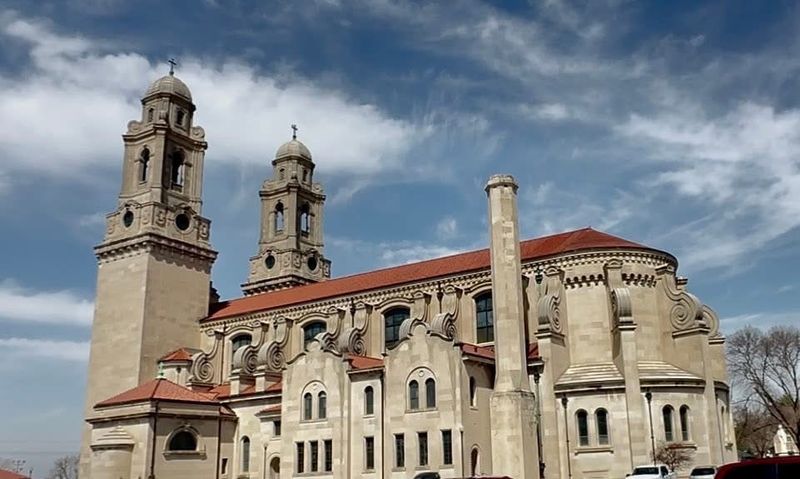
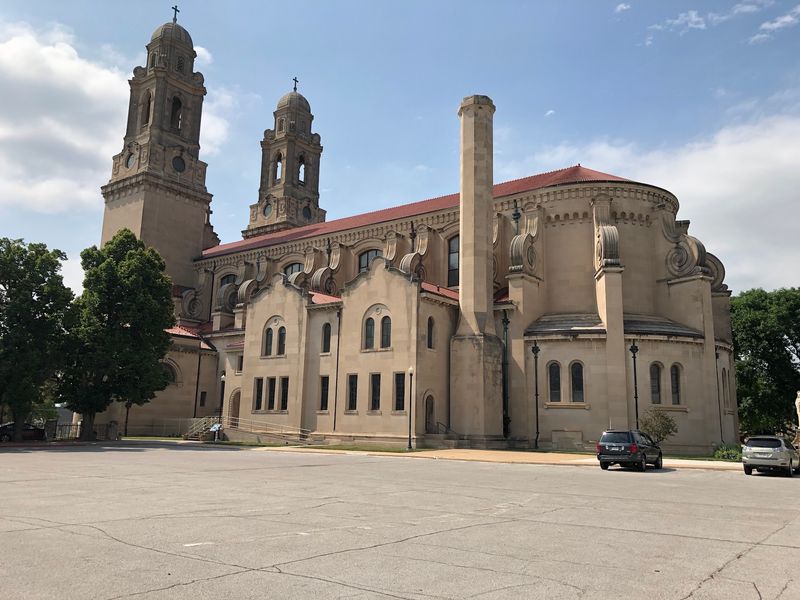
Driving through an ordinary Nebraska neighborhood of brick houses and shade trees, you round a corner and suddenly there are two pale stone towers rising over the rooftops. They belong to a building so large it seems to have wandered in from Spain and decided to stay.
The doors are unlocked on weekdays, nobody charges you a cent, and the inside is even bigger than the outside suggests. For families hunting an affordable afternoon that still feels like an occasion, that combination is hard to beat.
A Limestone Landmark on Omaha’s Gold Coast
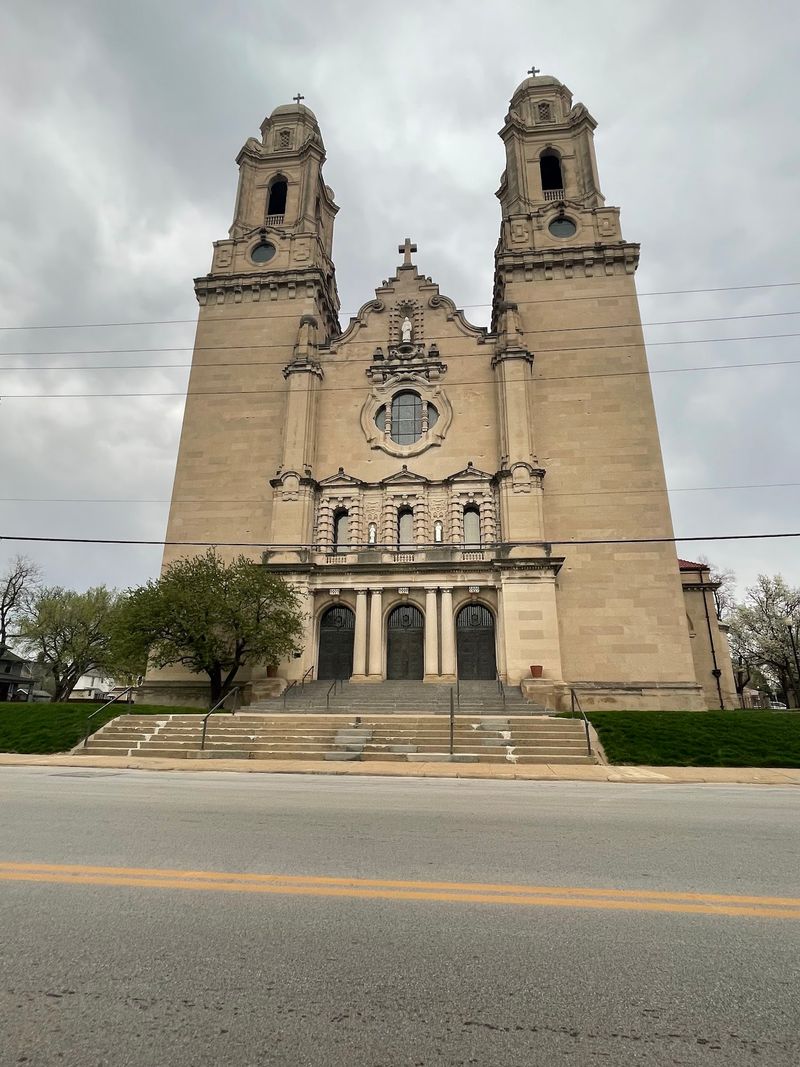
Address first, because it helps: 701 North 40th Street, Omaha, Nebraska. Saint Cecilia Cathedral sits on a hill in the historic Gold Coast neighborhood, and the hill does a lot of work.
The ground rises, the building rises on top of it, and the twin towers climb another 222 feet into the sky.
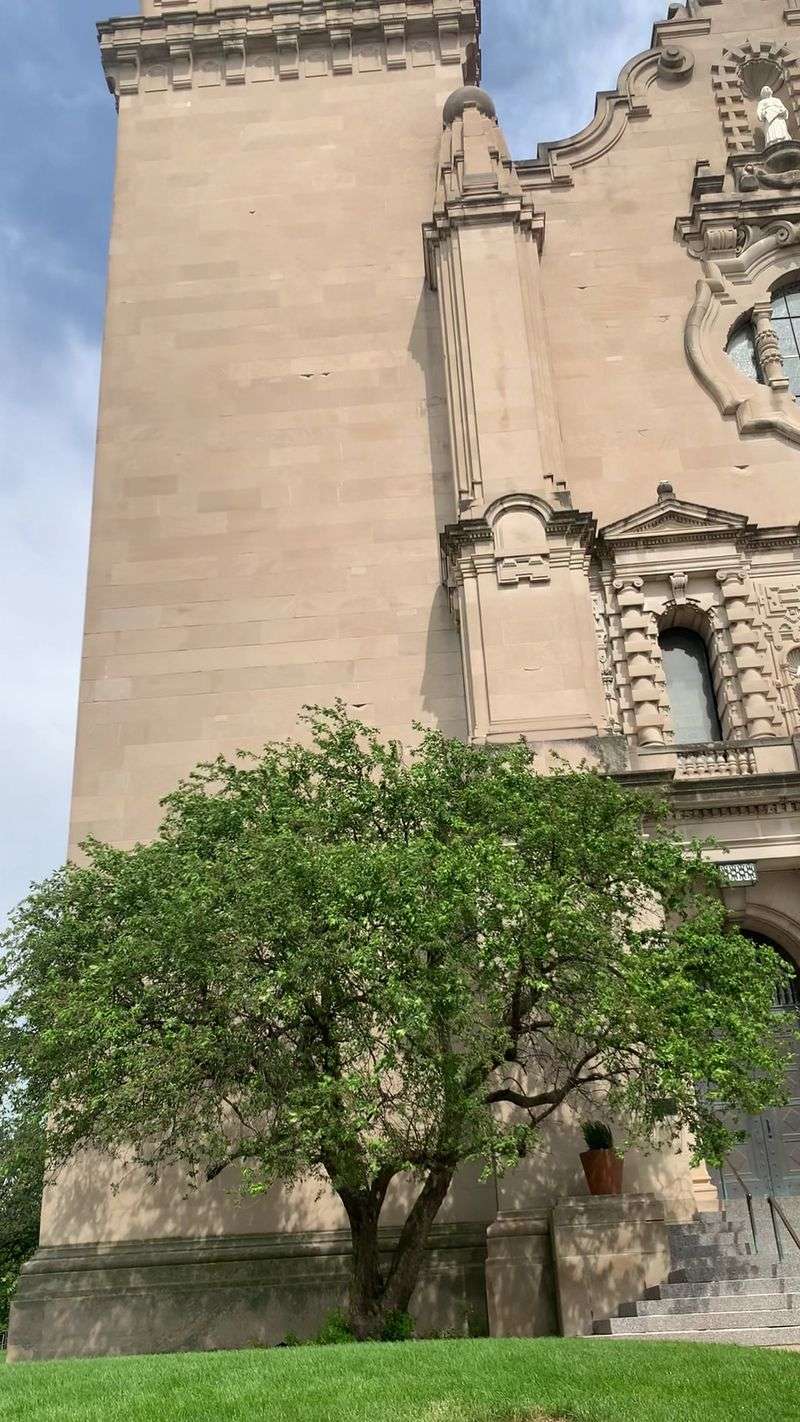
Off-white Bedford limestone covers the exterior, the same stone chosen for the Nebraska State Capitol down in Lincoln. Overhead, red Spanish tiles cap the roof in a color you rarely see on a Midwestern skyline.
Function matters as much as looks here. It is the seat of the Archdiocese of Omaha, an active Catholic cathedral where Mass is celebrated, not a museum with velvet ropes.
Walk-in visitors are welcome during posted hours, and there is no admission charge at the door.
The surrounding streets are ordinary residential blocks, which sharpens the effect considerably. You pass porches and parked cars, then the towers appear over the treetops and the scale rearranges itself in your head.
From 1905 Cornerstone to 1959 Consecration
Half a century separates the first shovel from the finished building. Construction began in 1905, the cornerstone was laid two years later, and services started inside by 1916 even though the cathedral was far from complete.
Full consecration waited until 1959. What held things up was the top of the structure: the domed cupolas crowning the towers were among the last major pieces to fall into place, and consecration followed their completion.
Think about what that span covers. Generations of Omaha families were baptized, married, and remembered inside walls that were still, in a technical sense, unfinished.
The building grew up alongside the city around it.
Solid masonry walls wrap a steel frame, a combination that gives the place its heavy, planted feeling while letting the interior open up dramatically. Nothing about the construction reads as rushed or economized.
Recognition eventually caught up. The cathedral is listed on the National Register of Historic Places and carries designation as an Omaha Local Landmark, protections that help keep the stonework and interior details intact for the long haul.
Why a Spanish Renaissance Church Landed in Nebraska
Spanish Renaissance Revival is not what most early twentieth-century American Catholic churches looked like. Gothic spires and Romanesque arches dominated the era.
Omaha architect Thomas Rogers Kimball went a different direction entirely.
His reasoning reached back to 1541 and the expedition of the conquistador Coronado, whose party pushed into the plains region that would eventually become Nebraska, accompanied by a Catholic priest. Kimball tied the building’s style to that early Spanish presence on the land.
He also aimed higher than borrowed decoration. The goal was a cathedral among the first in the United States to follow Old Country conventions strictly rather than loosely, from proportions to ornament to the red tile roof.
Does the argument hold up architecturally? Stand at the base of the towers and the answer settles itself.
The horizontal mass, the carved stone accents, the warm-toned roof against pale limestone all belong to a Mediterranean vocabulary that somehow suits a Nebraska hilltop.
Here is a detail that lands well with anyone proud of state history: this design choice makes Omaha’s cathedral genuinely unusual among American cathedrals of its generation.
Scale That Photographs Poorly and Impresses in Person
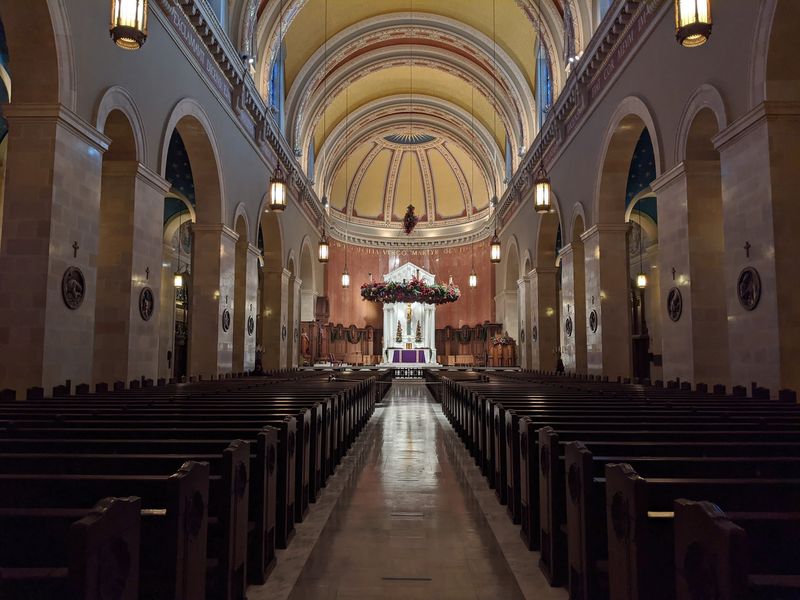
Photos flatten this place. Wide-angle lenses shrink the nave, compress the ceiling, and turn a cavernous room into something that looks merely large.
Standing at the back door is a different experience altogether.
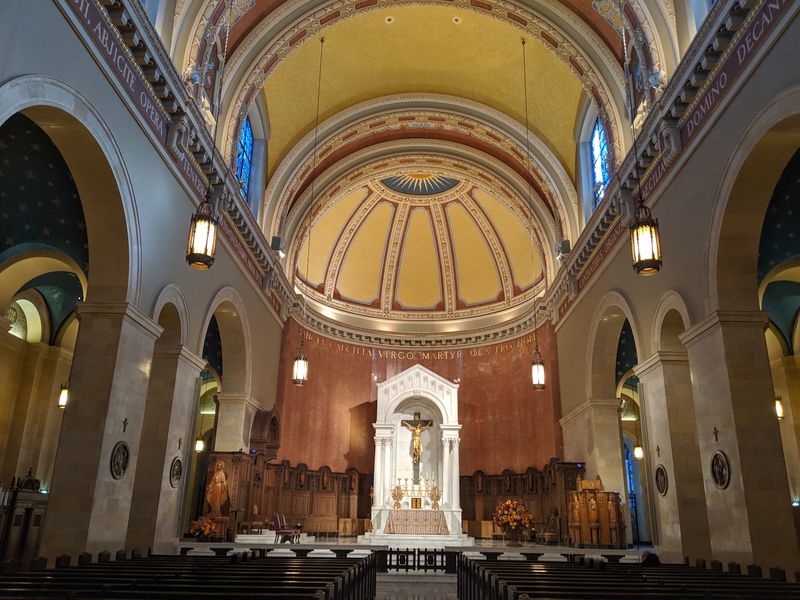
Saint Cecilia ranks among the largest cathedrals in the United States, and the interior makes that ranking obvious within about four seconds. The ceiling climbs.
The side aisles run long. Sound behaves the way it does in big stone rooms, softening and stretching.
The steel frame hidden inside those masonry walls is what allows the open span. Structural engineering doing quiet work behind the scenes, so the eye sees nothing but height and distance.
Walk-in visitors get a well-kept building, cleaned and maintained and arranged with people wandering through in mind. It does not feel like you are intruding on a working church, even though you are stepping into one.
A practical suggestion: pause a full minute inside the entrance before moving. Let your eyes adjust and find the ceiling.
The scale registers better standing still than it does mid-stride.
Woodwork, Gold Leaf, and the 1919 Altar
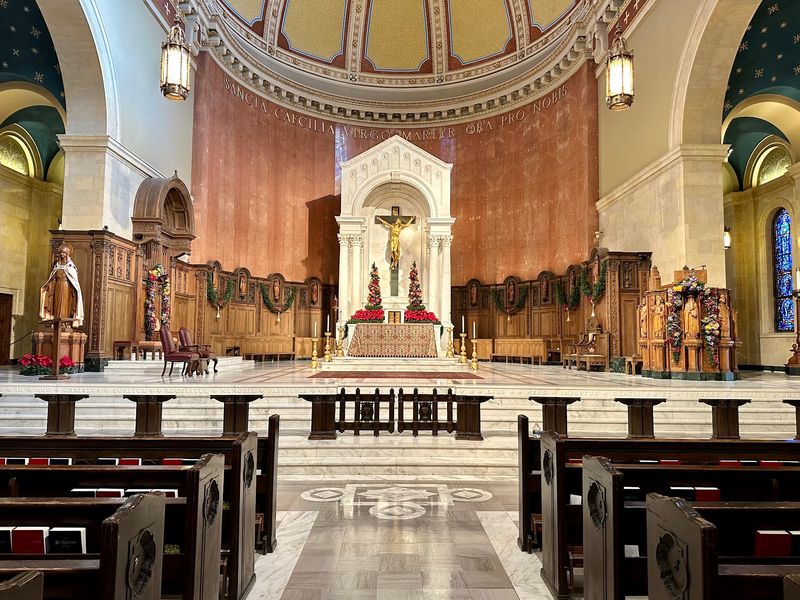
Carved saints and angels appear where you least expect them. Altars, podiums, confessionals: the woodwork throughout the cathedral carries detailed figures, and the craftsmanship rewards slow looking more than a quick lap around the perimeter.
The main altar dates to 1919 and anchors the whole sanctuary. Gold leaf work spreads across ceiling panels and wall sections, catching whatever light comes through the windows and glowing rather than glaring.
Stained glass fills the openings with color that shifts through the day. Morning light and late-afternoon light produce completely different rooms, which is a good argument for visiting twice.
Ornamentation here was never treated as an afterthought or a budget line to trim. Artwork, carving, and architectural detail were built into the plan from the beginning, and the result is a building where the small features hold up as well as the big ones.
Bring reading glasses if you use them. The confessional carvings and altar figures hide fine detail that gets lost from ten feet away, and there is no charge for standing close and studying the workmanship at your own pace.
Music, Acoustics, and the Saint of Musicians
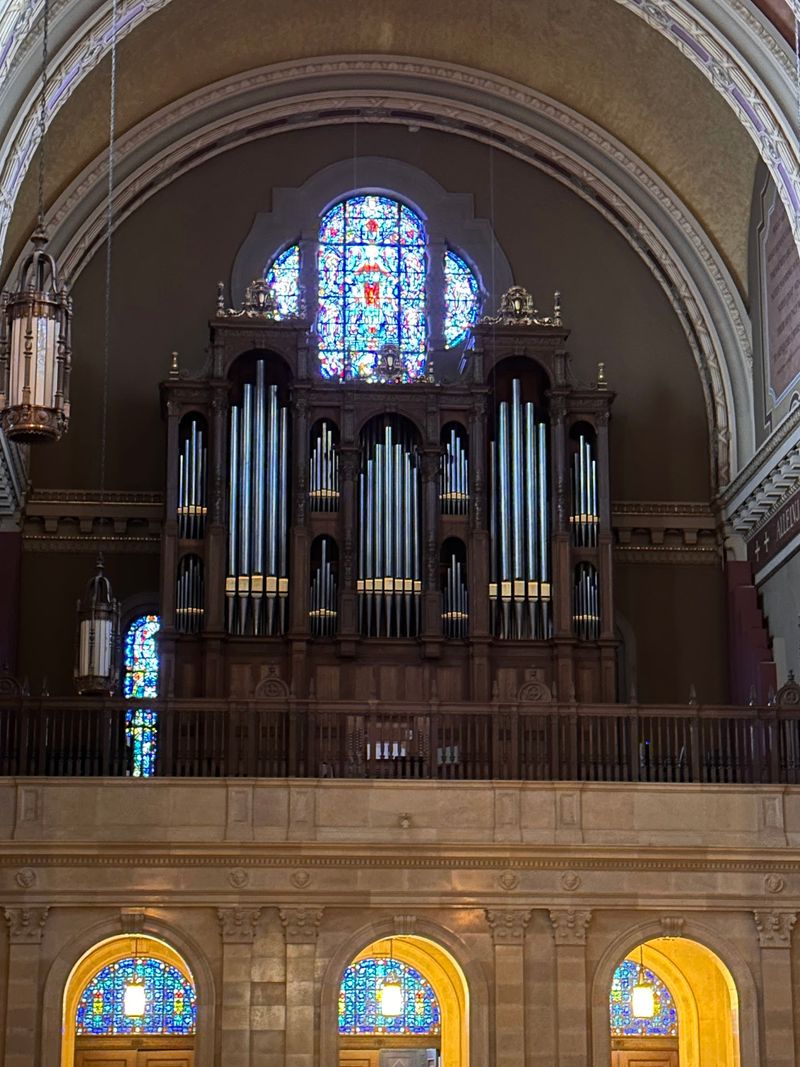
Saint Cecilia is the patron saint of musicians, which turns out to be more than a naming coincidence. The room was built with sound in mind and handles choral music beautifully, the notes hanging in the air a moment longer than they would anywhere smaller.
Organ music fills the space in a way that you feel through the pews as much as hear. Big stone interiors do that, and this one does it particularly well.
Choir arrangements vary by service. The later Sunday Mass tends to include the choir while earlier services are quieter and less crowded, so the experience you get depends on which hour you pick.
Gregorian chant vespers, sung by seminarians, are opened to the public twice a year. Those evenings are a different animal entirely, spare and unhurried, and they may fill quickly given how few of them there are.
Even in silence the acoustics announce themselves. Footsteps carry.
A closing door echoes down the nave. It is the kind of quiet that has texture to it, and it settles most people down within a minute.
The Winter Flower Festival
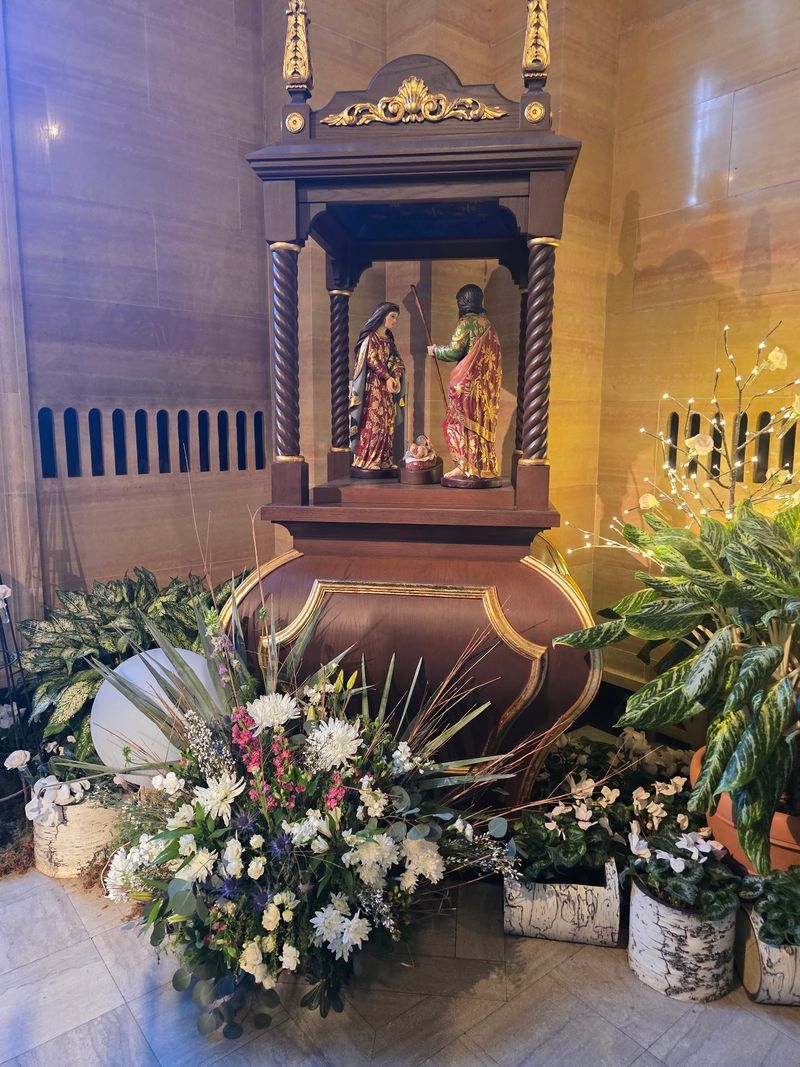
Late January in Nebraska is not flower season. Inside this cathedral, it briefly is.
The annual Flower Festival fills the nave with elaborate floral displays, and it has become the one weekend when the building draws a genuine crowd.
Arrangements go up throughout the sanctuary, some of them enormous. One suspended display near the entrance has run larger than a small car, closer in spirit to a parade float than a centerpiece.
Crowds come with the territory. Waits can stretch, and the pews double as a holding area while groups rotate through, so a weekday visit is the better call if quiet is what you are after.
Still, the pairing works. Bright color against pale stone in the deepest part of winter is exactly the sort of thing that gets Omaha families out of the house in January.
Timing shifts, so check the cathedral website before driving in. Festival weekends fall outside the standard weekday hours, and confirming ahead saves a wasted trip from Lincoln, Fremont, or anywhere else on the highway in.
Hours, Parking, and What a Nebraska Day Trip Looks Like
Weekdays are your window. Monday through Friday the cathedral is open from 7 AM to 6 PM, and it is closed Saturday and Sunday to general walk-in visitors, so plan around that before loading the car.
Admission costs nothing. Walking in, looking around, sitting in a pew, taking photos of the ceiling: all free, which makes this one of the better-value stops in the state.
Parking sits close by and is straightforward, a relief in any city neighborhood. The address is 701 North 40th Street, just off the main routes through midtown Omaha.
Drive times work in your favor. Lincoln runs under an hour on Interstate 80, Fremont and Council Bluffs are shorter still, and Grand Island makes a comfortable half-day round trip with time to spare.
Questions before you go can be handled by phone at 402-551-2313, or through stceciliacathedral.org. Tours are sometimes offered, and exterior repair and upkeep work happens periodically, so calling ahead may spare you a surprise at the door.
Why the Detour Pays Off
Not every free stop justifies the gas. This one does, and the reason is simple: there is nothing else in Nebraska quite like it, and very little in the country either.
The peaceful quality of the interior is the part that lingers longest. Dim light, high ceilings, candle flames, and stone that absorbs noise combine into a stillness that works on you whether or not you came for religious reasons.
It suits a wide range of people. Photographers, history buffs, grandparents showing grandkids something grand, anyone with a spare hour on a weekday afternoon in Omaha.
Small children do fine here, since there is space to move and plenty to point at.
Rating-wise the place sits at 4.8 stars across roughly 400 reviews, which tracks with a building that consistently exceeds what people expected from the outside.
Give it forty-five minutes minimum. Rushing a cathedral this size defeats the purpose, and the details that make it memorable, the carvings, the glass, the gold, only show themselves to people willing to slow down.