What Most Nebraskans Get Wrong About Ashfall Is That The Digging Still Happens Every Summer
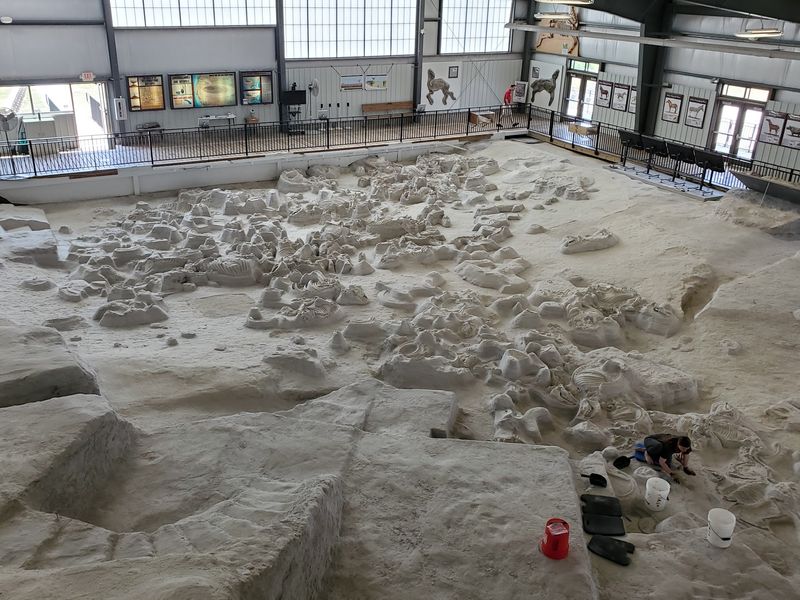
Somewhere in northeast Nebraska, whole rhino skeletons lie in the ground right where they fell about 12 million years ago. Nobody hauled them off to a city museum.
They stayed put, and you can stand a few feet above them.
Here’s the part plenty of folks miss. The work isn’t finished.
Paleontologists and student crews still brush away volcanic ash every summer, one careful stroke at a time.
I love that a fossil site in farm country is still adding new chapters. Return visits can reveal bones that were hidden the last time you came.
That’s a rare kind of road trip payoff.
The ash itself traveled roughly a thousand miles from a supervolcano in present-day Idaho. So how did a watering hole on the prairie end up holding hundreds of perfect skeletons?
A Prehistoric Watering Hole In The Rolling Hills Near Royal
Ashfall Fossil Beds State Historical Park sits in the quiet hills of Antelope County, north of the small town of Royal. It’s run in partnership with the University of Nebraska State Museum, which explains all the science happening on site.
The park covers about 360 acres of grassy Nebraska prairie. Most of the fame, though, comes from one small patch where an ancient pond once sat.
Around 12 million years ago, animals gathered at that watering hole. Then a massive eruption far to the west sent ash drifting across the region.
The ash piled up deep around the pond. Rhinos, horses, camels and birds were buried, and their skeletons stayed remarkably whole.
That’s why the site earned the nickname Pompeii of prehistoric animals. More than 200 complete skeletons have been found here so far.
Finding the place takes a little intention. It’s about seven miles north of U.S.
Highway 20, out among cattle country and gravel-edged roads.
Plenty of Nebraskans drive Highway 20 for years without knowing it’s there. Once you know, every trip past Royal feels like a missed opportunity.
The 1971 Discovery That Started With A Rhino Skull
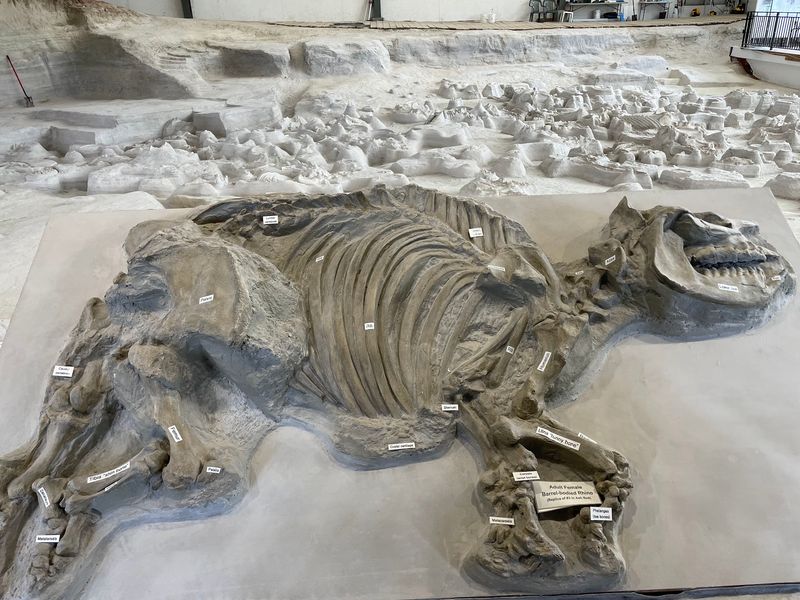
A heavy rain in 1971 exposed something strange in a cornfield gully. Paleontologist Mike Voorhies spotted a baby rhinoceros skull poking out of the ground.
He was scouting the area for the University of Nebraska State Museum. That single skull hinted at much more beneath the surface.
Digging soon revealed a thick layer of gray volcanic ash. Inside it were complete skeletons, still lying together like a scene paused mid-moment.
Voorhies later called the site a time capsule. Few descriptions fit better, since the animals were preserved in the same spots they collapsed.
The ash came from a supervolcano in what is now southwestern Idaho. That’s roughly a thousand miles away, which still sounds unbelievable.
The same volcanic hotspot now sits beneath Yellowstone. So a piece of Nebraska history is tied to geysers several states over.
Major excavations in the late 1970s drew wide attention. The site eventually became a state historical park, opening to the public in 1991.
Not bad for a discovery that started with a washed-out gully on a farm. Rain doesn’t usually get credit for science, but here it earns some.
Skeletons Left Exactly Where They Fell Inside The Hubbard Rhino Barn
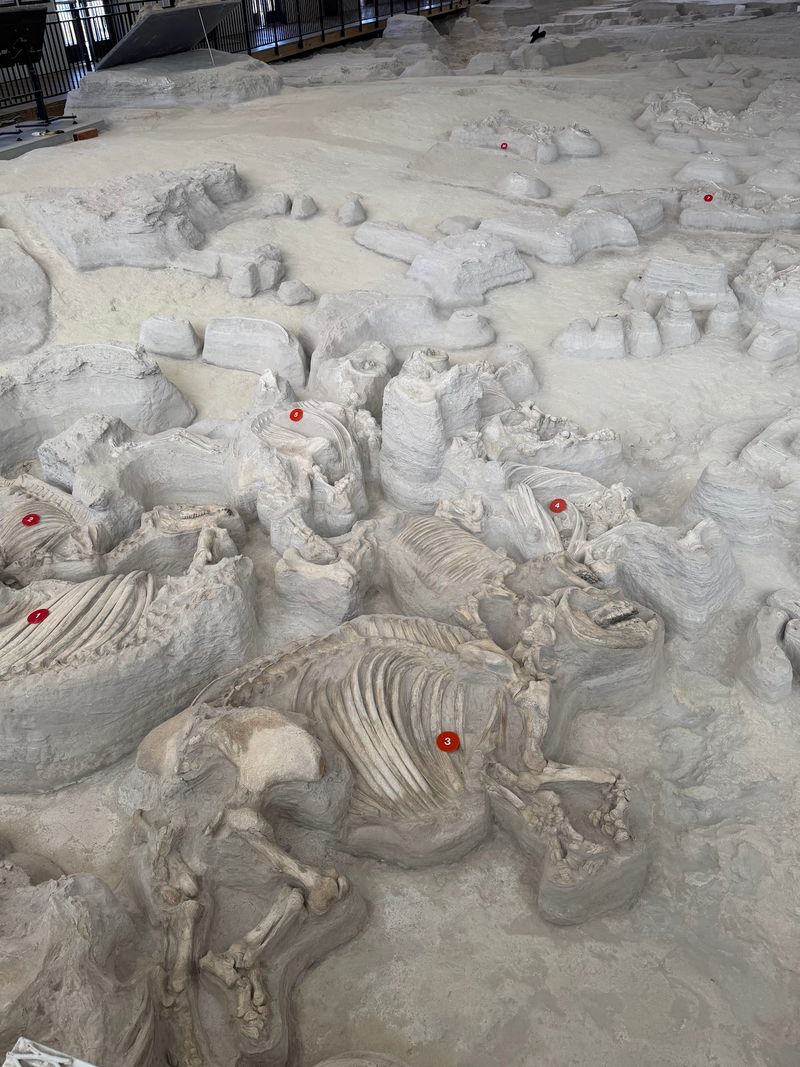
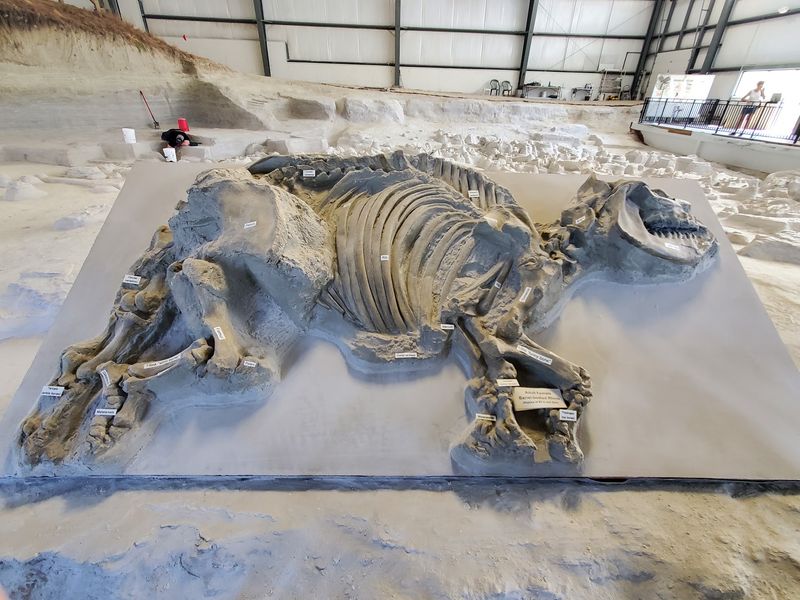
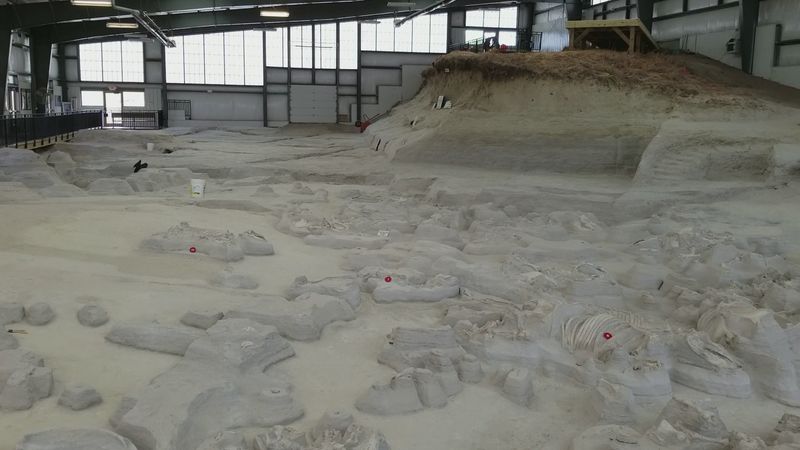
Most museums show bones mounted on metal stands. The Hubbard Rhino Barn takes a bolder approach and leaves them in the ground.
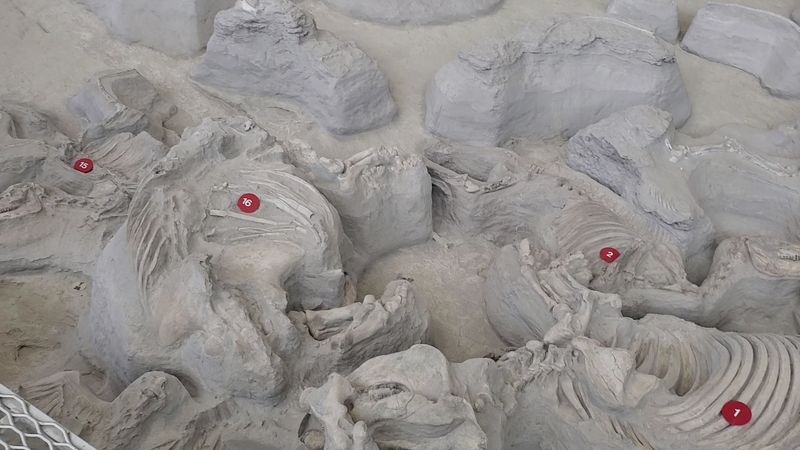
The building protects a large section of the fossil bed. Walkways let you look down on skeletons resting in the ash, exactly as they were uncovered.
You’ll see barrel-bodied rhinos in big numbers. Many lie close together, which makes the scale of that ancient event easy to grasp.
The detail is the real thrill. Skulls, ribs and tiny toe bones are visible, still arranged the way nature left them.
Some rhino skeletons even appear with young ones nearby. That gives the scene a surprisingly tender, family-like feel for a fossil bed.
The enclosure also shields the bones from Nebraska weather. Rain, wind and summer heat stay outside while the fossils stay protected.
Guides are often on hand to explain what you’re seeing. Questions are welcome, and the staff clearly enjoy sharing the backstory.
It’s hard to look away once your eyes adjust. Every few feet, another skeleton seems to appear in the gray.
Summer Crews Still Brushing Away Ash Every Season
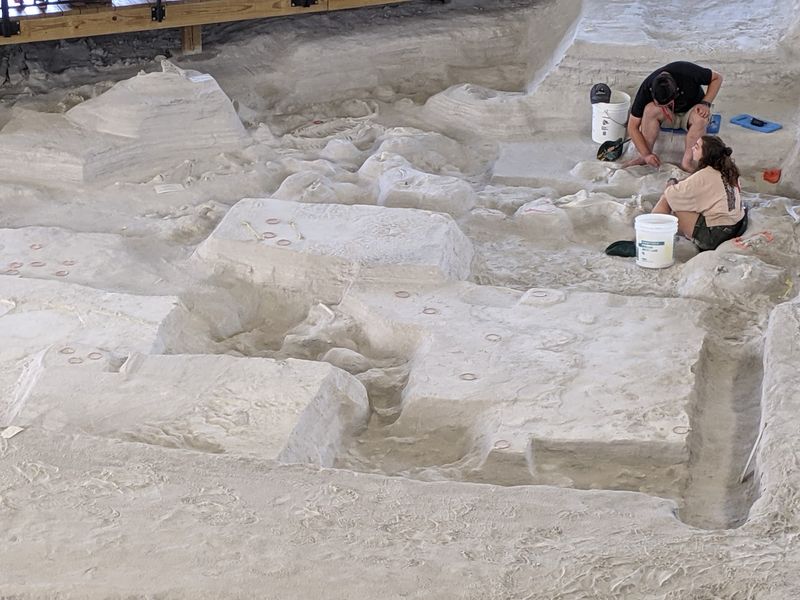
Paintbrushes and dental picks do the heavy lifting here. Summer crews kneel in the ash and slowly reveal bones that haven’t seen daylight in millions of years.
Paleontologists and student interns work the dig during the summer field season. Visitors can watch the process right from the Rhino Barn walkways.
The pace is slow and careful. A single skeleton can take a long time to expose without damaging delicate pieces.
That patience is the whole point. Rushing would destroy the very details that make the fossils valuable.
Park leaders estimate another 10 to 15 summers of work remain in the current excavation area. Plans call for a new dig nearby after that.
So the site you see this year won’t match the one you see later. New skeletons can surface between visits.
If you want to see active digging, aim for midsummer. July and August are prime months for crews to be working.
Earlier or later in the season, the barn still impresses. You just might catch the bones resting instead of the brushes moving.
Three-Toed Horses, Camels And Other Surprising Residents
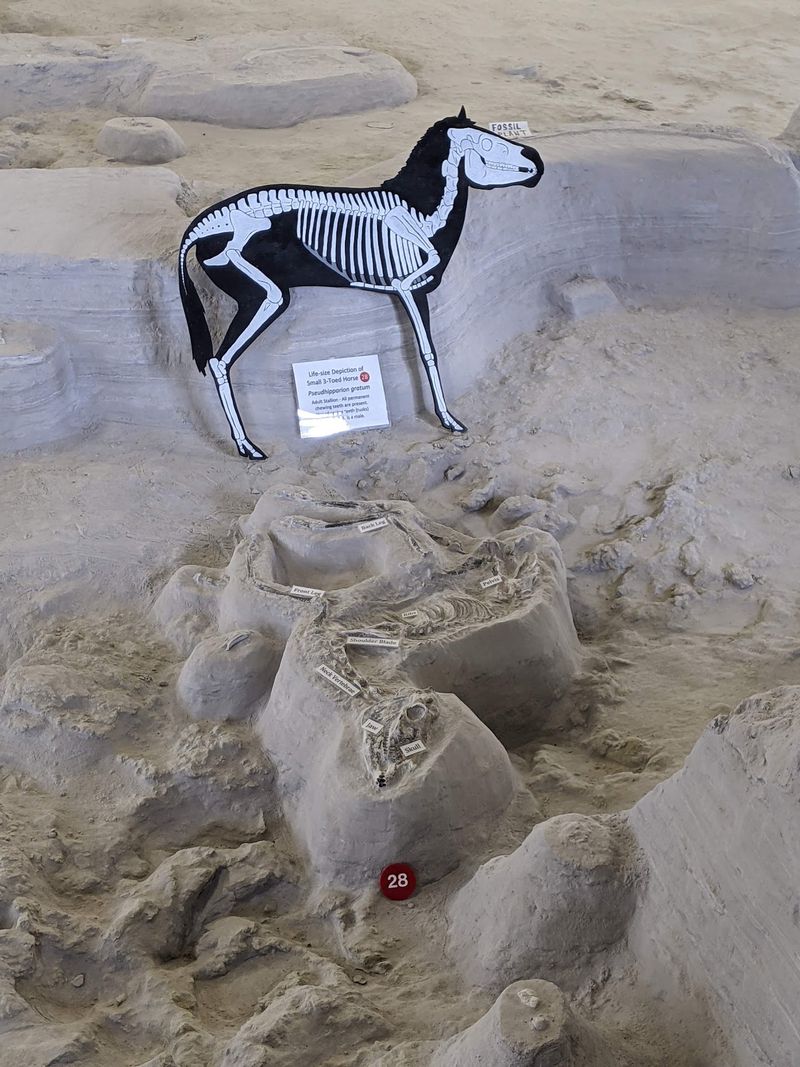
Rhinos steal the spotlight, but the supporting cast is just as fun. Ashfall has turned up horses, camels, birds and even a saber-toothed deer.
The most common rhino is Teleoceras major. It had short legs and a round body, built a bit like a hippo.
Horses here come in several kinds. Some had three toes, while others had just one, showing evolution in action.
Those side toes are tiny and fragile. They’re rarely preserved anywhere, which makes Ashfall’s horse fossils especially important to scientists.
Camels once roamed Nebraska too. The ones found here were long-necked, llama-like animals, not the desert humps you might expect.
Pond turtles and plant remains also show up. They confirm that this spot really was a watering hole.
Researchers have spotted tooth marks and tracks linked to bone-crushing dogs. Those clues hint at visitors that came after the ash settled.
Picture the old savanna and Nebraska suddenly looks very different. Rhinos and camels at the local pond is quite the image.
A Visitor Center Where The Lab Work Happens In Plain Sight
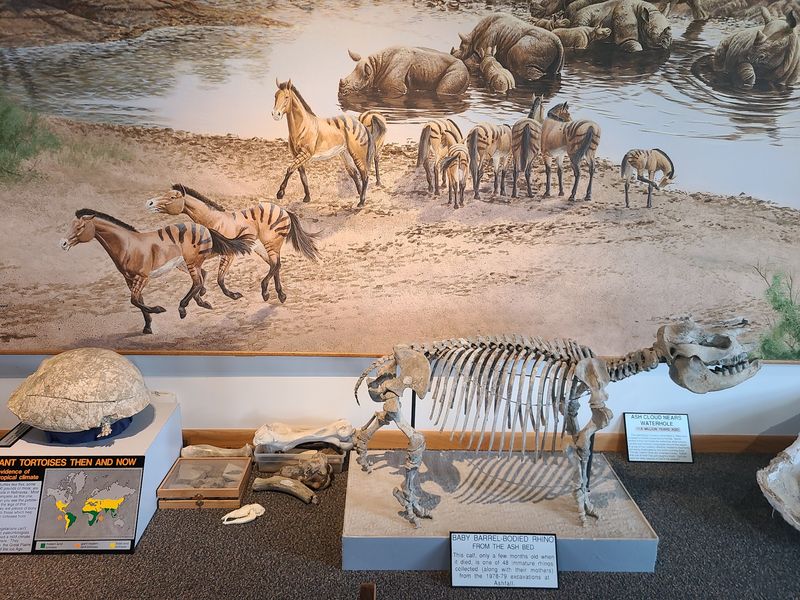
Start here, and the rest of the park makes a lot more sense. The visitor center explains the eruption, the ash and the animals in clear, friendly displays.
A highlight is the working lab. Student interns prepare real specimens where visitors can watch the cleanup up close.
Staff and researchers are happy to answer questions. Kids firing off a dozen of them in a row seem to fit right in.
Exhibits also cover nature found around the park today. So folks who aren’t big on fossils still have plenty to explore.
Petrified wood is on display as well. It adds another layer to the story of how this landscape changed over time.
A gift shop offers souvenirs for both adults and kids. Admission is paid inside, separate from the state park entry permit.
The building is also air-conditioned. On a hot Nebraska afternoon, that cool air feels like a reward.
Clean restrooms are close by too. Small comforts matter when you’ve driven a long way into the hills.
Prairie Trails Above The Ancient Savanna
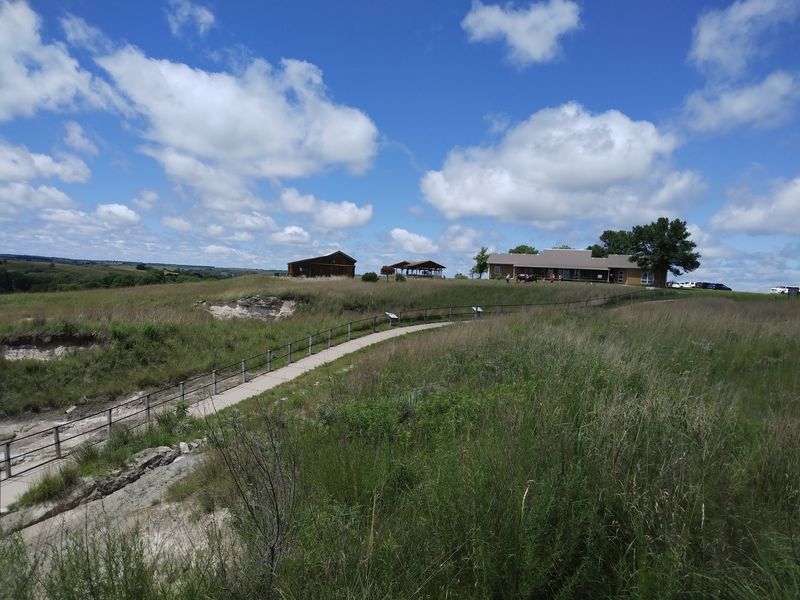
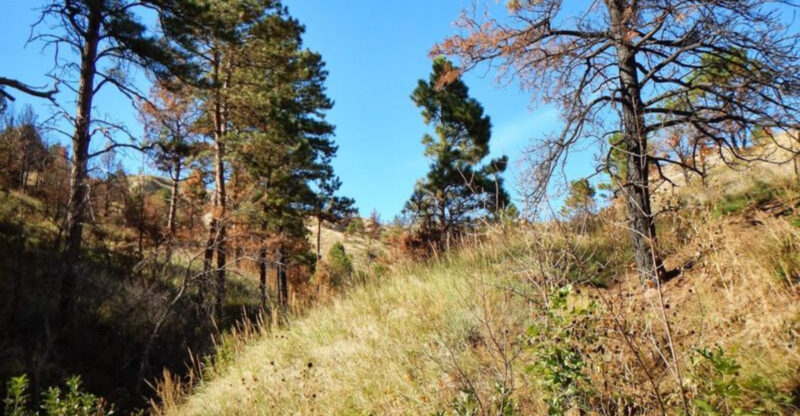
Step outside and the scenery shifts from ancient to present day. Grassy hills roll in every direction across Nebraska’s quiet northeast corner.
Interpretive trails wind through the park’s prairie acres. Signs along the way point out geology, plants and wildlife you might spot.
The trails aren’t especially long. They make a nice stretch after time spent leaning over walkway rails.
Views are a big part of the appeal. The open land gives a sense of how the area looked before modern farms filled it in.
Leashed dogs can join you on the outdoor paths. They’re not allowed inside the buildings, so plan accordingly.
Summer heat can be serious out here. Sturdy shoes, water and a hat go a long way.
A covered picnic shelter and tables offer a shady break. Packing lunch makes sense, since the park sits well away from town.
It’s a peaceful counterpoint to the drama in the barn. Below your feet, a 12-million-year-old story still waits under the grass.
Curious Kids, Fossil Fans And Return Visitors
Dinosaur-obsessed kids will want to know one thing first. No, these aren’t dinosaurs, and honestly that makes the story even better.
The animals here are mammals that lived long after dinosaurs. Rhinos and horses feel familiar, which helps kids connect the past to today.
Families tend to spend about 90 minutes to two hours. That’s enough time for the barn, the visitor center and a short walk.
Young children who need hands-on play may get restless. The experience leans more toward watching, listening and asking questions.
Fossil lovers will be in heaven. Few places let you see so many complete skeletons in one spot.
Retirees and road-trippers will appreciate the calm pace. Paths are manageable, and the whole site is fairly compact.
Repeat visits pay off in a special way. Since digging continues, each trip can reveal something new.
Plenty of longtime Nebraskans are surprised to learn this exists in their own state. Bringing the grandkids makes a great excuse to finally go.
Season Dates, Permits And The Drive North Of Highway 20
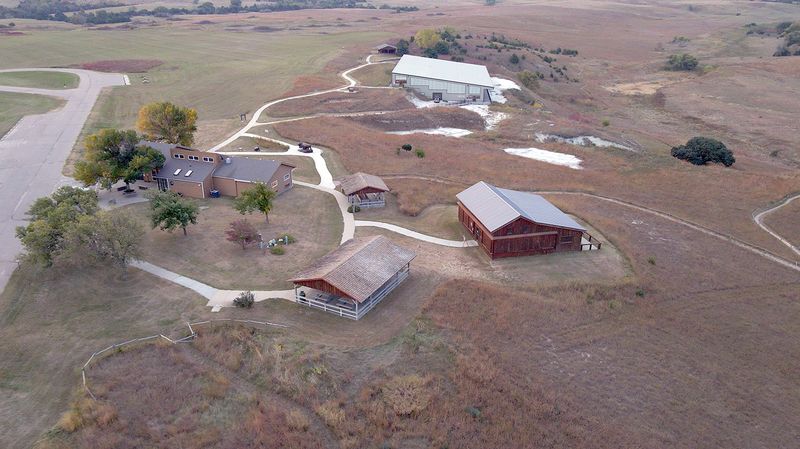
Timing matters most when planning this trip. Ashfall runs on a seasonal schedule, generally opening in spring and closing in early fall.
Days and hours shift through the season. Checking the park’s official schedule before leaving home saves a wasted drive.
Every vehicle needs a Nebraska state park entry permit. Permits can be bought online ahead of time or at the park.
There’s also a separate admission fee per person. You pay it inside the visitor center.
The address is 86930 517th Ave, Royal, NE 68773. It’s about two miles west and six miles north of Royal.
Coming from Highway 20, head north about seven miles. Signs help guide the final stretch through the countryside.
Norfolk and O’Neill make easy reference points for the drive. From either, it’s a pleasant trip through farm country.
Bring snacks and fill the tank beforehand. Services are limited this far out, which is part of the charm.
Worth Every Mile Of Gravel And Back Roads
Some road trips end with a nice view. This one ends with a herd of ancient rhinos lying right where they fell.
Ashfall Fossil Beds State Historical Park blends science, history and open prairie in one compact stop. It feels genuine, not flashy or overbuilt.
The biggest surprise is that the story isn’t finished. Summer crews keep uncovering skeletons, adding to a record that started in 1971.
That changes how you think about a visit. It’s less like seeing an exhibit and more like checking in on an ongoing project.
Nebraska often gets reduced to cornfields and interstate miles. Places like this prove the ground holds much bigger stories.
Plan for summer if you want to see brushes in motion. Any open day still delivers the skeletons, the trails and the sweeping views.
Bring curiosity, water and a few good questions. The staff will happily take it from there.
Twelve million years ago, ash drifted down on a quiet pond. Today, that same pond might be the best detour in the state.