This Strange North Carolina Attraction Has A Secret That Only Reveals Itself When You Start Moving
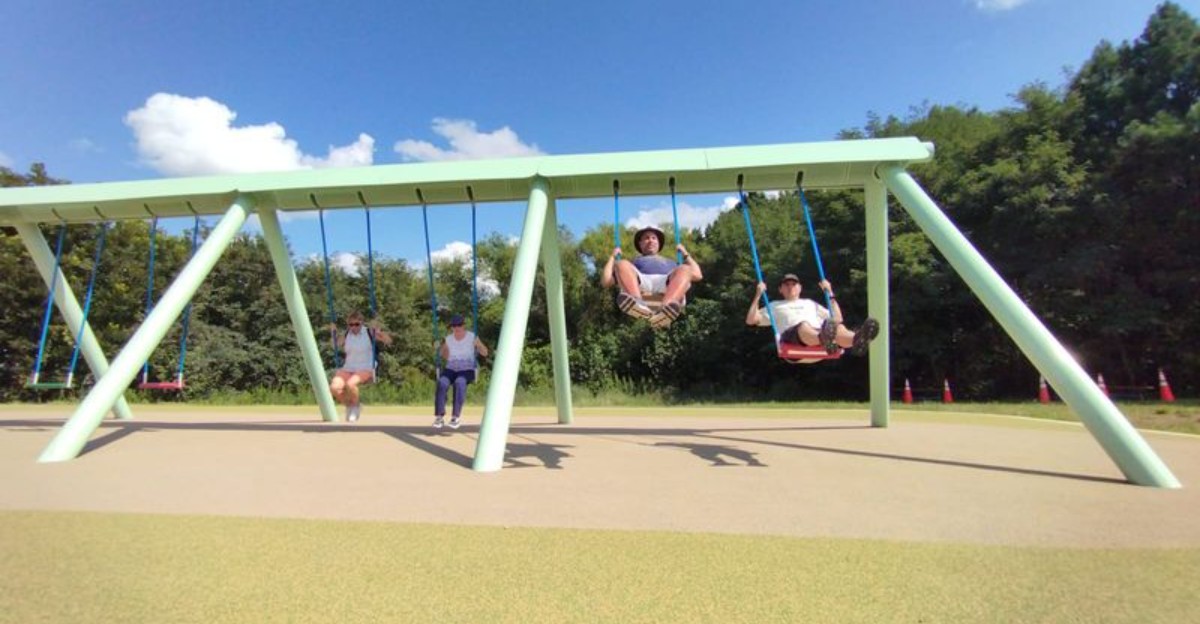
Somebody in North Carolina looked at a row of swings and apparently decided childhood needed better production values.
Now every push can trigger music and light, which means the person pumping their legs beside you may accidentally become part of an outdoor composition without knowing a single chord.
The installation comes from Montreal studio Daily tous les jours, but the real performers are whoever happens to climb aboard. Each swing adds something to the sound, and several people moving together can turn the whole thing into a wonderfully unpredictable little concert.
That makes watching almost as entertaining as participating.
A graceful rhythm might last for ten seconds before somebody starts swinging like they are qualifying for orbit and completely changes the score.
Best of all, the experience is free.
Apparently, North Carolina found a way to turn playground energy into public art and forgot to make anyone rehearse.
Sit Down And The Artwork Suddenly Starts Making Music
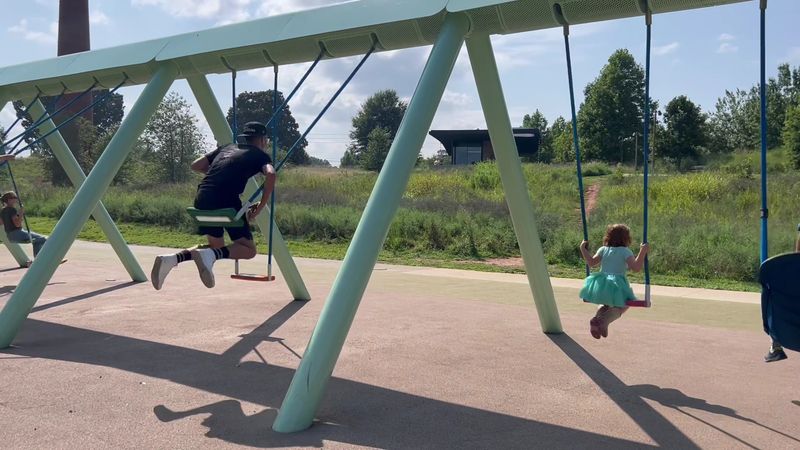
Ten seats hang in a neat row, looking harmless enough until someone pushes off with their heels. That first small arc wakes the whole installation, and a clear note floats out across the grass.
Visitors often pause, unsure whether the sound came from a speaker somewhere or from the swing itself. It comes from the structure, where wiring, lights, and speakers are hidden inside the frame so nothing spoils the clean lines.
Even a gentle push counts, which makes this an easy first stop for children who cannot yet swing high.
The response is instant. No buttons, no app, no waiting for a staff member to flip a switch.
Motion is the only instruction the artwork needs.
Each rider adds one voice to a bigger piece of music that keeps changing as people come and go. On a quiet weekday morning you might be the only performer.
By late afternoon the row can fill with families building something none of them planned.
Sit, push, listen. The Musical Swings stand at 2110 Blue Ridge Road in Raleigh, which is open daily from dawn to dusk.
Swing Higher To Hear The Notes Climb With You
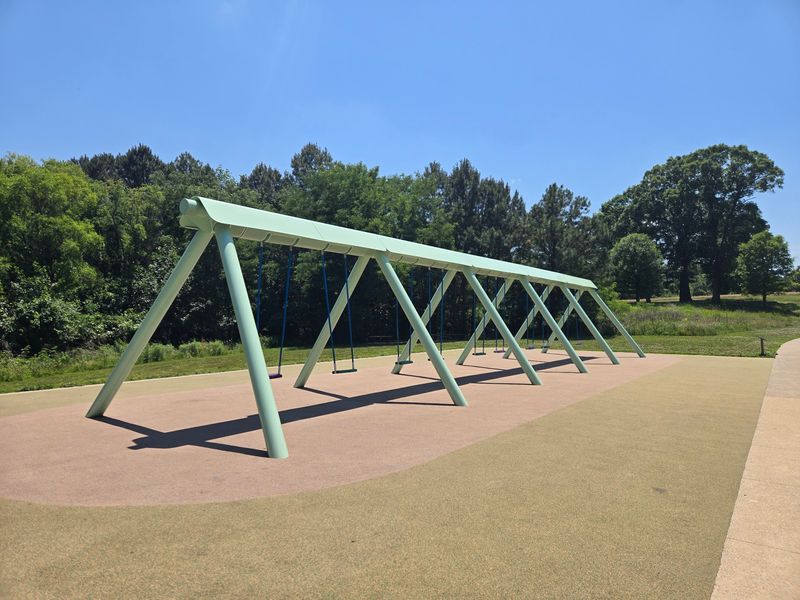
Physics does something delightful here. Pump your legs, gain height, and the pitch of your note rises right along with your body.
Nothing about the swings is hidden behind instructions or screens.
Drop back into a lazy sway and the sound settles lower, calmer, almost like a lullaby. The design borrows from the natural rhythm of a pendulum, so nobody has to learn anything before they play.
Few interactive artworks in North Carolina reward effort so directly.
That climbing scale gives the whole row a sense of drama. A group swinging at different heights produces layered sound, high notes fluttering over lower ones, the mix shifting each time somebody speeds up or slows down.
Few interactive artworks in North Carolina reward effort so directly. Your muscles set the tempo, your height sets the pitch, and the Musical Swings translate both into something you can hear across the lawn.
Wear shoes you can push off in, and skip anything that might slip. Sneakers make the higher notes much easier to reach at the Musical Swings.
Try Different Seats To Switch Between Four Instrument Sounds
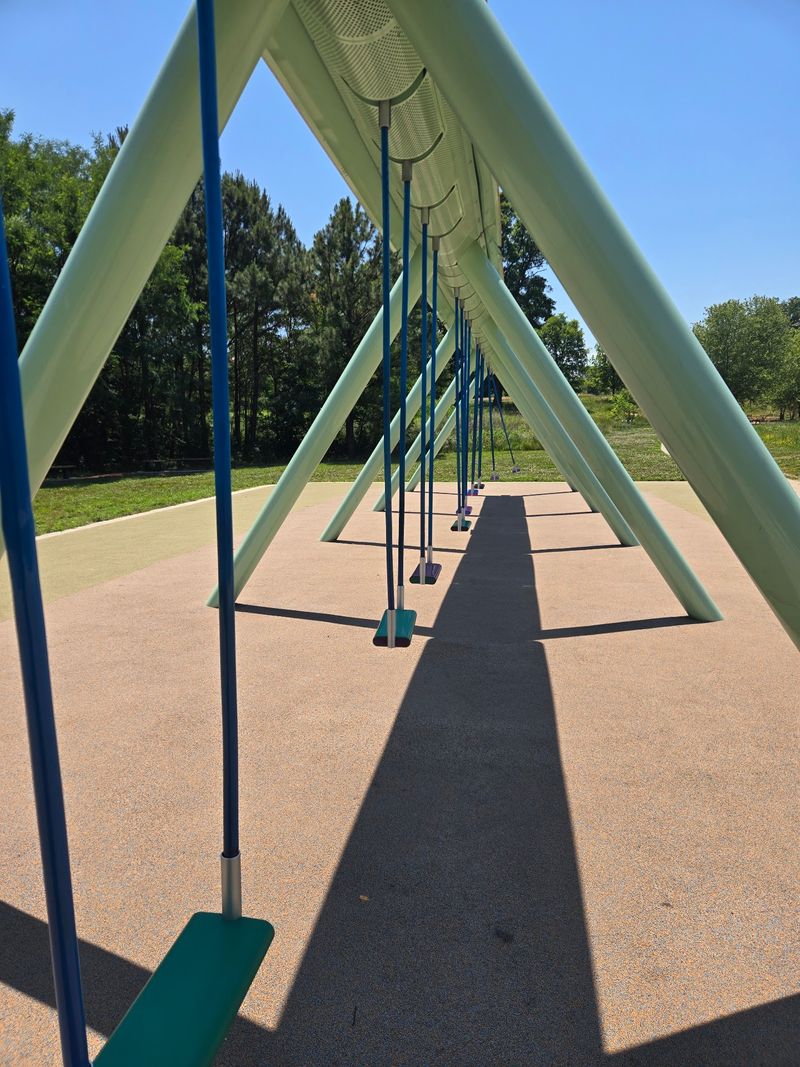
Look closely at the seats and you will spot a quiet color code. Each of the ten swings carries one of four classical instrument voices: harp, piano, guitar, or vibraphone.
The harp shimmers, thin and silvery. Piano notes land rounder and fuller, while the guitar has a warm plucked edge and the vibraphone rings with a soft metallic glow.
Switching seats changes your part in the piece entirely. Spend five minutes on a harp swing, then move two spots over and suddenly you are the low, steady heartbeat of the group.
Families sometimes turn this into a game, rotating every few minutes until everyone has tried all four sounds. Nobody sounds wrong, because the composition was built so the instruments always agree with each other.
Try listening before you sit. Standing a few steps back for a minute makes the four voices easier to tell apart, and you will pick your favorite seat faster.
The color markings do the rest.
Arrive early if you want the whole row to yourself. Mornings tend to be quietest, giving you room to experiment with the Musical Swings without waiting for a seat to open up.
Move In Sync With Someone Else To Unlock Hidden Melodies
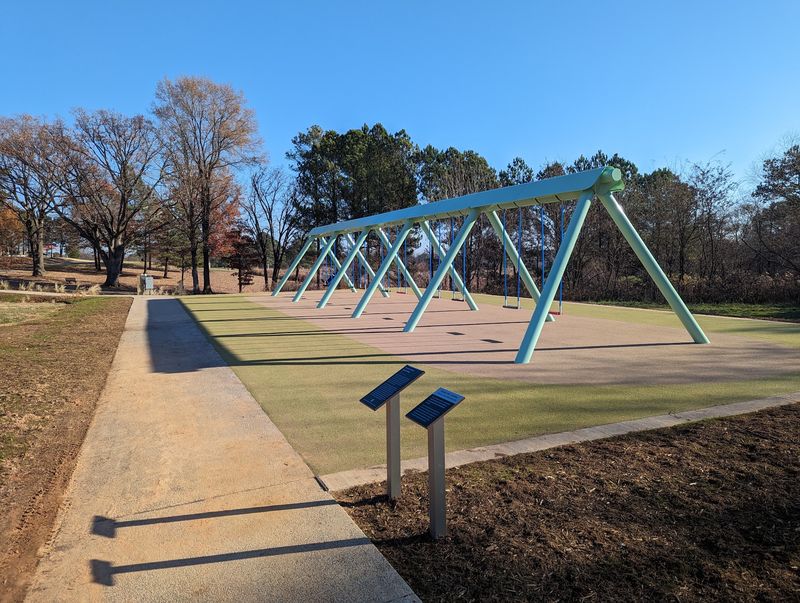
Solo swinging is fun. Two people moving in step is where the artwork really opens up.
When swings travel together, their separate notes lock into chords and fuller melodies that no single rider can produce alone. Fall out of rhythm and the music thins again, which is a gentle nudge to pay attention to the person beside you.
Cooperation, not competition, is the point. Strangers end up counting out loud, matching arcs, laughing when they finally sync.
Grandparents and grandchildren manage it just as easily as teenagers, since the only skill required is watching someone else and matching their pace.
Try mirroring the swing next to you rather than staring at your own feet. Timing gets easier when you watch the arc ahead of you, and the melody thickens the moment your rhythms line up.
Among interactive installations in North Carolina, few make teamwork this obvious or this satisfying. The hidden melodies are the reward, and they arrive without any announcement.
Bring a group of three or four for the fullest effect. With the ten seats of the Musical Swings, a small crowd can build layered harmony in under a minute.
Watch Light And Sound React To Every Swinging Motion
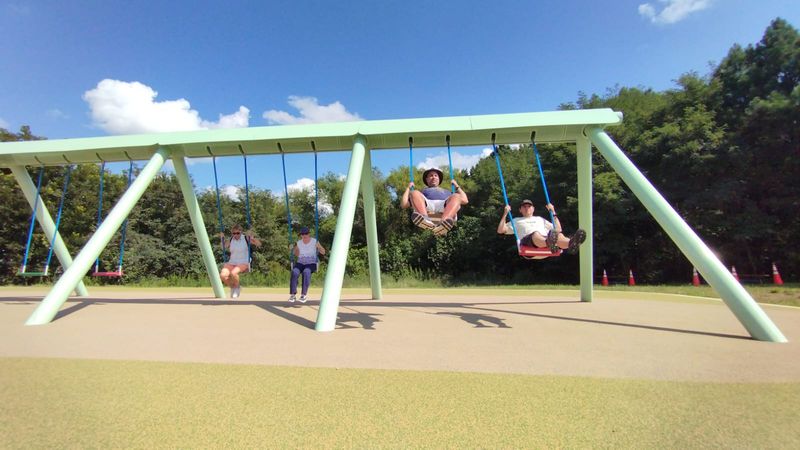
After sunset the installation becomes something else entirely. Each swing carries LED lighting that answers to motion, so the glow brightens and shifts as riders rise and fall.
Sound and light move together, one confirming the other. A note sings out, a corresponding light responds, and the whole row starts to shimmer in loose, uneven waves.
People who never sit down still get a show. Standing nearby, you watch bodies, beams, and notes rise and drop in a pattern that changes every few seconds.
Photographers love the effect: long exposures turn each arc into a ribbon of colored light against the dark lawn. Even a phone camera catches some of it if you hold steady.
Daylight visits show a different side of the piece, with sunlight on the metal frame and shadows sliding across the grass. Both versions are worth seeing, and the Musical Swings sound identical either way.
Closing time is at dusk, so the darkest, most dramatic viewing happens in late fall and winter when evenings come early. Plan a visit around dusk and the Musical Swings glow against a sky going purple over the museum park.
Bring A Friend Because This Artwork Gets Better Together
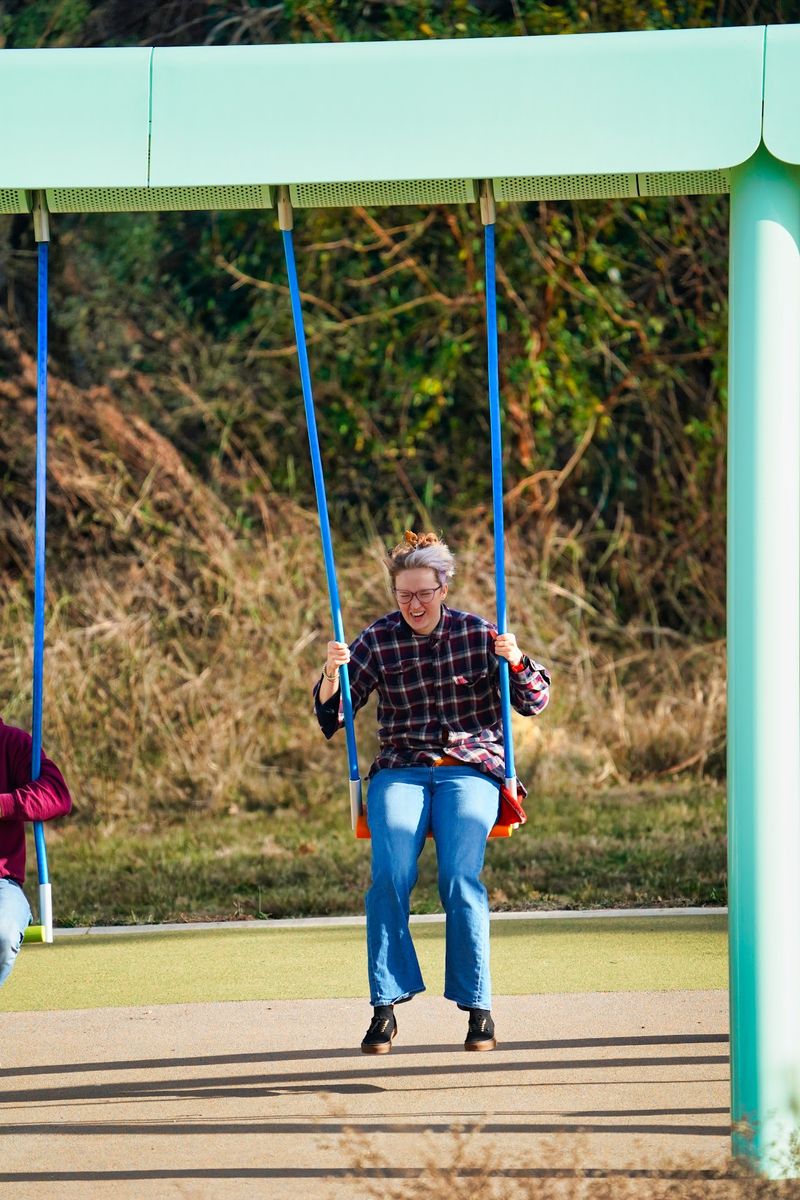
Credit belongs to Daily tous les jours, a Montreal design studio known for public artworks that ask people to do something together. Their work studies cooperation in ordinary places, from plazas to sidewalks.
Come alone and you will still enjoy yourself, but the piece is built for company. One rider makes notes.
Several riders make music.
Something friendly happens in that shared effort. Conversations start between families who arrived separately, and children who have never met begin coaching each other on timing.
Bringing a friend costs nothing and doubles what the artwork can do, which is a rare kind of bargain for a day out.
Across North Carolina, plenty of attractions ask you to look. Few ask you to participate with strangers and then hand you a melody as thanks.
Field trips, family reunions, and weekend meetups all suit the space well, since there is no cost and no reservation required. Pack a picnic blanket, claim a patch of grass, and let people rotate through the Musical Swings while others rest.
The best sessions usually happen when nobody is trying to perform. Push, listen, adjust, and repeat until somebody in the row starts laughing.
Find The Swings Just Steps From The Park Welcome Center
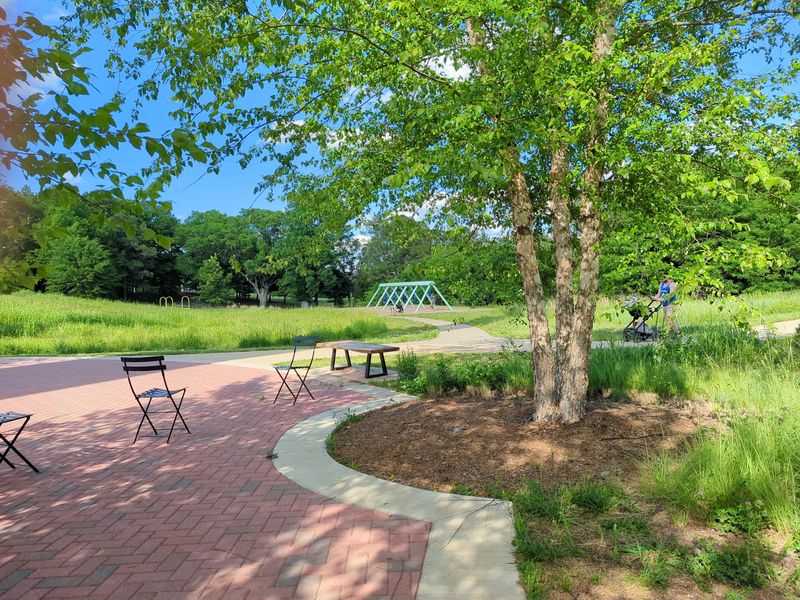
Getting there takes almost no effort. The swings stand near the Park Welcome Center inside the Ann and Jim Goodnight Museum Park, a green expanse threaded with paved trails and outdoor sculpture.
You will find them at 2110 Blue Ridge Road, Raleigh, NC 27607, a short stroll from parking.
The Welcome Center works nicely as a base. Restrooms, water fountains, and shaded patios sit right there, which matters on a warm afternoon when everyone needs a break.
Paved paths make the walk manageable for strollers and wheelchairs alike. Signs point the way, and the sound usually gives them away before you see them.
Bring a water bottle in summer, since fountains are sometimes shut off during certain seasons. Shade near the Welcome Center helps on hot days.
The Museum Park is free and open every day, including holidays, from dawn to dusk, and there is no admission fee. Early risers get soft light, empty seats, and birdsong mixed into the chords.
Pair the visit with a longer walk through the park. Many people spend an hour among the sculptures and then finish at the Musical Swings, ending the outing on a bright note.
Slow Down And Treat It Like Art Rather Than Playground Equipment
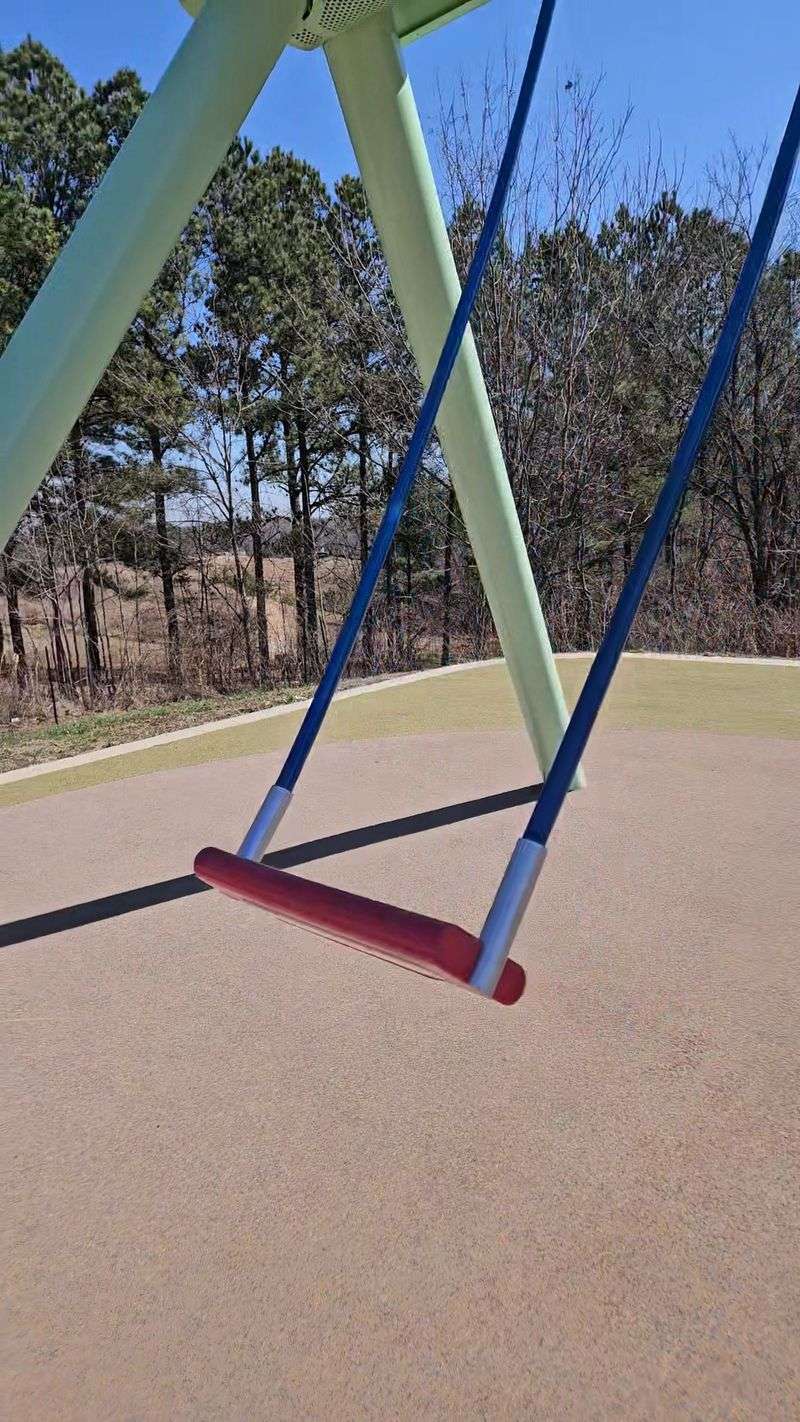
Museum staff make one request of visitors: treat the piece as artwork rather than playground gear. That framing changes how the experience feels.
Rushing through in thirty seconds misses the point. Sit for a while, notice how your note answers the swing beside you, and listen for the moment separate sounds become one piece.
NCMA asks visitors to remember that Musical Swings is an artwork rather than ordinary playground equipment.
Adult supervision is required, and surfaces exposed to direct sunlight may become hot, so visitors should use the installation with appropriate care.
Taking turns matters too, especially on busy weekends when ten seats fill quickly. A few minutes each keeps the row moving, and waiting your turn gives you a chance to hear the Musical Swings from the outside, where the full composition is clearest.
Slowing down also changes what you notice: the hush between notes, the breeze crossing the lawn, the way sculpture and trees frame the row of seats.
As a cultural stop in North Carolina, this one asks for participation instead of quiet observation, which is precisely what makes it memorable. The Musical Swings turn ordinary motion into shared composition, then hand the results back to whoever is willing to push off and listen.