The Old-Fashioned Nebraska Carousel Where Kids Ride Tigers And Giraffes For $4 Every Summer
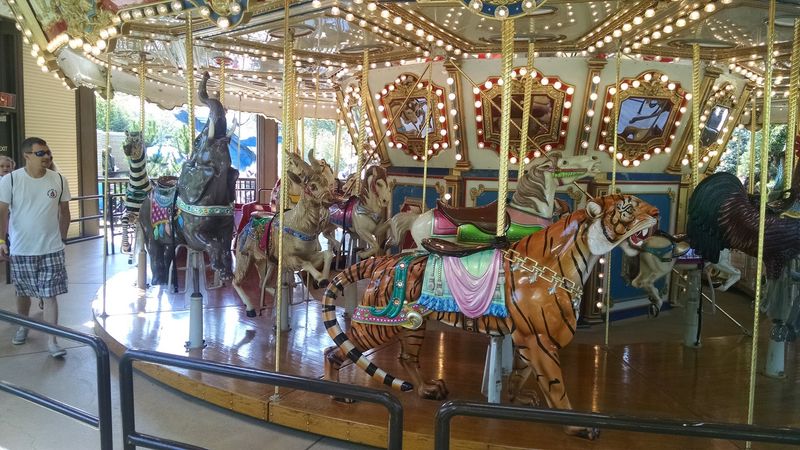
Somewhere in Nebraska, between the elephant barn and the sound of a train whistle, there is a painted tiger holding perfectly still and waiting for a kid to climb on. It costs four dollars, spins twice, and plays music you can hear from two paths away.
Nobody plans their whole day around it, which is exactly why it sticks in your memory afterward. For a lot of families, hearing that organ music start up is the moment summer officially begins.
Where to Find the Spinning Menagerie in South Omaha
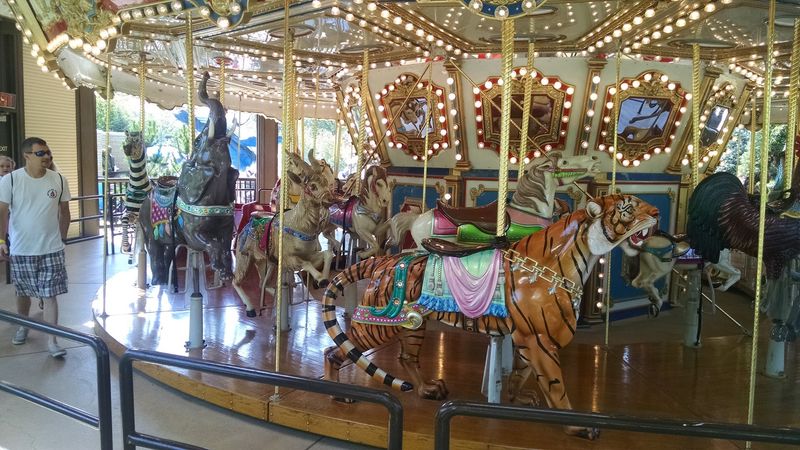
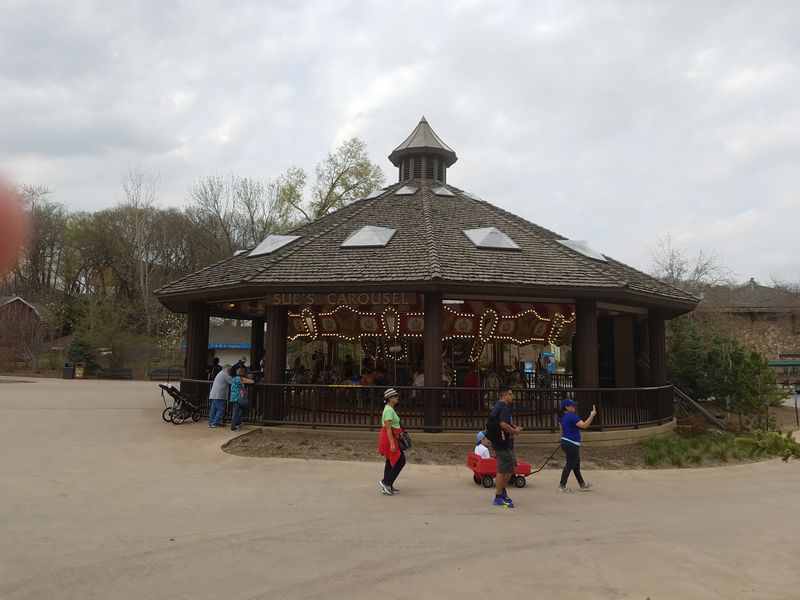
At 3701 S 10th Street in Omaha, inside the grounds of Henry Doorly Zoo and Aquarium, sits a modest round pavilion that does one job well. Sue’s Wildlife Carousel spins beneath a canopy of painted panels and mirrors, ringed by hand-finished animals that never once break stride.
South Omaha wraps around it. The zoo sits just off Interstate 80 near the 13th Street exit, close enough to downtown that you can drive from the Old Market in about ten minutes, and reachable in a couple of hours from Lincoln, Fremont, or Council Bluffs.
Classified simply as an amusement park ride, the carousel is not the reason most people buy a zoo ticket. It becomes the reason they remember the visit.
Kids spot it mid-walk, plant their feet, and negotiate.
The location matters more than it sounds. Placed among live animals, a carousel full of carved ones creates a small, funny echo.
You look at a real giraffe, then ride a wooden one, and somehow both feel like a treat worth the walk.
A Carousel Built Around Wildlife Instead of Horses
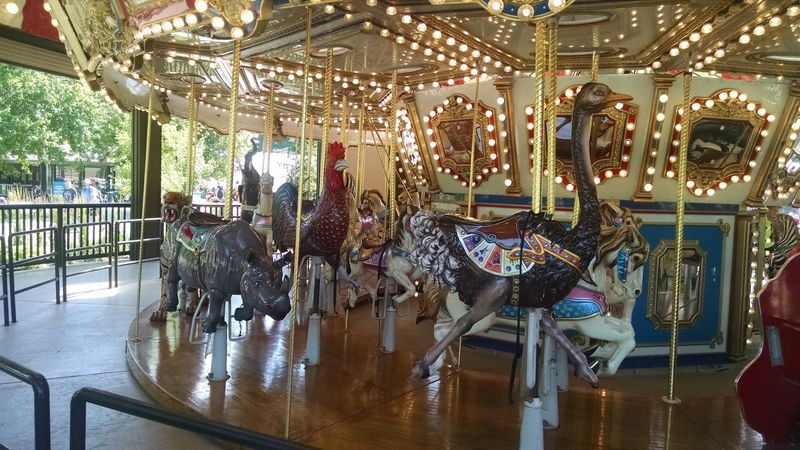
Most carousels are a parade of horses with the occasional lion thrown in for variety. Here, the animal lineup leans hard into the zoo theme, mixing traditional carousel horses with a menagerie of wildlife figures that fit the setting.
A tiger. A giraffe.
Horses with flowing carved manes and brass poles running through their saddles. The blend is the whole point, and it gives children an actual decision to make before the ride starts.
There is a practical wrinkle worth knowing before anyone commits. Not every figure rises and falls with the machinery, and the tiger and the giraffe are among the stationary ones.
If your child wants the up-and-down motion, steer them toward one of the jumping horses instead.
Some kids do not care in the slightest. Sitting on a tiger beats bobbing on a horse if you are five years old and picking based on teeth.
The paintwork rewards a closer look while you wait in line. Manes, hooves, spots, and stripes are all detailed enough that adults end up studying them too.
Two Full Circles for Four Dollars
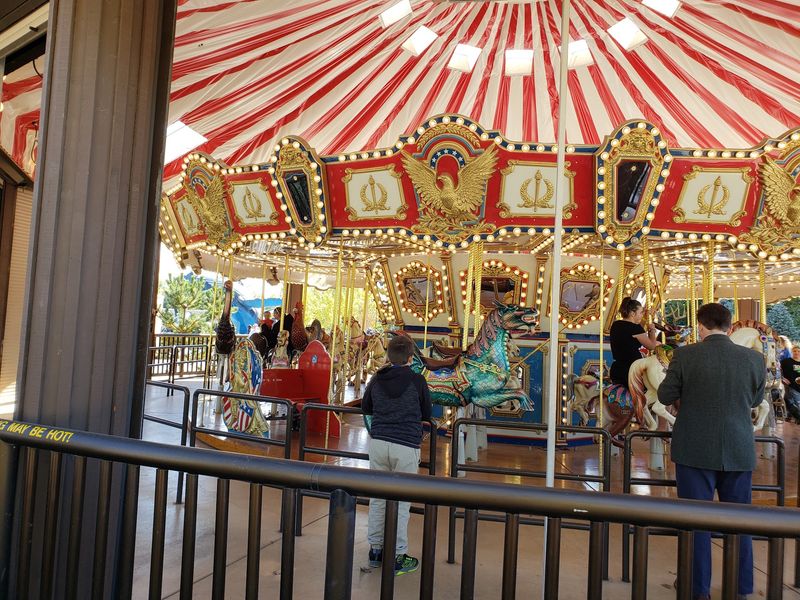
Four dollars per person buys the ride, and the ride is two complete revolutions. Short, honest, and over before a toddler has time to get bored or nervous.
One standing adult rides free with a child’s purchase, which is the detail that saves families real money. A parent can hold onto a nervous three-year-old without paying a second fare, and that policy quietly makes the whole thing workable for grandparents too.
Compare it to almost anything else priced by the ride in Nebraska and the math holds up. A single spin costs less than a soda at most concession stands, and for many kids it produces a longer-lasting memory.
Do keep expectations calibrated. Two circles go by fast, and there is a decent chance you will be asked to buy a second turn before the platform has finished slowing down.
Bringing a few singles or a card and budgeting for two rides per kid is the smart play. Nobody has ever regretted the second one.
The Sound That Signals Summer in Nebraska
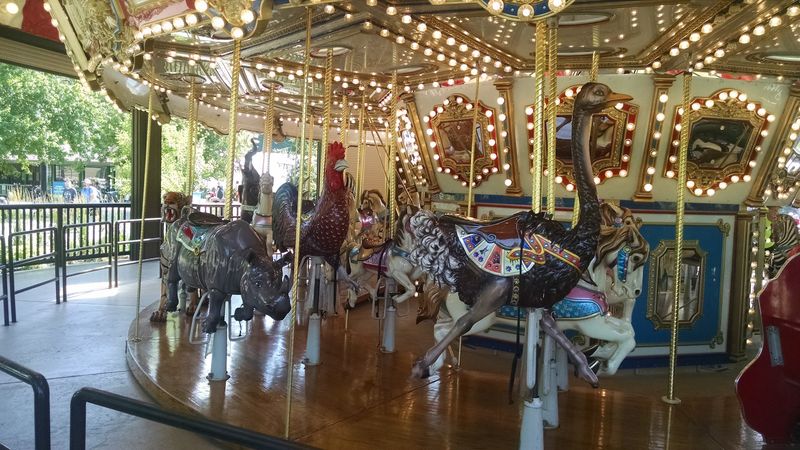
Carousel music travels. Long before you see the pavilion, the organ tune drifts across the zoo paths and children start walking faster without knowing why.
For Omaha families, that sound functions like a calendar. When the carousel is running, summer has arrived, and the season’s rhythm of splash pads, Werner Park games, and evening drives falls into place behind it.
Warm months are when the ride does its best work. Nebraska summers are long, humid, and generous with daylight, so a spin at four in the afternoon lands differently than it would in October.
The lights matter as much as the music. Bulbs ring the canopy and reflect off the mirrored center panels, throwing bright flecks across the painted animals as the platform turns.
Sit on a nearby bench and watch a full cycle before you ride. The blur of stripes, spots, and manes rotating past is oddly relaxing, and it makes a good rest stop halfway through a long zoo day with tired legs.
Picking Your Animal Before the Platform Fills
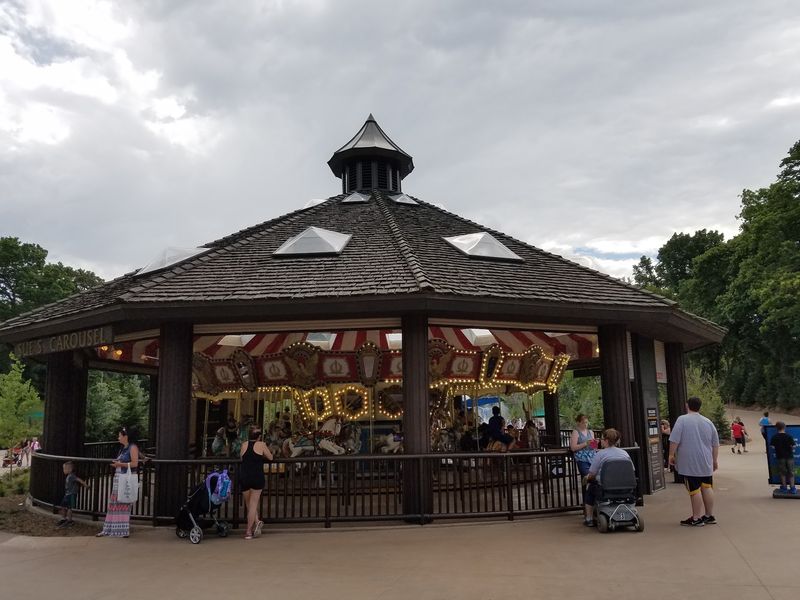
Strategy exists, believe it or not. Regulars know that the gate opens and the best figures go first, which means standing near the front of the line has actual consequences for a six-year-old with strong opinions.
The tiger is usually claimed within seconds. So is the giraffe, mostly because it is the tallest thing on the platform and looks impressive from the ground.
Jumping horses appeal to older kids who want motion. Stationary wildlife figures suit the smaller riders who would rather sit still and grip the pole with both hands.
Chariots and bench-style seats, where available, solve the problem of a child who wants to be aboard without being aboard anything specific. Adults with cameras tend to gravitate there too.
Attendants help riders on and check that everyone is settled before the platform moves. Straps go around waists, parents position themselves on the outside, and the whole boarding process takes only a minute or two.
Let kids choose their own animal. Half the fun happens before the music starts.
Old-Fashioned Craft in a Modern Zoo
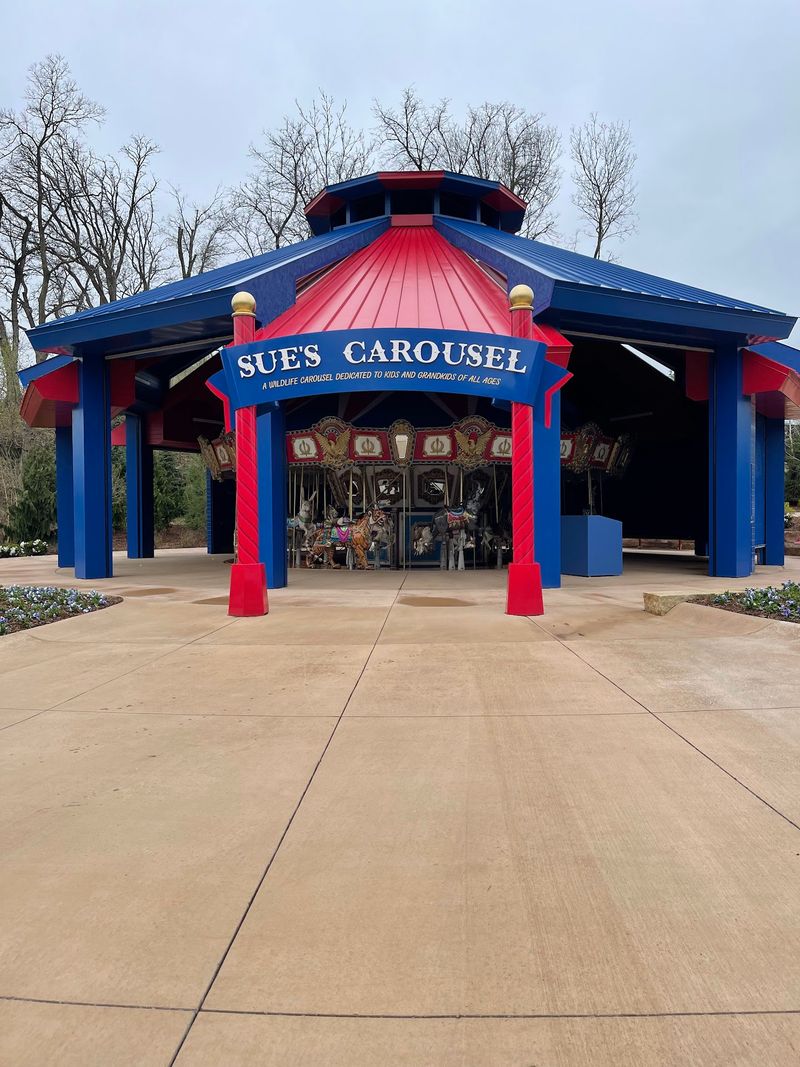
Glossy paint, carved saddles, jeweled bridles, scrollwork panels. The carousel belongs to an older tradition of American amusement craft, and it stands out sharply against a zoo full of glass tunnels, climate-controlled domes, and touchscreen exhibits.
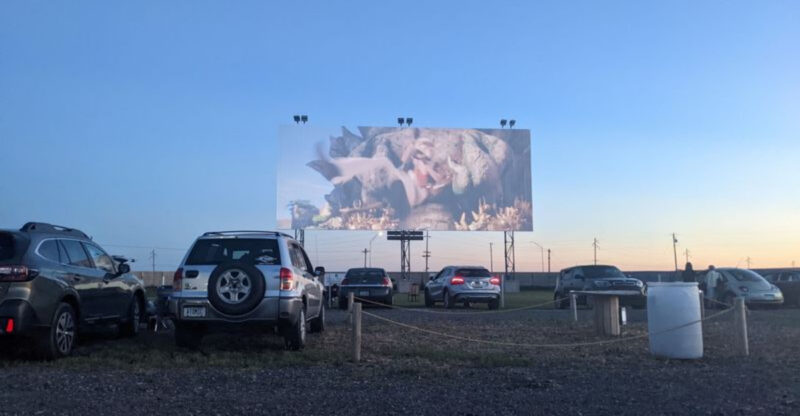
Nebraska has a soft spot for this kind of survivor. Drive-in screens near Neligh, single-screen theaters on county-seat main streets, soda fountains still pouring behind marble counters.
All of them earn affection by refusing to modernize themselves out of existence.
Vibrant coloring is the first thing people notice about the animals here. Deep stripes on the tiger, warm ochre on the giraffe, bright reds and golds worked into the trim above.
Rides like this one used to anchor amusement parks and county fairgrounds across the state. Many of those machines are long gone or sitting disassembled in storage buildings.
Keeping one running and open every day of the week takes maintenance, staff, and a real commitment. The result is a working piece of craftsmanship rather than a museum display behind rope.
Who Gets the Most out of the Ride
Toddlers through early grade-schoolers are the sweet spot. The ride is slow, brief, and unthreatening, which suits a two-year-old who cannot handle anything faster and a seven-year-old who still thinks tigers are the coolest thing available.
Grandparents do well here too. The free standing-adult policy means a grandmother can walk alongside a grandchild for two revolutions without buying a ticket, and there is a bench nearby for whoever sits out.
Teenagers will roll their eyes and then ride anyway. Something about a carousel dissolves cool in about eleven seconds.
Families with a wide age spread get the most value, since everyone can board the same ride at the same time. Nobody has to wait out a height requirement or hold the bags.
Photographers should position themselves outside the fence on the side where the light falls behind the animals. One clean shot of a kid on a painted tiger tends to outlast a hundred blurry pictures of real animals napping in the shade.
Hours, Season, and Planning Your Visit
Nine in the morning until six in the evening, seven days a week. That is the posted schedule, which gives you a wide window and removes the usual weekday-versus-weekend guesswork.
Weather and season still call the shots. The carousel runs during the warm months, so a January visit to the zoo will not include a spin on the giraffe no matter how early you arrive.
Mornings right after opening are the calmest. Lines are short, the paint looks its best in soft light, and kids have not yet burned through their patience on the rest of the grounds.
Late afternoon works as a closer instead. Ride the carousel on the way out, when legs are tired and one last treat prevents a meltdown in the parking lot.
Parking sits off South 10th Street with easy interstate access, and the zoo requires its own admission before you reach the ride. Budget the four dollars separately, in cash or on a card, and check current seasonal operation before driving in from out of town.
Pairing the Carousel With the Rest of a Zoo Day
Two revolutions will not fill an afternoon, and they are not supposed to. The carousel functions as a punctuation mark inside a much longer day on the grounds.
Build the route around it. Indoor exhibits handle the hottest part of the day, shaded paths cover the middle stretch, and the carousel makes a natural reward once everyone has walked far enough to earn it.
The train ride and other paid attractions live in the same category of small extras. Deciding in advance which ones you will pay for saves a lot of negotiating at each stop.
Snacks first, ride second. Learn that order the easy way rather than the hard way.
For visitors driving in from Grand Island, Norfolk, or the Platte valley towns along I-80, the zoo already justifies the trip on its own. The carousel is the detail people describe later, usually while looking at a photo of a kid gripping the pole on a painted tiger with an enormous grin.
Why Four Dollars and Two Circles Still Add Up
Short ride. Small price.
Big memory. The arithmetic of Sue’s Wildlife Carousel is simpler than most family outings in Nebraska, and it holds up year after year.
Fair warning on the mechanics: two circles pass quickly, and the tiger and giraffe stay level rather than rising and falling. Knowing that going in prevents disappointment from the kid who expected to bob.
What lands instead is the whole scene. Painted stripes, mirrored panels, organ music carrying down the path, and a small person waving every time they come back around.
Nebraska keeps plenty of old-fashioned amusements alive, from drive-in screens to county fair rides, but few of them come priced at four dollars with an adult riding along for nothing.
Go in the summer, go early or late, and bring change for two turns. Then stand where your kid can see you, wave on every pass, and let the machine do what it has always done well.