This Nebraska Museum Has A Whole Hall Of Towering Mammoth Skeletons That Families Walk Right Through
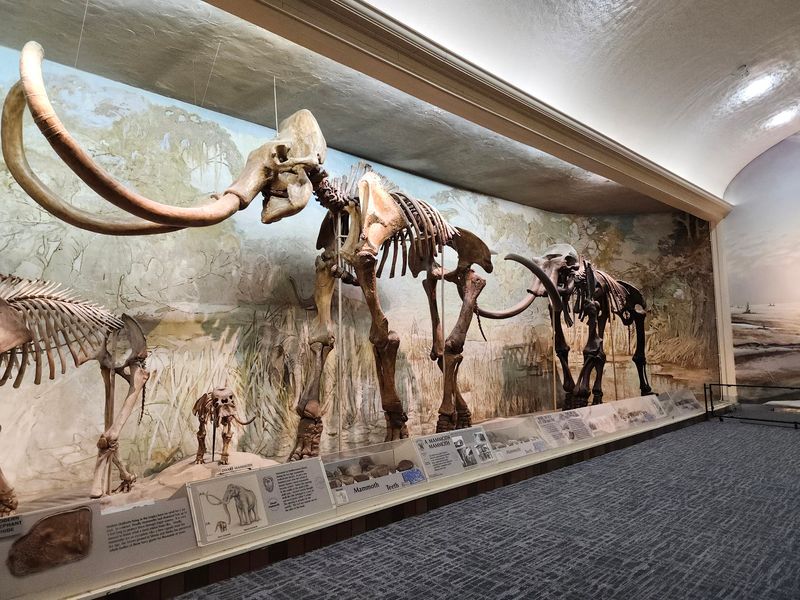
Some of the biggest animals that ever walked North America once wandered across what is now Nebraska, and their bones did not go far. A brick building on a college campus keeps dozens of them standing shoulder to shoulder in one long gallery, close enough that you crane your neck looking up.
Kids stop mid-sentence when they walk in. It costs very little, sits a short drive from Lincoln and Omaha, and it turns out to be one of the most surprising indoor stops in the state.
A Campus Building With Giants Inside
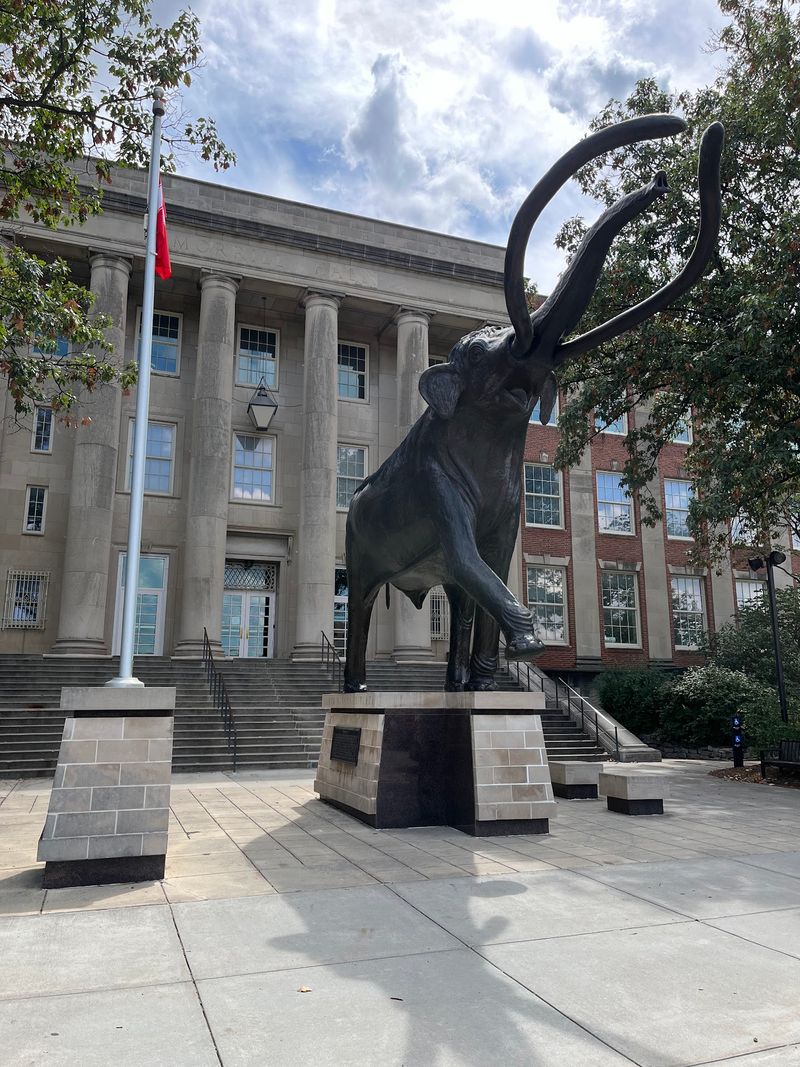
Morrill Hall sits at 645 N 14th Street on the University of Nebraska-Lincoln campus, a few blocks north of downtown Lincoln and easy to reach from Interstate 80. From the sidewalk it reads as an ordinary academic building, the kind students hurry past between classes.
Inside is the University of Nebraska State Museum, founded in 1871 and devoted to the natural and cultural history of the state. Four floors of exhibits climb from a level below the main entrance all the way to a renovated top floor, which catches plenty of people off guard.
The scale is closer to a city natural history museum than a campus display case.
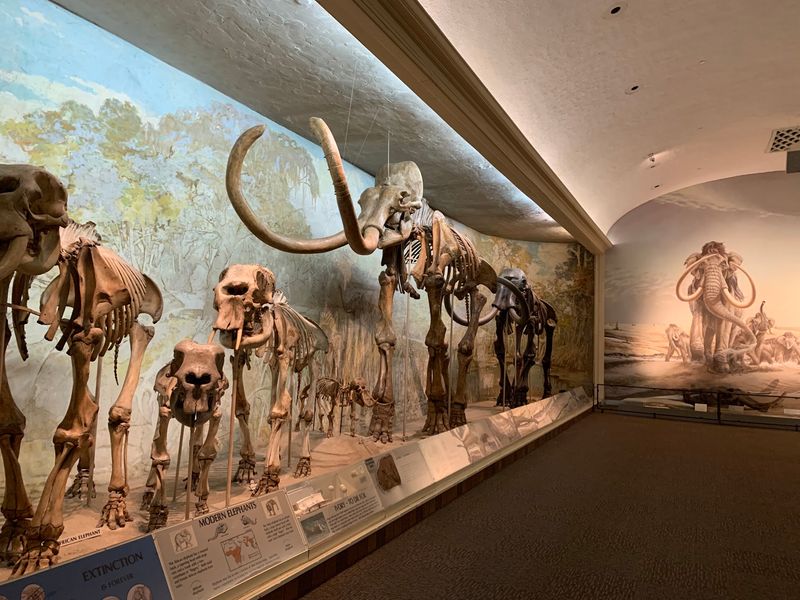
What anchors the whole place is the first gallery you meet: a long hall lined with the skeletons of mammoths, mastodons, and their relatives. Walking through it is the point.
There is no glass wall separating you from the ribcages and tusks overhead, just a floor, a railing here and there, and a lot of very old bone.
It is a Smithsonian Affiliate, and the research work behind the displays is ongoing.
Meet Archie, The World’s Largest Mounted Columbian Mammoth
Fifteen and a half feet tall at the shoulder. Twenty-five feet long from tusk tip to tail.
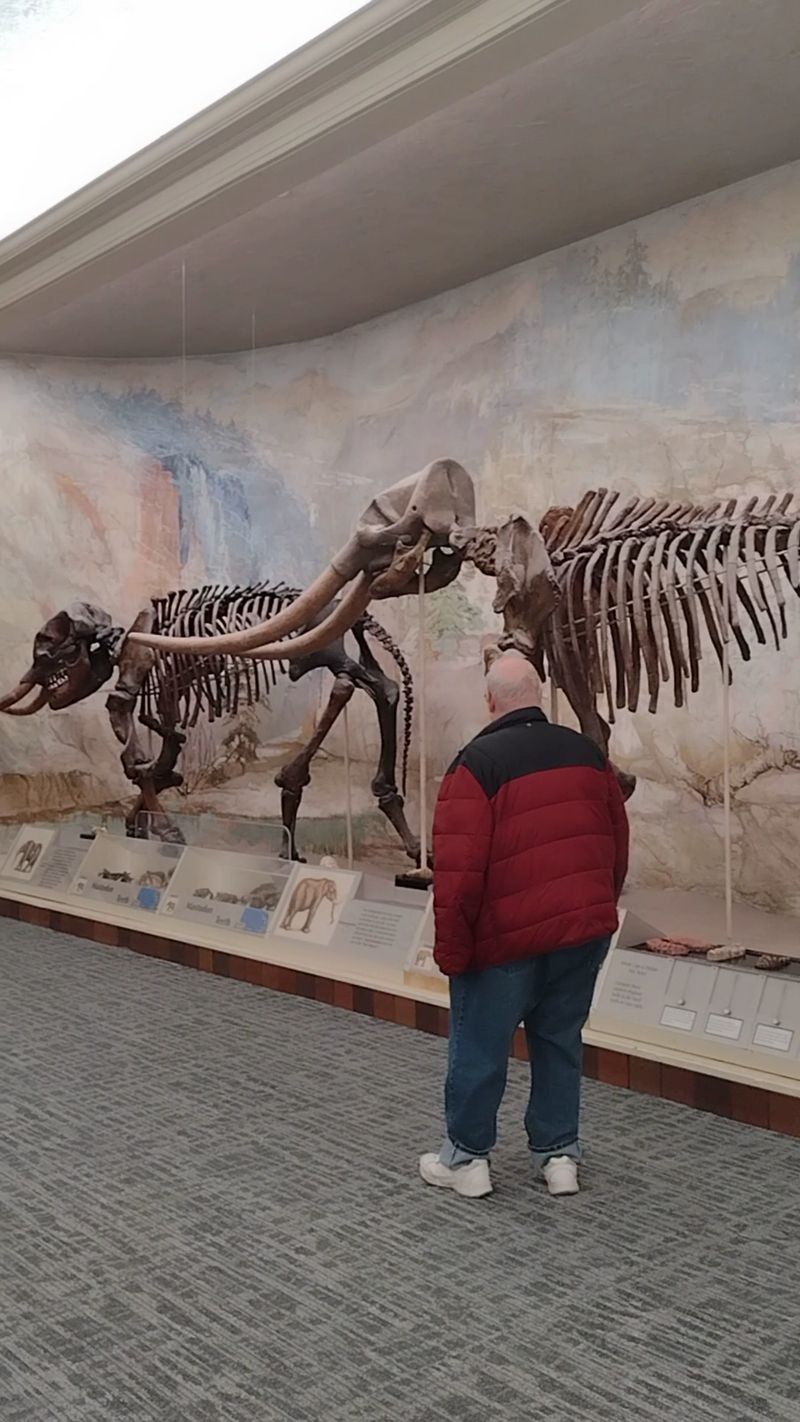
Archie, the Columbian mammoth who dominates the center of the hall, holds the record as the largest articulated mammoth skeleton mounted anywhere in the world.
Standing under those tusks changes how you think about the Great Plains. The curve of them sweeps out and back like something drawn by hand, and the leg bones are thicker than a grown adult’s torso.
Photographs never quite land the scale, which is exactly why the walk-through layout works.
Archie’s story is pure Nebraska. The skeleton came out of the ground in Lincoln County in 1922 and arrived at Morrill Hall in 1933, where it has anchored the gallery ever since.
Generations of Nebraska schoolchildren have filed past on field trips and remembered it decades later.
Museum staff and longtime guests alike treat finding Archie as the first order of business. Give yourself a minute to stand still at the base and look straight up before moving on to the rest of the parade.
The Parade of Elephants
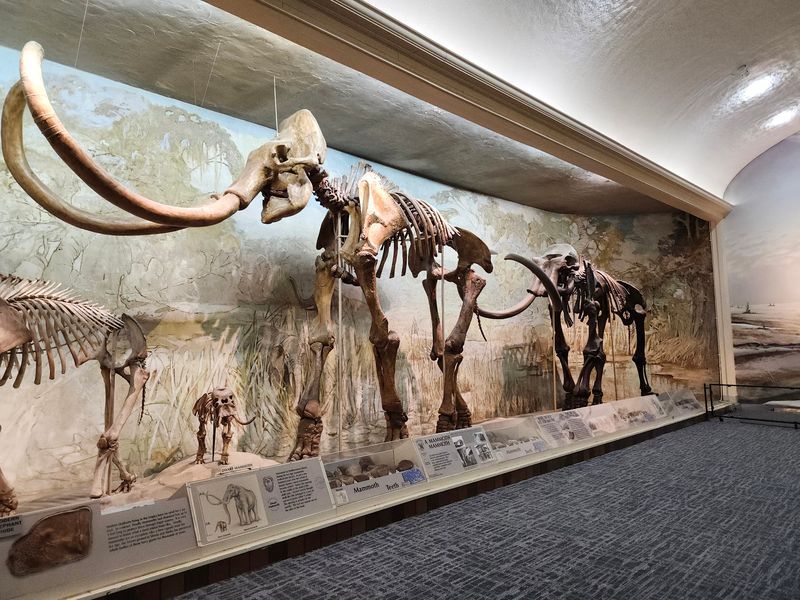
Archie has company, and plenty of it. The gallery is arranged as a Parade of Elephants, a lineup of mammoths, mastodons, gomphotheres, and other proboscideans reconstructed and set in a row so you can read the family resemblance as you move down the hall.
The arrangement tells an evolutionary story without a single lecture. Tusks shorten and lengthen, jaws change shape, bodies grow and shrink, and the differences become obvious when the specimens stand within a few steps of each other.
Four-tusked creatures share the floor with animals closer to modern elephants.
Nebraska earned this collection honestly. Remains of mammoths and mastodons have turned up in nearly every county in the state, which explains how one museum accumulated so many complete mounts.
Children tend to sprint the length of the hall first, then double back slowly once the size registers. Adults usually go the other direction, reading labels, then stepping back to take in the whole row at once.
Elephant Hall is the informal name, and it fits the room perfectly.
Murals Painted in the 1920s and 1990s
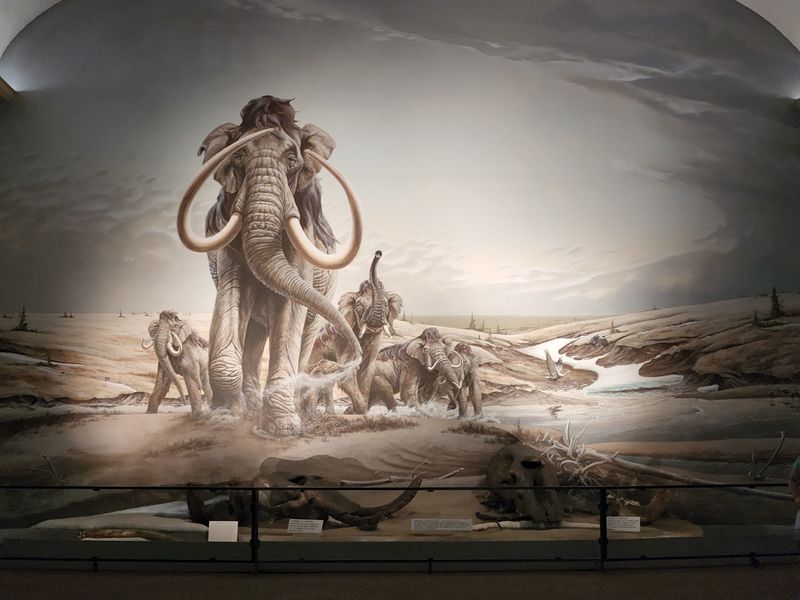
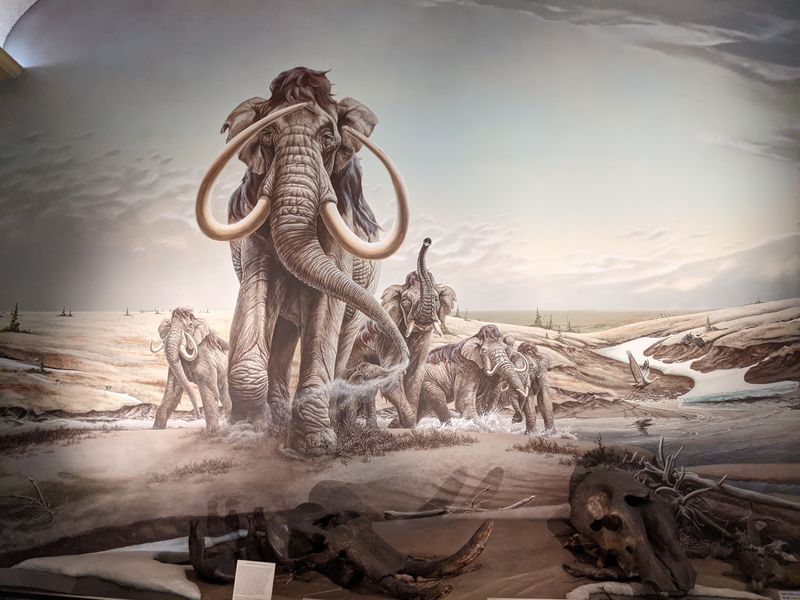
Look up past the tusks and there is art on the walls. Nebraska artist Elizabeth Honor Dolan was commissioned in 1926 to paint fresco murals for the hall, and those paintings still frame the skeletons below them.
They are part of the building’s fabric, and plans call for preserving them through upcoming renovations.
A second generation of artwork lives elsewhere in the museum. Paleoartist Mark E.
Marcuson contributed murals around 1995, reconstructions of ancient Nebraska landscapes that give the fossil mounts a setting to inhabit.
Put together, the two eras create an unusual layered feel. Some corners of Morrill Hall carry an older museum atmosphere, complete with vintage display technology in the Mesozoic Gallery if you look closely, while other floors are bright and screen-heavy.
That mix is part of the charm rather than a flaw. Grandparents recognize rooms from their own school trips, and their grandkids get touch tables in the next gallery over.
Painted murals and mounted bone were meant to be seen together, and standing in the middle of the hall makes that intention clear.
Dinosaurs, Rocks, and the Mesozoic Gallery
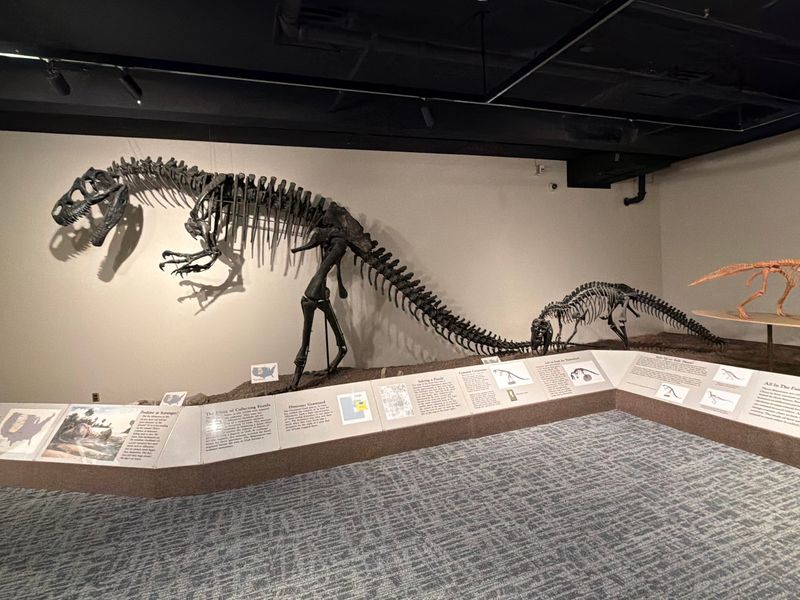
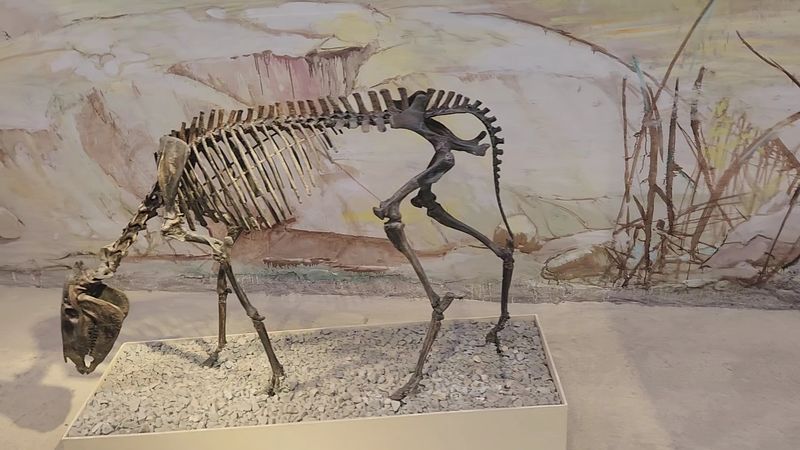
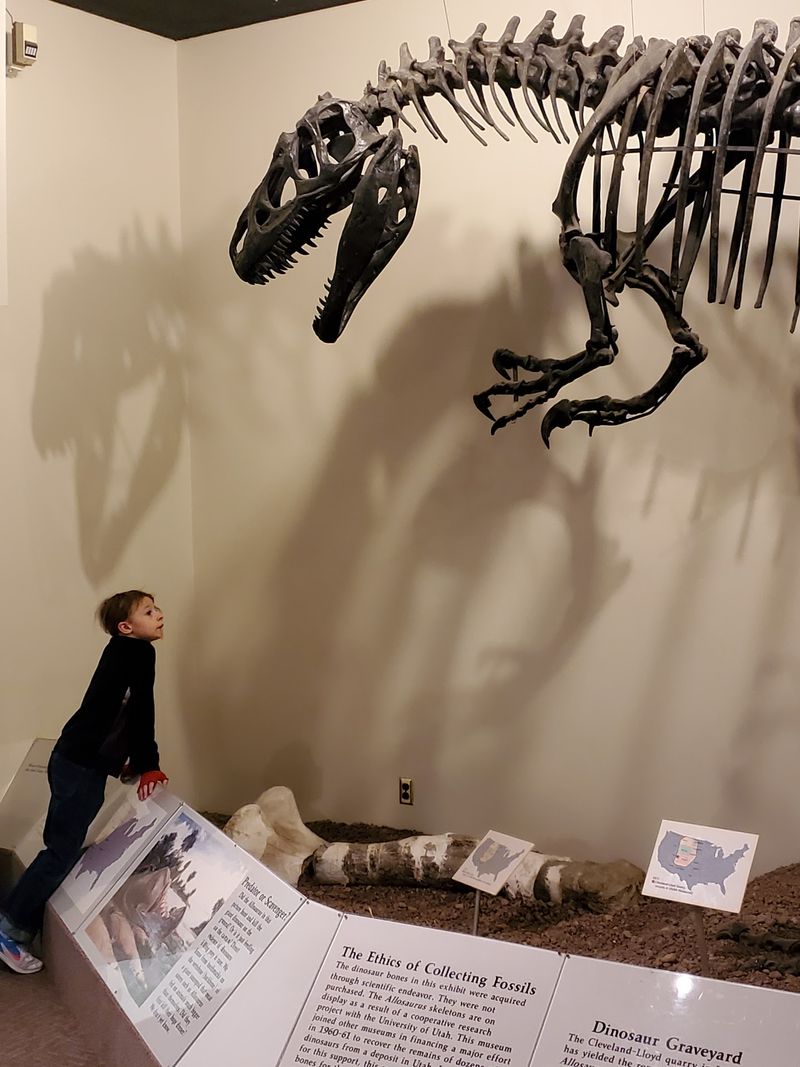
Past the elephants, the main floor moves into the Paleontology of Nebraska displays and then the Mesozoic Gallery, which covers the Age of Dinosaurs. Stegosaurus and Allosaurus replicas stand here in older-style poses that paleontology fans notice right away.
Glyptodonts show up too, armored relatives of armadillos built like small cars. Nebraska’s fossil record runs deep and strange, and the museum leans into the odd corners rather than sticking to household names.
Rock and mineral collections fill part of the second floor, with case after case of crystals and specimens that reward slow looking. Anyone who kept a shoebox of interesting stones as a kid will lose track of time in there.
The third floor holds a parasitology collection, including a digital table that draws steady crowds. It is a genuinely unusual thing to find in a museum of this size, and the science is presented plainly enough that nobody needs a biology background.
A fossil prep lab lets you watch casts being opened and specimens cleaned, real research happening a few feet from the public.
Cherish Nebraska on the Fourth Floor
Renovated and opened in spring 2019, the fourth floor is where Morrill Hall looks most current. Cherish Nebraska covers the state’s biodiversity through bright displays, specimen drawers you are invited to open, and interactive stations that hold attention without talking down to anyone.
The Science Exploration Zone lives up here. Pull out a drawer and you might find insects, fossils, plants, or shells, all of which can go under a microscope on the spot.
Kids can also crawl through a prairie dog burrow, a hollow cottonwood log, and a rattlesnake den.
Elsewhere in the building, the Hall of Nebraska Wildlife presents dioramas of the animals and plants that share the state today, from grassland birds to prairie mammals.
Volunteer paleontologists sometimes work in view, sorting through ancient sediment and occasionally turning up something tiny and millions of years old while you watch.
Plenty of people finish their visit here and immediately plan a return trip. Two hours goes fast when four floors are involved, and repeat visitors keep finding rooms they missed.
Star Shows at Mueller Planetarium
A domed theater tucked into the building handles the other end of the size scale. Mueller Planetarium runs shows about the cosmos, projected overhead while you lean back in the dark.
Admission to the planetarium costs extra beyond museum entry, and shows run on a set schedule, so checking times before you arrive saves some guesswork. The programming tends to suit younger audiences well, though the dome experience lands for adults too.
Pairing it with the fossil floors makes for a nicely balanced afternoon: mammoths measured in feet, then distances measured in light-years. The contrast is not subtle, and that is sort of the fun of it.
Whether the add-on fee fits your plans depends on how long the group can hold out. Families with restless little ones sometimes save the planetarium for a return trip rather than stacking it on top of four floors of exhibits.
Museum staff welcome suggestions for future show topics by email, which says something about how the place operates. Feedback goes somewhere.
Hours, Tickets, and Parking Near 14th Street
Doors open at 9 AM Tuesday through Saturday and close at 5 PM. Sunday hours run noon to 5 PM, and the museum is closed Mondays.
Phone is 402-472-2637, and current ticket prices are posted at museum.unl.edu.
Admission stays inexpensive, which matters for families making a day of it. UNL students get in free, and members of the ASTC Passport program can enter at no charge as well.
Planetarium shows carry a separate add-on charge.
Parking takes a little planning. Spaces directly outside the building are limited, but a garage sits a short walk away and handles the overflow without much trouble.
Know your license plate number before you park, since some lots require it.
School groups visit regularly, and on busy field trip days certain areas may be reserved. Calling ahead can save disappointment if you have your heart set on a particular gallery.
Lincoln sits about an hour from Omaha and roughly two hours from Grand Island, making this a comfortable half-day drive from much of eastern Nebraska.
Why the Walk Through Elephant Hall Sticks With You
Most museums keep their heaviest hitters behind rope and glass. Morrill Hall puts a room full of mammoths at floor level and lets you walk the length of it, which is why people who came here at eight years old still remember the feeling at fifty.
The building rewards a slow pace. Four floors, a planetarium, murals from two different centuries, drawers full of specimens, and a fossil lab add up to more than a quick stop, and finishing everything in one visit takes real effort.
Renovation work continues in places. The Marx Discovery Center, the space families associate with hands-on play, is temporarily running at smaller scale on the second floor while its permanent home is rebuilt, with an opening slated for early summer 2026.
For a low-cost outing within easy driving distance of Lincoln, Omaha, and points west, it is hard to beat. Bring the grandkids, bring your own curiosity, and leave time for the fourth floor.
Archie has been waiting since 1933. He is not going anywhere.