This Nebraska Cathedral Stays Open To Anyone Who Wants To Stand Beneath Its Soaring Ceilings
There’s a building in central Nebraska that looks like it belongs on a postcard from somewhere much farther away. I walked in expecting a quick look and ended up sitting in a pew for twenty minutes, just staring up.
The ceiling goes so high that ordinary sounds turn soft and strange, and nobody asks you why you came in. It’s free, it’s open most of the day, and hardly anyone treats it like the landmark it is.
A Limestone Landmark on South Cedar Street
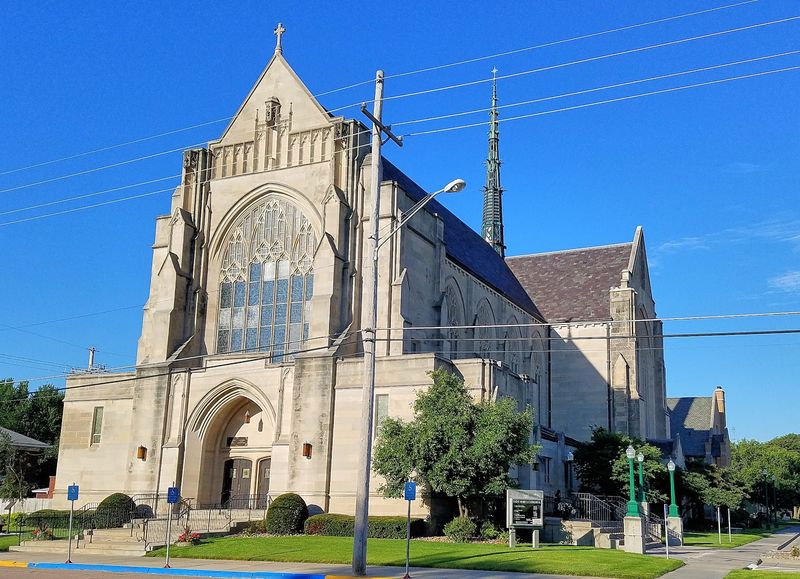
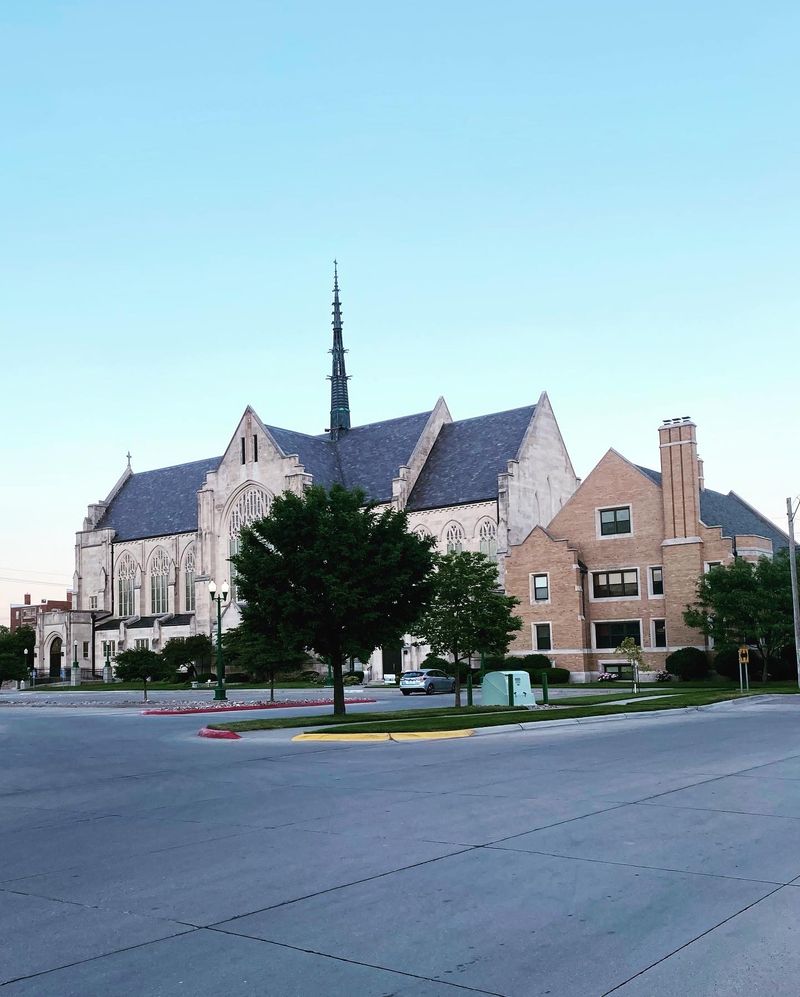
Drive through downtown Grand Island and the cathedral’s tower shows up above the rooflines before you find the street it sits on. Stone walls, tall arched windows, wide front steps: it reads more European parish than Hall County main street.
St. Mary’s Cathedral serves as the seat of the Catholic Diocese of Grand Island, which covers a huge stretch of central and western Nebraska. That role explains the scale.
A cathedral has to hold ordinations, diocesan gatherings, and crowds that a neighborhood church never sees.
Out front, a bronze figure of Mother Teresa stands near the entrance, small enough that plenty of people walk past without noticing her. She’s a good place to pause before you push through the doors.
The building dates to the 1920s, and the craftsmanship from that era holds up. Nothing about it feels like a replica or a modern reconstruction.
What surprises most first-timers isn’t the outside at all. It’s how quickly the noise of the street drops away once the door closes behind you.
Ceilings That Pull Your Eyes Upward
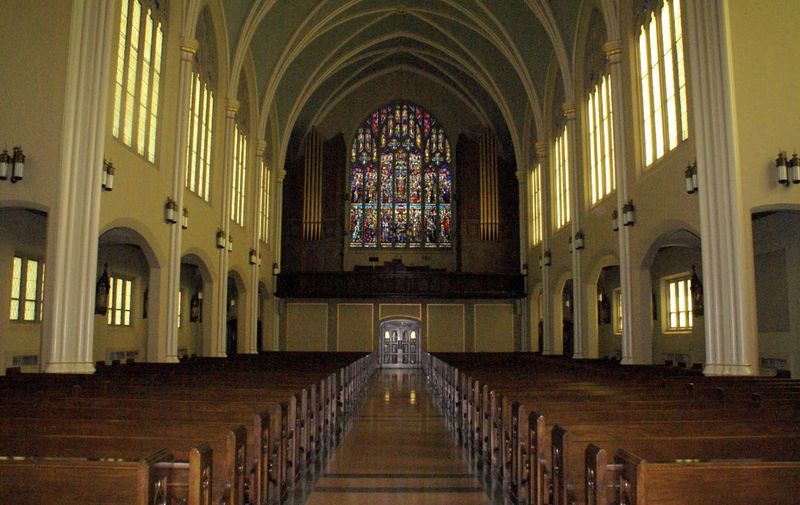
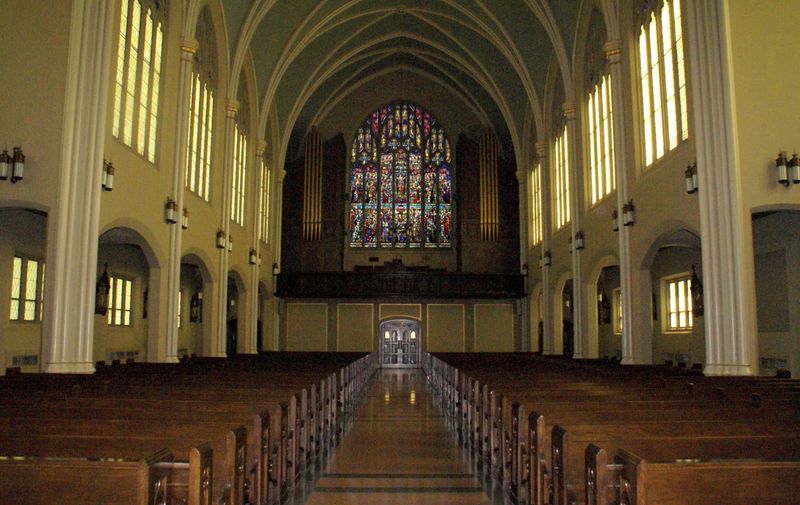
Look straight up and the arches keep climbing past where you expect them to stop. Columns run along both sides of the nave, meeting overhead in long vaults that make the whole room feel taller than it is wide.
Height like that does something to a person. Voices drop automatically.
Footsteps get shorter. People who wandered in to snap one photo end up standing in the center aisle with their phone forgotten in their hand.
The ceiling is the single feature that comes up most often when anyone describes the place, and it earns the attention. Grand Island sits in flat country where the tallest things around are grain elevators and water towers, so a room with this much vertical reach lands differently here than it would in a city of skyscrapers.
Morning is the best time for it, when light angles in and the upper arches catch a warm tone.
Bring a friend who complains about long car rides. Ceilings this tall tend to end the complaining.
The Rear Stained Glass Worth Turning Around For
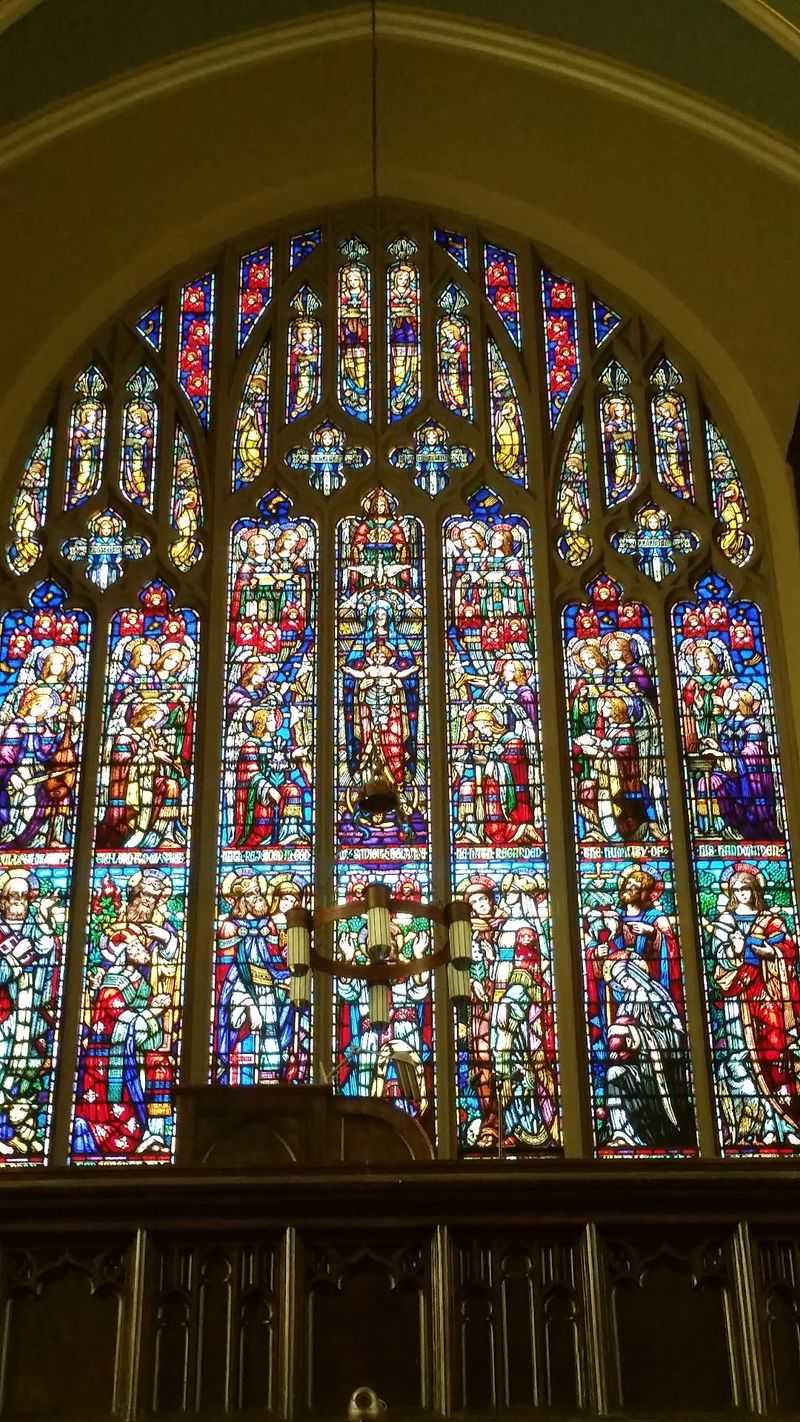
Most people walk in facing forward, admire the altar, and leave without ever turning around. That’s a mistake here.
The side walls of the nave carry far less stained glass than you’d expect in a cathedral of this age, which throws some visitors at first. Keep going.
The window at the rear of the building is where the color lives, a broad expanse of glass that lights up when the sun hits it from behind.
Colored light spreads across the back pews in the afternoon and shifts as clouds move. It’s the kind of thing you notice only if you sit still long enough to let it happen.
Glass work throughout the building reflects 1920s craftsmanship, hand-assembled panel by panel long before anyone in Nebraska thought of this as a tourist stop.
Practical tip: walk in, go halfway up the aisle, then pivot. The full window opens up from that spot better than from anywhere near the door, and you’ll understand why the side walls don’t need to compete.
Statues, Marble, and the Altar Detail
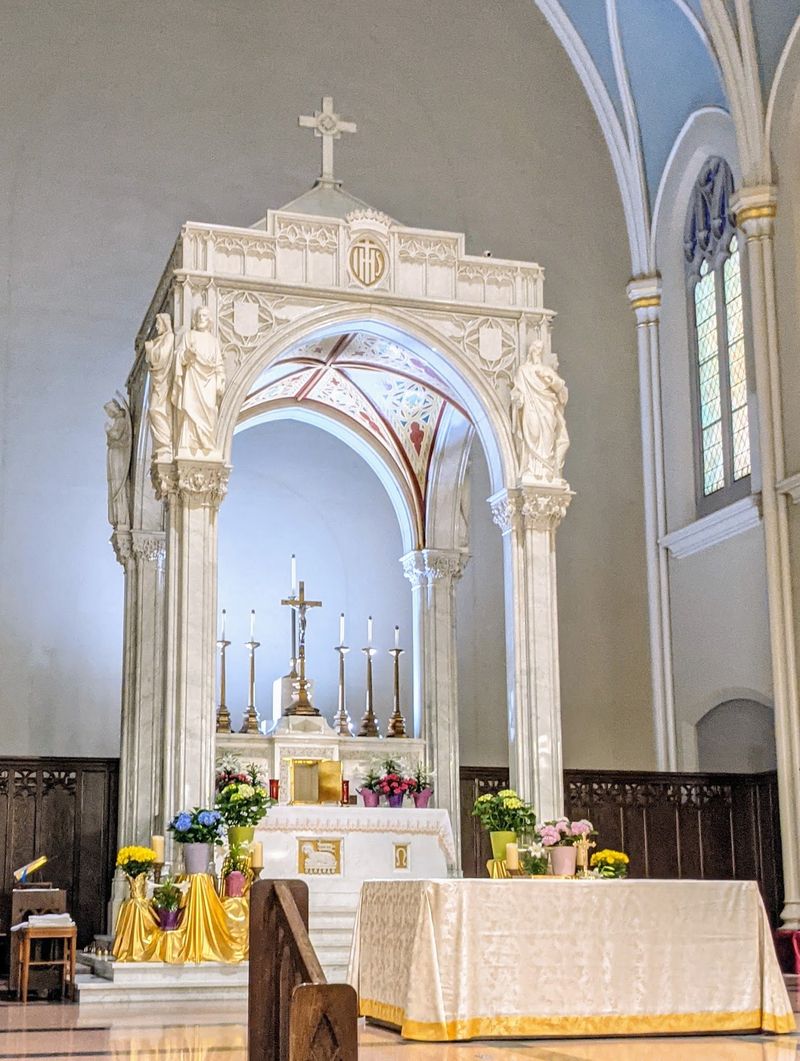
Up near the front, the detail work rewards a slow walk. Statues stand in alcoves along the sanctuary, carved with the kind of patience that has largely gone out of building.
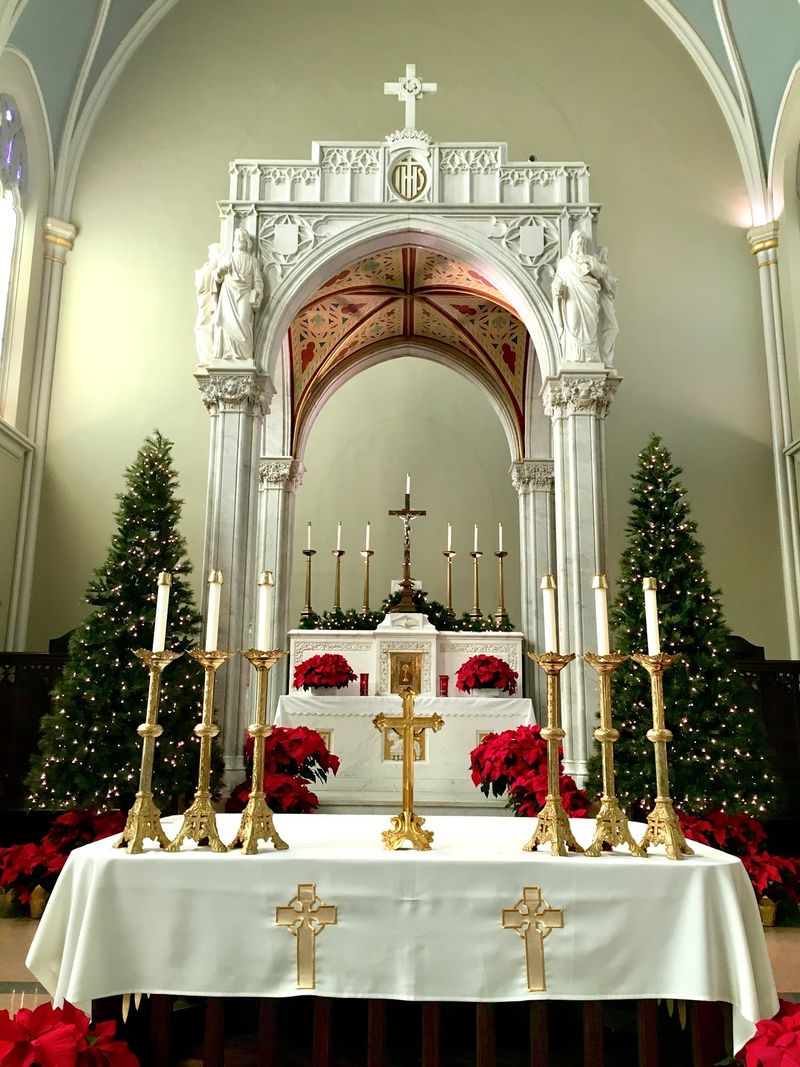
The altar area anchors everything. Stone, ornamental trim, and figures arranged with real deliberation, all of it built at a scale that matches the room rather than shrinking inside it.
Take a lap along the side aisles instead of staying in the middle. Faces on the statues change depending on the angle you view them from, and small carved elements hide near the bases where most foot traffic never slows down.
None of this is roped off behind glass. You can stand a few feet away, tilt your head, and study a hand or a fold of fabric for as long as you like.
For anyone who grew up in the Grand Island area, this is the interior that shows up in wedding photos and confirmation pictures going back generations. For everyone else, it’s a lesson in what 1920s Nebraska builders were capable of.
Acoustics That Come With the Territory
Big rooms have a trade-off, and this one is honest about it. Sound bounces.
Spoken words can blur before they reach the back pews, a side effect of hard surfaces and all that open air overhead.
If you’re there for a service and want to catch every word, sit closer to the front. That single adjustment solves most of it.
Singing, on the other hand, does something else entirely in a space like this. A held note travels up into the vaults and hangs there a moment longer than it should, which is exactly the effect these buildings were designed to produce centuries before microphones existed.
The music director’s voice carrying through the nave is one of the better reasons to time a visit around a Mass rather than a quiet weekday afternoon.
Empty, the room does the opposite. Your own footsteps come back to you from three directions.
Cough once and you’ll hear it twice. That echo is part of the experience, not a flaw to apologize for.
Open Doors From Early Morning to Night
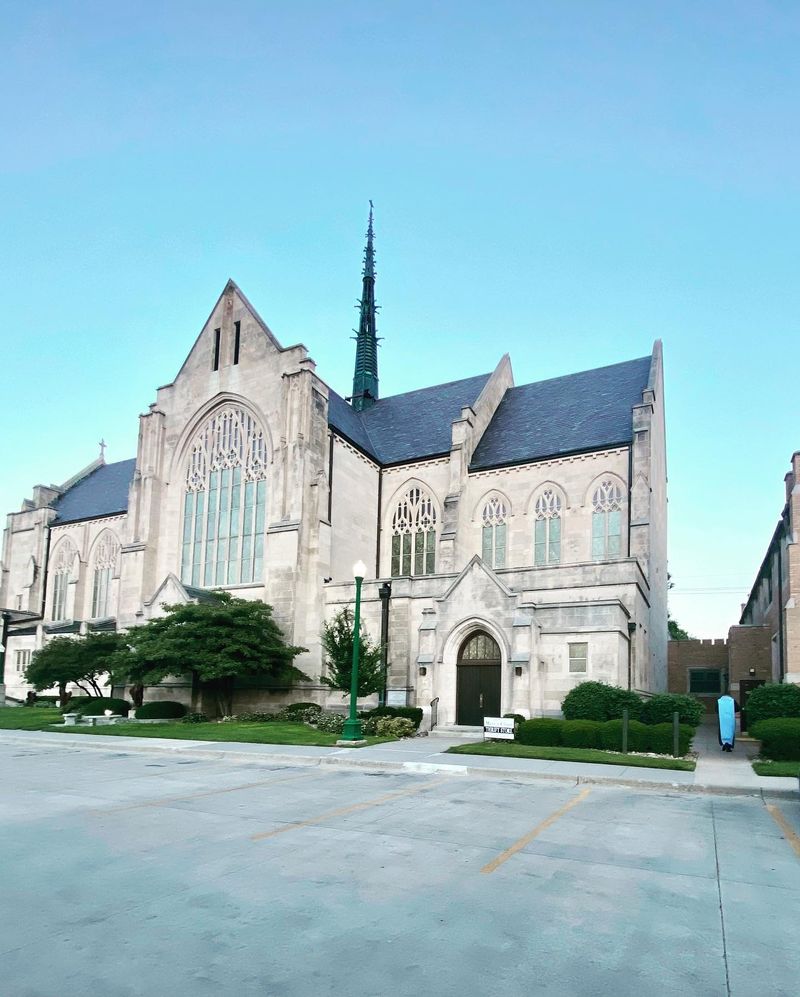
Here’s the detail that makes this place unusual: the doors stay unlocked for most of the day, every day of the week. Not just around services.
Not by appointment.
You can walk in before the sun is fully up and you can walk in after supper, and nobody meets you at the door with a clipboard. Anyone who wants to sit down and look up is welcome to.
Long hours like that turn a cathedral into something more useful than a photo stop. It becomes a place you can duck into on a hard day, or on a long drive across the Platte valley when you need twenty quiet minutes and a bathroom break.
Hours can shift around holidays and special liturgies, so a quick check before you make the drive is smart if you’re coming from out of town.
Free admission, no ticket booth, no gift shop pressure at the exit. Leave a donation if you feel moved to, or don’t.
The invitation stands either way.
A Quiet Room in a Loud Week
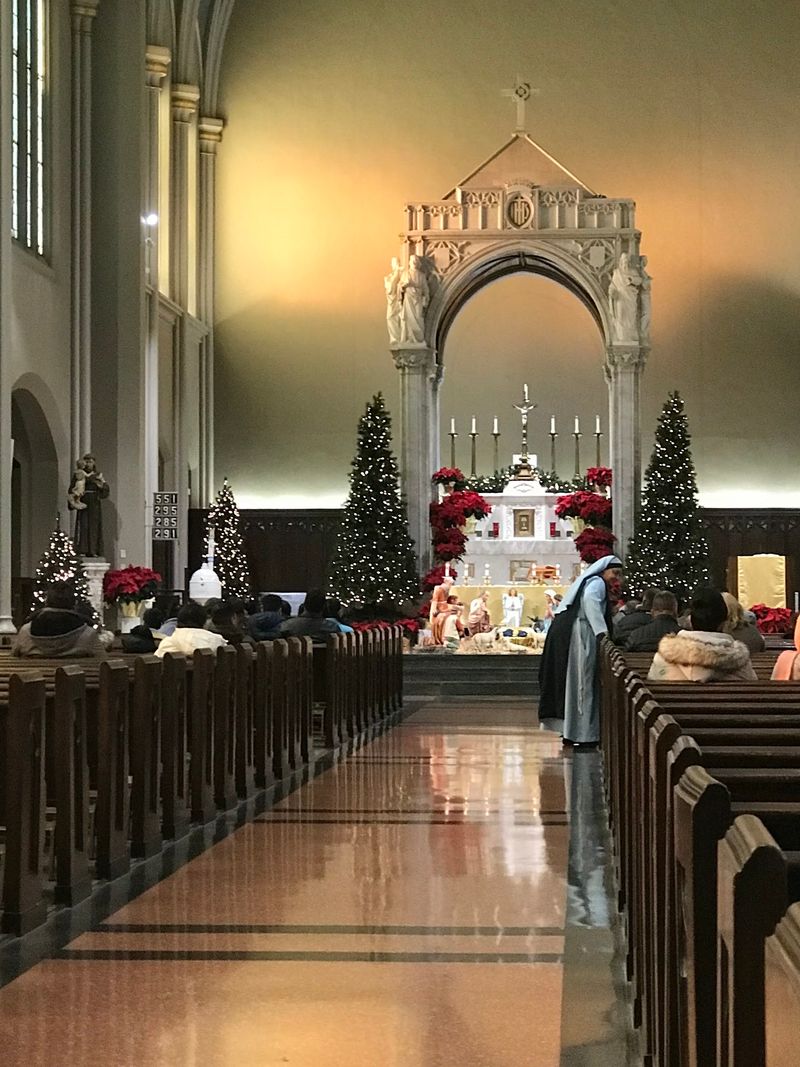
Silence is harder to find than it used to be. Inside these walls it’s still available, and it costs nothing.
Rows of pews sit mostly empty during the middle of a weekday. The room holds a lot of people, which means there’s always somewhere to sit alone without feeling like you’re intruding on anyone.
Some come to pray a rosary. Some come because the ceiling is remarkable.
Some come to think through something that won’t sort itself out in a kitchen or a truck cab. All three work here.
Cool in July, sheltered in January, dim enough that your eyes relax after a morning of highway glare. The building is genuinely restful in a way that no amount of decorating advice can manufacture.
Bring a kid who’s never seen a room this tall and watch their reaction. Bring a grandparent who hasn’t been inside in decades.
Either way, twenty minutes in a pew tends to stretch into forty.
Phones go in pockets on their own here. Nobody has to ask.
The Basement Thrift Store Most People Miss
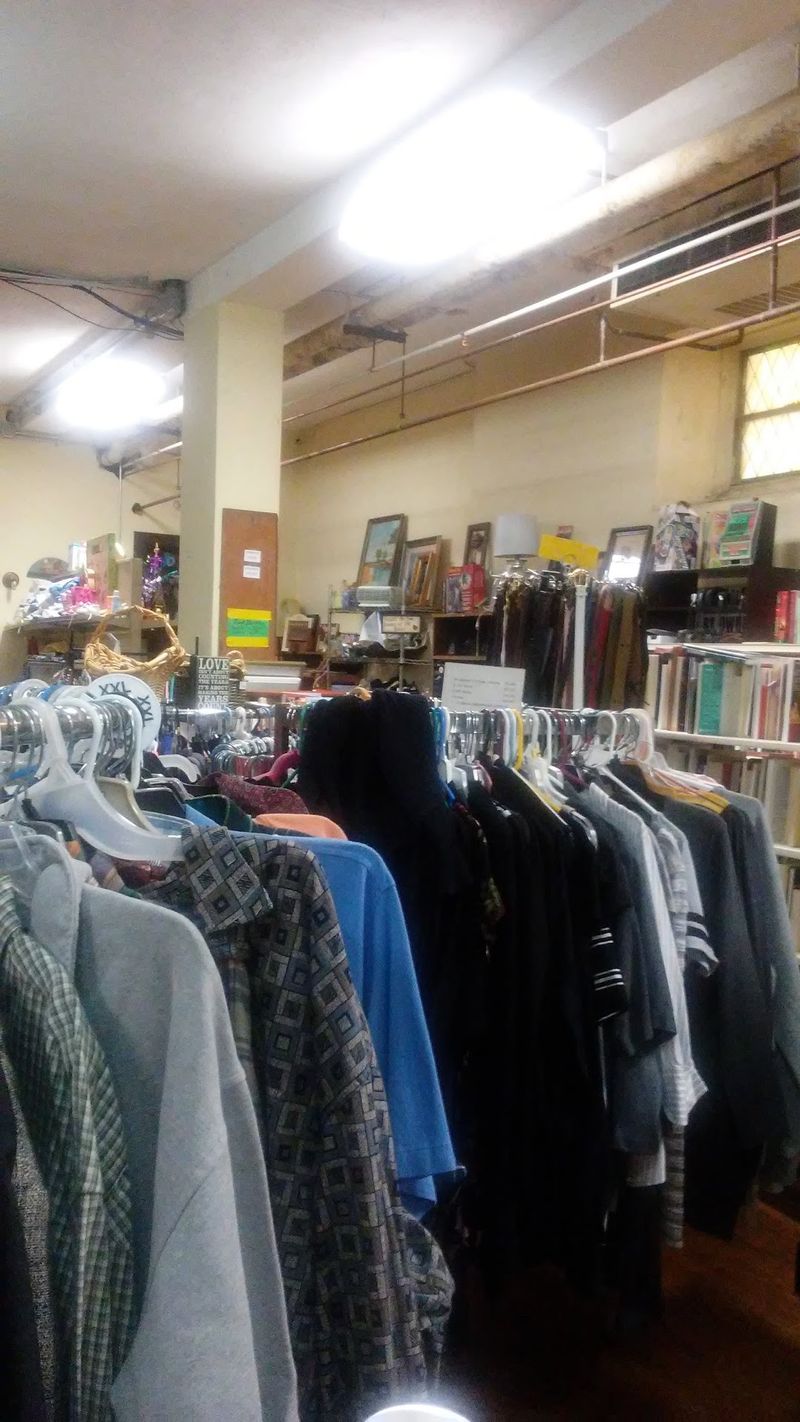
Below the sanctuary, the tone shifts completely. Racks of clothing, shelves of household items, tables of odds and ends: the cathedral runs a thrift store in its basement, and the prices stay low on purpose.
Second-hand goods here go for a few dollars, sometimes less. It’s the sort of operation where you go in for nothing and come out with a coffee mug and a jacket for the garage.
Donations keep it stocked, which means the inventory turns over constantly. Two visits a month apart look like two different stores.
Plenty of people who aren’t Catholic stop by strictly for the shopping, drop off a box of unwanted things, and take a look at the sanctuary while they’re there. That combination of bargain hunting and architecture is hard to beat for an afternoon in Hall County.
Store hours don’t necessarily match the cathedral’s long open schedule, so call ahead if the thrift shop is the main reason you’re driving in.
Bring cash and a tote bag. You’ll want both.
Saturday Meals and a Hand for Neighbors
Homemade food comes out of the kitchen here on Saturday evenings, served free to whoever shows up. Tables near the serving line hold bread and other groceries to take home.
If someone you know can’t get there, you’re allowed to carry a plate out the door to them. That policy says a lot about how the place operates.
Beyond meals, the parish helps people navigate immigration paperwork, a service that matters in a city where meatpacking work has drawn families from across the world for decades. Grand Island’s population reflects that history, and the cathedral’s role has shifted along with it.
Volunteers make all of it run. Nobody’s getting rich off a Saturday supper line.
Timing on community meals can change, so confirm before counting on it. What doesn’t change is the intent behind it.
A building can be beautiful and still be practical. This one manages both, which is arguably the more impressive achievement of the two.
The ceilings get the photos, the basement and the kitchen do the daily work.
Timing Your Visit Around a Mass
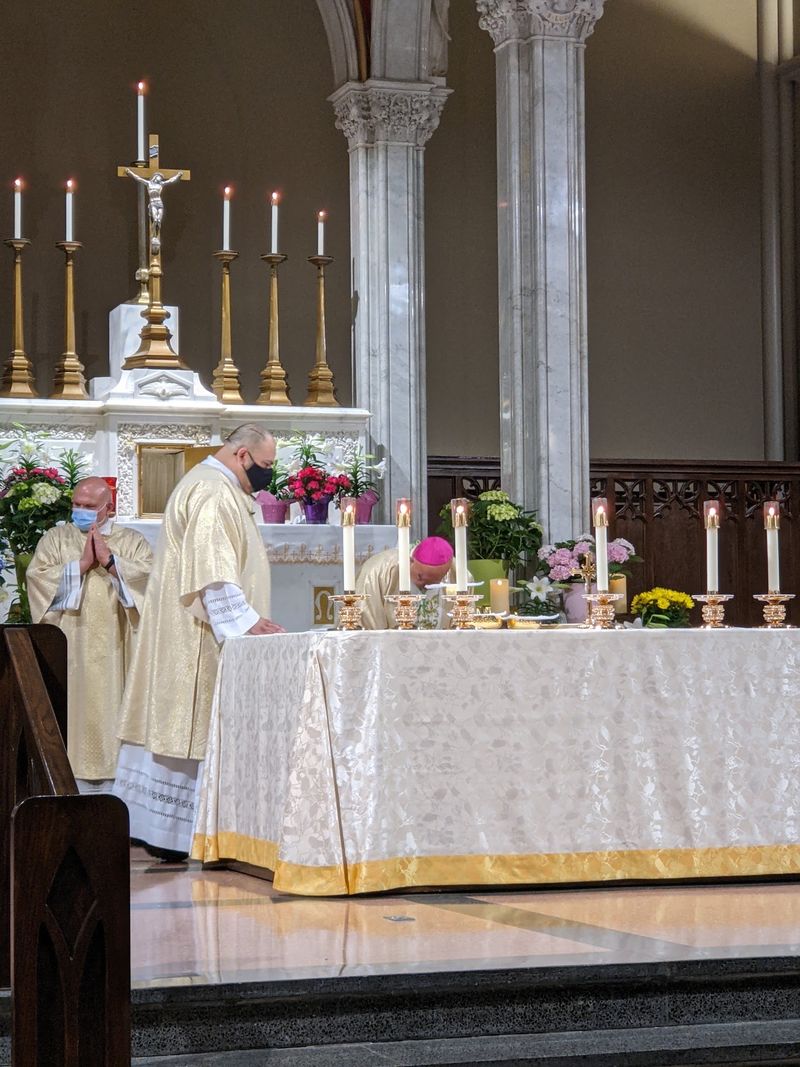
Two very different experiences live inside the same building depending on when you arrive. Empty and echoing, or full and singing.
Morning Mass fills the front pews with a steady weekday crowd and puts the room to its intended use. Candles lit, organ going, voices rising into the vaults.
If you want to understand why the architects built the ceiling that high, come when it’s being used.
Visitors who prefer solitude should aim for the middle of the afternoon instead, well clear of scheduled liturgies. The building empties out and you can wander the aisles without crossing anyone’s path.
Priests and deacons tend to stick around afterward and talk with people, so there’s no rush to clear the room once a service ends.
Mass times vary by season and by day, and the diocesan calendar adds ordinations and special celebrations that draw much larger crowds. Checking ahead saves a wasted trip.
Newcomers don’t need to know the routine. Sitting quietly in a back pew is entirely acceptable.
Getting There From Anywhere in Nebraska
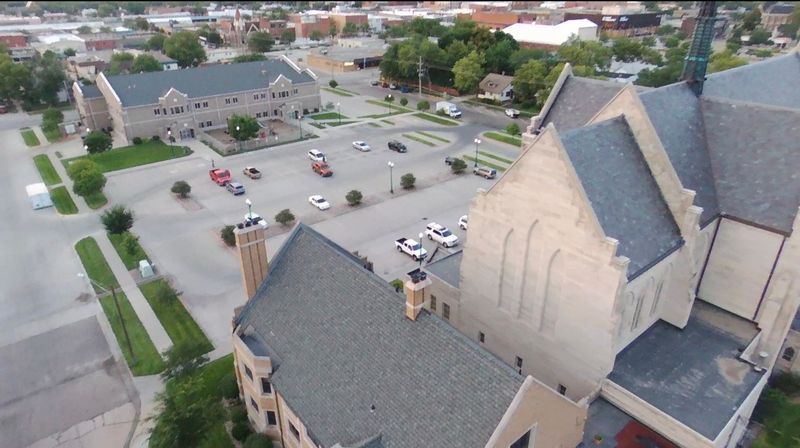
Interstate 80 runs just south of Grand Island, which puts this cathedral within easy reach of an enormous share of the state. Off the highway, into town, and you’re there in minutes.
From Lincoln it’s a straightforward run west. From Kearney it’s a short hop east.
Anyone coming down from the Sandhills on Highway 2 passes close enough that the detour barely registers on the odometer.
The address is 112 S Cedar St, Grand Island, NE 68801, right in the older part of downtown where the streets are narrow and the buildings have some age on them.
Street parking is the norm. Sunday mornings and special diocesan events fill spaces fast, so allow a little extra time or plan to walk a block.
Pair it with the rest of downtown. Grand Island has restaurants, shops, and the Stuhr Museum of the Prairie Pioneer on the south edge of town, which makes a full day out of what could otherwise be a fifteen-minute stop.
Fall is a fine season for the drive.
Why the Detour Holds Up
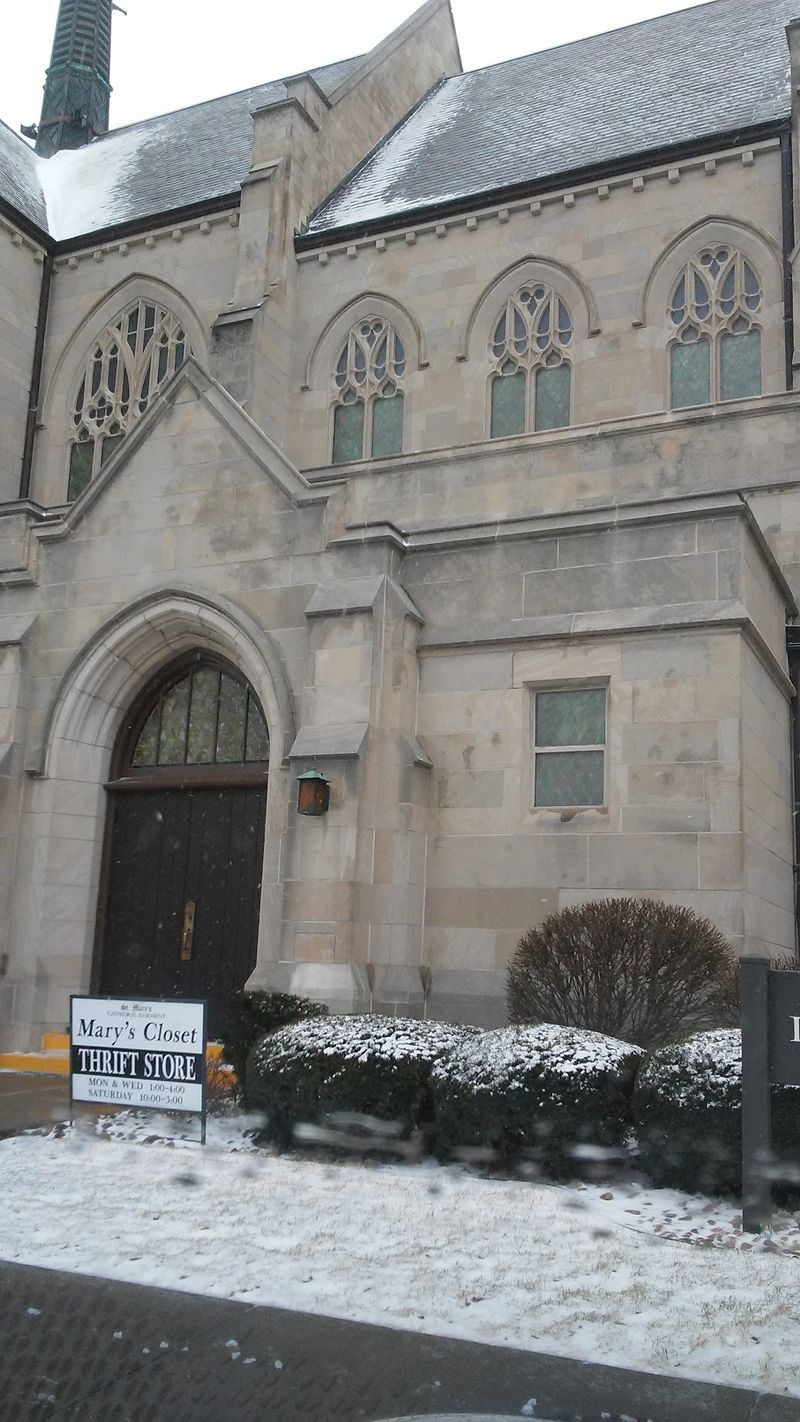
Not every landmark survives close inspection. This one does, partly because it isn’t trying to impress anybody.
The acoustics are imperfect and the side walls hold less glass than a cathedral hunter might hope for. Neither of those things dents the effect of walking in and looking up for the first time.
What’s on offer is simple: a 1920s building of real ambition, standing in a working central Nebraska city, unlocked from early morning until night, free to anyone who walks through the door. Add a thrift store in the basement and free suppers on Saturdays and you have a landmark that still pulls its weight.
Photographers get the tall arches and the rear window. Families get a room that quiets kids down without anyone raising a voice.
People just passing through on I-80 get twenty unhurried minutes that beat another gas station stop.
Set aside half an hour, longer if the light is good. Sit in a pew, tip your head back, and let the ceiling do what it was built to do.