This North Carolina University Has Harry Potter-Like Corridors, Stunning Fall Trails, And A World-Famous Lemur Sanctuary
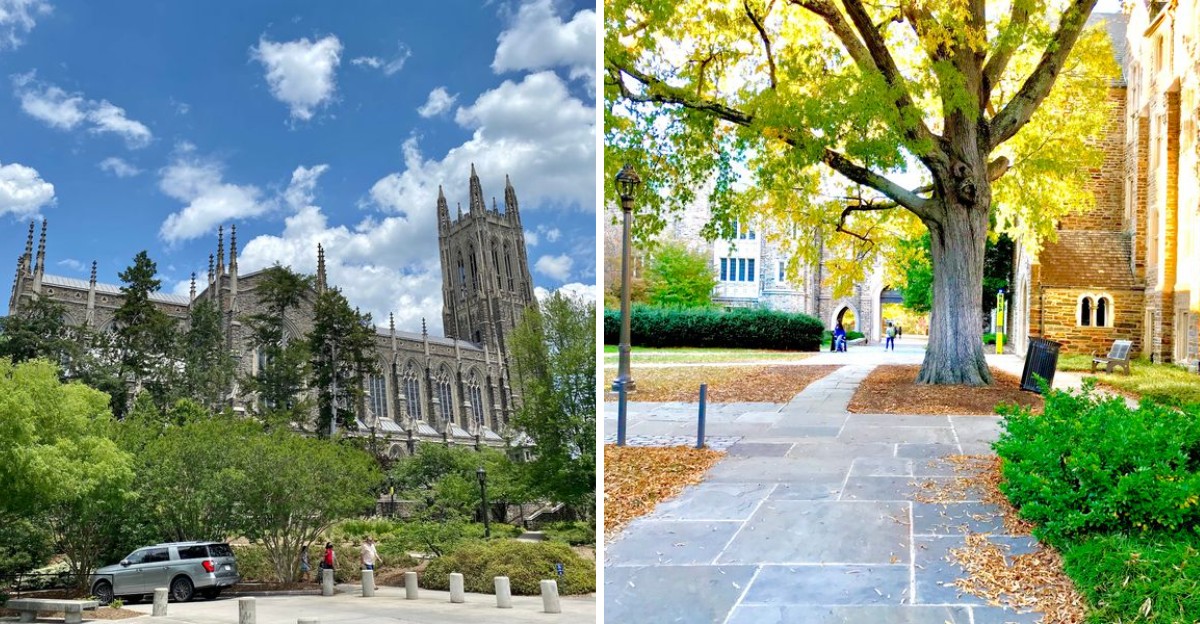
If a university could hide a spellbook behind one of its doors, this might be the place.
There is something wonderfully unreal about wandering through a campus that feels borrowed from another world, especially when autumn turns every path into part of the story.
In Durham, North Carolina, the atmosphere shifts quickly from grand and mysterious to playful and unexpected, which is exactly what makes the place so much fun to explore.
You start thinking you are simply taking a walk, and suddenly the whole day feels like an adventure with its own plot twist.
No broomstick required, sadly.
Just bring curiosity, follow wherever the paths lead, and let the campus work its peculiar kind of magic on you today.
Step Inside Gothic Corridors That Feel Straight Out Of Harry Potter

Pointed arches, ribbed stone ceilings, and long shadowed hallways greet you the moment you set foot on West Campus. The Collegiate Gothic design borrows from centuries-old European universities, and the effect is immediate.
Walk slowly and you will notice carved parapets above, leaded window panes catching afternoon light, and stone that shifts between blue-gray, tan, and rust depending on the hour.
The material is Duke Stone, quarried near Hillsborough, and its natural streaking gives every wall a hand-made quality that poured concrete never achieves.
For visitor information near West Campus, the Karsh Alumni and Visitors Center is at 2080 Duke University Road.
Inside the Brodhead Center, vaulted spaces and historic architectural details continue the distinctive character found across West Campus.
Vaulted ceilings, long communal tables, and tall windows turn an ordinary lunch into something memorable.
A camera is worth bringing, though interior access and building hours can vary throughout the day. Move at an unhurried pace, because the detail work rewards anyone willing to pause and look closely at each carved corner.
See Why The Campus Becomes Even More Striking In Fall
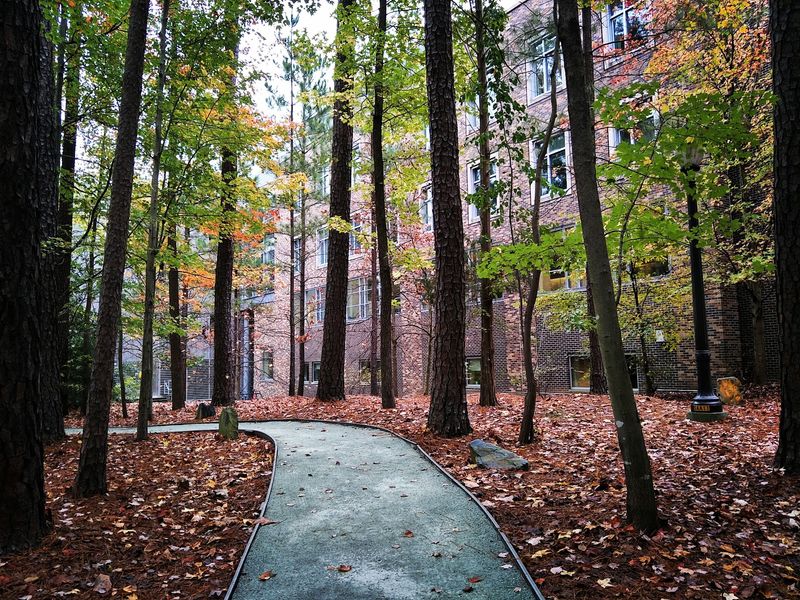
Autumn changes everything here. Cool nights arrive, and sourwood, dogwood, hickory, and oak begin trading green for scarlet, amber, and burnt orange across the grounds.
Duke Forest spreads across 7,060 acres, and its mixed hardwoods create one of the richest fall displays anywhere in the region. The Sarah P.
Duke Gardens, covering 55 acres on campus, turns especially vivid, with color reflected in still ponds and layered along terraced beds.
Fallen leaves and softer autumn light give these walking routes a noticeably different character from summer. For an easier walk, try the 1.7-mile East Campus Loop, while the 2.9-mile Al Buehler Trail offers a hillier challenge near the Washington Duke Inn.
Late October into early November usually brings peak color, though warm spells can push it later. Weekday mornings tend to be calmest, and parking is easier before midday crowds arrive.
Carry a light jacket, since shaded stone quadrangles stay noticeably cooler than open lawns. Few seasons show off this corner of North Carolina better than a bright, breezy fall afternoon on campus.
Walk The Leafy Trails And Gardens Around The University
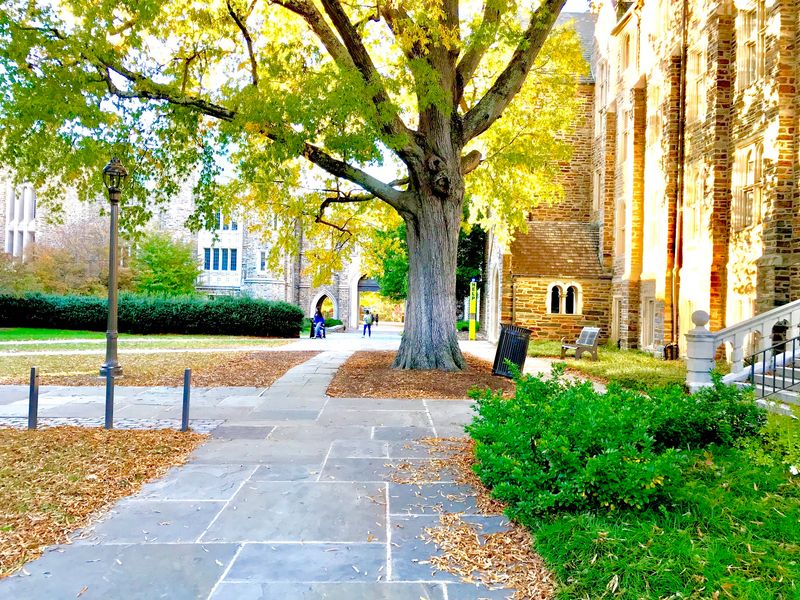
Green space surrounds the stone buildings in every direction, and the walking here suits nearly every fitness level.
Sarah P. Duke Gardens borders West Campus with 55 acres of designed landscape.
Wide, well-kept paths lead through the Culberson Asiatic Arboretum, where tall bamboo rustles overhead and a bright red wooden bridge arches over water. Nearby, the Historic Gardens frame the Roney Fountain with seasonal flower beds that change month to month.
Prefer something longer? Across more than 7,000 acres, Duke Forest provides designated roads and foot trails through research woodland open under current recreation rules.
The East Campus Loop runs 1.7 miles with gentle elevation, popular for a morning stroll or a steady jog. Near West Campus, the 2.9-mile Al Buehler Trail follows a hilly wooded loop beside the Washington Duke golf course.
Wear supportive shoes, bring water, and allow more time than the mileage suggests, because benches and overlooks invite frequent stops.
Strollers handle the garden paths well, while forest routes suit sturdier footwear and a slower, more exploratory pace.
Discover The Architectural Details Worth Looking Up For
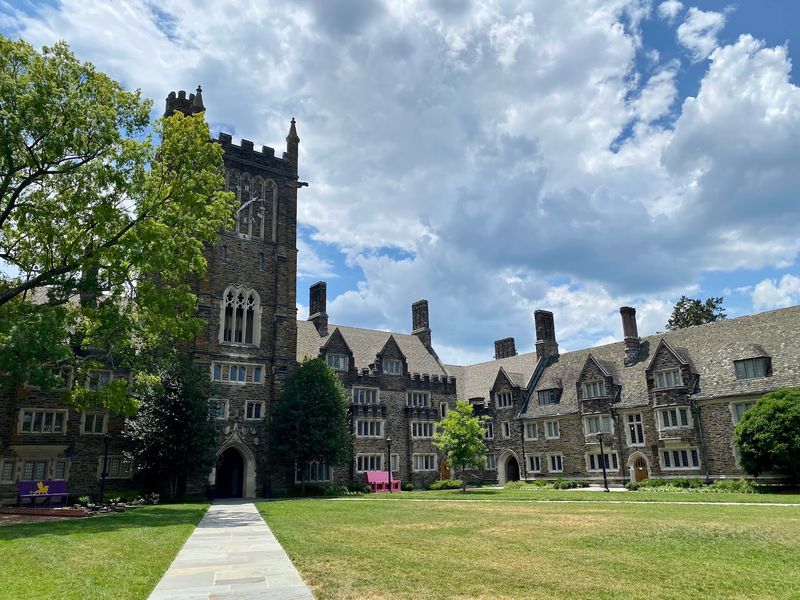
Most visitors watch the path ahead and miss the best part. Tilt your chin upward and the buildings start telling stories.
Decorative finials crown the rooflines. Gargoyles crouch along upper walls, some fierce, some oddly comic, each carved with its own expression.
Grotesque faces, twisting vines, and small figures hide in places that reward patient eyes and a zoom lens.
Duke Chapel anchors the center of West Campus and shows the craftsmanship at full scale. Its soaring spires, deep pointed arches, and heavy wooden doors trimmed with elaborate ironwork reflect the care poured into the original construction.
Local Duke Stone from Hillsborough covers the exteriors, and its natural mix of blue, gray, tan, and rust keeps the facades from ever looking flat or uniform.
Sunlight shifts those tones throughout the day, warming toward gold in late afternoon.
Give yourself an hour to circle the chapel exterior before stepping inside. Binoculars sound excessive until you spot your first stone creature perched three stories up, watching the quadrangle below with what looks suspiciously like amusement.
Meet The Lemurs Living Just Minutes From The Main Campus

Two miles from the chapel spires, something entirely unexpected lives among the trees.
The Duke Lemur Center occupies 100 acres within Duke Forest, close enough to West Campus that the drive takes under ten minutes. Founded in 1966, it gives these wide-eyed primates room to climb, leap, and forage in wooded, naturalistic settings rather than bare enclosures.
Watching a sifaka bounce sideways across open ground on its hind legs is the kind of thing you remember years later.
Depending on the tour and season, visitors may see ring-tailed lemurs, sifakas, nocturnal species, and other residents of the center.
Tours must be booked ahead of time, since this is an active research and conservation facility rather than a drop-in attraction. Guides explain behavior, diet, and family groupings as you move between habitats.
Dress for walking on uneven ground, bring sun protection in warmer months, and check the reservation calendar early because popular dates fill quickly.
The combination of Gothic quadrangles in the morning and lemurs in the afternoon makes for one of the most unusual day trips in North Carolina.
Find Out What Makes The Duke Lemur Center Famous Worldwide

Lemurs rank as the most threatened group of mammals on Earth, and that fact sits at the heart of this center’s reputation.
More than 200 animals across roughly 13 to 14 species live here, forming the largest and most diverse lemur population anywhere outside Madagascar. Many were born on site through breeding programs that scientists study closely.
One standout achievement: the world’s most successful breeding program for the critically endangered Coquerel’s sifaka. That record has helped secure the future of a species facing serious pressure in the wild.
Conservation work extends beyond Durham through collaborations with European institutions and Madagascar’s Ministry of the Environment. Reservations remain required for all public visits, which keeps noise low and animal routines undisturbed.
Here is a detail that delights parents and children alike. Former Duke Lemur Center resident Jovian, a Coquerel’s sifaka, played the live-animal role of Zoboo on the PBS Kids series Zoboomafoo.
Explore The Campus Spots First-Time Visitors Shouldn’t Miss
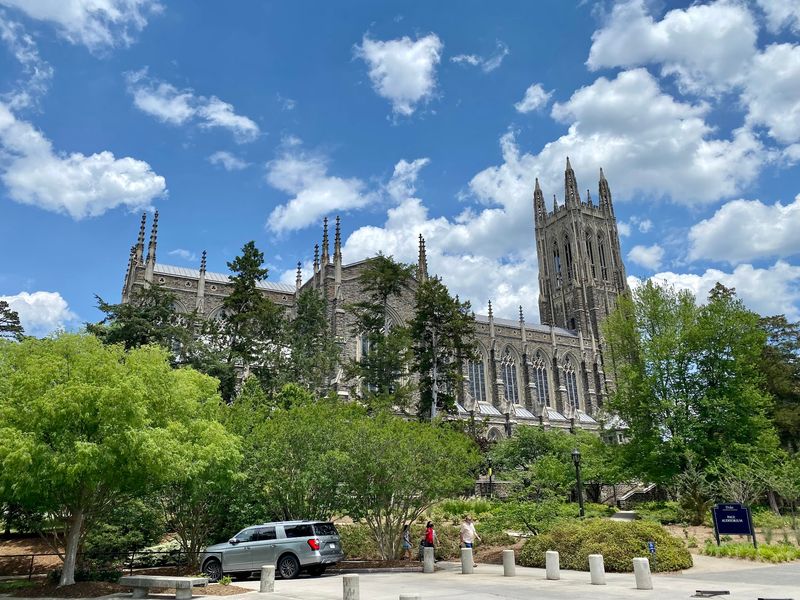
First-timers often try to see everything and end up rushing. A short, well-chosen list works far better.
Start at Duke Chapel, the towering centerpiece of West Campus and the image most people picture when they think of this university. From there, Sarah P.
Duke Gardens sits within easy walking distance, offering shaded benches and winding botanical paths when your legs need a break from stone.
Hungry? The Brodhead Center serves an international lineup of dishes under vaulted ceilings, from noodle bowls and grain plates to sandwiches and fresh salads, making it an easy midday stop.
Basketball fans should aim for Cameron Indoor Stadium, with the Duke Basketball Museum and Duke Athletics Hall of Fame close by for a look at trophies, jerseys, and decades of team history.
Before wandering, stop at the Karsh Alumni and Visitors’ Center for maps and current information. Campus signage can be confusing, and a printed map saves plenty of backtracking across the quadrangles on a warm afternoon.
Know What To See Before Planning Your Duke University Visit

A little preparation turns a good visit into a smooth one.
Two main options exist for exploring: student-led tours, which add personality and inside knowledge, or a self-guided walking route supported by a downloadable app or printed map.
Specialized experiences, including the Duke Lemur Center, require advance reservations, so book those first and build the rest of your day around them.
Timing matters more than people expect. Visiting during the academic year means lively quadrangles and open dining halls, though university holidays and the first and last weeks of semesters tend to be less ideal.
Parking details and visitor resources are available at the Karsh Visitors’ Center, 2080 Duke University Road, Durham, North Carolina.
Expect paid parking in most campus areas, so bring a card and allow extra time to find a space during busy weekends.
Flying in? Raleigh-Durham International Airport sits about a 20-minute drive from campus, making a weekend trip genuinely easy.
Comfortable shoes, a water bottle, and a loose schedule will serve you better than any detailed itinerary.