This California Beach Is Getting Overrun By Hundreds Of Sea Lions
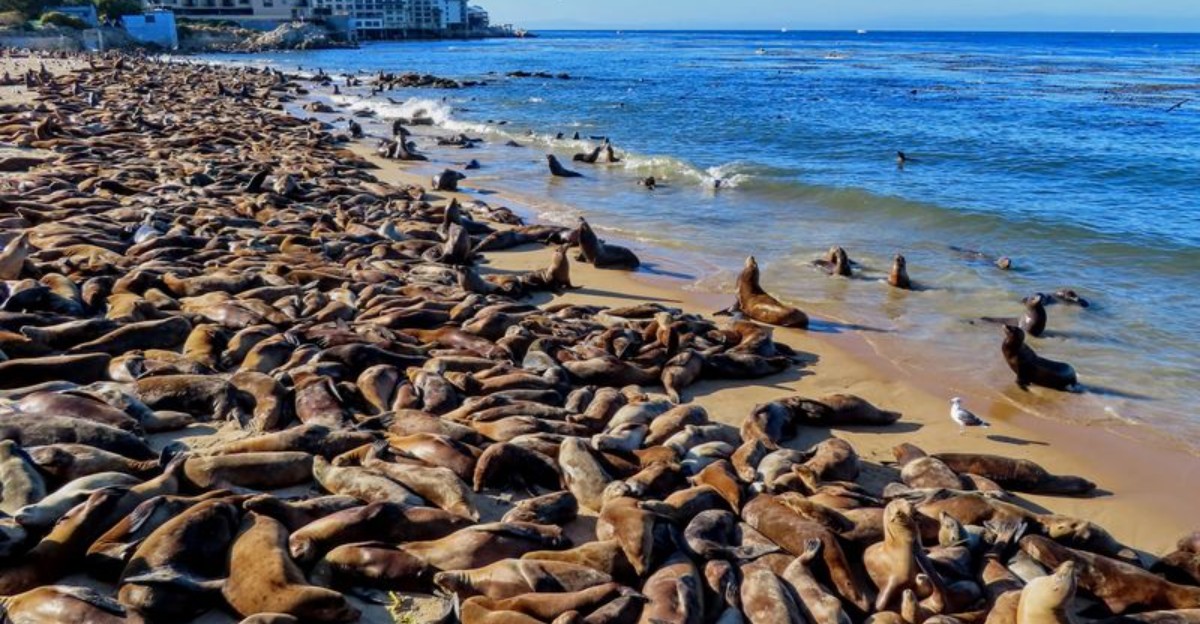
A quiet beach can change character quickly when hundreds of noisy visitors decide to claim the shoreline.
California’s coast is famous for its abundant marine life and remarkable wildlife encounters. Sometimes, that wildlife doesn’t stay far offshore.
Sea lions have a talent for turning an ordinary stretch of sand into a full-blown spectacle.
Their barking carries across the water, bodies crowd together along the shore, and the usual beach soundtrack suddenly gets a whole lot louder.
It’s fascinating, chaotic, and impossible to ignore.
For anyone hoping for a peaceful coastal outing, the scene might come as a surprise.
For wildlife lovers, though, it can be exactly the kind of encounter that makes a trip memorable.
A Beach Full Of Sea Lions
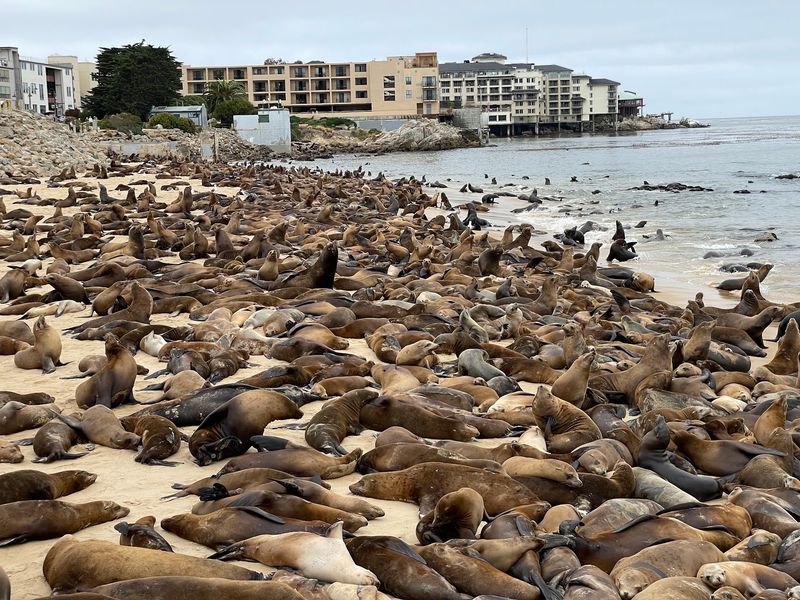
Few stretches of sand in California change character as quickly as the small cove below Cannery Row.
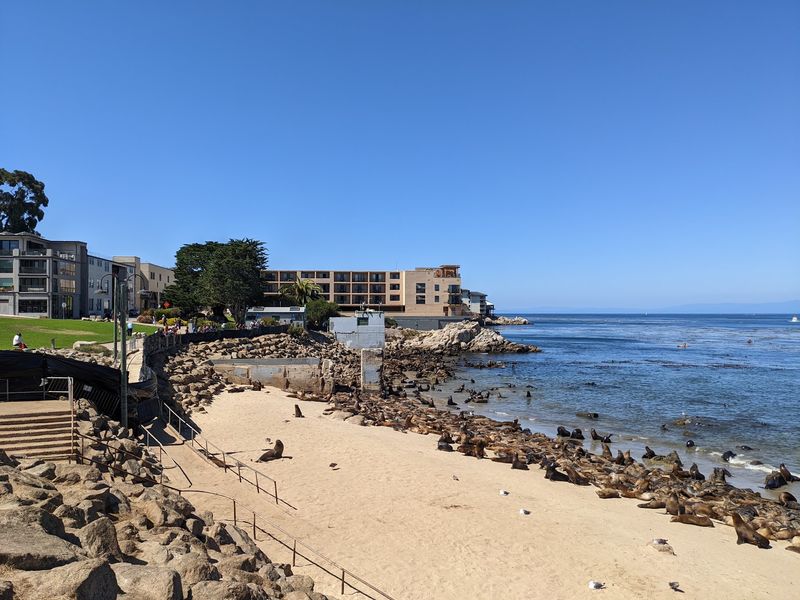
San Carlos Beach sits at Monterey, just south of the busy Cannery Row corridor and a short walk from the aquarium.
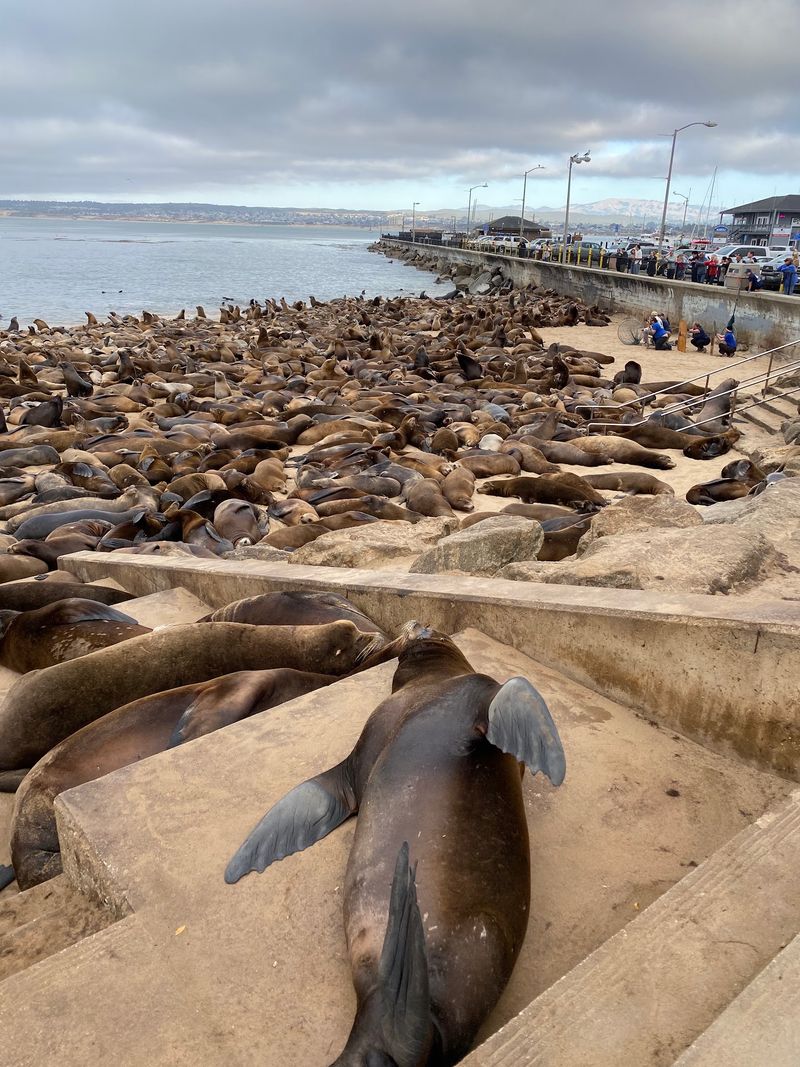
During certain summers, hundreds of California sea lions pack onto this compact beach, covering the sand so completely that the shoreline becomes hard to see.
The gatherings are made up mostly of adult males, large animals that can weigh several hundred pounds each.
They pile close together, shifting and grumbling, occasionally sending up a chorus of barks that carries across the water and down the recreation trail.
City officials have responded by closing the beach temporarily when the animals take over, using caution tape and barriers to keep people off the sand.
The closures protect the sea lions from disturbance and also keep visitors at a safe distance from animals that move faster than they look.
Visitors who arrive during one of these events often notice the sound first, then the smell, which can be strong when the wind blows in from the ocean.
The view remains open from the sidewalk and the grassy area above, so watching is still possible even when access to the sand is closed off for the season.
Why They Keep Coming Ashore
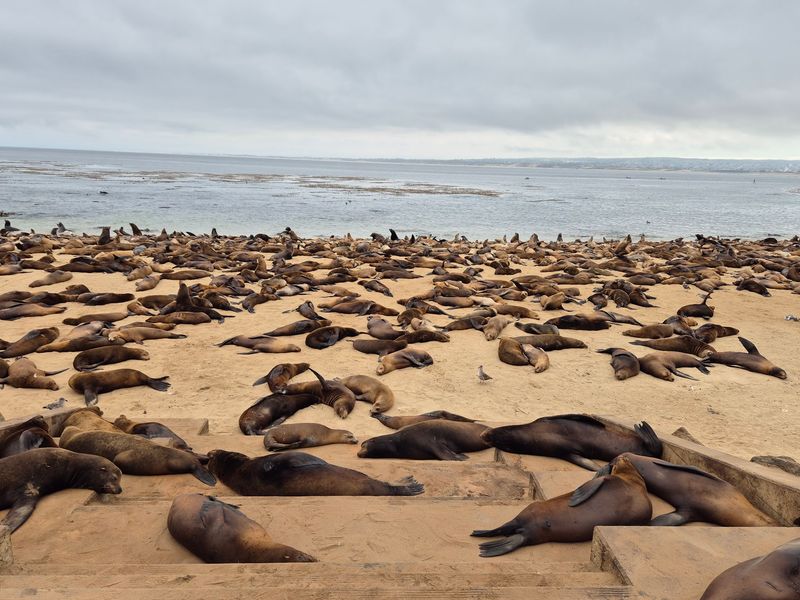
Resting is hard work for an animal that spends weeks swimming and hunting in cold water.
Sea lions haul out on land for several practical reasons, including sleep, warming up, and molting, which is the process of shedding and replacing fur.
Dry land lets them conserve energy that would otherwise go toward staying afloat and keeping warm.
Many of the animals appearing in Monterey Bay are traveling north after the breeding season wraps up in the Channel Islands off Southern California.
Males in particular move up the coast once mating season ends, following food as they go.
The waters of the Monterey Bay National Marine Sanctuary support large schools of anchovies, sardines, mackerel, and rockfish.
A reliable food supply makes the bay a sensible stopping point rather than a place to pass through quickly.
Why they choose this particular cove instead of another spot is harder to pin down with certainty. The beach is small, protected from heavy surf, and easy to climb onto, which likely helps.
Sea lions are highly mobile and will shift locations as prey moves, so their choices change from year to year.
When The Beach Gets Crowded
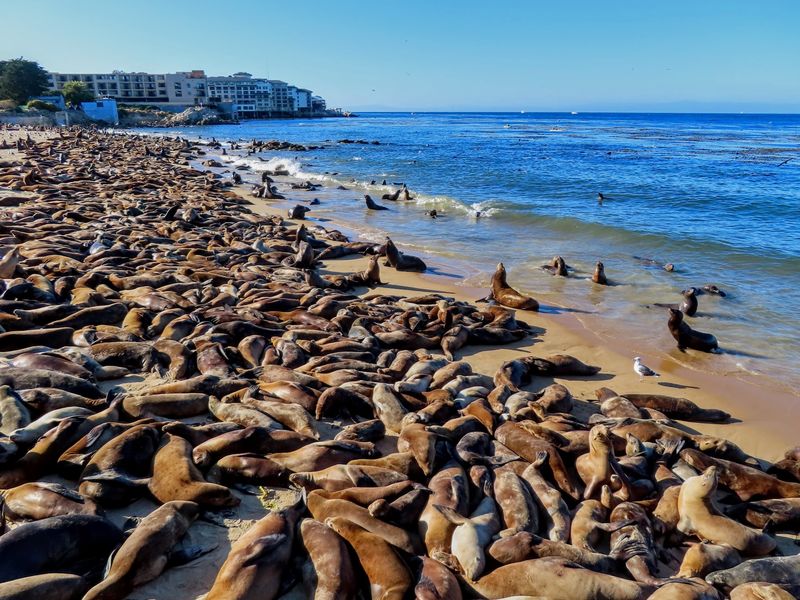
Summer turns the cove into a two-species crowd scene.
The largest congregations have typically happened between June and August, with the animals staying somewhere around three to seven weeks before moving on.
Timing shifts from year to year, so no calendar date guarantees a sighting.
Closures do not keep people away. Word spreads fast, and the sidewalk, parking lots, and grassy area above the sand fill with onlookers holding up phones and cameras.
Some of these gatherings have overlapped with major visitor periods in Monterey, including Car Week in August, which already brings heavy traffic to the peninsula.
Parking near the beach is paid, with meters and lots that accept coins or cards, and spaces fill earlier on weekends.
Arriving on a weekday morning generally means an easier time finding a spot and a calmer viewing experience.
The atmosphere stays fairly relaxed despite the numbers, partly because the barriers keep everyone in roughly the same place.
People tend to speak in lower voices, watch for a while, then continue along the recreation trail toward Cannery Row.
A Seasonal Wildlife Spectacle
Seasonal rhythms shape almost everything about this event.
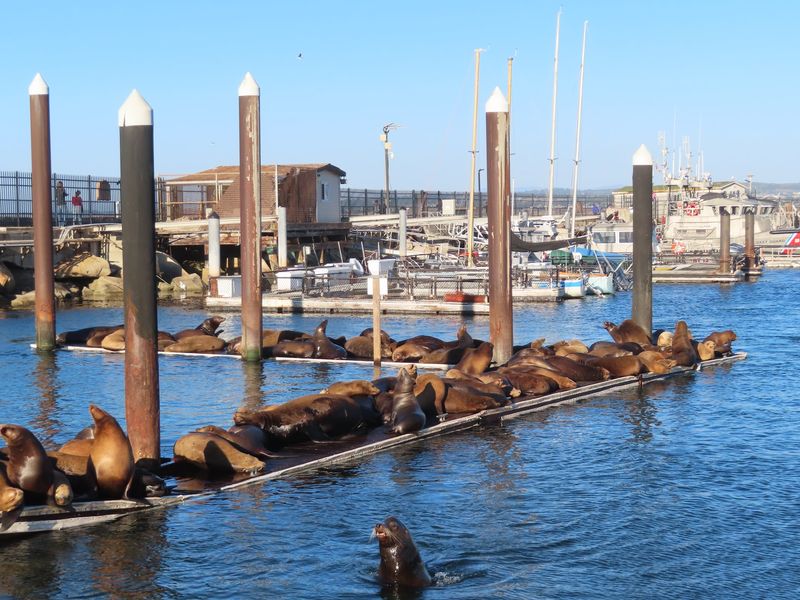
Sea lions are a familiar presence in Monterey Bay throughout much of the year, showing up on rocks, docks, and harbor structures.
What has stood out recently is the scale of the gatherings on this one small beach, which has been notably larger than what many longtime residents recall.
Stays generally last about three to four weeks, though observers have recorded groups remaining for as long as seven weeks.
The colony builds gradually, holds steady, then thins out as the animals continue north or shift to follow food.
Colder months look completely different. Visitors in winter often find the sand empty of sea lions, with only the sound of distant barking from the wharf or offshore rocks.
That unpredictability is part of what makes the summer version memorable.
Nothing about the gathering is staged or scheduled, and no one can promise the animals will be there on any given day.
Checking local advisories before driving over saves disappointment, especially for anyone making a longer trip from inland areas.
Monterey stays worth visiting either way, but expectations matter.
Where The Sea Lions Rest
Sand is only one of several spots these animals use.
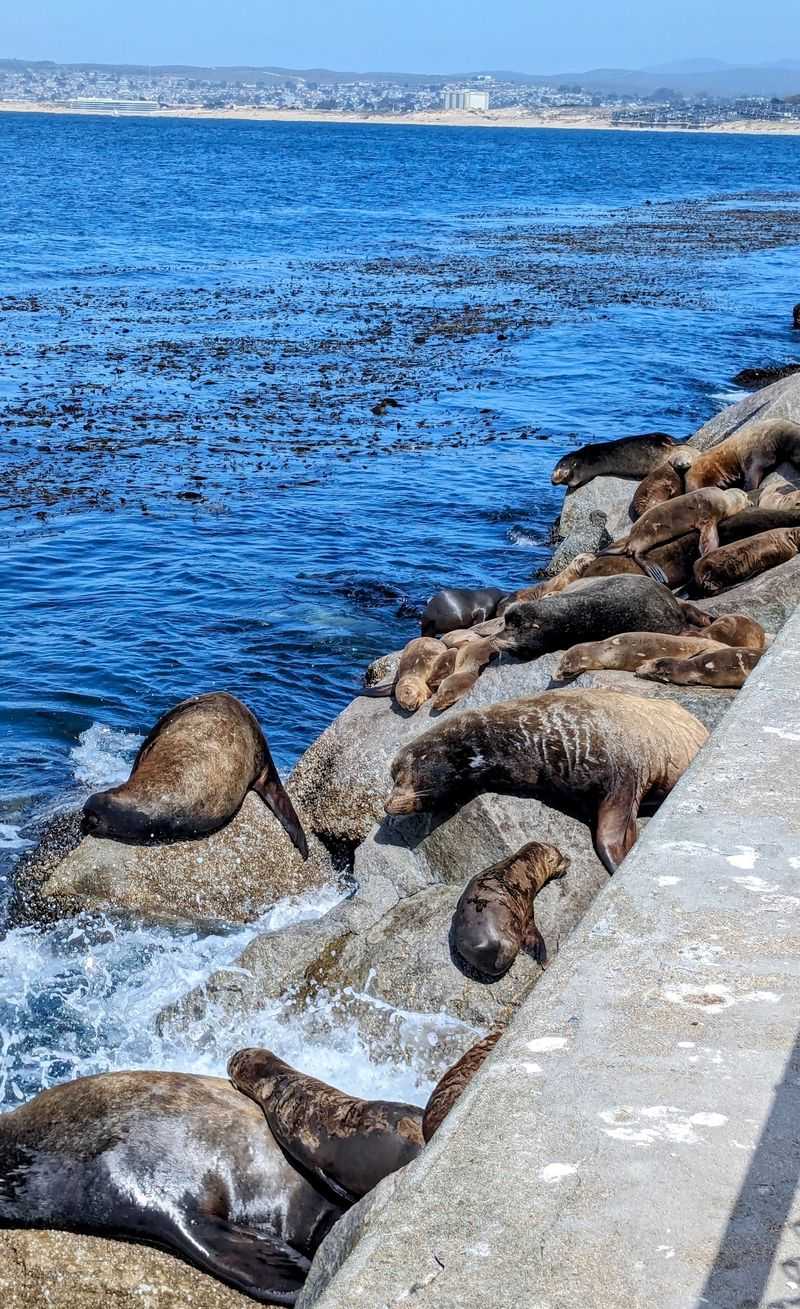
Along with the beach itself, sea lions settle onto rocky ledges and smaller coves inside Monterey Harbor and near Old Fisherman’s Wharf.
Wooden structures and breakwater rocks give them raised platforms out of the surf.
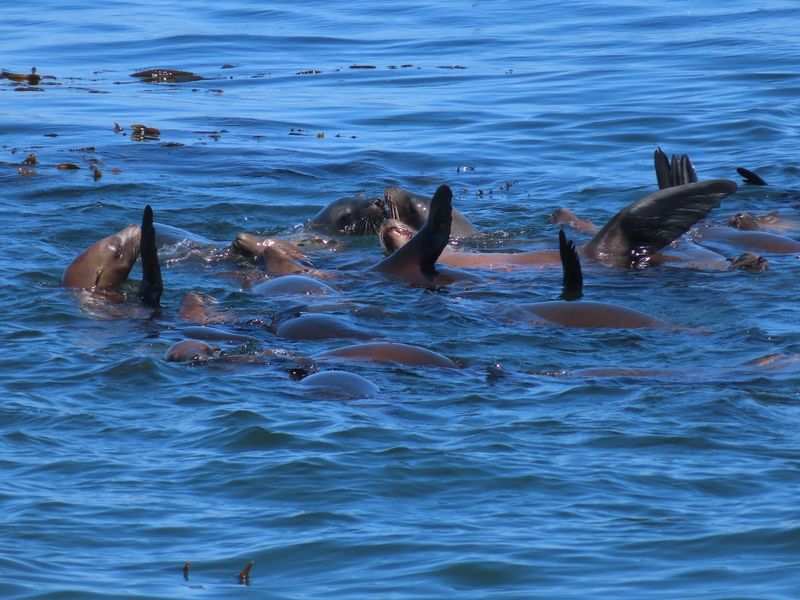
Out on the water, groups sometimes float together at the surface in a behavior called rafting.
Flippers stick up into the air, which is thought to help them manage body temperature while they rest.
The Coast Guard breakwater beside the beach has long been a favorite perch, and the barking from that direction reaches the sidewalk clearly.
Scuba divers who use the cove as an entry point often surface to find the animals swimming nearby, curious but keeping their own space.
Different spots serve different purposes. Flat sand suits large groups that want to sprawl, while narrow rocks work for smaller clusters that prefer separation.
A short walk toward the wharf or along the Monterey Bay Coastal Recreation Trail usually turns up animals hauled out somewhere within sight.
Binoculars help, particularly for the offshore rocks where groups gather beyond comfortable viewing range from land.
What Visitors Can Expect
Honesty helps here, because the experience is not gentle on the senses.
Hundreds of animals in one place produce a constant wall of barking, groaning, and splashing that can be heard from a block away.
The smell is strong, especially when onshore wind pushes it toward the sidewalk, and some people find it genuinely unpleasant.
Access to the sand may be blocked entirely during a large haul-out, with tape or temporary fencing marking the boundary.
Viewing happens from the walkway, the grassy area, and the parking lots above.
Crowds of people are part of the picture too. Expect cameras, strollers, and groups pausing along the recreation trail to watch.
Restrooms sit within walking distance of the beach, and the paved paths above the sand are level enough for wheelchairs and strollers to handle comfortably.
Getting down onto the beach itself involves stairs, which matters when the beach is open.
There are no food stands directly at the cove, so snacks and ice cream require a short walk toward Cannery Row. Bringing water and sun protection is sensible since shade is limited.
Most visitors stay twenty or thirty minutes, long enough to watch the animals shift positions and squabble over space before moving on to the rest of the waterfront.
Respecting The Animals On Shore
Distance is the single most important rule.
Guidance calls for staying at least 50 yards, roughly 150 feet, away from hauled-out marine mammals.
The Marine Mammal Protection Act makes it illegal to touch, feed, chase, or otherwise disturb them.
Approaching for a closer photo can push an entire group into the water, which wastes the energy they came ashore to recover.
Animals that flee repeatedly may abandon a resting site altogether.
Quiet behavior goes a long way. Loud voices, whistling, drones, and attempts to get an animal to look at a camera all count as harassment under federal rules.
Sea lions may look sluggish on land but can move quickly and bite when they feel cornered. Keeping children close and pets leashed protects everyone involved.
Anyone who spots a sick, injured, or apparently abandoned marine mammal should call The Marine Mammal Center hotline rather than intervening.
Barriers and tape put up by city staff exist for the animals’ benefit as much as for public safety, and stepping past them undermines the whole arrangement.
How Monterey Lives With Its Sea Lions
Managing a wild gathering inside a tourist district takes coordination.
City staff monitor the beach during haul-out events and close public access when the number of animals makes safe use impossible.
Barriers, signage, and periodic checks form the basic response.
Officials work alongside groups including the Monterey Bay National Marine Sanctuary and The Marine Mammal Center to guide decisions.
The situation creates real trade-offs. Divers lose a convenient entry point, families lose a swimming spot, and nearby businesses deal with both extra foot traffic and the strong smell.
Local response has generally leaned toward acceptance rather than complaint.
The prevailing view treats the shoreline as space that belongs partly to wildlife, with human use adjusting for a few weeks each year.
Communication matters in that arrangement. Posted updates and clear signage help visitors understand why the sand is off limits instead of assuming a maintenance issue.
Adaptive management also means the approach can change as the gatherings grow or shift location. Nothing about the current setup is permanent.
For travelers, the practical takeaway is simple enough. Check before going, respect the barriers, and treat any closure as evidence that the system is working the way it should.