This Nebraska Museum Has Two Mammoth Skeletons Standing With Their Tusks Still Locked Together
Some of the best stops in Nebraska announce themselves with nothing more than a small sign along the highway. Pull over at one particular spot in the northwest corner of the state and you walk into a modest building holding something no other museum in the country can show you: two enormous Ice Age animals, still locked together exactly as they were found in the ground.
Their tusks are tangled, their skulls are inches apart, and the whole scene has been frozen for more than ten thousand years. It is the kind of thing you expect to see in a big-city hall, not a few steps off a two-lane road on the edge of the pine ridge.
A Small Stone Building on the Edge of Fort Robinson
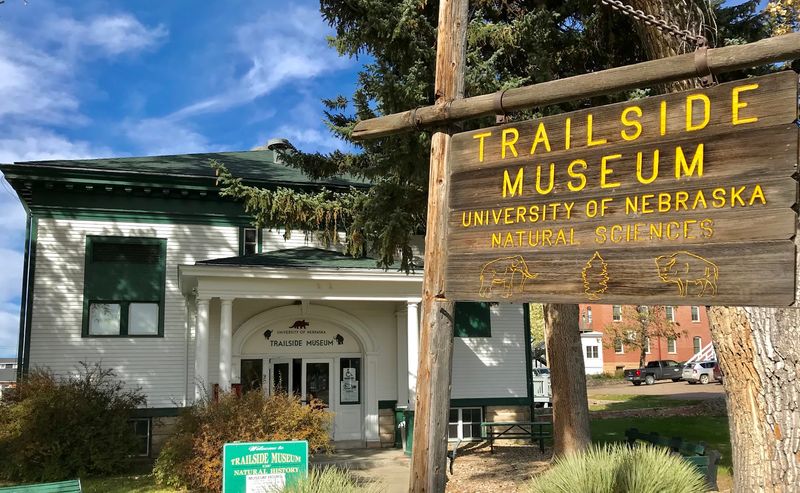
Drive west out of Crawford on Highway 20 and the buttes start closing in, pale rock topped with ponderosa pine. Just as the road slips into Fort Robinson State Park, a low building sits off to the side with a historical marker planted out front.
Trailside Museum of Natural History is the field outpost of the University of Nebraska State Museum, the same institution behind Morrill Hall in Lincoln. Out here in Dawes County, it trades big-campus scale for something more concentrated.
The building itself is unassuming enough that plenty of people have blown past it on their way to Wyoming. That would be a mistake.
Inside a footprint you could walk in a couple of minutes sits a fossil display that paleontologists travel across states to see.
What makes the setting work is how close the science sits to the source. The rock formations visible from the parking lot are the same beds that produced much of what is on the shelves inside, which is not something most museums can claim.
The Clash of the Mammoths Exhibit
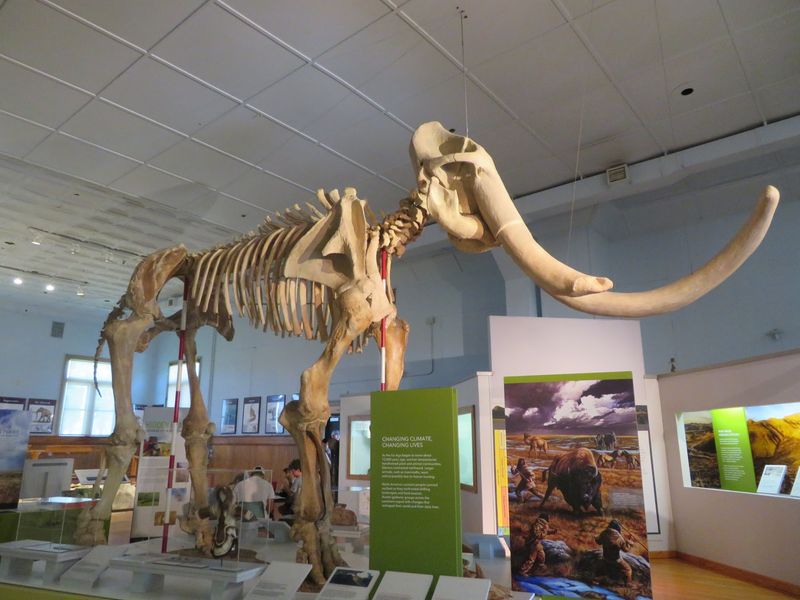
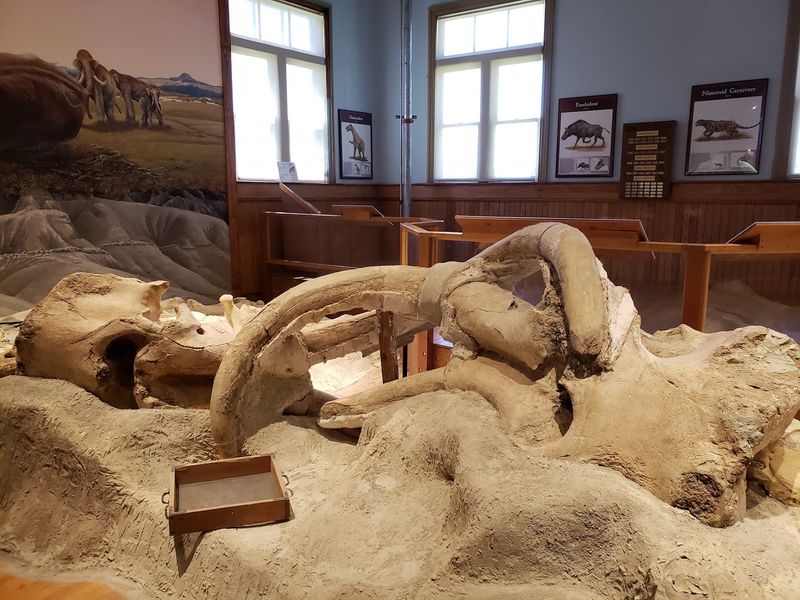
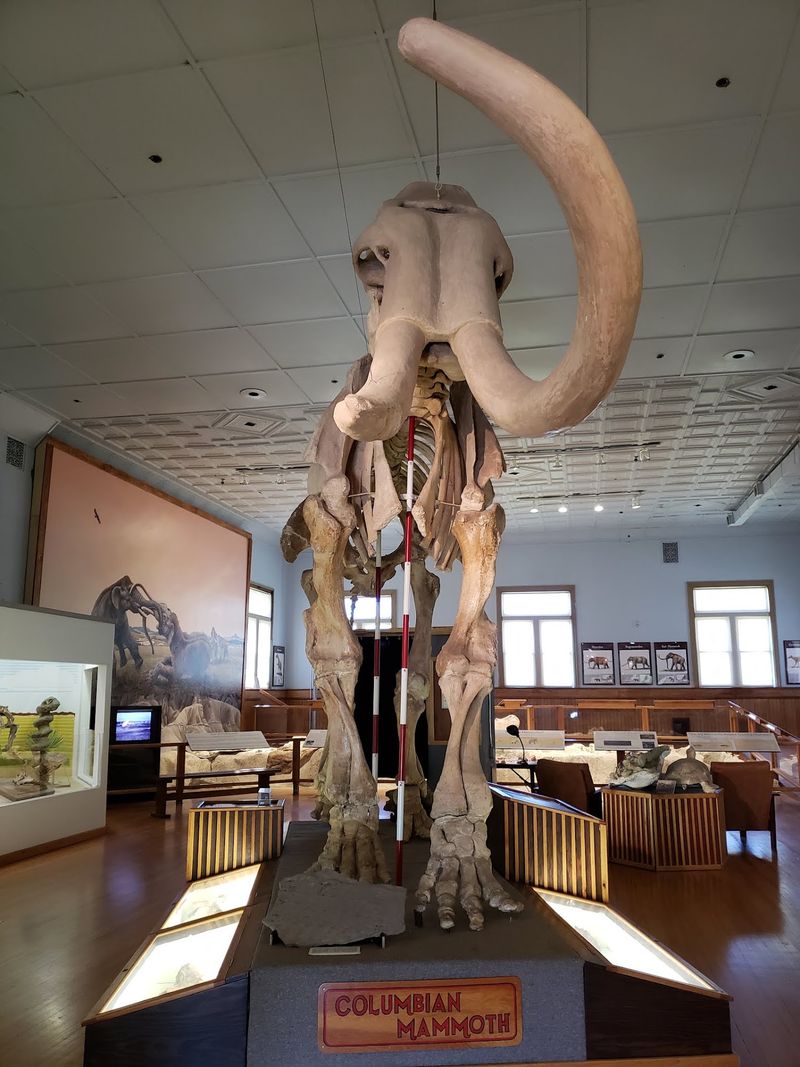
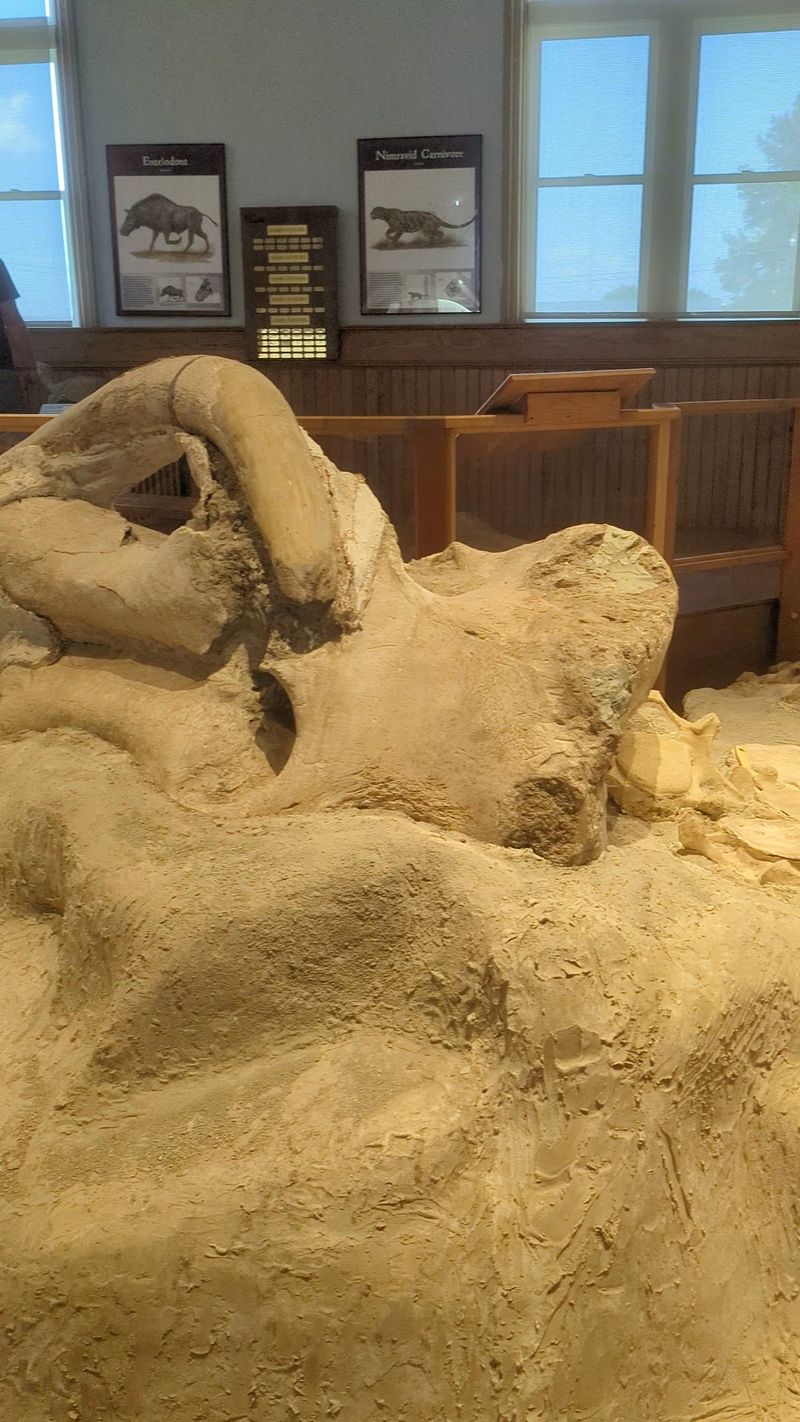
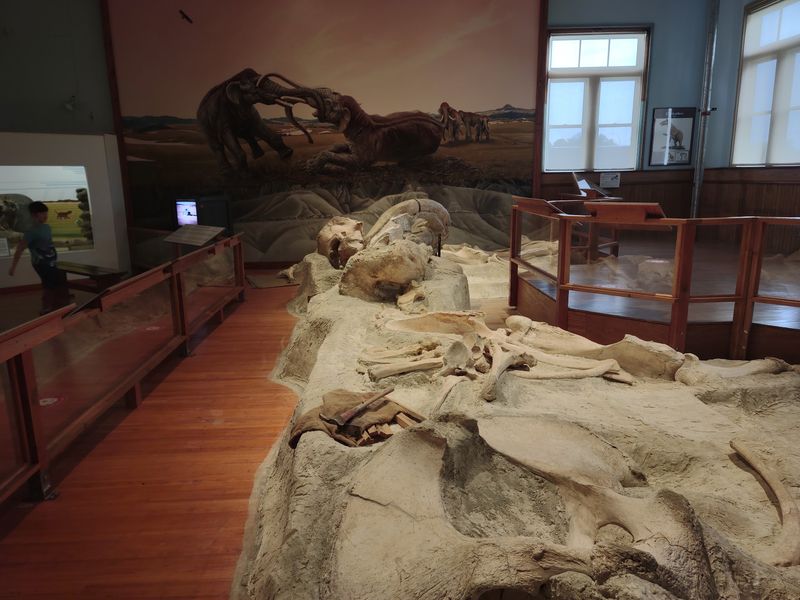
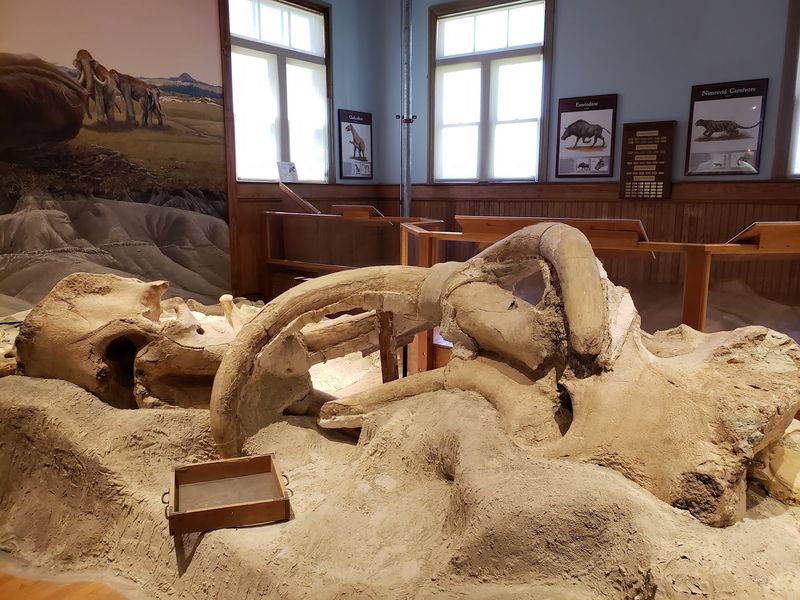
Two Columbian bull mammoths stand head to head in the center gallery, tusks twisted into each other like wrestlers who never let go. Both were roughly forty years old.
Both were about the same size, which is likely why neither backed down.
Columbian mammoths reached thirteen feet at the shoulder and could pass ten tons, with tusks stretching close to twelve feet. One of these two had already broken its left tusk; the other had broken its right.
Those blunted ends let them get closer than a healthy pair ever could, and the remaining tusks wound together and jammed.
Evidence from the skulls shows one tusk reached an opponent’s eye socket. When one animal finally went down, the other was pulled along with it, and the combined weight pinned them both in place.
The exhibit opened to the public on August 4, 2006. Nothing else like it is mounted anywhere in the United States, and standing under those tangled tusks makes the scale of the struggle immediate in a way no illustration manages.
Dug Out of the Little Badlands in 1962
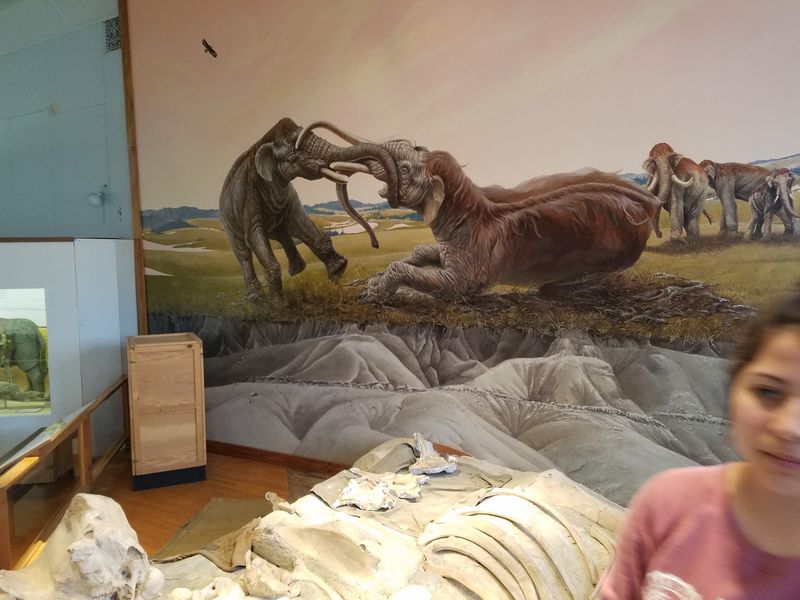
Back in 1962, a University of Nebraska State Museum field crew working roughly fifteen miles north of Crawford hit bone in an area called the Little Badlands. Paleontologist Mike Voorhies led the dig that pulled the pair out of the ground.
Getting them out was one thing. Interpreting them was another.
The tusks were still interlocked in the sediment, which told the crew immediately that these two animals had not simply come to rest near each other by chance.
Then the fossils went quiet. For forty-three years they sat in the university’s research collections in Lincoln, studied by specialists but unseen by the public.
That is a long stretch for something this dramatic to spend in storage drawers and crates.
When the mounted skeletons finally came back west to Dawes County, they landed within driving distance of the spot where they had been buried since the Ice Age. There is a certain rightness to that.
The animals ended up on display in the same stretch of country they once walked.
Ice Age Nebraska, Reassembled
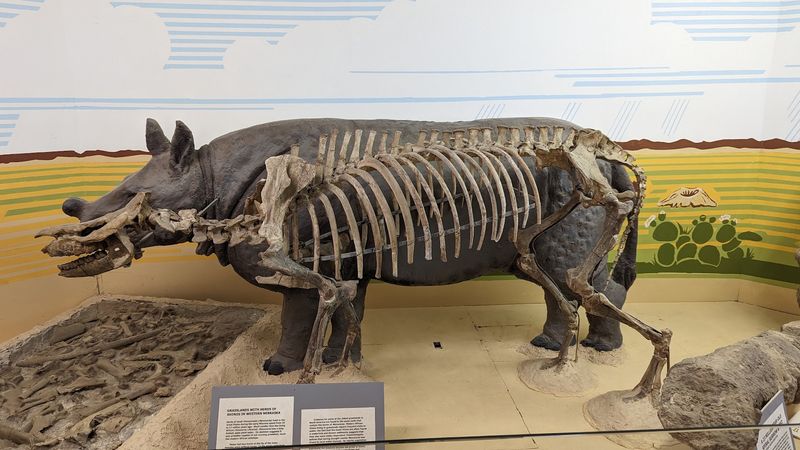
Mammoths get top billing, but they had company. The galleries walk through the animals that moved across the Great Plains during the Ice Age, when this part of Nebraska looked nothing like the grassland and pine country outside the door.
Geology gets real attention here too. Western Nebraska sits on layers of rock that record millions of years of deposits, and the museum works through how those layers stack up and what each one preserved.
Rocks and minerals from the region fill a good portion of the space, alongside displays covering the plants and animals living in the state right now. The through-line is continuity: the same ground, different tenants, across an enormous stretch of time.
A short video runs for anyone who wants the overview before working through the cases. Some panels carry more detail than a quick pass allows, so readers who like to study every label can lose a couple of hours easily.
Others get what they need in half that.
Hands-On Space and the Encounter Center
Not every fossil here sits behind glass. The Encounter Center is built for handling things, a spot where kids can work with specimens and try a bit of actual scientific poking around rather than reading labels over a rail.
An exhibit on animal tracks and droppings, the Poop and Paws display, does what good kid-facing science does: it uses something faintly gross to teach how researchers figure out which creature was where. Coloring pages are set out for younger children who need a break from standing and looking up.
The mammoths themselves sit relatively open, close enough that fine surface detail on the bone is visible and small children can stand almost beneath those tusks. That proximity does more for comprehension than any interactive screen.
Museum staff have said publicly they are looking at exhibit renovation options at this location, including adding more interactive elements. For now, the balance leans toward looking closely, with enough touchable material to keep restless visitors engaged through a full circuit.
Rock Shop and Gift Store
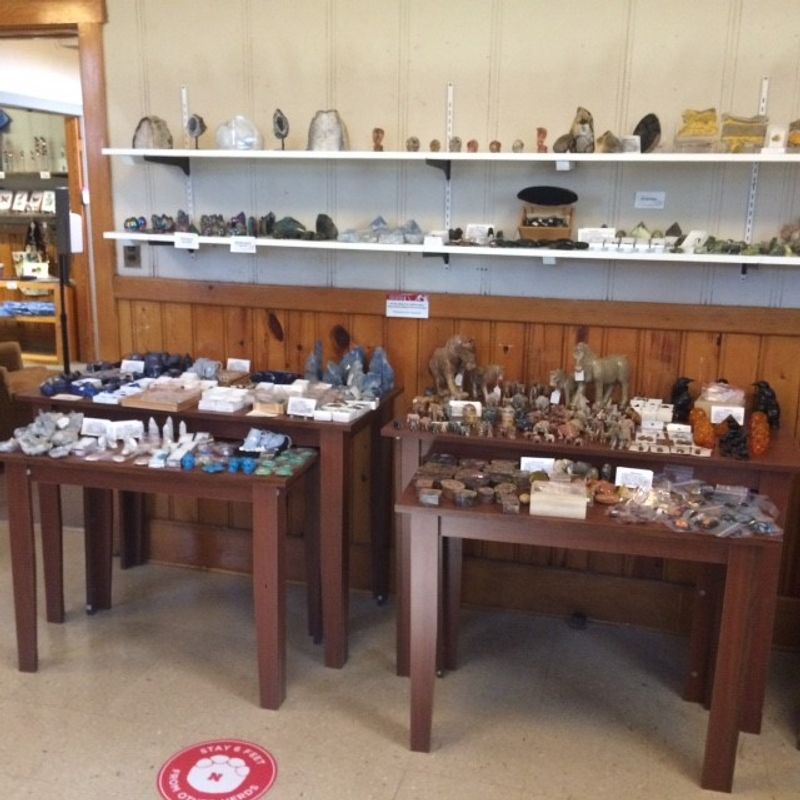
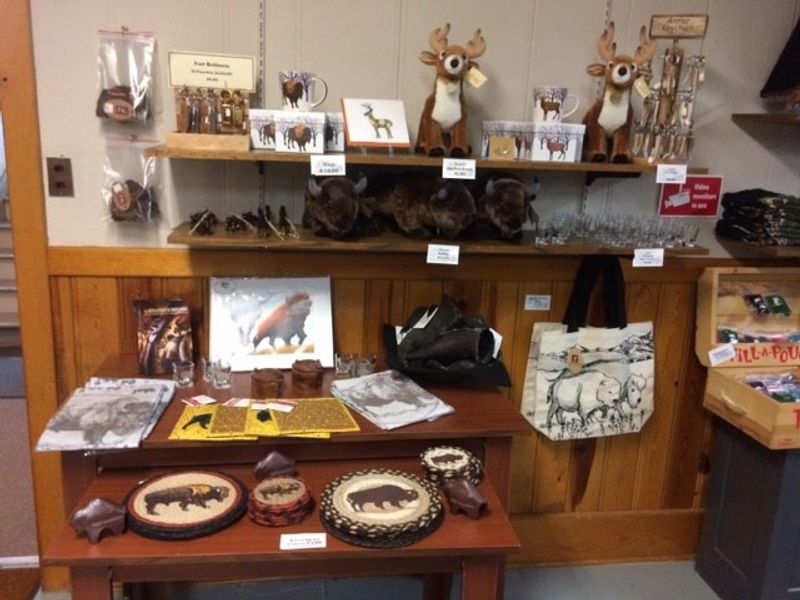
Polished stones in bins, mineral specimens, fossil replicas, books on prehistoric animals. The rock shop and gift store occupy a meaningful chunk of the building, and for families traveling with children who want a souvenir, that is a feature rather than a footnote.
Prices stay in territory where a kid can pick something out without much negotiation. A few dollars gets a decent rock, and the selection leans toward things connected to what is on display rather than generic tourist merchandise.
Rock hounds tend to linger longer than they planned. Northwest Nebraska produces interesting material, and the shelves reflect that regional focus more than most museum stores manage.
Worth knowing: the retail space is sizable relative to the exhibit floor, which strikes some people as an odd ratio in a building this compact. Balanced against that, revenue from those shelves helps keep a small field museum running in a county with a modest population.
Browse it at the end, after the mammoths have had their turn.
Crazy Horse Memorial Marker Across the Road
Step outside and the history keeps going. Directly across the road sits the memorial marking where the Oglala Lakota leader Crazy Horse was fatally wounded in 1877, a site that can be visited free of charge.
Fort Robinson itself spreads across thousands of acres of Dawes County, with parade grounds, restored buildings from the frontier army era, and a separate museum covering the cavalry history of the post. The mammoths are one chapter in a place that holds several.
Because of that layering, the drive out here pays off beyond a single stop. Horseback rides, hiking through the buttes, and long open views of the pine ridge fill out an afternoon or a full weekend.
The combination is unusual for Nebraska: Ice Age paleontology and nineteenth century frontier history sitting within a short walk of each other. Plan the museum as one piece of a Fort Robinson day rather than a destination on its own, and the trip up Highway 20 makes a great deal more sense.
Who the Museum Suits Best
Thirty minutes is enough for a family with restless kids who want to see the big animals and move on. Two or three hours is realistic for anyone who reads every panel and studies the geological displays properly.
Paleontology enthusiasts get the most out of it, because the dueling mammoths are a specimen they cannot see anywhere else in the country. Grandparents bringing grandchildren do well too, since the space is small enough that nobody gets separated and nothing is overwhelming.
Staff are approachable and happy to explain what you are looking at, which fills gaps that the signage leaves. Ask about the excavation and you usually get more than a one-sentence answer.
Crowds are rarely a problem. You can stand under those tusks for as long as you want without anyone pressing in behind you, and that quiet makes a difference with a specimen this unusual.
Birthday parties have been hosted in the building, so it functions as more than a drive-by stop for people in the area.
Planning the Drive to Crawford
The address is 3200 US-20, Crawford, NE 69339, sitting inside Fort Robinson State Park in Dawes County. Chadron is a short hop east, and Highway 20 carries you straight to the door from either direction.
Admission runs just a few dollars, and the fee has been structured to cover the duration of a stay at Fort Robinson rather than charging per entry. A Nebraska state park permit is needed for the vehicle, so factor that in if you do not already have one.
Hours shift by season, and the museum closes for part of the week, so a phone call before setting out saves a wasted drive. Winter access is more limited than summer.
From Omaha or Lincoln this is a serious haul across the state, which makes it a natural anchor for a Panhandle trip rather than a day out. Pair it with Toadstool Geologic Park, the Sandhills route, or Scottsbluff and the miles start earning their keep.
Why the Stop Sticks With You
Ten thousand years is an abstraction until you are standing three feet from the evidence. Two animals, each the size of a delivery truck, tangled at the tusks and still tangled, mounted in a building smaller than most grocery stores.
The museum is not polished in the way a major metropolitan institution is polished. Some displays could use updating, and the staff have acknowledged as much while working on renovation plans.
That honesty is easier to respect than a glossy presentation would be.
None of that changes the central fact. This specimen exists in one place, and that place is a couple of miles west of Crawford in the Nebraska Panhandle.
Go for the mammoths, stay for the rock shop and the fort grounds, and give yourself more time than you think you need. Plenty of people have left wishing they had lingered in the buttes a while longer.
The ground out here has been handing over surprises for a very long time, and it has not finished yet.