10 Alaska Attractions Worth Building A Once-In-A-Lifetime Trip Around
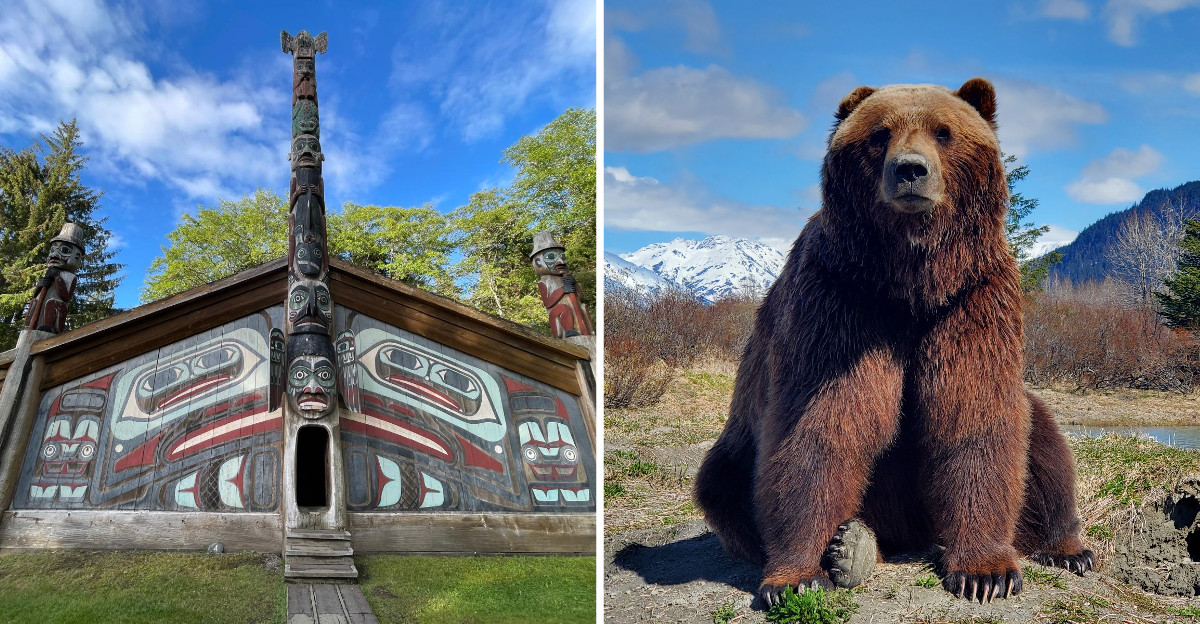
Some trips are built around convenience.
Alaska practically dares you to build one around experiences you may never forget.
Glaciers, wildlife, Indigenous culture, enormous mountains, working harbors, and remote landscapes can make the planning feel ambitious before the flight is even booked.
I love that kind of trip, the one where getting somewhere becomes part of the story.
The destinations ahead are very different, yet each can justify extra miles, ferries, or an early start for the right traveler.
Wow, even narrowing the possibilities feels like an adventure.
This is less about seeing everything and more about choosing experiences worth organizing the journey around.
1. Alaska Native Heritage Center, Anchorage
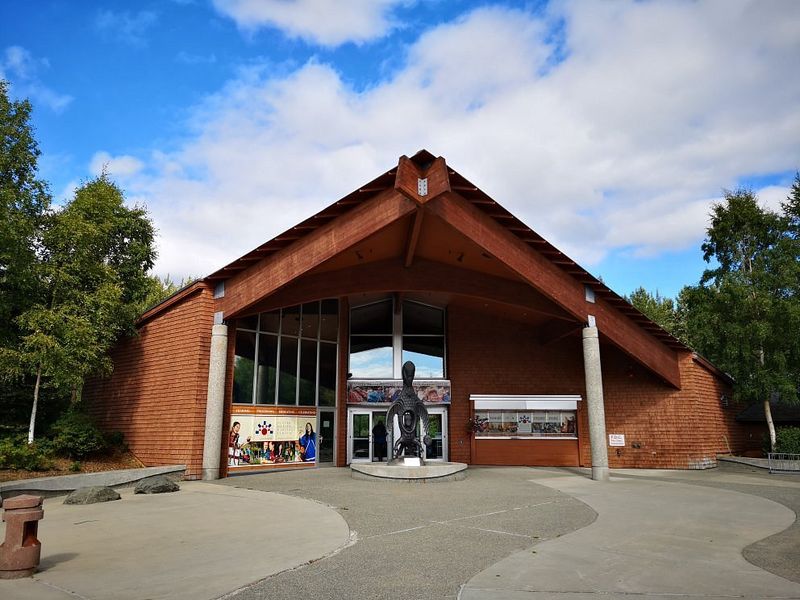
Just imagine for a second thousands of years of stories told out loud, not behind glass.
The center represents Native peoples from across the state, with summer programs and Village Site tours led by Native culture bearers and performers.
Live programming carries the day. Traditional dance performances fill the theater, and Native Games demonstrations show strength, balance, and grit. Storytellers pass along lessons that predate written records in this state.
Outdoors, life-sized Village Sites ring quiet Lake Tiulana.
Six life-sized Village Sites represent Dena’ina, Yup’ik and Cup’ik, Iñupiaq and St. Lawrence Island Yupik, Sugpiaq, Unangax̂, and Eyak, Tlingit, Haida, and Tsimshian traditions. Guided summer tours typically last 60 to 90 minutes.
The Hall of Cultures combines rotating exhibits, cultural belongings, contemporary art, and multimedia displays focused on Native cultures and histories.
Kids get involved easily, and adults usually end up joining them. Films in the theater fill any gaps between programs.
Art lovers should save time for the Ch’k’iqadi Gallery, where authentic Native work is sold. Buying directly supports artists and the center’s preservation mission.
Summer brings the fullest schedule, so check program times before you arrive. Comfortable shoes help on the outdoor paths after rain.
The Native Heritage Center sits at 8800 Heritage Center Dr, an easy drive from downtown. Start your trip here and everything you see afterward carries more meaning.
2. University Of Alaska Museum Of The North, Fairbanks
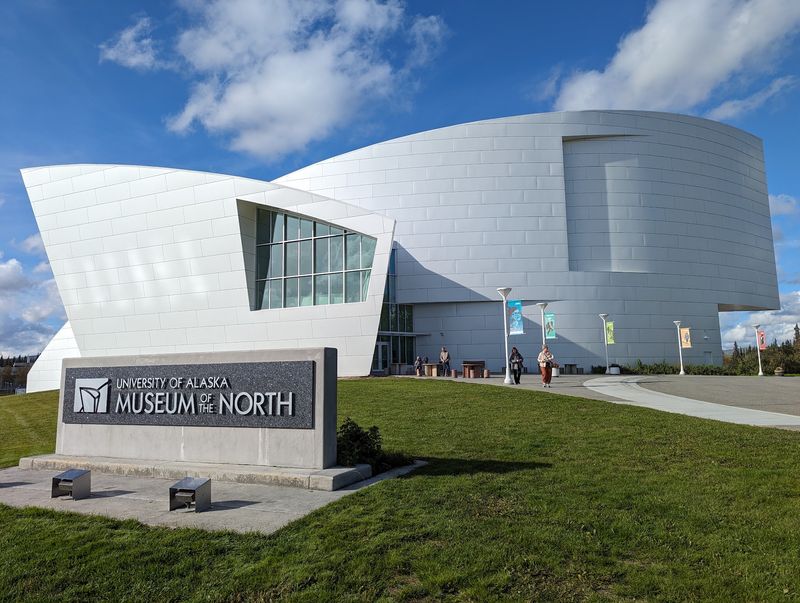
My jaw dropped at the building itself, all white curves and sharp angles against the hillside. Inside waits a collection covering millions of years.
Over 2.5 million artifacts and specimens live here, spanning biological diversity and deep cultural history.
It is the state’s only research and teaching museum and is accredited by the American Alliance of Museums.
Mammoths, grizzly bears, and Arctic dinosaur displays anchor the galleries. Yes, dinosaurs roamed this far north, which surprises almost everyone.
The star attraction is Blue Babe, a mummified steppe bison preserved for roughly 36,000 years. Nearby, a ceremonial Chilkat robe shows Tlingit weaving at its finest.
Five regional galleries divide the main exhibition floor. Each one represents a major ecological area of the state, using dioramas and cultural objects to tell the story.
The Interior Gallery leans into Fairbanks gold mining history and Athabaskan life. A standout display explains the aurora borealis, handy if you plan a winter northern lights chase.
Allow two to three hours minimum. Winter guests get shorter hours, so confirm before driving over.
The University of Museum of the North sits at 1962 Yukon Dr on the Fairbanks campus. Few buildings interpret the Circumpolar North with such clarity and confidence.
3. Mendenhall Glacier Visitor Center, Juneau
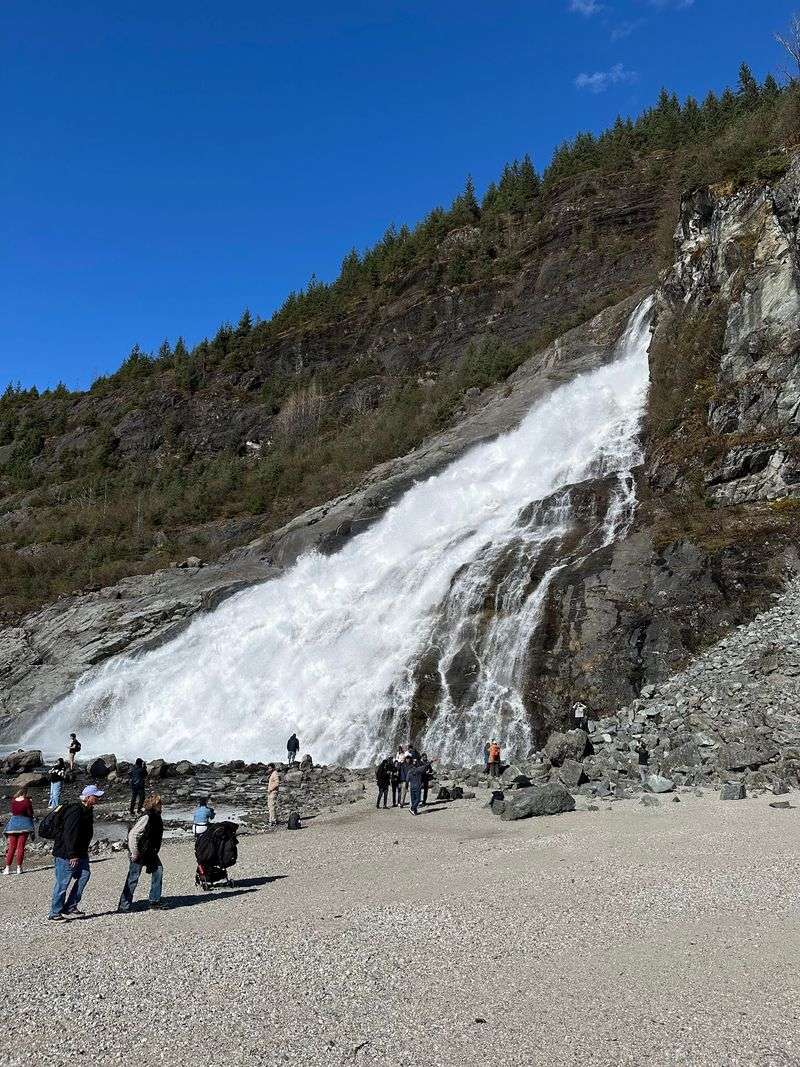
Photos simply do not prepare you for this view.
Roughly 12 miles from downtown Juneau, Mendenhall Glacier spills off the enormous Juneau Icefield. Views from the shore come wide open, with no trees blocking the ice.
The surrounding recreation area, managed by the U.S. Forest Service, holds several scenic trails. One favorite leads to Nugget Falls, a 377-foot cascade pouring into the glacial lake.
More adventurous visitors can explore Mendenhall Lake by kayak or book professionally guided glacier trips, but ice caves constantly change and should only be approached with appropriate expertise, equipment, and current safety information.
Between July and September, sockeye salmon crowd Steep Creek Trail during spawning season. Black bears show up for the feast, so keep your distance and your camera ready.
Indoors, films explain how the icefield formed and why the glacier keeps retreating. Rangers answer questions patiently, even the odd ones.
May through September brings the mildest weather and long daylight hours for exploring.
Winter can bring opportunities for snowshoeing and cross-country skiing around the recreation area, but lake ice conditions vary and should never be assumed safe.
Find the Mendenhall Glacier Visitor Center at 6000 Glacier Spur Rd. Mendenhall offers road access, overlooks, and maintained trails for viewing a major glacier without mountaineering skills.
4. Alaska SeaLife Center, Seward
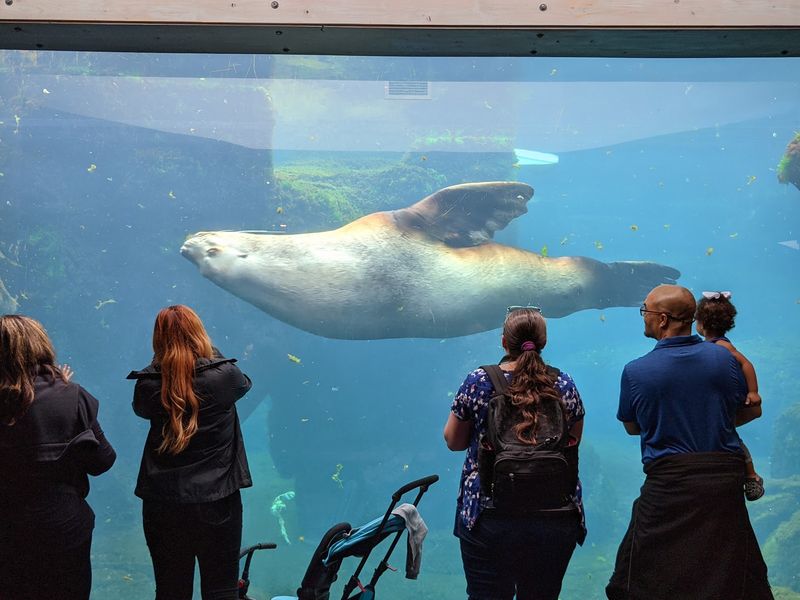
A Steller sea lion glides past the glass, weighing more than a small car.
Perched on the shore of Resurrection Bay, the SeaLife Center in Seward is the state’s only permanent marine mammal rehabilitation facility. Public aquarium and working research lab share the same roof.
Built in 1998 using funds from the Exxon Valdez Oil Spill settlement, its mission centers on ocean health. That history shapes everything on display.
Windows to the sea reveal sea otters grooming, seals cruising, and puffins zipping underwater. A 185,000-gallon tank gives the sea lions room to really move.
The diving bird habitat lets you watch common murres chase fish down a deep column of water. It is oddly hypnotic.
Touch tanks bring sea stars and anemones within reach, a hit with younger travelers. Special programs can include octopus, sea otter, puffin, and marine mammal experiences, depending on the current schedule and animal-care needs.
Head to the outdoor deck for open views across Resurrection Bay and the surrounding mountains. Bring a jacket; the breeze here means business.
The center stands at 301 Railway Ave, walkable from Seward’s small downtown. Pair it with a Kenai Fjords cruise and your marine wildlife day becomes unbeatable.
5. Alaska Islands And Ocean Visitor Center, Homer
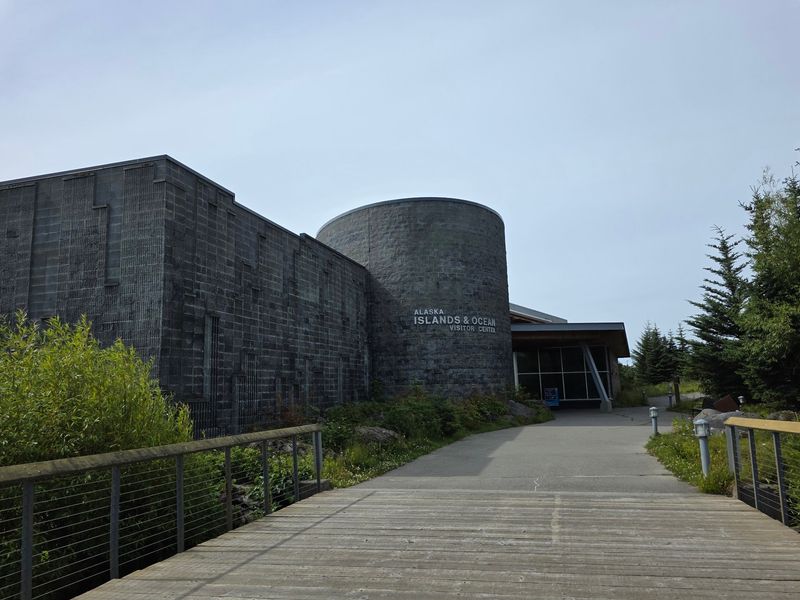
It makes you wonder, doesn’t it, how much wildlife hides along a single stretch of coast. Kachemak Bay answers that question quickly.
Run by the U.S. Fish and Wildlife Service in partnership with the Kachemak Bay Research Reserve, the Islands and Ocean Visitor Center in Homer explains a refuge most travelers have never heard of.
The Maritime National Wildlife Refuge is the world’s largest seabird refuge, stretching across more than 2,500 islands, islets, rocks, reefs, and other coastal lands.
A replica seabird colony surrounds you with recorded calls and the chaos of nesting cliffs. Children tend to stop cold in front of it.
In the Seabird Theatre, the film Journey of the Tiglax follows the refuge research vessel on its rounds. Guided walks and programs go deeper into local ecology.
Step outside onto the Beluga Slough Trail, a roughly 1.2-mile gravel-and-boardwalk route leading through wetlands to Bishop’s Beach, where shorebirds, ducks, and sandhill cranes are among the wildlife visitors may encounter.
Each May, the building becomes the hub of Homer’s Annual Shorebird Festival. Book lodging early if you aim for that week.
You will find it at 95 Sterling Hwy, minutes from the Homer Spit. Treat it as your briefing room before any bay excursion.
6. Denali Visitor Center, Denali Park
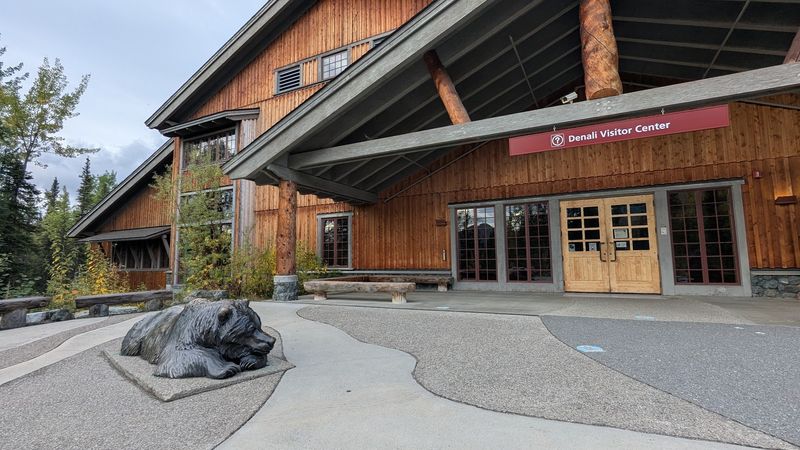
North America’s tallest peak rises to 20,310 feet.
Current federal materials call the mountain Mount McKinley, while Denali remains the name of the national park and the mountain’s traditional Koyukon-derived name.
The Denali Visitor Center serves as a gateway to a national park and preserve covering more than six million acres and containing a major portion of the the state’s range.
The name Denali comes from the Koyukon word deenaalee, commonly translated as the High One.
Private vehicles are generally restricted beyond Savage River at Mile 15, while in summer 2026 park buses travel only as far as East Fork at Mile 43 because of the Pretty Rocks closure.
Near the entrance you will find Riley Creek Campground, the Railroad station, and a network of hiking trails. Arriving by train makes the journey part of the fun.
Eielson Visitor Center and Wonder Lake lie farther along the Park Road, but both remain inaccessible by bus in 2026 because service stops at Mile 43; Eielson and Wonder Lake Campground are closed for the season.
Hiking, cycling, backpacking, and camping all fit here, often with no marked trail in sight. Off-trail travel is encouraged in much of the park.
Wildlife watching steals the show. Grizzly and black bears, moose, caribou calves, Dall lambs, and wolf pups all roam these valleys.
Denali’s 2026 summer season runs from May 20 through September 17, with bus service ending September 17 and the Park Road remaining closed to buses beyond Mile 43 for the season.
Give Denali three days if you can. Rushing this wilderness feels almost rude.
7. Alaska Wildlife Conservation Center, Girdwood
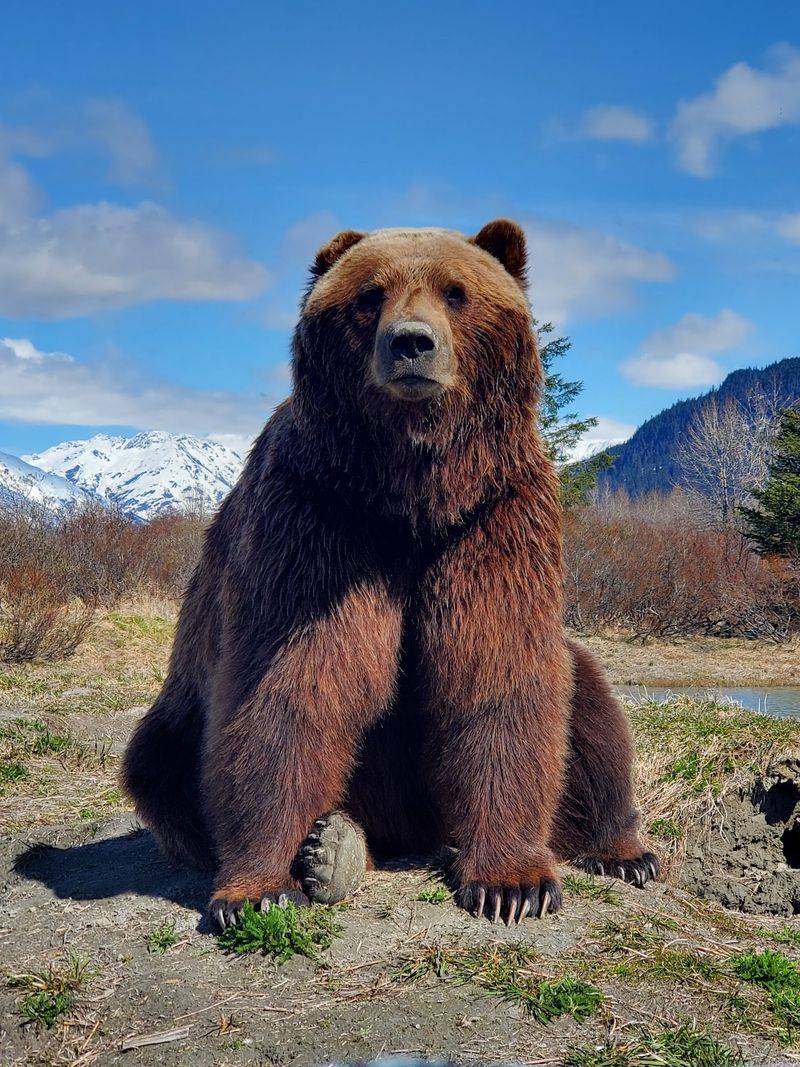
Let’s be real for a second: spotting a wood bison from a car window rarely happens. Here it takes about five minutes.
Set in scenic Portage Valley with the Chugach Mountains and Turnagain Arm as a backdrop, the Wildlife Conservation Center in Girdwood shelters rescued animals year-round.
The non-profit gives orphaned and injured wildlife a permanent home. Conservation, education, and research drive every enclosure decision.
More than 200 acres hold spacious habitats for brown bears, moose, wood bison, muskox, wolves, and porcupines.
The spacious habitats allow visitors to observe resident bears and other wildlife while learning about their individual histories and care.
A 1.5-mile loop connects it all, and you can walk, bike, or drive it. Interpretive signs share each animal’s rescue story.
Guided programs explore resident animals and their histories, while seasonal encounters can include feeding a moose or participating in the care and feeding routine of resident bears.
Winter visits reward the bundled-up, with thick coats on the muskox and frost hanging in the valley. Summer brings longer operating hours and additional seasonal tours and animal encounters.
The center sits at 43520 Seward Hwy along the scenic Seward Highway in Portage Valley.
Wildlife photography here comes with a clear conscience attached.
8. Totem Bight State Historical Park, Ketchikan
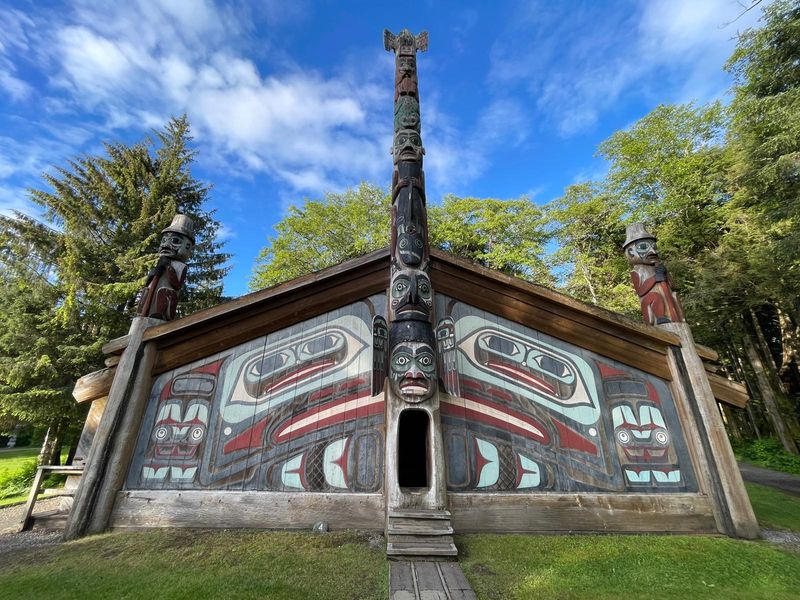
A quiet forest clearing holding one of the world’s finest totem pole collections? Wow!
Totem Bight State Historical Park north of Ketchikan currently encompasses 33 acres, with its cultural features set amid Southeast Alaska’s lush temperate rainforest.
Tlingit and Haida totem poles restored or replicated through the historic preservation program stand throughout the grounds.
A replica community clanhouse represents the type of large dwelling that could have housed 30 to 50 people in an early-19th-century Native village.
The story behind the park started in 1938. A U.S. Forest Service and Civilian Conservation Corps program hired skilled Native carvers to salvage and recreate deteriorating cedar monuments.
That work preserved centuries of clan history, crests, and family records in wood. Each figure carries specific meaning rather than decoration.
Interpretive signage explains the carvings and names the traditions behind them. Reading as you walk turns a pretty stroll into a history lesson.
Paths stay short and level, making this an easy stop for all ages. Rain is common, so bring a shell jacket and expect wet cedar smells.
Look for the entrance at 9883 N Tongass Hwy, about ten miles from downtown Ketchikan. Cruise passengers often reach it by shuttle or taxi.
Morning light through the spruce makes the poles photograph beautifully.
9. Sitka National Historical Park, Sitka
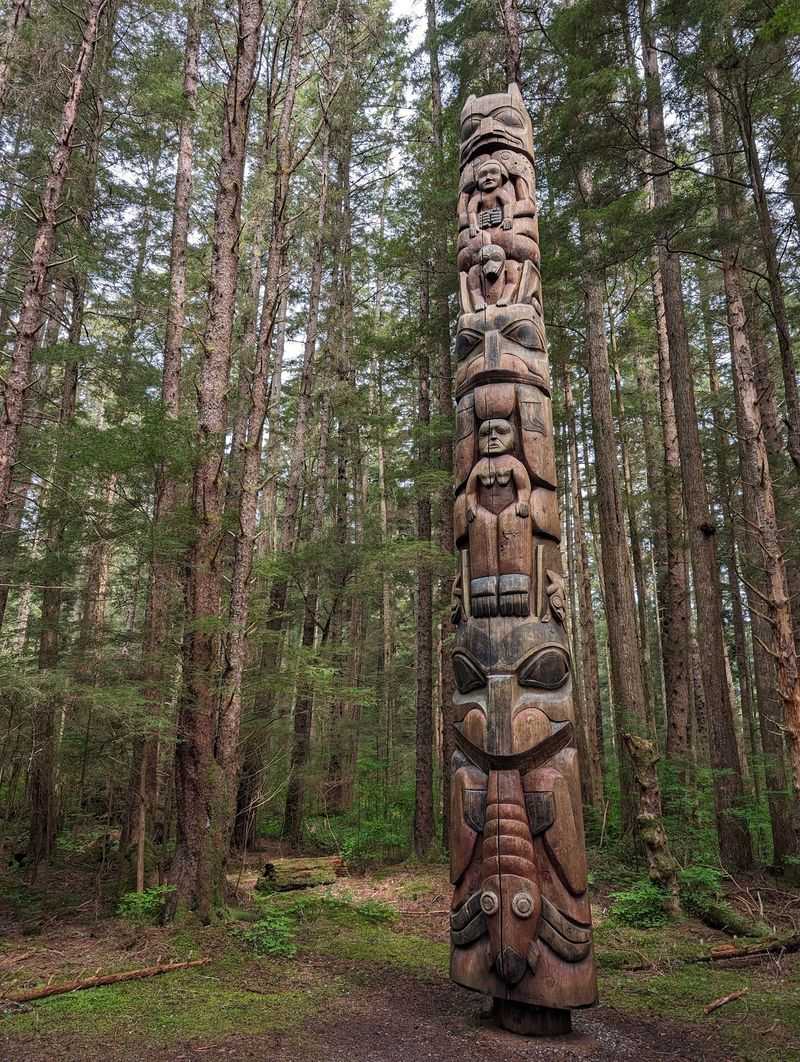
Two histories collide on one small patch of coastline, and the result is unforgettable. Tlingit resilience and Russian colonial ambition both left marks here.
Sitka National Historical Park is Alaska’s oldest federally designated park, established in 1890, and at about 113 acres it is the smallest National Park Service unit in this region.
The grounds protect the site of the 1804 Battle of Sitka between Tlingit defenders and Russian forces. Standing there changes how you read the state’s timeline.
The Totem Trail and adjacent Visitor Center grounds feature 18 original and replica totem poles carved by Native artists beneath towering Sitka spruce and western hemlock.
The Visitor Center displays both Russian and Tlingit artifacts, with theater videos filling in context. Rangers happily point out details you would walk past.
Summer brings the Demonstrating Artists Program, where Native artists work in the open. Woodworking, beading, weaving, and metal engraving all happen within arm’s reach.
A short distance away stands the Russian Bishop’s House, completed in 1842 and now one of the few surviving examples of Russian colonial architecture in North America.
Plan a half day, longer if the tide pools tempt you. Trails stay open and pleasant even in light rain. The park sits at 103 Monastery St, an easy walk from the harbor.
10. The Musk Ox Farm, Palmer
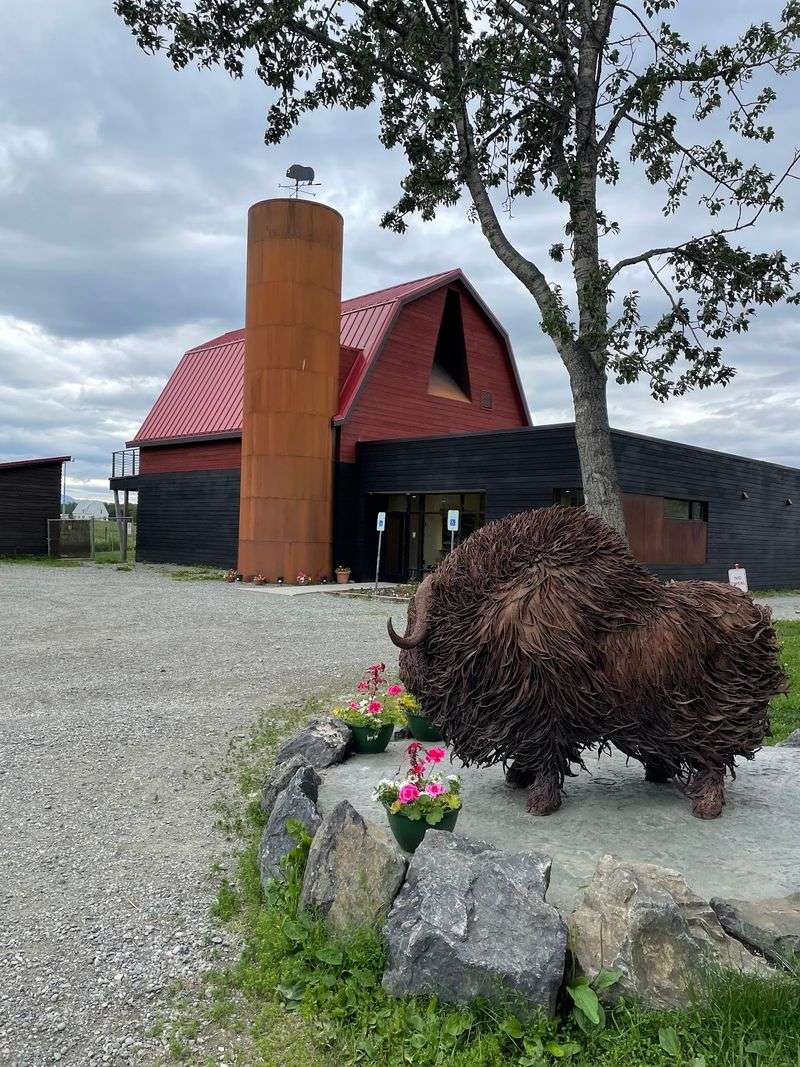
Here’s a crazy thought: shake hands with the Ice Age, or at least get close to it. Musk oxen shared the tundra with woolly mammoths.
The Musk Ox Farm sits just outside Palmer in the Matanuska Valley, about a 50-minute drive from downtown Anchorage.
This non-profit focuses on musk ox husbandry and qiviut production. More than seventy animals live here, from heavy-shouldered bulls to bouncing calves.
Guided walking tours run about 45 minutes and bring you near these Arctic ungulates. Guides explain musk ox biology, herd care, gentle husbandry, and the farm’s qiviut program.
Qiviut is the real treasure, the soft undercoat hand-combed from each animal every spring. Warmer than wool and remarkably light, it becomes prized knitwear.
The Musk Ox Project established the state’s first domestic musk ox farm in Fairbanks in 1964, building on John Teal’s earlier work to develop gentle husbandry and qiviut production as a source of economic opportunity.
The nonprofit continues that husbandry, fiber-production, and education mission today.
Open year-round, the farm hosts events including Mother’s Day with Musk Oxen and seasonal concerts. Each August, a Running with the Bulls 5K and 10K trail run fills the fields.
A gift shop and small museum round out the stop, located at 12850 E Archie Rd. Calving season in spring is pure charm.