10 Little-Known Alaska Spots That Feel Completely Off The Map
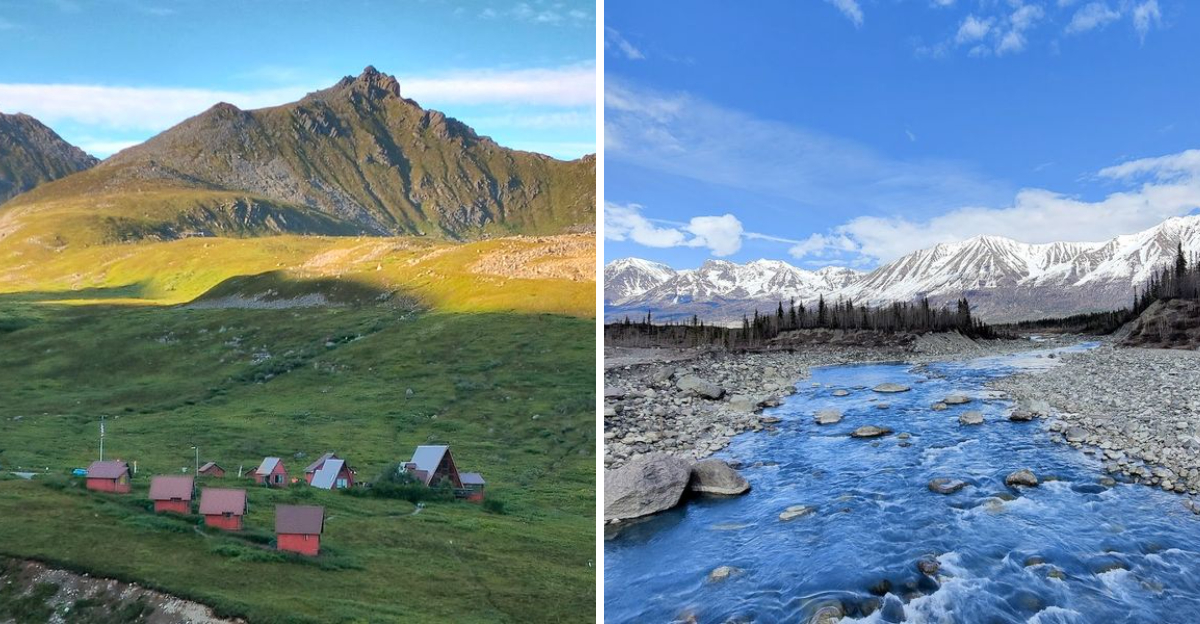
Alaska can make you feel gloriously, humblingly small, and I mean that as the highest possible compliment.
I once stood somewhere so quiet that the only sound in the entire world was my own breathing and the distant, ancient crack of ice shifting on a glacier nearby.
I can tell you with complete certainty that nothing in a brochure adequately prepares you for that moment.
Most people fly here, photograph Denali from a highway pullout, buy a magnet shaped like a bear, and consider the experience complete. And look, nobody is judging that itinerary.
But this state, that genuinely rewires your brain, is still very much out there waiting for anyone willing to look a little harder.
These spots are that Alaska. Remote, raw, quietly extraordinary, and completely worth every logistical challenge it takes to reach them.
1. Katmai National Park And Preserve
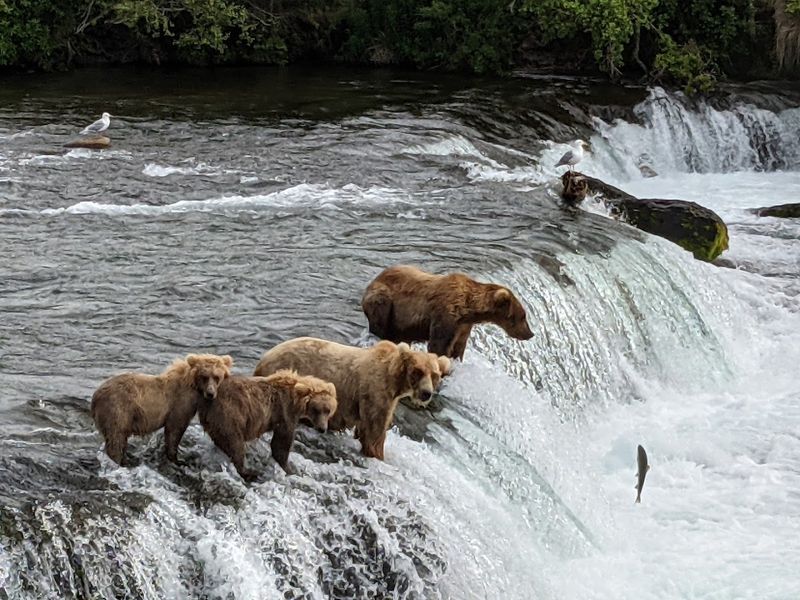
Nobody tells you that watching a brown bear catch a salmon mid-air is the most cinematic thing you will ever see in real life.
Katmai National Park is where that happens, and it happens with a regularity that still feels impossible.
The park sits on the Alaska Peninsula, and getting there already feels like an adventure since you fly into King Salmon and hop a floatplane to Brooks Camp.
Brooks Falls is the main event. During July and September, brown bears stack up along the falls like they own the place, which they absolutely do.
There are viewing platforms where you stand just yards away from bears that outweigh you by several hundred pounds.
The park covers over four million acres, so the bears have plenty of room to roam when they are not performing for visitors.
Beyond bear watching, Katmai has volcanic landscapes from the 1912 Novarupta eruption that still look surreal.
You can reach the visitor center through 1 King Salmon Mall, King Salmon. Book your Brooks Camp permit early because spots fill up months in advance and showing up without one is a hard lesson in planning ahead.
2. Gates Of The Arctic National Park And Preserve
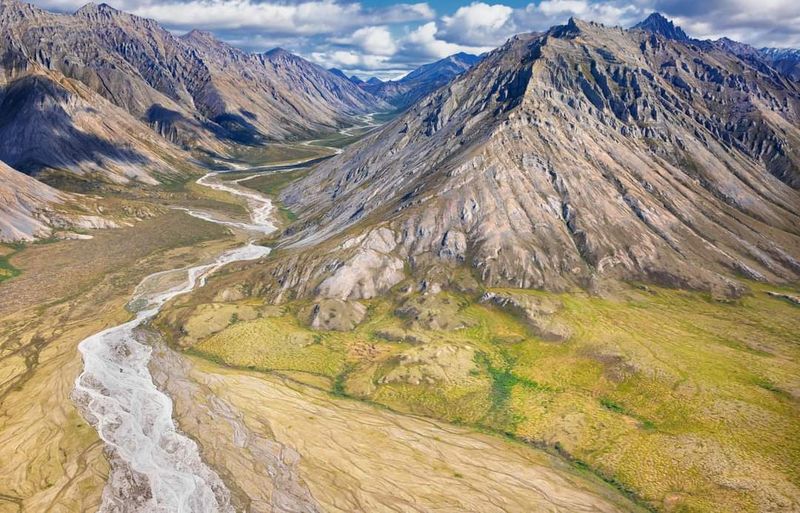
There are no roads here. No trails.
No ranger stations waiting with a map and a friendly wave.
Gates of the Arctic is the northernmost national park in the United States, and it operates on the assumption that you know what you are doing or you are willing to learn fast.
I talked to a bush pilot once who said flying into the Brooks Range feels like landing on another planet.
The mountains are raw and angular, the rivers run clear and cold, and the silence is so complete it almost has a texture.
The park sits entirely above the Arctic Circle, which means summer brings nearly continuous daylight and winter is a different kind of extreme entirely.
Wildlife here includes wolves, caribou, Dall sheep, and wolverines moving through country that has seen almost no human footprint.
The National Park Service office at 101 Dunkel St, Fairbanks is your starting point for permits and trip planning.
Most visitors fly into small villages like Bettles or Coldfoot and arrange guided expeditions from there. This is not a place for casual curiosity.
It rewards the bold, the prepared, and the genuinely wilderness-hungry traveler.
3. Wrangell-St. Elias National Park & Preserve
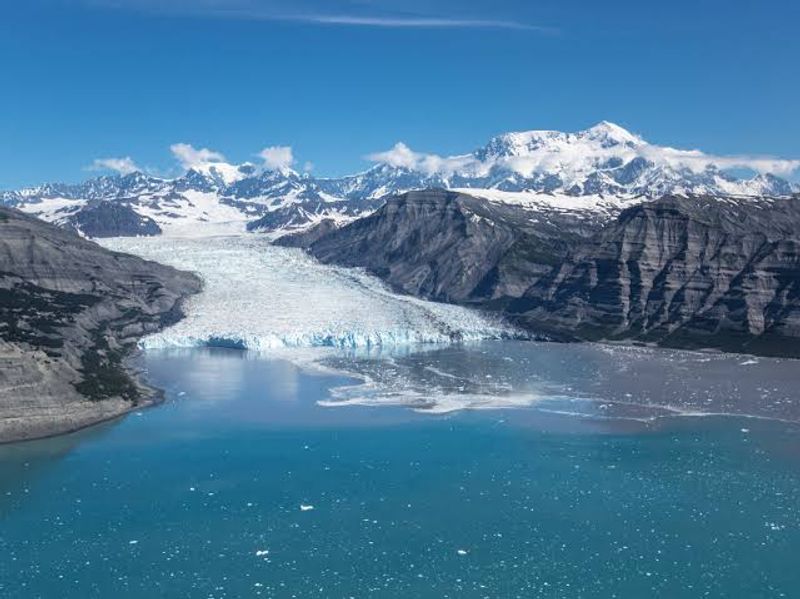
Wrangell-St. Elias is the largest national park in the United States, and it is bigger than the entire country of Switzerland.
That fact alone should stop you mid-scroll. Nine of the sixteen highest peaks in the country are here, and the glaciers are so large some of them have their own weather systems.
Most people drive in along the Nabesna Road or the McCarthy Road, both of which are unpaved and require a vehicle with some backbone.
The McCarthy Road ends at a footbridge over the Kennicott River, and crossing it feels like stepping through a door into the early twentieth century.
The nearby ghost town of Kennecott is a National Historic Landmark with copper mining ruins that are genuinely jaw-dropping.
The park visitor center sits at Mile 106.8 Richardson Hwy, Copper Center, and the staff there are refreshingly honest about conditions and difficulty levels.
Hiking here means route-finding across tundra, river crossings, and reading the terrain like a map because there often is no marked trail.
Wrangell-St. Elias rewards the curious and the patient. Come with solid boots, a good tent, and a flexible schedule because this park plays by its own rules.
4. Kenai Fjords National Park
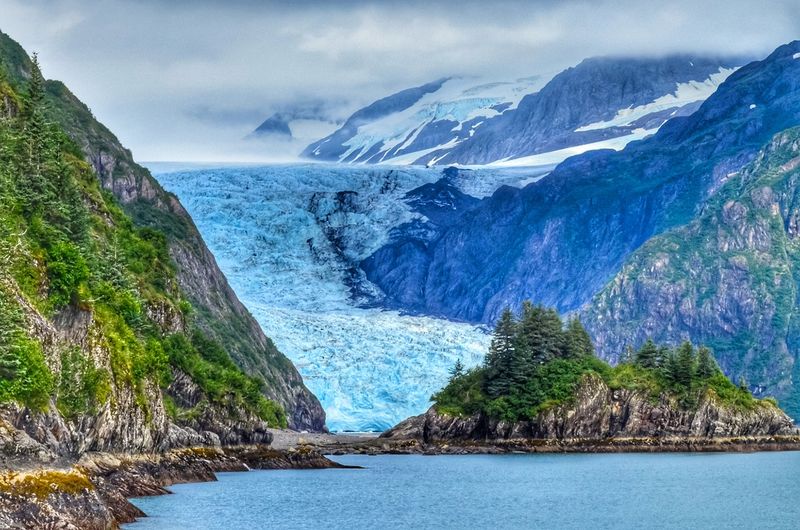
Watching a glacier calve into the ocean is one of those experiences that your brain keeps replaying for weeks. Kenai Fjords is where that happens on a scale that feels almost theatrical.
The park protects the massive Harding Icefield, one of the largest icefields in the United States, and the tidewater glaciers that flow from it into the Gulf of Alaska.
Exit Glacier is the only part of the park accessible by road, and walking up to the glacier face is free and genuinely moving.
Signs along the trail mark where the glacier stood in previous decades, and seeing how far it has retreated is a quiet but powerful experience. For the full fjords effect, book a day cruise out of Seward.
The boat tours take you past sea otters, orcas, humpback whales, puffins, and Steller sea lions with a frequency that makes you feel like a wildlife documentary is being filmed around you.
The park headquarters is at 1212 4th Ave, Seward, and the staff can help you choose the right tour operator for your interests and budget.
Seward itself is a charming small town worth an extra night or two before or after your visit.
5. Chena Hot Springs Resort
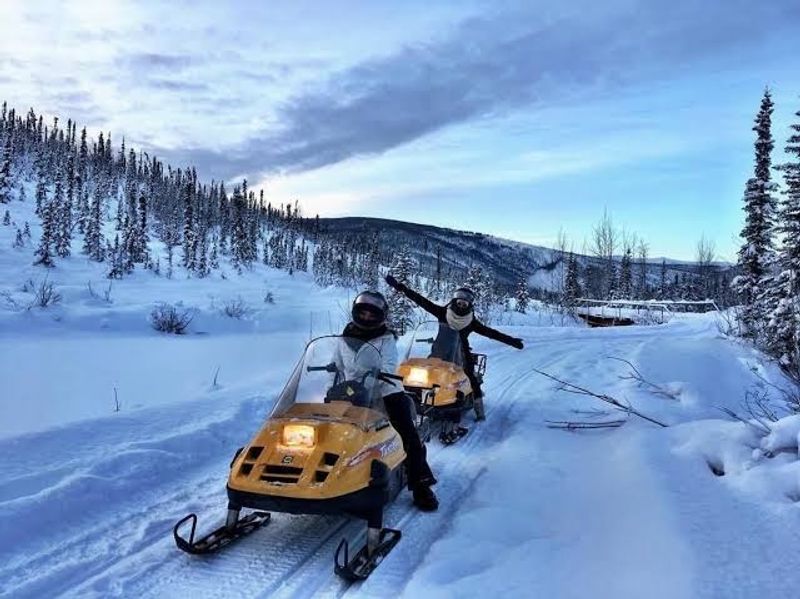
Soaking in a geothermal hot spring while the northern lights ripple green and purple overhead is exactly as good as it sounds.
Chena Hot Springs Resort is about sixty miles northeast of Fairbanks, and the drive out there through birch forest already sets the mood.
The resort has been operating since 1905 and feels like it belongs to a different, slower era of Alaska travel.
The outdoor rock lake is the main draw, a natural hot spring pool where the water stays around 106 degrees Fahrenheit year-round. In winter you can float in the warmth while snow falls quietly around you.
The resort also has an ice museum that stays frozen year-round thanks to a unique refrigeration system, and the ice sculptures inside are legitimately impressive works of art.
Aurora viewing is exceptional here from late August through April, and the resort offers guided northern lights tours with knowledgeable local guides.
During summer, the midnight sun keeps the landscape bright at odd hours, which creates a surreal and beautiful atmosphere.
The resort is located at 17600 Chena Hot Springs Rd, Fairbanks. Book your soak time in advance during peak aurora season because the hot spring fills up fast with visitors who know exactly what they came for.
6. Denali National Park And Preserve
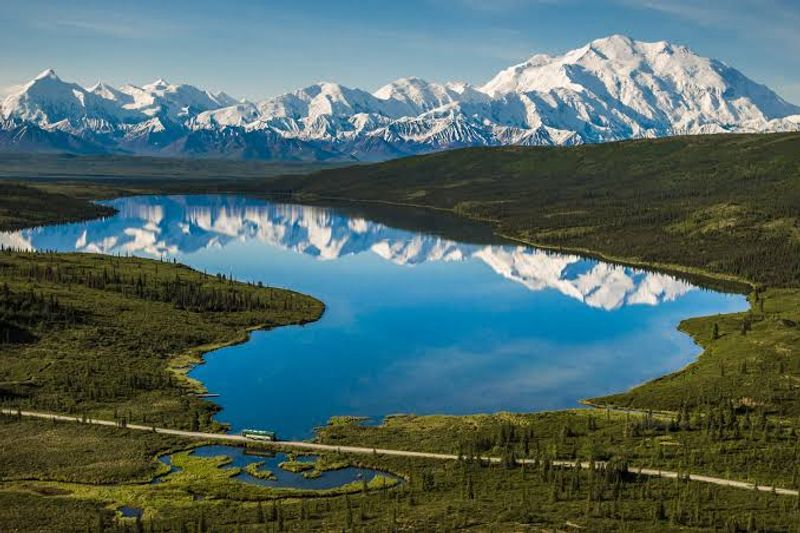
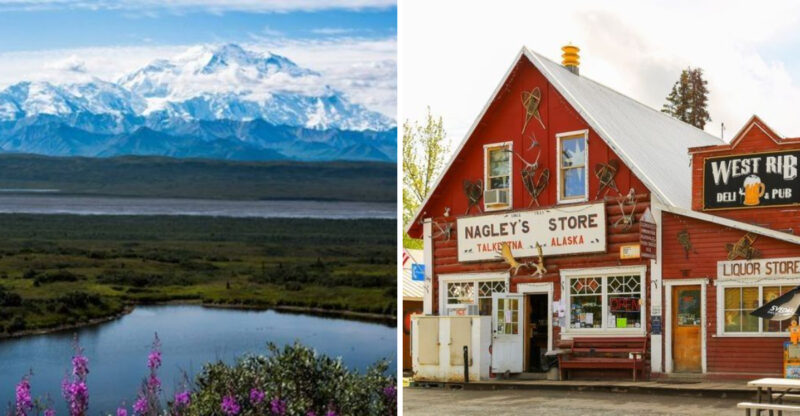
Denali is the tallest peak in North America at 20,310 feet, and on a clear day from the right angle it genuinely does not look real.
The mountain creates its own weather, and most visitors never see the full summit because clouds wrap around it more often than not. When it does come out, people stop their cars on the highway and just stare.
The park road stretches ninety-two miles into the wilderness, and private vehicles can only drive the first fifteen miles.
Beyond that, you board a park bus and let someone else navigate the narrow gravel road while you focus on spotting grizzly bears, moose, wolves, and caribou.
I once counted eleven grizzlies in a single day from a bus window, which felt almost unfair in the best way.
Backcountry camping in Denali means choosing one of thirty-two designated units and getting a permit, with no trails to follow and complete freedom to explore.
The park entrance is at Mile 237 George Parks Hwy, Denali Park. The visitor center there has excellent exhibits about the geology and ecology of the Alaska Range.
Go early in the season for the best wildlife viewing, and always bring layers because Denali weather changes its mind constantly.
7. Independence Mine State Historical Park
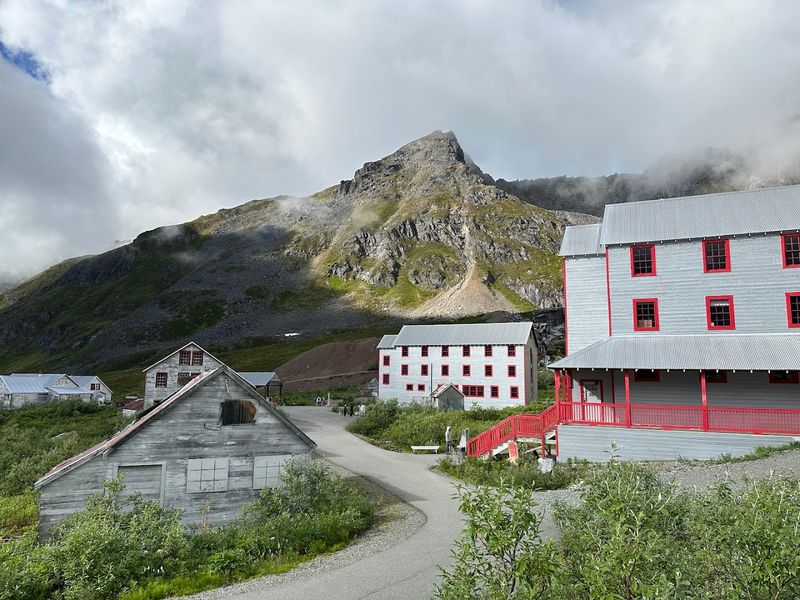
Gold rush history hits differently when you are standing inside the actual ruins of a 1930s hard-rock gold mine at four thousand feet elevation.
Independence Mine operated from 1938 to 1951 and produced over 37,000 ounces of gold during its peak years. Today the buildings are preserved as a state historical park, and the setting alone is worth the drive up Hatcher Pass Road.
The alpine valley where the mine sits is stunning in every season. Summer brings wildflowers and panoramic views of the Talkeetna Mountains.
Winter turns the whole area into a backcountry skiing and snowshoeing destination with runs that feel like a secret shared between locals and serious adventurers.
Self-guided tours let you wander through the mine manager’s house, the bunkhouses, the assay office, and the mill complex at your own pace.
Interpretive signs throughout the site explain what each building was used for without overwhelming you with information. The park is located at Mile 17.3 Hatcher Pass Rd, Palmer, about an hour north of Anchorage.
The road to the park is paved until it reaches the mine area, and the last stretch can be rough depending on the season. Plan to spend at least two hours here because the views alone demand your full attention.
8. Wrangell-St. Elias Wilderness, Kennecott
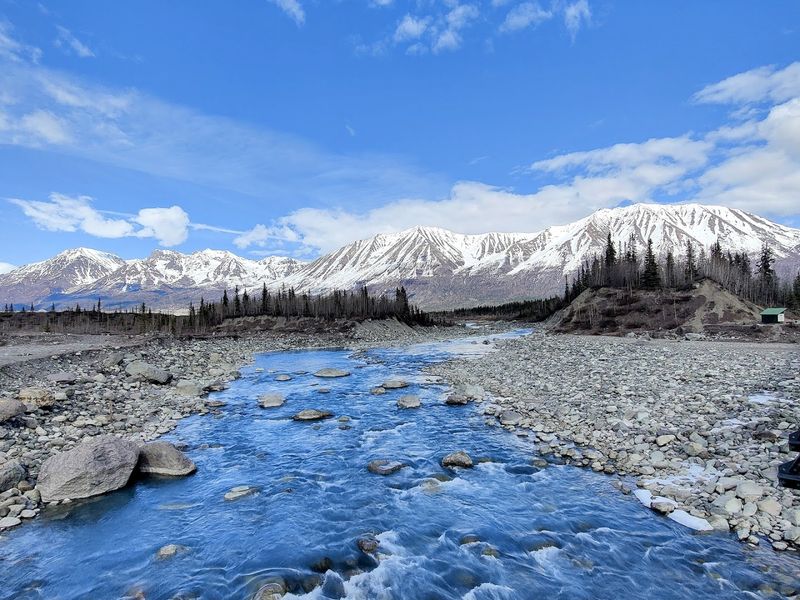
Kennecott looks like someone built a small industrial town in the 1900s and then simply walked away. Because that is almost exactly what happened.
The Kennecott Mines National Historic Landmark sits at the end of a long unpaved road deep inside Wrangell-St. Elias, and arriving there feels like finding something the modern world forgot to erase.
The copper mines here operated from 1903 to 1938 and produced hundreds of millions of dollars worth of ore.
The mill building towers fourteen stories above the valley floor, painted bright red against the white of the Kennecott Glacier, and the visual contrast is striking enough to stop you mid-step.
Guided tours of the mill building are offered through the Kennicott Mines National Historic Landmark program, and they are genuinely fascinating.
The nearby town of McCarthy is a short walk or bike ride away and has a handful of lodges, restaurants, and outfitters that cater to visitors without trying too hard to impress them.
The road to Kennecott begins at Kennecott Rd, Kennecott, inside the park.
Root Glacier is walkable from town and offers a rare chance to hike on a glacier without a helicopter or a guide, which feels like a small miracle of accessibility in an otherwise remote corner of Alaska.
9. Glacier Bay National Park And Preserve
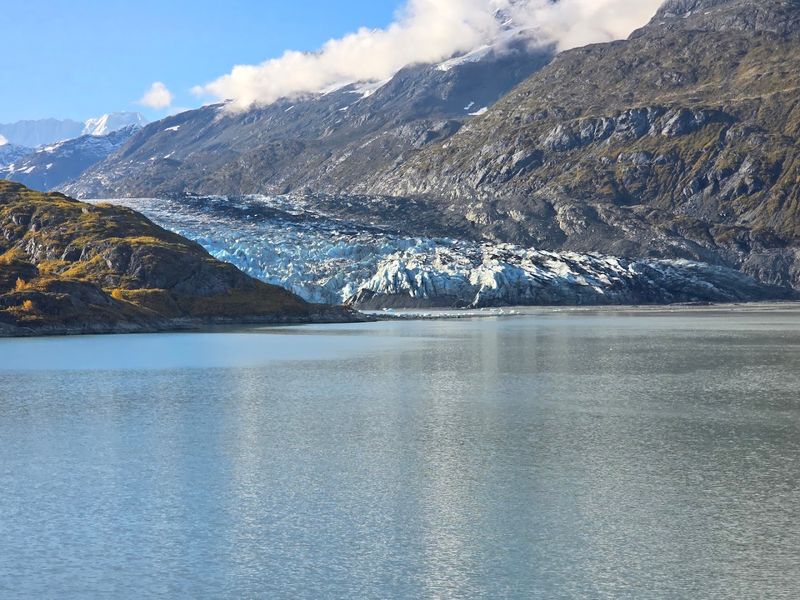
Two hundred years ago, Glacier Bay was almost entirely covered by a massive glacier. Today it is a sixty-five-mile-long bay filled with water, wildlife, and some of the most dramatic scenery on the planet.
The speed of that transformation, geologically speaking, makes Glacier Bay one of the most studied examples of glacial retreat and ecological succession in the world.
Getting here requires a flight or ferry to Gustavus, a tiny town of around four hundred people that exists almost entirely because of the park.
The park itself has no roads, so exploration happens by boat or kayak. Kayaking among icebergs in the upper bay is one of those experiences that people describe as life-changing without any exaggeration whatsoever.
Humpback whales feed in the bay throughout summer, and the whale watching from the lodge deck at Bartlett Cove is casually spectacular.
Brown and black bears roam the shoreline, and mountain goats pick their way along the cliffs above the waterline.
The park headquarters is at Bartlett Cove, Gustavus, and the lodge there is the only accommodation inside the park.
Day trips by tour boat leave from Bartlett Cove daily in summer and cover enough ground to leave you thoroughly overwhelmed by the scale of everything you are looking at.
10. Hatcher Pass
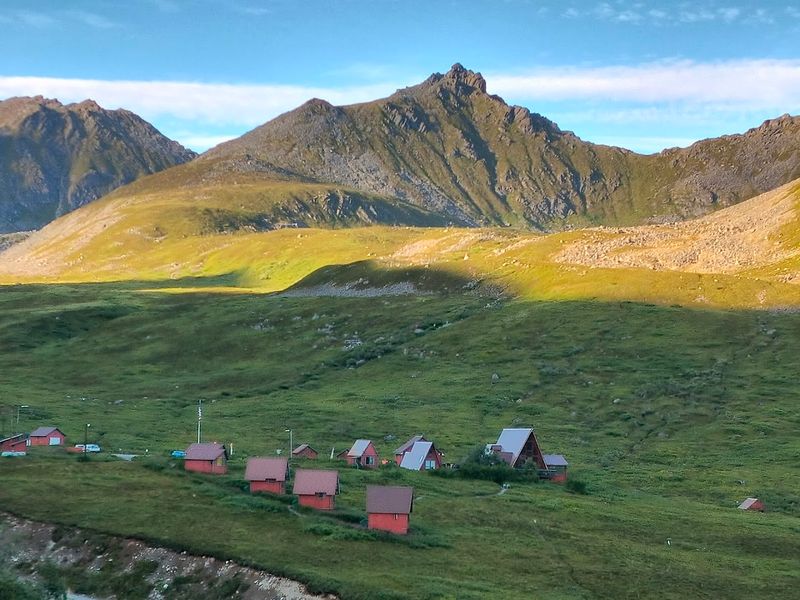
Hatcher Pass is the kind of place that makes Anchorage residents feel smug about living in Alaska.
It sits about an hour north of the city, and the drive up through the Matanuska-Susitna Valley already starts delivering views before you reach the pass itself.
At the top, you get open alpine terrain, braided rivers, and a horizon that goes on longer than feels reasonable.
Summer hiking here is excellent, with trails ranging from easy wildflower walks to serious ridge scrambles that reward you with views of the entire Talkeetna range.
The tundra turns brilliant red and gold in September, which is arguably the single best month to visit if you want color and fewer people sharing the road with you.
Winter transforms Hatcher Pass into a playground for backcountry skiers, snowshoers, and fat bikers who seem genuinely happy regardless of the temperature.
Summit Lake State Recreation Site sits right at the top of the pass and offers camping with views that cost nothing extra.
The access road is Hatcher Pass Rd, Palmer, and it connects to Willow on the other side, making a scenic loop possible if your vehicle can handle it.
Go on a weekday if you can, because weekends in summer bring out every Anchorage resident with a vehicle and good taste.