This California Orchard Makes Legendary Apple Cider Donuts Hot To Order
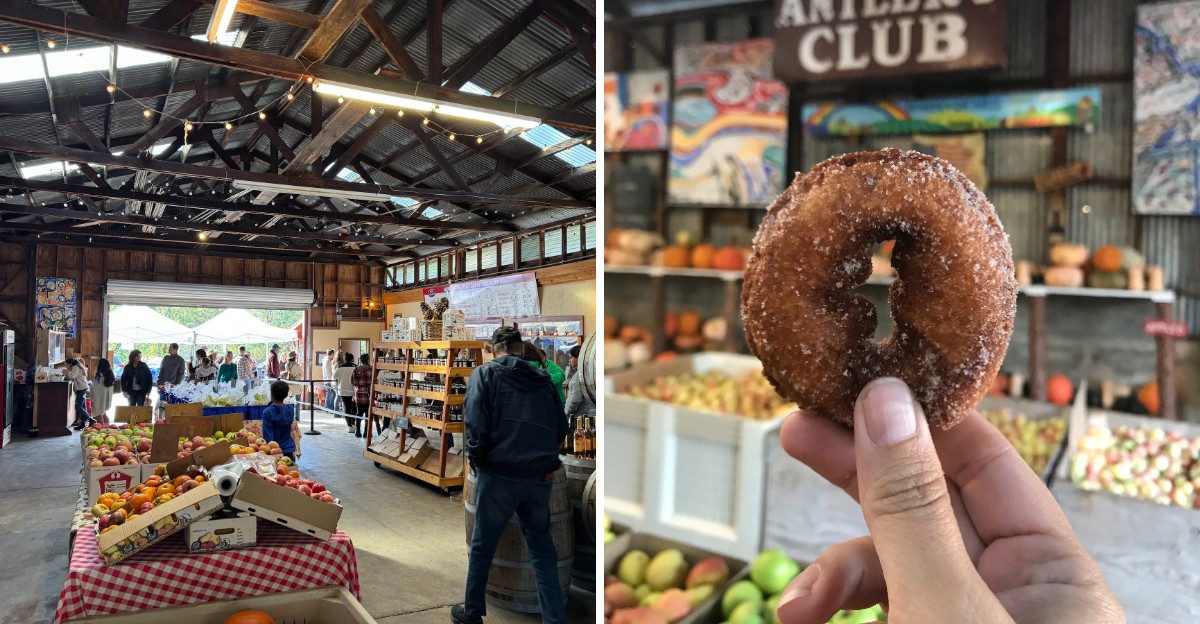
A warm donut is already difficult to argue with. Make it with apple cider and suddenly whatever sensible snack you packed for the drive has lost all relevance.
At one orchard, this fall favorite has become much more than a sweet extra after picking up apples.
People arrive knowing exactly what they want, and the smell alone can make sticking to a one-donut plan feel unnecessarily disciplined.
Fall in California smells considerably better when somebody nearby is dropping apple cider donuts into hot oil.
No elaborate presentation is required when a donut arrives warm enough to remind you that patience for the first bite might actually be necessary.
Of course, orchards have plenty of ways to get people into the autumn spirit. Apples certainly deserve their moment.
But when a humble cider donut develops a reputation of its own, the fruit suddenly has some serious competition.
Donuts Fried The Moment You Order Them
Most bakeries fry donuts in the morning and hope they sell by noon.
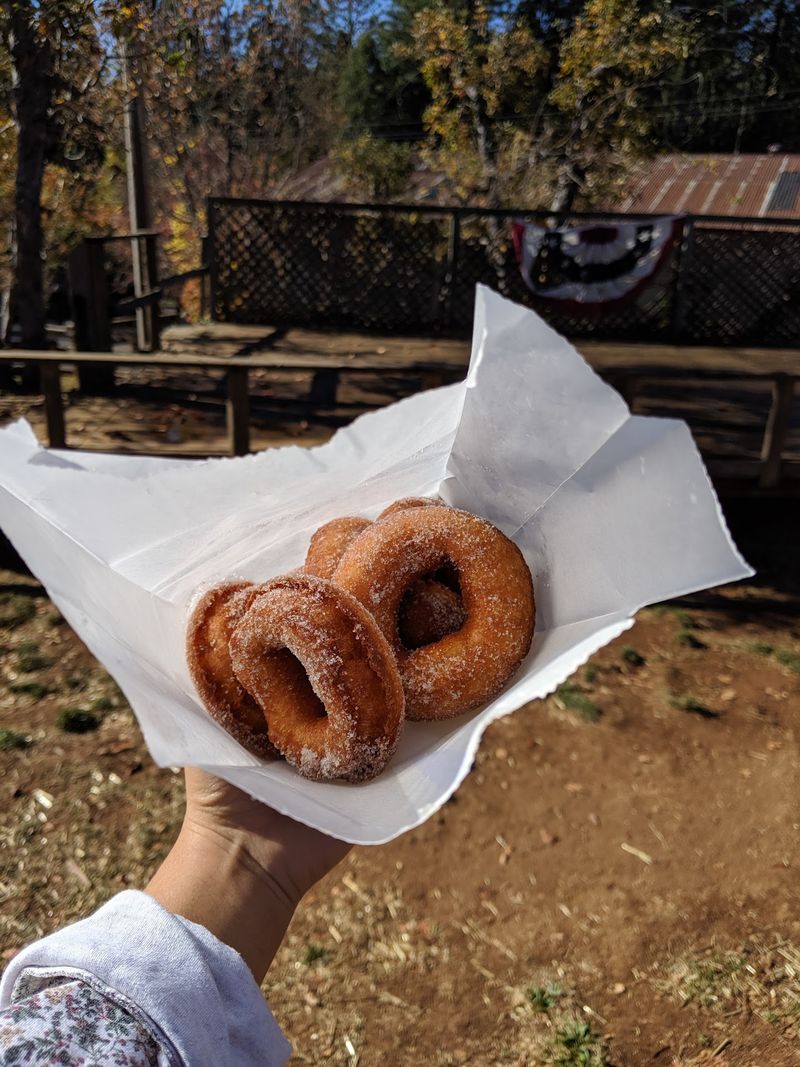
At Rainbow Orchards, the apple cider donuts are prepared hot for each order instead of sitting in a case waiting for customers.
That single choice changes the whole texture of the thing, with a crisp outer shell and a soft, steamy center that only lasts a short while.
The Apple Hill Growers Association describes these donuts as legendary, which is a strong word for a small farm bakeshop.
Visitors often mention the cinnamon coming through clearly, and the donuts are typically handed over in wax paper because they are still too warm to hold bare-handed.
The address for the farm is 2569 Larsen Dr, Camino, CA 95709, United States, and the bakeshop counter sits inside the main barn.
On busy fall days the line can stretch through the barn, though it generally keeps moving since the kitchen works in batches.
A practical tip: eat them right away rather than saving them for the car ride home.
The difference between a donut at minute two and minute thirty is noticeable, and most people who plan ahead end up buying a small bag for immediate eating plus a larger one to take back.
A Donut Tradition That Predates The Current Owners
Some food traditions get invented for marketing, and some just keep going because nobody wanted them to stop.
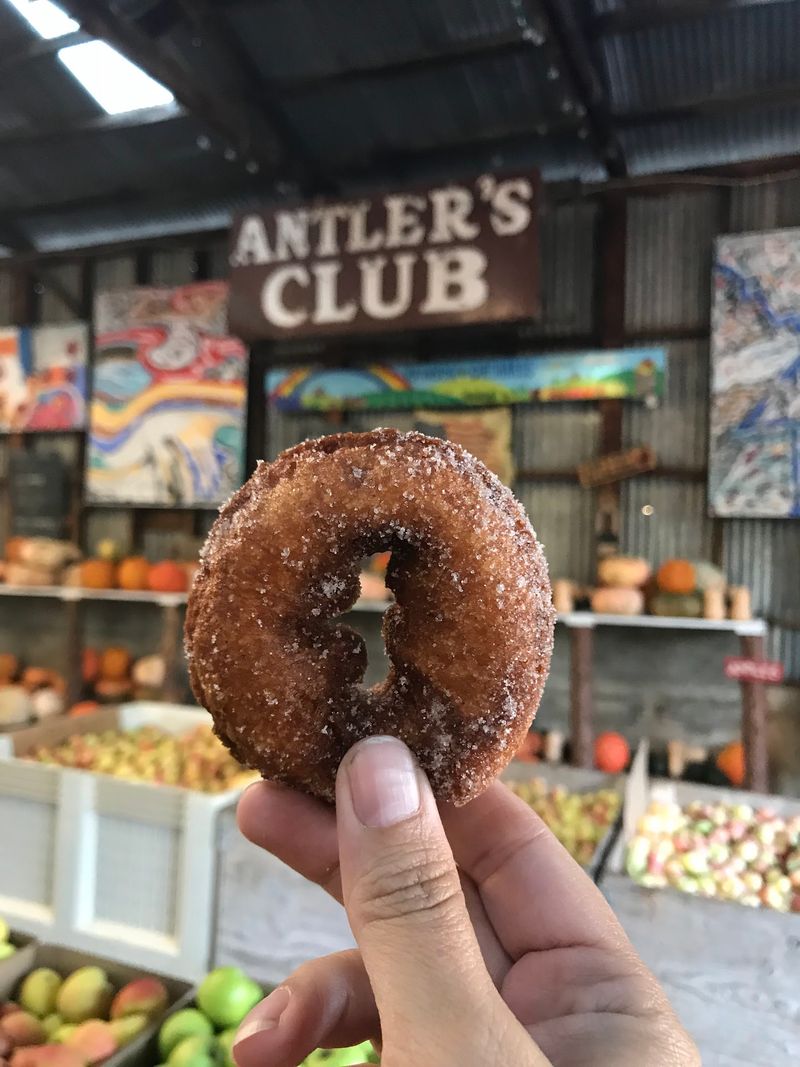
When the current family bought the property in 1977, the cider mill was already running and apple cider donuts were already being made on site. The recipe came along with the land rather than being created from scratch afterward.
Using cider to leaven and flavor donuts has deep roots in apple-growing regions across the country, and the practice traveled well into the California foothills.
What that history means for a visitor is fairly simple. The donut being handed across the counter connects back through decades of the same barn, the same mill, and roughly the same method.
Minor adjustments have been made over the years, which is normal for any recipe that gets cooked thousands of times a season.
The farm itself is now third generation, and the family has been growing mountain fruit here since that 1977 purchase.
Cider Pressed On The Property, Straight From Apples
Cider here does not arrive on a truck from somewhere else.
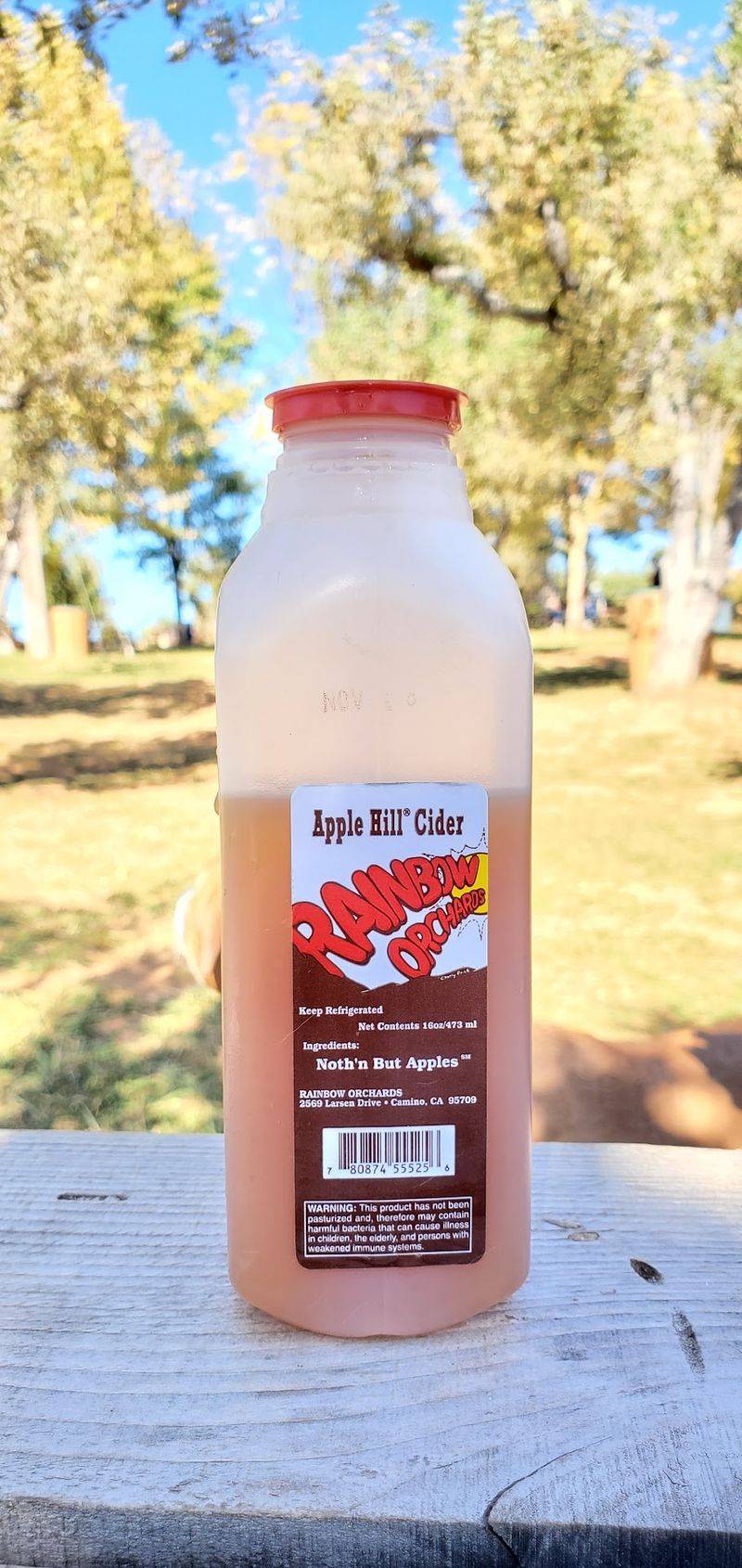
Fresh apple cider is pressed at the historic mill on the farm, and it is unpasteurized, unfiltered, and made only from apples with nothing added.
The color runs cloudy and deep gold rather than clear, which is exactly what you want from raw cider.
Rainbow Orchards holds one of the few California licenses allowing raw cider to be sold directly to consumers, which is genuinely uncommon.
Flavor-wise, raw cider tastes rounder and more apple-forward than the shelf-stable versions found in grocery stores.
Visitors often comment on how it is refreshing without being overly sweet, and small cups are sometimes available so guests can try it before committing to a jug.
Hot cider is also served during cooler months, which pairs naturally with a warm donut on a chilly morning.
The cider travels beyond the farm too, appearing at several Bay Area farmers markets and regional markets in Davis and Tahoe.
Keep in mind that unpasteurized cider needs refrigeration and has a shorter shelf life than processed juice.
Packing a small cooler for the drive home is a reasonable move if you plan to buy more than one jug during your visit.
Watching The Press Work Through The Mill Windows
Few snack stops let you see exactly how your drink was made.
On pressing days, viewing windows at the cider mill let visitors watch apples move through the process and turn into cider.
It is a working operation rather than a staged demonstration, so the pace depends entirely on the day’s production schedule.
The barn has served as a cider mill since the 1940s, giving the machinery a long history in that exact spot.
Kids tend to find this part fascinating, since the transformation from whole fruit to liquid happens quickly and loudly.
Adults often linger too, mostly because seeing the fruit go in makes the cider taste more meaningful afterward.
The sound carries through the barn, a steady mechanical rhythm mixed with the smell of crushed apples.
Pressing does not happen every single day, so it helps to ask at the counter whether the mill is running during your visit.
There is no separate ticket or tour involved, just windows and the willingness to stand and watch for a few minutes.
A 1920s Barn Still Doing Its Original Job
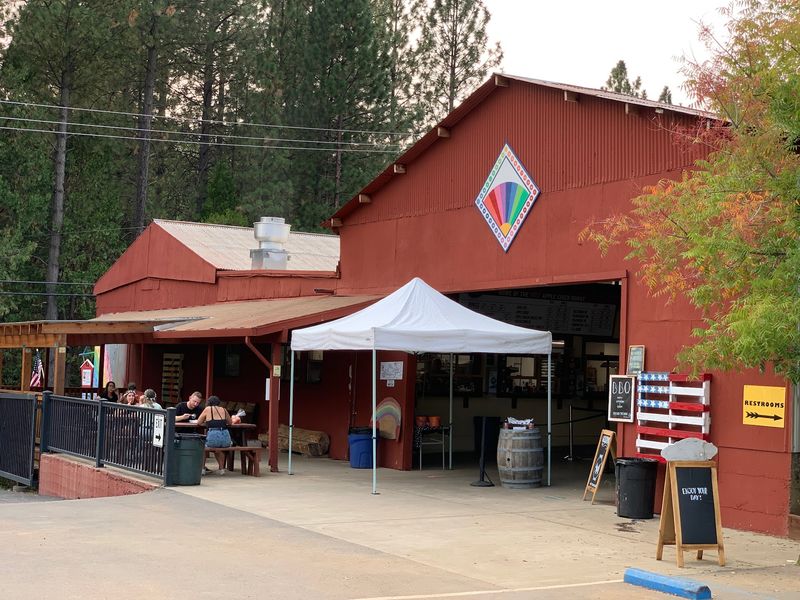
Old buildings usually get converted into something trendy, but not this one.
The barn at the center of the operation dates back to the 1920s, according to the Apple Hill Growers Association, and it has functioned as a cider mill since the 1940s.
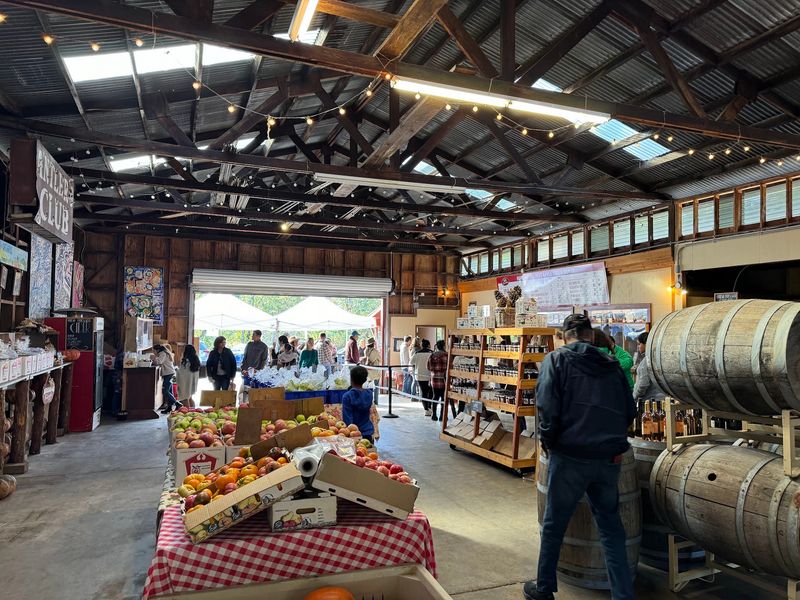
The wood shows its age in the best way, with worn floors and beams that have absorbed decades of apple season.
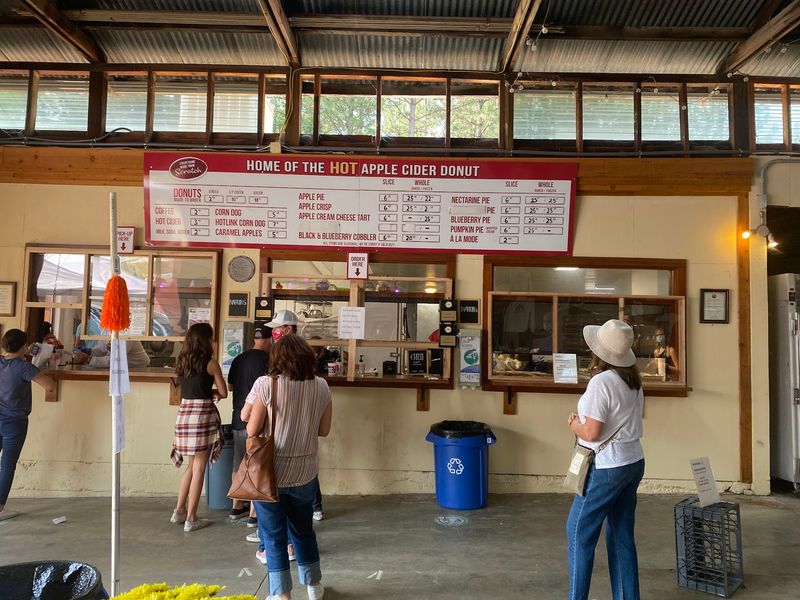
Inside, the space handles multiple jobs at once, housing the bakeshop counter, the retail area, and the mill.
Walking in, the light tends to be dimmer than outside, and the air holds a mix of cinnamon, frying oil, and apple. Noise levels climb on busy afternoons since the room is open and sound bounces off the wooden walls.
Dogs are welcome on the grounds but not permitted inside the barn, which keeps things simple around the food.
The building is not huge, so movement can feel tight when a line forms during peak hours.
Arriving earlier in the day usually means easier browsing and more room to look at the shelves without shuffling around others.
For photos, the exterior with the orchard behind it gives a cleaner shot than the crowded interior on most fall weekends.
Homemade Corn Dogs Break Up All The Sugar
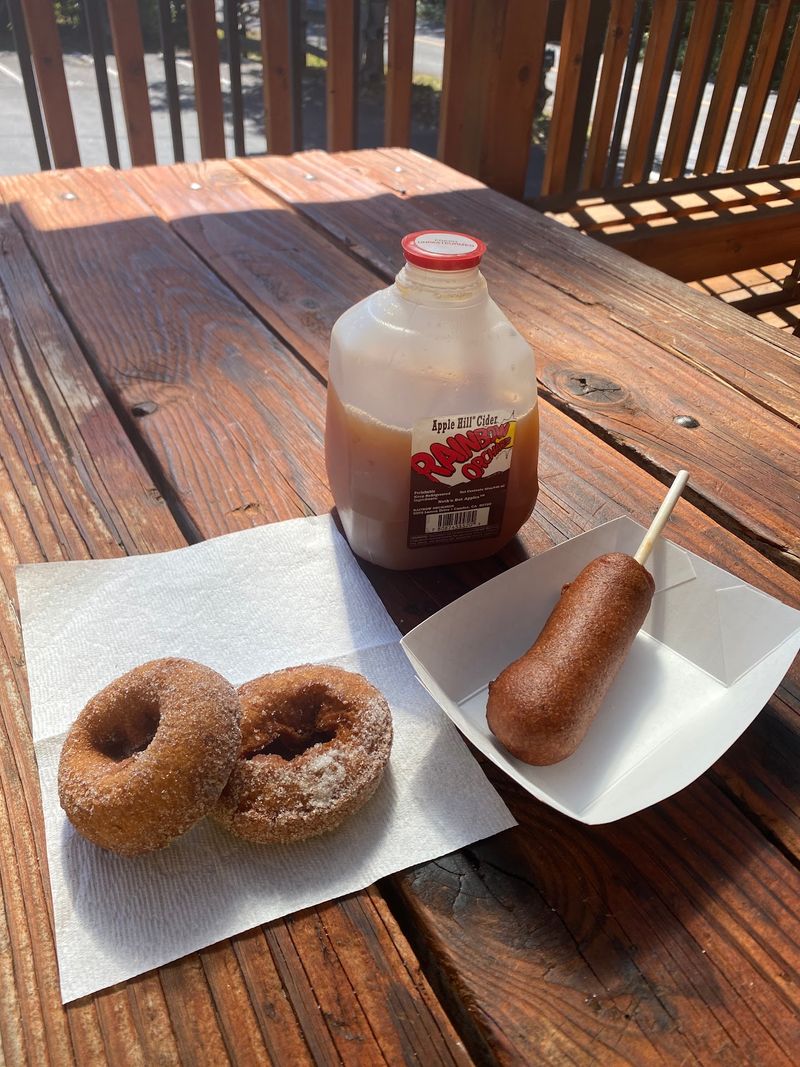
Here is the detail that surprises most first-time visitors: the corn dogs are made from scratch.
The bakeshop prepares homemade corn dogs daily, and hot link versions have also been part of the lineup.
Having something savory available matters more than it sounds when an entire day is otherwise built around pies and donuts.
The batter is mixed on site rather than pulled from a freezer bag, which puts it in a different category from fair food.
Texture opinions vary, with some people preferring a coarser cornbread crunch and others enjoying the softer, doughier style served here. The hot link option adds a mild kick for anyone who wants it.
Either way, it gives families a way to turn a snack stop into something closer to an actual meal.
Ordering a corn dog first and saving the donut for dessert is a reasonable strategy, especially with kids who fill up fast on sweets.
Both items come from the same counter, so there is no need to stand in a second line.
Eating outside at the picnic tables keeps the barn less crowded and gives everyone a bit more elbow room while the food is still hot.
Jars Of Jam Worth Packing Home
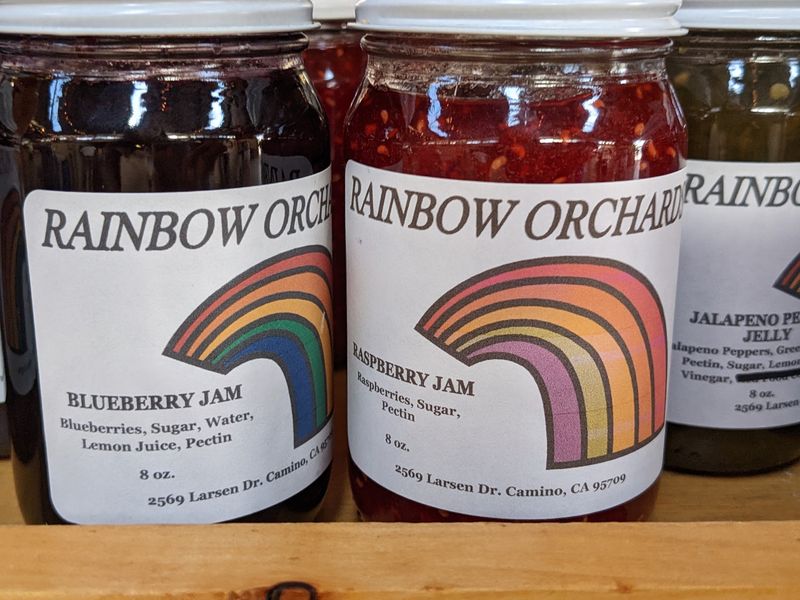
The shelves inside the barn hold the quiet souvenirs of the season.
Jams, jellies, syrups, vinegars, and fruit butters are made using the farm’s own pumpkins, apples, pears, and berries. Nothing on those shelves has to travel far to get into a jar.
Preserves make sense for a farm like this, since they turn a short harvest window into something that lasts through winter.
Shopping here works well for anyone who wants a piece of the visit that survives the drive home. Unlike donuts, a jar of pear butter will still taste right three months later.
Prices and selection shift with what has been harvested and processed recently.
These also make practical gifts, particularly for people who would rather receive something edible than another decorative object.
The retail area shares space with the bakeshop, so browsing while someone else waits in the food line is an efficient use of time.
A separate checkout counter exists for guests who only need to buy packaged goods and skip the made-to-order queue entirely.
Glass jars are heavy, so a reusable bag or box in the trunk is a smart thing to bring.
Picnic Tables Under The Trees Invite You To Stay
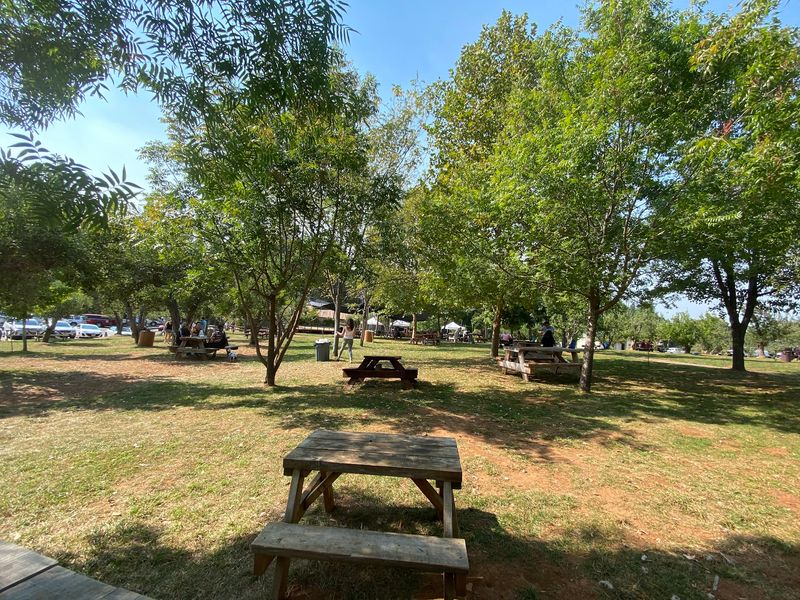
Grab and go is an option, but staying awhile is clearly the better plan.
An orchard picnic area sits behind the barn with tables spread beneath the trees, plus hay bales that kids regularly turn into an obstacle course.
Shade comes from the orchard itself, which helps on warmer early-season afternoons.
Having a place to sit changes the visit from a quick stop into something closer to an afternoon.
Families often settle in with a warm donut and a cup of cider, letting kids run between the tables while adults slow down.
The area is dog friendly, and pets are common on the grass even though they are not allowed inside the barn.
Parking near the entrance can fill up quickly on peak weekends, though additional space exists further along the property.
Tables are first come, first served, so arriving earlier in the day improves the odds of finding a shaded spot.
Bringing a blanket gives you a backup if every table is taken during the busiest hours.
Tractors and orchard rows around the area also serve as popular backdrops for family photos each season.
Labor Day Weekend Kicks Off The Real Season
Mark the calendar, because the bakeshop does not run year round.
Opening traditionally lands around Labor Day weekend, which is when hot cider donuts, fresh-pressed cider, and just-harvested fruit all become available at once.
Everything ramps up quickly after that, with September and October bringing the heaviest visitor numbers.
Early in the season the weather still leans warm, so shade and cold cider matter more than hot drinks.
By mid October the air cools, the crowds thicken, and hot cider becomes the obvious pairing with a warm donut.
Weekday visits generally feel calmer than weekends, though even a Wednesday afternoon can get busy during peak weeks.
Current posted hours run roughly 9 a.m. to 4 p.m. on Monday through Thursday and 9 a.m. to 5 p.m. Friday through Sunday, but seasonal changes happen.
Checking the farm’s website before driving up is the safest approach, since opening dates and hours shift year to year.