This Historic Connecticut Museum Turns Local History Into A Mansion-Sized Time Capsule
History feels different when you can see how people actually lived with it. A preserved home can tell you far more than a date printed neatly beside an artifact.
Rooms become clues. The choices made inside them reveal changing tastes and offer glimpses of a world that once felt completely ordinary to the people living there.
That is exactly what makes this museum such an entertaining time capsule.
Rather than squeezing the past into display cases, one historic Connecticut property lets an entire house become part of the story.
You start noticing details you might normally overlook. Suddenly, a doorway or an unusual corner of a room feels worth examining because it survived from another chapter of local life.
How much can one house really tell you about the people who came before?
Quite a lot, as it turns out. Sometimes the building itself ends up being the most fascinating object in the collection.
Gothic Revival Drama Makes This House Impossible To Miss
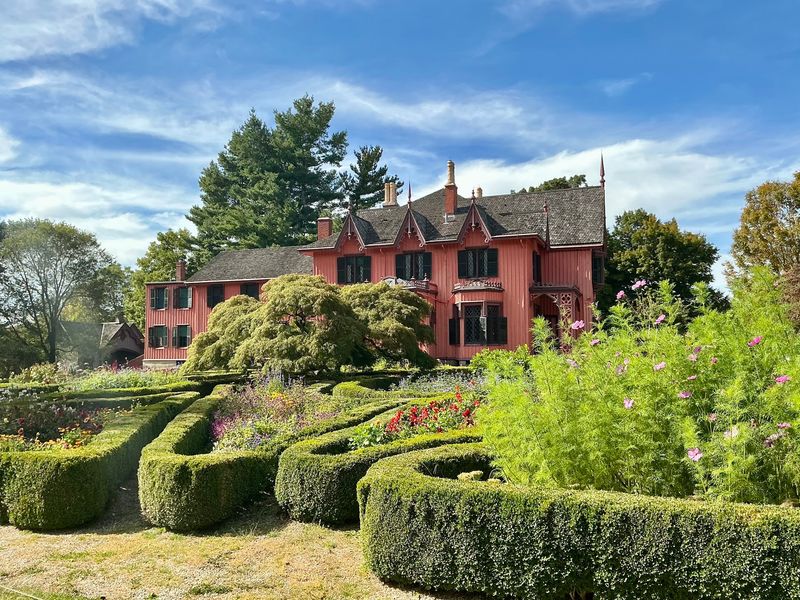
Pink, pointed, and impossible to ignore. Roseland Cottage looks like it wandered out of a Victorian storybook.
Built in 1846, the house was created as a summer retreat for Henry and Lucy Bowen and remains one of the country’s best-preserved examples of Gothic Revival architecture. Its appearance was deliberately bold.
Steep gables, intricate wooden trim, tall chimney pots, vertical board-and-batten siding, and Gothic windows gave the house a dramatically different personality from the restrained homes surrounding Woodstock’s town common.
That contrast still makes the exterior fun to study. Instead of rushing toward the entrance, it is worth circling the house and noticing how the decorative details change from one section to another. Even the famous pink exterior adds to its unmistakable character.
The grounds carry the design beyond the walls. Historic boxwood-edged parterre gardens date to the 1850s and remain an important part of the property, adding carefully arranged curves and seasonal color around the house.
Roseland Cottage welcomes visitors at 556 Route 169 in Woodstock, directly across from the historic town common.
Nearly two centuries later, its playful Gothic details still accomplish exactly what they did in the 1840s: make people stop and stare.
A Woodstock Native Built His Summer Retreat Here In 1846
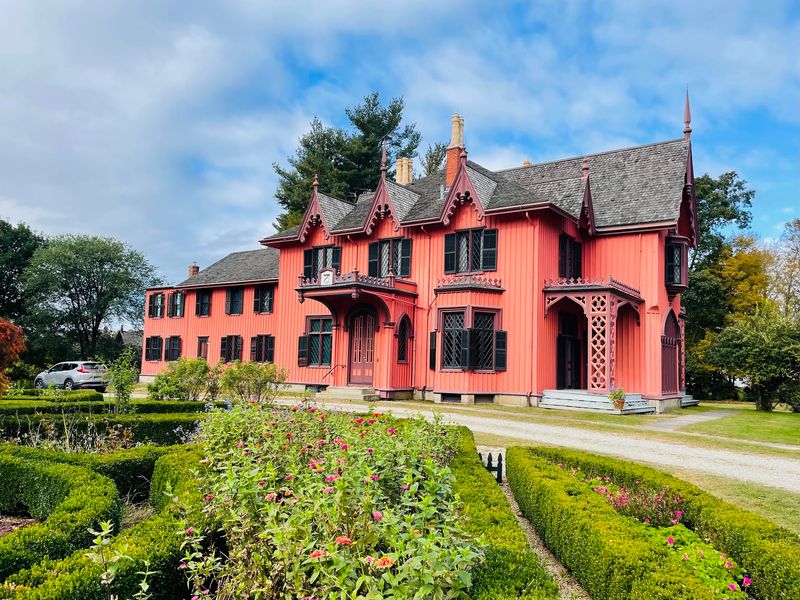
Behind the pink paint sits a fairly relatable story: a man who made his money in New York City wanted somewhere cooler and quieter to spend his summers, and he chose the town where he grew up.
The property was purchased in 1845, and the house was finished the following year. An English-trained architect handled the design, producing a residence grand enough for entertaining yet still called a cottage, which says a lot about Victorian modesty.
City summers in the mid-1800s were hot, crowded, and often unpleasant. Rural Woodstock offered open air, familiar surroundings, and space for a growing family to spread out.
What makes the place unusual is how long it stayed in the same family. Descendants held onto the house well into the twentieth century, which is a large part of why so much of the original material survived instead of being sold off or remodeled away.
Guides explain this continuity during tours, and it helps the rooms make sense. Rather than a collection assembled later by curators, the contents largely belonged here from the start.
That single thread of ownership turned a summer home into an accidental museum.
Route 169 Places It Along A Historic Country Road
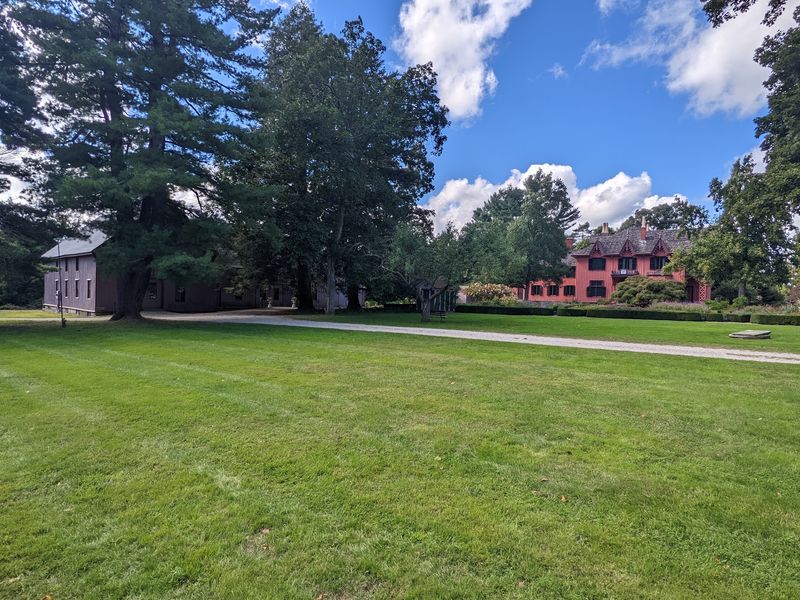
Some houses make you look twice. This one practically demands it.
Roseland Cottage brings a burst of pink Gothic Revival style to Woodstock’s otherwise classic New England village setting, creating a contrast that still feels wonderfully unexpected.
Its historical importance goes well beyond appearance. The property was added to the National Register of Historic Places in 1977 and received National Historic Landmark designation in 1992.
It also contributes to the Woodstock Hill Historic District, an area filled with architecture spanning generations of local history.
Visitors can explore more than the house itself. The surrounding grounds include historic gardens and a carriage barn containing one of the country’s oldest surviving indoor bowling alleys.
Parking is available on the property, with signs directing cars toward the appropriate area.
The surrounding countryside adds plenty to a day in Woodstock. Route 169 passes through a landscape of farmland, stone walls, historic buildings, and small communities, making it easy to continue exploring after a museum tour.
Roseland Cottage stands at 556 Route 169 in Woodstock, directly across from the town common.
Autumn brings brilliant foliage around the property, while warmer months turn the gardens green. Either way, that unmistakable pink exterior makes the house remarkably difficult to forget.
Pink Walls Give The Mansion Its Unmistakable Look
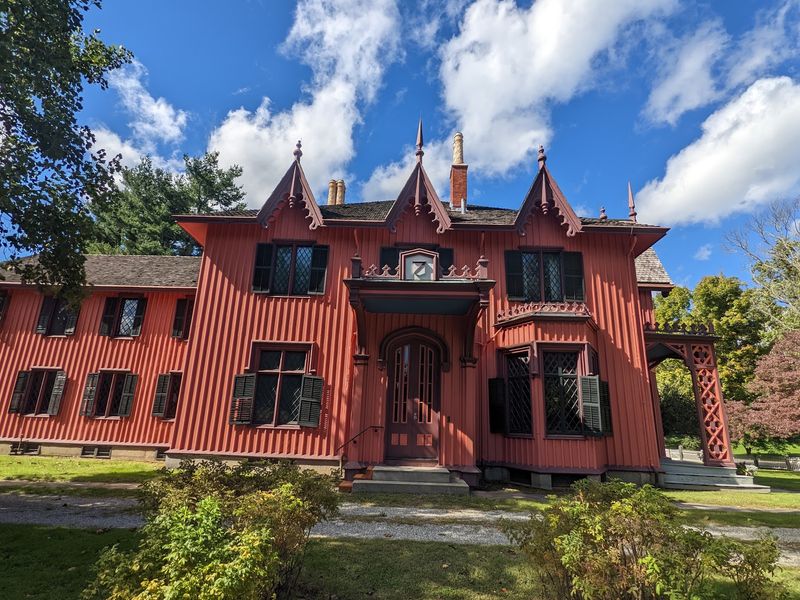
Locals call it the Pink House, and once you see it, no other nickname would work. The color is not subtle, and it was never meant to be.
Paint analysis has shown something surprising: the house has been pink for its entire history. Researchers identified at least thirteen different shades over the years, ranging from soft dusty rose to deeper coral tones.
The current coral pink reflects the palette used in the 1880s, a decade that shaped many of the decorative choices visitors see today. Choosing that period keeps the exterior consistent with much of the interior.
Family tradition holds that the name Roseland came from an affection for roses, which fits neatly with the color scheme.
Photographers love it. The pink shifts noticeably depending on the weather, reading warm and glowing in late afternoon sun and cooler and moodier under overcast skies.
If you want the boldest photos, aim for a clear day when the siding contrasts sharply against green lawns or blue sky. Visitors regularly mention that no picture quite prepares you for the scale and saturation in person.
It is cheerful, confident, and completely unexpected on a quiet village green.
Original Furnishings Preserve Victorian Family Life
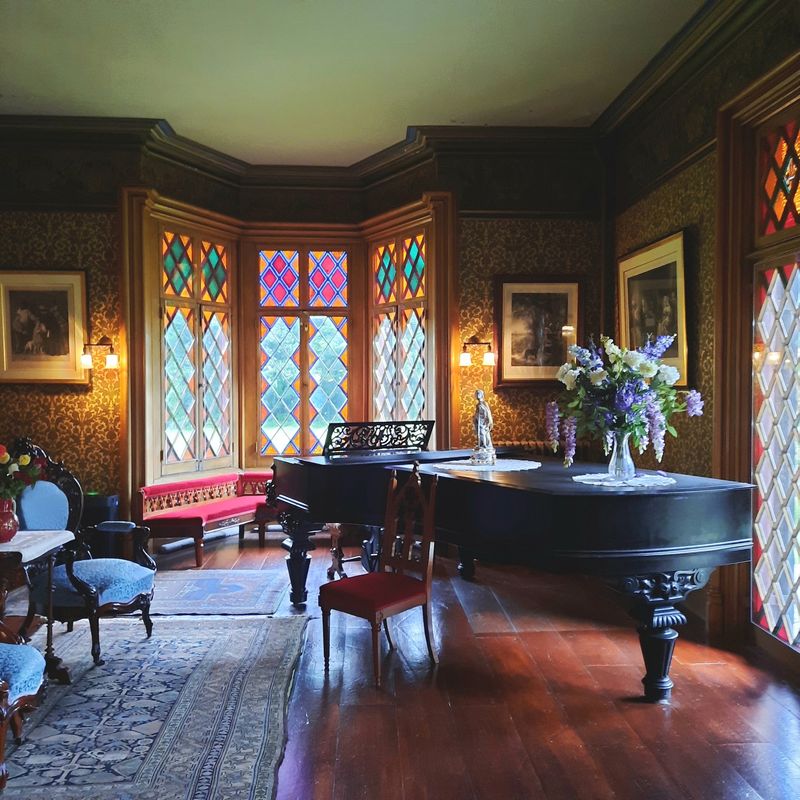
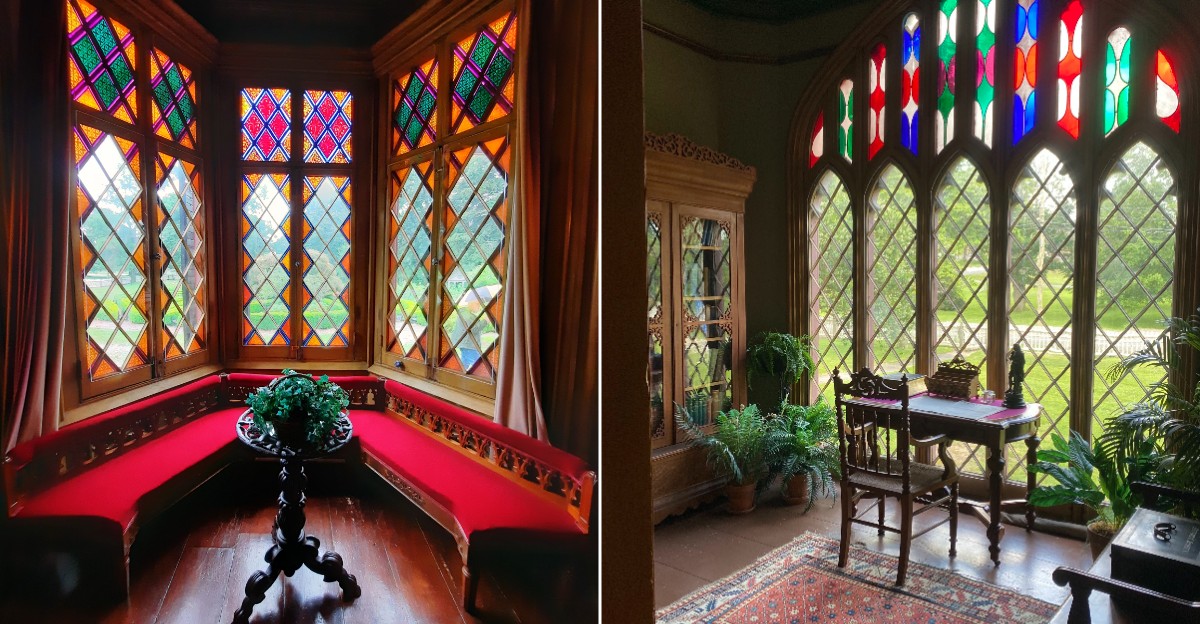
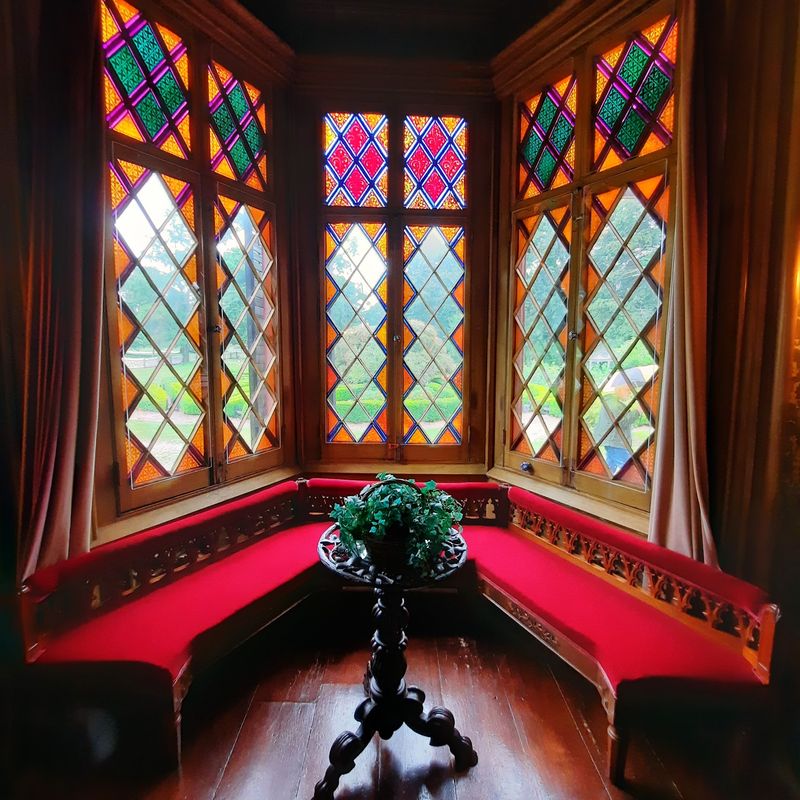
The outside prepares you for color, but the interior still surprises. Patterned carpets, richly decorated walls, and stained glass fill the rooms with a density that modern homes rarely attempt.
Much of what you see has survived unchanged since the Victorian era, which is why the house is considered one of the best-preserved Gothic summer homes in the country.
Original Gothic furniture sits alongside family china, glassware, books, artwork, and clothing. The effect is less like a display case and more like a household that stepped out for the afternoon.
In the public rooms, look for Lincrusta-Walton, an 1880s wall covering molded to imitate tooled and gilded leather. Guides usually encourage a closer look, since the texture is easy to mistake for the real thing.
A practical tip: the rooms can feel dim on cloudy days, so a brighter afternoon makes the colors and patterns far easier to appreciate. Visitors are asked to wear disposable shoe covers, which protect the original floors.
Tour groups tend to be small, and guides are frequently praised for their patience with questions. Take advantage of that and ask about the details you notice.
Presidential Guests Once Gathered Inside These Rooms
Four American presidents once passed through this house, which is a remarkable claim for a small state town.
Starting in 1870, the estate became known nationally for its elaborate Fourth of July celebrations. These were not backyard cookouts but large public events with speeches, crowds, and considerable press attention.
Ulysses S. Grant, Rutherford B. Hayes, Benjamin Harrison, and William McKinley all attended as guests and speakers over the years.
Grant came for the very first celebration in 1870.
Guest lists also included well-known writers and respected clergymen, turning the summer retreat into a genuine social and political gathering place during the summer months.
Tours bring this side of the house to life by connecting rooms to the events that happened in them. Standing in a parlor where national figures once mingled gives ordinary Victorian furniture an entirely different weight.
Many visitors arrive expecting an architecture tour and leave more interested in the people. The family history surprises those who had never heard the name before, especially once they learn how many prominent guests had.
It is a reminder that important American moments did not only happen in big cities.
America’s Oldest Surviving Indoor Bowling Alley Hides Here
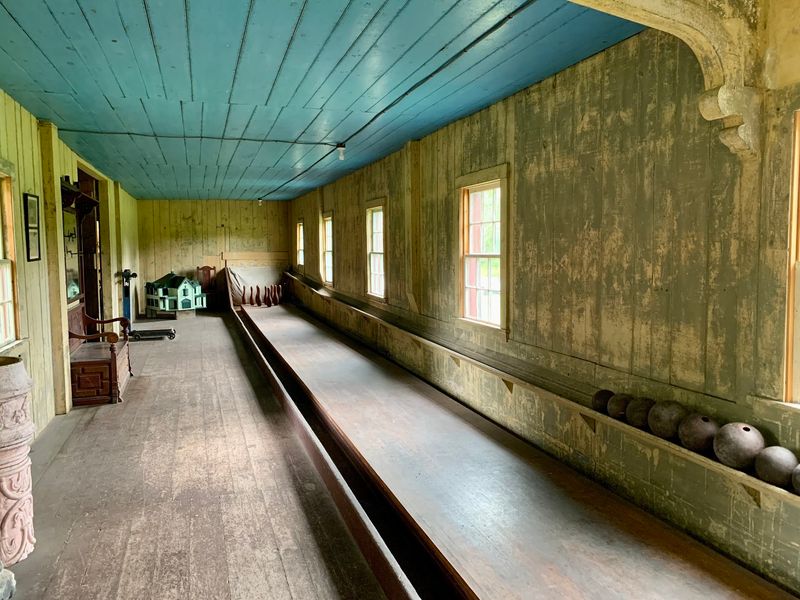
The property holds a feature that can catch even history-shy visitors by surprise. An 1846 bowling alley here is believed to be the oldest surviving indoor alley in the United States.
The backstory involves a legal loophole. Connecticut banned nine-pin bowling in 1841 because of its links to gambling, so players simply added a tenth pin and carried on.
That bit of Yankee problem-solving is why ten-pin bowling took off, and this alley dates from exactly that moment.
At just over fifty-three feet, the lane runs shorter than modern alleys, and the wooden surface shows its age in the best possible way. A long-repeated story claims President Grant bowled a strike here during his 1870 visit.
You cannot play, but seeing it in person gives a real sense of how wealthy families entertained themselves before electricity and television.
Guides usually include the alley as part of the visit, and it tends to become the detail people describe first when telling friends about the trip.
For families with restless kids, it is a welcome change of pace from parlors and portraits.
Formal Gardens Complete The Victorian Time Capsule
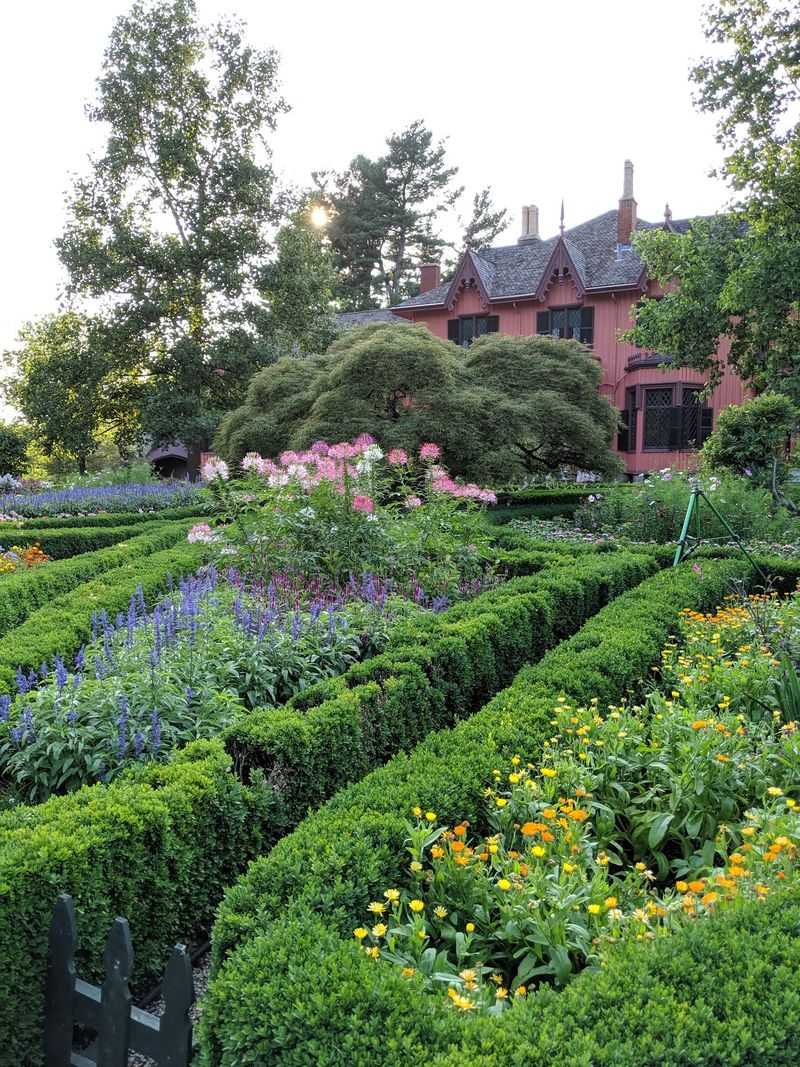
Gardeners tend to linger longest here. The boxwood-edged parterre gardens were first planted in the 1850s and are still maintained according to their original mid-nineteenth century design.
Geometric beds filled with thousands of annuals create bold ribbons of color against the clipped green hedges, and the whole arrangement lines up beautifully with the pink house behind it.
Beyond the flowers, the grounds hold period outbuildings including an icehouse, an aviary, and a carriage barn, which round out the picture of how a self-sufficient summer estate actually operated.
The design reflects the ideas of a leading nineteenth century tastemaker who argued that homes and landscapes should be both practical and picturesque. Seeing the theory carried out at full scale is rare.
Best of all, the gardens and grounds are open from dawn to dusk, so you can wander even outside tour hours. Bringing a picnic is welcomed, and plenty of people do exactly that.
Bloom timing varies with the weather, though midsummer through late August usually delivers the fullest display. Visitors consistently describe the grounds as immaculately kept, which speaks to steady ongoing care.
Guided Tours Unlock Rooms You Cannot Explore Alone
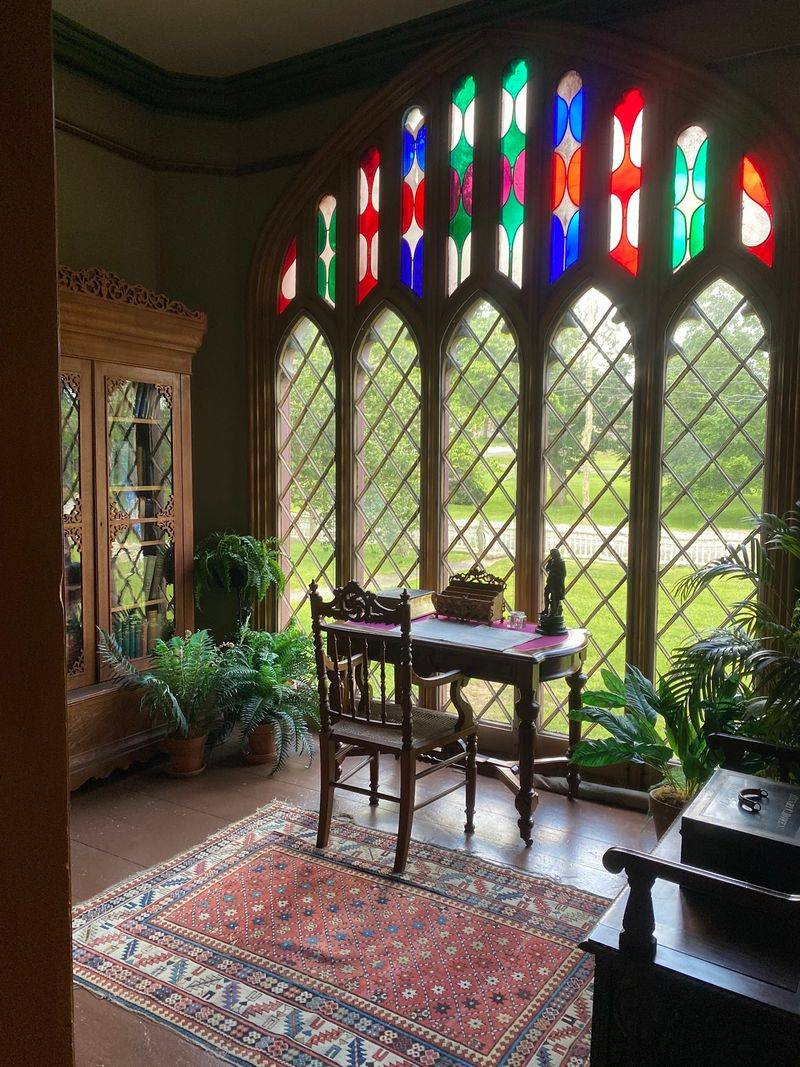
Access to the interior comes only through guided tours, and that policy exists to protect fragile original artifacts that have survived since the 1800s.
Tours typically run about an hour and are usually offered hourly during open days. Groups stay small, which means conversation rather than lecture, and questions are genuinely encouraged.
Many visits begin outside in the garden before moving indoors, giving you context for the architecture before you cross the threshold.
Guides at this property have a strong reputation. Visitors regularly mention how knowledgeable and patient they are, and how willing they are to point out details that would otherwise slip past unnoticed.
Behind-the-scenes tours are sometimes offered as well, opening up spaces that standard visits do not cover. Repeat visitors often come back specifically for those.
A few practical notes help. Arrive with a little time to spare, since tours depart on a schedule and space is limited. Disposable shoe covers are provided and required in some areas.
If you are visiting on a busy day, checking ahead by phone can save a wait. The house is open seasonally, generally from June through mid-October.