Nearly A Mile Of Boardwalk Through This Nebraska Forest Ends At A Marsh Lookout
The parking lot gives away almost nothing. A gravel pull-off, a sign, a gap in the trees, and then your shoes hit wooden planks and the whole thing opens up.
Nearly a mile of boardwalk carries you through one of the largest deciduous forests left in Nebraska, past turtles sunning on logs and hawks circling overhead, before ending at a two-story tower looking out over a marsh. It is free, it is flat, and most people driving the interstate a few minutes away have no idea it exists.
Where the Boardwalk Starts
Camp Gifford Road dead-ends in Bellevue, in Sarpy County, just south of Omaha, and that is where the planks begin. The wetlands section of Fontenelle Forest sits apart from the main Nature Center, close to the Missouri River bottomlands, on ground that floods and drains and floods again.
Wooden walkway lifts you a foot or two above the forest floor, which is the entire trick. Instead of slogging through muck, you glide over it, listening to the hollow knock of your own footsteps.
The loop runs just under a mile in total, with three connected routes branching off it: the Gifford Memorial Boardwalk, the Marsh trail, and the Pond trail. Signage at the junctions keeps the choices simple.
What makes the layout unusual is how quickly the scenery changes. Hardwood canopy gives way to floodplain, floodplain gives way to open water and reeds, all inside a walk that most people finish in under an hour.
At the far end, an observation tower waits above the Great Marsh.
A Forest Older Than the State Itself
Lewis and Clark camped near this ground in 1804, more than sixty years before Nebraska became a state. The bluffs and bottomland forest they passed are still recognizable, which is a rare thing in a state where most original land cover was plowed under long ago.
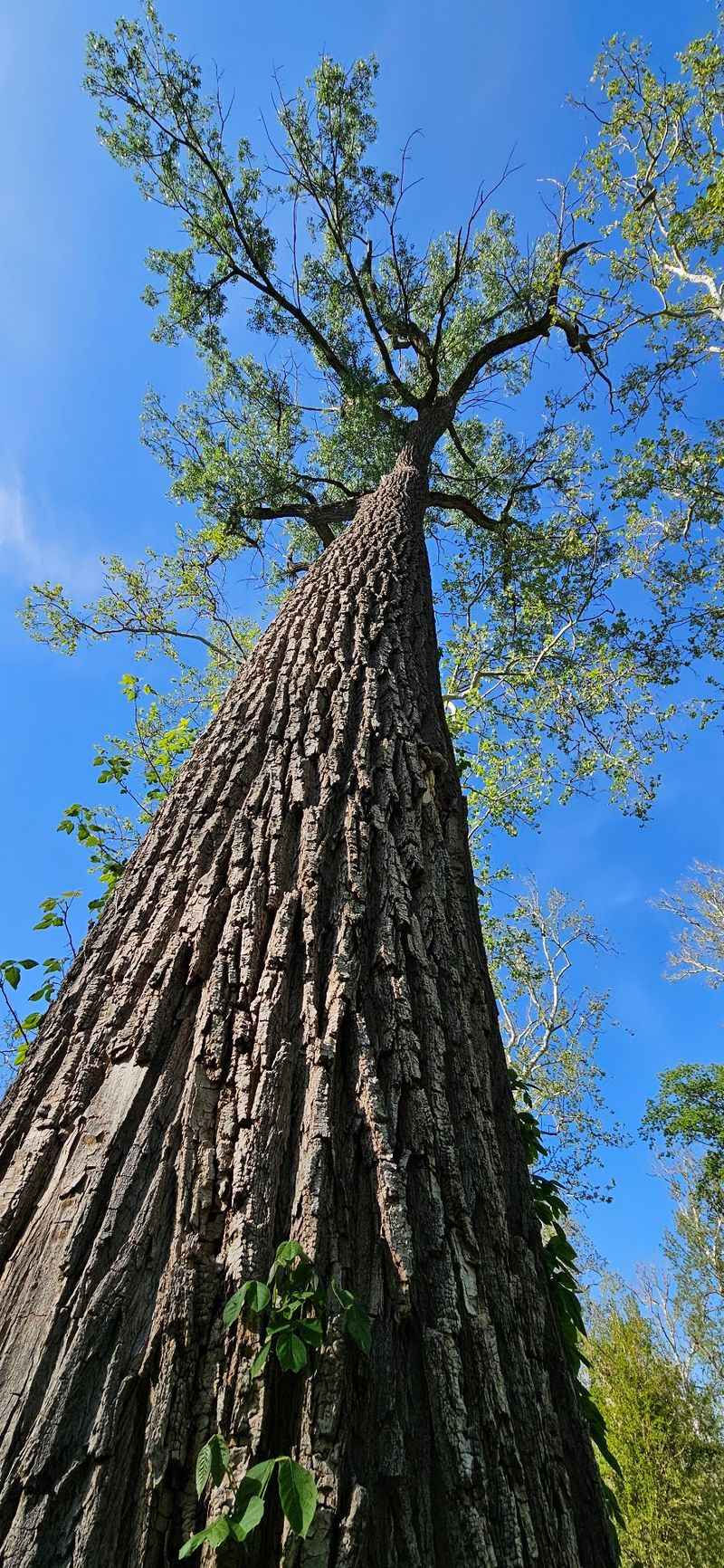
Fontenelle Forest protects over 2,000 acres of riparian forest, prairie, and swamp, holding together one of the largest natural deciduous forests remaining in Nebraska. The wetlands unit sits at the low end of that system, where water collects.
Two federal designations back up the significance. The forest carries status as a Natural National Landmark and also appears on the National Registry of Historic Places, an unusual double listing for a piece of ground in the Missouri River valley.
Standing on the boardwalk, none of that reads like a plaque. It reads like big trees, wet soil, and a hush that thickens as you walk farther from the road.
History here is ecological more than architectural, written in what was never cleared.
The Gifford Memorial Boardwalk
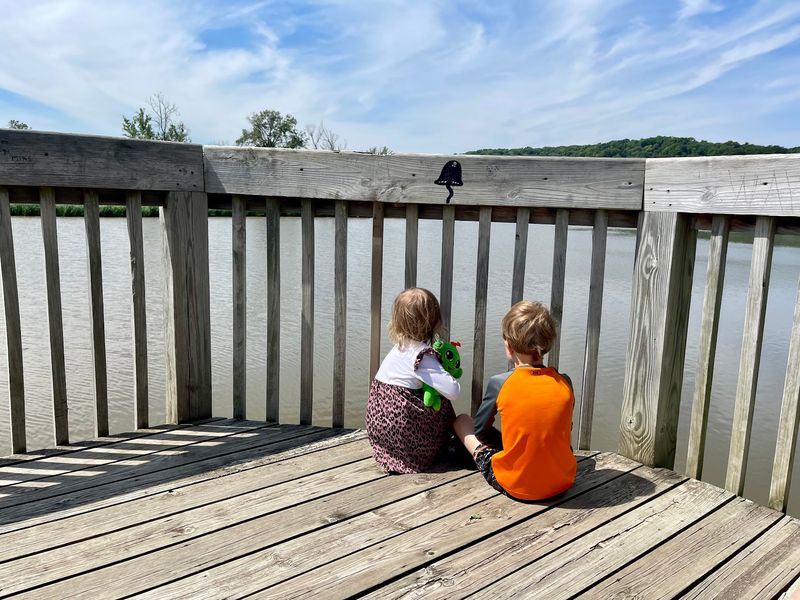
Three-eighths of a mile does not sound like much until you are standing on it, watching the trees change species every fifty feet. The Gifford Memorial Boardwalk is the spine of the wetlands walk, carrying people straight toward the Great Marsh without a single muddy step.
Construction matters here. Wide planking, sturdy railings, and a flat grade make the route ADA accessible, which means strollers, walkers, and wheelchairs all move along it without a fight.
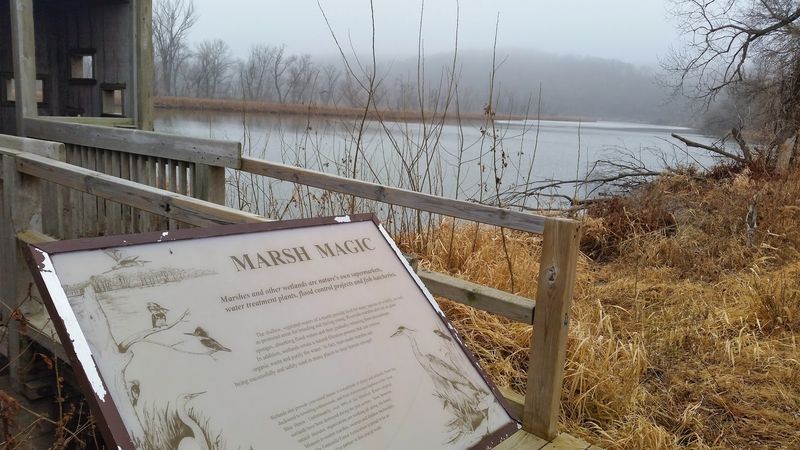
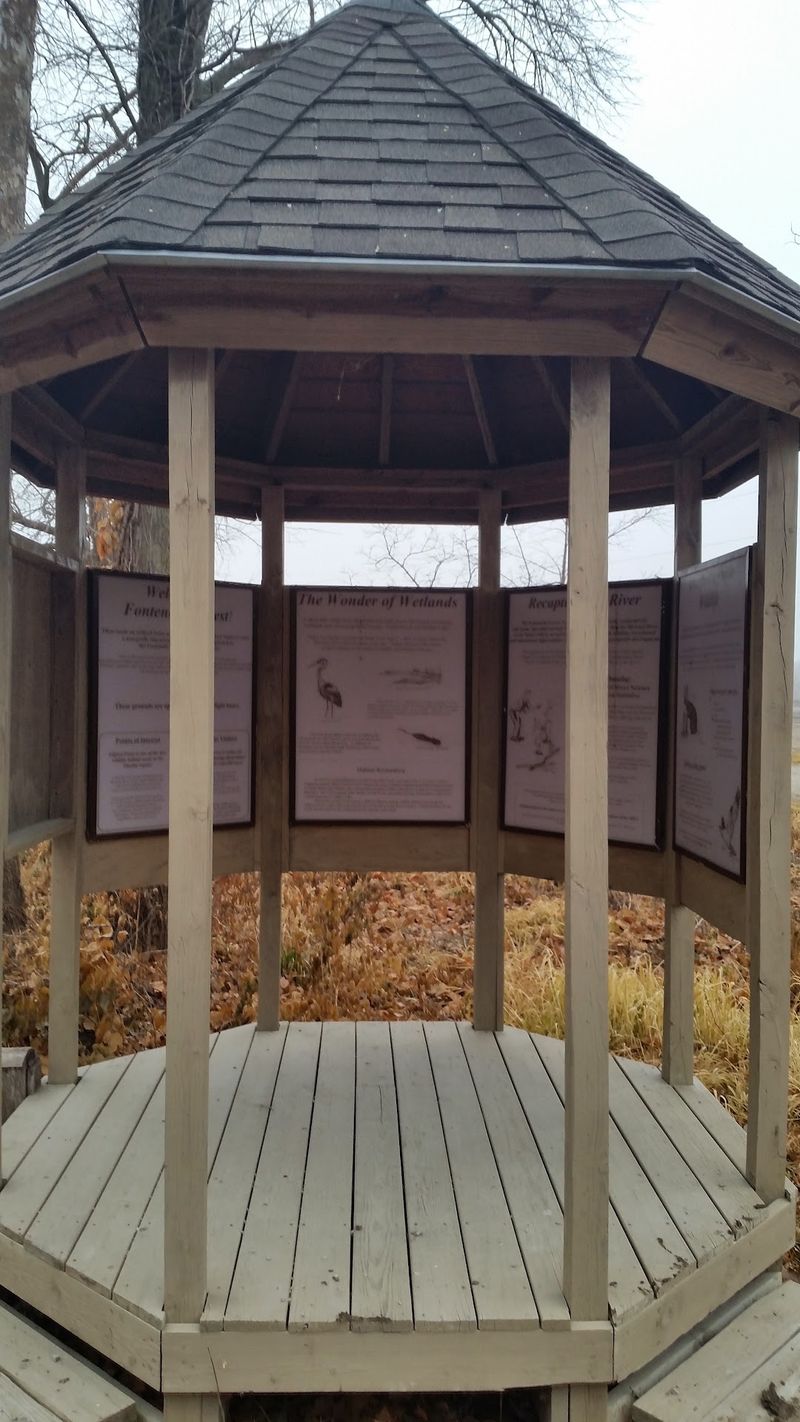
Interpretive signs are spaced along the way, explaining how a wetland actually works: why the water rises, what the cattails do, which birds depend on the shallows. They are readable rather than technical, aimed at a curious ten-year-old as much as a birder with binoculars.
One practical warning worth taking seriously. Poison ivy grows thick right alongside the wooden path in places, so keeping arms and legs over the planks rather than into the greenery is the smart move.
The payoff builds slowly, then arrives all at once when the canopy breaks.
Climbing the Two-Story Marsh Lookout
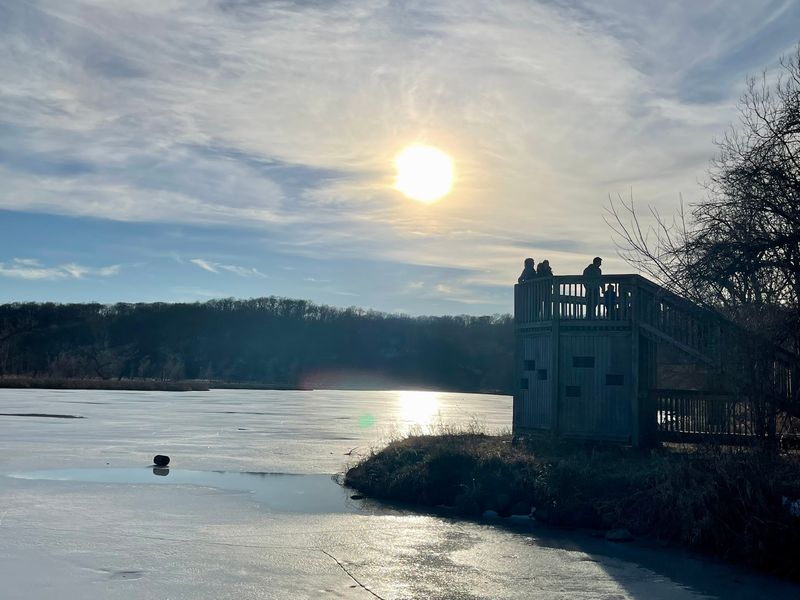
Up a short flight of stairs, the view stops being about trees and starts being about sky. The boardwalk ends at a two-story observation tower, and the second level clears the reed line so the Great Marsh spreads out in front of you.
From that height, patterns emerge that you cannot see at ground level. Channels of open water thread between stands of vegetation, and birds moving low across the surface become easy to track.
Morning and late afternoon are the productive windows. Waterfowl shift around, hawks work the edges, and the light coming in sideways turns the whole basin copper.
Water levels here are not constant. Dry stretches shrink the open pools considerably, and in low-water years the marsh looks more like a wet meadow than a lake, so expectations should flex with the season and recent rainfall.
Either way, the tower does its job. It is a platform built for standing still, which is not something most trails bother to provide, and standing still is exactly how wetlands reveal themselves.
Turtles, Hawks, and Whatever Else Shows Up
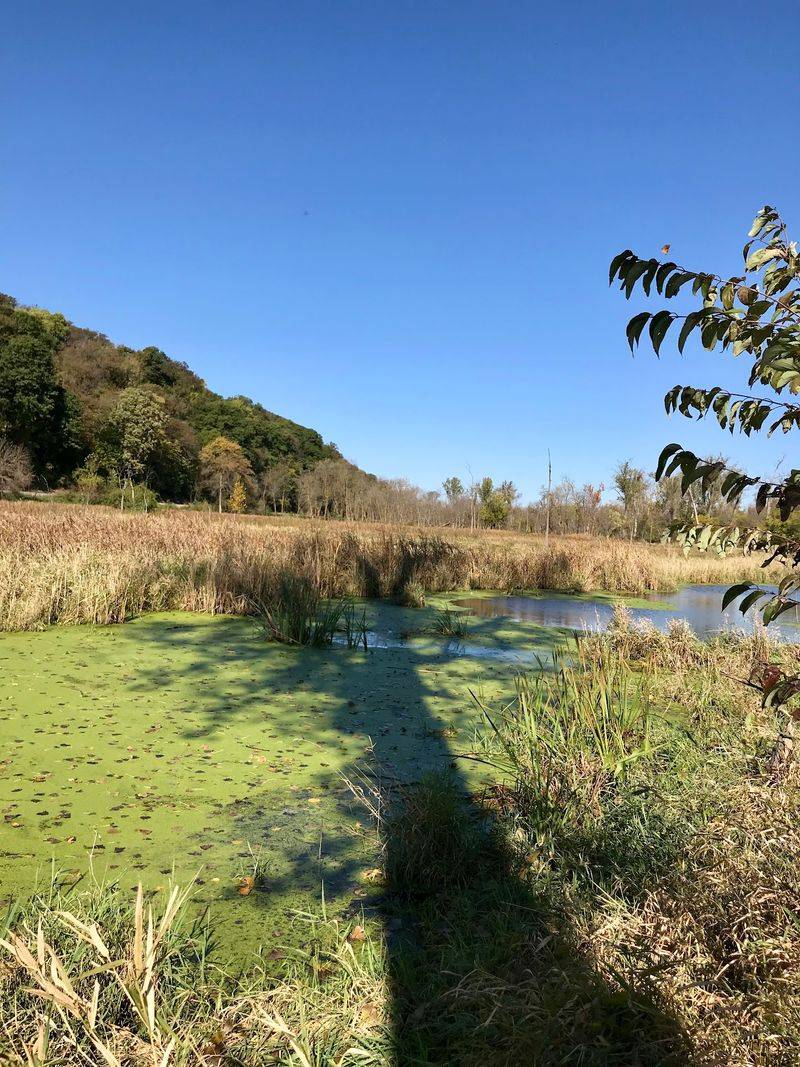
Turtles line up on half-submerged logs like commuters on a bench. Along the Marsh trail, where the path follows the bank of a waterway, snails cling to stems, caterpillars cross the dirt, and hawks ride the thermals above the opening.
Deer move through the bottomland regularly, often at the edges of daylight. Beavers leave their evidence in chewed stumps and dammed channels, and wild turkeys turn up in loose, noisy groups.
Birding is the headline draw across Fontenelle Forest as a whole. Migration funnels along the Missouri River corridor, which puts warblers, waterfowl, and raptors through this stretch in waves rather than a steady trickle.
The wetlands unit adds species the upland trails cannot. Herons, marsh wrens, and frogs belong to standing water, and you hear them before you see anything at all.
Rare wildflowers round out the list, scattered through the forest floor in spring. Nobody promises a sighting on any given walk, which is part of why the same loop rewards repeat visits at different points in the year.
The Learning Center the Flood Took
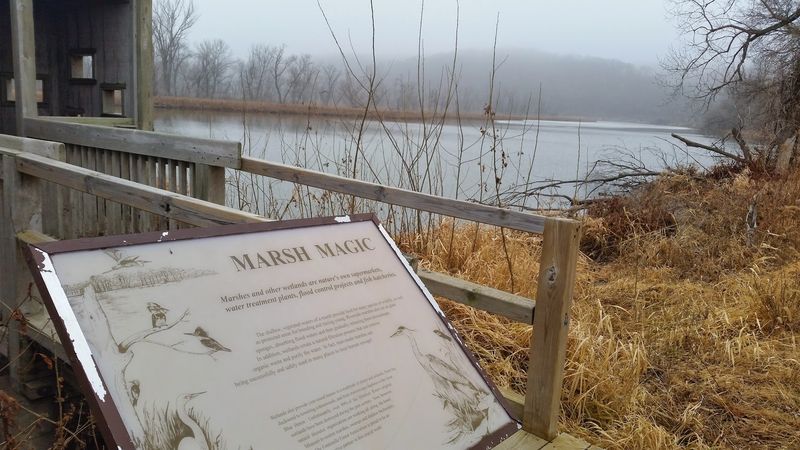
There used to be a building at the end of the road. The Gilbert and Martha Hitchcock Wetlands Learning Center stood next to the Gifford Memorial Boardwalk, serving as the indoor anchor for this whole corner of the forest.
Flooding in 2019 changed that. Water across the Missouri River valley that spring caused considerable structural damage to the center, and the building did not come back in its old role.
The Google listing still carries the old name, which is how plenty of Nebraskans find the spot at all. Search for Fontenelle Forest Wetlands and the former learning center name trails right behind it, a small digital fossil of what used to be here.
What remains is arguably purer. The boardwalk, the trails, and the lookout tower all survived, and the walk now stands on its own without a visitor desk attached.
For anyone who brought a school group here years ago, the absence registers. The marsh, though, does what marshes do and keeps going regardless of what people build beside it.
Three Trails, One Short Loop
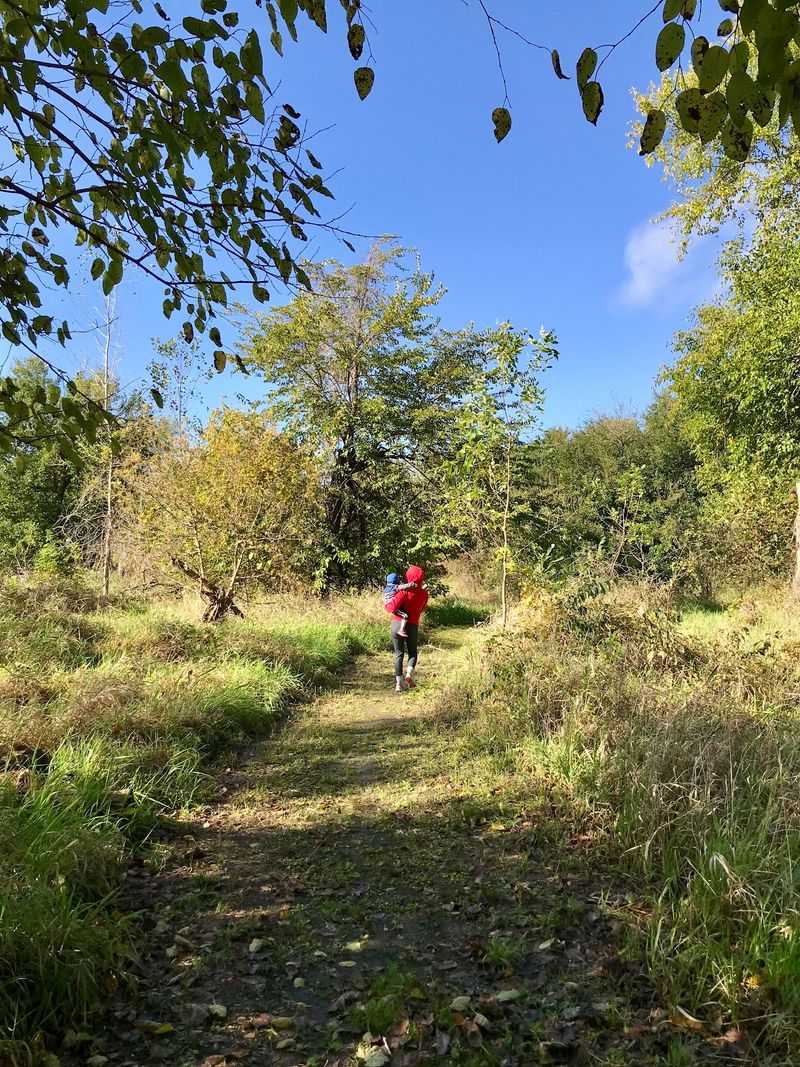
Choices on a mile-long walk sound excessive until you take them. The wetlands area splits into the Gifford Memorial Boardwalk, the Marsh trail, and the Pond trail, and each one hands you a different version of the same piece of ground.
Boardwalk gives you elevation and dry feet. The Marsh trail drops you onto dirt alongside a waterway, closer to the small stuff: shells, insects, prints in the soft edges.
Pond trail adds another pocket of water and a bit more tree cover. Combining all three still leaves you under a mile, which makes this a walk you can stretch or shorten depending on how the kids are holding up.
Grades stay mostly flat throughout. Beginners, older walkers, and anyone easing back into hiking can handle the whole network without needing to plan around hills.
Off the wooden sections, the surface is plain dirt, so recent rain turns parts of it soft. Shoes you do not mind scuffing solve that problem entirely.
Nebraska Seasons on the Same Mile
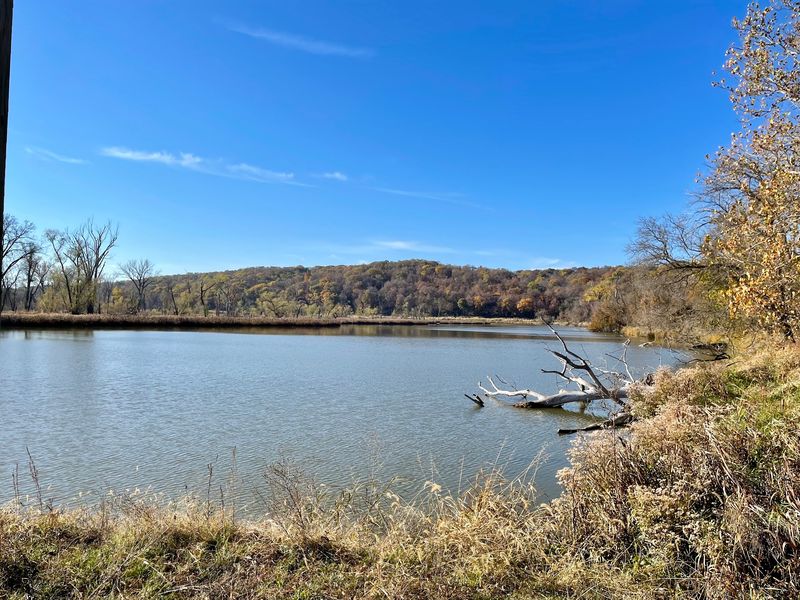
Autumn is the crowd-pleaser. Hardwood canopy over a wooden path turns gold and rust, and the reflection off the marsh doubles it, making October and early November the busiest window on the boardwalk.
Spring works differently. Rare wildflowers appear on the forest floor, migrating birds pile through the river corridor, and frogs start up loud enough to hear from the parking area.
Winter strips everything back. Bare branches open sightlines across the marsh that summer foliage hides completely, and frost on the planks turns the walk quiet in a way no other season manages.
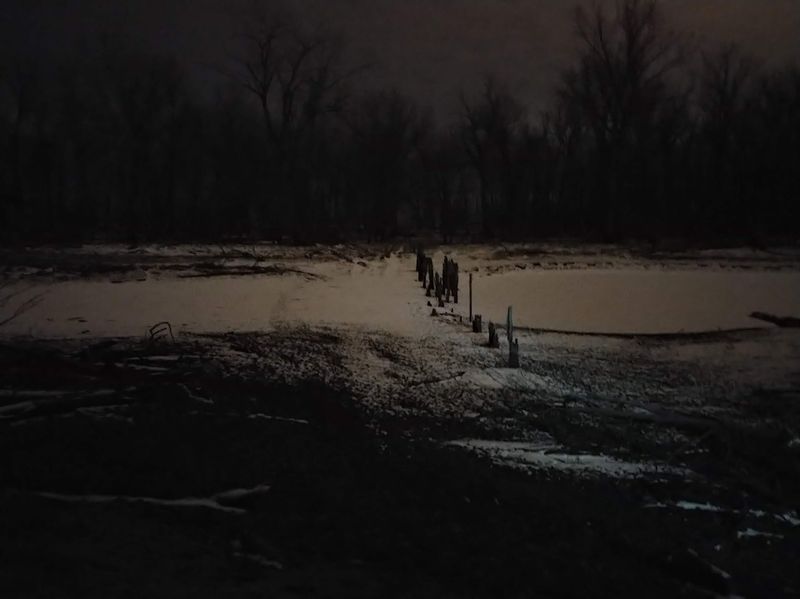
Night hiking in the cold months has its own following here.
Summer brings the thickest greenery and the most insects. Shade helps, but a still July afternoon over standing water is not the most comfortable hour to pick.
Because the loop is short and free, coming back across all four seasons costs nothing but gas. The same three-eighths of a mile does not feel like the same walk twice.
Walking It With Small Kids
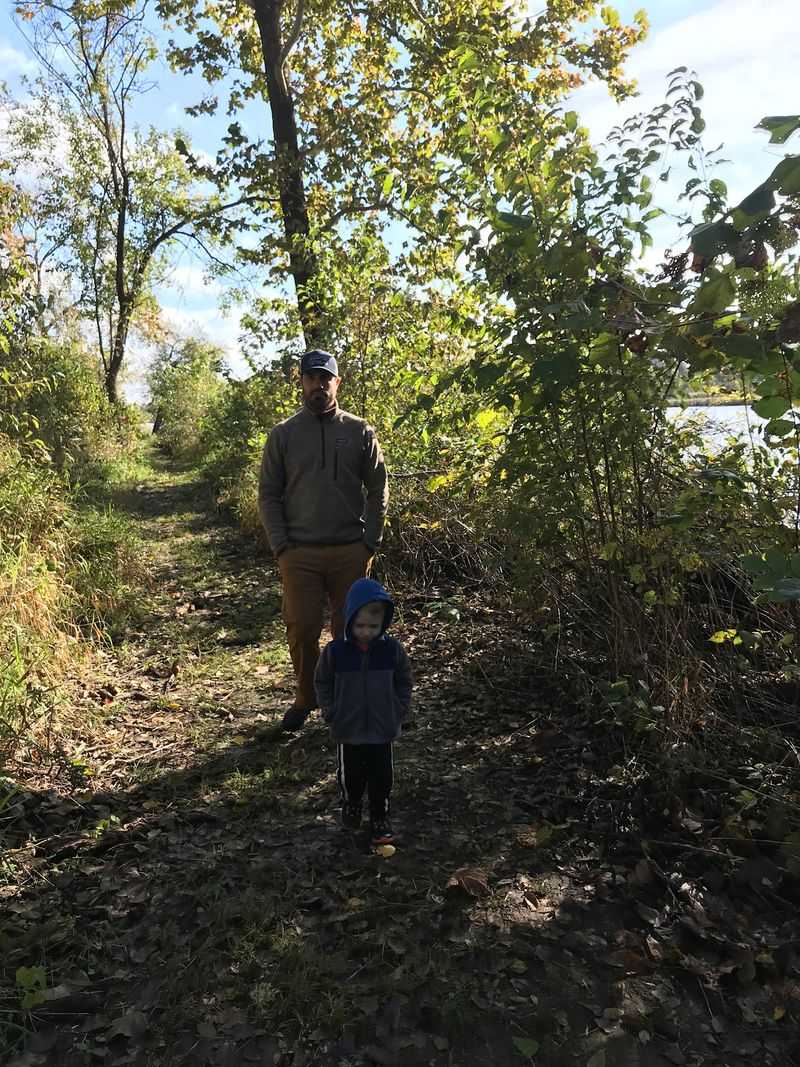
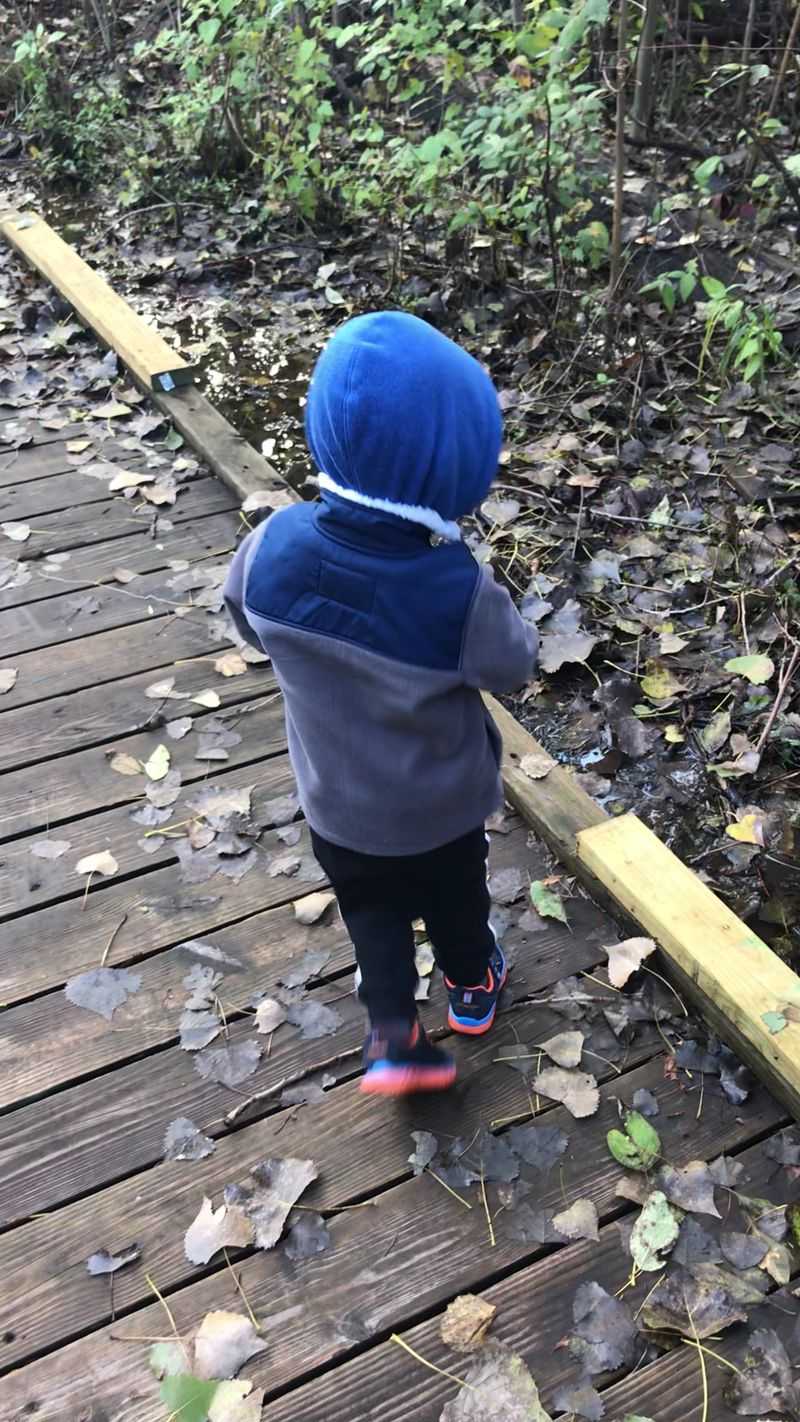
Railings on both sides change the math for parents. A toddler on a boardwalk stays on the boardwalk, which makes this one of the easier nature walks in the Omaha metro to attempt with short legs and shorter attention spans.
Distance helps too. Under a mile means a four-year-old can finish it, and the tower at the end gives them something to climb toward rather than an abstract promise of scenery.
Turtles do most of the entertaining. Spotting them stacked on logs, counting them, arguing about how many there really are, that occupies more time than any interpretive sign.
Strollers roll fine on the accessible boardwalk section. The dirt trails are a rougher push, so families with wheels often stick to the planks and save the Marsh trail for another trip.
The poison ivy along the path edges is the one thing to brief kids about before starting. Stay on the wood, look with your eyes, and the walk stays uncomplicated from car door to car door.
The Raptor Woodland Refuge Nearby
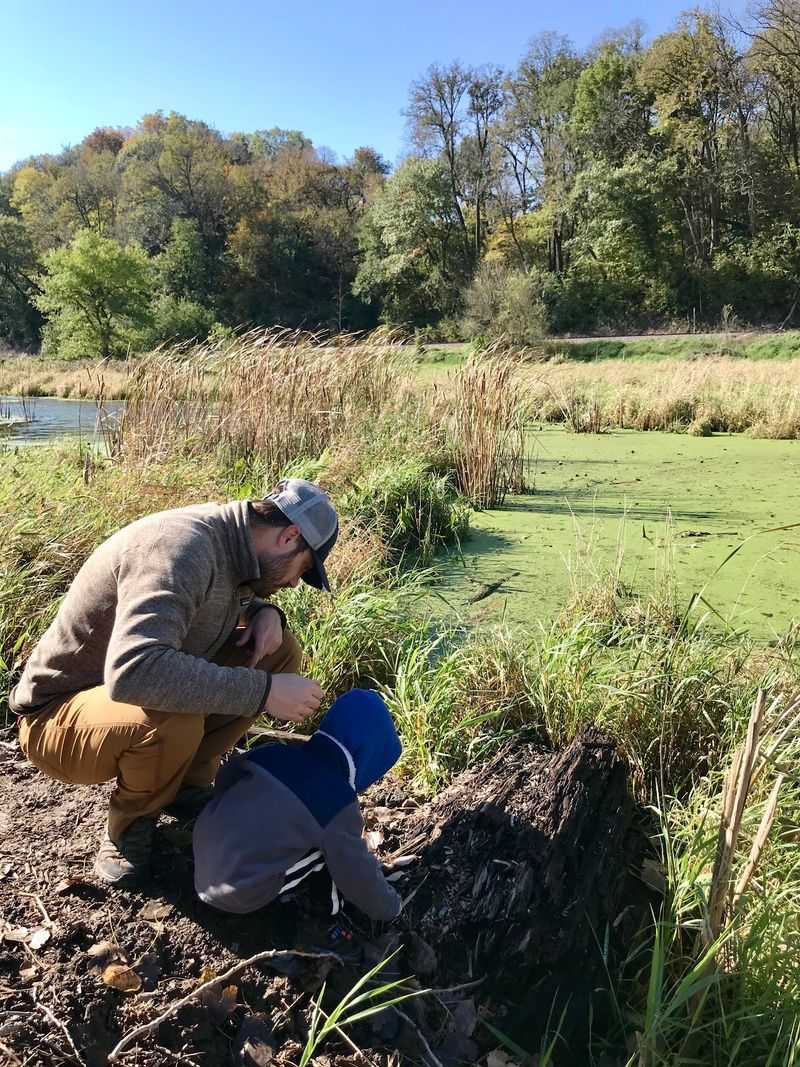
Owls at eye level do something to a person. Over at the main Fontenelle Forest campus, the Raptor Woodland Refuge runs a canopy-level exhibit housing several non-releasable birds of prey, positioned so you meet them in the treetops instead of looking up from below.
Elevated walkways link the enclosures. Because the birds cannot be returned to the wild, the refuge doubles as a long-term home and an education stop for anyone curious about how these species live.
It pairs naturally with the wetlands walk. Hawks circling the marsh become considerably more interesting after you have stood a few feet from one.
The Nature Center on that side of the forest adds a gallery of nature and history exhibits, a children’s play area, and a gift shop. It is a different kind of visit than the boardwalk, more structured and indoors.
Worth knowing: the main campus operates separately from the free wetlands area, so check current admission and hours before planning both in one afternoon.
Getting There From Omaha
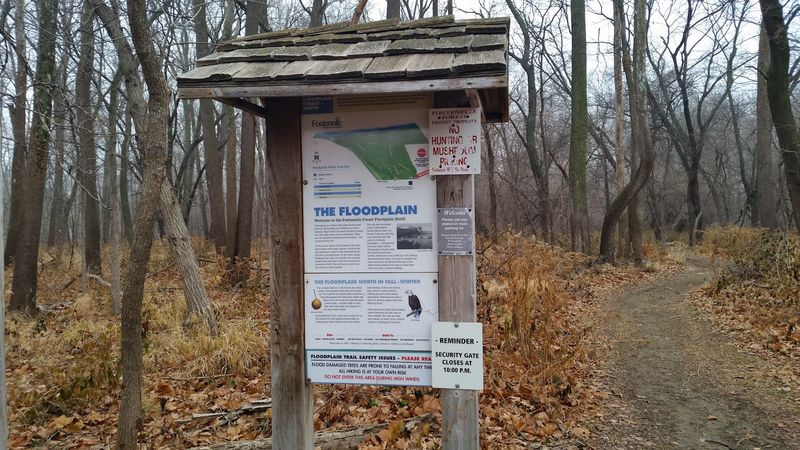
From downtown Omaha, the drive runs south into Bellevue and takes well under half an hour without traffic. The address is 695 Camp Gifford Rd, Bellevue, NE 68005, and the road ends where the trailhead begins.
Do not confuse it with the main Fontenelle Forest entrance. The Nature Center sits at a different address several minutes away, and plenty of people arrive there expecting the boardwalk and the tower.
Camp Gifford Road is quiet and residential in stretches, then narrows toward the bottomland. Mapping apps handle it fine as long as you search the wetlands location rather than the forest generally.
Parking is on site at the trailhead. There is no gate attendant, no ticket booth, and no building to check into anymore.
For anyone coming from Lincoln or farther west, it slots in easily with other stops in the Omaha metro. The walk itself is short enough that it works as a first thing in the morning outing before the rest of the day starts.
Free Access and Evening Hours
No admission charge applies at the wetlands trailhead, which is unusual for something this well built. The boardwalk, the trails, and the observation tower are all open without a fee.
Evening access is the other quiet advantage. The gates stay open late into the night, which puts a summer sunset walk or a winter night hike genuinely within reach after work.
Hours and access can change with seasons, weather, and flooding, so a quick check with Fontenelle Forest before driving out saves a wasted trip. High water in the Missouri bottoms has closed things before.
Restrooms are not something to count on here since the learning center is gone. Handle that before you leave the house.
Bring water, bug spray in the warm months, and binoculars if you own a pair. The marsh gives up considerably more detail through lenses than it does with the naked eye, especially from the upper level of the tower where the far bank comes into focus.
Quiet Enough for Running or Reflecting
Flat surfaces and low traffic make this a runner’s route as much as a walker’s. The combined loop covers enough ground for an easy out-and-back, and the boardwalk sections give a rhythmic, forgiving footfall that pavement never does.
Silence is the real draw. Away from the interstate noise, the loudest sound is often water moving or wind working through the canopy, and it takes only a few hundred feet to leave the parking lot behind entirely.
People come here to think. A bench, a tower, a stretch of planks over still water: the layout encourages stopping more than it encourages covering distance.
Photographers get a lot out of the geometry. Long straight boardwalk lines, vertical tree trunks, and horizontal marsh all in one frame is not a common combination in eastern Nebraska.
Dogs, strollers, and slow walkers all coexist without crowding. It is small enough that you will recognize the same faces on a second lap and quiet enough that you probably will not mind.
Why This Short Walk Sticks With You
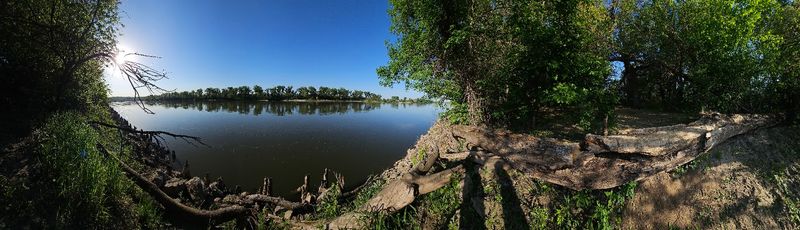
Under a mile should not leave an impression. Yet the sequence here does something a longer hike often cannot: forest, then floodplain, then a tower over open marsh, all compressed into a walk you can fit between errands.
Accessibility raises the value. Because the main boardwalk accommodates wheelchairs and strollers, families and multi-generational groups can all reach the lookout together, which rules out very few people.
Managing expectations helps. In dry years the marsh shrinks and the open water thins out, so the scenery leans more toward reeds and mudflats than a shining lake.
Even then, the wildlife holds up. Turtles, hawks, deer, and birdsong do not depend on peak water levels, and the interpretive signs still explain what you are looking at.
Bellevue is close enough to Omaha that this counts as a spare-hour outing rather than a road trip. Nearly a mile of planks, a climb, and a view over one of Nebraska’s largest remaining deciduous forests, for the price of parking your car.