Glass-Bottom Boats Still Glide Over One Of Florida’s Deepest Freshwater Springs
I once pulled off a two-lane Florida road expecting a picnic table and a duck pond, and found a hole in the earth so deep the bottom looked like another planet. Florida sits on a limestone sponge full of water, and in a few places that water comes roaring back to the surface in volumes that are hard to believe.
One of those places has been sending people out over the vent in boats with windows in the floor since the 1920s. Bring binoculars, bring patience, and let the river do the talking.
A Blue Vent in the Woodville Karst Plain
About a half-hour drive south of Tallahassee, the pine flatwoods open onto a wide bowl of water that seems to glow from underneath. Wakulla Springs is a first-magnitude spring, meaning it discharges an enormous volume every single day, and it forms the headwaters of the Wakulla River right where you stand.
Geologists call this corner of Florida the Woodville Karst Plain, a landscape pocked with sinkholes, smaller springs, and flooded caves carved out of limestone over an unimaginable stretch of time. Rain soaks in, travels underground through the Upper Floridan Aquifer, and surfaces here.
The whole thing sits inside Edward Ball Wakulla Springs State Park, which the Florida Department of Environmental Protection designated a State Geological Site in 2018. That label is not decoration.
Researchers study this vent to understand how water moves beneath the entire region.
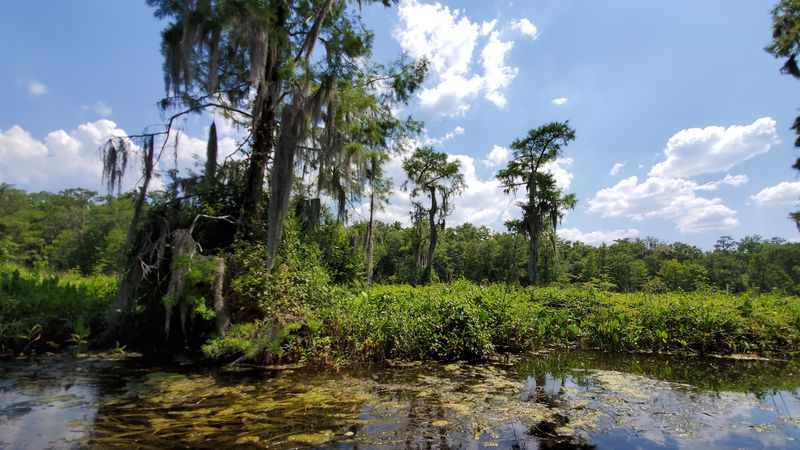
What strikes you first, though, is not the science. It is the scale, the cypress knees along the bank, and the fact that a spot this dramatic sits at the end of an ordinary county road with no ticket booth theatrics.
Boats With Windows in the Floor Since 1925
Real estate developer George T. Christie bought the spring and launched glass-bottom boat tours here in 1925, and the idea stuck for the better part of a century.
Passengers gather around a viewing panel set into the hull while the pilot idles over the deepest part of the basin.
Looking down through that glass is a strange sensation. The limestone walls fall away, sunlight fractures into long shafts, and the fish drifting below appear to hang in midair rather than swim.
Riverboat touring at this spot goes back even further. Guided trips on the water began in 1875, and the earliest of those used glass-bottom craft too, which makes this one of the longest-running boat traditions in Florida.
Rides are no longer a daily certainty, and that matters for planning. Since 2012 the glass-bottom trips have run only occasionally, in some years just a handful of days, because the water has to cooperate first.
When conditions do line up, park rangers typically launch them during the brightest midday stretch, roughly late morning into early afternoon.
Why the Water Turns Cloudy
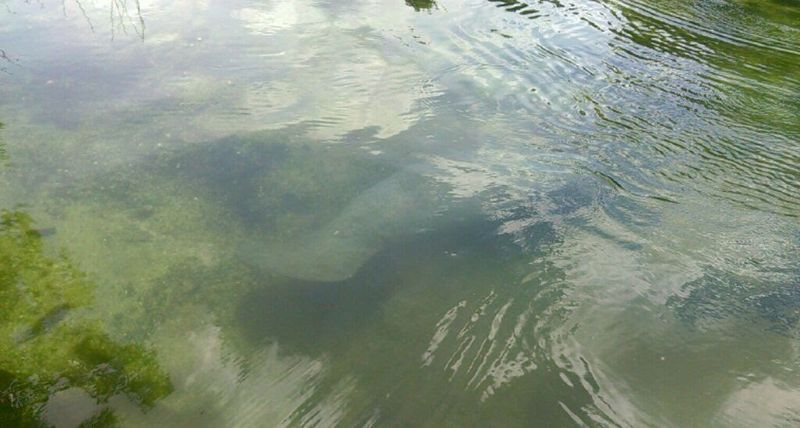
Clarity is the whole ballgame here, and it has become unpredictable. Nitrate pollution moving through the aquifer feeds algae growth, surging flow pushes stained water down from upstream swamps, and decomposing plant matter tints everything the color of strong tea.
Some days the basin looks like liquid glass. Other days it reads green, or brown, and the bottom simply vanishes from view a few feet down.
Restoring that clarity is an active goal for the state park rather than a lost cause. Water quality work across the springshed aims to bring the visibility back often enough that the boats can run on something closer to a normal schedule.
Call ahead. That single step separates a rewarding morning from a disappointed drive, because staff can tell you what the water looks like that day before you commit to the trip.
Even on murky days the spring still runs cold and the river still moves, so the outing holds up. You simply trade the view downward for the view outward, which has its own rewards.
The Jungle Cruise That Runs Rain or Shine
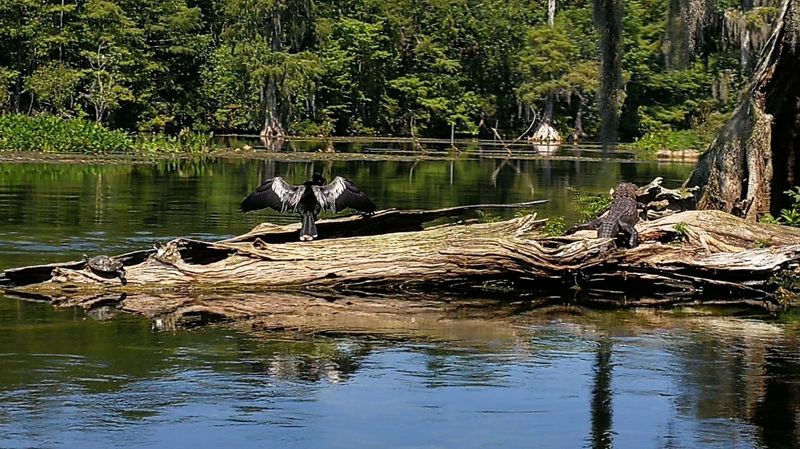
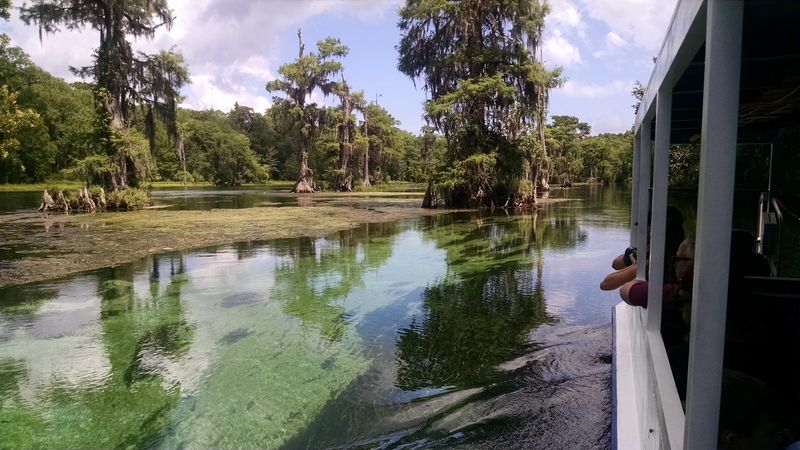
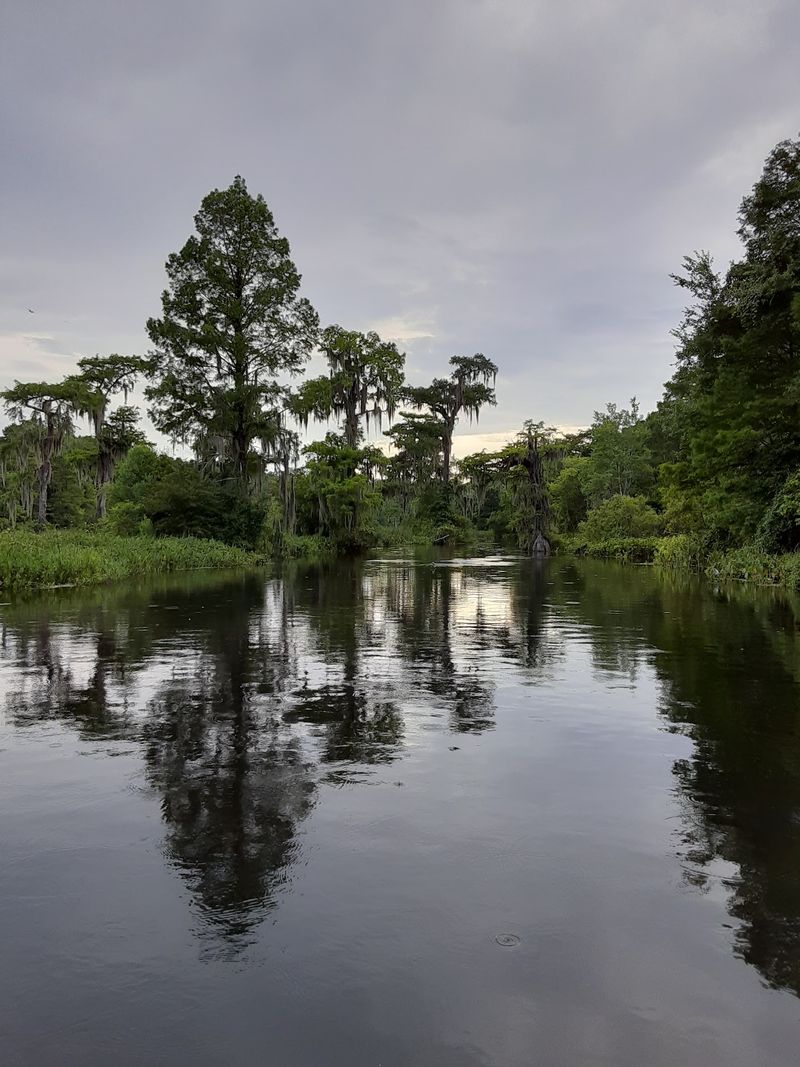
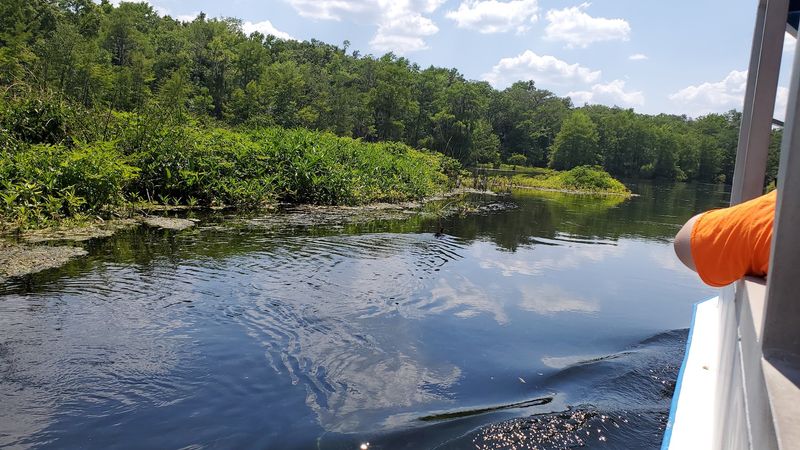
Rangers call the dependable option the Jungle Cruise, and it is the reason most people leave happy regardless of visibility. The guided run down the Wakulla River lasts roughly 45 to 55 minutes aboard an open-sided boat with a canopy overhead.
Alligators sun themselves on mud banks. Turtles stack up on half-sunken logs like dinner plates.
Anhingas spread their wings to dry, herons stalk the shallows, and in the cooler months manatees drift into the warm spring run.
Guides narrate the whole way, working in the geology of the vent, the behavior of the wildlife, and the long human history of the property. They answer questions rather than recite a script.
No two trips match. Sightings shift with season, temperature, and time of day, which is why an early boat and a late boat on the same afternoon can feel like separate rivers.
Sit on the outer edge of the bench if you plan to photograph anything. The canopy posts have a talent for landing squarely in front of the best bird.
Thirty-Two Miles of Mapped Darkness
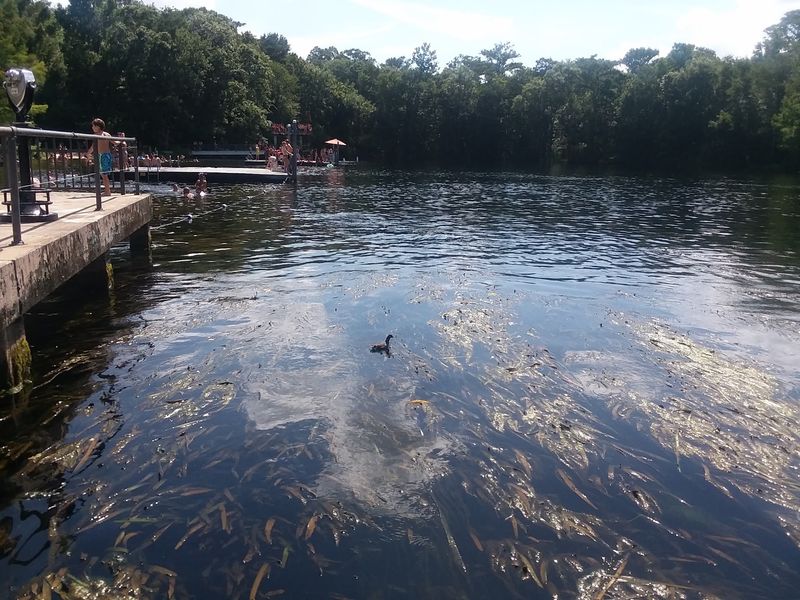
Under the swimming area lies the longest mapped underwater cave system in the United States, with more than 32 miles explored so far. The passages run wide and tall in places, big enough that mapping teams have used underwater scooters to cover ground.
Cave diving here is not a recreational activity open to the public. Exploration happens through sanctioned scientific projects run by highly trained specialists with redundant gear and years of technical experience.
What that work produces is knowledge everyone benefits from. Each mapped tunnel clarifies how rainfall in one part of the region ends up surfacing in another, which shapes how Florida manages the aquifer millions of people drink from.
Standing on the dock, you would never guess. The surface gives away nothing about the labyrinth below, and that gap between what you see and what exists is the most quietly astonishing thing about the site.
Interpretive displays and ranger talks fill in the picture, so you can grasp the scale of the system without ever getting your hair wet.
Ice Age Bones on the Basin Floor
Back when the water ran reliably clear, passengers peering through the glass could spot fossilized bones scattered across the sandy floor of the basin. Mammoth and mastodon remains turned up there, along with giant ground sloth, camel, bison, and saber-tooth tiger.
Picture the animals that once walked this ground when sea levels were lower and north Florida was drier grassland. The spring was a watering hole then, drawing herds the way it now draws boats.
Those discoveries are a large part of why the state recognized the property as a geological site. The sediments preserve a record of Pleistocene Florida that few places on the peninsula can match.
The fossils have not gone anywhere. They simply sit beneath water that will not always let you see them, waiting for a clear day and a well-timed tour.
Ask a ranger where the bone bed lies relative to the swimming platform. Knowing the geography helps, and it makes the whole basin feel less like a pool and more like an open archive.
Henry the Pole-Vaulting Fish and Other Lore
Old Florida attractions loved a character, and this spring had one named Henry. Billed as a pole-vaulting fish, Henry performed for boat passengers and became a fixture of the tour narration for years.
The routine was pure mid-century showmanship, the sort of gentle spectacle that once filled roadside Florida before theme parks rewrote the rules. Guides still mention him, which says something about staying power.
Hollywood found the place too. The clear water and wild shoreline drew film crews looking for jungle scenery without leaving the country, and the spring’s cinematic past is part of the property’s identity.
Lore like this is the connective tissue between a natural wonder and a destination. The geology explains why the water is here; Henry explains why generations of Florida families kept coming back.
Listen for these stories on the riverboat rather than hunting for a plaque. The guides fold them into the trip between alligator sightings, and they land better that way, delivered with a straight face over the engine noise.
Edward Ball’s Lodge and a Property That Changed Hands
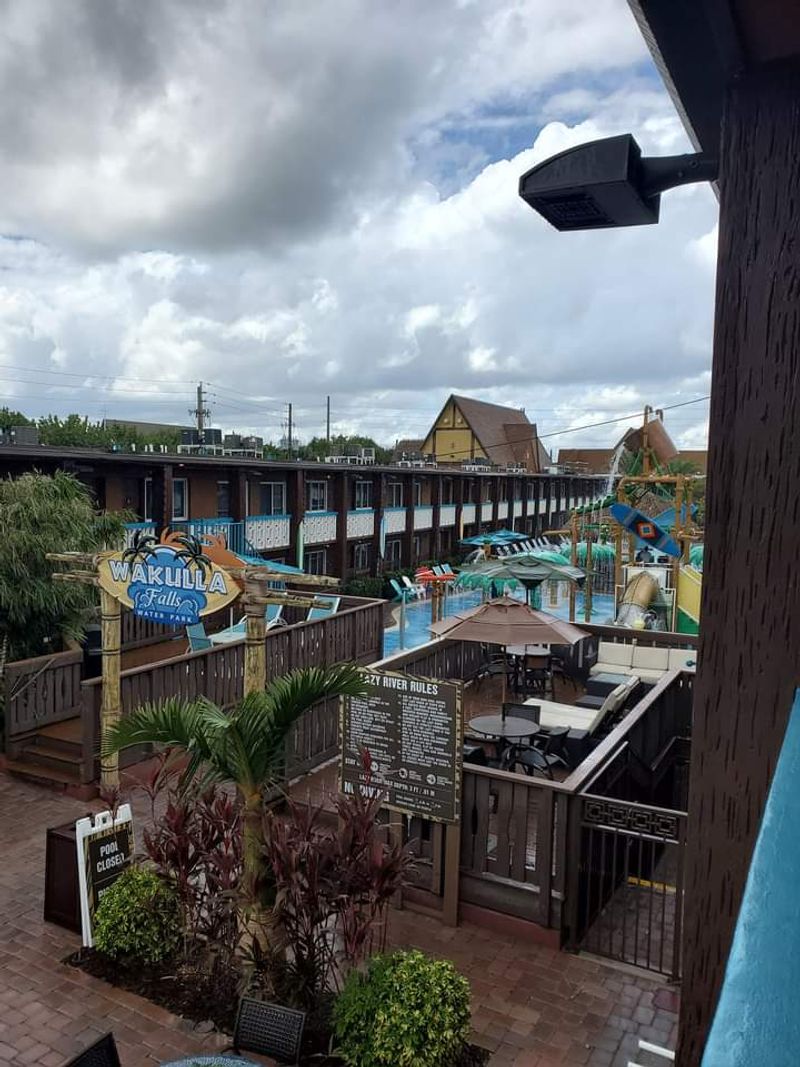
Financier Edward Ball acquired the property in 1931, and four years later he built the two-story hotel that still stands above the spring. Known today as The Lodge at Wakulla Springs, it anchors the park with marble floors, arched windows, and a long lobby that smells faintly of old wood.
Recognition followed over the decades. The site became a National Natural Landmark in 1966 and joined the National Register of Historic Places in 1993.
The State of Florida purchased the land in October 1985, converting a private retreat into Edward Ball Wakulla Springs State Park and opening the whole thing to anyone willing to drive out.
That transition is what makes the place unusual among Florida parks. You get a working historic hotel and a protected natural spring on the same grounds, each one supporting the other.
Wander the lobby even if you are not staying overnight. The building rewards a slow lap, and the shaded porch is the best place to wait out an afternoon thunderstorm.
Swimming, Shade, and the Feel of the Place
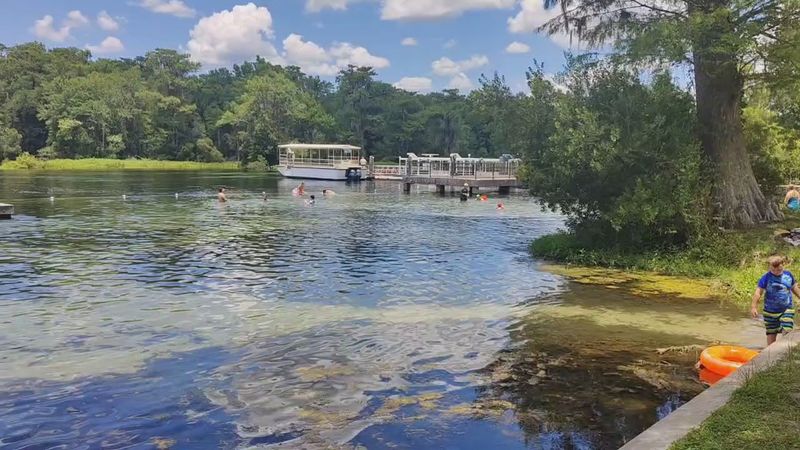
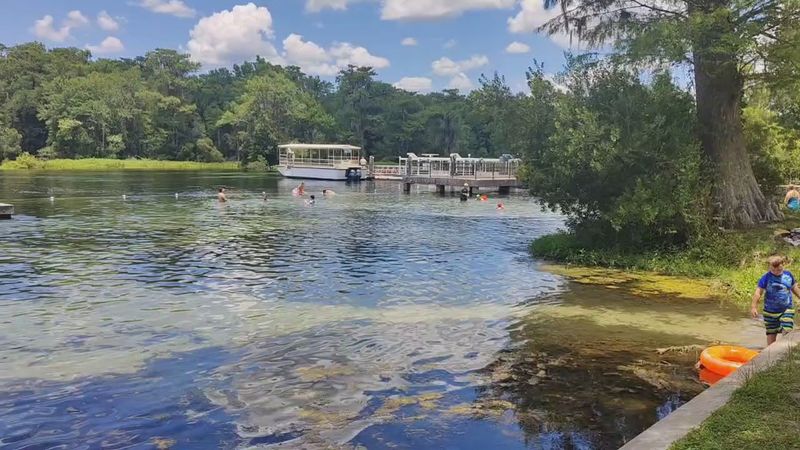
Cold. That is the first word out of most people who step off the swimming platform, because spring water holds a steady temperature that feels shocking against Florida humidity.
The designated swimming area sits right above the vent, with a sandy entry on one side and deeper water out toward the middle. Live oaks and cypress throw shade across the lawn, and picnic tables sit close enough that a towel run takes ten seconds.
Crowds thin out midweek. Weekend mornings in summer bring the biggest turnout, and by early afternoon the parking area fills, so an early arrival buys both space and better light on the water.
Nature trails wind back through hardwood forest for anyone who would rather walk than float, and they stay reasonably flat, which suits older walkers and short legs alike.
The overall mood is unhurried. Nobody is rushing you off the grass, there is no soundtrack piped through speakers, and the loudest thing most afternoons is a kingfisher working the far bank.
Getting There and Timing It Right in Florida
From downtown Tallahassee the drive runs roughly half an hour south through pine country, an easy hop off the corridors that feed into I-10. The final stretch is two-lane road with almost nothing on it, which is part of the appeal.
Admission is charged per vehicle at the gate, the standard Florida state park arrangement, and the riverboat tour carries a separate modest fee paid at the dock.
Glass-bottom trips depend entirely on clarity, so phone the park the morning you plan to come. Rangers will tell you honestly whether the bottom is visible, and if the answer is no, the Jungle Cruise still runs.
Winter is a strong window. Cooler air makes the drive pleasant, manatees move into the warm spring run, and the park feels roomier than it does in July.
During hurricane season, from June through November, check conditions before setting out. Heavy rain upstream clouds the water fast and can shuffle the day’s boat schedule with little warning.
Is the Detour Worth Making
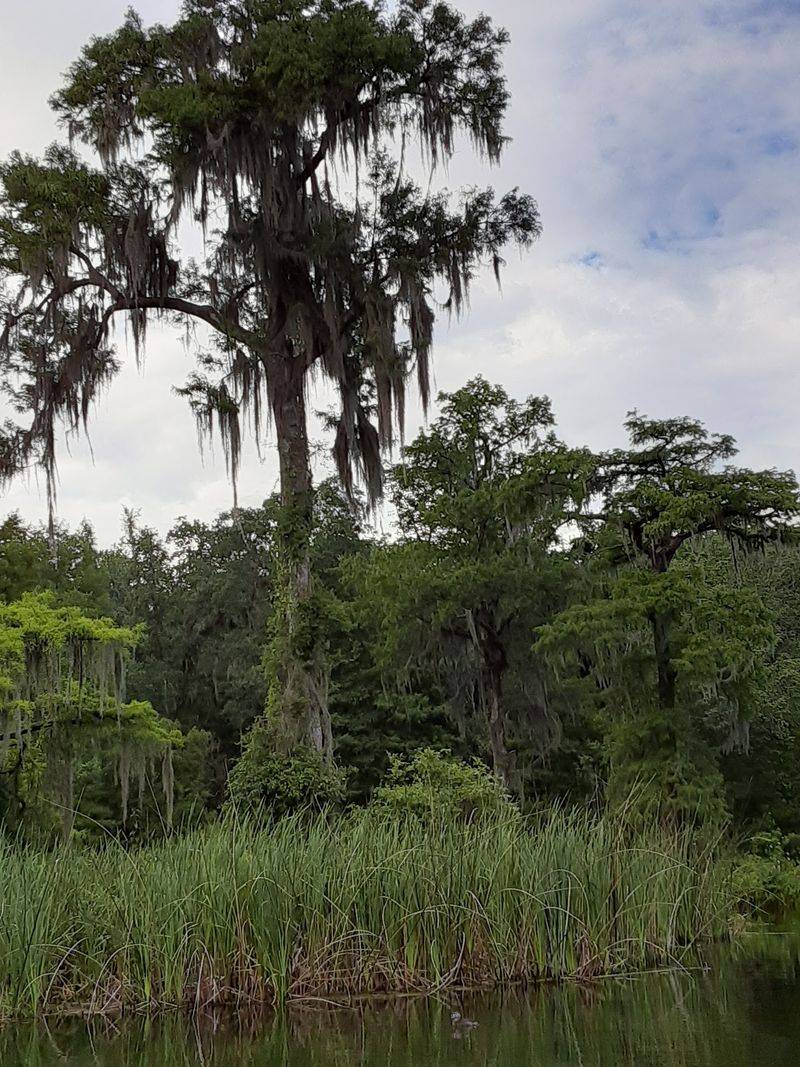
Late light on the spring run turns the water copper, the tour boats sit quiet at the dock, and the whole property settles into something close to silence. That is the version of this place people carry home.
Treat the glass-bottom ride as a bonus rather than the reason for the trip, and the day rarely lets you down. Clarity comes and goes, but the river cruise, the swimming area, the historic lodge, and the trails are all reliable.
For families, the combination works well: a boat ride short enough to hold attention, cold water to jump into, and enough alligators and turtles to fuel conversation the whole way home.
Science-minded travelers get something rarer, a direct look at the Floridan Aquifer where it breaks the surface, feeding a cave system longer than any other mapped in the country.
Go on a weekday, call first about the water, pack a lunch, and leave the schedule loose. The spring does not reward hurry, and that is precisely the point.