Arizona Is Home To An Incredible Miniature Airplane Collection Aviation Fans Could Explore For Hours
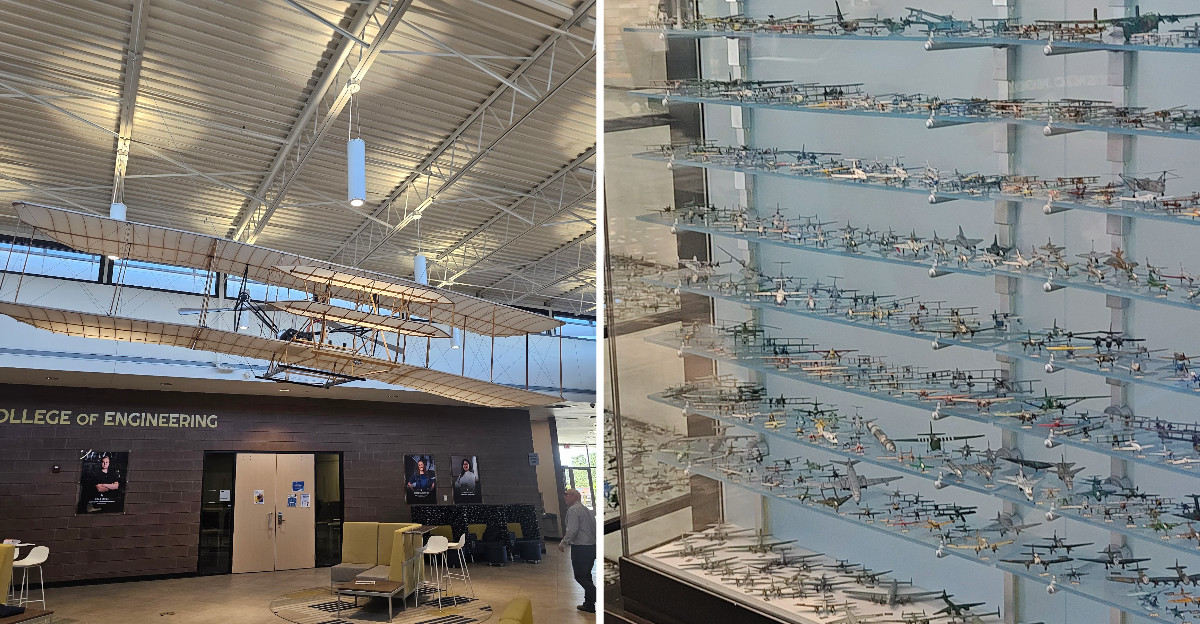
More than a few tiny airplanes sounds cute. Thousands of them? Now we have a problem!
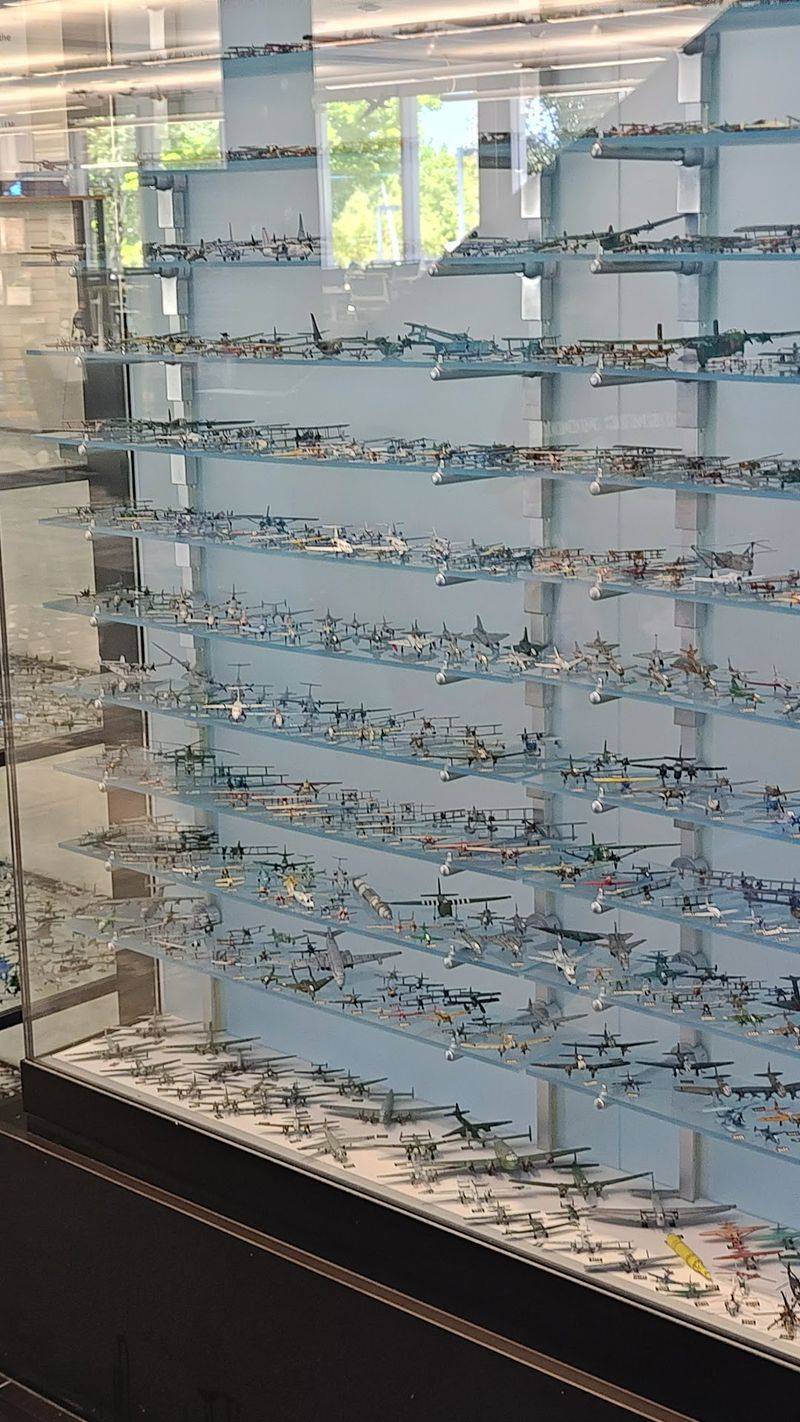
Arizona hides an enormous miniature aviation collection where fighters, airliners, rockets, and experimental designs all share the same scale. That detail makes the display strangely addictive.
Suddenly, you can compare a jumbo jet and an early biplane without needing an airport runway between them. The longer you stare, the more differences appear.
Wings change. Engines move. Shapes get weirder.
Aviation fans could lose hours here without noticing.
Everyone else may walk in mildly curious and walk out knowing far more about aircraft than they ever planned.
One Hobby, Thousands Of Tiny Planes

John W. Kalusa began making World War I aircraft models in 1936, when he was just 14 years old.
What started as part of a battle game developed into a lifelong project that eventually produced thousands of miniature aircraft.
World War II interrupted the hobby for a time.
Kalusa served as an aerial photographer and aircraft mechanic, work that placed him close to full-size aviation and gave him firsthand familiarity with aircraft structure and appearance.
After the war, he returned to model building and later continued the work from his home in Mesa.
Embry-Riddle records that he averaged about two completed aircraft each week, an extraordinary pace considering that every model was shaped and painted by hand.
Kalusa also worked as a purchasing agent for Rocketdyne before retiring. He continued creating miniature aircraft late into his life and died on February 17, 2003.
After his death, the collection was donated to Embry-Riddle, where it became a permanent display. Today the models fill cases on both floors of the Hazy Library at 3700 Willow Creek Rd in Prescott.
A Record-Breaking Fleet
The collection now contains 5,825 miniature aircraft, according to Embry-Riddle.
That current total is slightly different from the number attached to Kalusa’s Guinness World Records achievement.
Guinness certified Kalusa in December 2002 for a collection of 5,737 handmade model aeroplanes.
Embry-Riddle later recorded a larger final collection as additional completed models became part of the holdings.
Embry-Riddle says the Kalusa Miniature Aircraft Collection was inducted into Guinness World Records in 2003 for the largest collection of handmade aeroplanes.
The achievement reflects more than size because the collection was created by one maker over decades.
Kalusa relied on remarkably simple materials and tools. Guinness lists balsa wood, bamboo, wire, glue, watercolors, clear sealant, and even a broken razor blade among the materials used to create the aircraft.
The collection is large enough that a quick pass through the cases misses much of the point. Visitors interested in aircraft history can spend substantial time comparing types, periods, markings, and changing design ideas before reaching the end.
One Scale Changes The Whole Display

Every model follows the same scale: 1/18 inch represents one foot on the real aircraft. Using a single scale keeps the size relationships between completely different machines accurate.
That detail becomes obvious when compact early designs appear near commercial transports or military aircraft.
The models do not simply fit whatever display space is available. Their relative dimensions reflect the full-size aircraft they represent.
Many examples are remarkably small. Historical descriptions of the collection note that numerous models have wingspans under two inches, making the detailed markings even more impressive.
The uniform scale also makes comparison unusually easy. Visitors can see how aircraft became larger, more streamlined, or increasingly specialized without constantly adjusting for different model scales.
For younger visitors, that can turn an abstract measurement into something visual. A narrow early aircraft and a broad transport suddenly become easier to compare when both have been reduced according to exactly the same rule.
Aviation History In Miniature
Embry-Riddle groups the Kalusa Collection into broad categories that include pre-flight designs, private aircraft, commercial aircraft, military aircraft, and rocket aircraft.
Together, they cover a wide span of aviation development.
The earliest material reaches toward the period before successful powered flight, when inventors were still working through the basic problems of getting machines into the air.
Their unusual shapes create a sharp contrast with later aircraft.
Military aviation occupies a major part of the collection. Biplanes, bombers, fighters, and other service aircraft show how quickly design changed as speed, range, maneuverability, and mission requirements evolved.
Private and commercial aircraft add another side of the story. Smaller civil designs share the cases with much larger passenger aircraft, making it possible to compare machines built for completely different purposes.
Rocket aircraft push the display beyond conventional aviation. Rather than concentrating on one type of machine, the collection follows changing ideas about flight through many categories and decades.
Tiny Markings, Careful Hands

The close-up craftsmanship gives visitors another reason to slow down.
Embry-Riddle notes that each model carries detailed markings characteristic of the aircraft it represents.
Guinness describes the models as painted with the details and markings of their full-size counterparts. Considering the size of many examples, even a small insignia required considerable control.
Kalusa shaped the aircraft from balsa wood and added components with materials such as bamboo and wire. Watercolors supplied the color, while clear sealant protected the completed surfaces.
Small structural differences become easier to notice when the models are viewed together. Wing shapes, tail designs, and cockpit placement shift from aircraft to aircraft across the collection.
His experience as an aircraft mechanic and aerial photographer provides useful background, but the workmanship remains visible without explanation.
Consistent proportions and distinctive paint schemes help separate one miniature aircraft from the next.
Even visitors without a deep interest in aviation can appreciate the repetition involved. Thousands of objects created through the same careful process over decades form a record of patience as much as a record of aircraft design.
Inside A Working Aviation Library
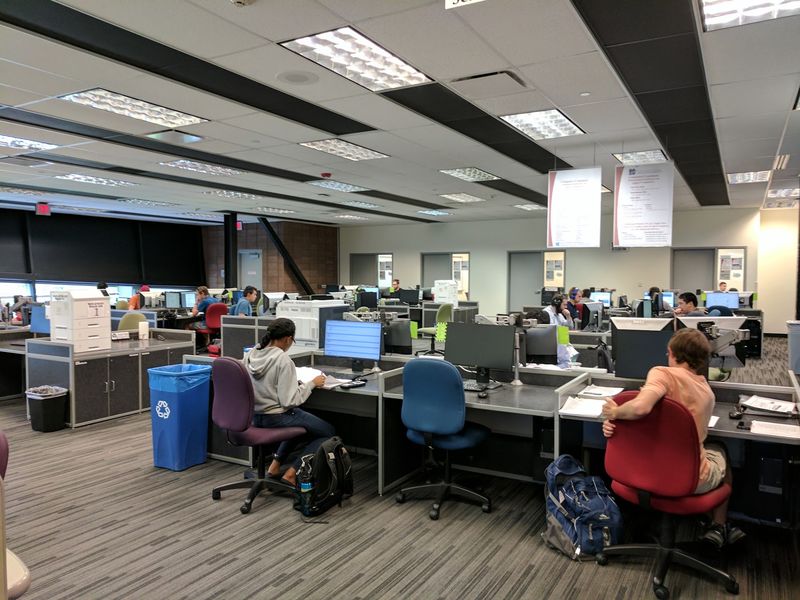
The collection is housed in the Christine and Steven F. Udvar-Hazy Library and Learning Center on Embry-Riddle’s Prescott Campus.
The current library building opened in 2008 and functions as an active study, research, and technology space.
Kalusa’s aircraft are displayed on both floors, so the collection forms part of the library rather than occupying a separate museum building.
Visitors can move through the public display areas while students continue using nearby reading and study spaces.
The setting suits the subject particularly well. Embry-Riddle’s Prescott Campus centers heavily on aviation, aerospace, engineering, safety, and related fields, placing the historical collection inside a community still focused on flight.
This Arizona library welcomes community visitors, although Embry-Riddle students receive priority during busy periods.
Minors must be accompanied by an adult, and guests are expected to follow normal library conduct rules while viewing the displays.
Outside, the Prescott Campus sits in the high-elevation landscape of northern Arizona. Mountain views and broad skies create an appropriate backdrop for a collection devoted almost entirely to machines built to leave the ground.
More Than Miniature Airplanes
The Kalusa Collection is the library’s largest aviation display, but it is not the only public exhibit inside the building. Several smaller collections provide additional reasons to look around.
On the second floor, selected paintings from the FAI Young Artists Contest feature aviation and aerospace subjects created by artists ages 6 to 17 from around the world.
The Hazy Library serves as the official archive for original winning paintings dating from 1988 to the present. The artwork adds a completely different interpretation of aviation after the technical precision of Kalusa’s aircraft.
The first floor holds a collection of 175 NASA manned-mission patches. The display begins with Mercury-era flights and continues through Gemini, Apollo, Skylab, and the Space Shuttle program, ending with the final shuttle mission in 2011.
Upstairs, the Geochron World Clock shows daylight, time zones, and the changing position of sunlight across the globe.
A Wall of Quotes featuring scientists, pilots, writers, artists, and other notable figures adds another smaller stop nearby.
Planning A High-Flying Visit
The Kalusa Miniature Aircraft Collection can be viewed during regular Hazy Library hours, and current library policy welcomes members of the public into the facility.
Ordinary viewing does not require joining a formal tour.
Visitors can wander through the public display areas at their own pace, while anyone wanting more background can arrange a collection tour through the library’s Kalusa curator.
Library hours change according to academic terms, summer schedules, holidays, exams, and campus breaks. Checking the official schedule shortly before making the drive is the safest approach.
The models occupy both floors, but the visit does not require a strenuous amount of walking.
The more useful preparation is simply allowing enough time to stop at individual cases rather than treating the collection like decoration along a hallway.
The library also maintains a searchable digital version of the Kalusa Collection. It can help visitors investigate particular aircraft before a trip or revisit models afterward without trying to remember hundreds of labels.
One close look at a tiny aircraft can easily lead to another.
By the end, the scale of Kalusa’s achievement becomes clearer: thousands of handmade models, one consistent system, and decades of work preserved inside an Arizona campus built around aviation.