Sitting On A Lonely Prairie Hill, Nebraska’s Pony Express Era Fort Kearny Still Guards Its Stockade
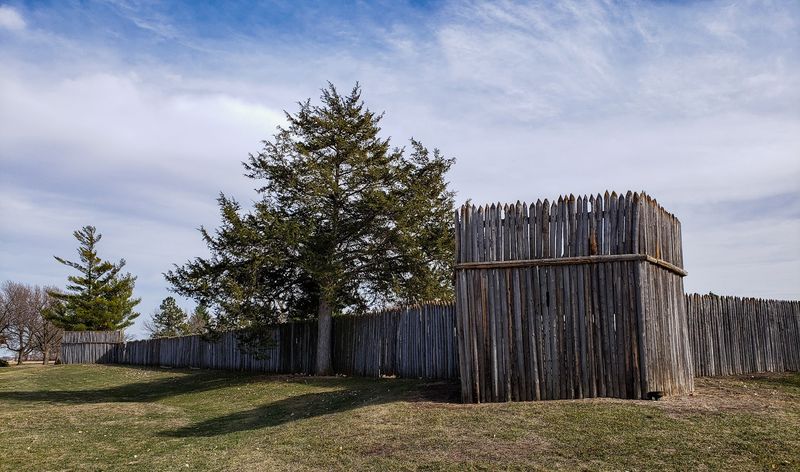
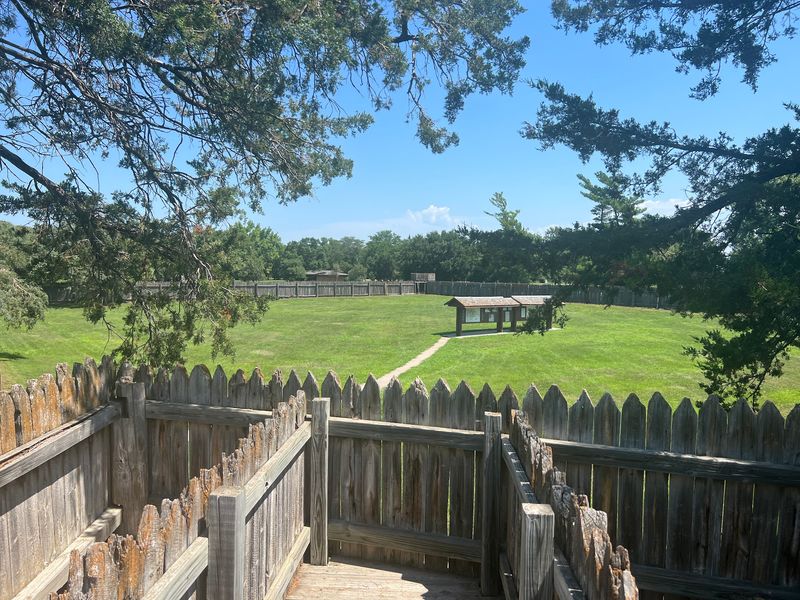
A gravel lane, a wide green lawn, and a wooden wall rising out of the Nebraska grass hardly look like the start of a big story. Walk a little closer and the ground starts talking about wagons, mail riders, and a young country heading west.
This quiet spot once sat at the center of the busiest road on the plains. It turns a short detour into an afternoon you keep thinking about on the drive home.
A Frontier Post on the Great Platte River Road
Picture the Platte River valley in 1848, with trails from the east pinching together into one long, dusty highway. Right where they merged, the U.S.
Army set down the first military post along the Oregon Trail. That post was Fort Kearny, and its site now sits a few miles south of Interstate 80 in south-central Nebraska.
Today the grounds belong to Fort Kearny State Historical Park, managed by Nebraska Game and Parks. The setting is flat and open, framed by cottonwoods and farm fields that roll off in every direction.
Corn stretches for miles on the drive in, which makes the sudden appearance of a timber stockade feel a little like finding a page torn from an old schoolbook.
Here’s a detail that trips up plenty of people. The fort is spelled Kearny, after Colonel Stephen Watts Kearny, while the nearby city carries an extra e thanks to a historical postal mix-up.
Both names point to the same slice of prairie. The park is recognized as a historic site on three National Historic Trails: the California, the Oregon, and the Pony Express.
Leaky Sod Buildings That Grew Into an Outpost
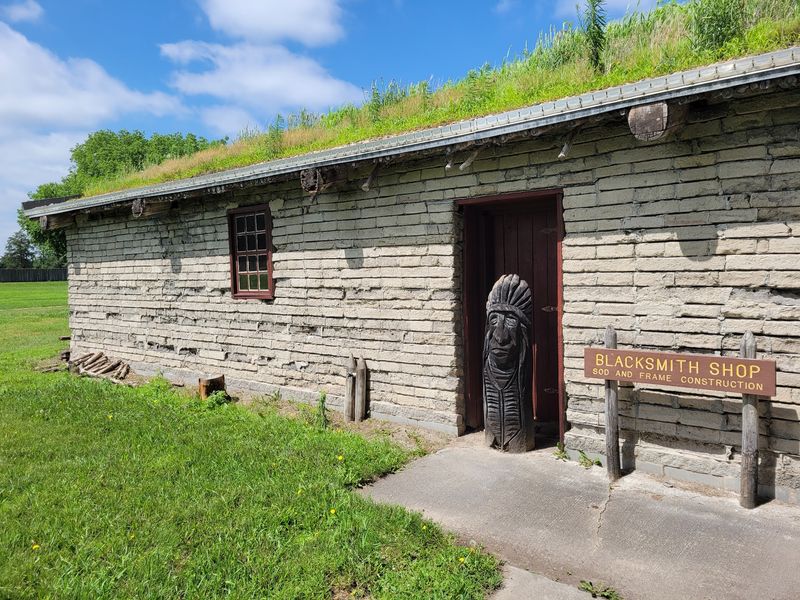
Nobody would have called the early fort impressive. Its first structures were adobe and prairie sod, once described as an unfenced collection of leaky buildings.
Still, for tired families rolling west, that humble cluster meant supplies, wagon repairs, fresh shoes for livestock, and a post office.
Medical care was available too. Some emigrants used the stop to rest, and a few decided the trail ahead was too much and turned back east.
Over the years the post grew to more than 30 buildings, and it was never directly attacked. In 1851, the German traveler Duke Paul of Wurttemberg passed through and wrote of a captain, a store, a post office, and large herds of bison nearby.
So what changed? The flood of overland travel slowed, and the transcontinental railroad arrived in 1869.
The Army closed the fort in 1871, and the land opened for homesteading while old buildings were taken apart or left to crumble. In the 1920s, the Fort Kearny Memorial Association bought 40 acres of the original site, and the state historical park officially opened in 1959.
Galloping Mail and the News of a New President
How fast could news cross half a continent before the telegraph? In November 1860, riders carried word of Abraham Lincoln’s election from Fort Kearny to Placerville, California, in a record five days.
For a nation that often waited weeks for mail, that pace felt close to magic.
From 1860 to 1861, the fort served as a Pony Express home station, and its role as a mail hub grew quickly. In March 1861, Lincoln’s Inaugural Address was telegraphed as far as Fort Kearny.
From there, riders including the well-known Pony Bob Haslam raced it westward, with Haslam finishing a 120-mile leg in about eight hours and twenty minutes.
Wires kept creeping west, though. By July 1861 the telegraph reached a few miles past the fort, and by September it stretched 100 miles beyond, so riders began picking up messages farther out toward Julesburg, Colorado.
The Pony Express ended on October 24, 1861, once the transcontinental line linked both coasts. Standing on the parade ground, it’s easy to imagine hoofbeats fading into the distance for good.
Timber Walls and Corner Guard Towers
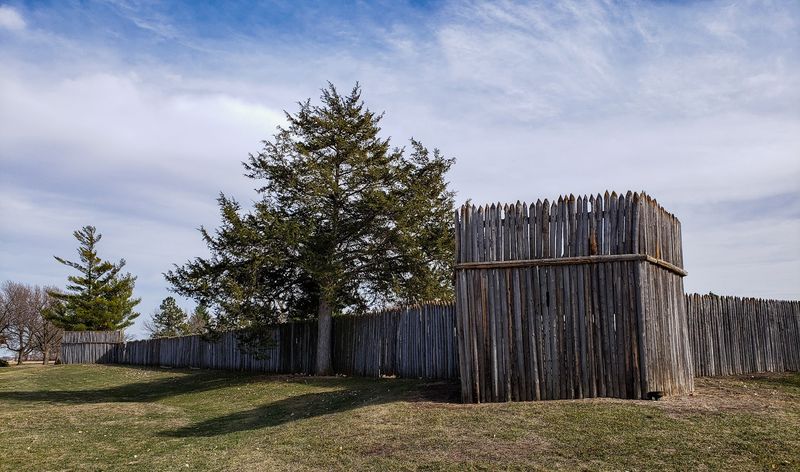
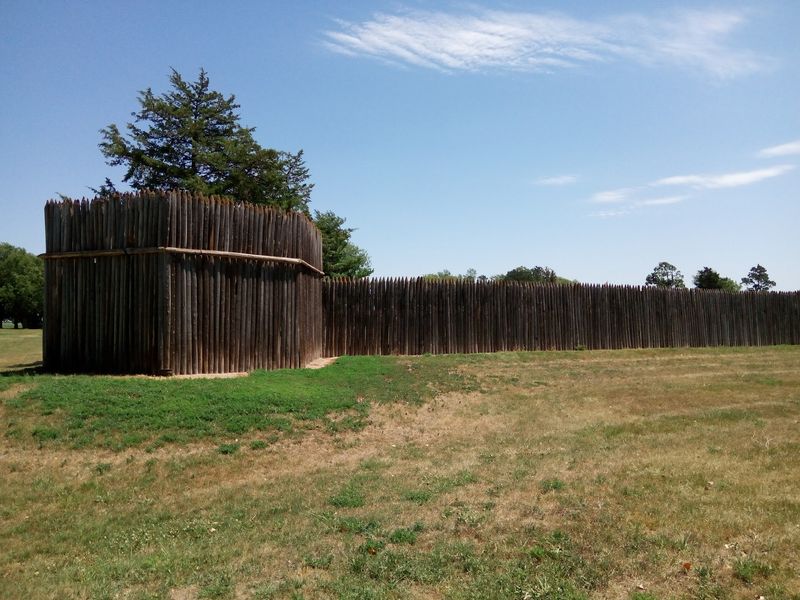
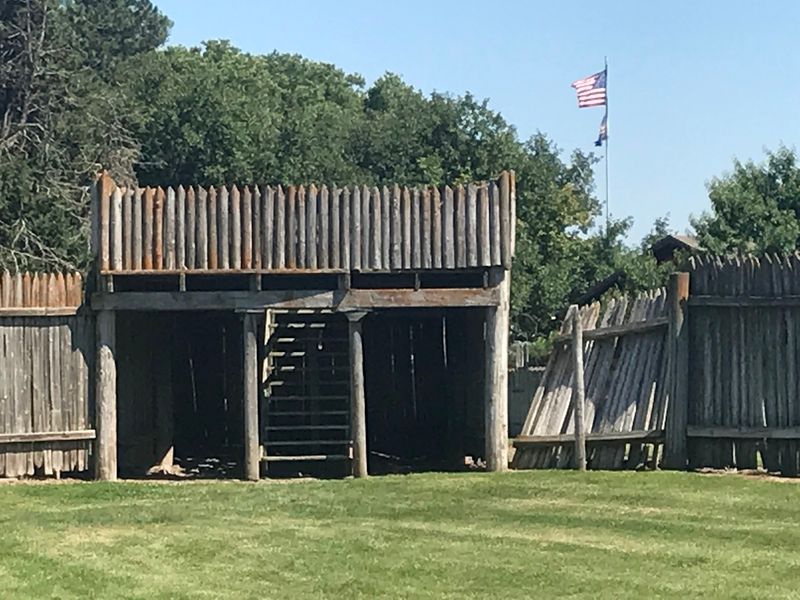
Sunlight slides across rough timber as you approach the rebuilt stockade, the feature that gives the whole park its silhouette. Walls of upright logs form the enclosure, and guard towers stand at the corners like patient lookouts.
Inside, there are no reconstructed barracks, just open space and the frame itself.
That emptiness surprises people expecting a movie set. It works in its own way, though, because the plain wood lets your imagination fill in the soldiers, the wagons, and the chatter of a busy crossroads.
Kids tend to treat the walls as an instant adventure zone, peeking out from corners and pacing the perimeter.
Wear and weather do show. Some sections of the wooden fort have needed repair, and the timber looks every bit of its age against the prairie wind.
Even so, climbing the grassy rise and seeing that outline against the sky delivers the image promised in the title: a lonely stockade holding its ground. Bring a camera for the late afternoon light, when the logs glow warm and the shadows of the towers stretch long across the lawn.
The Sod Blacksmith and Carpenter Shop
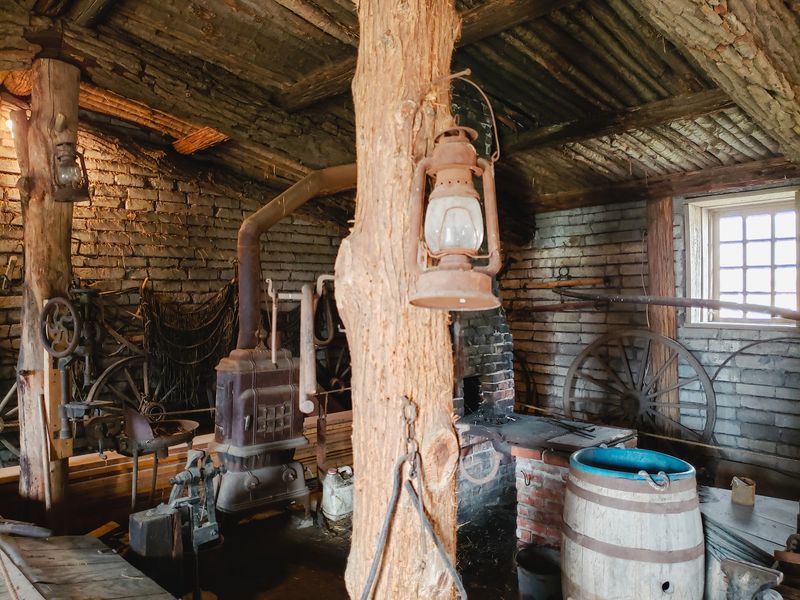
Step inside on a hot July day and the temperature drops noticeably. Thick walls of sod packed between bricks keep the carpenter-blacksmith shop cooler than the lawn outside, a trick frontier builders relied on long before air conditioning.
It’s the single most talked-about building on the grounds.
Much of the appeal comes from scale. The anvils, bellows, and iron tools are enormous, and seeing them up close explains why a working blacksmith was so valuable to emigrants with broken wheels and worn-out horseshoes.
Think about that sod, too, holding a wall together for generations.
Lighting inside is low, so eyes need a moment to adjust before the details come into focus. Displays have seen better days, and upkeep has not always kept pace with the building’s importance.
A flashlight or phone light may help you pick out the smaller pieces tucked along the benches.
For families, this room often becomes the highlight. Children can connect a clanging forge to the wagon repairs described in the visitor center film, and adults get a tactile sense of trail life that no sign can match.
Artifacts, a Film, and a Friendly Front Desk
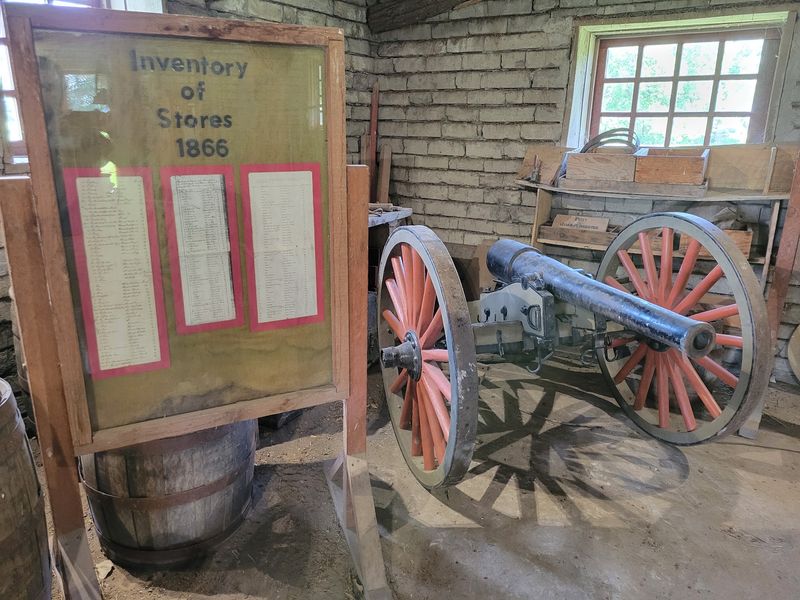
Start indoors. The interpretive center is small, yet it packs in trail-era artifacts, historical documents, and exhibits that trace the fort from its sod beginnings to its closing.
A short film lays out the whole story and makes the outdoor walk far easier to understand.
One exhibit thread follows Mormon pioneers who crossed the plains, some pushing handcarts loaded with everything they owned. It’s a humbling detail when you remember the distance still ahead of them from this point.
Documents and personal items bring those faces a little closer.
Staff at the desk are friendly and happy to answer questions, and the gift shop is pleasant for browsing books, postcards, and small souvenirs. A modest museum fee applies separately from the vehicle permit.
Stamp collectors on the Nebraska Passport program often plan their stop around this building.
Timing matters here. The center keeps daytime hours, so arriving late in the afternoon can mean exploring only the outdoor exhibits.
Give yourself at least thirty minutes inside before heading out to the stockade and the trail of marked foundations.
Walking the Outlines of a Vanished Fort
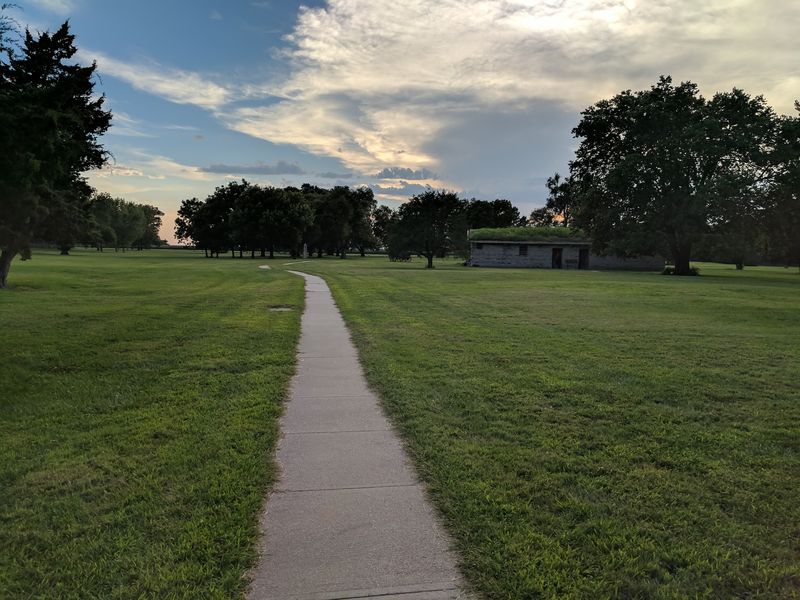
Most of the old fort is gone, yet its footprint remains. A walking path loops across the grounds, past foundations marked out in the grass where buildings once stood.
Along the way you’ll find the parade ground, the powder magazine, and informational boards explaining what each spot held.
Compare that to a crowded museum hall and the difference is striking. Out here it’s quiet, with wind in the cottonwoods and maybe a meadowlark calling from the edge of the field.
The ginormous lawn gives the place an unhurried pace that suits a slow stroll.
Some signs along the route are weathered and hard to read, and no printed map is handed out on the path. Watching the film first solves most of that problem, since you’ll recognize what the outlines represent.
A smartphone photo of any wall map inside the center also helps.
Plan for a relaxed half hour or so on foot. The terrain is flat and easy for most walkers, which makes it a good leg-stretcher on a long Interstate 80 drive when the back seat starts getting restless.
Cannon Firings on Holiday Weekends
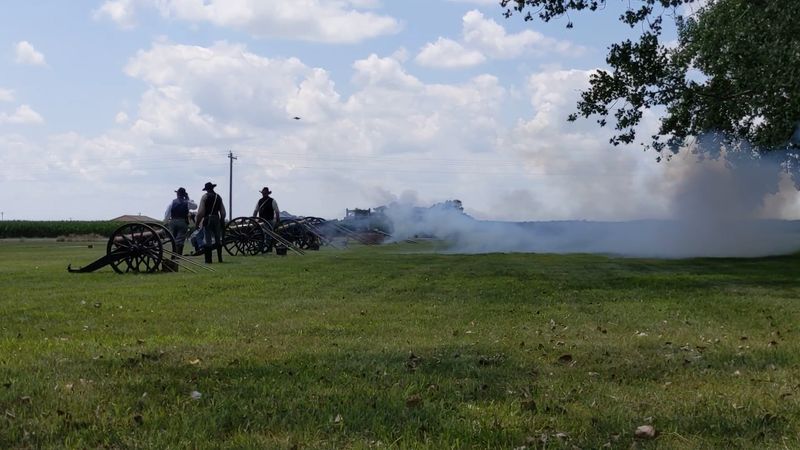
Boom. A puff of white smoke drifts across the prairie, and suddenly 1860 feels a lot closer.
Living history demonstrations with cannon firings take place during holidays and special events at the park.
Memorial Day, the Fourth of July, and Veterans Day weekends have traditionally been the times to catch these demonstrations, usually in the afternoon. Checking with Nebraska Game and Parks before you drive is smart, since event schedules can shift from year to year.
When it lines up, the noise alone makes the trip for most kids.
Even on ordinary days, the cannons on display are a draw. Their heavy iron barrels and wooden carriages show the kind of equipment a frontier post kept on hand.
They sit near the heart of the grounds, easy to spot on the walk.
Holiday weekends also bring the best chance to see the park with some energy and company around it. Pair a firing demonstration with a picnic and an evening at the neighboring recreation area, and a patriotic holiday gets a very Nebraska kind of celebration.
Picnics, Road Trip Breaks, and a Trail History Circuit
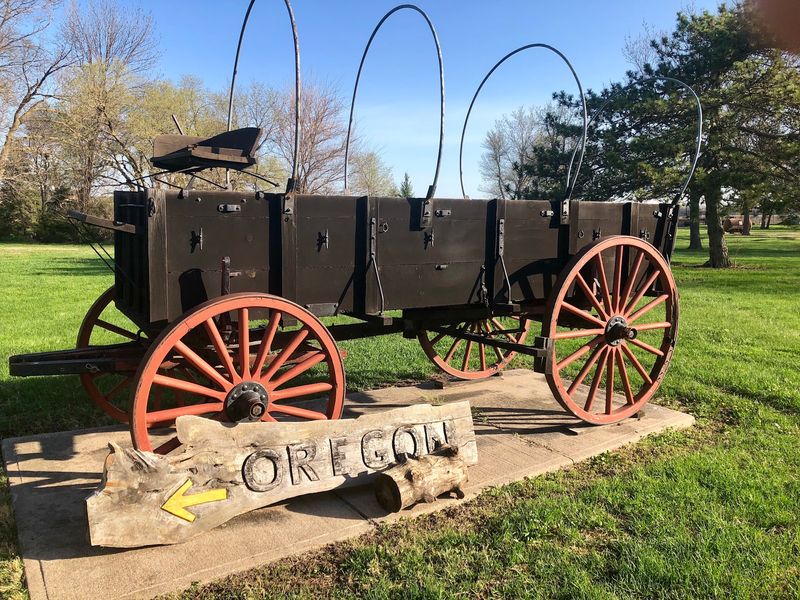
A blanket under the cottonwoods, sandwiches from home, and a wooden fort on the horizon: that’s a pretty great lunch break. The grounds are clean and open, with plenty of room for children to burn off energy after hours in the car.
History buffs, especially those with ancestors who came west on the trails, get the most from the site. Casual travelers who want lots of buildings may find it spare.
It’s a thoughtful, simple place rather than a theme park, and that simplicity is the point.
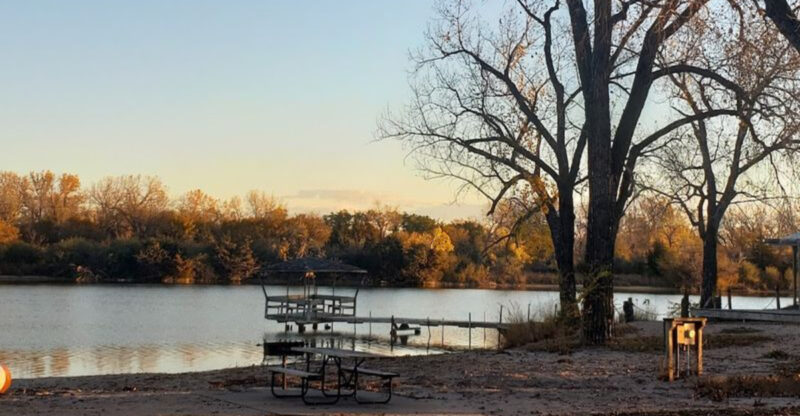
Camping happens next door, not here. The 186-acre Fort Kearny State Recreation Area sits adjacent, offering lakes, fishing, and a campground along the Platte River, so the two pair naturally for a weekend.
Note that pets have limited room to roam on the historical grounds.
Why not turn it into a circuit? The Archway museum over Interstate 80 is close, Pioneer Village in Minden is a short drive, and Stuhr Museum in Grand Island isn’t far.
Together they cover Nebraska’s settlement story in one ambitious, rewarding road trip.
Permits, Timing, and a Parting Word on This Nebraska Landmark
Getting there is simple. Head south from the Kearney exit on Interstate 80 and follow the rural roads a few miles to 1020 V Road, where the park entrance sits among farm fields.
The drive is short enough to fold into almost any trip across central Nebraska.
Plan on daytime hours, generally mid-morning to mid-afternoon, and arrive early to see the interpretive center. A Nebraska state park vehicle permit is required to park, and the museum charges its own small admission.
Anyone who already carries an annual state park sticker gets the most value, since a daily permit for a quick stop can feel steep.
Restrooms and amenities are basic, and cell service in the area can be spotty. Pack water, snacks, and sunscreen, because shade outside the cottonwoods is limited.
So is it right for you? If trail stories, Pony Express lore, and wide prairie quiet sound appealing, this lonely hill delivers something few places can.
You may not see the wagons or hear the riders, but standing inside that stockade, you’ll know it all happened right here.