Pack Your Gear And Head To This Alabama Mountain Biking Park For A Thrilling Downhill Escape
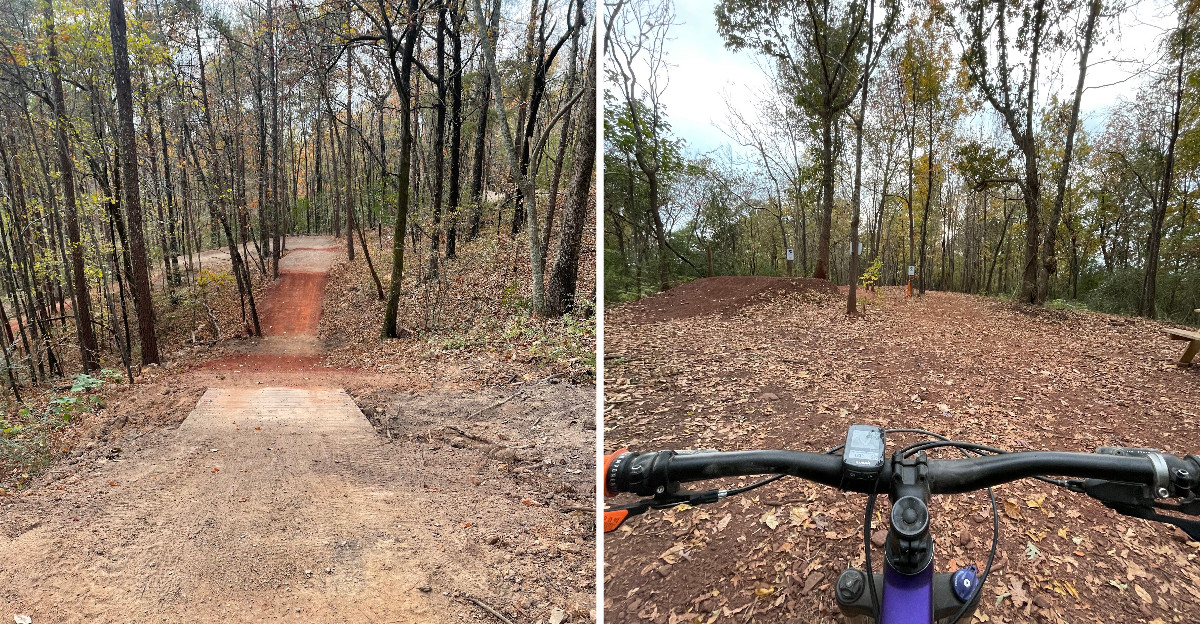
There is a moment on a downhill run when your brain says “slow down” and the bike says “absolutely not.”
That is the fun waiting at this Alabama mountain biking park, where smooth turns, rocks, jumps, and changing terrain keep every ride from feeling the same.
You do not need expert-level skills to enjoy the place, but you do need enough sense to pick a trail that matches your comfort zone.
Confidence grows quickly when the line feels right.
One good descent can make you forget how tired your legs are. Then you are back at the top thinking, Fine, one more run.
A Hill Built For Riding
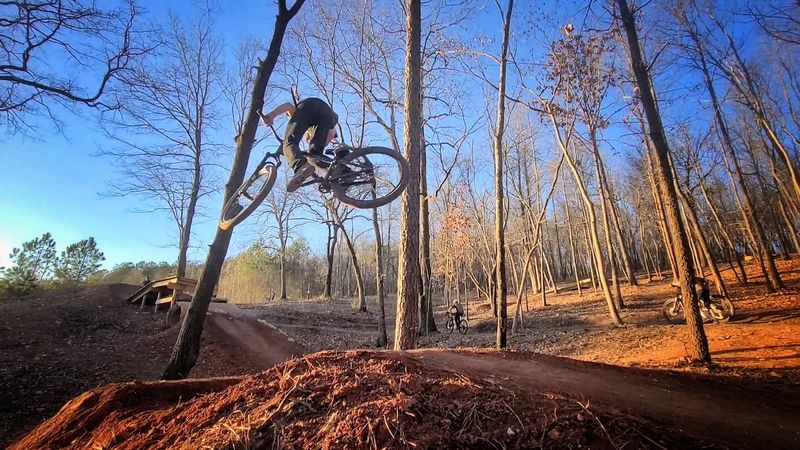
A surprising amount of riding fits onto this wooded Birmingham hillside. RideBHM currently advertises 20 trails, 220 feet of vertical, and 76 jumps packed into its downhill-focused network.
That concentrated layout keeps the purpose of the visit clear. Most of the attention stays on choosing a line, descending it, and deciding what should come next.
RideBHM officially opened on November 19, 2022, after founders developed the concept with Red Mountain Park and professional trail builders.
Red Mountain Park owns the property and serves as the bike park’s landlord.
The partnership also connects the riding area to a broader Red Mountain landscape shaped by Birmingham’s iron-mining history. Red Mountain Park itself preserves former mining land and industrial remnants from the city’s iron-producing era.
The park works especially well for riders who want to build skills gradually instead of committing immediately to the hardest terrain.
Beginner flow lines sit within the same network as blue, black, double-black, and expert-oriented trails. RideBHM is at 2800 Portofino Drive in Birmingham.
Begin With The Green Trails
A first lap works best when it leaves room to understand the terrain.
Sunday Driver is widely identified as RideBHM’s easiest flow trail, while Local Flow provides another approachable route built around smoother movement and bermed turns.
Trail ratings deserve more attention than whichever feature looks most exciting from below. Even an easier route can change with weather, loose soil, leaves, or regular trail maintenance.
A quick bike check belongs before the descent. Brakes, tire pressure, handlebars, and other key components should be working properly and set up for the rider before tackling downhill terrain.
Balanced body position and looking ahead through a turn can make cornering easier to manage. RideBHM’s own riding guidance also emphasizes controlled braking rather than sudden hard braking that can reduce traction.
Leaving space behind the rider ahead is useful on an unfamiliar line. The first run can reveal corners and features that become much easier to anticipate on later laps.
Find Your Favorite Flow
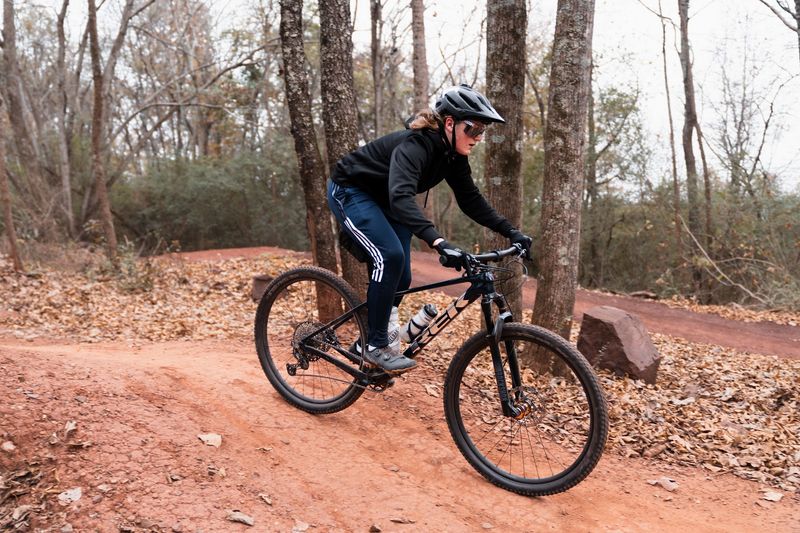
A good berm can make a trail feel almost effortless when speed and body position line up properly.
These banked turns are a major part of RideBHM’s smoother, machine-built terrain. Kanuga is one of the best-known examples.
The intermediate trail was built with help from the crew behind North Carolina’s Ride Kanuga and features a sequence of tabletop-style jumps, with rollable features or alternate lines available along the route.
Berm-ingham puts even more emphasis on shaped turns. Trailforks currently describes it as a blue jump trail with medium-size berms, tabletops, and shark-fin features.
Conditions can change how those lines feel. RideBHM maintains a live trail-status system, so checking it before assuming every route is open is more reliable than depending on conditions from a previous visit.
Progress does not have to mean riding dramatically faster. Braking a little earlier, carrying a cleaner line through a berm, or completing the same trail more smoothly can be enough to make the next lap feel different.
Save Bigger Features For Later
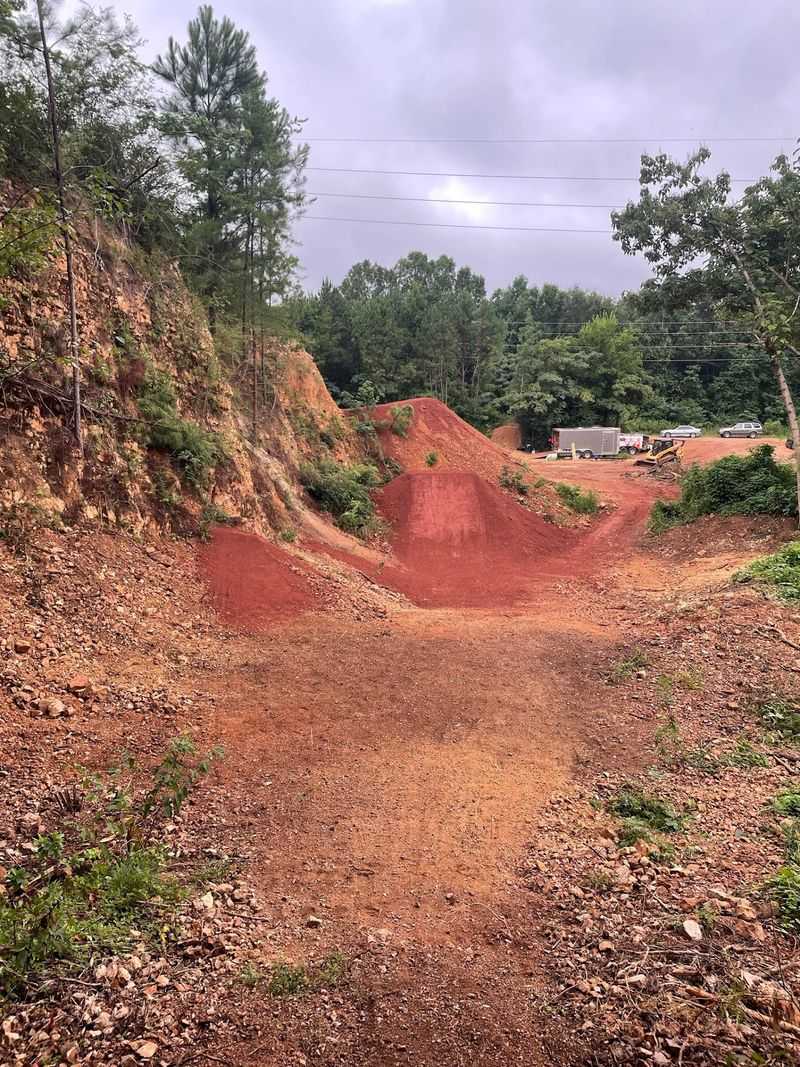
Difficulty rises noticeably once the easier flow trails start giving way to larger jumps and more technical terrain. Eureka represents a significant step above Kanuga.
Lower Eureka is currently rated black diamond and includes large tabletops and gap-style features intended for advanced riders.
Chiropractor mixes flowing sections with rougher downhill terrain and distinctive natural features.
RideBHM also includes expert-oriented lines such as Crucible, Huck Norris, Thriller, Temerity, and other demanding routes where steep terrain or substantial built features raise the consequences of mistakes.
Unfamiliar features deserve inspection before they are attempted. RideBHM’s own guidance recommends progressing from smaller jumps toward larger ones rather than using additional speed as a substitute for technique.
Trail etiquette matters just as much as skill. Riders stopping to inspect or rest should move completely away from active lines, especially near jumps, landings, and fast downhill sections.
Waiting for another day is also a valid choice. Fatigue, changing trail conditions, or a feature that simply does not feel right can all change what makes sense on a particular lap.
Practice Between The Descents
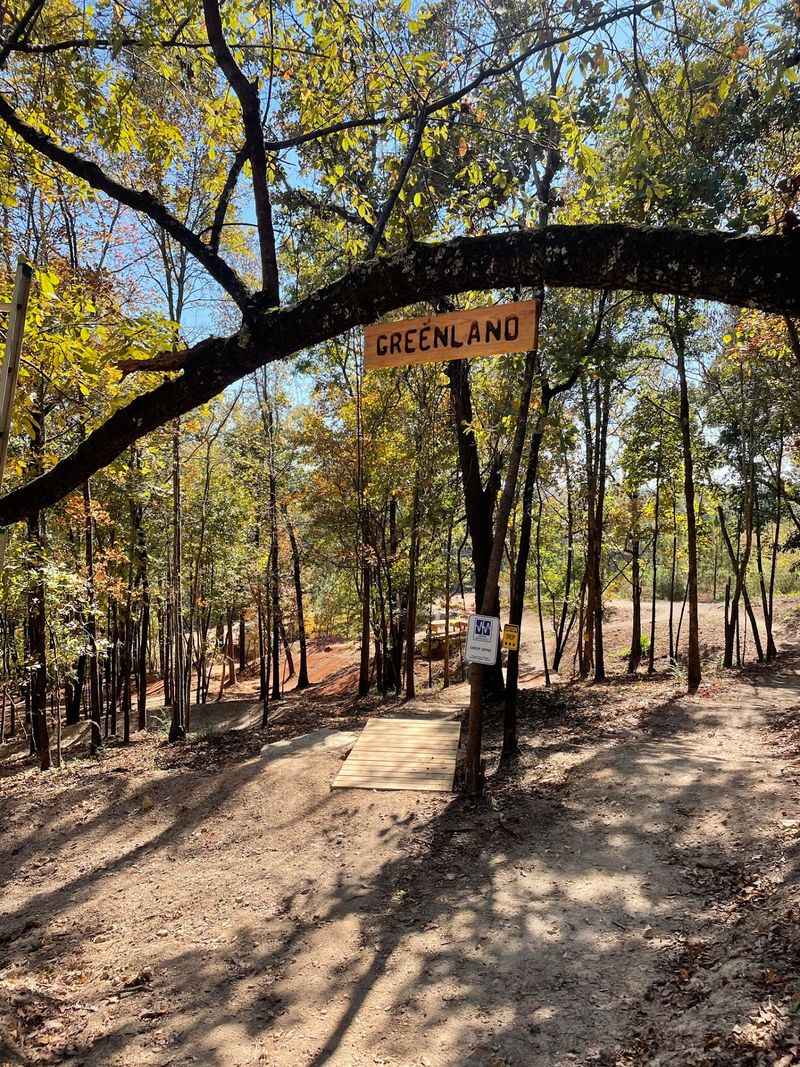
Not every useful minute at RideBHM needs to happen on a full downhill run. Practice areas near the base give riders a chance to work on movement and bike control in a more repeatable setting.
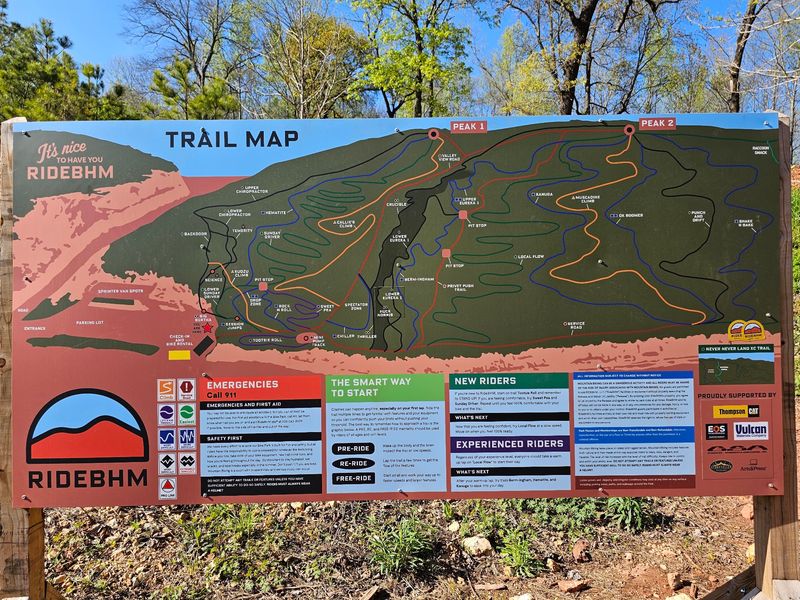
The park’s trail map includes compact features such as a mini pump track and session areas alongside the main downhill network.
Rollers and berms encourage riders to create and preserve momentum through coordinated movement rather than relying only on pedaling.
Starting at a comfortable pace makes those areas more useful. Flexible knees and elbows, steady vision, and a centered position help riders react to the terrain without becoming rigid.
Short practice laps can expose habits that are harder to notice on a longer descent. A rushed corner, stiff arms, or poorly timed braking becomes easier to identify when the same section can be repeated.
The goal does not have to be getting airborne. Better balance, smoother pumping, and more predictable cornering can transfer directly back to the park’s green and blue trails.
Following posted directions also matters in compact practice areas. Predictable traffic keeps riders from entering the same feature from conflicting directions.
Plan The Climb Back
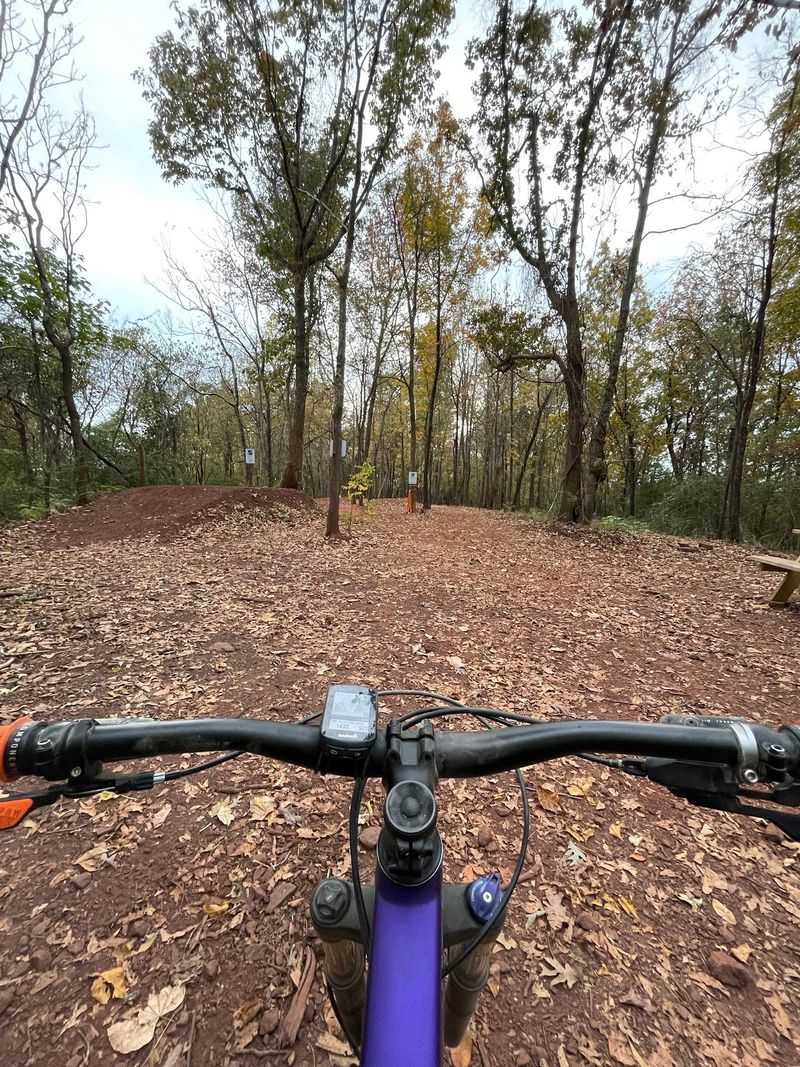
Every downhill lap eventually creates the same question: how do you get back to the top?
RideBHM is designed for self-powered climbing as well as shuttle-assisted riding.
Pedal access is available seven days a week, while the current 2026 schedule lists Saturday shuttle service from 10:30 a.m. to 4:30 p.m.
That makes the shuttle a useful option rather than something riders should assume is available every day. Checking the current schedule before the trip prevents a day built around an uplift service that is not operating.
E-bikes can reduce the effort required for repeated climbs, and electric mountain bikes are allowed on routes listed for e-bike use.
Cahaba Cycles also operates a demo center directly at RideBHM, with its own published daily hours and reservable bikes.
Regular mountain bikes remain completely practical for riders comfortable with the climb. Using an easier gear, maintaining a sustainable pace, and taking breaks can preserve more energy for the descending portions of the day.
Heat adds another consideration in Birmingham. Carrying water is basic mountain-bike preparation, and RideBHM’s own guidance includes hydration and a repair kit among useful trail essentials.
Make Base Camp Count
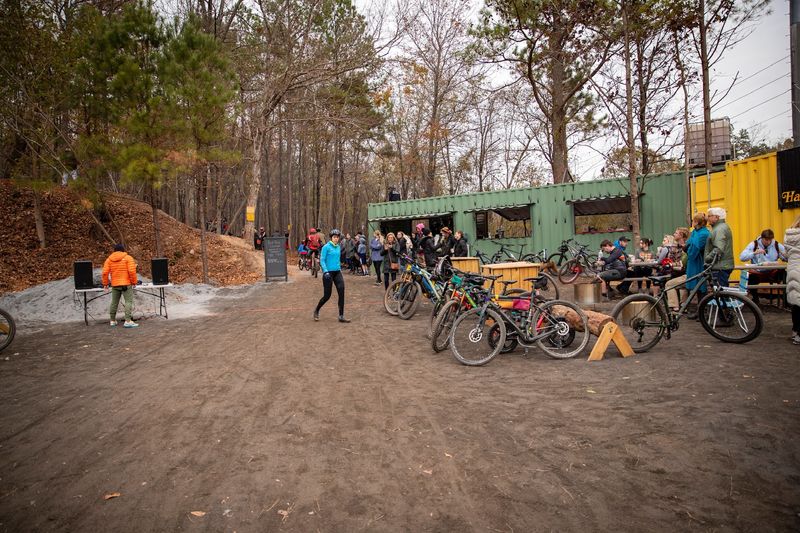
The base area gives riders somewhere to regroup before another lap rather than staying in constant motion.
Cahaba Cycles now operates its RideBHM Demo Center at 2800 Portofino Drive.
Its current schedule runs daily, with shorter afternoon hours Monday through Thursday and longer hours Friday through Sunday.
A pause is also a sensible time to look over the bike. Tire condition, pressure, brake response, and anything that has loosened during repeated downhill runs deserve attention before heading uphill again.
Water and a snack can matter just as much as equipment. Waiting until fatigue becomes obvious can make technical terrain harder to manage, particularly during warm Alabama weather.
Alabama families do not have to choose exactly the same experience. RideBHM offers discounted youth passes, while the wider trail system includes beginner terrain alongside progressively harder routes.
The base also makes a practical meeting point when riders separate onto different lines. Agreeing on a location beforehand is simpler than depending completely on phones or matching lap times.
Choose Your Riding Day
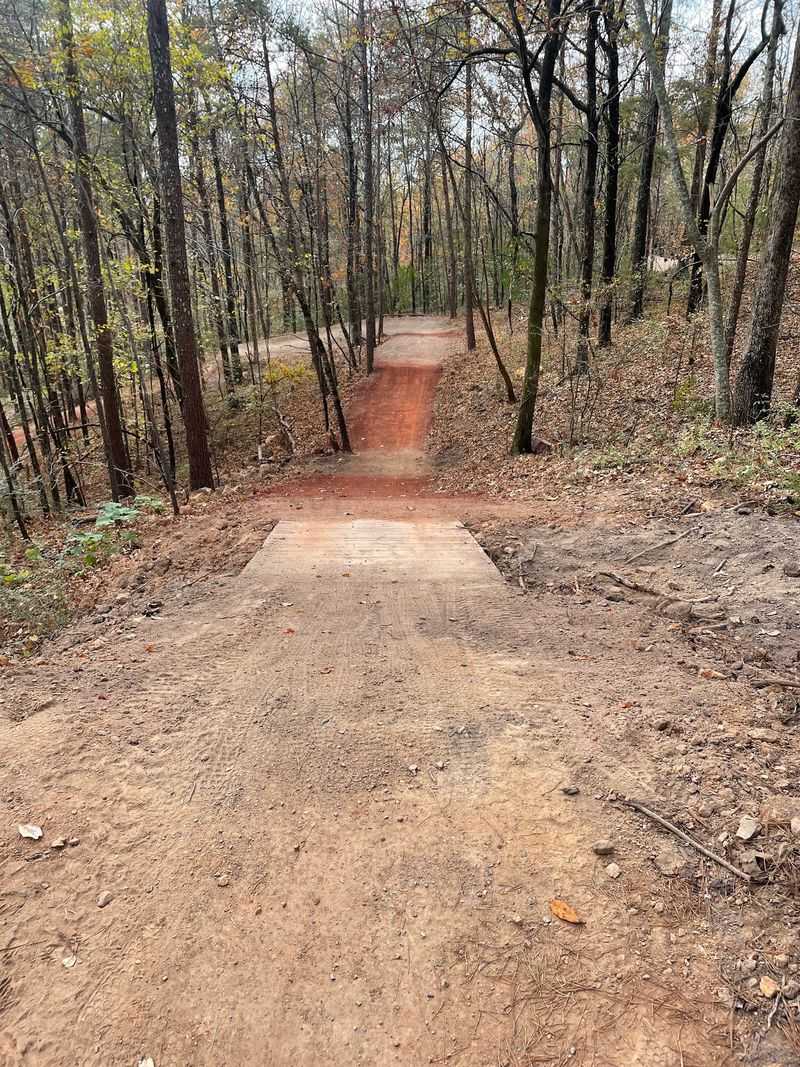
Weather can affect a RideBHM visit more than the season printed on the calendar.
This Alabama park publishes live trail status and weather information, and checking those updates before leaving home is worthwhile.
A route that was open on the previous visit may be unavailable after rain, maintenance, or another change in conditions.
Spring and fall often provide milder Birmingham temperatures for repeated climbing. Summer riding remains possible, but heat and humidity make hydration and rest more important.
Winter can deliver rideable days as well, although shaded sections may stay damp longer than exposed ground. Layers should work comfortably with protective equipment rather than restrict movement.
Current access is straightforward: pedal hours run from sunrise to sunset seven days a week, passes must be purchased online, and Saturday shuttle service currently operates from 10:30 a.m. to 4:30 p.m.
Bike availability at the onsite demo center should be checked separately before relying on a particular model.
A helmet belongs at the top of the packing list, with gloves, water, and basic repair supplies close behind.