This California Bridge Has A Glass Walkway And A 217-Foot Tower That Actually Tells Time
Most bridges are perfectly happy getting you across the water. This one decided that was nowhere near ambitious enough.
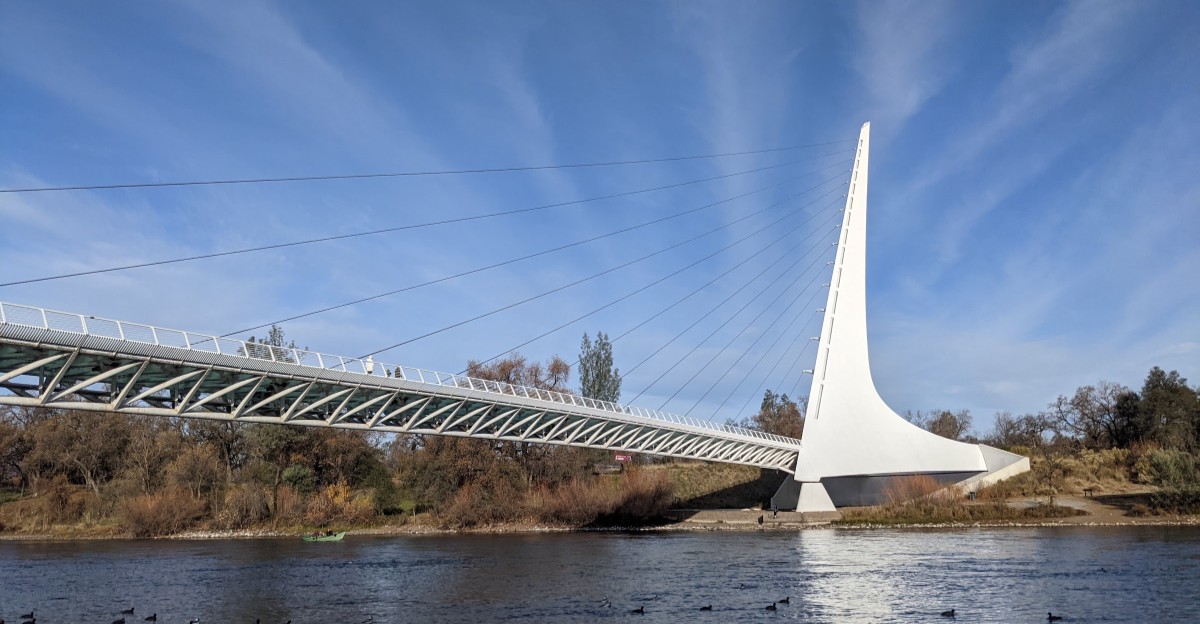
A glass walkway immediately makes the crossing more interesting, but the structure rising above it is where things get unusual.
The 217-foot tower is part of a working sundial, turning architecture into something far more clever than a dramatic backdrop for photos.
California has plenty of eye-catching landmarks, but crossing a bridge that can also tell time adds an unexpected twist to an afternoon walk.
The effect changes as sunlight and shadows shift throughout the day, giving visitors another reason to pay attention instead of simply heading straight across.
Even people who normally rush over bridges may find themselves slowing down to figure out exactly how the whole thing works.
Then there is the glass beneath your feet, which adds another little thrill to the experience.
This Is Much More Than A Pedestrian Bridge
Plenty of river crossings are purely practical, but very few double as public art, a science lesson, and a trail gateway all at once.
Only people on foot and on bikes use the span, so the space feels calm and unhurried.
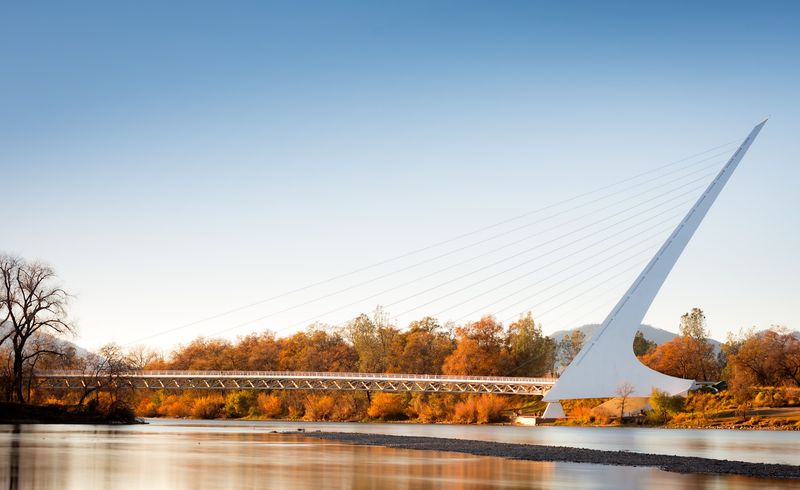
Engineers call the design a cantilever spar cable-stayed bridge. That long phrase simply means one leaning tower holds up the whole deck using a set of steel cables.
The result looks a bit like a huge white harp stretched over the water.
Beyond getting walkers across the river, the structure also serves as one of the largest working sundials in the world.
It connects the north and south parts of Turtle Bay Exploration Park, which includes gardens and a museum.
Trail users also rely on it as a central link in the local river path network.
Families with strollers, older visitors, and people with leashed dogs can generally cross without trouble because the deck is wide and flat.
The listed daily hours are 6 a.m. to midnight, though checking the official Turtle Bay website before a late visit is a smart idea.
A quick walk across may take only a few minutes. Still, most visitors end up lingering much longer than planned, simply because there is so much to notice along the way.
The Glass Walkway Stretches 700 Feet Across The River
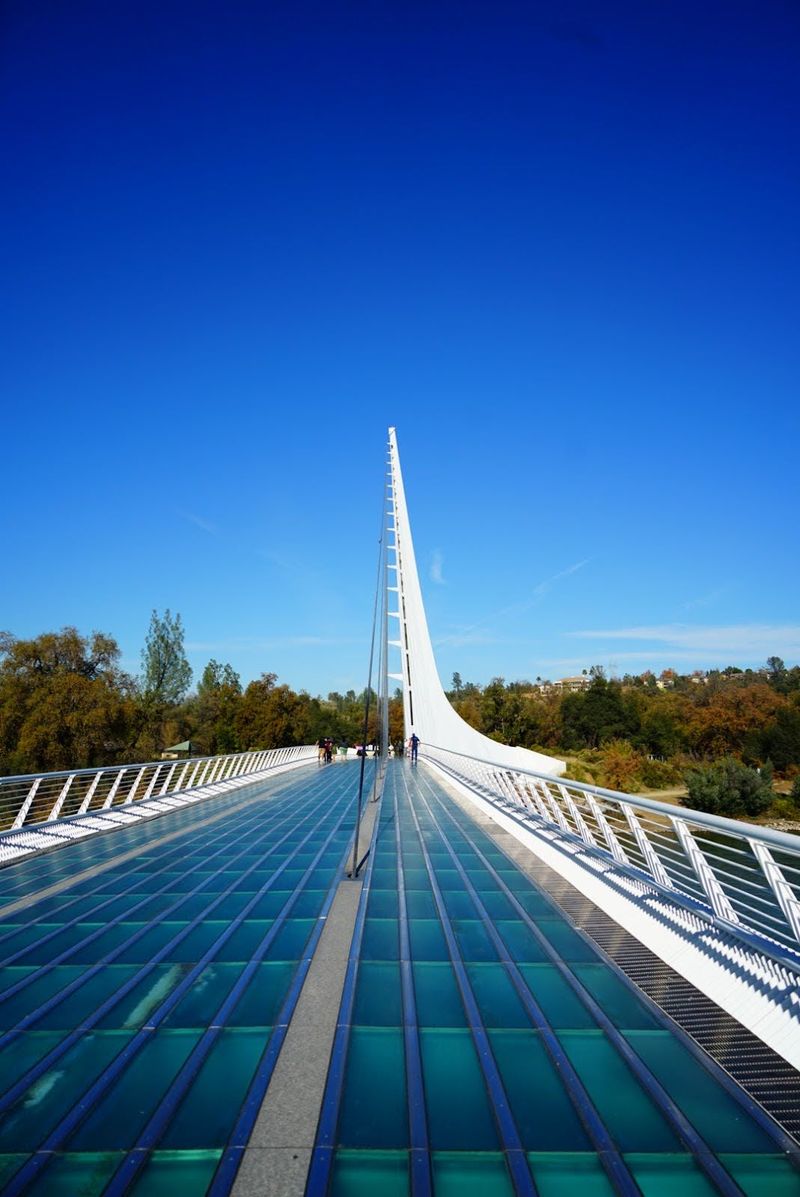
Stepping onto the deck for the first time can feel a little surprising.
The walking surface is made mostly of translucent glass panels with granite accents, and it runs about 700 feet from bank to bank.
Light filters through the panels, giving the path a pale blue-green tint on sunny days. The glass is textured and designed to be non-skid, so it does not feel like walking on a smooth window.
Even so, moisture from rain or morning dew can make the surface slick. Shoes with decent grip are a good choice, especially during cooler months.
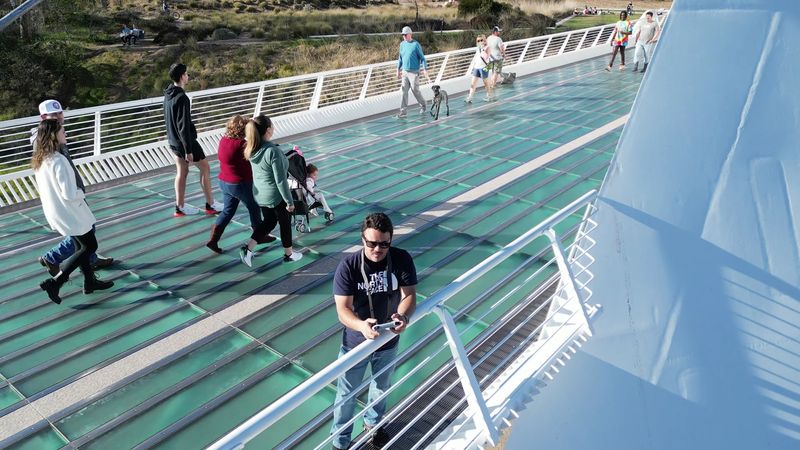
The deck is roughly 20 feet wide, which leaves plenty of room for walkers and cyclists to share the space.
People often slow down in the center to take photos or peer over the railings at the water. Moving to one side when stopping helps keep the flow comfortable for everyone.
Sound carries in an interesting way out here. Footsteps, bike tires, and the rush of the river blend together into a steady, soothing background hum.
On a hot afternoon, the glass can reflect a lot of brightness, so sunglasses may make the walk more comfortable.
A full crossing at an easy pace usually takes just a few minutes. Walking back the other way often reveals details that were missed the first time.
A 217-Foot White Pylon Towers Above Everything
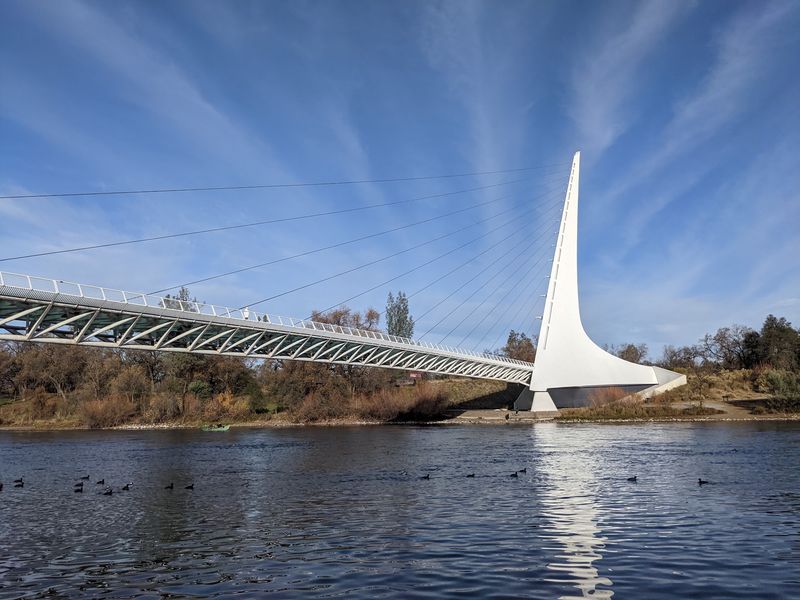
Standing at the base and looking up is enough to make most people tilt their heads all the way back. The white pylon rises 217 feet, which is roughly the height of a 20-story building.
Instead of standing straight, it leans at a 42-degree angle and points toward the north. About 580 tons of steel went into the tower.
A bright white coating keeps it looking clean against the trees, the river, and the sky. At the very top sits a red warning light that helps keep aircraft safe.
Many people say the shape reminds them of a harp or a bird with its neck stretched forward.
Cables fan down from the pylon to the deck like strings on an instrument. From some angles, the lines look almost delicate, even though they carry the weight of the entire walkway.
This California tower sits on the north bank, so it is easy to spot from the trails on either side.
Photographers often find that early morning and late afternoon light bring out soft shadows on its curves. Midday sun can make the white surface very bright, so adjusting camera settings may help.
Getting the whole pylon into one photo usually requires stepping back quite a distance.
Yes, The Entire Structure Really Works As A Sundial
Sundials have been used for thousands of years, but few are large enough to walk under.
Here, the leaning pylon acts as the gnomon, which is the part of a sundial that casts the shadow. As the sun moves across the sky, the shadow sweeps across the ground on the north side of the river.
The bridge is considered one of the largest working sundials on the planet. It gives an approximate time rather than an exact reading, so a phone clock will still be more precise.
That small difference does not take away from the fun of seeing an ancient idea at such a huge size. Accuracy is highest around the summer solstice, which usually falls on June 20 or 21.
Telling time works best from about 11 a.m. to 3 p.m. on clear days. Outside those hours, the shadow can stretch too far to read easily.
Winter brings a lower sun, and the shadow may reach deep into the arboretum where it is harder to follow. Cloudy weather can also hide the effect completely.
For the best chance, plan a visit on a bright summer day near midday.
Kids especially tend to enjoy connecting the shadow to the time on a watch.
The Sacramento River Runs Directly Beneath Your Feet
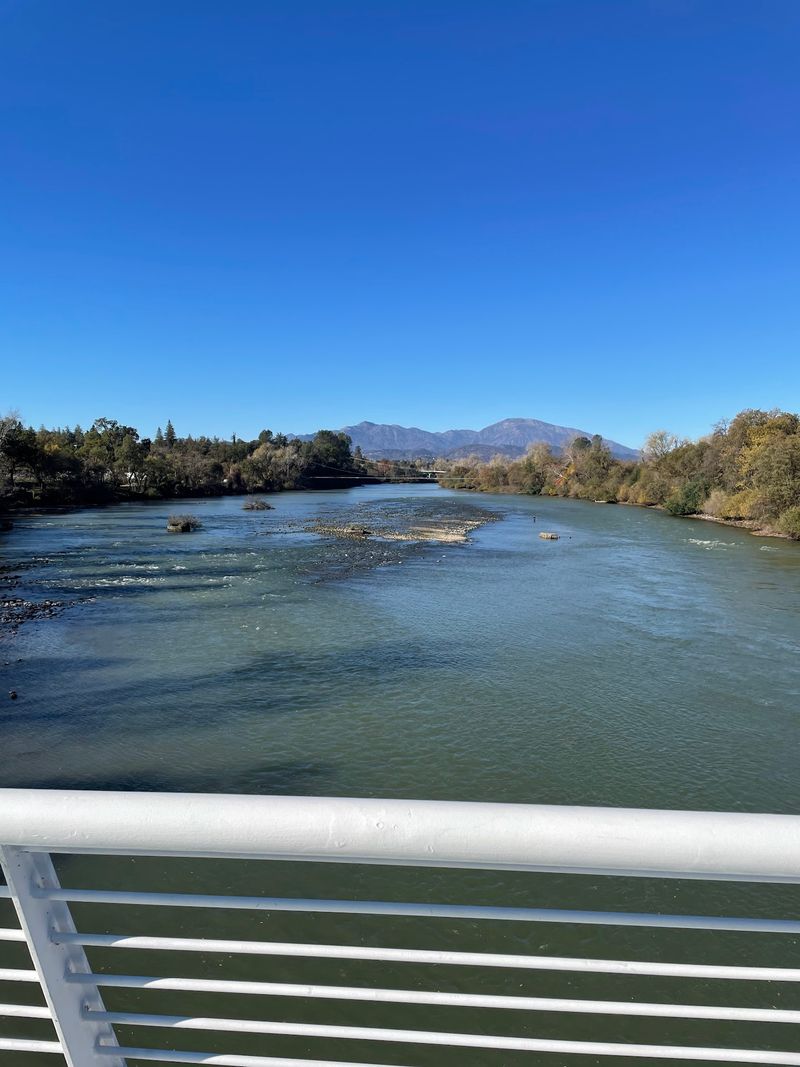
Cool air rising off the water is often the first thing people notice mid-crossing. Below the deck flows California’s Sacramento River, the longest river located entirely within the state.
Its water here often looks clear and green, moving at a steady pace.
Leaning on the railing gives a direct view of the current. On many evenings, anglers can be seen standing in the shallows or drifting in small boats.
Birds sometimes skim low over the surface, adding movement to the scene.
Summer in this part of the state can be very hot. Many visitors find that the area near the river feels noticeably cooler than nearby streets, though conditions vary day to day.
A breeze off the water can make an evening walk far more pleasant.
The sound of the river is steady and calming. It covers much of the background noise, so conversations feel softer and more relaxed.
People often stop in the center simply to listen for a moment. Mosquitoes may show up near the water around dusk, so packing insect repellent is a practical move.
Staying on the bridge and marked trails keeps the riverbanks protected.
The Design Helps Protect Salmon Spawning Habitat
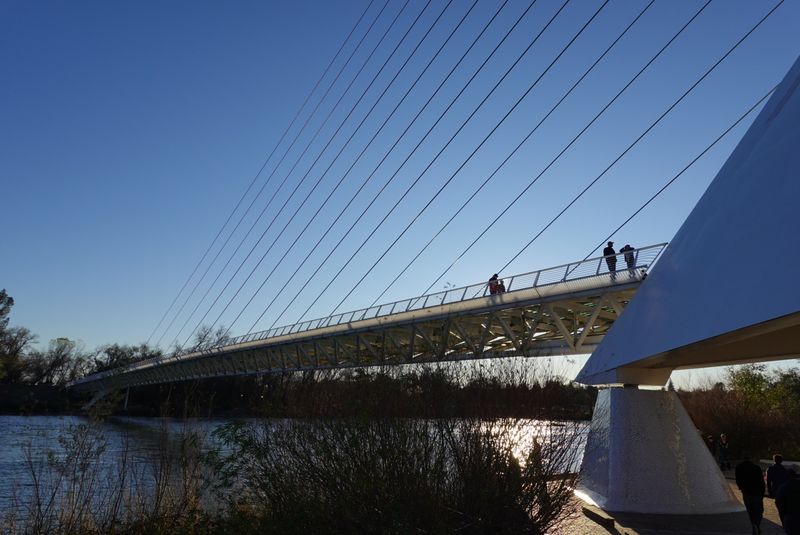
Fish played a surprisingly big role in how the bridge looks today.
The stretch of river below is used by Chinook salmon for spawning. Keeping supports out of the water helped avoid disturbing the riverbed where the fish lay their eggs.
Construction in water can stir up sediment and change the flow. By placing the pylon on land, planners reduced those risks.
The result is a crossing that sits above the habitat rather than inside it.
The glass deck also plays a part. Letting light pass through means the bridge does not throw a heavy dark shadow over the water.
That approach was intended to limit changes to the environment that fish rely on.
Some Chinook salmon runs in the Sacramento River are listed as threatened or endangered. Knowing this can make a simple walk feel more meaningful.
Visitors are standing on a landmark shaped partly by conservation goals. Respecting the river is easy.
Staying off fragile banks, packing out trash, and following posted fishing rules all help.
Watching the water quietly from the railing may even offer a glimpse of fish during certain seasons, though sightings are never guaranteed.
Everything Changes Once The Lights Come On At Night
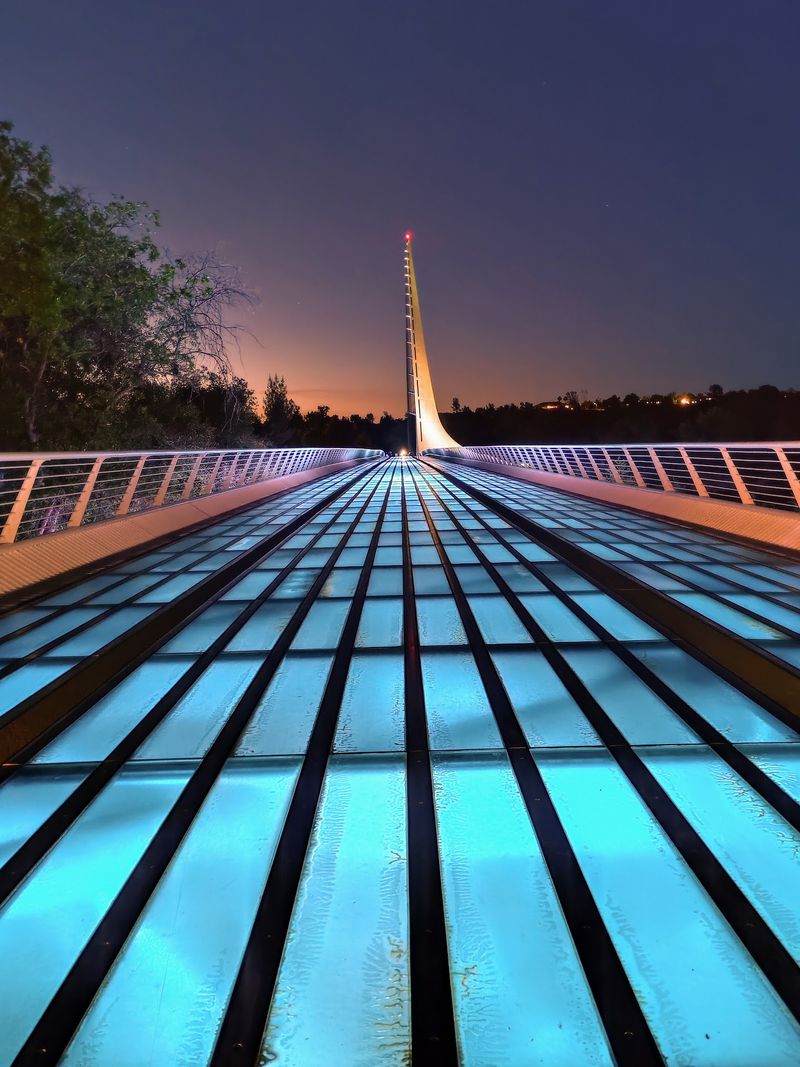
Sunset flips a switch, quite literally. After dark, lights beneath the deck make the glass walkway glow in shades of soft blue and aqua.
The white pylon and cables are lit as well, standing out sharply against the night sky. Reflections on the river double the glow when the water is calm.
Many people say the lit shape looks like a bird taking flight.
Nights often feel quieter than busy afternoons. Voices soften, and the sound of the river seems louder in the darkness.
Some couples and friends come just to stroll slowly and chat. Summer evenings can stay warm long after sunset, which makes late walks comfortable.
A light jacket helps during cooler seasons when temperatures drop quickly.
Photos at night work best with a steady hand or a small tripod. Phones with night modes may also capture the glow nicely.
Listed hours run until midnight, but checking current hours ahead of time is a good idea since schedules can change.
Know Where To Park And What To See Nearby
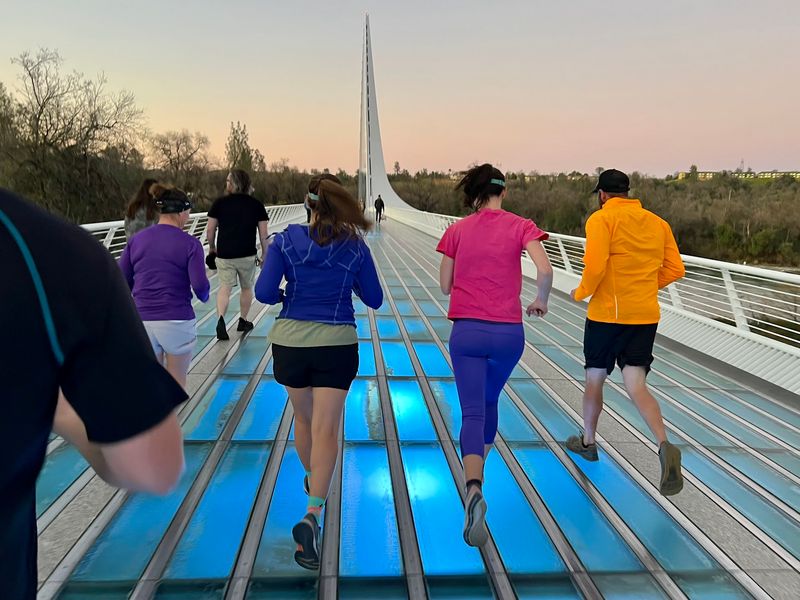
Smooth trips often start with knowing where to leave the car.
Free parking is available in front of California’s Turtle Bay Exploration Park on the south side of the river. Additional free spaces can often be found around the Redding Civic Auditorium nearby.
An overflow lot near the main bridge parking area can help larger vehicles like RVs and trailers.
A drop-off spot near the museum roundabout makes things easier for anyone who prefers a shorter walk.
From most parking spaces, the bridge is just a short stroll away. Busy times may include warm evenings, weekends, and seasonal events at the park.
During those periods, lots can fill up and traffic may move slowly. Arriving earlier in the day often means easier parking and quieter paths.
Clean public restrooms and benches are available in the area. A café at the park offers snacks and drinks for a quick break.
Shasta Dam, another impressive engineering site, is roughly a half-hour drive north and makes a great add-on for anyone who enjoys big structures and wide views.